Paint protection film already absorbs scuffs and rock chips, but without a sacrificial top layer, PPF will dull, stain, and lose its self-healing properties faster than it should. A dedicated ceramic coating solves that — locking in gloss, repelling chemical stains, and making the film itself much easier to keep clean.
I’m Amir — the founder and writer behind Four Wheel Ask. I’ve spent years analyzing automotive detailing chemistries, reading through hundreds of real-world owner reports, and cross-referencing independent lab data on how SiO2 and nano-ceramic formulas bond to TPU and vinyl surfaces.
What follows here are five of the most reliable options available today, backed by specific chemistry details and film compatibility data. This is the definitive breakdown when searching for the best ceramic coating for ppf on today’s market.
How To Choose The Best Ceramic Coating For PPF
Paint protection film is porous at a microscopic level — dirt, tree sap, bug guts, and bird droppings etch into the film permanently without a sealing layer. A ceramic-top coat fills those pores, creating a slick barrier that prevents bonding. The wrong coating, however, can yellow the film or peel it off prematurely.
Film Type Compatibility (TPU vs. PVC vs. Vinyl)
Not all ceramic formulas bond safely to every film. TPU-based PPF (the standard for modern clear bras) reacts poorly with solvent-heavy spray waxes. Look for a water-based or isopropyl alcohol-based SiO2 carrier that won’t attack the polyurethane substrate. Pure nano-ceramic liquids with a pH close to neutral are the safest option for TPU and satin vinyl wraps.
Contact Angle Rating — This is the measurable spec that tells you how well the coating repels water. A contact angle of 90 degrees is moderate beading; 110 degrees is excellent self-cleaning; anything above 115 degrees means water rolls off without leaving spotting residue. The highest-performing PPF coatings achieve around 110-115 degrees on a smooth film surface.
Quick Comparison
On smaller screens, swipe sideways to see the full table.
| Model | Category | Best For | Key Spec | Amazon |
|---|---|---|---|---|
| CARPRO CQUARTZ Skin | Nano-Coat | PPF & vinyl wrap permanence | 110°+ contact angle / 2yr protection | Amazon |
| GYEON Cure | Spray Sealant | Quick gloss maintenance | Dilutable formula / 16.9oz | Amazon |
| 3D GLW Ceramic Wax | SiO2 Wax | Deep wet-look gloss | SiO2-infused / 16oz | Amazon |
| XPEL Ceramic Boost | SiO2 Detailer | Film & paint top-up | Designed for XPEL PPF / 16oz | Amazon |
| Gyeon Ceramic Detailer | Quick Detailer | Budget-friendly top coat | SiO2 spray / 16.9oz | Amazon |
In‑Depth Reviews
1. CARPRO CQUARTZ Skin PPF & Vinyl Nano-Coat

This is the only product on today’s list that was engineered from the ground up specifically for paint protection film and vinyl wraps — not as a general-purpose spray. CARPRO’s CQUARTZ Skin uses a UV-infused nano-ceramic structure that bonds chemically to TPU, PVC, and PU films, creating a semi-permanent layer about 1-2 microns thick per 15ml coat. The 110-degree contact angle means water sheeting is aggressive enough to wash away light dirt during rain, making maintenance washes a quick hose-down instead of a two-bucket ordeal.
Unlike most SiO2 detailers that last a few weeks, CQUARTZ Skin delivers up to two years of protection when properly applied in two coats. The nano-coat also shields against UVA and UVB rays, which is crucial for vinyl wraps that fade under constant sun exposure. The 50mL bottle covers roughly two full sedan hoods with overlapping coats, making the per-application cost lower than using constant booster sprays every month.
Application does require a clean, decontaminated surface and a 12-hour indoor cure — this isn’t a spray-and-wipe quickie. But if you want a true permanent bond for your PPF investment, this is the chemistry that delivers. The matte and satin compatibility is a standout feature that most glossy-oriented coatings cannot match.
What works
- Two-year bonded protection layer on TPU, PVC, and PU films
- 110-degree contact angle creates true self-cleaning behavior
- UV-blocking formula preserves matte and satin wrap appearance
What doesn’t
- Requires a full cure period — not an instant spray detailer
- Small 50mL bottle demands precise application to maximize coverage
2. GYEON Cure Redefined Hydrophobic Ceramic Spray Sealant

GYEON’s Cure Redefined sits in a unique middle ground — it’s a spray sealant that works both as a sacrificial top layer over existing ceramic coatings and as a standalone hydrophobic gloss booster for bare PPF. The dilutable formula is an intelligent feature: you can use it full-strength for a deep wet-look shine on dark paint and film, or dilute it 1:1 with distilled water for a lighter maintenance spray that won’t leave high-spot residues on satin or matte finishes.
The real value here is the streak-free wipe-off even on black paint and dark-colored PPF. Many spray sealants leave oily smears on film edges, but Cure’s carrier chemistry evaporates cleanly, leaving a slick, mirror-like finish. Hydrophobic beading is immediate and noticeable — water sheets off the film within seconds of contact, reducing the amount of drying towel work needed after a wash.
It is not a permanent coating — expect the boosted beading to fade after 3-4 washes, depending on exposure. But for a fast weekend refresh that takes 15 minutes total and works safely over GYEON’s own top coats as well as other brand film layers, it’s a reliable choice. Safe on paint, glass, trim, and wheels too, making it a versatile single-bottle solution for the whole vehicle.
What works
- Dilutable for custom strength — versatile across matte and gloss finishes
- Streak-free wipe-off even on dark pigmented PPF
- Works as a sacrificial layer on top of thicker nano-coatings
What doesn’t
- Hydrophobic effect fades after a few wash cycles
- Requires a clean surface for proper bonding every application
3. 3D GLW Series Ceramic Wax – SiO2 Infused

3D’s GLW Ceramic Wax bridges the gap between a traditional carnauba wax and a modern SiO2 ceramic coating — but it leans heavily into the ceramic chemistry. The silicon dioxide infusion creates a semi-permanent bond on both paint and PPF surfaces, with a slick, ultra-smooth finish that feels more like a hard shell than a waxy layer. The gloss is deep and rich, giving dark-colored vehicles a wet-look reflection that photographs well.
Application is refreshingly simple for a ceramic product: wipe on with an applicator pad, let it haze for a few minutes, and buff off with a microfiber. No spraying, no timing, no flashing issues. This makes it a strong pick for detailers who prefer a traditional wax-like workflow but want the durability jump that SiO2 provides. The hydrophobic layer beads water and resists grime effectively between washes, reducing the frequency of full detail sessions.
While 3D markets this as a wax, the SiO2 content delivers better longevity than standard waxes — expect around 8-12 weeks of visible beading on a frequently washed vehicle. The film compatibility is good on glossy PPF, but satin and matte wraps may lose their uniform appearance with the gloss-enhancing oils. Stick to smooth, glossy clear bra for best results.
What works
- Deep wet-look gloss that enhances dark-colored PPF
- Beginner-friendly application with no spray timing
- SiO2 chemistry outlasts traditional wax by weeks
What doesn’t
- Gloss-enhancing oils can alter matte and satin finishes
- Not a true permanent coating — reapplication needed every 2-3 months
4. XPEL Ceramic Boost Spray Coating
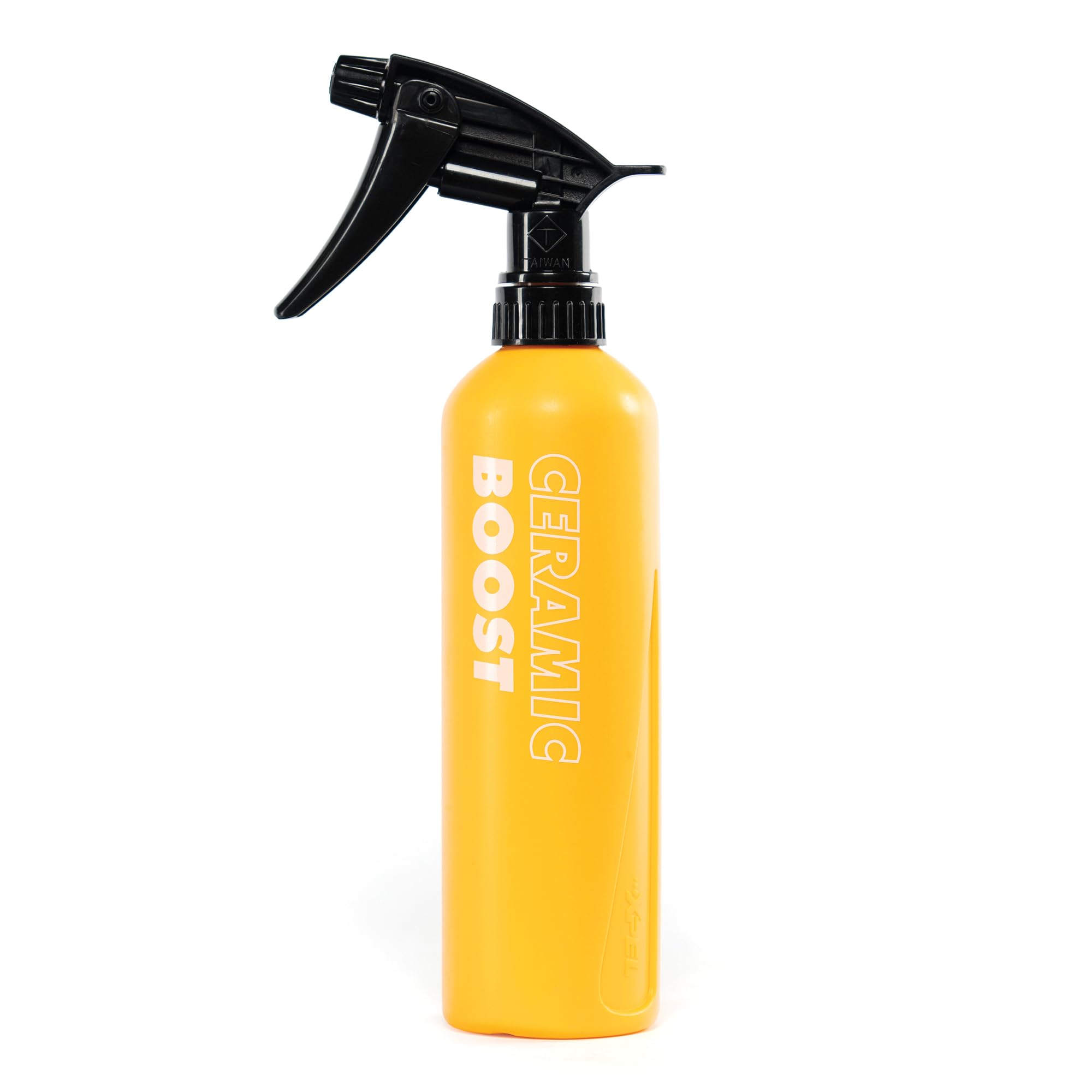
If you already have XPEL paint protection film installed, this ceramic boost spray is the OEM-recommended maintenance product, and there is genuine chemistry synergy at play. XPEL designed the SiO2 carrier solution to bond with the proprietary top coat used on their Fusion Plus film and standard clear bra. This means zero risk of delamination, yellowing, or incompatibility that sometimes occurs with third-party toppers.
The application is as straightforward as any spray detailer: mist onto the surface, spread with a microfiber, and buff dry. The hydrophobic effect is immediate — water beads up tightly and rolls off with minimal angle. The boost refreshes the original self-healing properties of the PPF, keeping the film pliable and free of embedded grime that could otherwise cause micro-tears over time.
The trade-off is that this is not a multi-surface universal coating. It works brilliantly on XPEL film and painted surfaces but isn’t formulated for vinyl wraps, matte finishes, or non-XPEL brand PPF. If you have a different brand of clear bra, the chemistry bonding may be weaker, reducing the longevity of the protection. It’s also a temporary boost, not a permanent layer — expect 4-6 weeks of enhanced beading on a daily driver.
What works
- Chemically matched to XPEL film for guaranteed compatibility
- Quick spray-and-wipe application with instant hydrophobic results
- Reinforces the self-healing layer of the PPF
What doesn’t
- Best results limited to XPEL brand PPF
- Beading lasts only 4-6 weeks before reapplication is needed
5. Gyeon Ceramic Detailer siO2 Spray Gloss Enhancer

Gyeon’s standard Ceramic Detailer is designed as an accessible entry point for SiO2 protection on both coated and uncoated surfaces. The formula creates a slick, water-repelling finish that is immediately noticeable the first time you rinse the panel — water beads cling and roll off rather than sitting flat. It works well on paint, glass, trim, and wheels, making it a flexible product for the whole vehicle, not just the PPF-covered sections.
The real appeal here is the cost per ounce. At this size, you can coat an entire sedan multiple times over, using it as a drying aid after every third wash to maintain gloss. It refreshes existing ceramic layers without degrading them, which is important if you have a multi-layer coating setup on top of your PPF. Beginners will appreciate the forgiving spray-and-wipe method that doesn’t leave rainbow streaks or high spots.
However, the primary limitation is longevity. This is a detailer spray — it does not form a bonded nano-ceramic layer. The SiO2 concentration is lower than dedicated sealants, so expect the beading intensity to drop after 2-3 washes. On a PPF-only surface, you will need to reapply every few weeks to maintain the same defense level. It is best thought of as a maintenance spray for more durable base coatings rather than a standalone solution.
What works
- Very friendly to beginners — no flash times or hard cure needed
- Works on paint, glass, trim, and wheels with universal compatibility
- Low per-application cost for frequent use
What doesn’t
- Short hydrophobic lifespan — reapplied every 2-3 washes
- Low SiO2 concentration limits standalone protection on film
Hardware & Specs Guide
Contact Angle — The Hydrophobic Metric
Measured in degrees, this spec tells you how effectively the coating repels water. A contact angle of 90 degrees means moderate beading; 110 degrees means water droplets bead tightly and roll off at a slight tilt. For PPF, a higher contact angle reduces the risk of water spots etching into the film over time. The gold standard for a spray coating is around 105-110 degrees, while liquid nano-coats target 115 degrees or more.
SiO2 Concentration & Carrier Solvent
The percentage of silicon dioxide in the formula directly impacts durability. Quick detailers typically contain 1-5% SiO2 and last weeks. Concentrated sealants contain 10-20% SiO2 and last months. Pure nano-coating liquids sit at 40-80% SiO2 solids, forming a hard shell that lasts over a year. The carrier solvent (isopropyl alcohol or water-based) determines whether the formula is safe on TPU and vinyl — water-based carriers are safest for matte and satin finishes.
FAQ
Can I use any ceramic coating on matte PPF?
Do I need to prep the PPF before applying a ceramic coating?
Final Thoughts: The Verdict
For most buyers, the best ceramic coating for ppf winner is the CARPRO CQUARTZ Skin because it is the only product chemically engineered for bonding to TPU, PVC, and PU films with a two-year lifespan. If you want a fast gloss refresh between washes, grab the GYEON Cure. And for XPEL film owners looking for factory-synced protection, nothing beats the XPEL Ceramic Boost.

Certification: BSc in Mechanical Engineering
Education: Mechanical engineer
Lives In: 539 W Commerce St, Dallas, TX 75208, USA
Md Amir is an auto mechanic student and writer with over half a decade of experience in the automotive field. He has worked with top automotive brands such as Lexus, Quantum, and also owns two automotive blogs autocarneed.com and taxiwiz.com.