That intermittent rough idle, the hard start that leaves you stranded, or the check engine light with a P0340 code — these are the unmistakable symptoms of a failing camshaft sensor. When the engine control unit loses sight of cam timing, everything from fuel injection to spark sequencing falls apart, turning a smooth drive into a frustrating guessing game. Finding the right replacement means understanding the specific signal type, mounting geometry, and voltage requirements your modern engine demands.
I’m Amir — the founder and writer behind Four Wheel Ask. I’ve spent years analyzing automotive sensor specifications, cross-referencing OEM part numbers against aftermarket alternatives, and studying owner-reported reliability data across thousands of replacement scenarios to identify the sensors that actually restore factory engine behavior.
This guide walks through seven carefully evaluated models, each chosen for its specific material construction, signal accuracy, and vehicle compatibility, to help you locate the precise best engine camshaft sensor for your make and model without wasting time on mismatched parts.
How To Choose The Right Engine Camshaft Sensor
A camshaft position sensor tells your engine computer exactly where the cam is in its rotation relative to the crankshaft. Without that signal, the ECU goes into blind mode, causing misfires, stalling, and poor fuel economy. The right choice comes down to signal technology, connector type, and material durability against engine heat.
Hall-Effect vs Variable-Reluctance Signal Types
Most modern engines use Hall-effect sensors because they produce a clean digital square-wave signal at idle and high RPM, even when the cam is barely rotating. Older systems may rely on variable-reluctance (VR) sensors that generate an analog AC voltage but can be weak at low cranking speeds. Check your service manual for the output type — installing the wrong one can confuse the ECU and trigger code P0343 instead of fixing the problem.
Connector Shape and Pin Configuration
The sensor’s three-pin blade connector must match your engine harness exactly. Some manufacturers use a D-shaped plastic keyway to prevent improper insertion, while others rely on a specific locking tab shape. A sensor that looks close but doesn’t snap in securely can vibrate loose or develop intermittent signal dropout that mimics a failing sensor.
Material Quality and Heat Resistance
Cam sensors sit near the valve cover where under-hood temperatures can exceed 250 degrees Fahrenheit. Sensors with ceramic or high-temperature plastic housings and aluminum cores resist thermal expansion better than cheap resin-filled units. The internal magnet’s Curie temperature rating matters too — if it crosses that threshold, the sensor output degrades permanently.
Quick Comparison
On smaller screens, swipe sideways to see the full table.
| Model | Category | Best For | Key Spec | Amazon |
|---|---|---|---|---|
| BOSCH 0232103114 | OEM Replacement | Mercedes-Benz V6/V8 engines | Digital Hall-effect, TIM mount | Amazon |
| ACDelco 213-363 | GM OE | GM full-size trucks & SUVs | Push-pull output, metal housing | Amazon |
| Hitachi CPS0008 | OEM Tier 1 | Import & domestic late-model | Aluminum core, high accuracy | Amazon |
| Ford F7TZ-12K073-B | Ford OEM | Ford Super Duty & Excursion | Digital output, ±1 degree accuracy | Amazon |
| Hyundai 39350-2B030 | Hyundai OEM | Hyundai/Kia 4-cylinder | Ceramic/metal construction | Amazon |
| Motorcraft DU70 | Ford/Mazda OE | Ford & Mazda crankshaft position | Digital output, fatigue-resistant | Amazon |
| A-Premium (Set of 3) | Budget Combo | Nissan/Infiniti V6, full set | 2 cam + 1 crank sensor kit | Amazon |
In‑Depth Reviews
1. BOSCH 0232103114 OE Camshaft Position Sensor

Bosch supplies Original Equipment sensors to Mercedes-Benz, and this 0232103114 unit is the same part that left the factory — without the premium brand packaging markup. The digital Hall-effect design delivers a rock-solid signal from idle all the way to redline, which directly fixes the rough-running and no-start conditions common on M272 and M273 V6/V8 engines.
The twist-insensitive mounting (TIM) system simplifies alignment during installation, reducing the chance of an angled install that could cause intermittent signal dropout. Its wide operating temperature range means signal fidelity stays consistent even after prolonged highway driving or stop-and-go heat soak.
For any Mercedes-Benz owner chasing a P0340 code restoration that feels factory, this sensor’s actual OE origin, robust digital output, and precise fit to dozens of C, E, S, CLS, ML, and GL models make it the most reliable single choice in the list. A true drop-in fix that requires zero adaptation.
What works
- Actual OE Mercedes part, direct factory fit
- Digital Hall-effect signal eliminates idle/flutter issues
- Twist-insensitive mount simplifies alignment
What doesn’t
- Limited to Mercedes-Benz applications
- Plastic housing may feel less durable than metal units
2. ACDelco 213-363 GM Original Equipment Camshaft Position Sensor

ACDelco’s 213-363 carries GM’s own engineering approval, meaning it matches the exact push-pull signal timing required by the ECU in LS-based trucks and SUVs. The metal housing provides better heat dissipation than standard plastic enclosures, reducing internal component drift as engine bay temperatures climb on long towing days.
The manufacturing tolerances here are tight — end-play on the mounting flange is practically zero, which prevents vibration-induced signal gaps. For Silverado, Suburban, Tahoe, and Yukon owners who want to clear that persistent P0341 code and restore seamless idle quality, this sensor behaves identically to the factory unit that came with the vehicle.
If you’re rebuilding a GM V8 or LS swap and refuse to accept generic aftermarket sensor lag, the ACDelco 213-363 provides the exact output characteristics the PCM expects. It is the most accurate choice for restoring factory cold-start behavior and preventing false misfire codes.
What works
- GM OE specification for exact signal match
- Metal housing better withstands engine heat
- Extremely tight flange tolerances
What doesn’t
- Premium tier pricing compared to aftermarket options
- Limited vehicle fitment — GM platforms only
3. Hitachi CPS0008 Engine Camshaft Position Sensor

Hitachi sits as a Tier 1 Original Equipment supplier for multiple global automakers, meaning the CPS0008 carries the same internal engineering as sensors shipped on factory assembly lines. The aluminum core material provides superior thermal conductivity versus resin-filled units, which keeps the internal magnet and Hall-effect IC operating within their stable range even during intense engine heat cycles.
Every unit is 100 percent new — never remanufactured — so you avoid the unpredictable failure rates sometimes associated with salvaged sensor cores. The measurement accuracy rating is marked high specifically because Hitachi calibrates the air-gap sensitivity to match OEM expectations, enabling precise cam timing detection at low cranking speeds.
For a broad range of import and domestic vehicles that originally used Hitachi-supplied sensors, this CPS0008 delivers factory-equivalent performance without the dealer price premium. It is the ideal choice for the buyer who wants genuine OEM pedigree without locking into a specific brand’s parts counter.
What works
- Tier 1 OEM supplier with factory-level engineering
- Aluminum core aids heat dissipation
- 100% new construction, no remanufactured risk
What doesn’t
- Output type not clearly specified as NPN or PNP
- Documentation is minimal for non-standard applications
4. Ford F7TZ-12K073-B Camshaft Sensor

This genuine Ford sensor was designed for the 7.3L Power Stroke diesel and similar applications found in Super Duty trucks and Excursions — environments where vibration, heat, and oil contamination are extreme. The metal body construction resists cracking and deformation better than plastic-housed aftermarket sensors, ensuring the internal sensing gap remains stable across tens of thousands of miles.
The specified ±1-degree measurement accuracy makes it a standout for high-mileage trucks where the original sensor has drifted out of tolerance, causing hard-hot-start symptoms and intermittent power loss. Its digital output communicates cleanly with Ford’s PCM architecture without requiring signal conditioning that some universal sensors need.
For anyone maintaining a Ford V10, V8, or diesel that originally left the factory with this part number, the F7TZ-12K073-B is the only sensor that restores the factory engine management behavior without guesswork. A simple, heavy-duty OEM replacement that eliminates diagnostic rabbit holes.
What works
- Genuine Ford OEM part for exact diagnostics
- Metal housing survives harsh engine bay
- ±1-degree accuracy for timing-critical engines
What doesn’t
- Fitment primarily limited to Ford/Excursion
- Universal fit type may confuse some buyers
5. Hyundai 39350-2B030 Camshaft Position Sensor
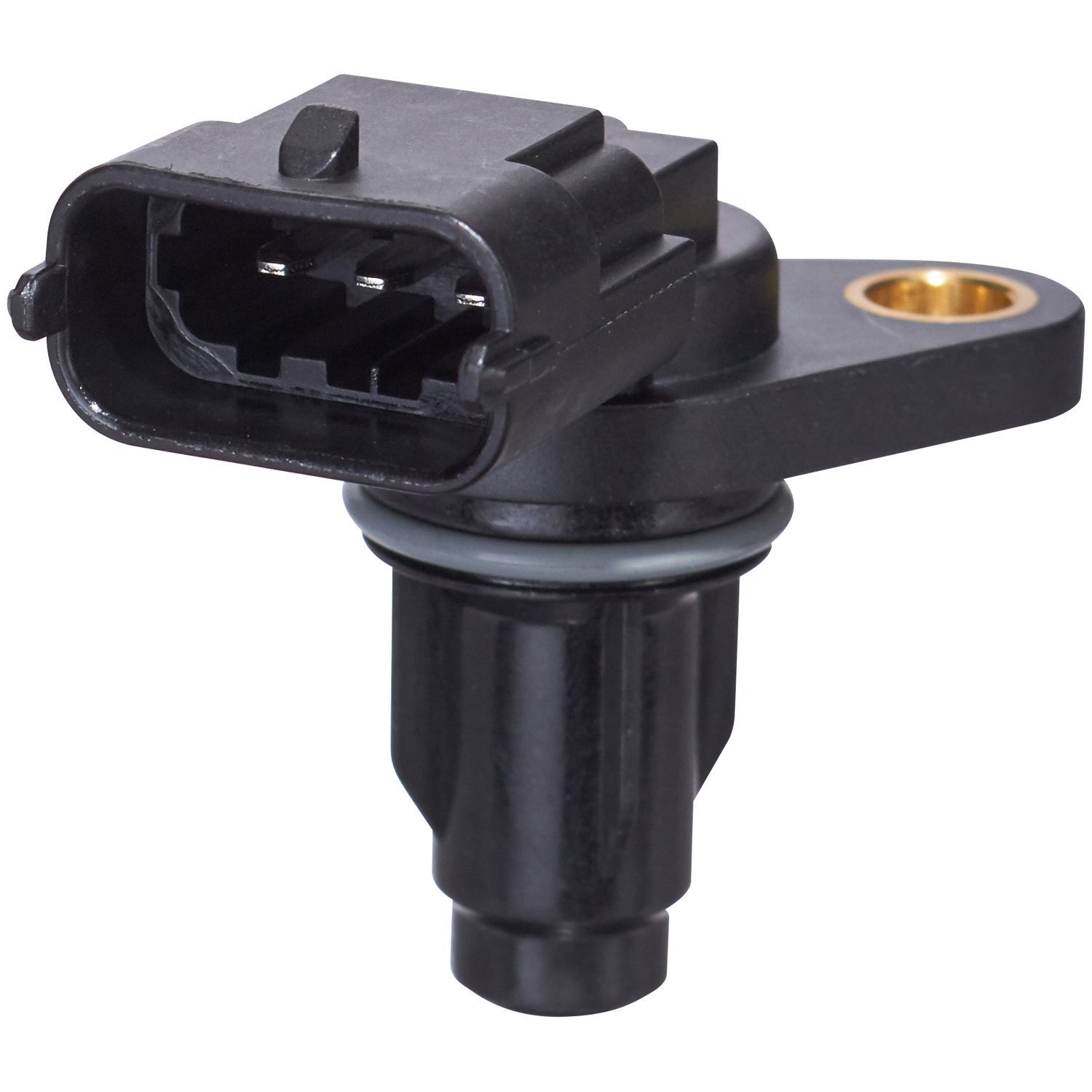
Hyundai’s own 39350-2B030 is the exact part that ships in the engine bay of Theta II and similar 4-cylinder applications. The construction uses a ceramic and metal blend that resists the thermal cycling stress common in front-wheel-drive layouts where the sensor sits close to the exhaust manifold. The push-pull output matches the ECU’s timing window exactly, eliminating the false timing codes that plague aftermarket units.
Because it is a genuine Hyundai Motor Group part, the connector keying and bolt hole alignment are perfect for models like the Elantra, Sonata, and Kia Forte. No wire splicing, no adapter harness, no filing down mounting tabs — it drops in and clears the code on the first start.
For owners of Hyundai and Kia vehicles who want a sensor that won’t fail within 6 months, this OEM piece removes the reliability risk of third-party manufacturing. It is the straightforward, no-surprises solution for a P0340-specific repair on these platforms.
What works
- Genuine Hyundai OEM, perfect fit and function
- Ceramic/metal hybrid for thermal stability
- Factory connector alignment, no modifications
What doesn’t
- Only fits Hyundai/Kia 4-cylinder applications
- Plastic housing section can be brittle if overtorqued
6. Motorcraft DU70 Cam Position Sensor

Motorcraft is Ford’s official service parts brand, and the DU70 is engineered to withstand the fatigue failure that affects sensors on high-mileage engines. Although it’s labeled for crankshaft position sensing in many applications, its digital output and engine-mount design make it a durable replacement for compatible Ford and Mazda models that share sensor assignments.
The high-quality material selection focuses on long-term dielectric strength — the internal insulation resists breakdown from engine oil vapors over time, which is a common failure mode for cheaper sensors that short internally after a year of service. The compact 1.67 x 1.65 x 2.88-inch dimensions fit tight engine bay spots where larger units won’t seat properly.
If you need a sensor that prioritizes fatigue resistance and extended service life over immediate cost savings, the Motorcraft DU70 provides genuine Ford-approved materials and testing. It’s the choice for those who plan to keep their vehicle for the long haul and want to minimize future electrical gremlins.
What works
- Ford Motorcraft quality for long-term reliability
- Fatigue-resistant material handles vibration
- Compact dimensions fit tight engine bays
What doesn’t
- Listed as crankshaft sensor — double-check application
- Very lightweight (0.01 oz) may feel insubstantial
7. A-Premium Camshaft Crankshaft Sensor Set (3-Piece)

The A-Premium kit bundles two camshaft sensors (bank 1 and bank 2) plus one crankshaft sensor, covering the full Nissan 3.5L V6 lineup including Altima, Maxima, 350Z, Murano, and Infiniti models. This is a practical approach for vehicles approaching 100,000 miles where all three sensors age together — replacing them as a set prevents a cascade of intermittent code throwing weeks after swapping just one.
Each sensor uses a three-pin blade terminal with digital output designed to match the original Nissan reference numbers like 237316J900, 237317Y000, and 237318J100. The flange-mount design replicates the factory geometry, allowing direct bolt-in installation without adapter plates. The one-year unlimited-mileage guarantee provides a safety net for the budget-conscious buyer.
While the build quality doesn’t match the heavy-duty metal housing of premium options like ACDelco, this kit offers the most thorough solution for the Nissan V6 owner who wants to eliminate sensor-related drivability issues in one service session. It’s the smartest entry-level investment for preventive maintenance on these popular engines.
What works
- Includes both cam sensors and crank sensor in one kit
- Covers widely used Nissan/Infiniti 3.5L V6 family
- 1-year warranty for cost-conscious buyers
What doesn’t
- Plastic housing less durable than premium metal units
- Only fits VQ35DE and related engine families
Hardware & Specs Guide
Digital Output and ECU Integration
Camshaft sensors produce either a digital square-wave signal (Hall-effect) or an analog sine-wave voltage (variable-reluctance). The ECU uses this signal to synchronize fuel injection and spark timing with the crankshaft position. A digital sensor is preferred for late-model vehicles because it maintains a clean signal across all RPM ranges, especially during low-cranking starts. Installing a sensor with the wrong output type can cause the ECU to enter limp mode or trigger cam-crank correlation codes like P0016.
Mounting Flange and Air Gap
The distance between the sensor tip and the camshaft trigger wheel — called the air gap — directly affects signal strength. Most sensors use a flange-mount design with a specific bolt pattern to maintain that gap. Bent or oversized flanges from poorly manufactured sensors change that distance, leading to weak signals or complete loss of reading at high RPM. Always verify that the replacement sensor’s flange shape matches the original part’s profile, especially on engines with limited clearance between the sensor and timing cover.
Internal Magnet Curie Temperature
The permanent magnet inside a cam sensor has a Curie temperature — the point where it loses its magnetic properties permanently. Sensors with low-temperature-rated magnets fail when engine heat pushes past the threshold, often leaving the ECU with no cam position reading at all. High-quality sensors specify a Curie temperature well above 200 degrees Celsius, ensuring the magnet retains its field through extreme heat soak after hard driving or towing.
FAQ
How do I know if my camshaft sensor is failing instead of the crankshaft sensor?
Can I replace only one camshaft sensor on a V6 engine with two sensors?
What does the measurement accuracy spec mean on a camshaft sensor?
Final Thoughts: The Verdict
For most buyers, the best engine camshaft sensor winner is the BOSCH 0232103114 because it provides genuine Mercedes-Benz OE digital signal output and straightforward drop-in installation for a wide range of popular V6 and V8 models without adaptation. If you need heavy-duty metal construction for a GM truck towing in extreme heat, grab the ACDelco 213-363. And for a complete preventive-maintenance approach on a Nissan V6, nothing beats the A-Premium 3-sensor kit.

Certification: BSc in Mechanical Engineering
Education: Mechanical engineer
Lives In: 539 W Commerce St, Dallas, TX 75208, USA
Md Amir is an auto mechanic student and writer with over half a decade of experience in the automotive field. He has worked with top automotive brands such as Lexus, Quantum, and also owns two automotive blogs autocarneed.com and taxiwiz.com.