A clogged, rusted, or incorrectly sized exhaust pipe chokes your engine’s breathing, killing horsepower and creating a drone that makes every drive miserable. Replacing that section with properly dimensioned 1-7/8 inch tubing—specifically the 1.875-inch outer diameter variety—restores flow, drops backpressure, and gives your build a clean, professional look. Whether you are patching a rotted section on a daily driver or fabricating a complete custom system for a weekend toy, the diameter, material grade, and wall thickness of your pipe determine whether the repair lasts one season or a decade.
I’m Amir — the founder and writer behind Four Wheel Ask. I’ve spent years analyzing automotive exhaust components, cross-referencing manufacturer claims against real-world metallurgy and fitment data to help builders pick the right steel for the job.
This guide breaks down the differences in stainless grades, mandrel bending quality, and wall gauges so you can confidently select a 1-7/8 exhaust pipe that matches your vehicle’s demands and your fabrication skill level.
How To Choose The Best 1-7/8 Exhaust Pipe
Selecting the right exhaust tubing starts with understanding three fixed constraints: the inner diameter (ID) your engine needs, the outer diameter (OD) your existing hangers and clamps expect, and the material grade that matches your climate. A 1-7/8 inch OD pipe is a common size for mid-range naturally aspirated and mild turbo builds, but the actual ID can shrink if the pipe is press-bent or made from thick-wall stock.
Material Grade: T304 vs T409 vs Mild Steel
T304 stainless steel is the gold standard for exhaust systems that live in salt-belt winters or near coastal air. It is non-magnetic, resists pitting, and handles sustained high temperatures without scaling. T409 stainless is magnetic, cheaper, and still corrosion-resistant but will show surface rust over time. Mild steel is the budget option—it is easy to weld and bend but will rust from the inside out within a few years unless you coat it.
Mandrel Bending vs Press Bending
Mandrel bending uses an internal support to keep the pipe’s cross-section round through the turn, preserving full ID for maximum flow. Press bending crushes the outer wall and collapses the inner radius, creating a restriction that disrupts exhaust scavenging. If your build includes any 45- or 90-degree bends, mandrel-worked tubing is worth the premium.
Wall Gauge: 16-Gauge vs 18-Gauge
16-gauge walls measure roughly 0.065 inches thick—they are heavier, harder to bend by hand, and resist denting from road debris. 18-gauge walls (about 0.049 inches) are lighter and easier to clamp but can crack at weld joints if subjected to extreme vibration. For a street-driven car that stays on pavement, 18-gauge T304 is the sweet spot; for a lifted truck or off-road rig, step up to 16-gauge.
Quick Comparison
On smaller screens, swipe sideways to see the full table.
| Model | Category | Best For | Key Spec | Amazon |
|---|---|---|---|---|
| Vibrant 2603 | Premium | High-flow mandrel bends | 16-gauge T304, 180° + 45° | Amazon |
| ZJXDZY Straight 18″ | Mid-Range | Universal straight section | T304, 1.875″ ID, flared end | Amazon |
| ZJXDZY Straight 17.3″ | Mid-Range | Custom straight runs | T304, 1.875″ ID, polished | Amazon |
| PATIKIL 45° Elbow | Budget | Mandrel 45° transitions | 304 SS, 48mm OD, 1.5mm wall | Amazon |
| FGJQEFG Flange Kit | Budget | Quick flange repair | T304, 1.75″ OD, slotted bolts | Amazon |
| DNA Motoring ZTL-20RAW-8P | Mid-Range | DIY mild steel kit | 18-gauge mild steel, 2.0″ OD | Amazon |
| DNA Motoring ZTL-25SS-8P | Premium | Full SS DIY kit | 18-gauge T304, 2.5″ OD | Amazon |
In‑Depth Reviews
1. Vibrant Performance 2603

The Vibrant 2603 is the clear standout for anyone fabricating a section of exhaust that has to navigate tight chassis constraints. This piece combines a 180-degree U-bend and a 45-degree bend in one continuous 16-gauge T304 stainless tube, which means you can chop out exactly the radius you need without pie-cutting multiple straight sections together. The mandrel process preserves the full 1.75-inch inner diameter through the entire curve, maintaining consistent cross-section that straight-pipe sections with crushed bends simply cannot match.
Vibrant uses 16-gauge material, which is noticeably heavier than the 18-gauge found on most universal straight pipes. That extra wall thickness adds a small weight penalty, but it also resists denting from gravel strikes and provides a more solid base for TIG welding. The T304 composition is fully non-magnetic and stands up to acidic exhaust condensate far better than 409-grade stainless—ideal for vehicles that see short trips where moisture never fully burns off.
The 30-day warranty is standard for raw tubing, but Vibrant’s reputation in the performance aftermarket means you are paying for repeatable bend geometry and consistent metallurgy. If your build requires a tight-radius U-section that flows as well as a straight pipe, this is the one.
What works
- 16-gauge T304 offers superior dent resistance
- Mandrel-bent ID stays full through 180° and 45°
- Heavier wall provides stable TIG welding platform
What doesn’t
- Premium price for a single multi-bend section
- 1.75-inch OD is slightly smaller than true 1-7/8
2. ZJXDZY 18″ Straight Tubing
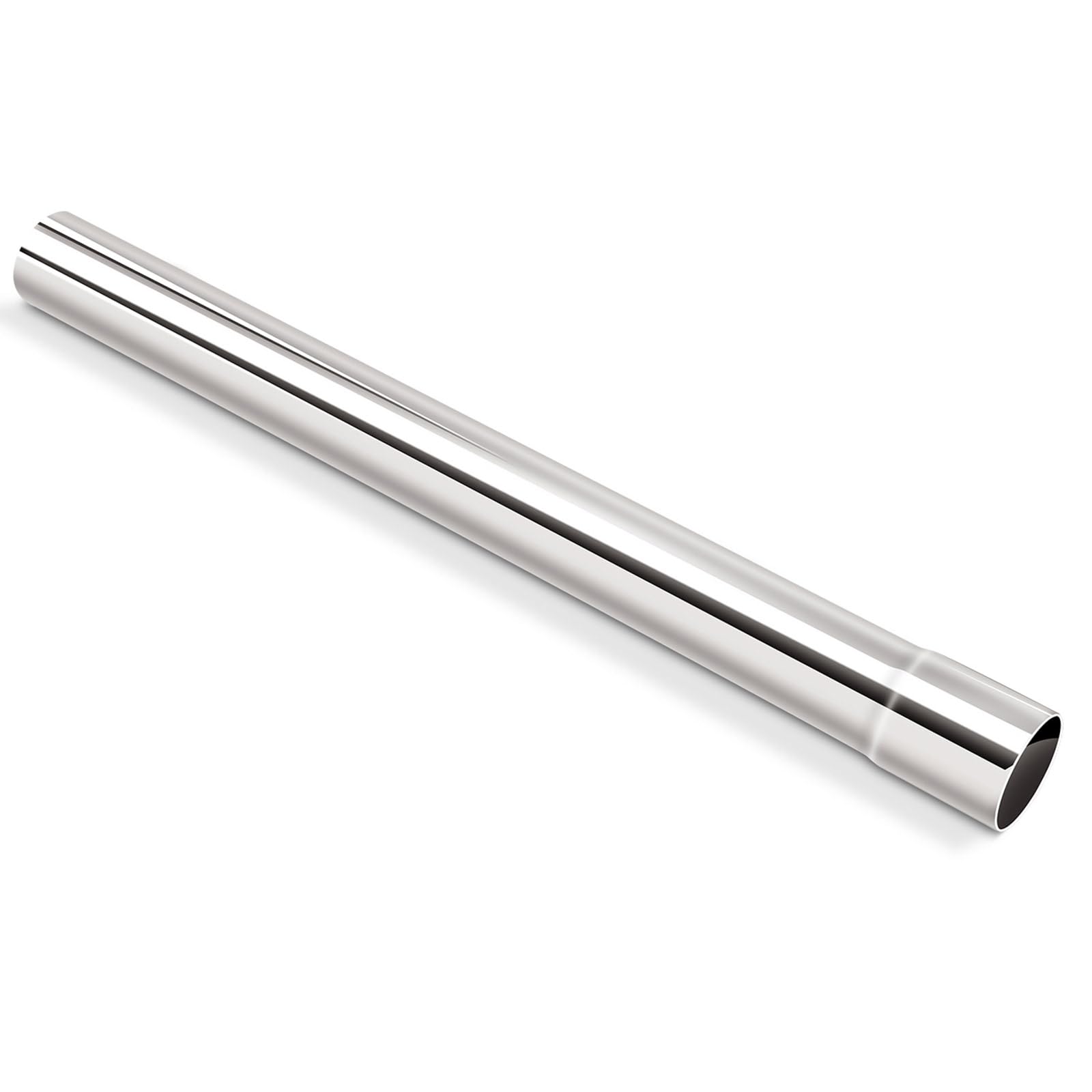
This 18-inch straight section from ZJXDZY is exactly what you need for a simple straight-pipe replacement or a mid-pipe extension on a custom exhaust. The tubing is built from T304 stainless steel with a polished finish, giving it a clean appearance and reliable corrosion resistance that aluminized or mild steel cannot touch. The flared end is a thoughtful touch—it allows the pipe to slip over an adjacent section and form a tighter seal without needing an external coupler.
The inner diameter is exactly 1.875 inches, which means it slides onto standard 1-3/4 inch OD pipe with a slip-fit tolerance that leaves room for welding or clamping. The 18-inch length is versatile enough to bridge a cutout section in most car and light-truck exhaust systems. ZJXDZY lists broad compatibility, including Honda Accord, Ram 3500 with the 5.9 Cummins, and Chevy Silverado—so this is not a vehicle-specific part, but a universal section that you cut and weld to fit.
With a 30-day warranty and no included instructions, this is squarely aimed at DIYers who already understand slip-fit alignment and MIG welding parameters. The T304 material adds a bit of upfront cost over mild steel, but it eliminates the need for high-temp paint or ceramic coating in most exhaust environments.
What works
- True 1.875-inch ID for correct slip-fit over 1.75-inch pipe
- Flared end improves joint sealing
- T304 stainless resists corrosion without coating
What doesn’t
- Polished finish may scratch during installation
- No instruction booklet included
3. ZJXDZY 17.3″ Straight Tubing
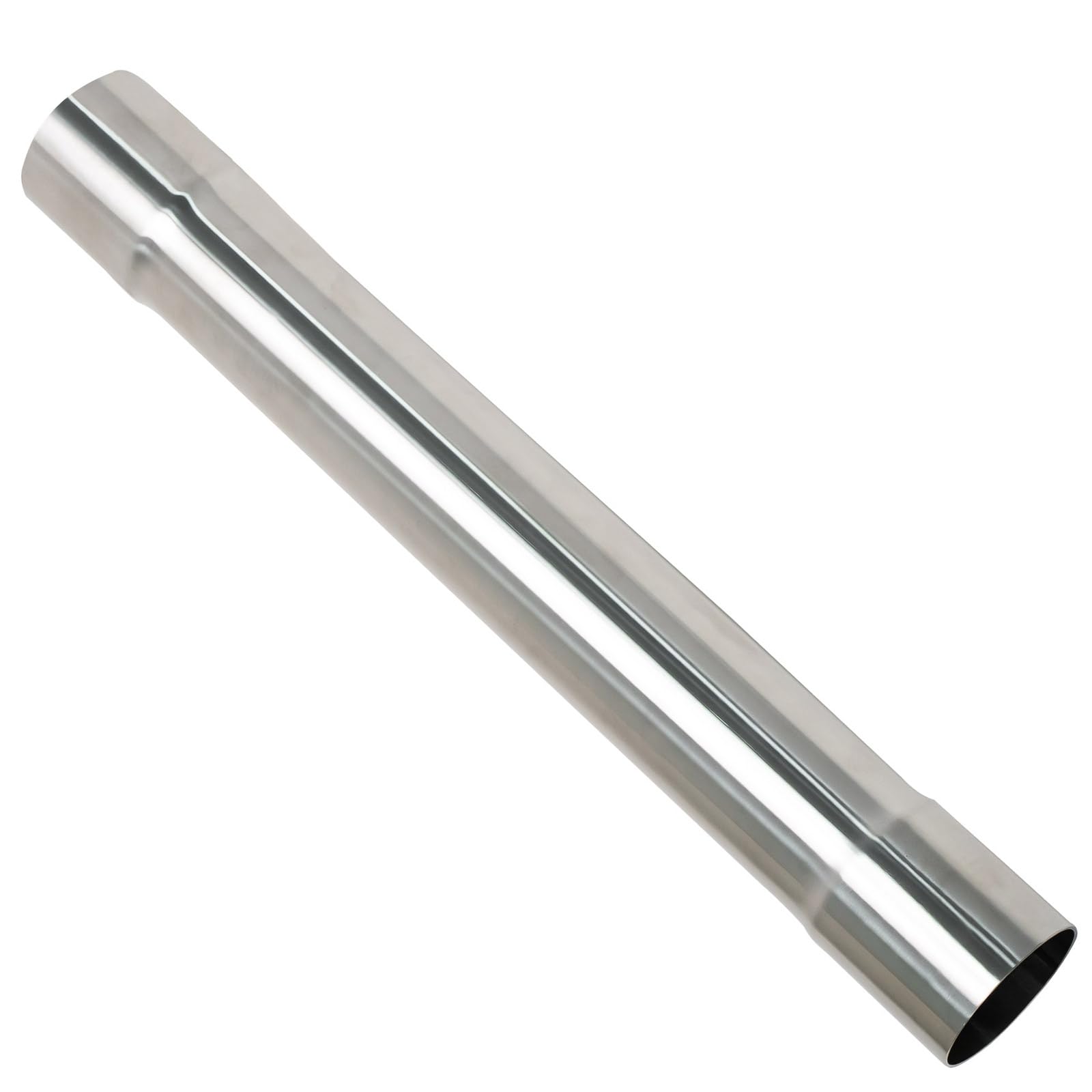
This 17.3-inch straight section from ZJXDZY is the most accessible entry point into T304 stainless exhaust tubing at the 1-7/8 inch diameter. The polished finish and flared end mirror the same build quality as the 18-inch sibling, but the slightly shorter length is better suited for precise gap-filling in tight engine bays or between existing exhaust components. The non-magnetic T304 construction ensures zero rust migration from the pipe into adjacent flanges or welds.
Precision-engineering on the flared end is consistent—the expansion is smooth and concentric, which means you can slide it onto a mating pipe without forcing the joint. That concentricity is critical for avoiding exhaust leaks at the slip-fit interface, where an off-center flare would create a gap on one side. The 30-day manufacturer warranty is standard for raw tubing, but the real value here is getting a ready-to-weld section that does not require trimming or reshaping before installation.
If you are replacing a rotted section on a daily driver and want a straight swap with no geometry changes, the 17.3-inch length is a practical choice. The polished surface does show handling marks, so wear gloves during mock-up to keep the finish clean before final welding.
What works
- Concentric flare creates tight slip-fit seal
- T304 stainless for long-term corrosion resistance
- Ready-to-weld length for common gap repairs
What doesn’t
- Polished finish requires careful handling
- 30-day warranty is short for a durable part
4. DNA Motoring ZTL-20RAW-8P
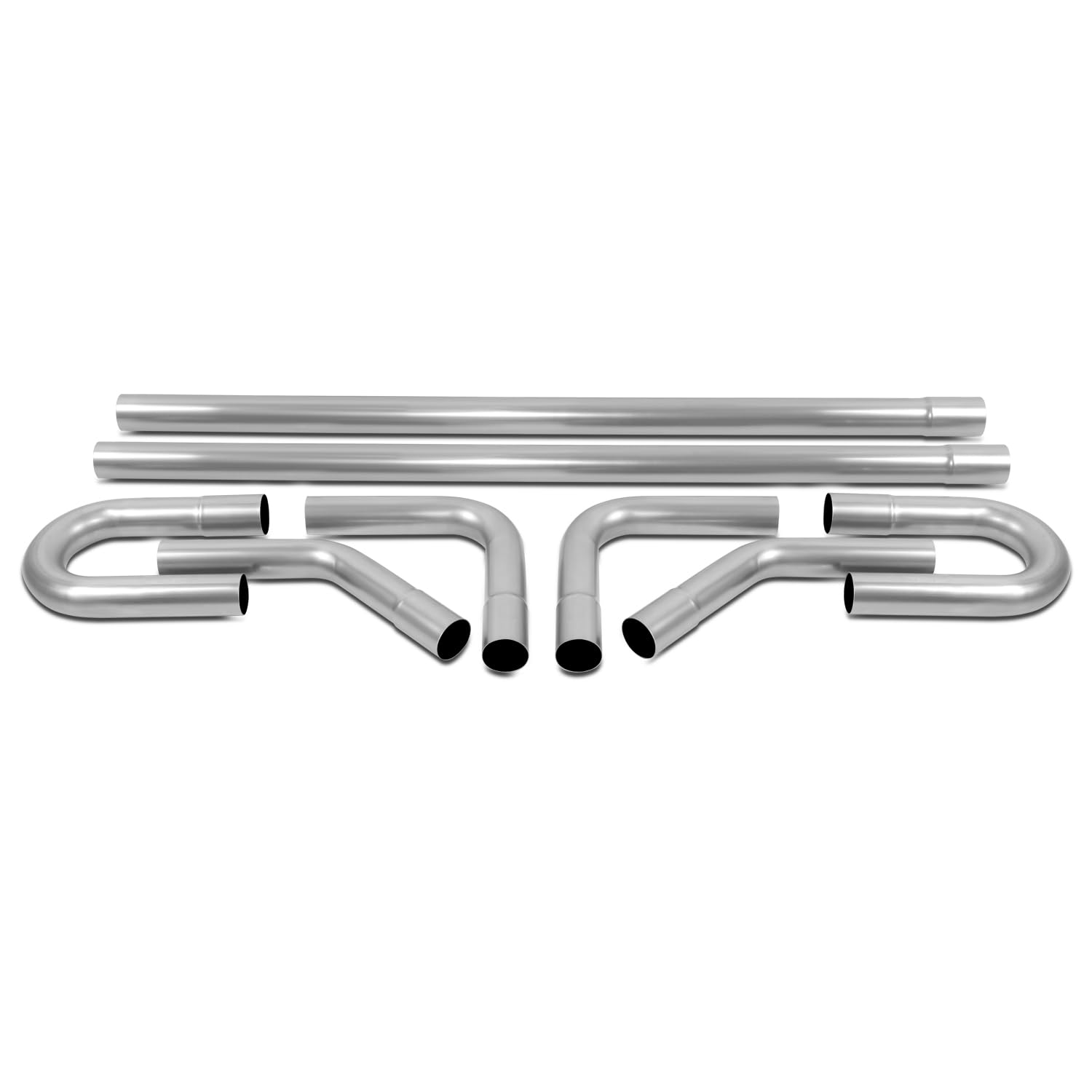
The DNA Motoring ZTL-20RAW-8P is a full 8-piece DIY kit that gives you straight pipes, 45-degree, 90-degree, and 180-degree U-bends, all in 18-gauge mild steel with a 2.0-inch OD. While this kit is technically 2.0-inch tubing rather than true 1-7/8 inch, the mandrel-bent construction and slip-fit ends make it an excellent foundation for custom exhaust fabrication if you are starting from scratch. The mild steel composition is easy to cut with a hacksaw or angle grinder and welds cleanly with standard MIG equipment.
The kit includes two 48-inch straight sections, which is enough tubing to run a complete axle-back system on a compact car or build a custom intake piping setup. Because these are mandrel-bent, every elbow retains its full 2.0-inch inner diameter—no crushed-radius restrictions. The 18-gauge wall thickness keeps the total weight manageable, though mild steel will need a protective coating or high-temp paint if the vehicle operates in a wet climate.
This is the smart choice if you are building your first exhaust system and want plenty of material to experiment with layouts without worrying about wasting expensive stainless stock. Just plan to weld each joint thoroughly, as slip-fit connections in mild steel can loosen over time if only clamped.
What works
- High-value kit with multiple bend types included
- Mandrel-bent elbows maintain full ID
- Mild steel is easy to cut and weld
What doesn’t
- Mild steel needs anti-rust coating in wet climates
- 2.0-inch OD is larger than 1-7/8 inch
5. DNA Motoring ZTL-25SS-8P

For builders who need a complete stainless steel fabrication kit, the DNA Motoring ZTL-25SS-8P delivers the same 8-piece mandrel-bent layout as the mild steel kit but upgrades the material to T304 stainless. The 2.5-inch OD is a significant jump from the 1-7/8 inch range, making this kit ideal for high-flow turbo-back systems or larger-displacement V8 builds where exhaust velocity needs a larger cross-section to prevent restriction at high RPM.
The kit includes two 48-inch straight sections, two 90-degree pipes, two 45-degree pipes, and two 180-degree U-bends—all mandrel-formed in 18-gauge T304. The stainless construction eliminates the need for aftermarket coating; it will outlast the chassis in most applications. The slip-fit joints are consistent in diameter, which simplifies tack-welding during layout before final seam welding.
At this price point, you are paying for both the material upgrade and the convenience of having every bend you need in one box. The 2.5-inch diameter means you cannot use standard 2.0-inch or 1-7/8 inch clamps or hangers—plan your build around the larger piping from the start. This kit is for the enthusiast who is already committed to a high-flow stainless system and wants to avoid pie-cutting multiple smaller tubes together.
What works
- Complete T304 stainless kit with all common bend angles
- Mandrel-bent tubing preserves full 2.5-inch ID
- No coating required; stainless is naturally corrosion-resistant
What doesn’t
- 2.5-inch OD is significantly larger than 1-7/8 inch
- Premium cost, appropriate for committed large-diameter builds only
6. PATIKIL 45° Bend Elbow
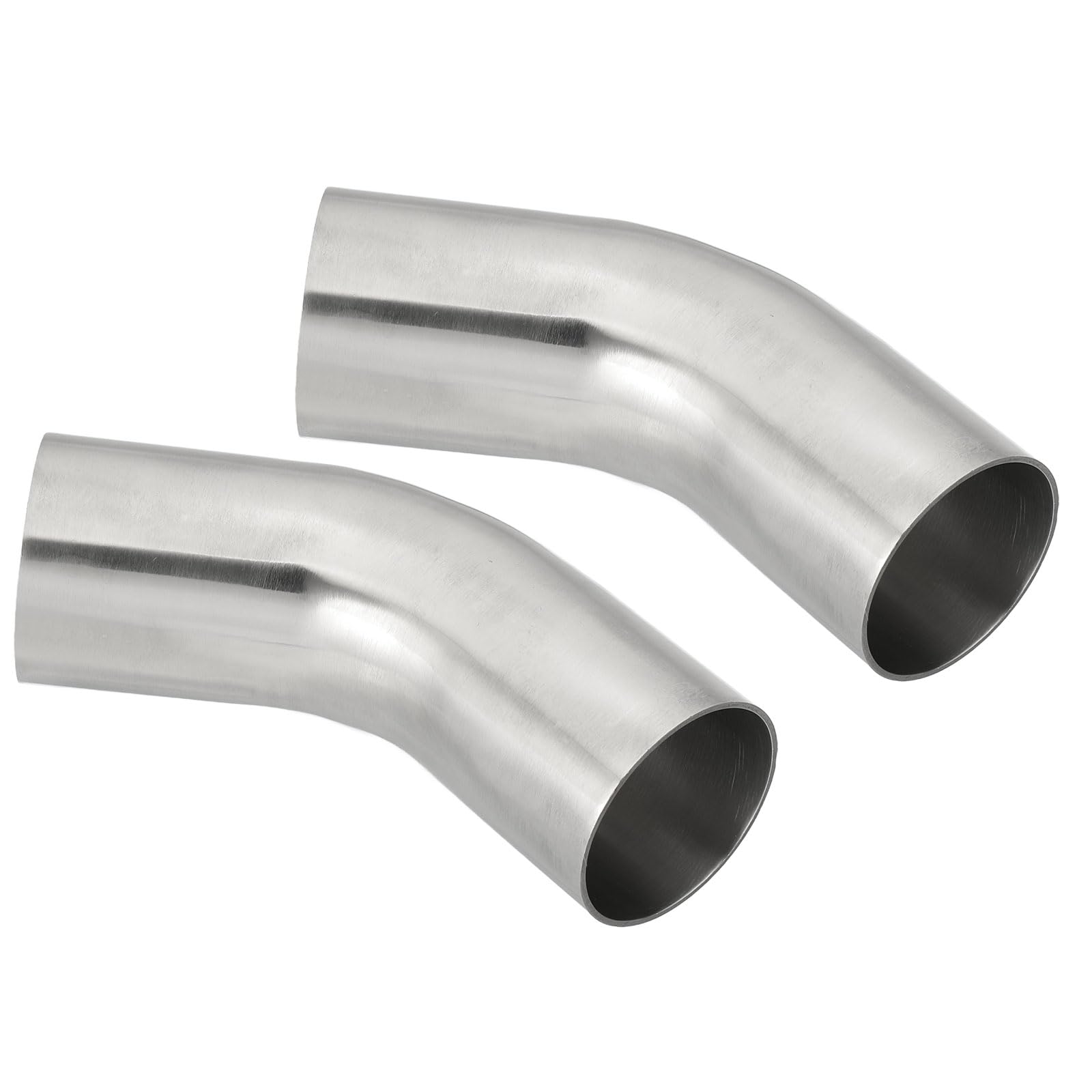
The PATIKIL 45-degree mandrel elbow is a budget-friendly solution for adding a smooth directional change to an exhaust or intercooler pipe without crushing the bore. Each elbow has a 48mm (1-7/8 inch) outer diameter and a 1.5mm wall thickness, made from 304 stainless steel with a mirror polish. The mandrel bend ensures the inner radius stays consistent, which is important for maintaining exhaust velocity through a turn.
These elbows are sold in a 2-pack, which is handy if you need two symmetrical bends for a dual-exit system or a crossover pipe. The 50mm straight leg on each side gives you enough material to clamp or weld without the heat-affected zone spreading into the bend. The polished surface looks good on visible exhaust tips or intake piping, though the mirror finish will dull with heat cycling over time.
At this price point, the material is 304 stainless rather than T304, which is a subtle difference—304 is still austenitic and non-magnetic but may have slightly different chromium-nickel ratios than premium T304 stock. For a short elbow that is not the primary structural member of the exhaust, the quality is more than adequate.
What works
- True mandrel bend preserves ID through the 45° turn
- Mirror polish looks great on visible sections
- 2-pack offers good value for dual-bend projects
What doesn’t
- 304 stainless is slightly lower spec than T304
- Short straight legs limit adjustment range
7. FGJQEFG Flange Repair Kit

This flange repair kit from FGJQEFG is a specialized solution for when your exhaust joint has a broken flange or stripped bolt holes but the pipe itself is still sound. The flange has a pipe OD of 1-3/4 inch and a slotted bolt pattern that adjusts from 2-7/8 to 3-5/8 inches center-to-center, making it adaptable to many stock flanges. The entire assembly is made from T304 stainless, including the springs and hardware, so it will not corrode and seize the way mild steel flange kits do.
The 1-3/4 inch OD is slightly smaller than the 1-7/8 inch pipes reviewed above, but the flange is designed to be welded onto the existing pipe end, not slipped over it. The slotted bolt holes are a practical feature—they accommodate mismatched bolt patterns that often result from exhaust system sag or previous repairs. The kit includes everything you need to cut out a rotted flange and weld in a new stainless unit without chasing new threads in the manifold.
This is not a pipe section; it is a repair component. If your exhaust is otherwise healthy but the flange is warped or the bolt ears have snapped off, this kit saves you from replacing the entire pipe. The 1.79-pound weight reflects the heavy-duty 5/16-inch flange thickness, which resists warping during welding.
What works
- Slotted bolt holes fit multiple flange patterns
- T304 stainless hardware resists corrosion and seizing
- Thick 5/16-inch flange resists weld distortion
What doesn’t
- 1.75-inch OD is smaller than 1-7/8 inch pipe
- Requires cutting and welding; not a bolt-on solution
Hardware & Specs Guide
T304 vs 304 Stainless
T304 is a specific ASTM grade with controlled chromium (18%) and nickel (8%) content, making it fully austenitic and non-magnetic. Standard 304 stainless can vary slightly in composition; the difference is small for most exhaust applications, but T304 is generally preferred for its consistent corrosion resistance and weldability. Both outperform 409 and 439 stainless in high-heat, high-moisture environments.
Mandrel Bending
A mandrel bend uses an internal flexible ball or plug that supports the pipe wall during bending, preventing the inner radius from collapsing. This keeps the cross-section round and the internal diameter consistent through the turn. Press bending, by contrast, pushes the pipe into a die without internal support, causing the inner wall to buckle and reducing flow area by 15-30%.
Wall Gauge Chart
16-gauge equals approximately 0.065 inches; 18-gauge equals approximately 0.049 inches; 20-gauge equals approximately 0.035 inches. For exhaust systems, 16-gauge is heavy-duty (off-road, commercial vehicles), 18-gauge is standard (passenger cars, light trucks), and 20-gauge is lightweight (racing, temporary repairs). Heavier gauge resists denting but adds weight and requires more heat during welding.
Slip-Fit vs Butt Weld
Slip-fit joints have one pipe end expanded slightly (flared) so the next pipe slides inside. This creates a self-aligning joint that is easier to tack-weld and supports clamping. Butt-weld joints require both pipe ends to be exactly the same diameter and perfectly aligned, which demands more prep work but produces a cleaner final weld with no step at the joint.
FAQ
What is the difference between 1-7/8 inch OD and 1-7/8 inch ID exhaust pipe?
Can I bend a 1-7/8 inch stainless pipe with a manual pipe bender?
Why does my 1-7/8 inch stainless pipe attract a magnet sometimes?
Final Thoughts: The Verdict
For most buyers, the 1-7/8 exhaust pipe winner is the ZJXDZY 17.3″ Straight Tubing because it offers true T304 stainless, a precisely flared end, and a ready-to-weld length at a price that beats premium competitors without cutting corners on corrosion resistance. If you need a complete bend kit for a custom fabrication project, grab the DNA Motoring ZTL-20RAW-8P for its versatile mild steel assortment. And for a single high-flow mandrel bend that handles tight chassis routing, nothing beats the Vibrant Performance 2603.

Certification: BSc in Mechanical Engineering
Education: Mechanical engineer
Lives In: 539 W Commerce St, Dallas, TX 75208, USA
Md Amir is an auto mechanic student and writer with over half a decade of experience in the automotive field. He has worked with top automotive brands such as Lexus, Quantum, and also owns two automotive blogs autocarneed.com and taxiwiz.com.