Leaving a standard plastic gas jug in a hot garage or truck bed is a slow gamble with vapor expansion. Professional mechanics and off-road enthusiasts know that a true safety can is built differently, with a brass flame arrestor and self-closing lid to eliminate the ignition sources that cause garage fires every year. Choosing the right container means understanding the difference between a utility jug and a certified safety vessel.
I’m Amir — the founder and writer behind Four Wheel Ask. I’ve analyzed hundreds of fuel container specifications and owner reports to separate genuine safety engineering from basic blow-molded plastic that only looks the part.
This guide breaks down the critical specs, materials, and compliance standards that define the best fuel safety cans so you can confidently store and transport gasoline or diesel without unnecessary risk.
How To Choose The Best Fuel Safety Cans
Not every container marked “safety can” meets the same fire code standards. Understanding a few key design elements helps you avoid a jug that leaks vapors or fails in a fire situation. The material, spout type, and compliance certifications are the three factors that matter most.
Material: Galvanized Steel vs. HDPE Plastic
Galvanized steel cans offer the highest level of fire resistance. The metal shell prevents static buildup, resists dents, and houses a non-sparking brass flame arrestor that dissipates heat if the exterior catches fire. High-density polyethylene (HDPE) is lighter and won’t rust, but it lacks the same thermal barrier — a plastic can exposed to flame will melt and release its contents. If you store fuel in a workshop or garage near potential heat sources, a steel can is the safer long-term investment.
Spout Design: Type I vs. Type II
Type I safety cans have a single opening with a fixed pouring spout — you tilt the entire can to pour. They are simpler and generally more affordable. Type II cans use a flexible hose with a separate vent, allowing you to pour without fully inverting the container. This gives you better control and reduces splashing, which is critical for refueling generators or small engines where precise flow matters. Type II is preferred by mechanics and anyone who refuels equipment frequently.
Compliance Certifications: OSHA, NFPA 30, UL, FM
A true safety can must meet OSHA standard 1910.106 and NFPA Code 30, which regulate flammable liquid storage. Look for UL and FM (Factory Mutual) approval marks on the can itself. These certifications verify that the flame arrestor stops vapor ignition and that the self-closing lid seals properly. Containers sold as “utility jugs” without these marks are not safety cans — they are just gas cans with a different label.
Quick Comparison
On smaller screens, swipe sideways to see the full table.
| Model | Category | Best For | Key Spec | Amazon |
|---|---|---|---|---|
| Eagle UI50FS | Premium Steel | Maximum fire safety | 5 gal, Galvanized Steel, UL/FM | Amazon |
| Eagle UI50FSY | Premium Steel | Diesel storage | 5 gal, Galvanized Steel, Yellow | Amazon |
| Surecan SUR5SFD2 | Type II Plastic | Diesel utility use | 5 gal, HDPE, 9″ hose | Amazon |
| Scepter 10506 Marine | Marine HDPE | Boat/RV under seat | 3 gal, 5-layer HDPE, Gauge | Amazon |
| Surecan SUR2SFG2 | Type II Plastic | Gasoline precision pour | 2 gal, HDPE, 9″ hose | Amazon |
| Scepter FSCD552 | Diesel HDPE | Diesel fast refills | 5 gal, 5-layer, 3 GPM flow | Amazon |
| VP Racing 3552 | Utility Plastic | Budget mixed fuel | 5.5 gal, HDPE, Wide mouth | Amazon |
In‑Depth Reviews
1. Eagle UI50FS Red Galvanized Steel Safety Can
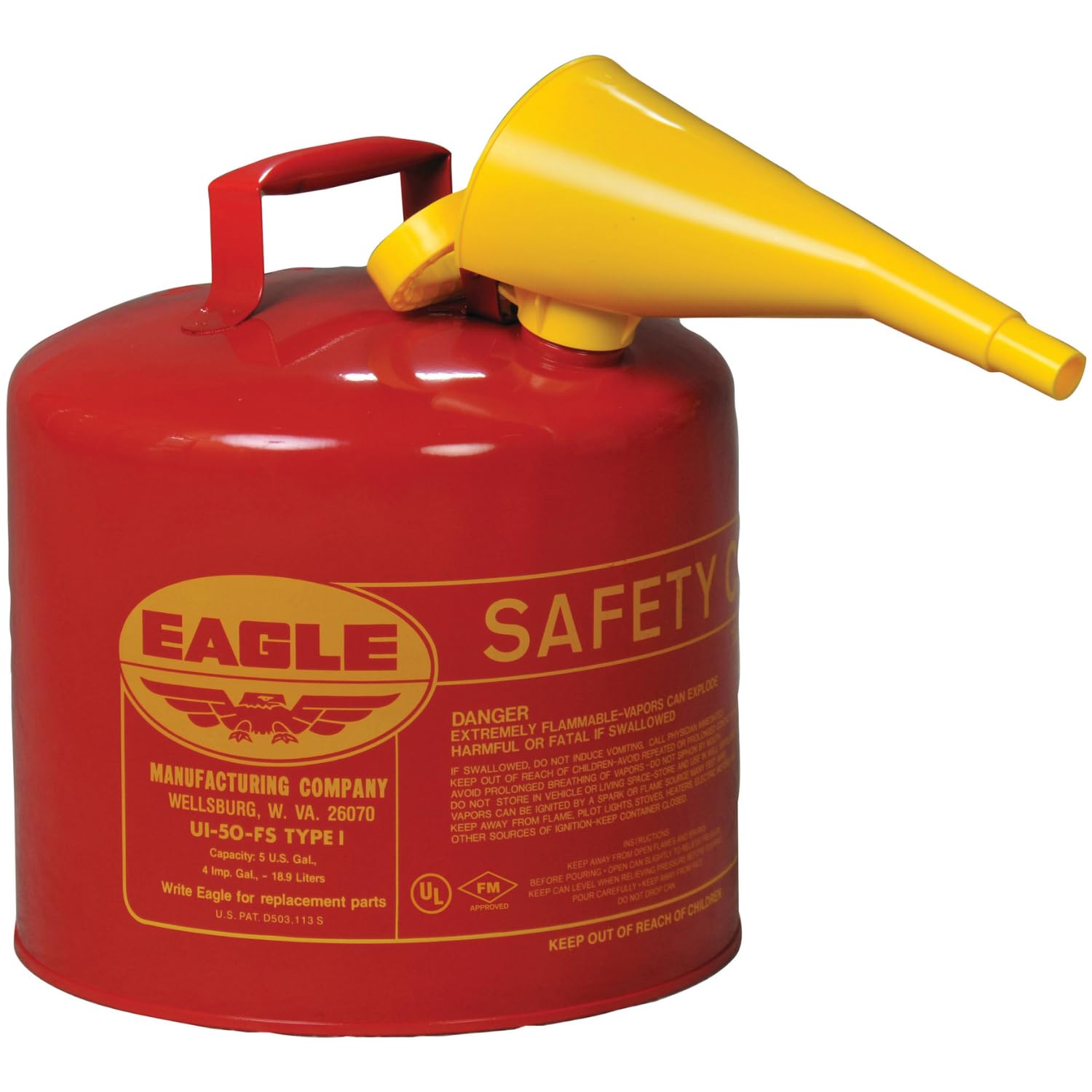
The Eagle UI50FS is the benchmark for residential and commercial flammable liquid storage. Its 24-gauge hot-dipped galvanized steel shell resists rust far better than painted steel, and the double-interlock no-weld bottom seam eliminates weak points that can leak over time. This can is tested and certified to meet OSHA 1910.106 and NFPA 30, making it legal for use in professional shops that require insurance-grade storage.
The self-closing gasketed lid automatically returns to the sealed position after each pour, and the integrated brass flame arrestor prevents flashback ignition — a feature absent from every standard plastic jug on this list. The included F-15 funnel helps direct fuel without splashing, and the fixed handle supports the full 5-gallon weight safely, even when carrying across uneven garage floors.
Steel won’t crack in freezing temperatures the way some HDPE containers can, and the baked-on powder coat finish handles scratches and chemical exposure without chipping. If you need one can that can sit in a workshop for years and still pass a fire marshal inspection, this is the unit to buy. The only real compromise is the weight — empty it’s over 5 pounds, so plan for that if you’re transporting it long distances.
What works
- UL and FM approved for commercial use
- Brass flame arrestor prevents vapor ignition
- Self-closing lid eliminates accidental spill risk
What doesn’t
- Heavier than plastic alternatives at over 5 pounds empty
- Type I spout requires full tilt for pouring
2. Eagle UI50FSY Yellow Galvanized Steel Safety Can
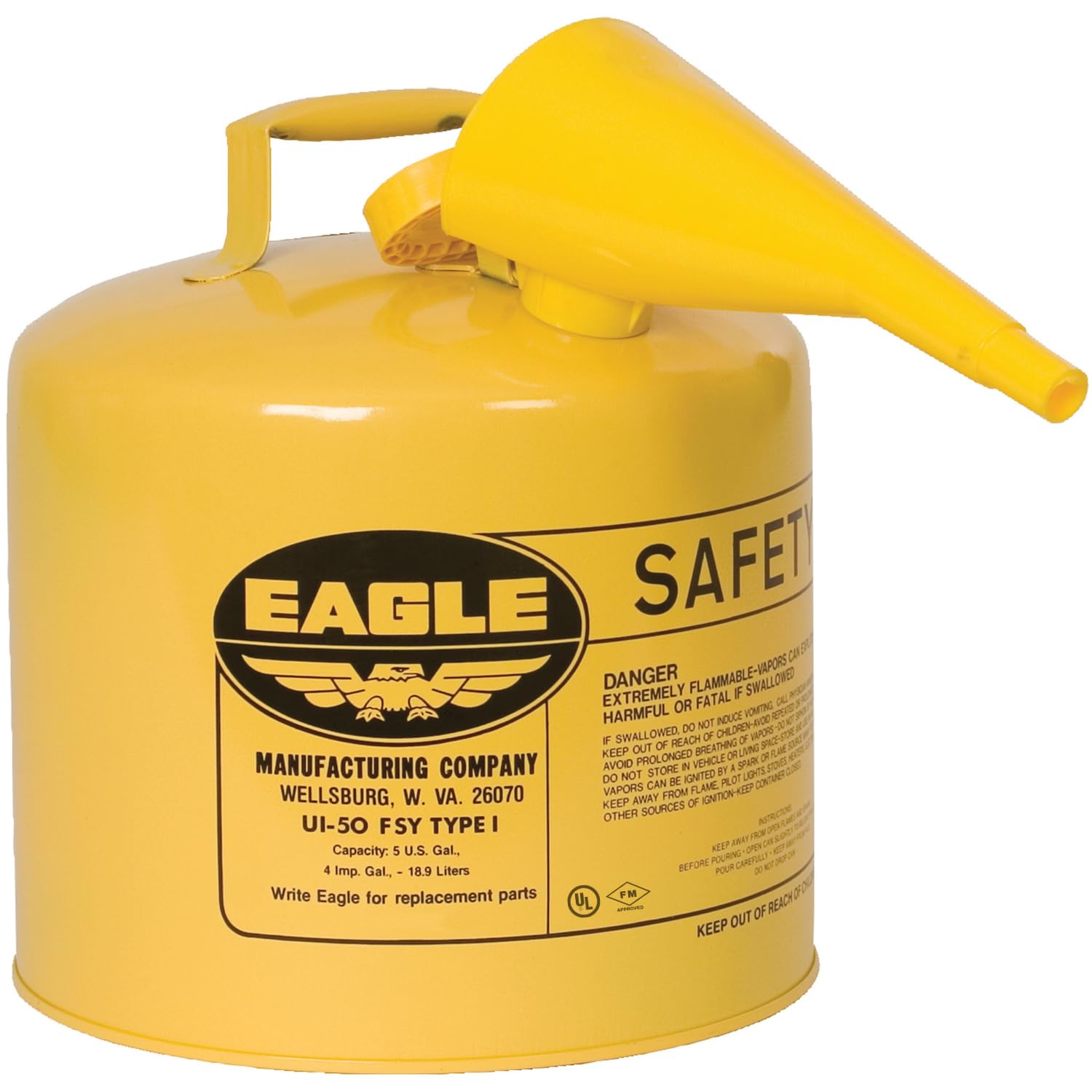
This yellow variant of the Eagle UI50FS is the correct color code for diesel storage under OSHA guidelines. The construction is identical — 24-gauge galvanized steel, brass flame arrestor, self-closing lid — but the yellow finish prevents accidental mixing of gasoline and diesel in a busy shop environment where multiple fuel types are stored side by side.
Diesel is less volatile than gasoline, but it still requires proper ventilation and a flame arrestor in the spout. The Eagle UI50FSY includes the same F-15 funnel as the red model, making it easy to fill from a bulk tank without drips. The baked powder coat resists the oily residue that diesel leaves on containers, so the exterior stays clean with simple wiping.
The key advantage over plastic diesel jugs is the steel’s compatibility with biodiesel blends — some HDPE containers can degrade or swell with high-concentration biodiesel over months of storage. The Eagle can handles B20 and higher without issue. If your farm, fleet, or heavy equipment operation stores diesel in a permanent fueling station, this is the container that meets NFPA standards and stays compliant year after year.
What works
- OSHA-compliant yellow color coding for diesel
- Same UL/FM safety construction as the gasoline version
- Resists biodiesel blend degradation that affects plastic
What doesn’t
- Same weight penalty as the red steel model
- Type I spout requires tilting whole can to pour
3. Surecan SUR5SFD2 5-Gallon Type II Diesel Container

The Surecan SUR5SFD2 brings Type II convenience — a flexible 9-inch hose with a separate air vent — to the 5-gallon diesel market without requiring a steel shell. This HDPE container is designed for users who refuel equipment multiple times per day and want one-handed pouring control. The vent prevents the glugging effect that slows down Type I spouts, so you can maintain a steady stream at any angle.
The yellow color coding matches the diesel standard, and the 5-gallon capacity keeps you under the portable container weight limit that most people can lift into a truck bed. The screw-on cap seals securely and the hose stows in a recessed pocket to protect the nozzle during transport. The HDPE material is UV-stabilized to resist cracking from sunlight exposure if you store it on a trailer.
This is not a fire-rated safety can in the OSHA/NFPA sense — it lacks a steel flame arrestor and self-closing lid. However, for users who need a practical, spill-resistant diesel container for farm or construction site refueling, the Type II flexibility justifies the step up from basic utility jugs. It pairs well with a diesel transfer pump for even faster fills.
What works
- Type II hose enables precise, one-handed pouring
- 5-gallon capacity balances portability with volume
- UV-stabilized HDPE resists sun damage outdoors
What doesn’t
- No OSHA/NFPA safety certifications for fire protection
- HDPE can degrade with long-term biodiesel storage
4. Scepter 10506 3-Gallon Marine Gas Tank

The Scepter 10506 is engineered specifically for outboard motor boats, not general workshop storage. Its low-profile underseat shape is only 6.8 inches tall, which allows it to slide under benches in small fishing boats, dinghies, or RV compartments where standard 5-gallon cans won’t fit. The 3-gallon capacity matches the typical run time for a weekend of trolling without being overly heavy to carry from dock to boat.
The combination fuel pick-up and sight gauge is integrated into the tank body, letting you check the remaining fuel level without opening the cap or using a dipstick. The 2-way vented cap releases internal pressure automatically above 5 PSI, preventing dangerous vapor buildup in hot marine environments. The 5-layer HDPE shell is crush-resistant and prevents vapor permeation, which preserves ethanol-blended fuel longer than single-wall containers.
This tank accepts standard 1/4-inch NPT marine fittings, so you can connect it directly to an outboard motor fuel line if you buy the mating connector separately. The molded-in feet keep the bottom off the deck for ventilation, reducing condensation that can contaminate fuel. If you need a portable tank that fits tight boat storage and provides a reliable fuel gauge, the Scepter is purpose-built for that specific mission.
What works
- Ultra-low profile fits under boat seats and benches
- Built-in sight gauge eliminates guesswork
- Auto pressure relief cap prevents vapor explosion
What doesn’t
- Requires separate fuel line kit for outboard connection
- 3-gallon capacity is small for extended trips
5. Surecan SUR2SFG2 2-Gallon Type II Gasoline Container

The Surecan SUR2SFG2 is a 2-gallon Type II container designed for gasoline, making it ideal for small engines like chainsaws, string trimmers, and pressure washers where a full 5-gallon can is overkill and awkward to handle. The 9-inch flexible hose gives you precise control over the pour angle, and the separate vent eliminates the back-splash that happens with standard spouts when filling a small fuel tank.
The red HDPE body is color-coded for gasoline, and the compact size means you can wedge it into a truck toolbox or the back of an ATV rack without it taking up half your cargo space. The Type II mechanism uses a squeeze trigger to release fuel, with the hose tip reaching into deep filler necks that a standard rigid spout cannot access. This is particularly useful for string trimmers and blowers that have recessed fuel caps.
Because this is a utility container rather than a fire-rated safety can, it lacks a flame arrestor and self-closing lid. It is EPA and CARB compliant for vapor emissions, but it should not replace an OSHA-rated steel can in a shop environment. For homeowners and landscapers who want a lighter, easier way to refuel small equipment, the 2-gallon Surecan reduces weight and improves control over a typical gas can nozzle.
What works
- 2-gallon size is lightweight and easy to carry one-handed
- Type II hose reaches deep into small engine filler necks
- Red color coding prevents accidental fuel misidentification
What doesn’t
- No flame arrestor or OSHA safety certification
- Small capacity means frequent refills for large equipment
6. Scepter FSCD552 5-Gallon Diesel Can

The Scepter FSCD552 focuses on speed. Its SmartControl spout delivers up to 3 gallons per minute thanks to an integrated air vent that prevents the fuel from glugging as it pours. For a 5-gallon diesel can, that means you can empty the entire container in under two minutes — a meaningful time savings when refueling tractors or heavy equipment at the end of a long work day.
The 5-layer HDPE construction includes a flame mitigation device to prevent internal vapor ignition, giving it a level of safety certification that standard utility jugs lack. The dual-handle design includes a rear handle that improves balance when pouring, reducing the strain on your wrist compared to single-handle cans. The yellow color is specific to diesel, preventing accidental use for gasoline storage.
The biggest trade-off is the spout material — the SmartControl system relies on a plastic valve assembly that can wear out over hundreds of cycles. Replacement spouts are available, but the plastic-to-plastic interface is less durable than the full brass flame arrestor in a steel can. For daily diesel refueling on a farm or construction site where speed matters more than OSHA-formal compliance, the Scepter delivers the fastest pour in this lineup.
What works
- 3 GPM pour rate is the fastest of any can reviewed
- Flame mitigation device adds safety over standard jugs
- Dual handles improve control and reduce wrist fatigue
What doesn’t
- Plastic spout valve is less durable than brass alternatives
- Not steel-bodied so lacks some fire-rated protection
7. VP Racing 3552 5.5-Gallon Utility Jug

The VP Racing 3552 is a straightforward utility jug designed for transporting mixed fuel to the track or filling lawn equipment. Its 5.5-gallon capacity is slightly larger than standard 5-gallon cans, giving you an extra half gallon per trip. The bright yellow HDPE body and wide mouth opening make filling from a pump quick, and the contoured bottom grip helps control the pour angle.
This jug is not a certified safety can. It lacks a flame arrestor, self-closing lid, and OSHA compliance. It is simply a durable plastic container for fuel transport. VP Racing markets it for motorsports applications where fuel is consumed quickly and long-term storage safety is less critical. The wide mouth also makes it easy to mix pre-measured oil for two-stroke engines directly in the jug.
The material is standard HDPE with a single-wall construction, so vapor permeation occurs over weeks of storage — fuel sitting for months will lose volatile compounds and degrade. If you need a high-capacity jug for weekend use or track days where the fuel is burned within days, the VP Racing 3552 offers extra volume at a entry-level price point. For permanent storage or shop use, invest in a steel safety can instead.
What works
- 5.5-gallon capacity is larger than standard options
- Wide mouth makes mixing and filling easy
- Contoured grip improves pour control for a basic jug
What doesn’t
- No flame arrestor, self-closing lid, or fire safety rating
- HDPE body permits vapor loss during long-term storage
Hardware & Specs Guide
Flame Arrestor
A brass or stainless steel mesh insert inside the spout that dissipates heat and prevents external flames from igniting the vapor inside the can. This is the single component that separates a certified safety can from a standard fuel jug. All Eagle steel cans include a non-sparking brass flame arrestor; most plastic utility containers omit it entirely. OSHA and NFPA 30 require flame arrestors on any container used for flammable liquid storage in commercial or industrial settings.
Self-Closing Lid
A spring-loaded cap that automatically returns to the sealed position after each pour. This prevents the can from being left open accidentally, which would allow vapors to escape and create a fire hazard. On Eagle steel cans, the lid also includes a gasket that maintains a vapor-tight seal even if the can is tipped over. Type II plastic containers like the Scepter and Surecan use a screw-on cap instead, which requires manual closure and can be left loose.
FAQ
What does CARB compliant mean for a fuel safety can?
Can I store gasoline in a yellow diesel can?
How long can fuel sit in an HDPE safety can before it degrades?
Final Thoughts: The Verdict
For most buyers, the best fuel safety cans winner is the Eagle UI50FS Red Galvanized Steel Can because it combines OSHA and UL certification, a brass flame arrestor, and a self-closing lid in a body that will outlast a decade of garage use. If you need diesel-specific color coding with the same safety rating, grab the Eagle UI50FSY. And for marine or RV applications where a low-profile tank with a built-in fuel gauge matters most, the Scepter 10506 Marine Gas Tank is the purpose-built solution.

Certification: BSc in Mechanical Engineering
Education: Mechanical engineer
Lives In: 539 W Commerce St, Dallas, TX 75208, USA
Md Amir is an auto mechanic student and writer with over half a decade of experience in the automotive field. He has worked with top automotive brands such as Lexus, Quantum, and also owns two automotive blogs autocarneed.com and taxiwiz.com.