The moment bare metal meets open air, the clock starts ticking. Surface oxidation, flash rust, and adhesion failure turn a promising restoration or repair into a peeling, blistering nightmare, making the selection of a proper foundation coating the single most critical step in any automotive refinishing project.
I’m Amir — the founder and writer behind Four Wheel Ask. I’ve analyzed dozens of primer formulations, cross-referenced chemical composition data with real-world owner feedback, and tracked which products consistently deliver corrosion resistance and topcoat compatibility across steel, aluminum, and galvanized substrates.
This guide breaks down the essential differences between etching primers, epoxy systems, and 2-in-1 converters, so you can choose the right auto primer for bare metal without wasting time on products that fail within months.
How To Choose The Best Auto Primer For Bare Metal
Selecting the wrong primer for bare metal guarantees poor adhesion and early corrosion. The decision depends on the metal type, whether rust is present, and the topcoat system you plan to use.
Acid Etch vs Self-Etching vs Epoxy Primer
Acid-etch primers use phosphoric acid to microscopically bite into the metal surface, creating a mechanical and chemical bond. Self-etching primers combine this etching action with a thin primer layer in one step. Epoxy primers form a thick, moisture-proof barrier but require a clean, bare surface for maximum adhesion. For bare steel or aluminum, an acid-etch or true self-etching primer is the safest starting point.
Rust Converter vs Metal Primer
A rust converter chemically changes iron oxide into a stable, paintable layer, making it suitable for surfaces with light surface rust that is difficult to remove entirely. A dedicated metal primer, however, is designed for clean bare metal and provides superior adhesion for the topcoat. Using a converter on fully bare metal adds no benefit and may compromise bond strength.
1K Aerosol vs 2K System
1K aerosols are single-component primers that cure by solvent evaporation. They are convenient for small jobs but offer less chemical resistance. 2K epoxy systems use a separate hardener that triggers a chemical cross-linking reaction, resulting in a harder, more solvent-resistant film that blocks moisture far more effectively. For panels exposed to road salt or moisture, a 2K epoxy primer is the long-term choice.
Quick Comparison
On smaller screens, swipe sideways to see the full table.
| Model | Category | Best For | Key Spec | Amazon |
|---|---|---|---|---|
| SprayMax 2K Epoxy Primer | 2K Epoxy | Maximum corrosion resistance on bare steel and aluminum | 12.5 oz, 2K epoxy with hardener | Amazon |
| Raptor Acid Etch Primer | Acid Etch | One-step etching and priming for galvanized steel | 13.2 oz, phosphoric acid ester formula | Amazon |
| SEM Self Etching Primer | Self-Etching | Thin, high-adhesion coat for body panels | 15.5 oz, grey, 3-hour dry time | Amazon |
| Meuvcol Rust Converter & Primer | Rust Converter | Sealing light surface rust before topcoating | 35 oz, black, matte finish | Amazon |
| Transtar 2-in-1 Primer | 2-in-1 Primer | Quick priming on mixed plastic and metal surfaces | 15 oz, grey, fast-drying | Amazon |
In‑Depth Reviews
1. SprayMax 2K Epoxy Primer Black
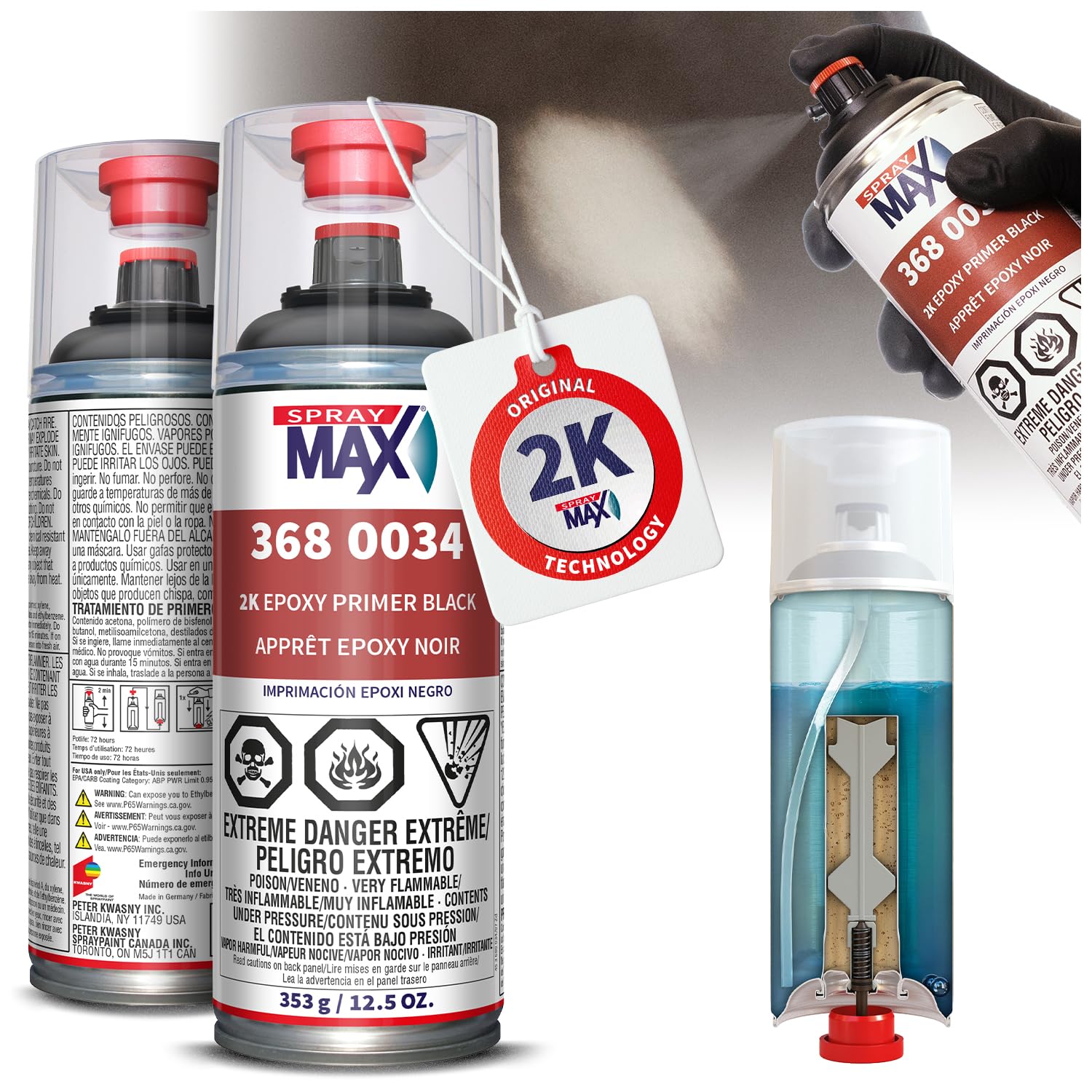
The SprayMax 2K Epoxy Primer is the gold standard for bare metal preparation in a rattle can. Its two-component system, activated by an internal hardener, creates a chemical cross-link that forms an exceptionally tough, moisture-proof film on steel, aluminum, and galvanized surfaces. The variable nozzle allows precise control over fan width, reducing overspray on smaller panels.
Dust-dry in 15 minutes and sandable within a few hours, this primer supports an efficient workflow without sacrificing durability. The corrosion resistance is noticeably superior to single-component aerosols, especially when exposed to humidity or road salt. It lays down flat and fills minor surface scratches effectively.
The 12.5-ounce can size limits coverage to smaller jobs like motorcycle tanks, fenders, or quarter panels. Once activated, the can has a limited pot life, so you must use the entire contents in one session. For complete panel or full-vehicle work, you will need multiple cans, but the adhesion and protection are worth the premium.
What works
- 2K chemical cure provides superior moisture barrier compared to any 1K aerosol
- Fast dust-dry time of 15 minutes speeds up multi-coat workflows
- Excellent adhesion on bare steel and aluminum without lifting
What doesn’t
- Low coverage per can due to 12.5 oz size; larger jobs require multiple units
- Limited pot life after activation forces full can use in one session
2. Raptor Acid Etch Primer 1K Aerosol

The Raptor Acid Etch Primer uses a phosphoric acid ester formula that chemically etches the metal surface while depositing a primer layer in one step. This makes it particularly effective on difficult substrates like galvanized steel and aluminum, where standard primers struggle to grip. The flat fan nozzle delivers a wide, even spray pattern that covers panels efficiently.
One of its strongest advantages is the elimination of sanding before application on clean bare metal. The etching action provides sufficient tooth for the topcoat to lock onto, saving significant prep time. The anti-corrosive barrier it leaves behind is robust enough for indoor and outdoor exposure.
Being a 1K aerosol, it cures by solvent evaporation rather than chemical cross-linking, so its chemical resistance is lower than the SprayMax 2K system. It is best suited as a sealer for rub-throughs or as a primer for parts that will not face extreme moisture exposure. The 13.2-ounce can provides decent coverage for small to medium projects.
What works
- Chemically etches galvanized steel and aluminum where standard primers fail
- No sanding required on clean bare metal before application
- Broad spray pattern covers panels quickly with minimal effort
What doesn’t
- 1K formula lacks the chemical resistance of 2K epoxy systems
- Not recommended for surfaces with existing rust or heavy contamination
3. SEM 39683 Grey Self Etching Primer

The SEM Self Etching Primer is a trusted name among body shop professionals for its consistent, thin-build coating that promotes excellent topcoat adhesion without filling fine details. It lays down a uniform grey matte film that is ideal for spotting in small repairs or priming entire panels where a minimal film thickness is desired to preserve body lines.
With a dry time of approximately three hours and full cure within 24 hours, it allows for a reasonable workflow, though it is slower than the SprayMax 2K in terms of sand-ready time. The self-etching chemistry works effectively on bare steel and provides a good mechanical bond as long as the surface is completely clean and free of oil.
The 15.5-ounce can offers generous coverage, but the product is not designed for aluminum or galvanized surfaces where a stronger acid-etch formulation is required. It also has a strong solvent odor, so adequate ventilation or a respirator is essential during application. Best used as a dedicated steel panel primer under solvent-based topcoats.
What works
- Thin, uniform coat maintains original panel contours and details
- Excellent mechanical adhesion on clean bare steel surfaces
- Large 15.5 oz can provides good value for small to medium repairs
What doesn’t
- Not formulated for aluminum or galvanized metal substrates
- Strong solvent fumes require proper respiratory protection
4. Meuvcol 2 in 1 Rust Converter & Metal Primer
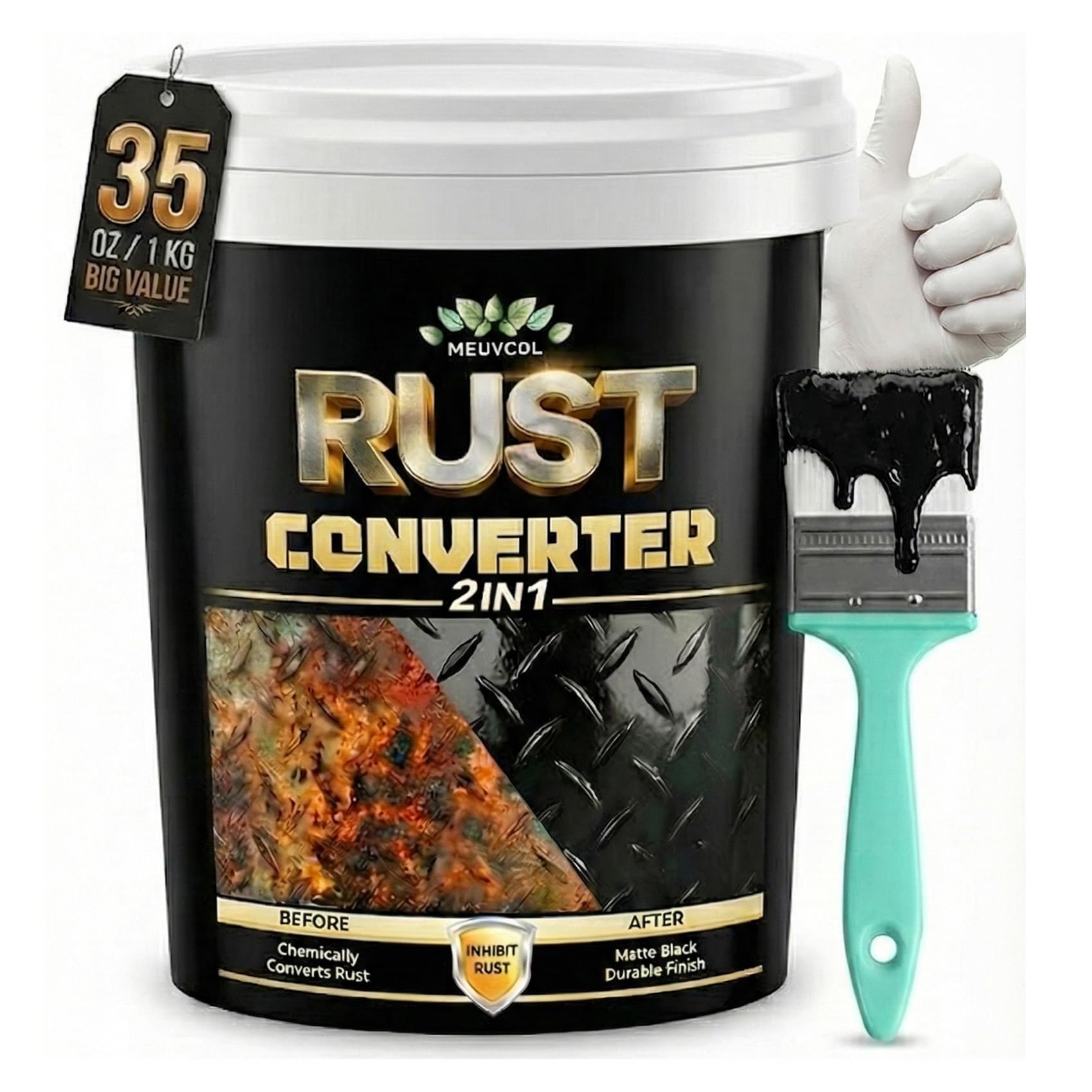
The Meuvcol Rust Converter takes a different approach from etching primers: it chemically neutralizes iron oxide and converts it into a stable, paintable black surface. This makes it a strong choice for trailer frames, truck chassis, and farm equipment where complete rust removal is impractical. The 35-ounce can provides substantial coverage for large structural parts.
The product requires the metal surface to be free of grease and oil, but it can tolerate light rust that etching primers would reject. It creates a durable flat black matte finish that bonds to both rusted areas and bare metal areas nearby, providing a uniform base. Its waterproof formulation after full cure offers solid protection against moisture.
Drying time is longer than aerosol primers — a minimum 24-hour cure is recommended before topcoating. It must be applied in thin coats with a brush, which is less convenient than spray application for complex shapes. This is a dedicated solution for rust remediation, not a universal bare metal primer for smooth body panels.
What works
- Converts light rust into a stable, paintable surface without grinding
- Large 35 oz volume delivers excellent coverage for frames and chassis
- Waterproof cured film provides strong moisture barrier
What doesn’t
- Requires 24-hour cure before topcoating, slowing project pace
- Brush application less convenient than spray for detailed or tight areas
5. Transtar 4603 Gray 2-in-1 Primer

The Transtar 2-in-1 Primer is designed as a versatile quick-coat for both plastic and metal parts, making it a convenient option for mixed-material repairs or projects where speed matters more than ultimate corrosion protection. Its fast-drying formula allows for same-day topcoating on small components like brackets, mirrors, or interior trim pieces.
It provides a smooth base for topcoat application and seals out moisture on metal surfaces, but it does not contain etching agents. For bare steel, this means adhesion relies on mechanical surface roughness rather than chemical bonding, so thorough scuffing or sanding is required beforehand. On plastic surfaces, its flexibility is a useful advantage.
The 15-ounce aerosol can delivers fair coverage, but the gray color may require multiple coats for complete hiding on dark metals. It is not a heavy-duty anti-corrosion solution and should not be used on structural or exterior panels that face road salt or constant moisture. It is best reserved for light-duty or interior automotive parts.
What works
- Works on both plastic and metal surfaces for mixed-material repairs
- Fast-drying formula allows quick turnaround for small components
- Provides a smooth, paintable base for topcoats
What doesn’t
- Lacks chemical etching action for bare metal adhesion
- Not suitable for high-moisture or exterior panel applications
Hardware & Specs Guide
1K vs 2K Primer Chemistry
1K (single-component) primers cure by solvent evaporation, forming a thermoplastic film. They are easy to apply from an aerosol can but offer limited chemical and moisture resistance. 2K (two-component) primers require a separate hardener that triggers an exothermic cross-linking reaction, producing a thermoset film that is harder, more solvent-resistant, and significantly more effective at blocking moisture. For bare metal exposed to the elements, 2K epoxy is the chemically superior choice. The SprayMax 2K Epoxy Primer and the Raptor Acid Etch Primer represent these two distinct chemistries, with the 2K system providing the highest long-term protection.
Film Build and Sandability
The thickness of the primer layer directly affects how much surface imperfection it can fill before topcoating. Self-etching primers like the SEM Grey Self Etching Primer intentionally deposit a thin film to avoid obscuring body lines, requiring more surface prep beforehand. Epoxy and 2-in-1 primers build thicker films, allowing them to fill minor scratches and pitting. Sandability varies: the SprayMax 2K can be sanded within hours, while the Meuvcol Rust Converter needs a full 24-hour cure before sanding. Always check the dry and full cure times to plan your workflow, as premature topcoating can cause solvent pop or adhesion loss.
FAQ
Can I apply auto primer over light surface rust on bare metal?
What is the difference between self-etching and acid-etch primer?
How long should I wait before topcoating a 2K epoxy primer?
Final Thoughts: The Verdict
For most buyers, the auto primer for bare metal winner is the SprayMax 2K Epoxy Primer because its two-component chemistry delivers professional-grade corrosion resistance and adhesion that no single-component aerosol can match. If you need a one-step etching primer for tricky substrates like aluminum or galvanized steel, grab the Raptor Acid Etch Primer. And for treating light surface rust on a trailer frame or chassis without complete removal, nothing beats the Meuvcol 2 in 1 Rust Converter.

Certification: BSc in Mechanical Engineering
Education: Mechanical engineer
Lives In: 539 W Commerce St, Dallas, TX 75208, USA
Md Amir is an auto mechanic student and writer with over half a decade of experience in the automotive field. He has worked with top automotive brands such as Lexus, Quantum, and also owns two automotive blogs autocarneed.com and taxiwiz.com.