Dead batteries don’t give warnings — they strand you at the worst moment, often on a cold morning when your Elantra won’t crank. Finding a direct-fit replacement that delivers strong cold cranking amps and handles the Elantra’s start-stop electric load without leaking or failing prematurely is the difference between a reliable daily driver and a money pit of jump-starts and tow trucks.
I’m Amir — the founder and writer behind Four Wheel Ask. I’ve spent years analyzing automotive battery specifications, comparing AGM and lithium chemistries, and filtering through countless owner reports to separate the cells that genuinely hold up from the ones that die after a single hard winter.
After evaluating crank performance, reserve capacity, vibration resistance, and physical dimensions across nine quality options, I’ve narrowed the field to the most dependable choices for your 2015 Hyundai Elantra. What follows is a detailed breakdown of the 2015 hyundai elantra battery replacements that deliver real reliability without guesswork.
How To Choose The Best 2015 Hyundai Elantra Battery
Your Elantra requires a BCI Group 47 (also labeled H5 or L2) battery with a specific physical footprint and terminal layout. This form factor ensures the battery sits securely in the tray and connects to the factory cables without adapters. Beyond dimensions, the key specs that determine whether you get a reliable cranking battery or a constant headache are cold cranking amps, reserve capacity, and battery chemistry type.
Cold Cranking Amps and Reserve Capacity
The 2015 Elantra’s 2.0L four-cylinder needs around 600 to 700 CCA for reliable starts in subzero temperatures. A battery with only 500 CCA might work in mild climates but will struggle when the thermometer drops below freezing. Reserve capacity matters just as much — a higher RC rating means your battery can run the lights, radio, and accessories for longer if the alternator fails, giving you time to reach a shop instead of sitting on the shoulder.
AGM vs. Flooded: Which Works Best
Standard flooded lead-acid batteries are cheaper but spill acid if tipped, vent hydrogen gas, and usually last three to four years. AGM absorbed glass mat batteries are sealed, vibration-resistant, handle deep discharges better, and typically deliver four to six years of service in an Elantra. If your car has start-stop technology, an AGM battery is almost mandatory. Lithium iron phosphate options exist but cost more and require a compatible charging system — they are overkill for a stock 2015 Elantra unless you prioritize weight savings.
Quick Comparison
On smaller screens, swipe sideways to see the full table.
| Model | Category | Best For | Key Spec | Amazon |
|---|---|---|---|---|
| Weize Platinum AGM Group 47 | AGM | Best Overall Reliability | 680 CCA / 100 RC | Amazon |
| Goodyear 47-H5-AGM Platinum | AGM | Premium Brand Assurance | 680 CCA / 100 RC | Amazon |
| OPTIMA YellowTop DH5 | AGM Deep Cycle | Extreme Vibration Protection | 700 CCA / 115 RC | Amazon |
| Interstate MTX-48 AGM | AGM Pure Lead | Highest Cycle Life | 760 CCA / Group 48 | Amazon |
| Autocessking H5 AGM | AGM | Vibration Durable Pick | 680 CCA / 100 RC | Amazon |
| SDULIBITIY LiFePO4 Group 47 | Lithium | Weight-Saving Upgrade | 600 CCA / 512 WH | Amazon |
| Relistart AGM Group 47 | AGM | Mid-Range Cold Weather | 680 CCA / 105 RC | Amazon |
| MARXON Group 47 AGM | AGM | Faster Recharge Rate | 660 CCA / 60 AH | Amazon |
| Forgetyo AGM Group 47 | AGM | Best Warranty Term | 640 CCA / 111 RC | Amazon |
In‑Depth Reviews
1. Weize Platinum AGM Battery BCI Group 47

The Weize Platinum hits every spec a 2015 Elantra owner needs without forcing you into premium pricing. Its 680 CCA rating ensures reliable cranking in single-digit temperatures, and the 100-minute reserve capacity gives you enough margin to run accessories if the alternator cuts out. The AGM construction absorbs vibration from the Elantra’s engine bay — a common killer of cheaper flooded units that rattle apart after two years.
Physical fitment is spot-on for Group 47 dimensions at 9.52 x 6.89 x 7.48 inches, and the tapered terminal orientation matches the factory cables without needing adapters or shims. Weize includes a three-year warranty, which is competitive for the mid-range price tier and signals confidence in the battery’s cycle life. Self-discharge stays under 8 percent after 90 days of storage, meaning it holds charge well if the car sits for extended periods.
The only real shortcoming is that this battery is not designed for deep-cycle applications like powering inverters or solar loads — it is strictly a starting and accessory battery. For a daily-driven Elantra, that is exactly what you need, but don’t try to use it as a dual-purpose battery for camping setups. If you want a straight-up replacement that starts every morning without drama, this is the one.
What works
- 680 CCA provides confident cold-weather starts
- 100-minute reserve capacity for accessory overhead
- Three-year warranty at a mid-range price point
What doesn’t
- Not suitable for deep-cycle or solar usage
- Terminal orientation requires double-check on some trim levels
2. Goodyear 47-H5-AGM Platinum
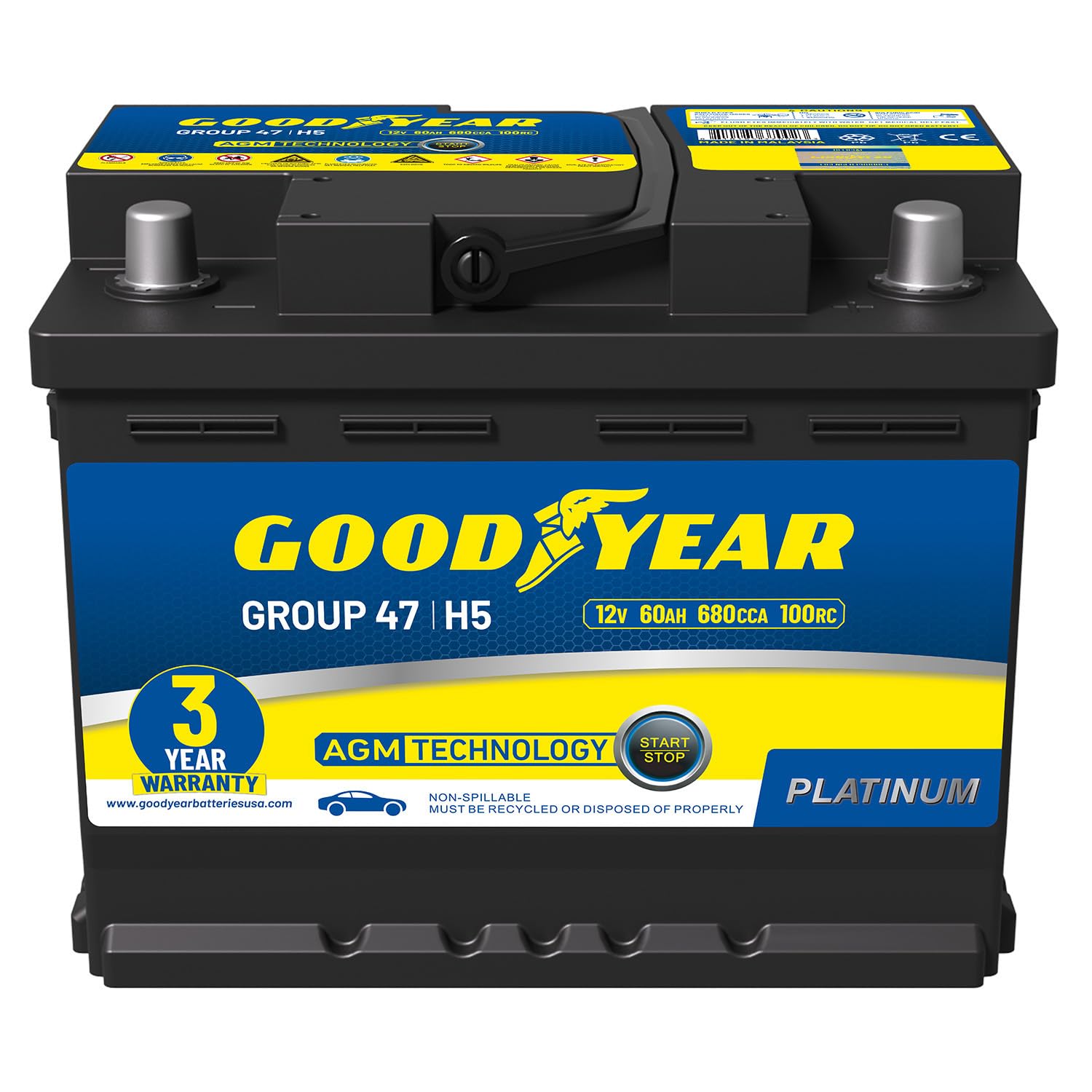
Goodyear’s Platinum AGM brings brand recognition and legitimate build quality to the 2015 Elantra battery conversation. The 680 CCA rating matches the factory recommendation, and the 100-minute reserve capacity keeps the car operational during alternator failures. The AGM design is spill-proof and can be mounted in multiple positions (except upside down), which simplifies installation in tight engine bays.
The battery is CE certified and built in an ISO-certified factory, which is a quality signal often missing from no-name imports. Dimensions are slightly tighter than the Weize at 9.37 x 6.75 x 7.50 inches, which actually gives you a bit more wiggle room in the battery tray. The included mounting screws are a nice touch — many competitors ship the battery alone and expect you to reuse corroded hardware.
On the downside, the 36-month warranty is standard for the premium tier, not exceptional, and the battery does not include any wire harness or accessory mounting brackets. If you want a battery from a household name that fits without drama and cranks reliably through winter, the Goodyear delivers — but you are paying a premium for the logo on the case.
What works
- CE certified from ISO factory
- Slightly smaller dimensions ease installation
- Includes mounting screws
What doesn’t
- Premium price for a brand-name badge
- Warranty is standard three-year term
3. OPTIMA YellowTop DH5

The OPTIMA YellowTop is the gold standard for dual-purpose batteries that handle both starting and moderate cycling. With 700 CCA and a 115-minute reserve capacity, it exceeds the 2015 Elantra’s requirements by a comfortable margin, meaning you get headroom for aftermarket audio, upgraded lighting, or accessory loads without draining the battery during a short commute. The spiral-wound AGM construction compresses the lead plates more tightly than flat-plate designs, which is why OPTIMA claims 15 times more vibration resistance than standard flooded batteries.
At 44 pounds, it is marginally heavier than other Group 47 options, but the weight comes from dense lead content that translates to longer service life. The PureFlow technology uses 99.99 percent pure lead, which resists corrosion and maintains conductivity better than recycled lead commonly found in budget batteries. The DIN Type A1 terminals fit the Elantra’s factory clamps directly without adapters.
The trade-off is the price — this is the most expensive battery on this list by a wide margin. For a bone-stock 2015 Elantra that never sees extreme conditions, the YellowTop is overkill. But if you live on rough roads, do a lot of short trips that prevent full recharging, or run extra electrical equipment, the extra upfront cost pays for itself in longevity you will not get from a standard AGM.
What works
- 700 CCA and 115 RC exceed factory spec
- 15x more vibration resistant than flooded batteries
- 99.99 percent pure lead construction
What doesn’t
- Highest price in the lineup
- Overkill for stock daily driving
4. Interstate Batteries MTX-48 AGM

Interstate’s MTX series uses pure lead AGM technology that packs more active material into the same footprint, claiming two to three times the service life of conventional flooded batteries. The 760 CCA rating is the highest of any battery in this comparison, giving you a massive safety margin for the Elantra’s 2.0L engine. The Group 48 (H6) size is slightly longer than the standard Group 47, so you must verify that your Elantra’s battery tray has the extra inch of clearance — some trim levels accommodate it, others do not.
The AGM construction is spill-proof and valve-regulated, meaning no acid leaks and no maintenance. Interstate has been a staple in automotive batteries for over 70 years, and their warranty support is generally responsive. The battery is designed specifically for start-stop vehicles, which matches the 2015 Elantra’s electrical system characteristics even if your specific trim does not have factory start-stop technology.
The major caveat is fitment: this is not a direct Group 47 drop-in. You need to physically measure your tray and confirm that the 11-inch length fits without interfering with the fender or air box. If it fits, you get class-leading CCA and cycle life. If it does not, you have to return a 45-pound battery, which is a hassle. Measure first, buy second.
What works
- 760 CCA is highest in comparison
- Pure lead AGM for 2-3x longer life
- 70-year brand reputation
What doesn’t
- Group 48 size may not fit all Elantras
- Heavy at 45.4 pounds
5. Autocessking H5 AGM Group 47
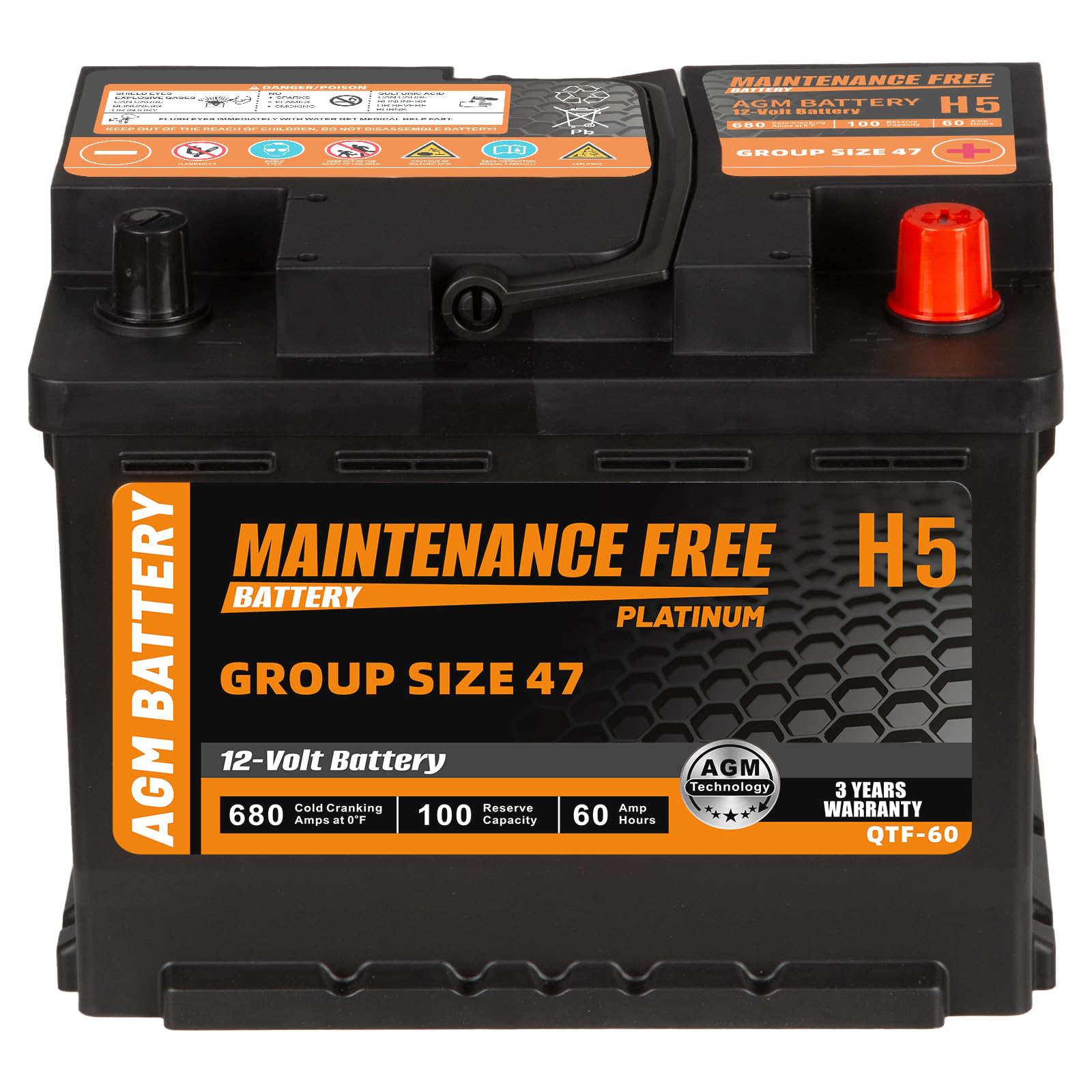
Autocessking markets this AGM battery with an 18-times vibration resistance claim, which is bold but plausible given the high-density negative paste and compression-fit internal construction. For an Elantra that sees rough pavement or dirt roads, this extra vibration damping can prevent internal plate shedding — the leading cause of premature AGM failure. The 680 CCA and 100 RC are solid numbers that match the Elantra’s cold-weather needs.
The three-year warranty provides adequate coverage, and the battery’s operating temperature range spans from -18°C to 60°C, with short-term tolerance up to 75°C. That covers everything from a Minnesota deep freeze to a Phoenix summer under the hood. The physical dimensions at 9.57 x 6.89 x 7.48 inches align closely with OEM Group 47 specifications, so installation is straightforward with no bracket modifications.
One notable detail: Autocessking explicitly states this is a starting battery, not for deep-cycle applications like solar or marine use. That honesty is refreshing in a market where many brands blur the line. The battery does not include any mounting hardware beyond the screws, so hang onto your factory hold-down clamp. For a driver who wants a tough mid-priced AGM that handles road vibration well, this is a strong candidate.
What works
- 18x vibration resistance rating
- Wide operating temperature range
- Honest labeling as starting battery
What doesn’t
- No mounting hardware included
- Brand has shorter track record than Optima or Interstate
6. SDULIBITIY LiFePO4 Group 47
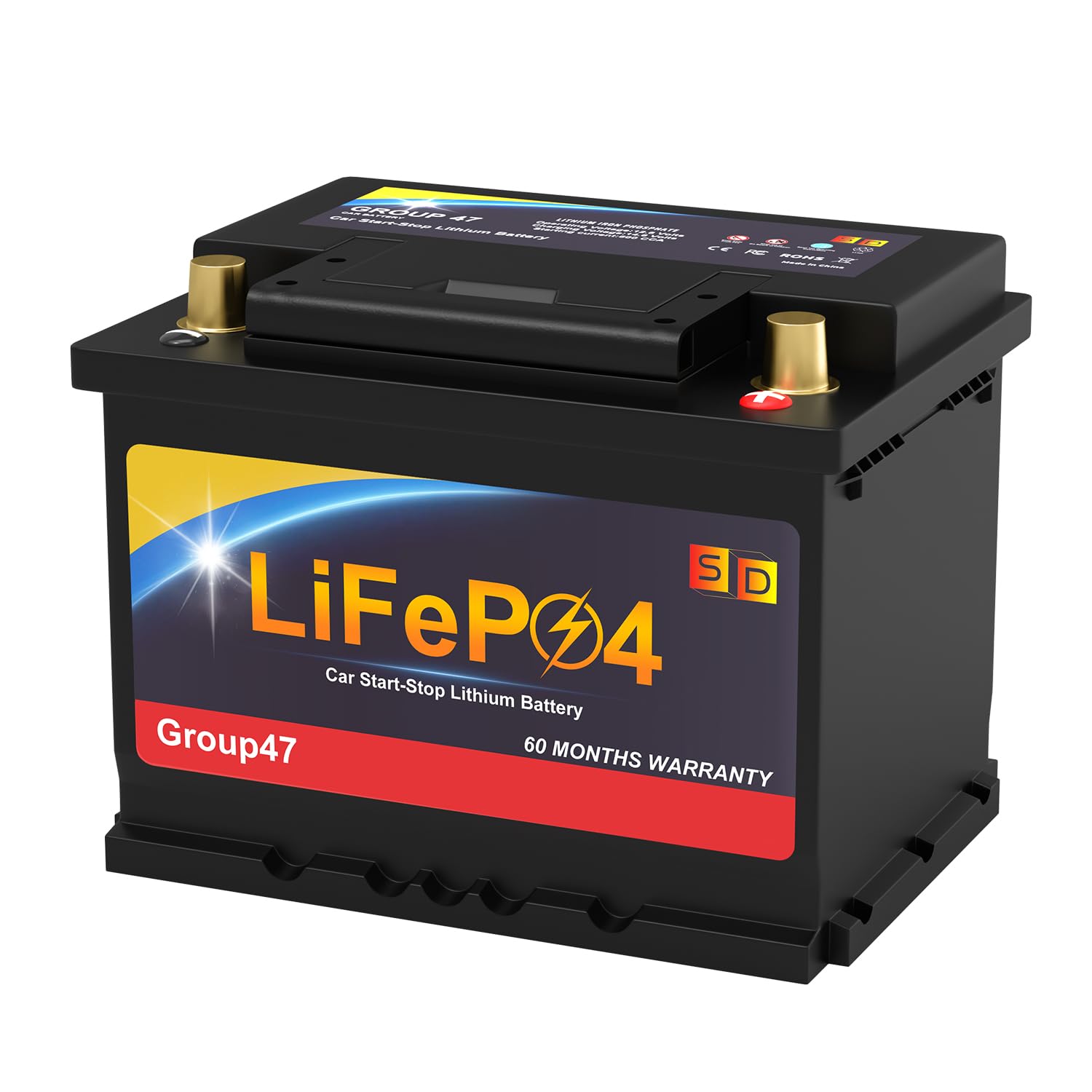
This lithium iron phosphate battery weighs only 11 pounds — a staggering 73 percent lighter than a standard 41-pound AGM. For any owner looking to reduce front-end weight for better handling or fuel economy, that is a significant change. The 600 CCA rating is lower than the top AGMs but still sufficient for the 2015 Elantra’s 2.0L engine in most climates. The built-in BMS protects against overcharge, over-discharge, over-voltage, and over-current, which extends the battery’s usable life dramatically.
The LiFePO4 chemistry handles deep discharges far better than AGM — you can run the battery down to near-empty repeatedly without damaging it, which is useful if your Elantra sits for long periods or you often forget to turn off interior lights. The five-year warranty is the longest of any battery in this comparison, reflecting the inherent durability of lithium cells when managed correctly. The terminal layout at left-negative, right-positive matches the Elantra’s factory orientation.
The downsides are real: the price is high, the BMS can trip in extreme cold below -20°C, and not all alternator charging profiles are optimized for lithium. If your Elantra has a standard alternator without a smart charging system, the lithium battery may never fully charge to its 14.6V absorption voltage. This is a specialist upgrade, not a universal recommendation. Get it if you track the car, store it for months, or want to shed weight — otherwise stick with AGM.
What works
- Weighs only 11 pounds
- Five-year warranty
- Tolerates deep discharges well
What doesn’t
- 600 CCA lower than premium AGMs
- May not charge fully with standard alternator
- BMS can trip in extreme cold
7. Relistart AGM Group 47
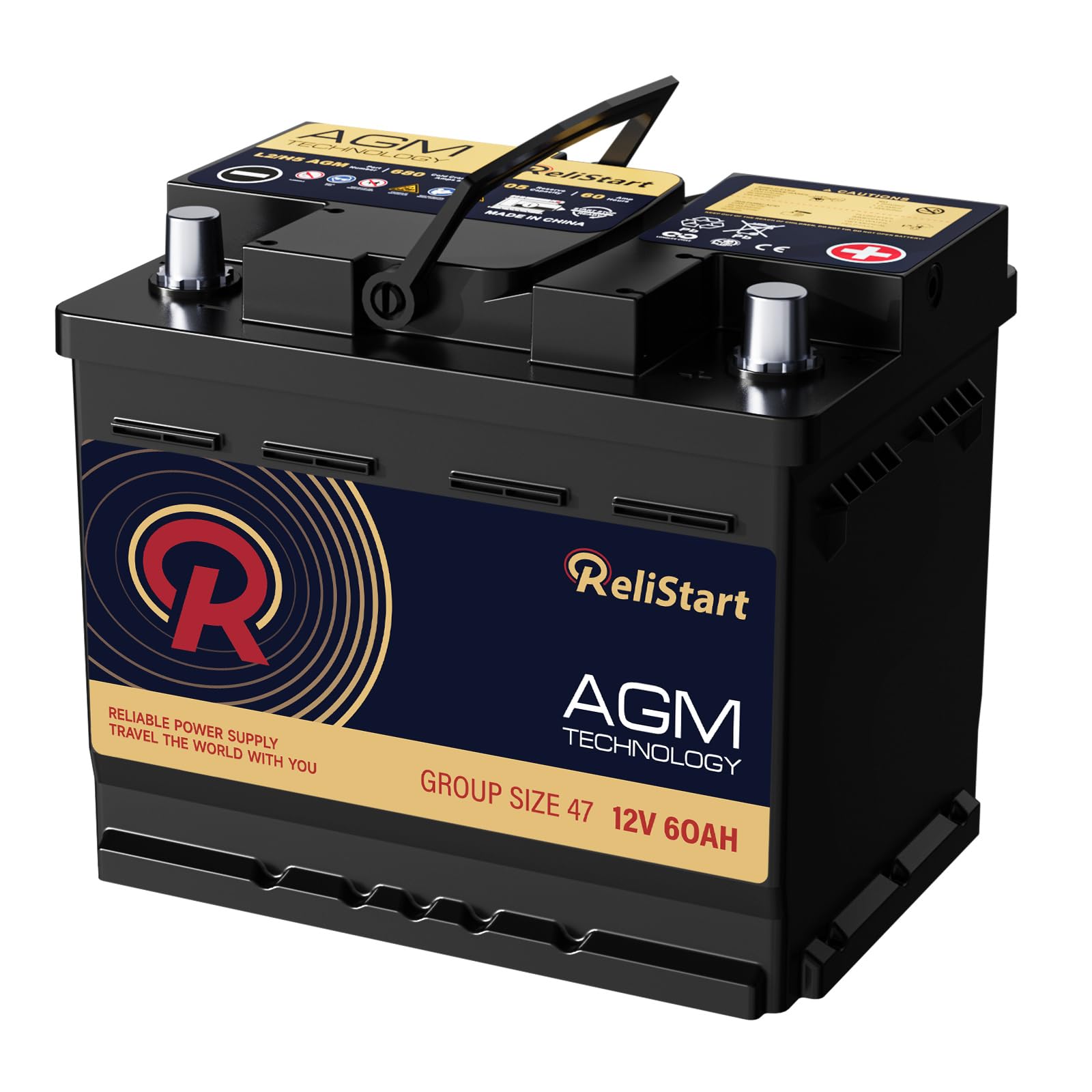
Relistart offers a 680 CCA AGM battery with a 105-minute reserve capacity — slightly better RC than the 100-minute standard that most competitors hit. That extra five minutes of reserve power means you can sit in the car with the radio and headlights on for a bit longer before the battery dips below starting voltage. The self-discharge rate is under 8 percent after 90 days, which is on par with the category standard for AGM.
The two-year warranty is shorter than the three-year terms offered by Weize, Goodyear, and Autocessking, which makes this less appealing if you plan to keep the car for more than four or five years. Physical dimensions match the standard Group 47 envelope, and the tapered terminals fit the Elantra’s cables without adapters. The battery is leak-proof and maintenance-free, as you would expect from any AGM product.
The shorter warranty and lesser-known brand name are the main reasons this falls to the middle of the pack. It works well out of the box, but the lack of a longer-term guarantee means you are relying on the battery’s inherent reliability rather than manufacturer backing. For the price, it is a capable AGM that will start your Elantra fine, but the competitors above offer better protection for only a small incremental investment.
What works
- 105 RC beats the 100-minute standard
- Low self-discharge rate
- Standard Group 47 dimensions
What doesn’t
- Only two-year warranty
- Less established brand
8. MARXON Group 47 AGM

MARXON enters the Group 47 space with a 660 CCA AGM that is billed as start-stop compatible. The 660 CCA rating is adequate for the Elantra, though you lose about 20 CCA compared to the 680 CCA standard that most competitors use — in practical terms, this means slightly less margin on subzero mornings. MARXON claims 40 percent faster charging than standard SLA batteries, which could benefit drivers who do mostly short trips where the battery never gets a full charge cycle.
The three-year warranty matches the mid-range standard, and the battery is made by Leoch, a known OEM manufacturer with decent quality control. Physical dimensions at 9.53 x 6.89 x 7.48 inches fit the Elantra tray correctly, and the A1 terminal type works with factory clamps. The weight at 40.97 pounds is typical for a Group 47 AGM.
The lower CCA is the main compromise here. For a daily driver in a moderate climate, 660 CCA is unlikely to cause problems. But if you live where winter temperatures drop below -10°F regularly, the extra 20 CCA from a Weize or Autocessking provides a noticeable comfort margin. MARXON is a solid budget option for mild-weather drivers who want AGM benefits without the premium price.
What works
- Good price-to-value ratio
- Made by Leoch, a reputable OEM
- Three-year warranty
What doesn’t
- 660 CCA is lower than category standard
- Not ideal for extreme cold climates
9. Forgetyo AGM Group 47
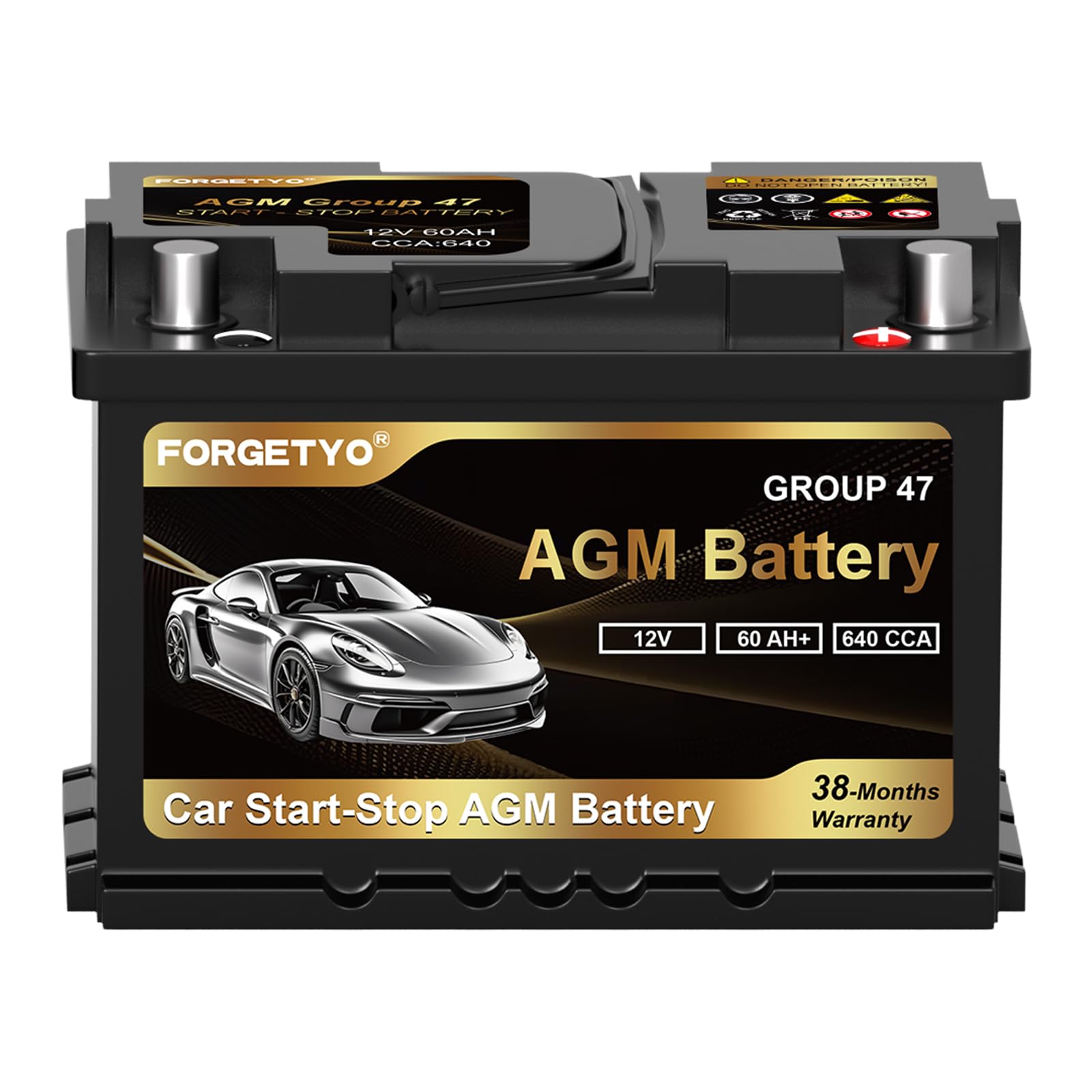
Forgetyo stands out for offering a 111-minute reserve capacity — the best RC figure in the standard AGM group — combined with a 38-month warranty that beats the typical 36-month terms. The 640 CCA rating, however, is the lowest among all the AGM options here. In practice, that means the battery will start the Elantra reliably in moderate conditions, but cold-weather performance is the weakest of the AGM group.
The physical dimensions at 9.5 x 6.9 x 7.5 inches match the Group 47 form factor perfectly, and the tapered terminals fit without modification. The AGM construction is spill-proof and vibration-resistant, so it holds up to normal driving conditions without leaking or failing from road shock. The price is entry-level for an AGM, which makes it accessible if you are on a tight budget but still want the sealed, maintenance-free benefits of AGM over a flooded battery.
The low CCA is the dealbreaker for cold-climate drivers. If your winter temperatures rarely drop below freezing, Forgetyo’s long warranty and excellent RC make it a compelling budget choice. But if you face real winter, the reduced starting power is a genuine risk. This battery is best suited to mild southern climates or owners who can afford a replacement if the first one struggles through a cold snap.
What works
- 111 RC is best in standard AGM group
- 38-month warranty exceeds standard term
- Budget-friendly entry to AGM
What doesn’t
- 640 CCA is the lowest AGM rating
- Struggles in cold climates
Hardware & Specs Guide
Cold Cranking Amps (CCA)
CCA measures how many amps a 12V battery can deliver at 0°F for 30 seconds while maintaining at least 7.2V. For the 2015 Elantra’s 2.0L four-cylinder, 600 CCA is the bare minimum, 680 CCA is the sweet spot, and anything above that provides a margin for extreme cold or degraded battery health over time. Batteries with 640 CCA or less may fail to start the engine when temperatures drop below -10°F.
Reserve Capacity (RC)
RC tells you how many minutes the battery can supply 25 amps at 80°F before voltage drops below 10.5V. A 100-minute RC means you can run headlights, wipers, and the blower for about an hour and a half after the alternator fails. Higher RC numbers help if you frequently run accessories with the engine off or have a long commute where electrical load exceeds alternator output.
FAQ
Does my 2015 Hyundai Elantra need an AGM battery or will a standard flooded battery work?
What happens if I install a battery with higher CCA than the factory original?
Final Thoughts: The Verdict
For most buyers, the 2015 hyundai elantra battery winner is the Weize Platinum AGM Group 47 because it delivers the ideal 680 CCA and 100 RC for cold-weather reliability at a mid-range price with a three-year warranty. If you want vibration resistance and comparable specs, grab the Autocessking H5 AGM. And for heavy electrical loads or rough-road durability, nothing beats the OPTIMA YellowTop DH5.

Certification: BSc in Mechanical Engineering
Education: Mechanical engineer
Lives In: 539 W Commerce St, Dallas, TX 75208, USA
Md Amir is an auto mechanic student and writer with over half a decade of experience in the automotive field. He has worked with top automotive brands such as Lexus, Quantum, and also owns two automotive blogs autocarneed.com and taxiwiz.com.