A modular snowmobile helmet needs to do more than just flip up — it has to resist fogging in subzero temperatures, seal out snow dust, and stay warm without trapping moisture. Finding one that actually delivers on all fronts requires careful examination of shell materials, shield technology, and ventilation design.
I’m Amir — the founder and writer behind Four Wheel Ask. My analysis focuses on comparing shell composites, anti-fog systems, and real-world owner feedback across multiple winter riding environments to identify the most dependable modular snowmobile helmet options available.
After deep research across many popular models, the top-rated best modular snowmobile helmet balances fog-free visibility with trail-ready durability and reliable warmth.
How To Choose The Best Modular Snowmobile Helmet
Selecting a modular snowmobile helmet comes down to understanding how each component performs in winter conditions. The chin bar mechanism, shield design, and interior liner all play critical roles in keeping you comfortable and protected on the trail.
Heated Shield Technology
Dual-pane heated shields use an electrical element embedded between two layers of polycarbonate to prevent fogging and ice buildup. These systems require a power cord that connects to the snowmobile’s battery or a portable pack, and they are the gold standard for subzero riding where breath moisture would otherwise freeze on the shield interior.
Modular Chin Bar Mechanics
The chin bar on a modular helmet must lock securely when closed and operate smoothly with gloved hands. Look for single-lever release systems with metal components rather than all-plastic mechanisms, as plastic can become brittle in cold temperatures and fail over repeated use cycles.
Safety Certifications and Shell Construction
DOT FMVSS 218 certification is the minimum standard for snowmobile helmets sold in the United States. ECE 22.06 certification adds additional impact testing criteria including rotational force management. Polycarbonate composite shells offer the best balance of weight and impact resistance for trail riding, while multi-density EPS liners improve energy absorption across a wider range of impact speeds.
Quick Comparison
On smaller screens, swipe sideways to see the full table.
| Model | Category | Best For | Key Spec | Amazon |
|---|---|---|---|---|
| 509 Delta R4 Ignite | Snowmobile | Heated shield trail riding | Dual-pane heated shield, Fidlock magnetic clasp | Amazon |
| Castle X CX950 V2 Electric | Snowmobile | Electric no-fog performance | LG polycarbonate shell, dual-pane electric shield | Amazon |
| ScorpionEXO AT960 | Adventure | Versatile modular touring | ECE 22.06, Everclear fog-free shield, drop-down sun visor | Amazon |
| Bell SRT-Modular | Street | Class 1 optics and low noise | ECE 22.06, Panovision shield, eyewear pockets | Amazon |
| Sena Outrush R | Smart | Integrated Bluetooth intercom | Bluetooth 5.0, built-in speakers, 4-way intercom | Amazon |
| HJC i91 Solid | Street | Pinlock-ready modular value | HJ-33 Pinlock shield, multi-step sun visor | Amazon |
| Outrush Modular Smart | Smart | Budget Bluetooth integration | Jog-dial controls, 15-hour talk time, retractable sun visor | Amazon |
| HJC C91 Solid | Street | Entry-level modular with sun visor | Polycarbonate shell, HJ-17 Pinlock shield, speaker pockets | Amazon |
| LS2 Valiant Modular | Street | Budget-friendly large sizing | 180-degree chin bar, quick-release strap, included fog-free visor | Amazon |
In-Depth Reviews
1. 509 Delta R4 Ignite Snowmobile Helmet with Heated Shield

The 509 Delta R4 Ignite is purpose-built for snowmobiling, and it shows in every detail. The dual-pane heated shield draws power directly from the sled to eliminate fogging entirely in temperatures as low as minus eleven degrees Fahrenheit. Owner reports consistently confirm that the heated element keeps vision clear even during heavy exertion and frequent stops where breath moisture would normally freeze on a standard shield.
The two-shell-size construction and dual-density EPS liner allow the helmet to fit a wide range of head shapes without excessive bulk. The Fidlock magnetic strap clasp is a practical touch that makes buckling and unbuckling simple with thick winter gloves — no fumbling with traditional D-rings. The Pro Series liner and cheek pads manage moisture well and dry quickly between rides.
Some users note that the sun visor mechanism can occasionally stick when transitioning between positions, and the helmet does allow noticeable airflow through the lower vent area in deep powder conditions. However, the heated shield performance and secure modular latch make this the most complete snowmobile-specific option in the lineup.
What works
- Heated dual-pane shield delivers fog-free visibility in extreme cold
- Fidlock magnetic clasp operates easily with gloves
- Two shell sizes accommodate varied head shapes
What doesn’t
- Sun visor mechanism can stick during adjustment
- Snow dust can enter through lower vents in deep powder
2. Castle X CX950 V2 Modular Electric Snow Helmet

The Castle X CX950 V2 brings an electric dual-pane shield system to a modular snowmobile helmet at a more accessible tier than many competitors. The LG Advanced Polycarbonate shell provides a solid impact platform while keeping weight manageable for all-day trail use. The electric shield connects via a power cord kit and maintains crystal-clear vision without requiring chemical anti-fog treatments.
Owner feedback highlights the comfortable fit and the convenience of the modular chin bar for quick ventilation adjustments without removing the helmet entirely. The included cold-weather chin curtain and breath box work together to direct warm air away from the shield interior, reducing the load on the electric heating element. Communication system speaker pockets are built in for those who want to add a headset later.
Multiple users advise ordering one size larger than usual, as the fit runs snug compared to other brands. A few reports mention that the included chin curtain is mesh rather than a solid cold-weather barrier, requiring a separate purchase for optimal winter sealing. The heated visor cable also points upward when connected, which some riders find awkward to route.
What works
- Electric dual-pane shield prevents fogging reliably
- Lightweight LG polycarbonate shell reduces fatigue
- Built-in speaker pockets for Bluetooth integration
What doesn’t
- Runs small — order one size up from normal
- Mesh chin curtain allows cold air penetration
- Heated cable orientation can be cumbersome
3. ScorpionEXO AT960 Modular Adventure Helmet

The ScorpionEXO AT960 is a modular adventure helmet that crosses over effectively into snowmobile use thanks to its aero-tuned ventilation and Everclear fog-free shield technology. The advanced polycarbonate shell is CAD-refined to reduce lift and turbulence, making it stable at highway speeds behind a windshield or on open trails. The dual-position mouth vent allows the rider to direct airflow for defrosting or cooling as conditions change.
The KwikWick C moisture-wicking liner and KwikFit cheek pads accommodate eyeglasses comfortably, a feature that matters for riders who wear prescription eyewear under their helmet. The retractable Speedview drop-down sun visor eliminates the need to swap shields when transitioning from deep woods to open fields. The wide eye port provides excellent peripheral vision, and the eye port is tall enough to accept most goggle sizes when the shield is removed.
Sizing runs slightly small — most users report needing one size larger than their usual measurement. The helmet carries more weight than dedicated snowmobile models due to its adventure-oriented feature set, and the external peak visor can catch wind at higher speeds if not removed. However, the dual DOT and ECE 22.06 certifications make it one of the safest modular options available.
What works
- Everclear shield provides reliable fog-free optics
- DOT and ECE 22.06 dual certification
- KwikFit design accommodates prescription eyewear
What doesn’t
- Runs small — size up for proper fit
- Heavier than dedicated snowmobile helmets
- External visor creates drag at speed
4. Bell SRT-Modular Helmet

The Bell SRT-Modular pairs a clean matte aesthetic with optical clarity that sets a benchmark in this segment. The Panovision shield with Class 1 optics delivers distortion-free vision across an exceptionally wide field of view, which translates to safer lane changes and better situational awareness on shared trails. The shield’s optical quality is immediately noticeable compared to cheaper alternatives that introduce peripheral distortion.
Eyewear compatibility is woven directly into the interior liner with dedicated arm pockets, making this one of the most comfortable modular helmets for riders who wear glasses or sunglasses. The interior is noticeably quieter than the older Bell Qualifier series, according to multiple owner reports who upgraded specifically for noise reduction. The ECE 22.06 certification adds confidence in the helmet’s ability to manage rotational impact forces.
The traditional double D-ring closure feels dated in a segment where magnetic and quick-release buckles are becoming standard, and the fit tends toward snug compared to other brands. Some users find the cheek pads require a break-in period before achieving full comfort. Despite these details, the optical quality and build integrity justify the position as a premium modular option.
What works
- Class 1 Panovision shield offers outstanding optical clarity
- Dedicated eyewear pockets for glasses
- ECE 22.06 certified for rotational impact protection
What doesn’t
- Double D-ring closure less convenient in cold weather
- Fit runs snug; requires break-in period
- Premium pricing reflects optical refinement
5. Sena Outrush R Bluetooth Modular Helmet

The Sena Outrush R integrates a 4-way Bluetooth intercom system directly into the helmet shell, eliminating the need for aftermarket communication add-ons. The speakers and microphone are factory-installed and tuned for the helmet’s acoustic environment, which results in clearer audio at speed compared to clip-on systems. The three-button control on the left side allows gloved operation for volume, track skipping, and intercom pairing without requiring a smartphone touchscreen.
Bluetooth 5.0 provides reliable connectivity up to the rated intercom range, and the Smart Intercom Pairing feature lets riders link helmets by scanning QR codes through the Sena Utility App — a practical improvement over manual button sequences. The retractable sun visor adds convenience for variable lighting conditions, and the modular chin bar allows quick communication without removing the helmet entirely.
The fit runs small, with many owners reporting that they needed to go one or even two sizes above their normal measurement. Audio volume can be marginal on loud snowmobiles at higher speeds, and the battery life requires regular charging if used for extended multi-day trips. The integrated nature of the electronics also means that if the communication system fails, the entire helmet needs replacement rather than just swapping a module.
What works
- Factory-integrated speakers and microphone for clear audio
- Bluetooth 5.0 with 4-way intercom capability
- QR code pairing simplifies setup
What doesn’t
- Runs small — order up significantly
- Speakers can be faint on loud snowmobiles
- Entire helmet must be replaced if electronics fail
6. HJC i91 Solid Modular Motorcycle Helmet
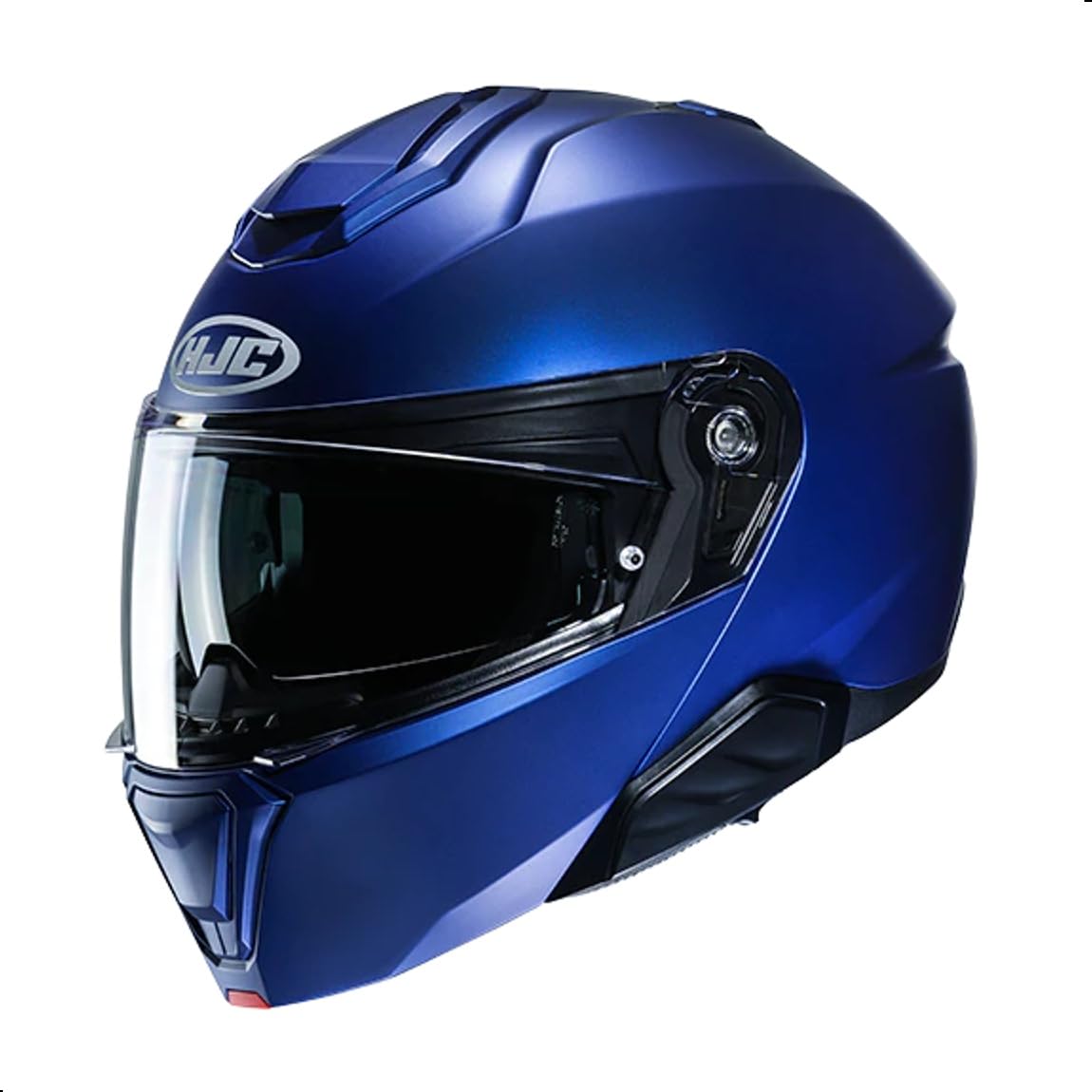
The HJC i91 represents a meaningful step up from the company’s C91 line, offering a Pinlock-ready HJ-33 shield and a refined polycarbonate composite shell that reduces weight without compromising impact protection. The dynamic multi-step sun visor allows the rider to position the tinted inner visor at multiple stops rather than just a single up-or-down position, which improves comfort during changing light conditions.
The Advanced Channeling Ventilation System moves air from the front intake through channels in the EPS liner and out rear exhaust ports, effectively managing heat and humidity during active riding. The moisture-wicking interior is fully removable and washable, and the glasses grooves accommodate eyewear without pressure points. Multiple owners report that the i91 fits more comfortably for larger head shapes than the C91, with better distribution of padding pressure.
Road noise is the most frequently cited drawback, with several riders noting that wind noise becomes fatiguing on highway stretches exceeding thirty minutes without earplugs or headphones. The chin strap uses a traditional buckle rather than a quick-release mechanism, which is less convenient in cold weather. Despite these points, the Pinlock-ready shield and improved ventilation make this a strong mid-range modular choice.
What works
- Pinlock-ready HJ-33 shield for anti-fog performance
- Multi-step sun visor for variable light conditions
- Improved fit for larger head shapes
What doesn’t
- Wind noise is elevated at highway speeds
- Traditional chin strap less convenient in cold
7. Outrush Modular Smart Helmet by Sena

The Outrush Modular Smart Helmet brings Sena’s Bluetooth integration experience into a more accessible price tier while retaining the core communication features that make modular smart helmets practical. The jog-dial control system allows gloved operation of volume, track selection, and phone calls without visual attention. The intercom pairs with another Outrush user for two-rider communication up to the rated open-terrain distance.
The fifteen hours of talk time on a single charge covers multiple full days of riding between charges, and the helmet pairs directly with a smartphone for GPS audio prompts and music streaming. The retractable sun visor adds convenience for variable light without requiring a shield swap. The ABS outer shell provides adequate impact protection, and the helmet meets FMVSS 218 safety standards.
Fit is consistently reported as running small, with many users needing to order one size larger than their normal measurement. The speakers can be difficult to hear on loud snowmobiles or motorcycles without in-ear monitoring, and Bluetooth 3.0 is a generation behind the newer Outrush R model. The helmet also lacks a heated shield option, making it less suitable for extreme cold environments where fogging is persistent.
What works
- Integrated Bluetooth with jog-dial glove-friendly controls
- Fifteen-hour talk time covers multi-day trips
- Retractable sun visor for variable lighting
What doesn’t
- Runs small — order one size larger
- Speakers lack volume on loud vehicles
- Bluetooth 3.0 is outdated
8. HJC C91 Solid Modular Motorcycle Helmet

The HJC C91 is a solid entry into the modular helmet market with a feature set that punches above its positioning. The HJ-17 Pinlock-prepared shield accepts an optional anti-fog insert that dramatically reduces shield fogging in cold, damp conditions — a critical consideration for riders transitioning from warm interiors into freezing air. The integrated dark smoke sun visor deploys via a sliding mechanism on the left side of the shell for quick adjustment.
The advanced polycarbonate composite shell uses CAD technology to optimize the shell shape for impact management while keeping weight under control. The Advanced Channeling Ventilation System provides front-to-back airflow through the EPS channels, and the moisture-wicking liner is removable for cleaning. Speaker pockets are built into the liner for riders who want to add a Bluetooth communication system later, and the helmet is Smart HJC ready for compatibility with the 10B or 20B systems.
Sizing is the most frequently cited issue — this helmet runs one to two sizes smaller than the published sizing chart, and many owners report needing to exchange for a larger size even after careful measurement. The noise level is moderate for a modular helmet but benefits from the included chin curtain. Once properly sized, the C91 offers reliable modular functionality at an accessible investment.
What works
- Pinlock-prepared shield for anti-fog capability
- Integrated dark smoke sun visor
- Speaker pockets for future Bluetooth upgrade
What doesn’t
- Runs one to two sizes small
- Noise levels moderate without chin curtain
9. LS2 Helmets Modular Valiant Helmet

The LS2 Valiant Modular Helmet offers a 180-degree rotating chin bar that flips completely to the rear of the shell, keeping it out of the field of view and out of the way when the helmet is in open position. This full-range rotation is a practical advantage over modular designs that only lift the chin bar partway, allowing easier communication and ventilation without obstruction. The included fog-free visor provides basic anti-fog performance out of the box.
The quick-release chin strap is a notable feature at this tier, providing the convenience of a magnetic-style buckle without requiring the cost of a premium Fidlock system. The shell accommodates large head shapes well, with multiple owners reporting that the 3X size offers a rare fit for those who struggle to find modular helmets that accommodate larger measurements. The included tinted visor slides in and out of the shield assembly for sun protection.
Wind noise is higher than more expensive modular helmets, and the overall finish does not match the refinement of options from HJC or ScorpionEXO at higher price tiers. The chin bar mechanism, while functional, has a less substantial feel during operation than premium competitors. For riders with larger head shapes or those seeking an affordable introduction to modular helmets, the Valiant delivers core functionality without the premium markup.
What works
- Full 180-degree chin bar rotation for clear field of view
- Quick-release chin strap added convenience
- Excellent sizing options for larger head shapes
What doesn’t
- Elevated wind noise compared to premium options
- Chin bar mechanism feels less substantial
- Overall finish does not match higher-tier competitors
Hardware & Specs Guide
Heated Shield Systems
Electric heated shields use a wire element embedded between two layers of polycarbonate that connects to the snowmobile’s electrical system via a cord. These systems maintain shield temperature above the freezing point of condensation, preventing fog and ice formation regardless of breath moisture or external temperature. Dual-pane construction also adds insulation value that reduces heat loss from the rider’s face.
Modular Chin Bar Mechanisms
Chin bar locking mechanisms must withstand impact forces while allowing easy one-handed operation with gloves. Designs range from single-lever releases with metal latch components to multi-step systems that lock at intermediate positions. Ratcheting metal latches offer superior durability in cold weather compared to plastic detents that can become brittle and break.
Shell Materials and EPS Liners
Polycarbonate composite shells provide the best balance of impact resistance, weight, and cost for snowmobile helmets. Multi-density EPS foam liners use varying foam densities to manage impacts at different speeds — softer foam for low-speed impacts and denser foam for high-energy events. Some premium helmets add a third EPS layer for rotational force management.
Ventilation and Moisture Management
Cold-weather ventilation requires a different approach than summer riding. Adjustable intake vents on the forehead and chin bar allow the rider to direct air across the shield interior for defogging while closed vent positions retain warmth during low-activity periods. Moisture-wicking liners with breathable backers pull sweat away from the skin and dry quickly between rides.
FAQ
Can I use a motorcycle modular helmet for snowmobiling?
How do heated helmet shields work?
What safety certifications should I look for?
How should a modular snowmobile helmet fit?
Can I add Bluetooth to a snowmobile helmet?
Final Thoughts: The Verdict
For most riders, the best modular snowmobile helmet winner is the 509 Delta R4 Ignite because it combines a dedicated snowmobile design with a heated dual-pane shield that eliminates fogging in extreme cold. If you want integrated Bluetooth communication without the complexity of aftermarket installation, grab the Sena Outrush R. And for the best optical clarity and ECE 22.06 safety certification, nothing beats the Bell SRT-Modular.

Certification: BSc in Mechanical Engineering
Education: Mechanical engineer
Lives In: 539 W Commerce St, Dallas, TX 75208, USA
Md Amir is an auto mechanic student and writer with over half a decade of experience in the automotive field. He has worked with top automotive brands such as Lexus, Quantum, and also owns two automotive blogs autocarneed.com and taxiwiz.com.