Painting a car at home is one of the most rewarding—and intimidating—projects you can tackle. The line between a smooth, professional-looking finish and a textured, overspray disaster comes down to one thing: having the right equipment to paint a car. Without it, even the best paint job in a can will fall flat.
I’m Amir — the founder and writer behind Four Wheel Ask. Over the years I’ve studied hundreds of owner reports, compared spray patterns, nozzle designs, and cup systems, and analyzed build quality across dozens of brands to separate what actually works from what just looks good on paper.
This guide cuts through the noise to help you choose the best equipment to paint a car for your skill level, project size, and budget—whether you’re touching up a quarter panel or spraying a full respray in your garage.
How To Choose The Best Equipment To Paint A Car
Picking the right gear starts with understanding three core variables: your air source, the type of paint you’ll spray, and the kind of finish you’re chasing. A mismatched gun and compressor is the most common reason first-timers end up with orange peel or dry spots.
Spray Gun Types: HVLP vs. Conventional vs. Turbine
HVLP (High Volume Low Pressure) guns are the standard for automotive work because they transfer more paint onto the panel and less into the air. Conventional guns use higher pressure and produce more overspray, while turbine systems (like the Fuji Mini‑Mite) generate their own low‑pressure air and are ideal for shops without a big compressor.
Nozzle Size Matters
A 1.3–1.4 mm nozzle is perfect for basecoat and clearcoat. Primers and high‑build coatings usually need a 1.7–1.8 mm tip. Most premium spray gun kits come with interchangeable sets so you can handle everything with one gun body.
The Cup System: Disposable vs. Reusable
Disposable liner systems like the 3M PPS 2.0 let you measure, mix, and filter directly in the cup, then toss the liner when you’re done. They’re more expensive per use but save hours of cleaning. Traditional aluminum cups are cheaper and lighter, but require thorough solvent cleaning between colors.
Quick Comparison
On smaller screens, swipe sideways to see the full table.
| Model | Category | Best For | Key Spec | Amazon |
|---|---|---|---|---|
| Master Elite PRO‑88 | HVLP Spray Gun Kit | Versatile DIY & semi‑pro | 3 tips: 1.3, 1.4, 1.8mm, 1L cup | Amazon |
| 3M Performance Gun Starter | HVLP Spray Gun System | Premium finish, easy cleanup | 15 replaceable heads (1.2,1.3,1.4mm) | Amazon |
| DeVilbiss Auto Painting Kit | 2‑Gun Set | Full primer + topcoat with one buy | Two guns, 1.3mm & 1.8mm tips | Amazon |
| Graco Sharpe FX3000 | HVLP Gravity Gun | Entry‑level value | 1.8mm tip, 600cc aluminum cup | Amazon |
| DeVilbiss StartingLine Kit | HVLP Gun Kit | Spot repairs & beginners | 1.3mm + 1.0mm tips, carrying case | Amazon |
| 3M PPS 2.0 Cup Kit | Disposable Cup System | Fast color changes, no cleanup | 28‑oz cup, 50 liners, 200‑micron filter | Amazon |
| Fuji Spray Mini‑Mite 4 | Turbine HVLP System | No compressor needed | Turbine + T‑70 gun, 25‑ft hose | Amazon |
In‑Depth Reviews
1. Master Elite Performance PRO-88 HVLP Spray Gun Ultimate Kit

With three complete atomizing sets (1.3, 1.4, and 1.8 mm), this kit covers everything from thin basecoats to thick 2K primers without needing a second gun. The stainless steel needle and nozzle are waterborne compatible, a feature often reserved for guns costing twice as much.
Owner reports consistently praise the even fan pattern and lack of spitting, even for novice users. The included regulator gauge gives you direct control at the gun, eliminating guesswork. A few users noted internal rust if waterborne paints were left in the gun without thorough drying, so a strict cleaning regimen is advised.
The MPS adapter allows use of disposable cup liners, bridging the gap between traditional cup convenience and modern cleanup. For the DIYer who wants one gun to handle every stage of a respray, this is the most cost‑effective way to get there.
What works
- Three included tip sizes cover all automotive coatings
- Excellent atomization for a gun in this tier
- Regulator gauge and MPS adapter add pro‑level control
What doesn’t
- Some interior rusting reported if not fully dried after waterborne use
- Heavier than all‑composite bodies like the 3M
2. 3M Performance Spray Gun Starter Kit (26778)

This is the gun that redefines “fast clean.” The stainless‑steel‑reinforced composite body is up to 50% lighter than metal guns, and the replaceable atomizing heads (5 each of 1.2, 1.3, and 1.4 mm) mean you never have to disassemble the nozzle to swap setups—just twist off the old head and click on a new one.
Owners who spray multiple colors in a single day love the PPS 2.0 cup system that comes with the kit: measure, mix, filter, spray, then toss the liner. Transfer efficiency is excellent, which translates into less paint waste and fewer coats needed for coverage.
The only trade‑off is the initial investment, which sits above most hobbyist budgets. But for anyone painting frequently—restorers, custom shops, serious DIYers—the time saved on cleaning and setup quickly justifies the cost.
What works
- Lightest gun in its class reduces fatigue
- Swapping atomizing heads is faster than changing tips
- Integrated PPS cup system saves hours of cleanup
What doesn’t
- Higher price point than many DIYers expect
- Replacement heads are relatively expensive over time
3. DeVilbiss Auto Painting/Priming Kit (802343)

This is the rare set that gives you a dedicated primer gun and a dedicated topcoat gun for roughly the same price as a single mid‑range gun. The primer gun uses a larger tip to handle high‑build coatings without clogging, while the finishing gun delivers a fine atomization for base and clear.
Reviews from hobbyists who painted entire classics—like a 1970 Barracuda—report professional results. The cup attachments are robust and don’t collapse or twist during use, a common complaint with budget sets. The gravity‑feed design reduces paint waste compared to siphon feed.
One caveat: if you plan to use a disposable liner system like the 3M PPS, you’ll need to verify adapter compatibility, as this set is built around traditional aluminum cups.
What works
- Two guns at a price that beats buying separately
- Solid cup design doesn’t twist or deform
- Great for full‑car paint jobs from primer to clear
What doesn’t
- Not compatible with most disposable cup systems out of the box
- Heavier than modern composite guns
4. Graco-Sharpe 288882 HVLP FX3000 Paint Spray Gun
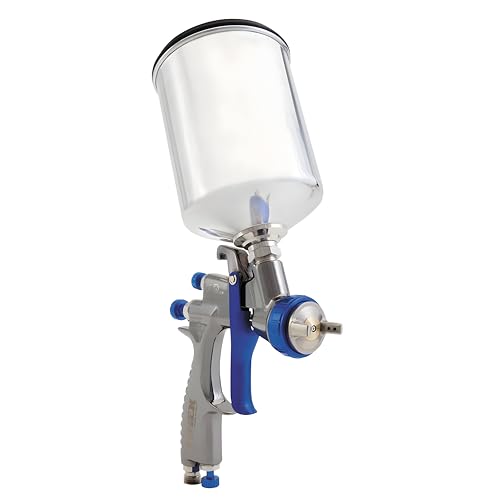
The FX3000 has become a go‑to for beginners because it delivers a usable spray pattern right out of the box. The lightweight body and gravity feed make it easy to maneuver, and the 1.8 mm tip is well suited for primers and single‑stage paints.
Experienced users note that the gun doesn’t finish basecoat or clearcoat at the level of higher‑end tools—some report a less refined atomization that can require more sanding and buffing. However, several owner reviews from professional shop painters confirm that it outperforms other guns in its price tier by a wide margin.
For someone doing their first full paint job, this is a low‑risk way to learn the basics of setup, trigger control, and cleaning without a big financial commitment.
What works
- Exceptionally affordable entry into HVLP painting
- Good atomization for primer and single‑stage paints
- Lightweight and easy to handle for long sessions
What doesn’t
- Not ideal for high‑gloss clearcoat without post‑work
- Plastic air distributor can feel flimsy; some units reported failures
5. DeVilbiss StartingLine HVLP Gravity Spray Gun Kit (802342)

The StartingLine kit is built with the novice in mind: a clear instruction guide walks you through setup, and the included air regulator with gauge takes the guesswork out of pressure settings. The two‑tip system (1.3 mm for base/clear, 1.0 mm for spot repairs) covers the most common automotive painting tasks.
Long‑time users report that these guns perform surprisingly well for the money. A painter with 35 years of experience noted the spray pattern is consistent, though the internal components are made offshore. That’s expected at this price, and the gun still outpaces generic no‑name units.
The blow‑molded case keeps everything organized—a small bonus that makes a big difference when you’re new and learning to maintain your gear.
What works
- Comes with regulator gauge for easy pressure control
- Two tip sizes give flexibility without extra cost
- Carrying case simplifies storage and transport
What doesn’t
- Overseas manufacturing means parts may vary
- 1.0 mm tip is rarely used; most users stick to the 1.3 mm
6. 3M PPS 2.0 Spray Gun Cup, Lids and Liners Kit (26024)

If you already own a spray gun and want to cut cleanup time from 20 minutes to two, this is the upgrade. The PPS 2.0 system uses disposable plastic liners and lids with a built‑in 200‑micron filter, so you can pour, mix, measure, and spray without ever touching a solvent bucket.
Every owner review calls the clean‑up “effortless.” The quarter‑turn locking collar prevents cross‑threading, and the clear liner lets you see exactly how much paint remains. The kit includes 50 liners, 50 lids, and 32 sealing plugs, enough for a full car or several projects.
Be aware that some adapters are needed to fit non‑3M guns, and the liners are a recurring expense. But for anyone who hates after‑work cleanup, the time savings alone make this a no‑brainer.
What works
- Dramatically reduces cleanup time and solvent use
- Built‑in filter eliminates a separate step
- Clear liner shows paint level at a glance
What doesn’t
- Requires a compatible adapter for most aftermarket guns
- Ongoing cost of disposable liners adds up
7. Fuji Spray 2904-T70 Mini-Mite 4 Platinum with T70 Gun
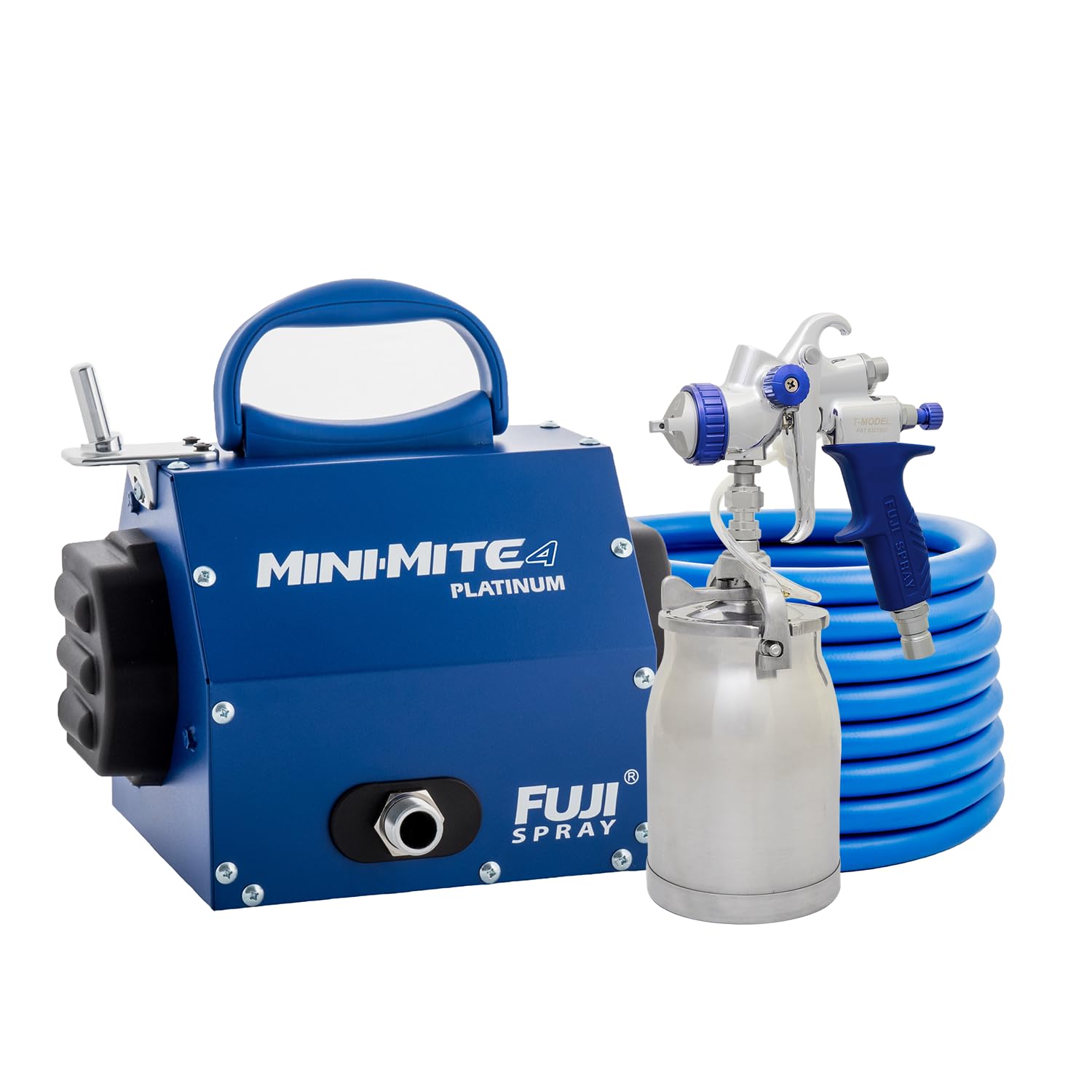
For those without a large air compressor—or who want portability—the Mini‑Mite 4 Platinum is a complete solution. The turbine generates its own low‑pressure air, so you get consistent HVLP performance anywhere you can plug into a wall outlet. The T70 bottom‑feed gun has a side pattern control knob for easy adjustment.
Woodworkers and furniture finishers rave about the fine atomization and zero pressure fluctuation. When used for automotive work, it handles basecoats and clearcoats very well, though the fan pattern is slightly different from a conventional compressed‑air gun. The 25‑foot hose with air control valve reduces overspray and bounce‑back.
The trade‑off is weight: at nearly 29 pounds, the turbine unit isn’t something you’ll sling over your shoulder. But for a dedicated paint booth or garage setup, the consistent air delivery and lack of compressor noise make it a worthy investment.
What works
- No compressor required—plugs into any standard outlet
- Steady, moisture‑free air supply
- Excellent atomization for fine finishes
What doesn’t
- Heavy turbine unit limits portability
- Bottom‑feed gun has a smaller cup capacity
Hardware & Specs Guide
HVLP vs. Conventional Spray Guns
HVLP guns operate at around 10 psi at the air cap, transferring up to 65% of paint to the surface. Conventional guns run at higher pressures (30–50 psi) and waste more material through overspray. For automotive finishes, HVLP is the standard because it reduces orange peel and meets environmental regulations.
Nozzle & Needle Sets
Most guns use a combination of fluid tip, needle, and air cap. Smaller sizes (1.2–1.4 mm) are for thin materials like basecoat, clearcoat, and sealer. Larger sizes (1.7–2.0 mm) handle thicker products like high‑build primer. Interchangeable sets let you switch without buying separate guns.
Cup Systems: Gravity vs. Siphon vs. Disposable
Gravity feed (cup on top) uses less paint and allows spraying at any angle. Siphon feed (cup below) is older and less efficient. Disposable liner systems like 3M PPS eliminate cleaning but create ongoing consumable costs. The choice depends on how much paint you waste vs. how much time you save.
Compressor Requirements for HVLP Guns
Most HVLP guns need a compressor that delivers 6–12 CFM at 40 psi. A 20‑gallon tank is the minimum for continuous panel spraying; larger tanks (30–60 gallons) prevent the compressor from cycling mid‑coat. Turbine systems bypass this entirely by generating their own low‑pressure air.
FAQ
What size air compressor do I need to paint a car?
Can I use an HVLP gun for both primer and clearcoat?
Are disposable cup systems really worth the extra cost?
Final Thoughts: The Verdict
For most buyers looking for the best equipment to paint a car, the Master Elite PRO‑88 Ultimate Kit offers the best combination of versatility, atomization quality, and value with its three included tip sets. If you prioritize fast cleanup and don’t mind spending more upfront, the 3M Performance Spray Gun Starter Kit is the premium choice that saves hours of solvent work. And for those without a large compressor, the Fuji Spray Mini‑Mite 4 Platinum provides professional‑grade results straight out of the box.

Certification: BSc in Mechanical Engineering
Education: Mechanical engineer
Lives In: 539 W Commerce St, Dallas, TX 75208, USA
Md Amir is an auto mechanic student and writer with over half a decade of experience in the automotive field. He has worked with top automotive brands such as Lexus, Quantum, and also owns two automotive blogs autocarneed.com and taxiwiz.com.