A hitch extender that flexes under load or introduces wobble into your bike rack, cargo carrier, or trailer connection is not just annoying — it compromises safety. The market is flooded with extenders that look identical online but diverge wildly in weld quality, steel thickness, and real-world stability. Understanding which dimensions, materials, and anti-rattle features actually matter separates a dependable setup from a constant headache.
I’m Amir — the founder and writer behind Four Wheel Ask. My research process involves cross-referencing manufacturer material certifications, analyzing weld geometry from owner photos, and tracking long-term corrosion reports across thousands of verified purchases.
This guide evaluates seven top contenders on build integrity, receiver fit precision, and real-world compatibility with trucks, SUVs, and RVs. After analyzing dozens of models across price tiers, this guide identifies the best dual receiver hitch extender for every towing configuration and budget.
How To Choose The Best Dual Receiver Hitch Extender
Selecting the right dual receiver hitch extender requires evaluating material strength, extension length, drop/rise adjustability, and anti-rattle design. A poorly chosen unit introduces dangerous leverage on your receiver and accelerates wear on both the hitch and the accessory mounted to it.
Material and Construction
Steel offers higher tensile strength and lower cost but adds significant weight. Aluminum provides corrosion resistance and easier handling but requires thicker walls to match steel capacity. Look for robotically welded seams and solid (not hollow) shank inserts on high-load units. Powder-coated finishes resist UV and salt better than basic paint, while anodized aluminum surfaces hold up against oxidation without chipping.
Extension Length and Leverage
Every inch of extension multiplies the leverage force on your receiver hitch. An extender that pushes accessories six to eight inches back creates substantially more bending moment than a compact four-inch unit. Match extension length strictly to what you need to clear a spare tire, rear door, or RV bumper — never buy more length than your setup requires.
Drop/Rise and Dual Ball Configurations
Adjustable drop/rise hitches let you level a trailer by raising or lowering the ball height in one-inch increments. Dual ball designs pair a 2-inch ball for lighter trailers with a 2-5/16-inch ball for heavier loads up to 12,500 lbs GTW. Ensure the adjustment mechanism uses positive locking with a pin and cotter rather than friction clamps alone.
Quick Comparison
On smaller screens, swipe sideways to see the full table.
| Model | Category | Best For | Key Spec | Amazon |
|---|---|---|---|---|
| Roadmaster 077-2 | Dual Offset | Jeep Wrangler & spare tire clearance | 10,000 lbs towing, 400 lbs tongue | Amazon |
| Blue Ox BX88265 | Fixed Extension | RV bumper clearance & tow bars | 10,000 lbs, 12-inch extension | Amazon |
| METOWARE Adjustable | Drop Hitch | Frequent height changes | 14,000 lbs GTW, 4-inch drop/rise | Amazon |
| Kohree 6-Inch | Adjustable | Multi-trailer households | 12,500 lbs GTW, dual ball, 6-inch drop | Amazon |
| Onsski Adjustable | Drop Hitch | Value-focused towing | 12,500 lbs GTW, 6-inch drop, dual ball | Amazon |
| CURT 45791 | Fixed Extension | Bike rack & spare tire clearance | 3,500 lbs, 8-inch extension | Amazon |
| HITOWMFG Extension | Drop/Rise | Budget clearance solutions | 350 lbs TW, 2-inch drop/rise | Amazon |
In‑Depth Reviews
1. Roadmaster 077-2 Dual Receiver Hitches
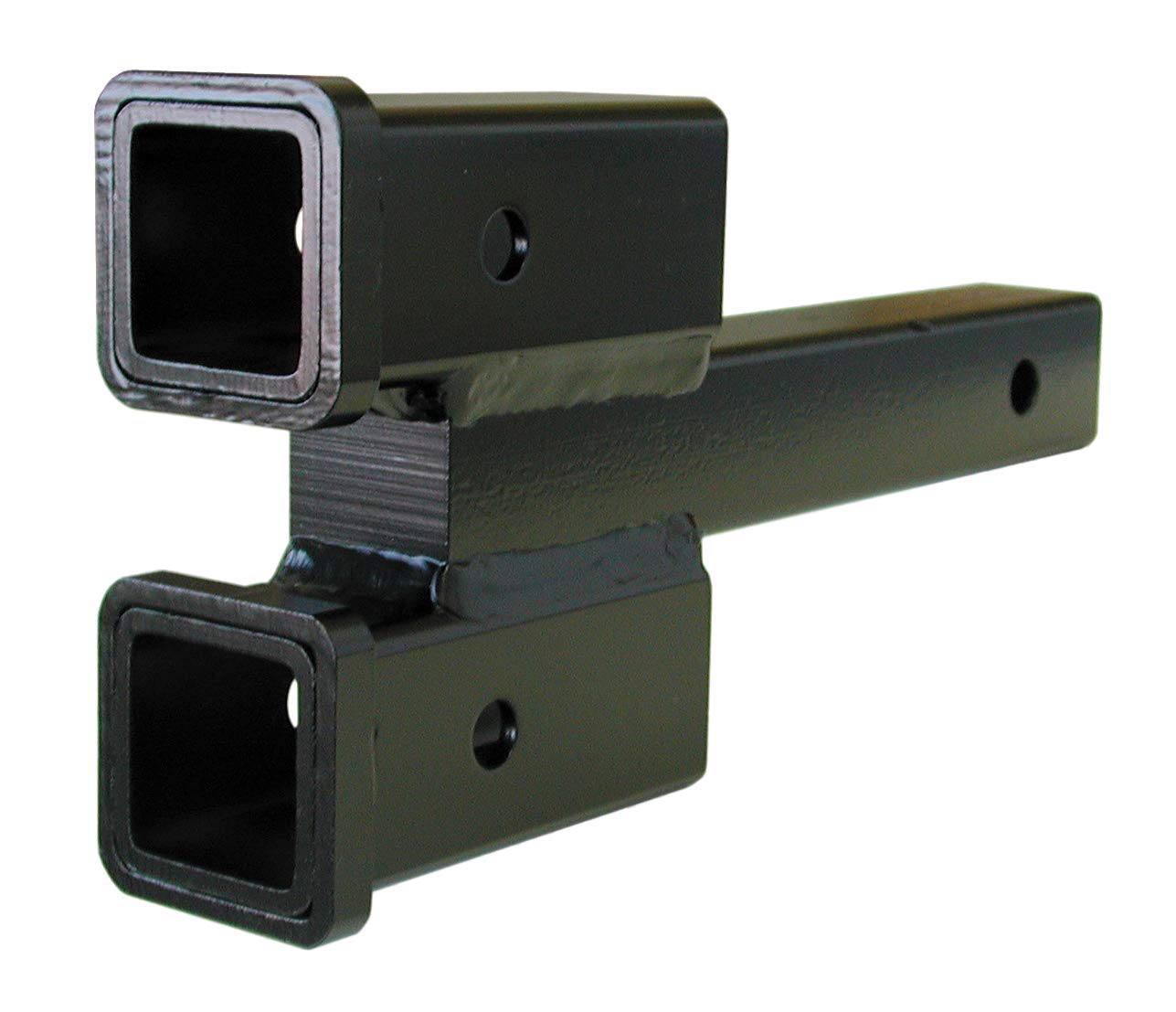
The Roadmaster 077-2 is not a traditional extender — it is a dual receiver adapter that adds a second 2-inch opening above or below your existing hitch. This design lets you run two accessories simultaneously, such as a bike rack and a tow dolly, without swapping hardware. The solid steel stinger and limited lifetime warranty reflect a build standard that outclasses stamped or extruded alternatives.
Owner reports consistently highlight the offset geometry as the only reliable solution for Jeep Wrangler spare tire clearance. The dual offset can be installed upward to raise the towing height or downward to lower it, adding versatility beyond simple extension. The powder coat finish holds up well against road salt and UV exposure based on long-term reviews.
The 10,000-pound towing capacity with 400-pound tongue weight covers most recreational towing scenarios. Some early units had hole alignment issues, but recent production appears to have corrected this. The integrated anti-rattle clamps grab the collar securely, reducing the wobble common with budget dual receivers.
What works
- Dual offset slots clear spare tires on Wranglers where other adapters fail
- Solid steel stinger with clean, thick welds and premium powder coat finish
- Anti-rattle clamps effectively reduce vibration during highway driving
What doesn’t
- Heavier than aluminum alternatives — adds noticeable weight behind the bumper
- Early production units reported misaligned pin holes; verify before installing
2. CURT Manufacturing 45791 2″ Receiver Extender
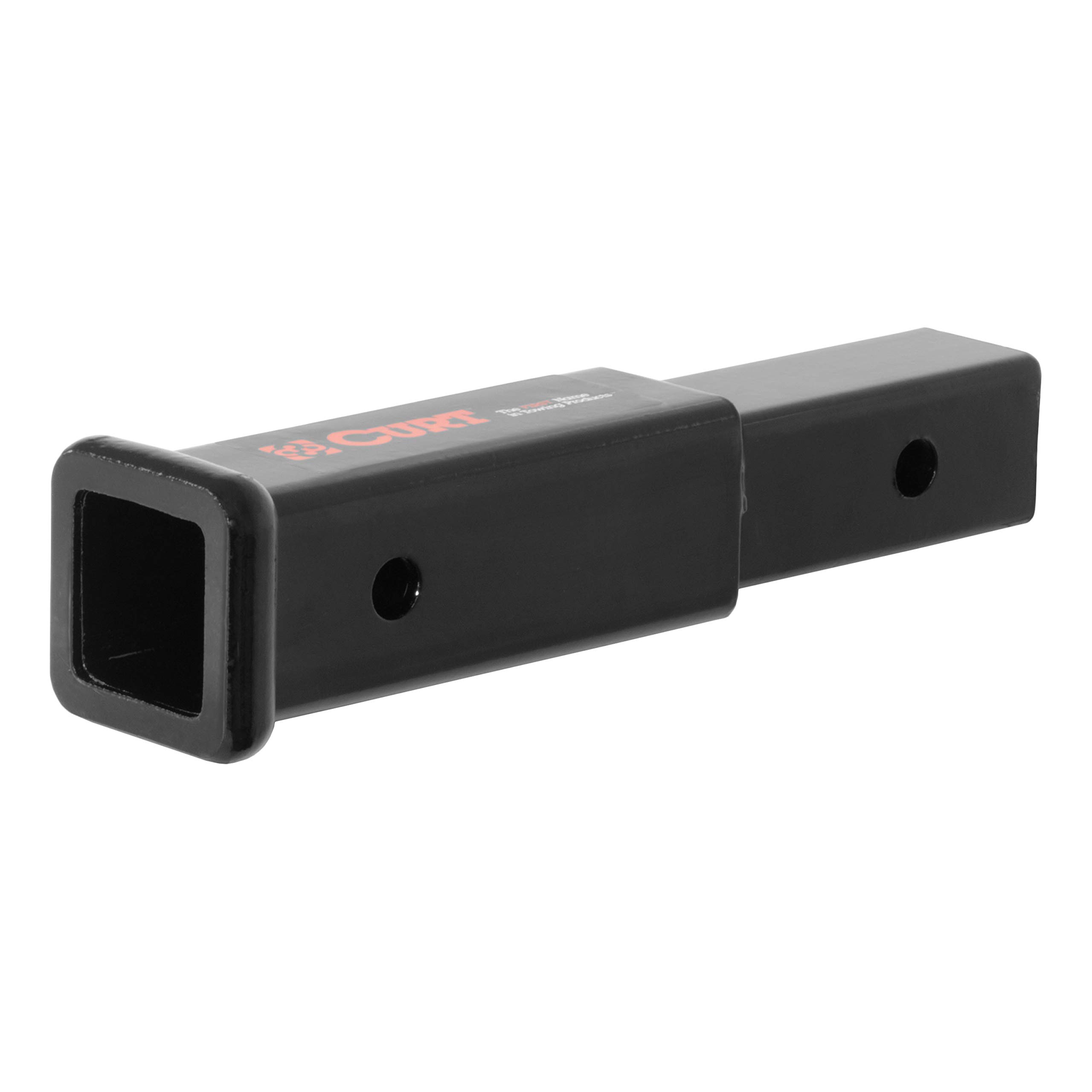
CURT has a decades-long reputation in the towing industry, and the 45791 extender reinforces that standing. The insert shank is solid carbon steel rather than hollow tubing, which eliminates the slop that develops over time with cheaper stamped units. The 8-inch extension provides enough clearance for bike racks behind spare tires on SUVs like the Jeep Liberty and Honda Pilot.
Robotic welding and a mechanical descaling process ensure the shank slides smoothly into the receiver without excessive filing or hammering. The gloss powder coat finish resists chipping better than matte alternatives, though it will scuff under heavy use. Owner feedback notes that the extender pairs perfectly with other CURT brand hitches for aligned pin holes.
At 12 pounds, this is one of the heavier fixed extenders on the market, which speaks to the material density. The 3,500-pound towing capacity is lower than adjustable drop hitches, so this unit is best suited for bike racks, cargo carriers, and light trailers rather than heavy RV towing. The limited lifetime warranty adds peace of mind for long-term ownership.
What works
- Solid carbon steel shank eliminates hollow-section flex under load
- Robotic welding and mechanical descaling ensure precise receiver fit
- Limited lifetime warranty covers manufacturing defects beyond initial use
What doesn’t
- Rated for 3,500 lbs — not suitable for heavy travel trailers or large boats
- No built-in anti-rattle mechanism; aftermarket stabilizer may be needed
3. Blue Ox BX88265 6″ Receiver Extension
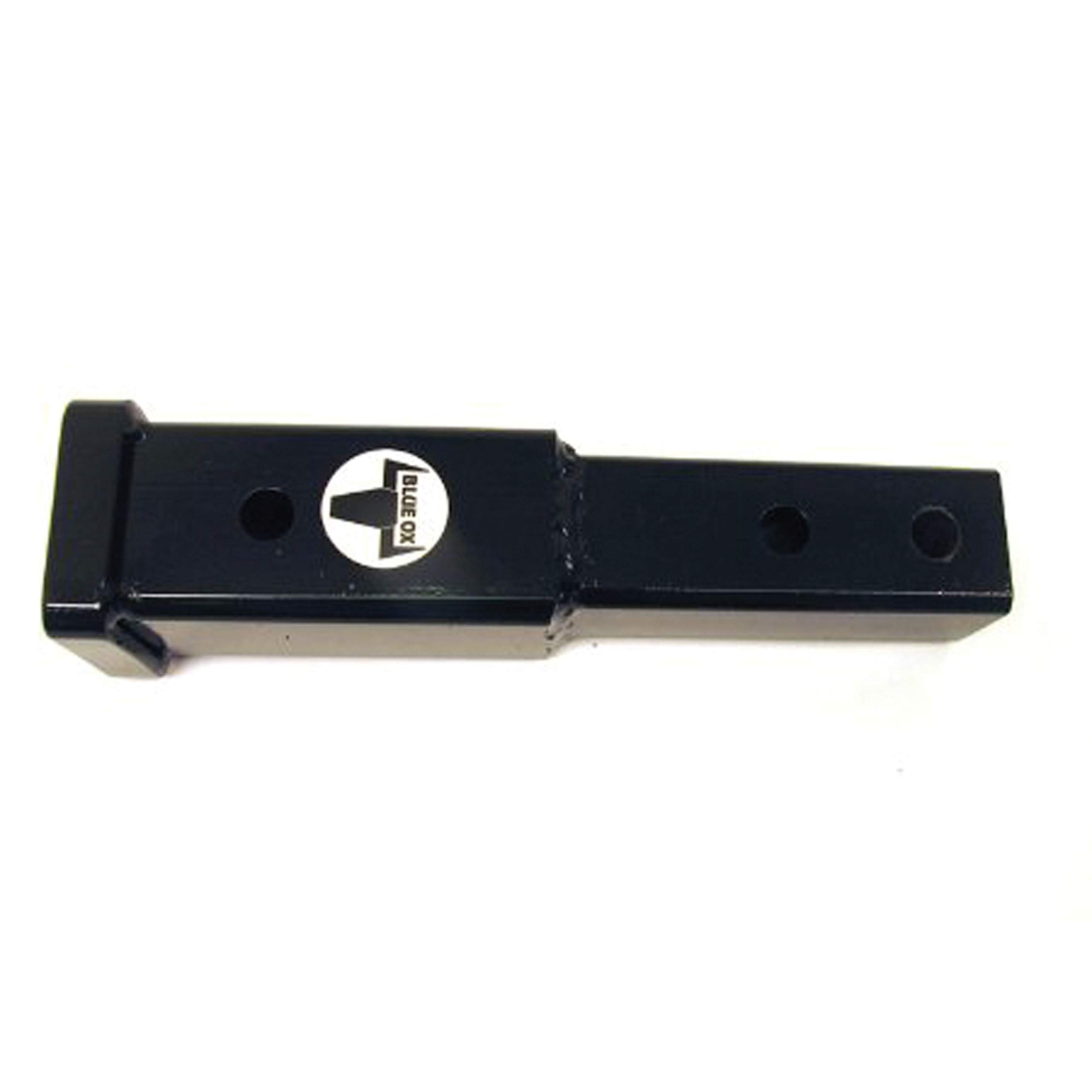
Blue Ox is synonymous with heavy-duty towing gear, and the BX88265 extension exemplifies overbuilt engineering. The insert shank is a solid slug of steel instead of formed tubing — owners consistently describe the weight as surprising for its size. This mass translates to minimal vibration and zero torsional flex even when loaded near the 10,000-pound rating.
The 12-inch extension length is among the longest available, making it the go-to choice for motorhome owners who need to clear a rear bumper for tow bar or bike carrier attachment. The powder coated steel finish is thick and uniform, though the sheer weight makes this impractical for those who frequently install and remove the extender.
Class IV rating means this unit is designed for load-carrying hitches and can handle significant tongue weight. Owner reviews note that towing a 4,000-pound travel trailer over 500 miles produced no issues beyond typical receiver slop. The main trade-off is weight — this is not a unit you want to handle daily, but for permanent or semi-permanent RV installations, it is the most solid option available.
What works
- Solid steel shank — no hollow tubing, minimal flex under heavy loads
- Class IV rated with 10,000 lb towing capacity for serious RV use
- 12-inch extension clears deep RV bumpers and large spare tire mounts
What doesn’t
- Extremely heavy — inconvenient for frequent removal and storage
- No built-in anti-rattle system; some receiver slop reported without add-ons
4. METOWARE Adjustable Trailer Hitch
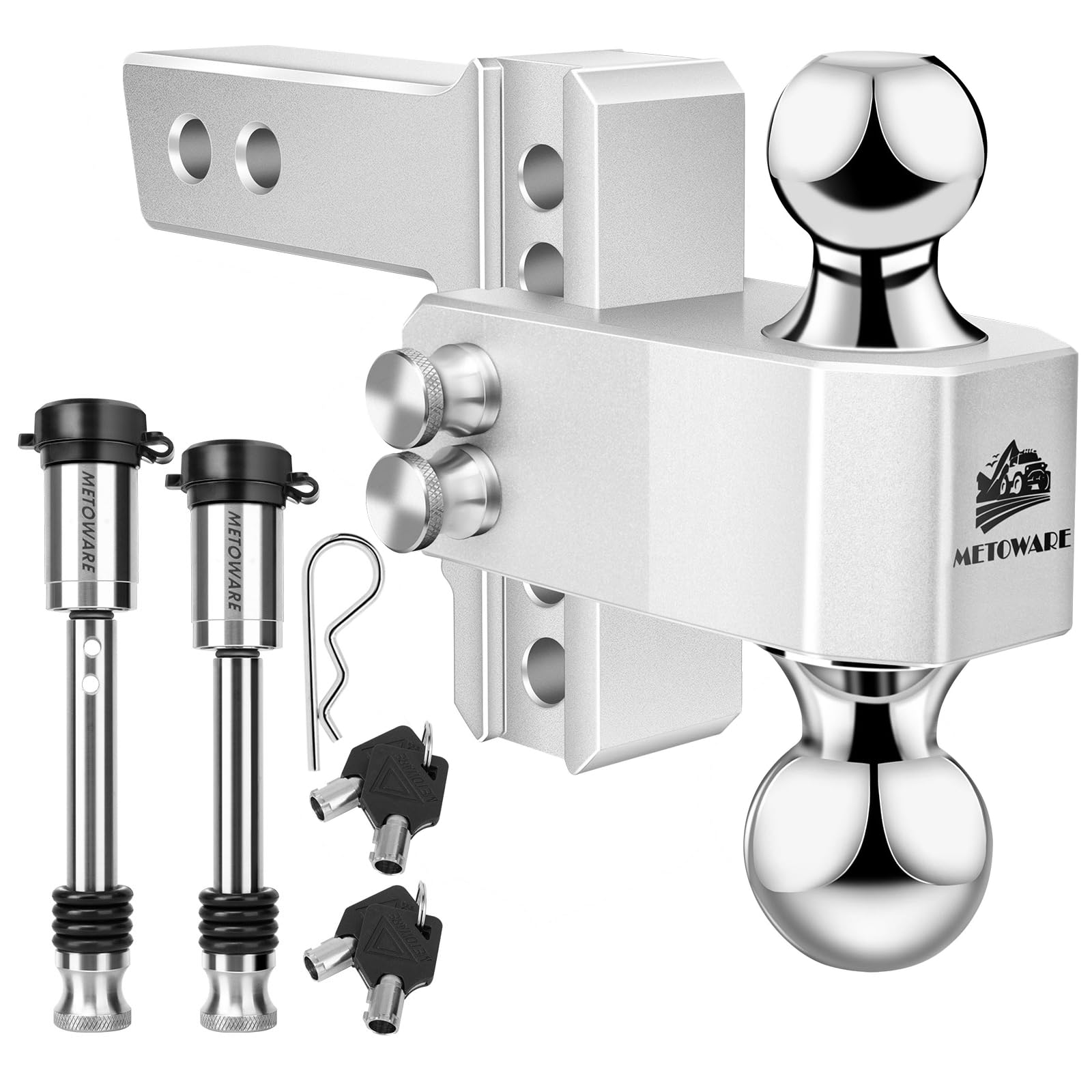
The METOWARE adjustable hitch achieves an impressive 14,000-pound GTW rating from an aluminum body, which puts it in a weight class above most competitors. The advanced oxide coating provides genuine corrosion resistance without the chipping risk of powder coat. The 4-inch drop and 4-inch rise range covers typical height mismatches between trucks and trailers.
Owner reviews emphasize the quick-adjust mechanism that uses cotter pins to limit horizontal movement while the two locking shafts secure height position. This dual-lock approach reduces the wobble that plagues single-pin adjustable hitches. The integrated dual-ball system covers both 2-inch and 2-5/16-inch ball sizes without needing to swap hardware.
Some owners noted surface rust developing on the steel balls despite the aluminum body, which suggests the balls lack sufficient corrosion coating. The one-key locking system simplifies management but means losing the key compromises security. For those who regularly tow different trailer types and want lightweight handling, this is the highest-capacity adjustable option available.
What works
- 14,000 lb GTW rating exceeds most aluminum adjustable hitches on the market
- Triple-secure system with two locks and safety pin provides redundant theft protection
- Anodized finish resists corrosion better than powder-coated alternatives
What doesn’t
- Steel balls prone to surface rust — require periodic coating maintenance
- One-key system creates single point of failure if key is lost
5. Kohree 6″ Adjustable Trailer Hitch
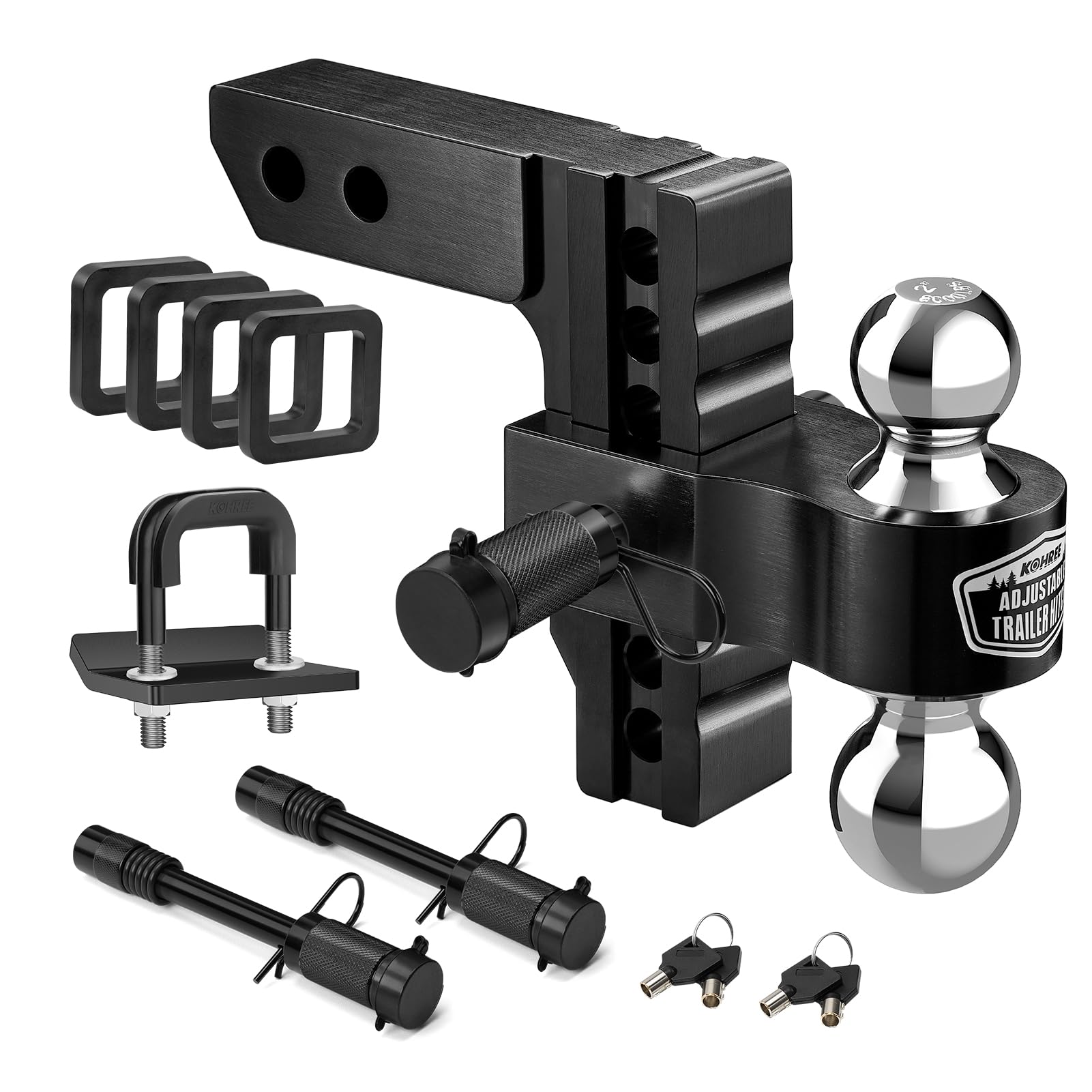
The Kohree adjustable hitch focuses on eliminating the infamous hitch rattle that plagues many drop hitches. Four silicone silencer pads fit between the shank and receiver to dampen vibration, and owner feedback confirms a noticeable reduction in cab noise compared to metal-on-metal installations. The 6-inch drop/rise range provides more adjustability than the METOWARE, suiting trucks with significant lift or squat.
The dual-ball design covers 2-inch and 2-5/16-inch balls with towing capacities of 8,000 and 12,500 pounds respectively, matching the Onsski unit in capability. The powder coat finish is described by owners as deeply black and uniform, though the quality of the anodizing on the METOWARE is superior for long-term corrosion resistance.
The locking hitch pins use stainless steel construction with unique key cylinders, though some owners report the pins are longer than necessary, potentially making them easier targets for cutting tools. The rubber silencer pads soften over time and may need replacement after a season of heavy use. For buyers prioritizing a quiet towing experience with generous adjustability, this unit delivers on its core promise.
What works
- Four silencer pads dramatically reduce receiver rattle compared to bare metal
- 6-inch drop/rise range suits lifted trucks and varied trailer heights
- Stainless steel locking pins with unique keys deter opportunistic theft
What doesn’t
- Rubber silencer pads degrade and compress over time, requiring replacement
- Locking pin length may be excessive — easier for bolt cutters to reach
6. Onsski Adjustable Trailer Drop Hitch

The Onsski adjustable hitch delivers the same dual-ball, 6-inch drop configuration as the Kohree at a more accessible price point. The aluminum body keeps weight manageable, and the powder coat finish presents well out of the box. Owner reviews consistently note the solid feel and attractive appearance, with several commenting that build quality exceeds expectations for the price tier.
Four silencer pads are included to reduce rattle, though some owners report the pads compress quickly and lose effectiveness within a few months of regular use. The locking hitch pins are heavy-duty stainless steel, but the branded white lettering milled into the hitch body drew criticism from owners who prefer a cleaner look. The unique key cylinders provide basic theft deterrence, though the pin length concerns seen in the Kohree unit apply here as well.
The 12,500-pound GTW rating covers most recreational trailers, and the 8,000-pound capacity on the 2-inch ball handles lighter loads. Some owners noted the 8-inch drop version introduces more leverage than ideal, so the 6-inch variant is the better choice for stability. For budget-conscious buyers who need full adjustability and dual-ball convenience, this is the strongest contender in its segment.
What works
- Dual-ball design with 12,500 lb GTW covers most recreational towing needs
- Lightweight aluminum construction makes installation and adjustment easy
- Included hitch silencers reduce road noise during towing
What doesn’t
- Brand name engraved in large white lettering may be visually unappealing
- Silencer pads wear out faster than premium rubber alternatives
7. HITOWMFG 2″ Trailer Hitch Receiver Extension

The HITOWMFG extension is a straightforward steel drop/rise solution for light-duty clearance needs. The 2-inch drop or rise adjusts the hitch height slightly to accommodate minor mismatches between vehicle and trailer. The alloy steel construction with robotic welding delivers adequate strength for bike racks and cargo carriers, though the 350-pound tongue weight limit prevents use with conventional travel trailers.
Owner feedback from Jeep Wrangler owners confirms this unit provides just enough extension to clear rear tire carriers while keeping the bike rack or winch mount accessible. The three pin-hole positions help avoid bumper interference, which is a thoughtful detail for vehicles with tight rear clearances. The powder coat finish is serviceable but thinner than premium units — owners in salt-belt states should monitor for corrosion.
Notable omissions include the lack of a hitch pin in the box, which several reviewers pointed out as an inconvenience. The universal fit works with class III and IV receivers, but the absence of anti-rattle features means some wobble is expected. For those who need a simple, low-cost spacer for accessories that stay under 350 pounds of tongue weight, this unit solves the problem without frills.
What works
- Solid alloy steel shank with robotic welds provides reliable light-duty strength
- Three pin positions help avoid bumper contact on vehicles with tight clearance
- 2-inch drop/rise range suits minor height adjustments for bike racks and carriers
What doesn’t
- No hitch pin included — requires separate purchase before installation
- 350 lb tongue weight limits use to accessories only, not conventional trailers
Hardware & Specs Guide
Receiver Class and Capacity
Hitch receivers are classified I through V based on gross trailer weight and tongue weight. Class III receivers handle up to 6,000 lbs GTW with 600 lbs tongue weight, while Class IV supports up to 10,000 lbs GTW. A dual receiver extender must match or exceed your vehicle’s receiver class — never use a lower-rated extender on a higher-rated hitch, as the leverage from extension increases stress on the shank and pin connection.
Drop and Rise Measurement
Drop/rise is measured from the center of the receiver opening to the center of the ball mount platform. A 6-inch drop hitch lowers the ball 6 inches below the receiver centerline. Measure your trailer coupler height when the trailer is level, then subtract your receiver height to determine the drop needed. Most adjustable hitches offer 4 to 6 inches of range in 1-inch increments, covering the majority of truck and SUV setups.
Material and Finish Durability
Carbon steel offers the highest strength-to-cost ratio but adds weight and requires corrosion protection. Powder coating is the most common finish — look for a minimum 2-mil thickness and baked-on application rather than spray. Anodized aluminum provides inherent corrosion resistance without a coating layer that can chip. For frequent use in wet or salted environments, anodized aluminum or heavily powder-coated steel is recommended.
Anti-Rattle and Stabilization
All hitch extenders introduce some degree of wobble because the shank is smaller than the receiver opening. Silicone or rubber silencer pads fill the gap and dampen vibration, while wedge-style anti-rattle clamps apply mechanical pressure to eliminate movement. For bike racks and cargo carriers, silencer pads are usually sufficient. For trailer towing, a clamp-based stabilizer provides more consistent tension over long distances.
FAQ
Is a dual receiver hitch extender safe for towing a trailer?
How much extension is too much for a hitch extender?
Will a dual receiver hitch extender fit my Jeep Wrangler with a spare tire?
Can I use a hitch extender with a weight distribution system?
What is the difference between a drop hitch and a receiver extender?
Final Thoughts: The Verdict
For most buyers, the best dual receiver hitch extender winner is the Roadmaster 077-2 because it solves the specific clearance problems that plague Jeep Wrangler and SUV owners while offering a full 10,000-pound towing capacity in a premium steel build. If you want lightweight adjustability with maximum corrosion resistance, grab the METOWARE Adjustable Hitch. And for heavy-duty RV bumper clearance where nothing less than bombproof steel will do, nothing beats the Blue Ox BX88265.

Certification: BSc in Mechanical Engineering
Education: Mechanical engineer
Lives In: 539 W Commerce St, Dallas, TX 75208, USA
Md Amir is an auto mechanic student and writer with over half a decade of experience in the automotive field. He has worked with top automotive brands such as Lexus, Quantum, and also owns two automotive blogs autocarneed.com and taxiwiz.com.