A dashboard that looks clean from five feet away but feels greasy to the touch or glares in direct sunlight is a compromise too many drivers accept. The real challenge is finding a formula that dissolves embedded grime without leaving a slick, light-reflecting film that attracts dust hours later. The chemistry behind modern vinyl cleaners has shifted away from heavy silicone oils toward engineered polymers that bond at the molecular level, which changes how we evaluate what actually works.
I’m Amir — the founder and writer behind Four Wheel Ask. I’ve spent years studying formulation data, analyzing owner-reported long-term results, and comparing how different cleaner and protectant chemistries hold up under real UV exposure and temperature cycling.
Selecting the right product comes down to understanding the balance between cleaning power and the final surface character you want. After reviewing dozens of real-world reports and lab-grade ingredient breakdowns, the best auto vinyl cleaner delivers a factory-fresh satin finish without sticky residue.
How To Choose The Best Auto Vinyl Cleaner
Not every spray or wipe sold as a vinyl cleaner actually cleans. Many are dressings that deposit a temporary coating over existing dirt, which looks fine for an afternoon but traps contaminants against the surface. Understanding a few core distinctions helps you pick a product that preserves the material rather than just masking its condition.
Surface Compatibility & Material Safety
Vinyl in automotive interiors varies widely — from soft-touch dashboard coatings to rigid door panel trim and weather stripping. A cleaner safe for hard plastic may etch or discolor soft vinyl. Look for formulations that explicitly list compatibility with coated vinyl, uncoated vinyl, rubber, and polycarbonate. Products with biodegradable or non-toxic labels typically avoid harsh solvents that can accelerate cracking over time.
Finish Character: Gloss, Satin, or Matte
The sheen level of a cleaner or dressing directly affects visibility and dust accumulation. High-gloss products reflect more sunlight onto the windshield, creating dangerous glare during daytime driving. Satin finishes strike the most practical balance — they darken and enrich the surface without introducing reflective shine. Matte options exist but often require more frequent reapplication because they lack the protective film that extends durability.
UV Protection & Longevity
UV degradation is the primary cause of vinyl fading, cracking, and color shifting. A cleaner with integrated UV inhibitors provides dual action: it removes surface contaminants while depositing a protective layer that blocks radiation. Wipes offer convenience for quick touch-ups, but liquid sprays generally allow more control over coverage thickness, which translates to longer-lasting protection between applications.
Quick Comparison
On smaller screens, swipe sideways to see the full table.
| Model | Category | Best For | Key Spec | Amazon |
|---|---|---|---|---|
| Griot’s Garage Vinyl & Rubber Dressing | Liquid Spray | Satin finish on dash, trim, tires | 22 oz, silicone-free formula | Amazon |
| Turtle Wax Hybrid Solutions Interior Detailer | Misting Spray | Streak-free screens & glossy vinyl | 20 oz, UV inhibitors included | Amazon |
| 303 Aerospace Protectant Wipes | Wipes | Quick UV protection touch-ups | 40 wipes, unscented | Amazon |
| Sprayway SW936 Aerosol | Aerosol Spray | Instant high-gloss shine | 11 oz, silicone-based coating | Amazon |
| 3D All Purpose Cleaner | Liquid Concentrate | Deep cleaning before dressing | 16 oz, biodegradable formula | Amazon |
In‑Depth Reviews
1. Griot’s Garage Vinyl & Rubber Dressing
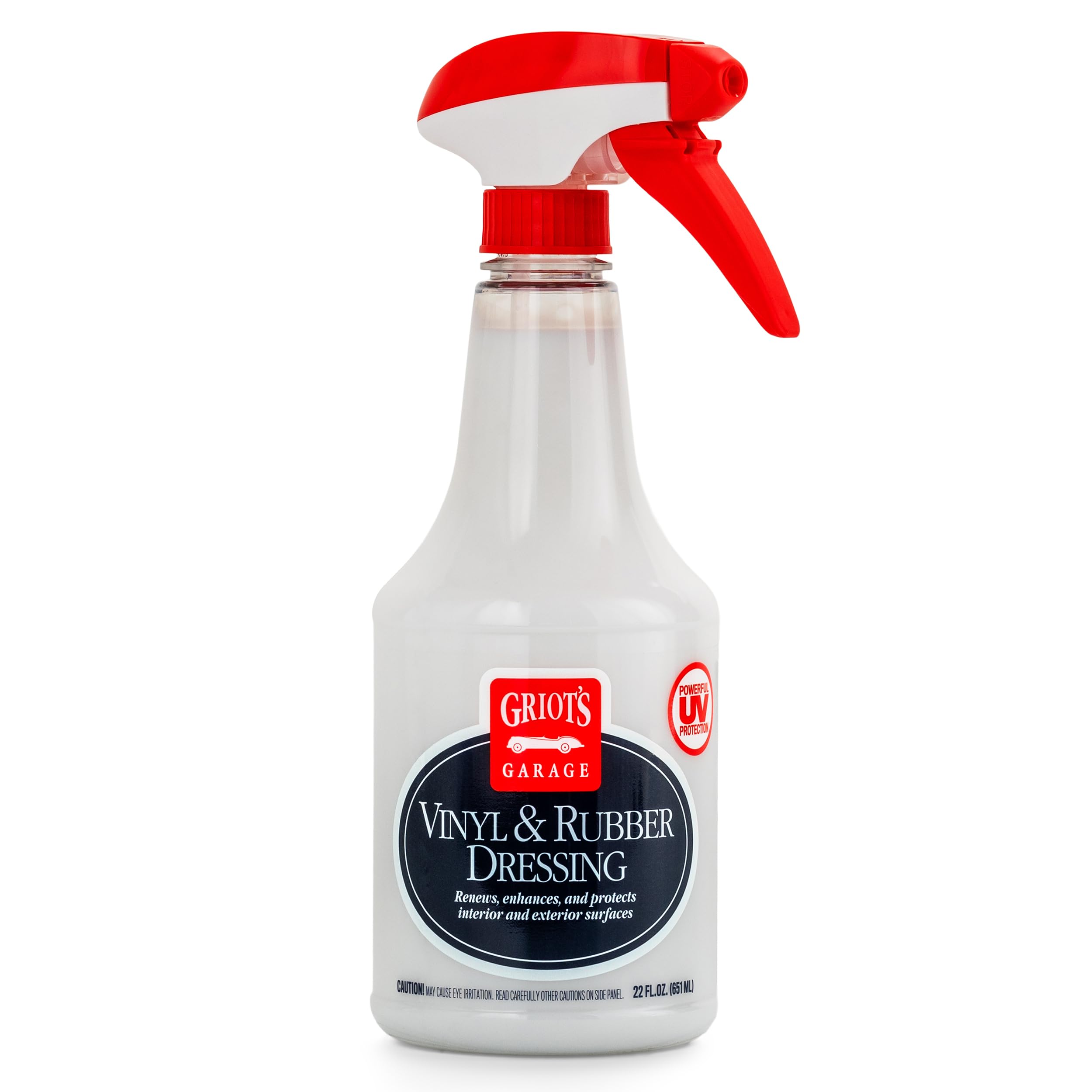
Griot’s Garage has formulated this dressing to clean and protect in a single pass, using ingredients that create a lasting barrier against UV fading and cracking. Owner reports consistently highlight the satin finish it leaves behind — no greasy residue, no mirror-like glare that bakes the windshield. The spray pattern is wide enough to cover a dashboard in a few passes, and the liquid bonds evenly to both smooth and textured vinyl surfaces.
What sets this apart from conventional dressings is the absence of heavy silicones that collect dust hours after application. Multiple long-term users note that the finish holds up through temperature swings and repeated sun exposure without turning hazy or requiring weekly reapplication. The 22-ounce bottle offers strong coverage for the price tier, making it a practical choice for full interior jobs plus exterior trim and tires.
On textured rubber and plastic trim, the dressing restores a rich, deep color without pooling in crevices or leaving white residue. Some owners report using it on engine bay plastics and door seals with the same consistent results. For anyone seeking a single product that handles vinyl, rubber, and plastic with a clean satin look, this is the benchmark.
What works
- True satin finish with no greasy feel
- Strong UV protection layer
- Versatile across vinyl, rubber, and plastic
What doesn’t
- Not designed for glass or screens
- Requires clean surface before application
2. Turtle Wax Hybrid Solutions Streak Free Interior Detailer

Turtle Wax engineered this hybrid detailer around a misting sprayer that distributes product as an ultra-fine vapor, which reduces the risk of over-application that causes streaking. The formula is designed to work across multiple interior materials — vinyl, hard plastic, leather, rubber, glass, and even infotainment screens — without leaving a greasy transfer film. Owners of newer vehicles with glossy dashboard trim report that it removes fingerprints and dust without dulling the factory finish.
The UV inhibitors in this blend are a genuine differentiator for daily drivers parked in direct sunlight. Multiple reviews from owners in high-altitude and desert climates note that the protection layer helps maintain color depth on dark dashes that would otherwise fade within a single season. The odor-eliminating technology is subtle rather than perfumed, which keeps the cabin smelling fresh without introducing an artificial scent that competes with the car’s natural aroma.
Application speed is a recurring positive theme — one or two pumps per section and a quick wipe with a microfiber cloth is enough to restore a clean, uniform appearance. Some users caution that over-application causes temporary streaking, but the consensus is that learning curve is minimal. For a do-it-all interior spray that handles vinyl alongside electronics, this is a strong contender.
What works
- Streak-free on screens and glossy plastic
- UV protection for fading-prone dashes
- Fast spray-and-wipe workflow
What doesn’t
- Easy to over-apply if not adjusted
- Less effective on heavy built-up grime
3. 303 Aerospace Protectant Wipes

303 is a name that commands respect in the marine and RV world for UV protection, and these wipes bring that same aerospace-grade formula to automotive interiors. Each wipe is pre-saturated with a protectant that blocks UV radiation while restoring the rich appearance of vinyl and plastic. Jeep and off-road owners frequently cite this product for maintaining the look of hard-plastic trim that takes constant sun and trail abuse.
The wipe format trades some cleaning power for pure convenience — you can treat an entire dashboard in under two minutes without dragging out spray bottles and microfiber cloths. Multiple reviews note that the wipes leave a smooth, non-glossy finish that doesn’t attract dust, which is a common complaint with cheaper dressings. The 40-count pack lasts through multiple full interior treatments or several months of quick touch-ups.
One practical consideration is that the wipes can feel slightly dry if the container has been sitting at temperature extremes during shipping, requiring two wipes per section instead of one. Users who prefer maximum control over application thickness tend to choose the spray version, but for glove-box storage and roadside touch-ups, the wipes are hard to beat.
What works
- Excellent UV protection for sun-prone vehicles
- No greasy residue or dust attraction
- Extremely convenient wipe-and-go format
What doesn’t
- Wipes can arrive partially dry
- Less cleaning ability compared to liquid sprays
4. Sprayway SW936 Aerosol Instant Shine

Sprayway has been a staple in professional detailing circles for decades, and the SW936 aerosol delivers the instant high-gloss finish that show-car builders and concours enthusiasts expect. The silicone-based formula bonds to vinyl, fabric, leather, and polycarbonate, creating a reflective layer that mimics the look of new factory trim. Owners report that a single application restores faded vinyl to a deep, wet appearance that photographs exceptionally well.
The aerosol delivery system is both a strength and a limitation — it provides even coverage without needing to touch the surface, which is ideal for textured trim and intricate dashboard contours. However, the overspray can make floors slippery if not contained, and the high-gloss result is too reflective for some daily drivers who prefer a lower sheen. The 11-ounce can is compact enough to store in a trunk detail kit.
Longevity is the main trade-off with this shine-focused formula. Owners note that the gloss lasts about a week with full vibrancy and fades gradually over a month, depending on sun exposure. It works best as a finishing product applied to an already-clean surface rather than a deep cleaner. For those who want maximum visual pop for a car show or weekend cruise, this aerosol delivers unmatched instant results.
What works
- Exceptional high-gloss shine on first application
- Aerosol reaches tight dashboard crevices
- Works on vinyl, leather, fabric, and plastic
What doesn’t
- Overspray creates slippery surfaces
- Gloss finish fades within a week
5. 3D All Purpose Cleaner

3D’s All Purpose Cleaner takes a fundamentally different approach — it is a concentrated cleaner rather than a combined cleaner-and-dressing, which gives the user complete control over the final result. The enzyme-based formula breaks down organic soils, grease, and odors at the molecular level rather than just lifting them off the surface. Multiple owners confirm that a 15:1 dilution handles light interior maintenance while full-strength application strips years of accumulated grime from door panels and vinyl upholstery.
The biodegradable and non-toxic formulation makes it one of the safer options for frequent use inside the cabin. Unlike solvent-based cleaners that can dry out vinyl over time, 3D’s chemistry leaves no chemical residue that accelerates cracking. Owners who use this as a pretreatment before applying a dedicated dressing report that the dressing bonds more evenly to the freshly cleaned surface, extending the life of the protection layer.
The 16-ounce bottle is concentrated, meaning a single purchase yields several gallons of ready-to-use cleaner depending on the dilution ratio. This makes it an economical choice for detailers who work on multiple vehicles. The primary limitation is that it is a cleaner only — you need a separate protectant or dressing to add UV blocking and surface enrichment. For anyone who prefers a two-step process for maximum control, this delivers exceptional value.
What works
- Powerful enzyme cleaning without harsh solvents
- Biodegradable and safe for frequent use
- Highly concentrated — huge value per use
What doesn’t
- Requires separate protectant for UV defense
- Strong initial smell until it dissipates
Hardware & Specs Guide
Cleaner vs. Protectant: Understanding the Chemistry
Many products labeled as vinyl cleaners are actually dressings that deposit a thin coating over existing dirt. True cleaners use surfactants or enzymes to lift and suspend contaminants so they can be wiped away. Protectants, by contrast, focus on UV absorption and surface bonding to prevent future degradation. The most effective strategy is a two-step process — clean with a dedicated detergent-based product, then apply a protectant. Combination products save time but rarely excel at both tasks equally.
Finish Characteristics and Their Trade-offs
Satin finishes provide the best balance between visual enhancement and practical usability. They deepen the color of vinyl and plastic without introducing windshield glare or attracting airborne dust. Gloss finishes create a wet-look effect that appeals at car shows but requires frequent reapplication to maintain uniformity. Matte finishes reduce reflections almost entirely but lack the polymer layer that protects against UV damage, so they demand the most frequent reapplication schedule of the three categories.
FAQ
Can I use an auto vinyl cleaner on leather seats?
How often should I clean and protect my car’s vinyl surfaces?
What is the difference between a vinyl cleaner and a vinyl dressing?
Final Thoughts: The Verdict
For most buyers, the best auto vinyl cleaner winner is the Griot’s Garage Vinyl & Rubber Dressing because it delivers a true satin finish with robust UV protection in a single step. If you want a versatile interior spray that works on screens and glossy trim without streaks, grab the Turtle Wax Hybrid Solutions Interior Detailer. And for a deep clean followed by your own choice of protectant, nothing beats the value of the 3D All Purpose Cleaner.

Certification: BSc in Mechanical Engineering
Education: Mechanical engineer
Lives In: 539 W Commerce St, Dallas, TX 75208, USA
Md Amir is an auto mechanic student and writer with over half a decade of experience in the automotive field. He has worked with top automotive brands such as Lexus, Quantum, and also owns two automotive blogs autocarneed.com and taxiwiz.com.