Towing a trailer behind your 4Runner demands a brake controller that responds instantly, communicates clearly, and integrates without clutter. The wrong unit introduces dangerous trailer sway, delayed stopping, or a dash full of cheap plastic that rattles loose after one season.
I’m Amir — the founder and writer behind Four Wheel Ask. My approach relies on deep market research, cross-referencing technical specifications with verified owner feedback, and comparing build quality across multiple price segments to separate genuine engineering from marketing hype.
This guide evaluates nine distinct units using real-world compatibility data, installation reports, and long-term reliability signals. Based on extensive market research and owner-reported data, these nine units represent the top choices for your best 4runner trailer brake controller.
How To Choose The Best 4Runner Trailer Brake Controller
Selecting the right brake controller for your 4Runner starts with understanding three variables: braking technology, electrical compatibility, and physical installation space. Ignoring any one of these leads to poor stopping performance, false error codes, or a controller that interferes with your knee while driving.
Proportional vs. Time-Delayed Braking
Proportional controllers use an internal accelerometer to measure your 4Runner’s deceleration rate and apply an equivalent force to the trailer brakes. Time-delayed units apply a fixed, preset amount of power once the brake pedal is pressed. For the 4Runner’s typical towing range — small campers, boats, utility trailers — proportional braking delivers smoother stops and reduces trailer sway significantly.
Axle and Brake Count
Most 4Runner owners pull single- or dual-axle trailers with two to four brakes. Confirm that the controller supports at least 2-4 brakes (1-2 axles). If you plan to tow heavier equipment with triple axles, look for a unit rated up to 8 brakes (4 axles).
Installation and Harness Compatibility
Many 4Runner generations come with a factory-installed brake controller pigtail under the dash. A vehicle-specific plug-and-play harness eliminates splicing and reduces installation time to under an hour. Verify that the controller you choose either includes or offers a harness matched to your 4Runner model year.
Mounting Form Factor
Full-sized controllers with a large faceplate can crowd the 4Runner’s knee space. Split-design units (display plus remote module) or compact rotary knobs tuck neatly into blank dash slots or lower panels. Consider how much dash real estate you are willing to sacrifice before committing to a specific shape.
Quick Comparison
On smaller screens, swipe sideways to see the full table.
| Model | Category | Best For | Key Spec | Amazon |
|---|---|---|---|---|
| REDARC Tow-Pro Elite | Premium | Clean factory-style integration | Remote dial, proportional + manual | Amazon |
| TEKONSHA Prodigy iD | Premium | Smartphone app tuning | Bluetooth, LED display, 1-4 axles | Amazon |
| CURT TriFlex Next | Mid-Range | Low-profile dash mount | Triple-axis sensor, 1-4 axles | Amazon |
| CURT Spectrum | Premium | Discrete OEM-style knob | Triple-axis, tri-color LEDs | Amazon |
| TEKONSHA P3 + 4Runner Harness | Premium | Proven reliability + vehicle-specific wiring | Proportional, boost, store 5 profiles | Amazon |
| REDARC Tow-Pro Liberty | Mid-Range | Compact dial for tight cabs | Proportional + manual, 1-2 axles | Amazon |
| Kohree Split Design | Mid-Range | Separate display + controller placement | 4-chip, LCD, 9 boost levels | Amazon |
| Kessocco P3 Style | Budget | Entry-level proportional with basic display | Color LCD, boost, 1-4 axles | Amazon |
| Detroit Axle Brake Kit | Parts | Front rotor/pad replacement | Drilled & slotted, ceramic pads | Amazon |
In-Depth Reviews
1. REDARC Tow-Pro Elite (EBRH-ACCV2)

The REDARC Tow-Pro Elite sets the benchmark for clean integration into the 4Runner cabin. The remote dial occupies a single small hole in the dash, leaving no bulky box hanging below the knee bolster. The main module tucks behind the dash and communicates with the dial via a thin cable, giving you total freedom in placement.
It supports proportional braking plus a manual override that applies up to the preset power level instantly. Owner reports from 4Runner and Jeep Wrangler owners highlight how seamlessly the Active Calibration adapts to different trailer weights without requiring manual re-leveling. The die-cast dial feels solid and the push-button engagement is tactile enough to use by feel alone.
The Elite version adds a more durable remote head and enhanced diagnostic feedback compared to the Liberty. Installation requires a separate vehicle-specific harness for most 4Runner generations, but the wiring step is straightforward with the included instructions.
What works
- Smallest dash footprint of any premium controller
- Smooth proportional response with active calibration
- Easy manual override for fine control
What doesn’t
- Vehicle-specific harness sold separately
- Dial bezel may need a spacer on thicker dash panels
2. TEKONSHA Prodigy iD (90920)

The Prodigy iD brings Bluetooth wireless configuration to TEKONSHA’s respected product line. Using the EDGE app on your phone, you can dial in power output, boost level, and braking type without reaching under the dash. The rotary knob and LED display still offer full local control, but the app adds a level of precision that matters when swapping between a loaded camper and an empty utility trailer.
It handles 1-4 axles with a proportional inertia sensor that adjusts automatically to driving conditions. The module hides behind the dash while only the knob and display faceplate remain visible. Owners of fifth-gen 4Runners report that it fits neatly into the lower dash panel with the optional bezel kit, and the built-in diagnostics log helps troubleshoot wiring issues without guessing.
Some users note that the knob has a slight amount of play, which detracts from the premium feel at this price point. The Bluetooth app, while functional, has been described as somewhat unpolished during initial setup. Once configured, it holds settings reliably.
What works
- Full smartphone configurability
- Built-in tech support and alert logging
- OEM-style dash integration
What doesn’t
- Knob feels slightly loose
- Bluetooth app can be finicky during setup
3. CURT TriFlex Next (51146)

The TriFlex Next uses a triple-axis accelerometer that reads motion in three planes rather than just forward-backward deceleration. This third axis allows the controller to compensate for braking force when climbing or descending a grade, which directly translates to more consistent stopping on the hills many 4Runner owners encounter on trail access roads.
The slim faceplate measures less than an inch thick at its edges, making it one of the most space-efficient full-function controllers on the market. It can handle up to eight brakes (four axles), providing room to grow if you upgrade to a larger trailer. Installation reports from full-size truck owners confirm that the plug-and-play harness option makes the job a quick afternoon project.
At this price point, the TriFlex Next delivers a sensor package typically found on controllers costing significantly more. The trade-off is a slightly more utilitarian interface — the LCD is clear but not as refined as higher-end units. For drivers who prioritize function over flash, this is a very strong contender.
What works
- Triple-axis sensor improves hill braking
- Slim design fits tight dash spaces
- Supports up to 4 axles
What doesn’t
- Some units require re-plugging to re-detect trailer
4. CURT Spectrum (51170)
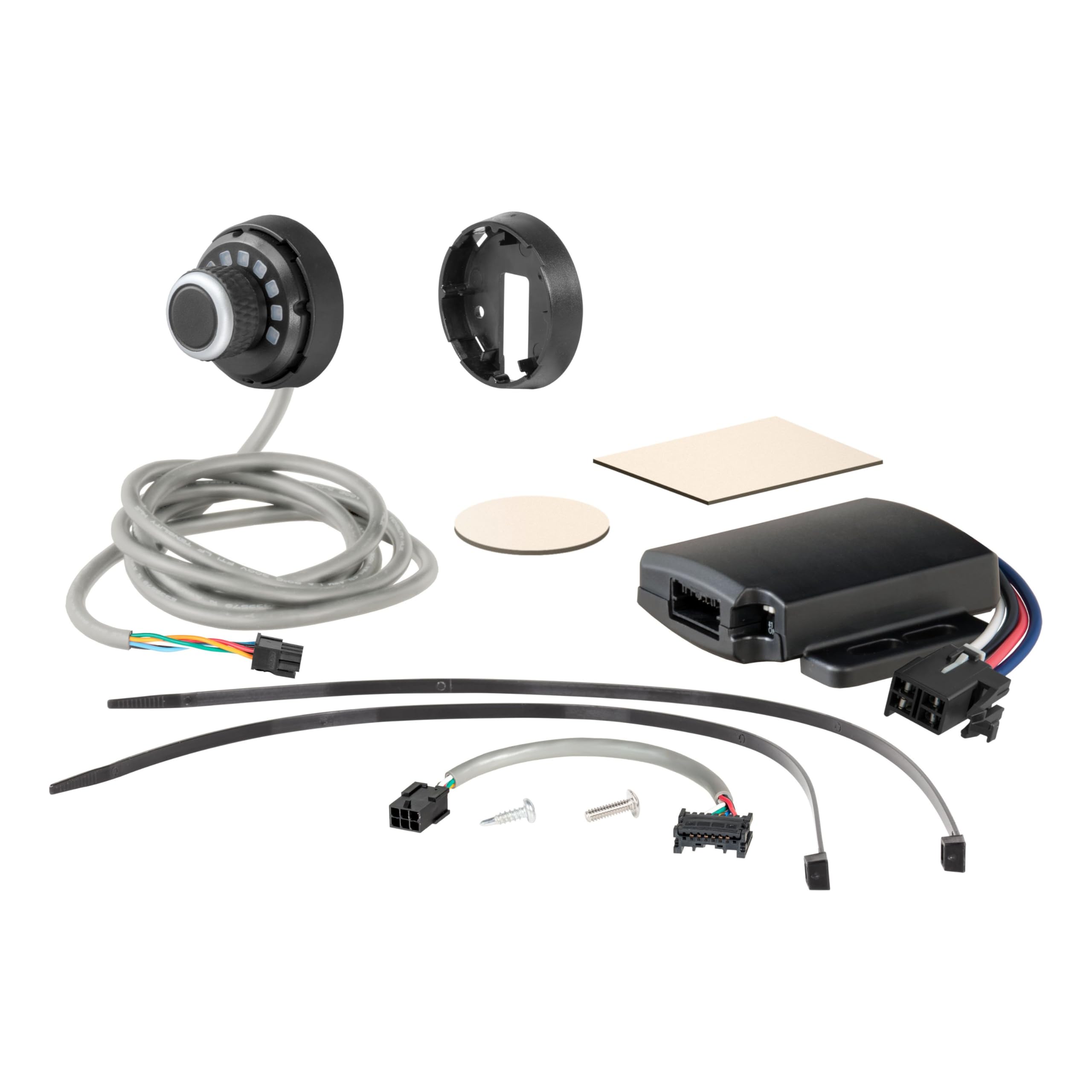
The CURT Spectrum takes a different approach: instead of a full display, it uses ten tri-color LEDs around a central rotary knob to communicate braking force, boost level, and diagnostics. The main module mounts out of sight, leaving only the knob visible on the dash. This makes it one of the most discreet options for 4Runner owners who want a factory-original appearance.
The triple-axis accelerometer mirrors the TriFlex Next’s sensor technology, providing the same grade-compensated braking in a more compact package. The push-button manual override is instantly accessible without hunting for a slider. Owners who have installed it in Silverados and Tundras praise how naturally the knob blends into the existing dash layout.
A quirk reported by some users involves random LED illumination that does not affect braking performance. CURT confirmed this as normal behavior, but it can be distracting at night. The plastic knob, while functional, does not feel as dense as the REDARC dial.
What works
- Discrete knob-only dash presence
- Triple-axis grade-compensated braking
- Easy push-button manual override
What doesn’t
- Random LED lights can be distracting
- Knob material feels less premium
5. TEKONSHA P3 + Toyota 4Runner Harness

The TEKONSHA P3 has been a reference standard for aftermarket brake controllers for over a decade. This bundle pairs the P3 controller with a plug-and-play wiring harness specifically designed for the 4Runner, Land Cruiser, Sequoia, Tundra, and Tacoma. That means no wire cutting or adapter hunting — you locate the factory pigtail under your 4Runner’s dash, plug in, and mount the unit.
The P3 offers proportional braking, three boost levels for fine-tuning response, and the ability to store up to five different trailer profiles. The color-coded LCD screen shows gain, output level, and diagnostic codes. Owners towing medium-weight trailers consistently report that once the gain is set, they forget the controller is there — the stops are smooth and the trailer tracks true.
The controller body is larger than split-design competitors, which can make placement in a 4Runner’s knee space challenging. The included dash bracket provides some adjustability, but you may need to mount it lower than ideal. The trade-off is bulletproof reliability and parts availability.
What works
- Vehicle-specific harness for true plug-and-play
- Five trailer memory profiles
- Proven long-term reliability
What doesn’t
- Large faceplate takes up dash space
- Manual leveling required during setup
6. REDARC Tow-Pro Liberty (EBRH-ACCNA)
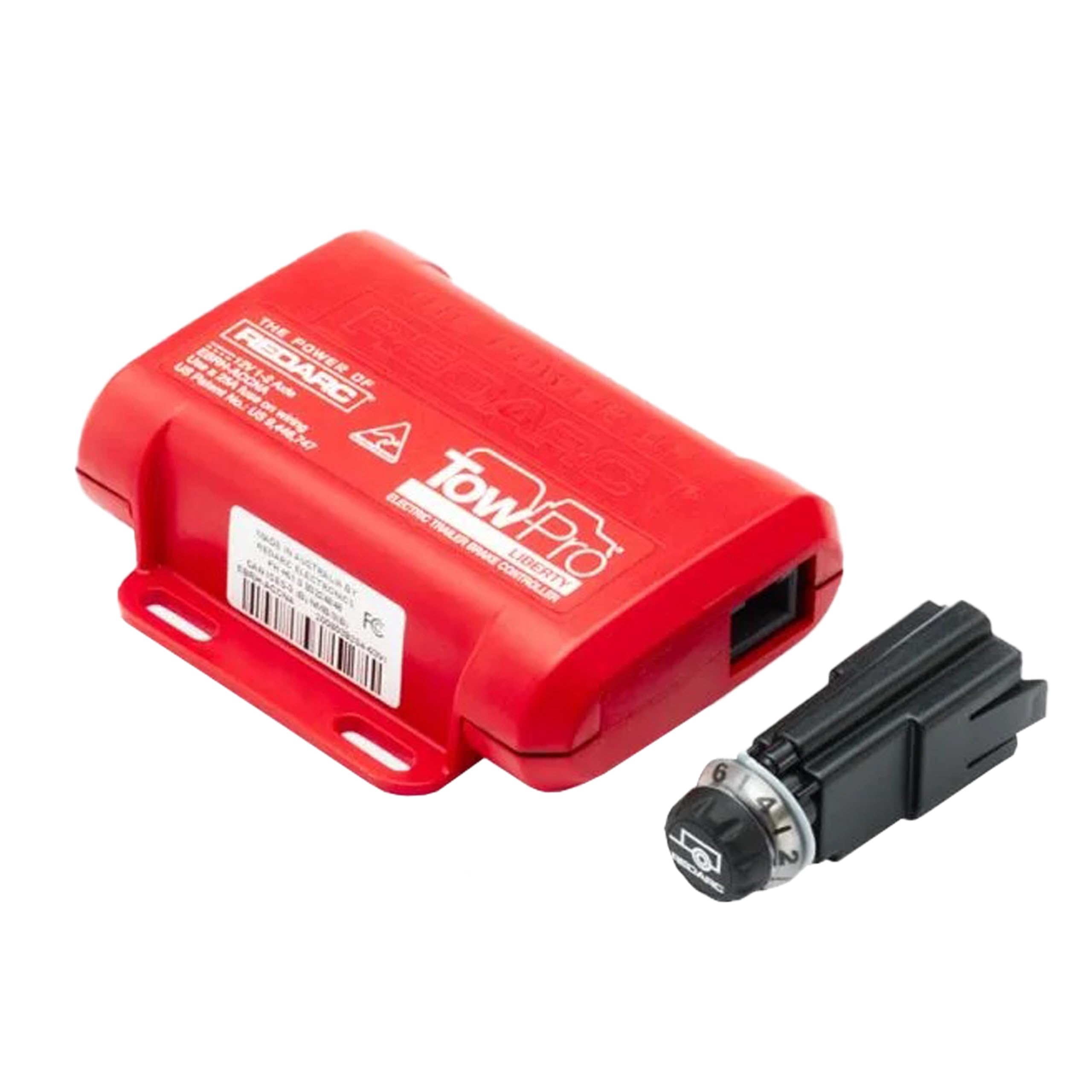
The Tow-Pro Liberty brings REDARC’s proven proportional braking and Active Calibration into a slightly more accessible price tier. It supports 1-2 axles, which covers the vast majority of 4Runner towing scenarios. The remote dial is the same compact form factor as the Elite, with a clear LED indicator that shows braking activity at a glance.
Installation mirrors the Elite experience: the module hides behind the dash while the dial mounts through a single hole. The Liberty includes sway control technology that senses trailer oscillation and applies the trailer brakes independently to dampen the motion. This feature alone makes it a strong choice for first-time 4Runner tower owners who want a safety net.
The primary difference from the Elite is that the Liberty lacks the more robust diagnostic feedback and the upgraded dial materials. For daily towing of a small camper or boat, the Liberty performs identically. Owners of Tacomas and Titans report that the dial fits perfectly into blank switch plates, creating a factory-installed appearance.
What works
- Smooth proportional braking with Active Calibration
- Built-in sway control
- Very small dash footprint
What doesn’t
- Limited to 1-2 axles
- Harness must be purchased separately
7. Kohree Split Design (KR3588)
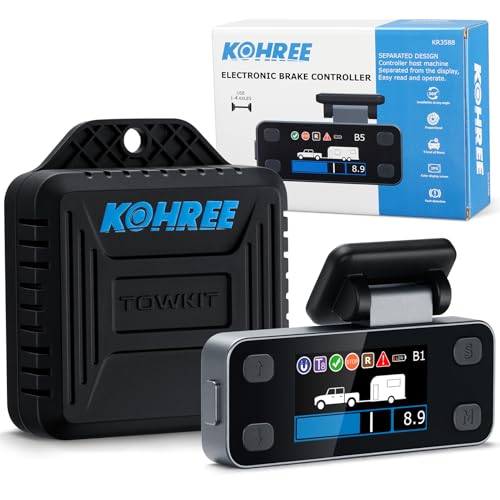
The Kohree KR3588 uses a fully split architecture: the LCD display can be mounted on the windshield or any visible surface, while the brake controller module installs in the rear interior panel. This design removes the constraint of finding space near the driver’s knee. The display communicates with the controller via a Type-C data cable, keeping the signal path clean.
It packs four 32-bit processor chips — two in each module — that independently process and validate braking commands. This redundant processing is unusual at this price point and theoretically adds a layer of safety if one chip encounters an error. Nine levels of boost adjust sensor sensitivity to match trailer weight and braking character.
Owner feedback indicates that the split design solves real placement headaches, especially in 4Runners with aftermarket seat mounts or extra switches. The included wiring harness simplifies connection, though some users recommend professional installation if you are not comfortable running data cables through panels. The display is bright enough for daytime reading but can be distracting at night if not angled away.
What works
- Truly flexible split placement
- Redundant four-chip processing
- Nine boost levels for fine tuning
What doesn’t
- Display can be bright at night
- Data cable routing takes extra effort
8. Kessocco P3 Style (90195)
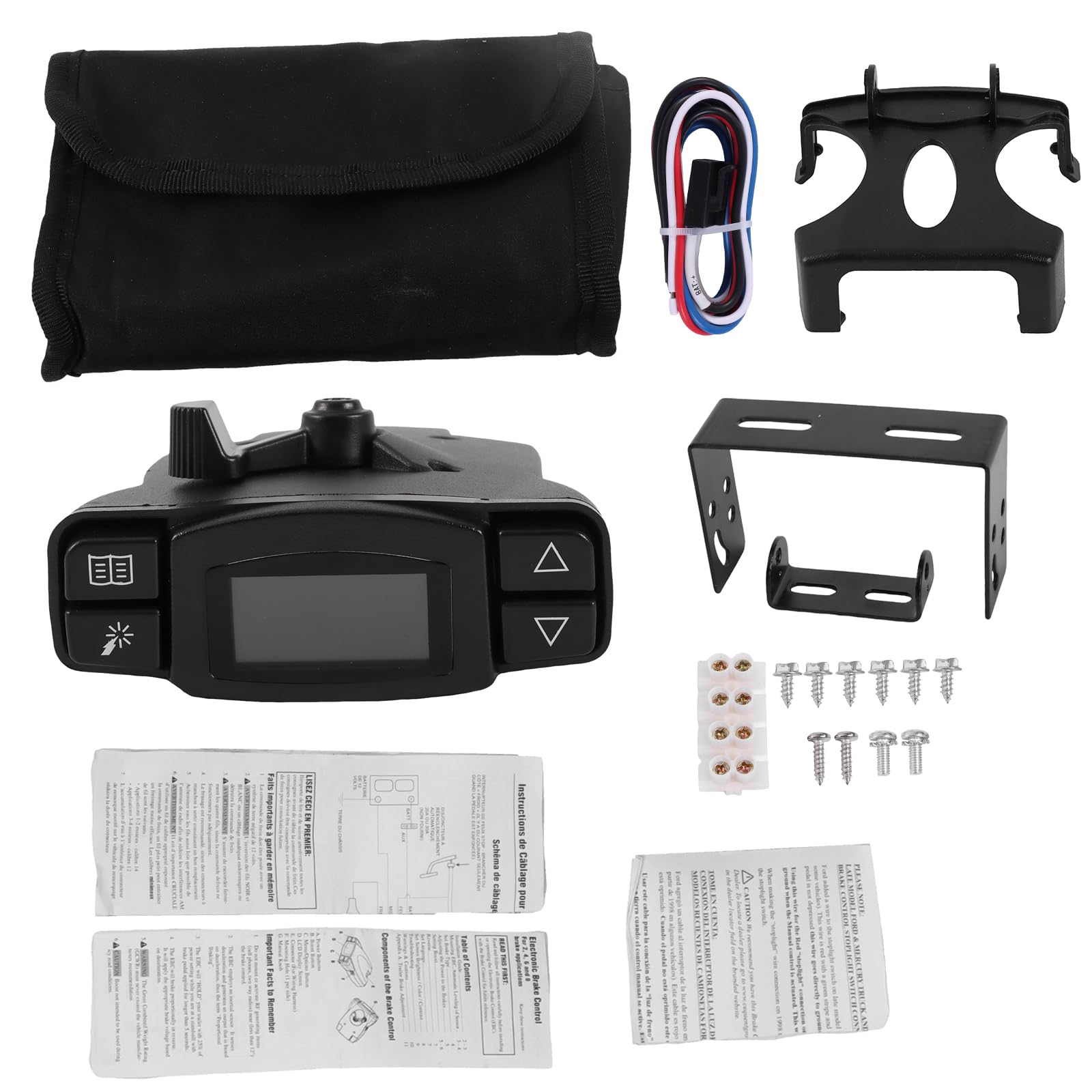
The Kessocco 90195 is a proportional brake controller that mimics the feature set of the TEKONSHA P3 at a lower entry point. It includes a color LCD display, manual override lever, and boost settings. The internal inertia sensor applies trailer brakes proportionally based on your 4Runner’s deceleration rate. It stores up to five trailer profiles, just like the P3.
Several owners have reported that the unit works well initially, providing smooth stops with a properly adjusted gain. The manual slide lever is easy to reach and gives direct control when needed. For 4Runner owners who need a functional controller on a tighter budget, the Kessocco represents a viable way to get proportional braking without paying full premium-tier prices.
However, reliability concerns appear in longer-term owner reports. Multiple verified buyers experienced internal faults after only a few uses, displaying output shortage errors. There are also complaints that the product uses misleading marketing that implies it is a TEKONSHA unit. If you choose this path, test it thoroughly with a connected trailer shortly after installation.
What works
- Proportional braking at a budget-friendly price
- Five trailer memory profiles
- Color LCD display with diagnostics
What doesn’t
- Mixed reliability reports from long-term owners
- Not a genuine TEKONSHA product despite visual similarity
9. Detroit Axle Front Brake Kit

The Detroit Axle kit addresses a different but related need: refreshing the 4Runner’s own front braking system. It includes drilled and slotted rotors and ceramic brake pads specifically for 1996-2002 4Runners and compatible Tacoma models. While not a trailer brake controller, maintaining your tow vehicle’s foundation brakes is essential before adding trailer braking hardware.
The rotors measure 11.69 inches with a drilled-and-slotted pattern that improves heat dissipation during repeated stops — exactly the scenario encountered when tooning a trailer down a mountain grade. The ceramic pads produce less dust and deliver consistent bite across a wide temperature range. Owner reports confirm that the kit fits without modification and includes the necessary hardware.
For 4Runner owners planning to install a trailer brake controller, combining it with a fresh brake rotor and pad refresh ensures the entire braking system shares an equal performance baseline. The Detroit Axle kit carries a 10-year warranty, reflecting confidence in the metallurgy and pad compound used in production.
What works
- Direct fit for 4Runner applications
- Drilled/slotted pattern fights fade
- Strong 10-year warranty
What doesn’t
- Not a trailer brake controller — a complementary component
- Limited to 1996-2002 4Runner fitment
Hardware & Specs Guide
Proportional Inertia Sensors
These sensors measure deceleration force along one or more axes. Single-axis controllers detect forward-backward motion only. Triple-axis sensors (found in CURT TriFlex Next and Spectrum) also detect lateral and vertical movement, allowing the controller to adjust braking force when ascending or descending a grade. For 4Runner owners who tow in hilly terrain, triple-axis technology provides noticeably smoother stops.
Boost Levels
Boost increases the sensitivity of the inertia sensor, effectively telling the controller to apply more braking power for a given deceleration rate. A controller with multiple boost levels lets you match aggressiveness to the trailer load without changing the base gain setting. Lighter trailers typically need low or no boost; heavy campers may require level 2 or 3 to prevent a push feeling during stops.
Manual Override
Every proportional controller includes a manual override — a lever, slide, or button that applies the trailer brakes independently of the tow vehicle. This is used for testing brake adjustments, controlling sway independently, or slowing the trailer during a runaway scenario. Dial-style units usually place the override on the knob; slide-style units have a dedicated lever on the faceplate.
Vehicle-Specific Harnesses
Toyota 4Runners from the 4th generation (2003-2009) and 5th generation (2010-present) have a factory brake controller pigtail located under the driver-side dash. A vehicle-specific harness connects directly to this pigtail with no splicing. Using the correct harness reduces installation time to roughly 30 minutes and preserves the factory wiring integrity, which matters for warranty and resale value.
FAQ
Does my 4Runner come with a brake controller from the factory?
What is the difference between proportional and time-delayed braking?
Do I need a vehicle-specific wiring harness?
Can I install a brake controller myself?
Final Thoughts: The Verdict
For most buyers, the best 4runner trailer brake controller winner is the REDARC Tow-Pro Elite because it combines the smallest dash footprint with reliable proportional braking, active calibration, and a robust build that survives real towing conditions. If you want full smartphone configurability and Bluetooth diagnostics, grab the TEKONSHA Prodigy iD. And for a proven platform that includes the exact harness for your 4Runner, nothing beats the TEKONSHA P3 with the Toyota-specific wiring kit.

Certification: BSc in Mechanical Engineering
Education: Mechanical engineer
Lives In: 539 W Commerce St, Dallas, TX 75208, USA
Md Amir is an auto mechanic student and writer with over half a decade of experience in the automotive field. He has worked with top automotive brands such as Lexus, Quantum, and also owns two automotive blogs autocarneed.com and taxiwiz.com.