A failing radiator hose strands you on the roadside with steam billowing from under the hood, a repair that always seems to come at the worst moment. The difference between a hose that lasts a decade and one that cracks within a year comes down to material composition, ply construction, and the quality of the reinforcement layer — details most parts catalogs gloss over.
I’m Amir — the founder and writer behind Four Wheel Ask. My work centers on cross-referencing OEM specifications with aftermarket build quality, analyzing owner-reported failure patterns, and identifying which hoses deliver genuine longevity over marketing claims.
After studying material specs, pressure ratings, and verified owner feedback across sources, this guide reveals the best an radiator hose for your build.
How To Choose The Best AN Radiator Hose
Selecting the right radiator hose goes beyond matching the inner diameter. Material composition, reinforcement type, and compliance with industry standards determine whether a hose handles daily heat cycles without bulging, cracking, or collapsing under vacuum. Here are the critical factors to evaluate before making a purchase.
Material Composition
EPDM (ethylene propylene diene monomer) rubber is the gold standard for modern coolant hoses. It resists ozone cracking, electrochemical degradation, and the chemical attack from modern extended-life coolants better than standard SBR (styrene-butadiene rubber) blends. Look for hoses that explicitly state EPDM construction in their specifications.
SAE Standards and Pressure Ratings
SAE 20R4 class D2 is the most common standard for molded radiator hoses, requiring a minimum burst pressure of 100 PSI and resistance to coolant at 257°F. SAE 20R3 covers heater and by-pass hoses with thinner walls. A hose that meets or exceeds these standards has passed laboratory testing for heat aging, coolant resistance, and burst strength.
Molded vs. Universal Fit
Molded hoses come pre-shaped to match specific vehicle applications, ensuring proper routing and clearance from moving components. Universal straight hoses require cutting and bending, which can create kinks or stress points that reduce flow and accelerate failure. For street-driven vehicles, a molded hose that matches the OEM routing is almost always the better choice.
Reinforcement Layers
Quality hoses use synthetic fiber knit or braided reinforcement embedded between the inner tube and outer cover. Two-ply construction provides better resistance to collapse under coolant pump suction and reduces the risk of blowouts at higher system pressures. Single-ply hoses are lighter but typically have lower burst ratings.
Quick Comparison
On smaller screens, swipe sideways to see the full table.
| Model | Category | Best For | Key Spec | Amazon |
|---|---|---|---|---|
| ACDelco Gold 26207X | Lower Hose | GM OE Replacement | 1.52″ OD, Limited Lifetime Warranty | Amazon |
| Dorman 626-111 | Heater Hose Assembly | HVAC System Repair | Metal Connectors, Threaded | Amazon |
| Gates 22900 | Molded Coolant Hose | Jeep TJ 4.0L | EPDM, 1/8″ Wall, SAE 20R4 | Amazon |
| Gates 22309 | Upper Radiator Hose | Toyota V6 Models | Trim-to-Fit, 0.32 lbs | Amazon |
| EVIL ENERGY 5/8″ | Universal Straight | Custom Builds | 100 PSI WP, 300 PSI Burst | Amazon |
In‑Depth Reviews
1. ACDelco Gold 26207X Molded Lower Radiator Hose
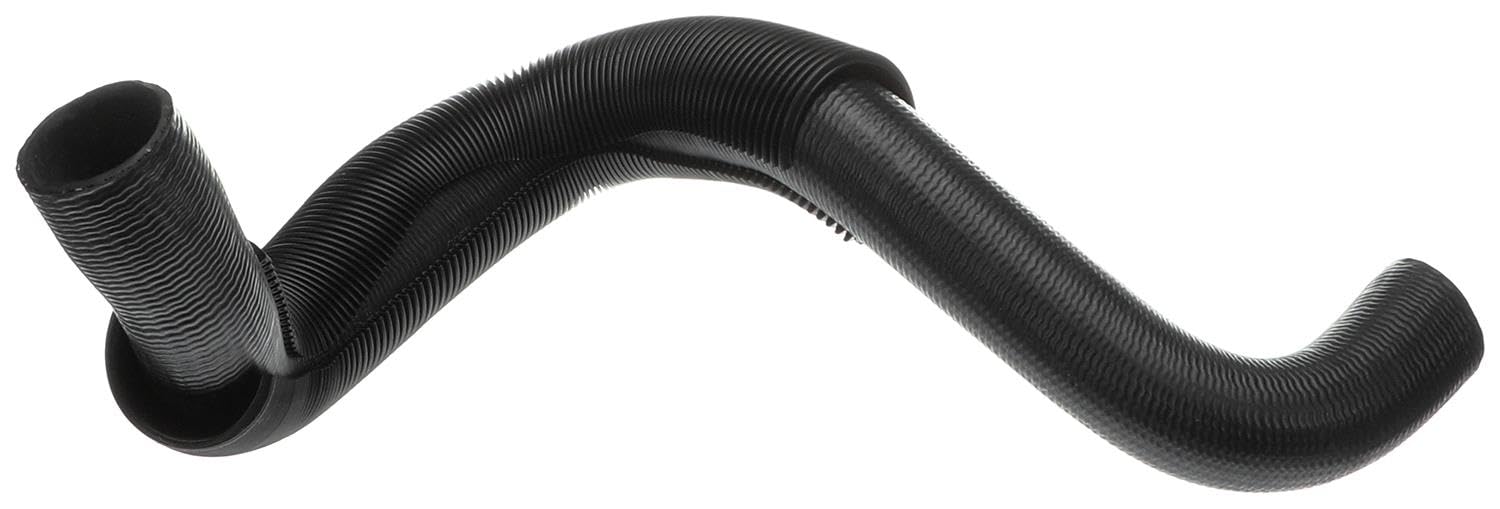
ACDelco Gold parts are engineered to meet GM’s original equipment specifications for fit, form, and function, and this lower radiator hose follows that standard closely. The molded shape matches the factory routing on a wide range of Chevrolet and GMC trucks, including the 1997 Silverado 350 and 1998 Tahoe, according to verified owner reports. The included protective wrap on the lower section adds abrasion resistance against belt-driven components and chassis interference points.
The hose material feels substantial in hand, with a thick wall that resists collapse under the suction of the coolant pump. Owners describe the fit as requiring no trimming or modification on most supported vehicles, which eliminates a common frustration with universal or generic replacements. The limited lifetime warranty for the original purchaser adds confidence, though it requires keeping proof of ownership documentation.
Where this hose distinguishes itself is in the consistency of its manufacturing — multiple reviewers across different GM platforms report identical fitment experiences, indicating tight quality control. The gold color code is purely cosmetic but makes visual inspection of the hose surface easier over time. For GM truck and SUV owners who want a direct OE-grade replacement without paying dealer pricing, this is the reference standard.
What works
- Precision molded for direct bolt-on fit on GM trucks and SUVs
- Thick wall construction resists collapse and abrasion
- Limited lifetime warranty backs long-term reliability
What doesn’t
- Vehicle-specific design limits compatibility to GM platforms
- Protective wrap adds bulk in tight routing spaces
- Warranty only applies to original owner with proof of purchase
2. Dorman 626-111 HVAC Heater Hose Assembly

This HVAC heater hose assembly from Dorman addresses a common failure point on select Cadillac, Chevrolet, and GMC models: the plastic three-way connector that becomes brittle and cracks after years of heat cycling. The assembly replaces the entire heater hose circuit from the water pump to the firewall, with threaded metal connectors at the key junction points. Owners of 2005 Escalade and 2008 Trailblazer report that the metal connectors outperform the original plastic components, eliminating a known leak source.
The hoses themselves are pre-formed to match the factory routing on the 6.0L Vortec engine family, with the correct bends at the reservoir, pump, and heater core connections. Multiple reviewers note that installation takes under ten minutes on familiar vehicles, with no trimming required. The included hose clamps are functional, though several owners recommend upgrading to constant-tension clamps for a more secure long-term seal.
Dorman engineers this assembly to withstand extreme temperature swings without cracking, and the metal connector upgrade addresses the single weakest link in the original design. For owners of GMT800 and GMT900 platforms with the 6.0L or 5.3L engines, this assembly offers a durability improvement over the factory parts while remaining a direct-fit replacement. The limited lifetime warranty adds further reassurance for a component that sees daily thermal stress.
What works
- Metal connectors replace failure-prone plastic originals
- Pre-formed hoses require no cutting or adjustment
- Quick installation time on supported GM platforms
What doesn’t
- Included hose clamps are basic and may need upgrading
- Limited to specific Cadillac, Chevrolet, and GMC applications
- Metal connectors add weight versus all-rubber assemblies
3. Gates 22900 Premium Molded Coolant Hose

Gates has built a reputation in the cooling system market for reliable OE-replacement hoses, and the 22900 is a strong example of why. Engineered with EPDM tube and cover material and a synthetic fiber knit reinforcement layer, this hose resists electrochemical degradation — the primary cause of premature hose failure in modern cooling systems. It meets SAE 20R4 class D2 and DIN 73411 class A standards, giving it a verified performance baseline that generic hoses cannot claim.
This specific application fits the Jeep TJ Wrangler with the 4.0L inline-six, a vehicle known for its robust but aging cooling system. Owners consistently report that the hose matches the factory routing precisely, with a perfect fit on 2003 and 2004 models. Several reviewers note that reusing the original internal spring from the factory hose is necessary, as the Gates hose does not include a new one — a minor step but worth knowing before installation.
The wall thickness measures approximately half that of the original Mopar hose, which caused some concern among owners. However, the EPDM formulation and reinforcement design compensate for the thinner wall, and long-term owner reports from 2016 installations still show no leaks or bulges. For Jeep TJ owners who want Gates quality without paying dealer pricing, this hose delivers dependable service at a reasonable investment.
What works
- Meets SAE 20R4 and DIN 73411 standards for verified quality
- EPDM construction resists ozone and coolant chemical attack
- Precise fit on Jeep TJ 4.0L with no modification needed
What doesn’t
- Does not include the internal spring — must reuse original
- Thinner wall than OEM may concern some buyers
- Application-specific design limited to Jeep TJ models
4. Gates 22309 Upper Radiator Hose

Designed as an upper radiator hose for several Toyota V6 applications, the Gates 22309 arrives slightly longer than the factory hose, requiring the installer to trim roughly one inch from each end for a perfect fit. This is a deliberate design choice that allows the hose to cover multiple vehicle applications with slightly different routing lengths. Owners of 2003 Camry, 2004 Avalon, and 2004 Lexus ES models all confirm that trimming with a sharp utility knife produces a clean, leak-free seal.
The material quality is consistent with what Gates delivers across its product line — a thick, dense rubber compound that feels durable and resists kinking during installation. The inner diameter matches the factory radiator outlet and water pump connection precisely on the 3.0L and 3.3L V6 engines common to these Toyota and Lexus models. Reviewers compare it favorably to OE Toyota parts at roughly half the cost from dealership parts counters.
One detail that stands out in owner feedback is the recommendation to invest in proper hose clamp pliers for installation. The constant-tension clamps used on these Toyota engines require specific tools to avoid damaging the hose or clamp during tightening. For Toyota V6 owners who want a reliable gate replacement without the dealer markup, the 22309 delivers familiar Gates quality with minimal adjustment.
What works
- Thick, durable rubber compound with OEM-level density
- Covers multiple Toyota V6 applications with one part number
- Significant savings versus dealer-purchased Toyota hoses
What doesn’t
- Requires trimming of approximately one inch per end
- No internal spring included for lower hose applications
- Hose clamp pliers recommended for proper installation
5. EVIL ENERGY 5/8″ Heater Hose Coolant Radiator Straight

EVIL ENERGY brings a straightforward universal hose option to the market with this 10-foot length of 5/8-inch EPDM rubber hose rated for 100 PSI working pressure and 300 PSI burst pressure. The temperature range spans from -40°F to 257°F, making it suitable for both coolant and heater circuit applications in most climates. The hose meets SAE 20R3 standard wall class D-2 requirements, giving it a recognized performance baseline for universal heater hose.
Owners have used this hose in a variety of applications, from direct replacement of coolant overflow lines to custom rear-mounted radiator setups in modified vehicles. The flexibility of the EPDM compound allows it to bend around tight corners without kinking, though the minimum bending radius of 128mm (about five inches) should be respected to avoid flow restriction. Reviewers describe the wall thickness as comparable to parts-store brands, with good flexibility even at cooler temperatures.
The 10-foot length provides enough material for multiple short runs or one long custom routing, making it a practical choice for builders who need to fabricate their own cooling system plumbing. The tolerance of ±0.5mm on the inner diameter ensures a snug fit on standard 5/8-inch barb fittings and hose nipples. For custom projects or universal replacements where a molded hose is not available, this offers a reliable off-the-shelf solution at a practical investment.
What works
- EPDM rubber handles coolant and high-temperature exposure
- 10-foot length supports multiple or custom routing setups
- 100 PSI working pressure covers most street applications
What doesn’t
- Universal straight hose cannot replicate molded OE routing
- Minimum bend radius of 128mm limits tight installations
- Burst rating of 300 PSI is lower than some premium molded hoses
Hardware & Specs Guide
EPDM Rubber Composition
EPDM (ethylene propylene diene monomer) is a synthetic elastomer formulated specifically for high-temperature coolant applications. Its saturated backbone structure resists ozone cracking, UV degradation, and the chemical attack from ethylene glycol and propylene glycol coolants. EPDM hoses typically last eight to ten years in normal service, compared to three to five years for SBR rubber. The material also maintains flexibility at low temperatures, reducing the risk of cracking during cold-start thermal shock. All five products in this guide use EPDM as the primary tube and cover material, which is the industry standard for modern cooling system hoses.
SAE Standards Explained
SAE J20 specifications define the performance requirements for radiator and heater hoses. SAE 20R4 class D2 is the most stringent standard for molded radiator hoses, requiring a minimum burst pressure of 100 PSI, resistance to coolant at 257°F for 1000 hours, and no cracking after 100 hours of ozone exposure. SAE 20R3 covers heater and by-pass hoses with thinner walls and lower burst requirements. The Gates 22900 carries SAE 20R4 class D2 certification, while the EVIL ENERGY hose meets SAE 20R3 class D-2. Choosing a hose that meets or exceeds these standards ensures it has passed laboratory validation for real-world cooling system demands.
Wall Thickness and Reinforcement
The nominal wall thickness of a radiator hose directly affects its resistance to collapse under coolant pump vacuum and its ability to withstand pressure spikes. The Gates 22900 specifies a 1/8-inch wall thickness with synthetic fiber knit reinforcement embedded between the EPDM tube and cover. Two-ply reinforcement layers provide redundancy — if one ply develops a pinhole, the second maintains structural integrity. Molded hoses like the ACDelco Gold 26207X use multiple reinforcement layers in the bend areas, where stress is highest. Universal straight hoses typically use single-layer reinforcement, which is sufficient for heater and overflow applications but less robust for pressurized primary radiator circuits.
Pressure and Temperature Ratings
Modern cooling systems operate at pressures between 13 and 16 PSI under normal conditions, with spikes up to 20 PSI during high-load operation. The burst pressure rating of a hose indicates its safety margin above normal operating pressure. The EVIL ENERGY hose offers a 300 PSI burst rating with 100 PSI working pressure, while SAE 20R4 spec requires a minimum burst of 100 PSI. Temperature ratings are equally critical — EPDM hoses are typically rated to 257°F continuous, which covers the 195-220°F operating range of most street-driven engines. Hoses used in race or high-performance applications should be evaluated for short-term exposure to higher temperatures during sustained WOT operation.
FAQ
What does AN stand for on a radiator hose?
Can I use a universal straight hose instead of a molded one?
How often should radiator hoses be replaced?
What is electrochemical degradation in hoses?
Do I need to use constant-tension clamps with these hoses?
Final Thoughts: The Verdict
For most buyers, the best an radiator hose winner is the ACDelco Gold 26207X because it delivers OE-grade fitment on GM trucks and SUVs with thick wall construction and a limited lifetime warranty. If you want a direct-fit HVAC upgrade with metal connectors that eliminate a known plastic failure point, grab the Dorman 626-111. And for a universal custom build or budget-friendly replacement, nothing beats the flexibility and value of the EVIL ENERGY 5/8″ Hose.

Certification: BSc in Mechanical Engineering
Education: Mechanical engineer
Lives In: 539 W Commerce St, Dallas, TX 75208, USA
Md Amir is an auto mechanic student and writer with over half a decade of experience in the automotive field. He has worked with top automotive brands such as Lexus, Quantum, and also owns two automotive blogs autocarneed.com and taxiwiz.com.