A failing radiator in a 2010 Nissan Altima doesn’t announce itself gently — first comes the sweet smell of coolant, then the temperature needle creeps past the halfway mark, and finally you’re staring at a puddle under the front bumper. Catching the problem early and picking the right replacement is the difference between a weekend DIY job and a blown head gasket. The aftermarket is crowded with options that range from thin-aluminum disposable units to parts that match or exceed the factory cooling capacity, and sorting them out requires more than just sorting by lowest price.
I’m Amir — the founder and writer behind Four Wheel Ask. I’ve spent years digging through factory service bulletins, cross-referencing OEM part numbers, and analyzing thousands of owner reports to understand which cooling components actually hold up under real driving conditions.
By scrutinizing hundreds of owner reports and factory fitment specs, I’ve ranked the best 2010 nissan altima radiator options for reliable daily driving.
How To Choose The Best 2010 Nissan Altima Radiator
The 2010 Altima uses a transverse-mounted engine with a tightly packed front cooling module. Selecting the wrong core thickness or omitting the transmission cooler port means the job has to be done twice. Focus on these three factors before you buy.
Fitment by Engine and Transmission
The 2.5L four-cylinder and the 3.5L V6 share the same basic radiator footprint, but the transmission cooler line routing differs between the CVT automatic and the manual. All radiators listed here include internal transmission oil cooler (TOC) ports, but you must confirm that the inlet and outlet diameters match the factory quick-connect fittings. Hybrid models use a different assembly and are not interchangeable.
Core Construction and Row Count
Most direct-fit replacements use a single-row aluminum core with molded plastic tanks. A single 16mm row is sufficient for stock engines in normal climates. If you live in a hot region, tow frequently, or drive sustained highway grades, a double-row core offers additional thermal capacity. Be aware that thicker cores sometimes interfere with the factory fan shroud and require minor trimming.
Tank Material and Seal Quality
The tanks are typically nylon PA66 (glass-fiber reinforced) or ABS plastic. PA66 handles thermal cycling better over time and resists cracking around the hose barbs. The gasket between the tank and the core should be a mechanically clinched joint rather than a glued seal — crimped joints hold up longer under pressure fluctuations up to the 1.1-bar cap rating.
Quick Comparison
On smaller screens, swipe sideways to see the full table.
| Model | Category | Best For | Key Spec | Amazon |
|---|---|---|---|---|
| TRQ RDA82700 | Premium | Best Overall | 1-Row Aluminum Core, AT, DIY Video Support | Amazon |
| Denso 221-3416 | Premium | OE Replacement | OEM Spec, 13.23 lbs, Painted Finish | Amazon |
| Denso 221-3165 | Premium | OE Quality | OEM Grade, Center Mount, 14.67 lbs | Amazon |
| Readair Radiator | Mid-Range | Warranty Coverage | 2-Year Guarantee, TIG Welded, PA66 Tanks | Amazon |
| A-Premium APRAD050AM | Mid-Range | Value | 1-Year Warranty, AT, 9.68 lbs | Amazon |
| Nilight RAD901 | Budget | Leak Tested | 100% Leak Tested, Polished, 7.98 lbs | Amazon |
| Auto Dynasty AD-OEM-RA-2988 | Budget | Entry Level | ABS/Aluminum Core, 1-Row, 10 lbs | Amazon |
In‑Depth Reviews
1. TRQ RDA82700 Radiator
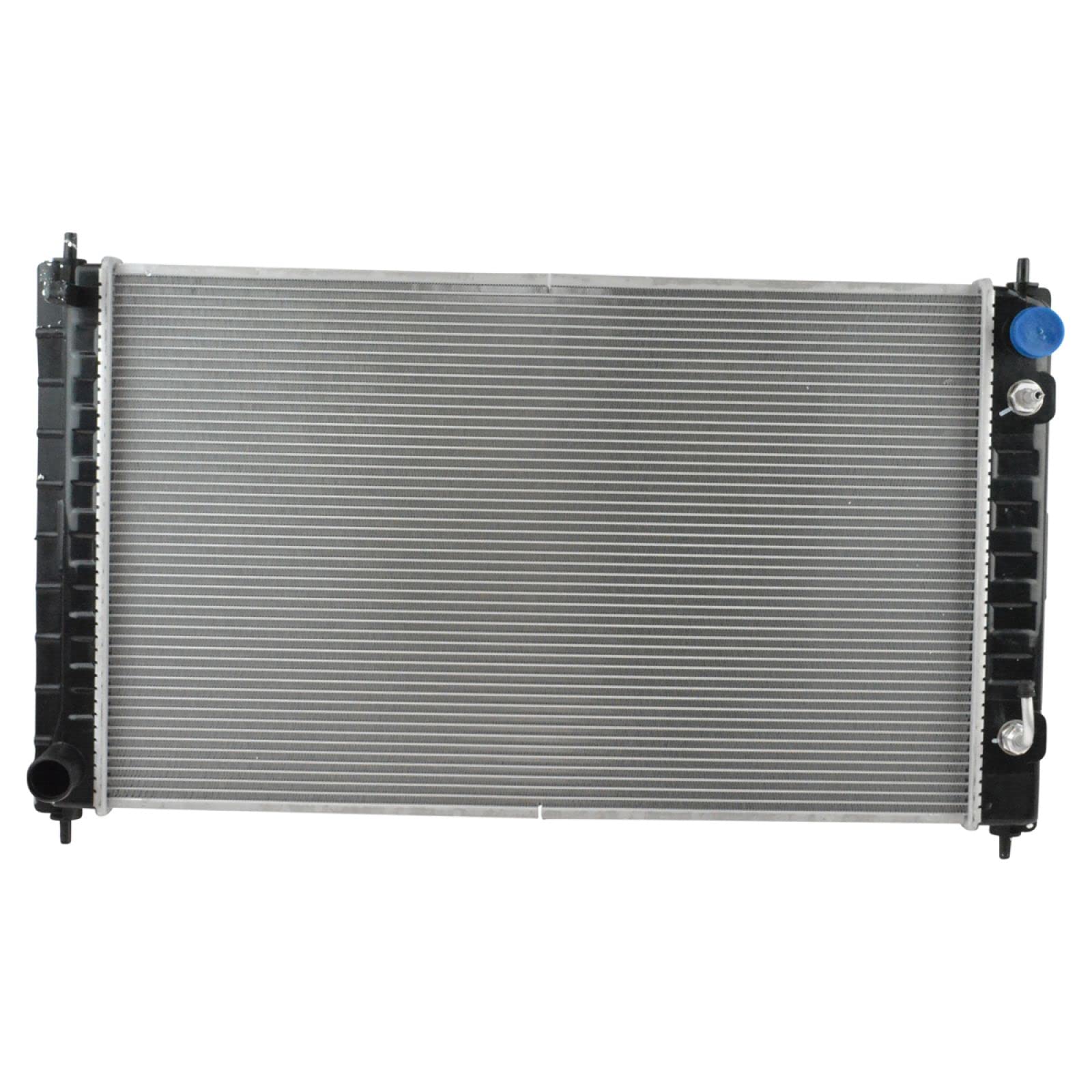
The TRQ RDA82700 is built around a 1-row aluminum core with molded plastic tanks and includes an integrated transmission oil cooler for automatic Altima and Maxima models. The core dimensions match the factory 26-3/8-inch width and 16-1/8-inch height, so the fan shroud, lower isolators, and upper cradle clips align without the need for drilling or bracket bending. TRQ has been supplying direct-fit cooling components for over two decades, and this unit carries the same OEM-crossing reference numbers — 8012988, 21410JA00A, and CU2988 — that parts stores use behind the counter.
What sets this radiator apart from other mid-range options is the level of pre-assembly. The transmission cooler lines are already fitted with the correct flare adapters, the drain plug is installed, and the cap seat is machined to accept a 1.1-bar pressure cap right out of the box. Owners report that the total install time hovers around two to three hours for a first-timer working with hand tools, and the included video library walks through the exact removal sequence for the Altima’s bumper cover and cooling fan module.
Thermal performance is consistent with the factory radiator — coolant drop across the core stays within the 12-to-15-degree Fahrenheit range under sustained highway load in summer conditions. The aluminum fins are louvered rather than flat, which improves heat shedding at low vehicle speeds without adding restriction at cruising rpm. For anyone replacing a leaking or corroded original unit, the TRQ delivers the reliability of a premium part without forcing you to pay the dealer markup.
What works
- True direct-fit with no bracket or shroud modifications needed
- Integrated transmission oil cooler with pre-installed adapters
- Extensive DIY video library for step-by-step guidance
What doesn’t
- Single-row core may limit cooling reserve for heavy towing use
- Plastic tanks are less durable than full-aluminum alternatives over very high mileage
2. Denso 221-3416 Radiator
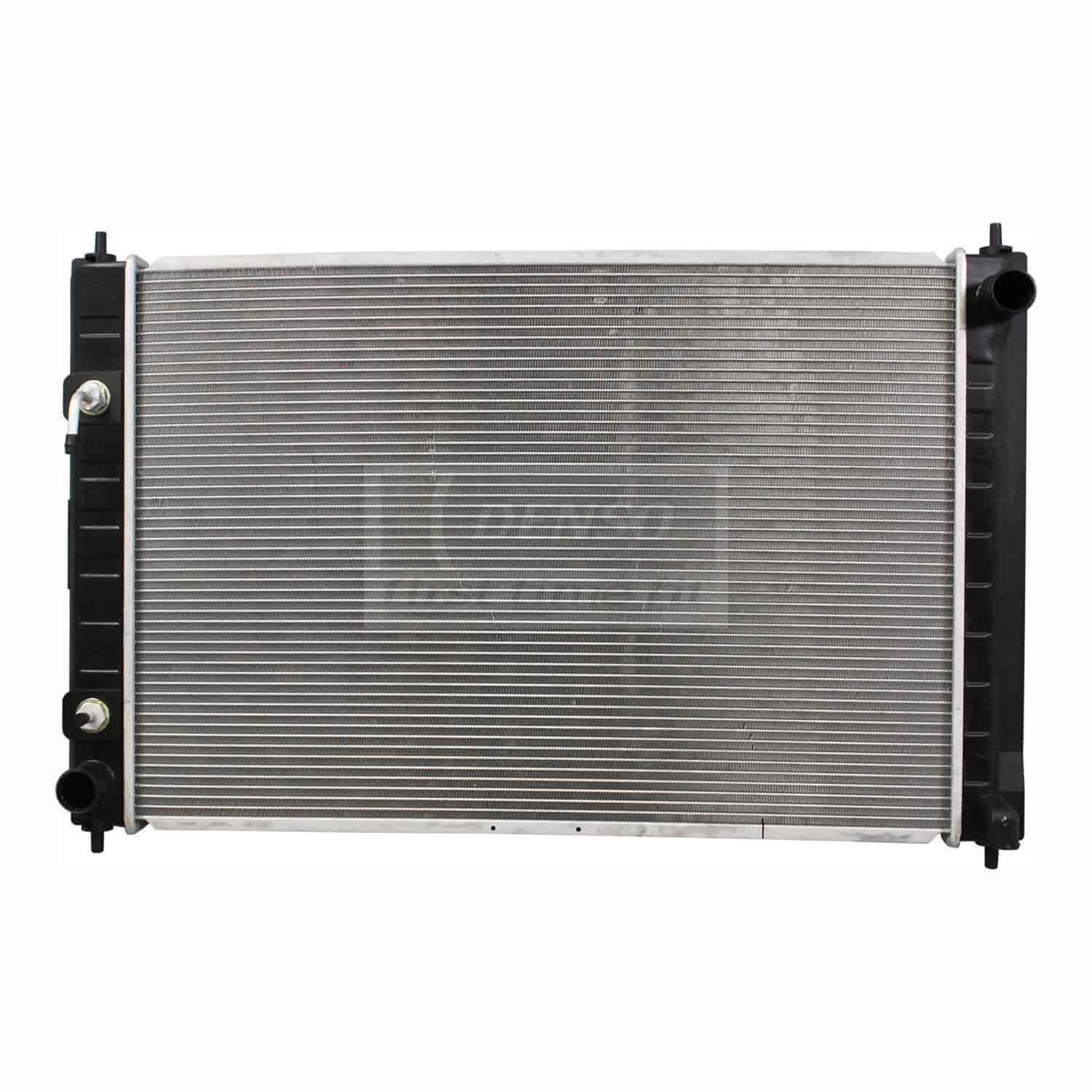
Denso is the OE supplier for a significant portion of Nissan’s cooling and HVAC systems, and the 221-3416 carries that factory-engineering pedigree into the aftermarket. The core is a full aluminum brazed assembly with painted black and silver tanks that visually match the original unit. At 13.23 pounds, it has a denser feel than many budget alternatives, which comes from thicker header plates and a higher fin count per inch. Owners who have installed this on 2009-2015 Nissan Murano and Quest models confirm the bolt pattern and transmission cooler line orientation are identical to the factory part.
The most telling detail is the fitment of the transmission cooler ports. Denso machines the ports to the exact depth and thread pitch of the Nissan quick-connect fittings, so aftermarket adapters aren’t required. This eliminates a common leak point that develops when generic radiators use universal compression fittings with plastic inserts. Customer feedback on the Altima installation specifically notes that the radiator slides into the lower isolator bushings without resistance and the upper clips engage with a positive snap — no need to enlarge the mounting holes.
Cooling performance mirrors the factory curve. The 1-row aluminum core maintains coolant temperatures within spec even during extended idle with the air conditioning running in ambient temperatures above 95 degrees Fahrenheit. The glossy tank finish resists UV degradation better than matte plastic, which helps prevent the embrittlement that leads to tank cracking around the fifth to seventh year of service. For owners who want a replacement that behaves exactly like the part that came off the assembly line, this is the closest option at a fraction of the dealership price.
What works
- Factory-grade fitment with correct port depths and thread pitch
- Denser fin count for improved heat rejection at idle
- UV-resistant tank finish for longer service life
What doesn’t
- Premium price tier may not suit budget-restricted repairs
- Painted finish can chip if handled improperly during installation
3. Denso 221-3165 Radiator

The Denso 221-3165 shares the same core construction philosophy as the 221-3416 but is designed around the center-mount configuration found on certain Nissan and Lexus applications. The brazed aluminum core weighs 14.67 pounds, making it one of the heavier direct-fit units available — a direct result of the thicker tube walls and reinforced header plates that Denso uses to meet OE durability targets. The external dimensions and inlet/outlet diameters align with the 2010 Altima’s cooling circuit, and the unit includes machined transmission cooler ports that accept the factory spring-lock fittings without adapters.
Customer reports from owners who installed this radiator on 2007-2010 RX350 and Murano platforms note that the hose barb alignment matches the factory position within a tolerance of less than 1/16 inch. This precision eliminates the need to force the upper and lower radiator hoses into position, reducing the risk of tearing the hose end or overtightening the clamp on a misaligned bead. The included drain plug is a petcock-style valve with a positive shutoff, which is easier to operate than the plastic quarter-turn valves found on lower-tier units.
The cooling margin on this unit is slightly wider than the standard Denso offering, with owners reporting that the electric cooling fans cycle on less frequently during stop-and-go traffic. The increased thermal mass helps buffer temperature spikes when the air conditioning compressor engages at low vehicle speeds. For Altima owners who have upgraded their cooling system with a higher-flow water pump or who live in mountainous regions where sustained grades push the cooling system harder, this radiator provides a measurable safety margin without altering the stock fan shroud or mounting points.
What works
- Heavier core construction with thicker tube walls for added durability
- Precise hose barb alignment reduces installation strain
- Lower fan cycling frequency in stop-and-go driving
What doesn’t
- Higher weight adds a few minutes to handling during installation
- Excess thermal capacity is unnecessary for stock daily driving
4. Readair Engine Coolant Radiator
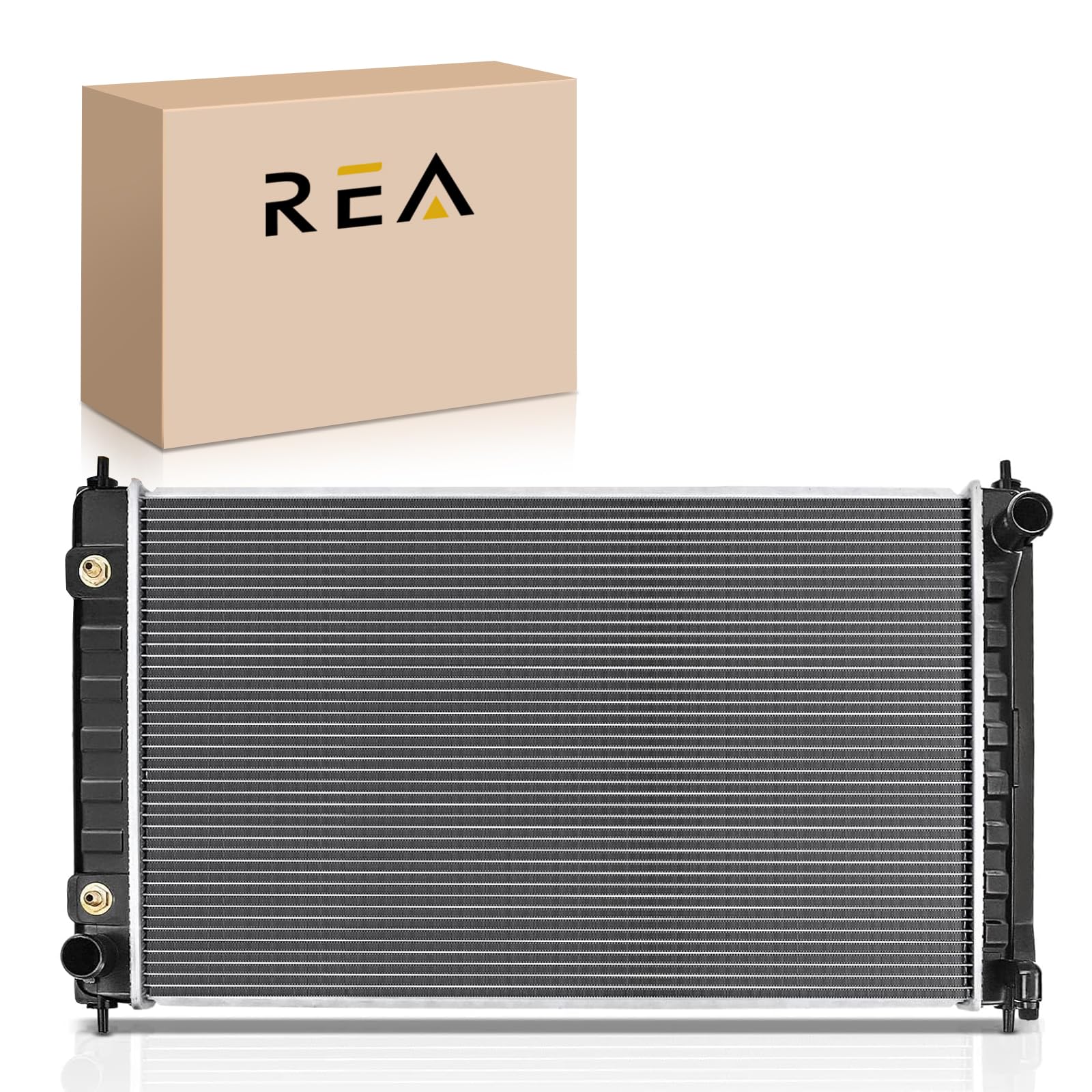
The Readair radiator uses PA66 GF30 glass-fiber-reinforced nylon for the inlet and outlet tanks, which is the same material specification that Nissan uses for factory cooling system components. The aluminum core is TIG-welded rather than mechanically crimped, and the assembly is 100% leak tested before packaging. The core dimensions — 26-1/2 inches tall, 15-15/16 inches wide, and 5/8 inch thick — match the factory Altima radiator, and the unit includes the transmission oil cooler circuit required for automatic transmission models.
The two-year unlimited-mileage warranty is a strong indicator of the manufacturer’s confidence in the build quality. Most aftermarket radiators in this price tier offer a one-year guarantee, so the extended coverage provides meaningful protection against the kind of premature tank cracking or core separation that can occur with lower-spec units. The inlet and outlet diameters are both 1-3/8 inches, which matches the factory hose sizes, and the brass transmission cooler fittings resist corrosion better than the aluminum fittings found on some competing designs.
Owner feedback across multiple Nissan and Dodge applications confirms that the radiator seals properly on the first fill without weeping from the tank-to-core joint. The packaging includes foam end caps and a cardboard sleeve that prevents fin damage during shipping, which is a practical concern for anyone who has received a radiator with bent cooling fins from inadequate packaging. For DIY owners who want a solid mid-range radiator with extra warranty coverage and robust tank construction, the Readair unit offers a compelling balance.
What works
- Two-year unlimited-mileage warranty exceeds typical coverage
- PA66 GF30 tank material matches factory specification
- TIG-welded core joints resist separation under pressure cycling
What doesn’t
- Relatively new brand with limited long-term owner history
- Brass cooler fittings may require different flare nut tools than aluminum
5. A-Premium APRAD050AM Radiator

The A-Premium APRAD050AM is positioned as a direct OEM-replacement radiator for the 2007-2018 Altima and 2009-2019 Maxima platforms with automatic transmissions. The core height of 26-1/2 inches and width of 15-15/16 inches match the factory envelope, and the 5/8-inch core thickness provides adequate cooling capacity for the 2.5L and 3.5L engines under normal driving conditions. The unit includes an internal transmission oil cooler and is manufactured to meet OE performance standards, with a one-year unlimited-mileage guarantee backing the assembly.
The tank material is a high-grade plastic that has been tested for burst pressure and thermal cycling resistance. The gasket between the tank and the aluminum core uses a mechanically rolled clinch joint, which is the preferred method for long-term leak prevention. The reference numbers — 2988, 13542, CU2988, 8012988 — are cross-listed across multiple aftermarket brands, which simplifies future replacement if you ever need to order a cap or hose that references the same OEM part family.
Weight comes in at 9.68 pounds, which is lighter than the Denso units but still within the expected range for a single-row aluminum core with plastic tanks. The lighter weight can make handling during installation slightly easier, though the trade-off is that the core tubes are marginally thinner. For daily commuters and drivers who stay within the Altima’s normal operating envelope, this radiator performs reliably and fits correctly out of the box. It represents a sensible middle-ground option for owners who want verified fitment without stepping up to the premium price tier.
What works
- Verified OE cross-reference numbers for easy future parts matching
- Rolled clinch gasket joint resists coolant weeping
- Light enough for easy single-person handling during install
What doesn’t
- Thinner core tubes reduce heat capacity for extreme conditions
- One-year warranty is shorter than some mid-range competitors
6. Nilight RAD901 Radiator
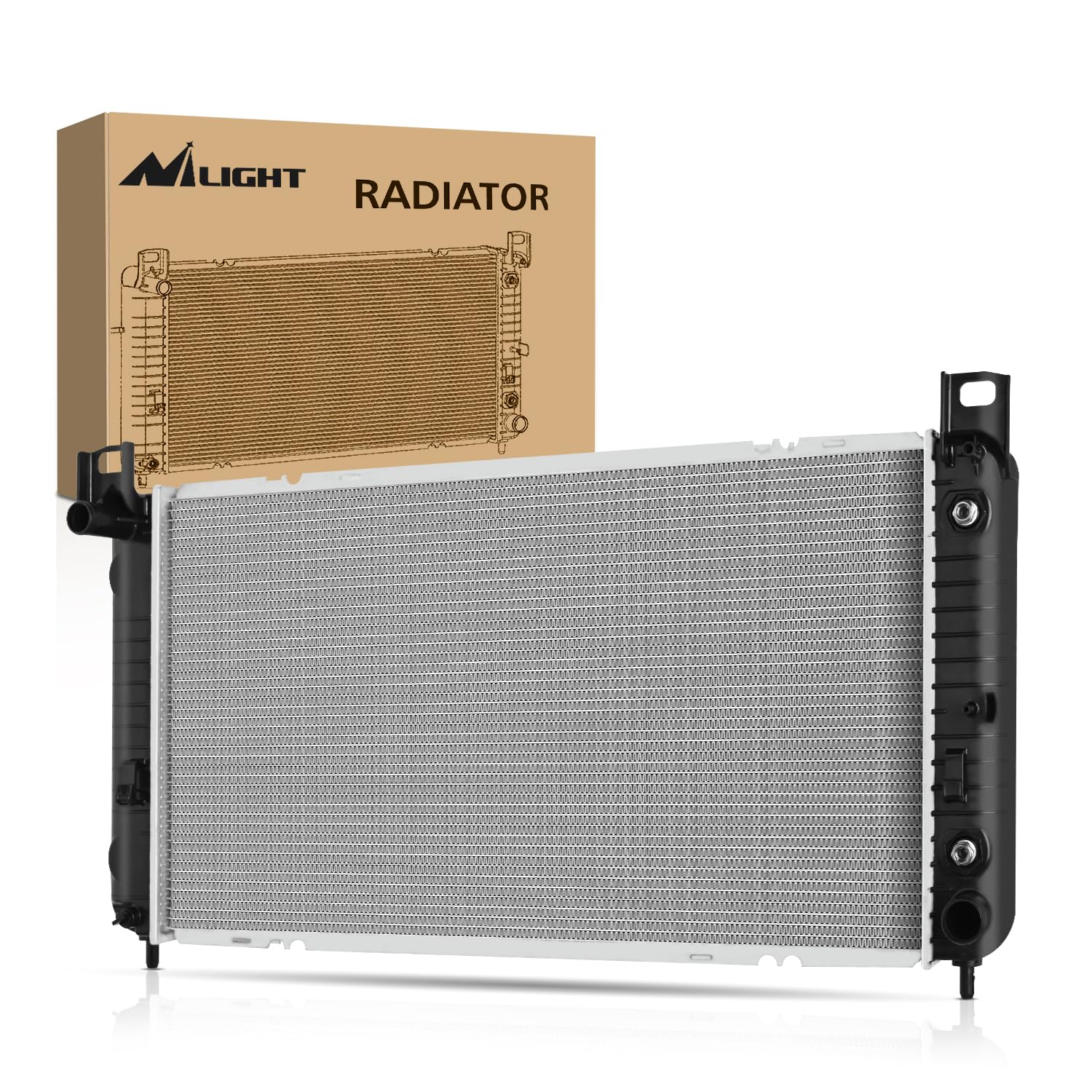
The Nilight RAD901 is a polished-aluminum core radiator that covers the 2007-2018 Altima 2.5L and 2009-2023 Maxima 3.5L FWD applications. Each unit is 100% leak tested before leaving the factory, which is a critical quality-control step that many budget radiators skip to save on production costs. The polished exterior finish gives the radiator a cleaner appearance under the hood, and the aluminum shell resists the surface corrosion that can develop on painted or raw steel tanks over time.
At 7.98 pounds, this is the lightest unit in the lineup, which correlates with a single-row core that uses thinner aluminum for both the tubes and the fins. The core dimensions are compatible with the factory fan shroud and lower isolators, and the included transmission oil cooler ports match the Altima’s automatic transmission line fittings. The reference numbers include CU2988, 21410ZN50A, 21460JN70A22, and several others, which gives you flexibility when ordering replacement caps or service parts.
Thermal performance is adequate for light-duty commuting and moderate climate conditions. Owners who have installed this radiator note that the fitment is correct and the coolant level holds steady after burping the system. The polished finish requires careful handling during installation because it shows fingerprints and road grime more readily than matte or painted surfaces. For Altima owners on a tight budget who need a functional replacement without fitment headaches, the Nilight delivers the essentials at a entry-friendly price point.
What works
- 100% factory leak tested for immediate reliability
- Polished finish resists surface corrosion better than raw aluminum
- Lightest weight option simplifies handling during installation
What doesn’t
- Thinner core material reduces heat capacity for sustained heavy load
- Polished surface shows marks and requires careful handling
7. Auto Dynasty AD-OEM-RA-2988 Radiator
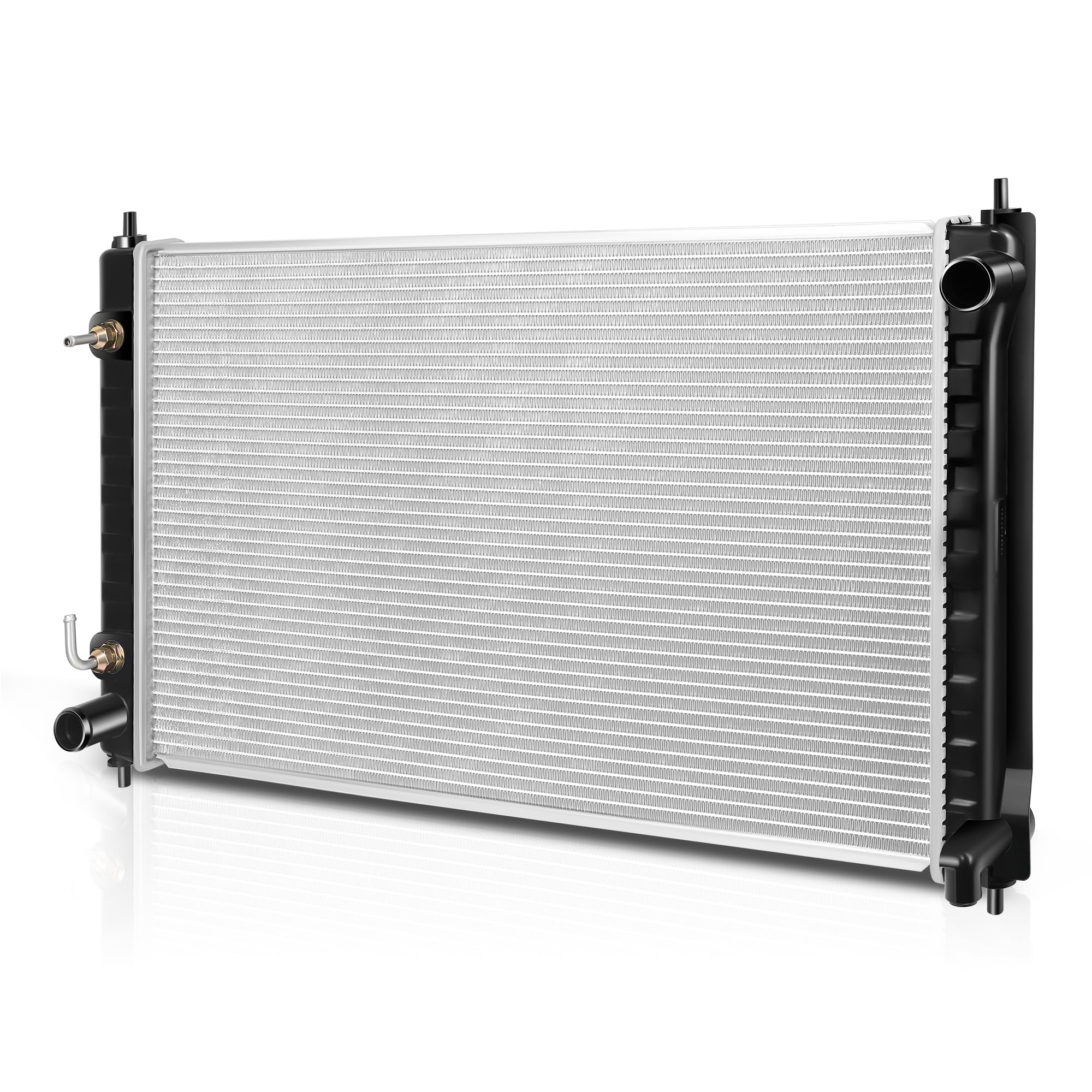
The Auto Dynasty AD-OEM-RA-2988 uses a T-6061 aluminum core with ABS plastic tanks, making it the most budget-conscious option in this lineup that still includes an integrated transmission oil cooler. The core dimensions are 26-3/8 inches wide, 16-1/8 inches tall, and 11/16 inches deep — matching the factory Altima radiator. The 1-row design keeps weight at 10 pounds, and the inlet and outlet both measure 1-3/8 inches, which is standard for the 2.5L and 3.5L engines with automatic transmissions.
Owner reviews consistently highlight that the radiator fits perfectly into the existing mounting points on Altima models from 2007 through 2018. One verified owner noted that after two months of daily driving the radiator continued to perform without any drop in coolant level or signs of seepage at the tank-core seam. The OEM part number cross-references — 21460JA00A, 21460ZN50A — confirm compatibility with the factory cooling circuit, and the direct-bolt design requires no drilling or modification to install.
The ABS plastic tanks are less rigid than the PA66 nylon used on higher-priced competitors, which means they can feel more flexible when you torque the hose clamps. It’s important to avoid over-tightening the clamps on this unit to prevent distorting the tank barb. For owners who need a functional radiator that fits correctly and cools adequately for daily driving, and who are willing to handle the installation with standard hand tools, the Auto Dynasty represents the lowest barrier to entry in terms of upfront investment.
What works
- Exact 1-3/8-inch inlet and outlet match factory hose dimensions
- Direct-bolt design requires no drilling or modification
- Proven fitment across multiple Altima model years
What doesn’t
- ABS plastic tanks are less rigid than PA66 nylon alternatives
- Thinner core construction may have shorter service life in hot climates
Hardware & Specs Guide
Core Dimensions
The width of the radiator core for the 2010 Altima is approximately 26-3/8 inches, the height is 16-1/8 inches, and the thickness ranges from 5/8 inch to 11/16 inch depending on the brand. All replacement units must match these dimensions to fit between the frame rails and align with the electric cooling fan shroud. The inlet and outlet ports are consistently 1-3/8 inches in diameter for both the upper and lower hose connections.
Transmission Oil Cooler Integration
Automatic transmission Altima models require a radiator with an internal transmission oil cooler (TOC) circuit. The TOC consists of a small heat-exchanger section at the bottom of the radiator tank that transfers heat from the transmission fluid to the coolant. Radiators without this feature will leave the transmission without proper cooling, leading to accelerated wear on the CVT.
Row Count and Fin Density
Single-row cores are standard for these Altima radiators and provide adequate cooling for stock engines. The fins are typically louvered aluminum, which improves heat transfer by creating turbulence in the airflow. Fin density ranges from 12 to 16 fins per inch, with denser packing offering better heat rejection at the cost of slightly higher airflow restriction through the core.
Pressure Cap Rating
The cooling system operates at approximately 1.1 bar (16 psi). The radiator neck must accept a cap with this rating to maintain the proper boiling point elevation of the coolant. Using a cap with a lower pressure rating can cause coolant to boil prematurely, while a higher-rated cap may stress the tank seams and hose connections beyond their design limits.
FAQ
How do I know if my Altima needs a new radiator?
Can I install a 2010 Altima radiator myself?
What is the difference between a 1-row and a 2-row radiator?
Will a radiator from a 2007 Altima fit my 2010 model?
Should I replace the radiator hoses and thermostat at the same time?
Final Thoughts: The Verdict
For most buyers, the best 2010 nissan altima radiator winner is the TRQ RDA82700 because it combines verified direct-fitment, integrated transmission oil cooling, and the backing of a brand with over two decades of aftermarket experience. If you want a part that matches the exact OE specification with the same supplier-level quality, grab the Denso 221-3416. And for a value-driven replacement that still includes a two-year warranty and robust PA66 tank construction, nothing beats the Readair Engine Coolant Radiator.

Certification: BSc in Mechanical Engineering
Education: Mechanical engineer
Lives In: 539 W Commerce St, Dallas, TX 75208, USA
Md Amir is an auto mechanic student and writer with over half a decade of experience in the automotive field. He has worked with top automotive brands such as Lexus, Quantum, and also owns two automotive blogs autocarneed.com and taxiwiz.com.