A puddle of coolant under the car every morning is more than an annoyance — it signals a compromised seal that can strand you at the worst moment. Choosing the right sealing solution means understanding material compatibility, temperature limits, and whether you need a pre-formed gasket, a liquid sealant, or a DIY sheet you cut yourself.
I’m Amir — the founder and writer behind Four Wheel Ask. My approach to the aftermarket cooling system category relies on cross-referencing manufacturer material data with long-term owner feedback to separate short-term fixes from durable repairs.
From liquid block sealants that handle hairline cracks to silicone sheets you trim for a custom fit, this guide evaluates each option for real-world coolant containment. Finding the best gasket for radiator requires weighing temperature tolerance, ease of installation, and whether the product is designed for permanent or emergency use.
How To Choose The Best Gasket For Radiator
A radiator gasket or sealant is only as good as its ability to hold pressure at operating temperature. Three factors determine whether a product delivers a lasting fix or lets you down after a few heat cycles: material composition, temperature tolerance, and the nature of the leak itself. Understanding each one before you buy saves you from repeating the job.
Material Type: Liquid Sealant vs. Sheet vs. Pre-Formed Gasket
Liquid block sealants like the K&W formula use metallic particles suspended in a carrier that hardens when exposed to air and heat, plugging small cracks and pinholes from the inside. Sheet materials — silicone, neoprene, or rubber — let you fabricate a custom gasket for flanged connections when the factory part is discontinued or unavailable. Pre-formed gaskets such as the Elring rocker cover gasket are engineered for a specific mating surface and offer the most straightforward installation with the least risk of misalignment.
Temperature and Pressure Rating
Cooling systems operate between 195 and 220 degrees Fahrenheit under 13 to 16 psi of pressure. A gasket material rated below 300 degrees Fahrenheit risks softening and blowing out under load. Silicone sheets rated up to 400 degrees Fahrenheit provide a comfortable safety margin, while liquid sealants must also withstand thermal expansion without cracking or washing away.
Thickness and Durometer
Thicker gasket material — around 1/8 inch — fills uneven clamping surfaces but can over-compress and lose sealing force. Thinner material — 1/16 inch — requires a flatter surface but conforms well to minor irregularities under proper torque. Durometer, or hardness, should match the application: softer material (Shore A 55) compresses easily for rough surfaces, while harder material (Shore A 65 or above) resists extrusion under high clamp loads.
Quick Comparison
On smaller screens, swipe sideways to see the full table.
| Model | Category | Best For | Key Spec | Amazon |
|---|---|---|---|---|
| K&W 401016 Block Seal | Liquid Sealant | Hairline cracks & head gasket leaks | Permanent molecular seal | Amazon |
| MATNIKS Silicone Sheet 12×12 | DIY Sheet | Custom gasket fabrication | Shore A65, 400°F max temp | Amazon |
| MATNIKS Neoprene Variety Pack | DIY Sheet Pack | Multiple thickness needs | 1/16, 1/8, 1/4 inch sheets | Amazon |
| Elring Rocker Cover Gasket 036161 | Pre-formed Gasket | Precise rocker cover seal | OEM fit, 3.5 oz weight | Amazon |
| FOYLEAD Silicone Rubber Sheet | DIY Sheet | Entry-level custom seals | Shore A55, 0.06 in thick | Amazon |
In‑Depth Reviews
1. K&W 401016 Block Seal Permanent Metallic Block & Radiator Seal

The K&W 401016 uses a metallic particle suspension that hardens into what the manufacturer describes as a molecular bond as strong as steel. This is not a stop-leak additive meant to be flushed out later — it deposits material directly into cracks in cast iron and aluminum blocks, head gaskets, freeze plugs, and radiator cores. The formula meets ASTM D6107 for cooling system leak sealing and is approved for both gasoline and diesel water-cooled engines.
Owner feedback consistently highlights how following the warm-engine procedure produces results that last across multiple seasons. The product withstands the pressure and temperature extremes of a pressurized cooling system without washing out, which is a common failure point with cheaper additives. Users who flushed the system first and poured the entire bottle into the radiator opening reported the highest success rate on hairline head gasket leaks.
A small number of deliveries arrived past the labeled shelf life, which affected performance. The product also requires a thorough flush beforehand, so it is not a grab-and-go fix. For permanent sealing of small-to-medium cooling system leaks, the K&W formula offers the most thoroughly documented owner track record in this category.
What works
- Permanent molecular seal withstands high pressure and temperature
- Compatible with cast iron, aluminum, copper, and bi-metal cooling components
- Professional-grade formula backed by ASTM testing standard
What doesn’t
- Shelf-life concern on some units delivered from third-party sellers
- Requires proper system flush and warm-engine procedure for best results
- Not suitable for large structural cracks or physical holes
2. MATNIKS Silicone Rubber Sheet 12×12 Inch 1/16 Black Duro A65
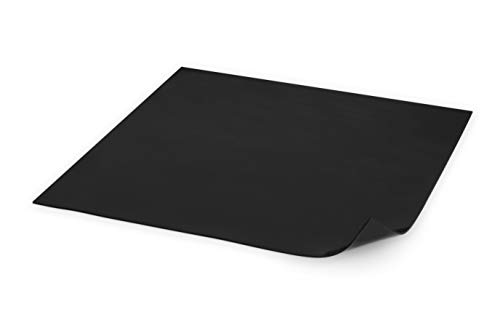
The MATNIKS 12×12 silicone sheet offers a Shore A65 durometer rating with a wide temperature range from negative 100 to 400 degrees Fahrenheit, making it suitable for radiator flange gaskets where high-temperature coolant contacts the seal. The 1/16-inch thickness provides enough compressibility to conform to slightly uneven mating surfaces without extruding under proper torque. Tensile strength is rated at 6 MPa with 400 percent elongation, indicating good flexibility before tearing.
Users have successfully cut this material for aquarium bulkhead seals, plumbing fixture gaskets, and automotive cooling system applications. The food-grade silicone construction means it does not degrade or off-gas when exposed to coolant chemicals. The sheet cuts cleanly with scissors or a knife, allowing precise gasket shapes for non-standard radiator tanks or replacement of obsolete OEM parts.
The 12-inch square size covers most single-gasket jobs with some waste. For multiple thickness options or smaller projects, the variety pack below may be more practical. This sheet is best for the owner who wants a known high-temperature rating and medium hardness for a single large custom gasket.
What works
- Broad temperature range from -100°F to 400°F covers all cooling system scenarios
- Shore A65 hardness resists extrusion under clamping pressure
- Food-grade silicone safe for coolant contact without chemical breakdown
What doesn’t
- Single sheet may leave excess for small jobs
- Not oil-resistant like nitrile-based gasket materials
- Requires careful cutting to avoid uneven sealing edges
3. MATNIKS Rubber Sheets Variety Pack 6×6 Inch 1/16, 1/8, 1/4 Neoprene
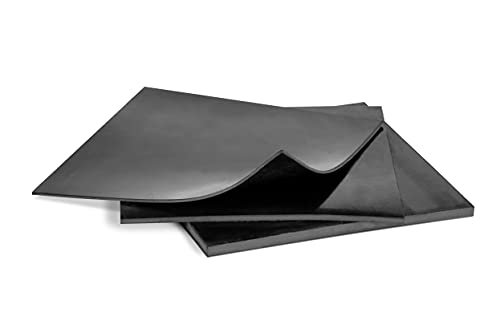
This variety pack delivers three 6×6-inch neoprene sheets in 1/16, 1/8, and 1/4-inch thicknesses, giving the fabricator options without buying three separate rolls. Neoprene offers moderate oil resistance and good compression set characteristics, making it a solid all-purpose choice for gaskets that see coolant exposure but not continuous high-temperature immersion. The special drying process mentioned in the product data reduces off-gassing compared to carbon-burned rubber, which matters for sealed cabin applications.
Owners have used these sheets for custom washer fabrication, electrical box sealing, and general automotive gasket work. The 6-inch square format works well for small flanges, thermostat housings, and water neck gaskets where a full 12-inch sheet would waste material. Multiple thicknesses let the user select the right compression for the joint geometry — 1/16 for tight metal-to-metal surfaces, 1/4 for rougher castings that need gap filling.
The neoprene material does not match silicone for upper temperature limits, so it is better suited for lower-temperature cooling system connections or secondary seals. The variety pack is ideal for the shop that stocks gasket material for multiple repair scenarios and wants thickness options in one purchase.
What works
- Three thicknesses in one pack for versatile gasket fabrication
- Neoprene offers moderate oil and coolant resistance at budget-friendly cost
- 6×6 sheets minimize waste for small flange gaskets
What doesn’t
- Lower temperature ceiling than silicone sheet materials
- Cannot match the permanent sealing capability of a liquid block sealant
- Thinner sheets may tear if over-torqued on uneven surfaces
4. Elring Replacement Rocker Cover Gasket 036161

The Elring 036161 is a pre-formed rocker cover gasket designed for specific European engine applications, notably the 2.0 TSI found in VW and Audi models. Unlike universal sheet material, this gasket is precision-molded to match the exact groove pattern of the rocker cover, eliminating guesswork during installation. The heat-resistant material formulation is engineered to withstand the temperature cycles of a valve cover without hardening or becoming brittle over time.
Owner reports from VW MK4 Jetta and TSI timing chain jobs confirm leak-free results when the gasket is correctly seated and torqued. Multiple users note that covering the full mating surface without gaps — as with any gasket — is critical for success. The product carries manufacturer part number 036.161 and cross-references to OEM part 36161 for direct replacement.
This gasket is application-specific and will not fit a universal radiator flange. However, it demonstrates the quality of Elring as a German gasket manufacturer. For owners needing a rocker cover gasket for a compatible engine, this is a direct-fit solution that outperforms any cut-from-sheet alternative.
What works
- Precision-molded fit eliminates measurement and cutting errors
- Proven leak-free performance on TSI and VW 2.0 engines
- Heat-resistant material withstands valve cover temperature cycling
What doesn’t
- Limited to specific European engine applications only
- Not designed for radiator flange or cooling system use
- Requires proper torque sequence to avoid distortion
5. FOYLEAD Silicone Rubber Sheet 12×12 Inch 1/16 Thick Duro A55

The FOYLEAD silicone sheet offers an entry point into DIY gasket fabrication with a 12×12-inch surface area at 1/16-inch thickness and a Shore A55 durometer. The softer hardness gives it excellent conformability to rough or uneven clamping surfaces, which can be an advantage for older radiators with minor flange warpage. The sheet is waterproof, heat resistant, and cuts easily with household scissors for quick custom shapes.
Users have applied this material for foot pedal grip, drawer lining, art projects, and basic sealing tasks rather than demanding high-temperature automotive gasket work. The 55A durometer means it compresses more easily than the MATNIKS 65A sheet, which helps fill gaps but may allow extrusion under higher torque loads. Odor control is noted as a positive
For light-duty sealing needs or for the owner who wants a single sheet for multiple small projects, this is a functional choice at an approachable entry point. For dedicated radiator gasket fabrication where sustained coolant temperature and pressure are factors, the higher-temperature MATNIKS silicone sheet delivers a wider safety margin.
What works
- Soft 55A durometer conforms well to uneven or slightly warped surfaces
- Large 12×12 sheet provides ample material for multiple gaskets
- Easy to cut and shape with basic tools
What doesn’t
- Softer material risks extrusion under high clamp loads
- Temperature rating not as high as premium silicone sheets
- Some users reported split tube sealant in packaging
Hardware & Specs Guide
Material Composition
The three material types in this category — liquid metallic sealant, silicone rubber, and neoprene — each serve a different sealing philosophy. Liquid sealants use suspended particles that bridge gaps from inside the coolant passage, forming a permanent plug. Silicone offers superior high-temperature stability (up to 400°F) with excellent flexibility and UV resistance, making it the top choice for fabricated gaskets. Neoprene provides a balance of oil resistance and compression strength at a lower cost, but its temperature ceiling is lower than silicone, limiting its use to cooler cooling system connections.
Temperature Range & Durability
Cooling system operating conditions demand a gasket material that maintains integrity from cold start to full operating temperature. Silicone sheets rated for 400°F continuous service comfortably outlast the 220°F typical of a pressurized cooling system. Liquid sealants rely on chemical curing to form a bond that resists both pressure washout and thermal expansion cycling. Neoprene sheets typically degrade above 250°F, so they are better suited for coolant return lines or thermostat housing gaskets rather than direct radiator core contact. Durometer hardness also affects durability — softer materials (Shore A55) seal rough surfaces but may creep under sustained pressure, while harder compounds (Shore A65) hold shape under torque.
FAQ
What is the difference between a liquid block sealant and a traditional gasket for radiator repairs?
How do I select the correct thickness for a DIY radiator gasket?
Can I use silicone sheet material for every gasket on my cooling system?
Final Thoughts: The Verdict
For most buyers, the best gasket for radiator winner is the K&W 401016 Block Seal because it permanently seals internal cracks and pinholes without disassembly, backed by a professional-grade formula and decades of owner success stories. If you need to fabricate a custom flange gasket with high temperature resistance, grab the MATNIKS 12×12 Silicone Sheet. And for versatility across multiple thicknesses in one package, nothing beats the MATNIKS Neoprene Variety Pack for the shop that stocks gasket material for every job.

Certification: BSc in Mechanical Engineering
Education: Mechanical engineer
Lives In: 539 W Commerce St, Dallas, TX 75208, USA
Md Amir is an auto mechanic student and writer with over half a decade of experience in the automotive field. He has worked with top automotive brands such as Lexus, Quantum, and also owns two automotive blogs autocarneed.com and taxiwiz.com.