A single rock chip or UV fade can turn a pristine factory finish into a patchwork of dull spots and peeling layers. The clear coat is your paint’s last line of defense, and choosing the wrong one means sanding everything off and starting over within a year.
I’m Amir — the founder and writer behind Four Wheel Ask. I’ve spent years analyzing formulation chemistry, owner-reported durability data, and real-world application results across dozens of clear coat products to separate the ones that bond for years from those that flake within months.
Whether you are touching up a daily driver, refinishing a classic car in the garage, or sealing a custom bumper repair, this guide breaks down the top contenders based on gloss retention, chemical resistance, and ease of application. I have researched owner feedback, technical specs, and formulation data to find the best car paint clear coat for every budget and skill level.
How To Choose The Best Car Paint Clear Coat
Selecting the right clear coat comes down to understanding the chemical system, the finish type you need, and the environment your car lives in. Two-part (2K) catalyzed clears use a separate hardener that cross-links as it cures, producing a far tougher film than any single-component (1K) aerosol. For any repair that will see sunlight, road debris, or regular washing, 2K is the only durable choice.
2K vs 1K Chemistry
A 2K clear coat contains a built-in activator that you release by pressing a button on the can bottom. Once mixed, the isocyanate resin and hardener begin a chemical reaction that creates a dense, solvent-resistant polymer network. A 1K clear coat dries by solvent evaporation alone and remains softer and more porous. Owner-reported durability data shows 2K formulas last two to three times longer before yellowing or peeling compared to 1K alternatives.
Finish Type and Gloss Level
High-gloss clears maximize depth and reflection but show every imperfection in the base coat. Matte clears reduce glare and hide minor surface defects, making them popular for custom builds and off-road vehicles. Choose based on your base paint’s original finish — matching gloss levels avoids a patchy appearance under direct light.
Spray Pattern and Application Ease
Fan nozzle width and atomization quality determine how evenly the clear lays down. Wide fan patterns cover more area per pass but require more overlap control. Narrower patterns reduce waste on small repairs but risk tiger-striping if you pause mid-pass. Products with adjustable nozzles or pre-installed wide fans tend to deliver more consistent results for first-time users.
Quick Comparison
On smaller screens, swipe sideways to see the full table.
| Model | Category | Best For | Key Spec | Amazon |
|---|---|---|---|---|
| Eastwood 2k Aerosol | 2K High-Gloss | Full-panel resprays and show-car finish | 12-hour cure at 68°F; IR dry option | Amazon |
| ERA Paints 2K High Gloss | 2K High-Gloss | Bumper repairs and spot touch-ups | 24-hour full cure; fan nozzle | Amazon |
| SprayMax 2K Matte Clear | 2K Matte | Custom builds and flat-finish restorations | 48-hour full cure; chemical resistant | Amazon |
| U-Pol Products 0796 Clear#1 | 2K High-Gloss | Headlight restoration and small parts | UV resistant; blends with 2K clears | Amazon |
| VHT SP145 Engine Enamel Clear | 1K High-Heat | Engine blocks and high-temp components | 550°F heat resistance; waterproof | Amazon |
In‑Depth Reviews
1. Eastwood 2k Aerosol Spray Clear Coat

The Eastwood 2k Aerosol delivers a high-gloss finish that owner reports consistently describe as indistinguishable from OEM clear coats. Its 2K catalyzed formula produces a dense, scratch-resistant film that holds up to regular washing and minor abrasion better than any single-stage aerosol on the market. Users tackling deep scratch repairs note that the gloss depth matches factory paint after proper curing, eliminating the need for a full respray.
Application data shows that two passes with 50 percent overlap at 1.2 mils per coat produce optimal thickness without runs. The 48-hour pot life after activation gives you ample time to apply multiple panels from one can, a major advantage over quick-set systems that harden within hours. Eastwood also provides lifetime tech support, which owner feedback highlights as invaluable for first-time 2K users navigating spray distance and flash timing.
The trade-off is a longer cure window — 12 hours at 68°F before handling, and full hardness takes additional time in cooler conditions. Users in humid climates report that slight orange peel can appear if coats are applied too wet. Prepping the surface with a tack cloth and maintaining consistent temperature throughout the cure period eliminates most finish inconsistencies. For anyone wanting a professional-grade result from an aerosol can, this is the benchmark.
What works
- OEM-matched gloss depth and scratch resistance
- 48-hour pot life allows multiple panels from one can
- Lifetime tech support helps beginners dial in technique
What doesn’t
- 12-hour cure time requires dust-free environment
- Orange peel can form if applied too heavily
2. ERA Paints 2K High Gloss Clear Coat Spray
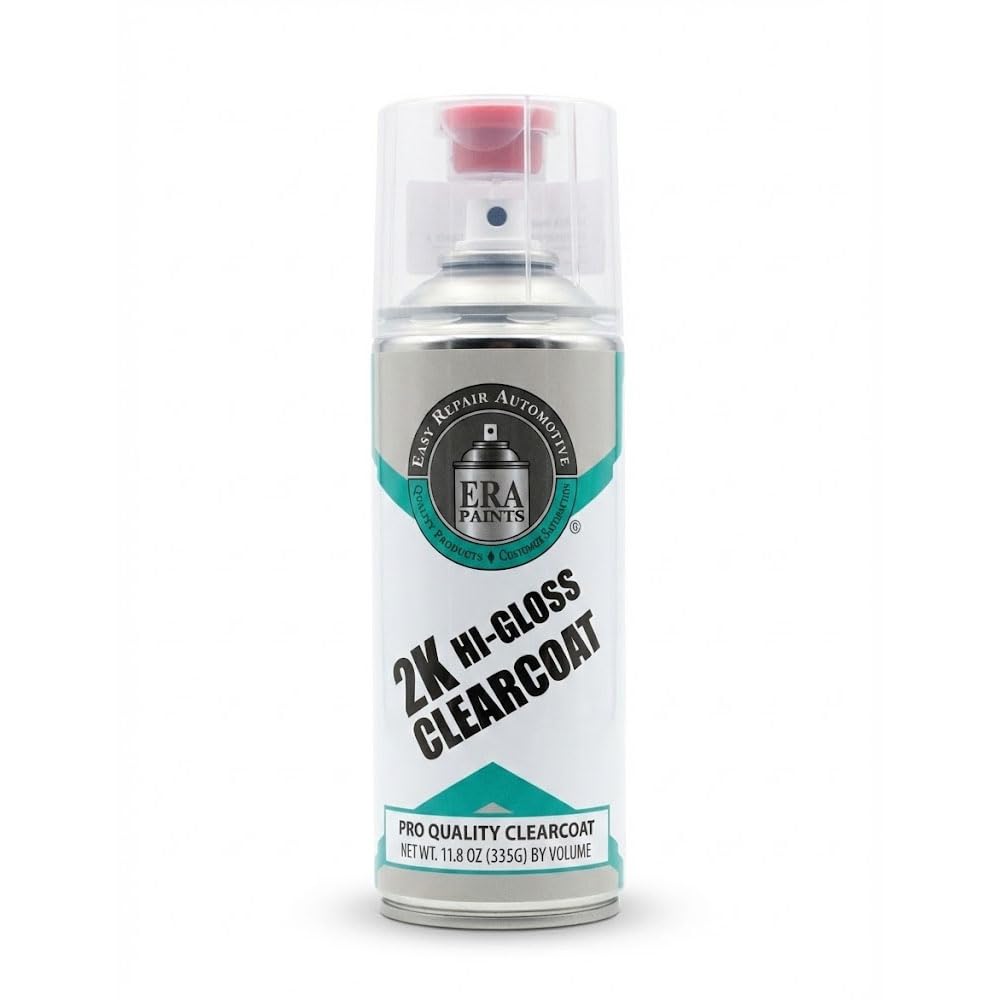
ERA Paints uses a catalyst-activated 2K system that chemically bonds during cure to create a film tougher than any 1K aerosol. Owner reports from bumper repairs and spot touch-ups consistently mention that the finish blends seamlessly into surrounding factory clear coat, with no edge witness lines after 48 hours of full cure. The fan nozzle produces a wide, even pattern that minimizes runs even for users with limited spray experience.
UV resistance is a standout here — the formulation uses premium resins formulated in Oregon, and long-term owner updates indicate no yellowing or clouding after six to twelve months of outdoor exposure. The 24-hour full cure time is faster than many competing 2K aerosols, which matters when you need to reassemble trim panels or return the car to service quickly. Coverage per can is rated at 3.5 square feet, so plan for two cans on full panels.
Some owners note that the pot life after activation is closer to 36 hours than the stated 48, especially in warmer conditions. This means you need to plan your application session and avoid storing an activated can for later use. The can also requires thorough shaking — at least two minutes — to ensure the hardener mixes completely; insufficient mixing leads to soft spots that fail to cure properly.
What works
- Seamless blend with factory clear on repairs
- No yellowing or clouding reported after months outdoors
- Wide fan nozzle reduces run risk for beginners
What doesn’t
- Pot life shorter than advertised in warm temps
- Limited coverage area per can for full panels
3. SprayMax 2K Matte Clear Coat
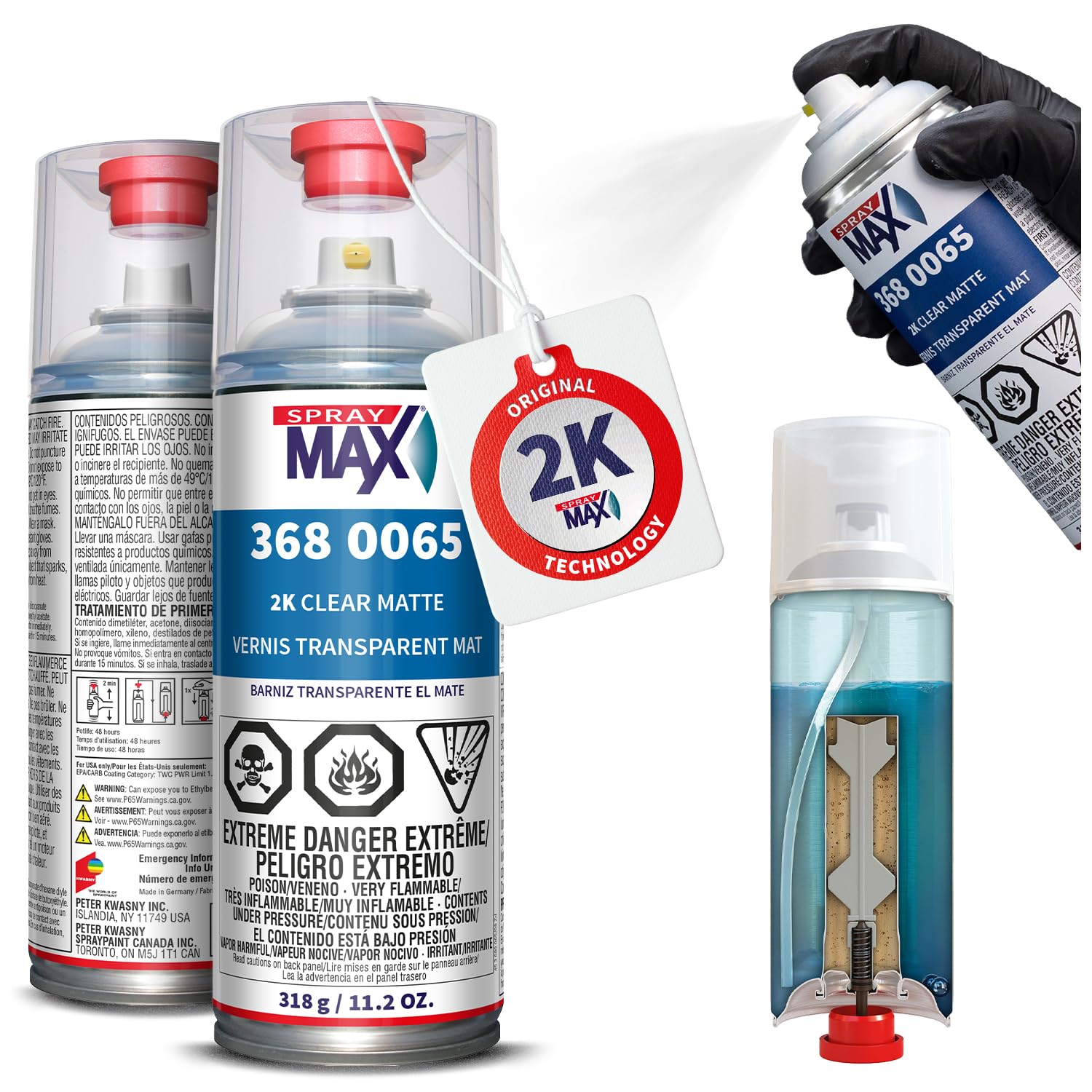
SprayMax has built a reputation among custom builders and hydrographic finishers for delivering a consistent matte sheen that resists chemicals and weather exposure without glossing up over time. The 2K formula uses an internal activator that produces a flat clear coat capable of withstanding fuel spills, degreasers, and road salts — a combination rarely found in matte aerosols. Owner reports from dipped parts and camo-painted rifles confirm the matte texture stays true through repeated handling and cleaning.
The 48-hour full cure window is standard for 2K systems, but what sets SprayMax apart is its 10-12 square foot coverage per can, which is generous for a matte product. Users report that the self-leveling behavior is excellent even in cooler temperatures, reducing the need for wet-sanding between coats. The can must be stored in a cool environment after activation; owners who refrigerate the can report pot life extending well past the stated 48 hours, giving more flexibility for multi-day projects.
Matte finishes demand more careful surface prep than gloss because any imperfection in the base coat or primer will telegraph through the flat clear. Some users note that the nozzle can clog if flash times are too short between passes — cleaning the tip with solvent after each coat prevents this. For anyone building a custom rig or restoring a vehicle with a factory flat finish, this is the most reliable matte 2K aerosol available.
What works
- True matte sheen with excellent chemical resistance
- Generous coverage area for a 2K aerosol
- Self-leveling reduces need for wet-sanding
What doesn’t
- Nozzle can clog with tight flash schedules
- Requires flawless base prep for matte finish
4. U-Pol Products 0796 Clear#1 High Gloss Clear Coat

U-Pol’s 0796 Clear#1 occupies a sweet spot for DIYers who want 2K performance without paying a premium. The clear coat is formulated to blend easily with existing 2K clear layers, making it a strong candidate for spot repairs where you need the new clear to melt into the old without a harsh edge. Owner feedback from headlight restoration projects highlights its ability to produce a crystal-clear, non-yellowing finish on polycarbonate lenses when applied in light coats.
Compatibility with water-based base coats is a specific advantage for modern vehicles that have moved away from solvent-based paints. The UV resistance in the formulation prevents the hazing that often appears on repair edges within a year. Coverage is rated at 4.5 to 6.75 square meters, which translates to roughly two to three times the area of most competitor aerosols, giving this can exceptional mileage for budget-conscious users.
Some owners report that the clear can appear slightly soft for the first 24 hours and is prone to marking if handled too early. Full hardness takes longer than the label suggests in humid conditions — users in coastal areas recommend waiting 72 hours before wet-sanding or polishing. The nozzle produces a conical spray rather than a fan pattern, which requires more careful overlap to avoid uneven texture on larger panels.
What works
- Excellent blend compatibility with existing 2K clears
- UV resistant formulation prevents yellowing on repairs
- High coverage area per can for the cost
What doesn’t
- Soft for first 24 hours; marks easily
- Conical spray pattern requires precise overlap
5. VHT SP145 Engine Enamel Gloss Clear Can

VHT’s SP145 is a 1K enamel clear formulated with urethane and ceramic resins to withstand engine-bay temperatures up to 550°F. It is not a substitute for a body-panel clear coat, but for engine blocks, valve covers, caliper brackets, and other heat-soaked components it delivers a glossy, waterproof finish that holds up to degreasers and gasoline. Owner reports from LS swap builds and classic restorations confirm that the clear adheres well to sandblasted metal and cast iron without flaking under thermal cycling.
Application technique matters significantly with this product — reviewers who apply multiple thin coats with 10-minute flash times report a smooth, durable finish, while heavy single coats can run and remain tacky for days. The 1K system means no mixing or pot life concerns, so you can spray a single component and save the rest of the can for later use without waste. Coverage at 24-30 square feet per can is generous for a specialty heat-resistant product.
This clear coat is not designed for exterior body panels exposed to UV and road debris; it will chalk and degrade within months if used outside the engine bay. The gloss level is moderate rather than deep — it produces a clean satin-gloss look rather than a mirror finish. For engine builders and off-road enthusiasts who need corrosion protection on hot parts, this is the most cost-effective option available.
What works
- Handles 550°F continuous heat without flaking
- No mixing or pot life — spray as needed
- Good adhesion to sandblasted and cast surfaces
What doesn’t
- Not designed for exterior body panel use
- Moderate gloss level; not a mirror finish
Hardware & Specs Guide
2K Catalyst System
A two-part clear coat uses a separate hardener that initiates a chemical cross-linking reaction when mixed. This produces a thermoset polymer film that is significantly harder, more solvent-resistant, and more durable than a 1K lacquer or enamel. The pot life — the window after activation during which the product remains sprayable — typically ranges from 24 to 48 hours depending on temperature and formulation.
Cure Time vs. Dry Time
Dry time refers to the point when the surface is touch-dry and dust will not stick, usually 30-60 minutes. Cure time is the period required for the full chemical reaction to complete, during which the film reaches its ultimate hardness and chemical resistance. Most 2K aerosols require 24-48 hours at 68°F for full cure; lower temperatures extend this window significantly.
UV Resistance and Yellowing
UV absorbers and hindered amine light stabilizers (HALS) are additives that prevent the polymer chains from breaking down under sunlight. Clear coats without adequate UV stabilization will yellow within 6-12 months of outdoor exposure. Premium 2K formulations include higher concentrations of these stabilizers, which is why they maintain clarity longer than budget 1K clears.
Spray Pattern and Atomization
Fan nozzles produce an elliptical spray pattern that distributes paint evenly across a wide area, reducing the risk of tiger-striping and uneven thickness. Conical nozzles concentrate the spray in a smaller circular pattern, which works well for small repairs but requires more overlap on larger surfaces. Wider fan patterns generally produce smoother results for DIY users.
FAQ
Can I apply clear coat over existing factory clear without sanding?
How long should I wait between clear coat coats?
Why does my clear coat look cloudy or hazy after drying?
Can I use engine enamel clear on my car’s body panels?
Is matte clear coat less durable than gloss clear coat?
Final Thoughts: The Verdict
For most buyers, the best car paint clear coat winner is the Eastwood 2k Aerosol Spray Clear Coat because it delivers OEM-matching gloss, excellent scratch resistance, and the longest usable pot life for multi-panel projects. If you want a rapid-cure formula with seamless blend-in for spot repairs, grab the ERA Paints 2K High Gloss Clear Coat. And for a true flat finish on custom builds or matte restorations, nothing beats the SprayMax 2K Matte Clear Coat.

Certification: BSc in Mechanical Engineering
Education: Mechanical engineer
Lives In: 539 W Commerce St, Dallas, TX 75208, USA
Md Amir is an auto mechanic student and writer with over half a decade of experience in the automotive field. He has worked with top automotive brands such as Lexus, Quantum, and also owns two automotive blogs autocarneed.com and taxiwiz.com.