Rolling down the highway with the windows up and the AC on should mean crisp, clean air—not a dusty sigh followed by that musty, stale odor that no air freshener can fix. The cabin air filter is the quiet workhorse behind your Impala’s climate system, and when it clogs, so does your comfort. Choosing the right replacement means better airflow, fewer allergens, and a cabin that actually smells fresh even in stop-and-go traffic.
I’m Amir — the founder and writer behind Four Wheel Ask. My approach centers on deep market research, analyzing product specifications, build quality data, and aggregating owner feedback to identify which parts deliver on their promises without unnecessary markup.
After analyzing dozens of options on build quality, filtration media, and owner feedback, this guide names the best chevy impala cabin air filter precisely.
How To Choose The Best Chevy Impala Cabin Air Filter
Not all cabin air filters are built the same, and with dozens of listings claiming universal fitment, it is easy to grab the wrong one. Understanding three key factors will help you pick the right filter for your Impala without guesswork.
Filtration Media: Activated Carbon vs. Standard Pleated
Standard pleated filters capture dust, pollen, and debris using electrostatic media. Activated carbon filters go further by adsorbing gases, exhaust fumes, and odors through a layer of charcoal-infused material. If you drive in urban traffic, near industrial areas, or simply dislike that stale AC smell, a carbon filter makes a noticeable difference. The trade-off is slightly more airflow resistance, but modern carbon blends minimize that penalty.
Fitment and Compatibility Across Impala Generations
The tenth-generation Impala (2014–2020) uses a different cabin filter size than the ninth-generation (2006–2013) and earlier models. Double-check the model year and trim before purchasing. Many aftermarket filters list broad compatibility across GM platforms, but the physical dimensions—length, width, and thickness—must match your specific Impala’s filter housing. Filters labeled CF11966 generally fit the 2014–2020 models, while CF8392A fits earlier generations.
Build Quality and Service Life
Look for reinforced frames that resist warping in humid conditions and dense pleating that maintains structural integrity over thousands of miles. Filters with electrostatic media and carbon infusion typically last 12,000 to 15,000 miles, while some premium options stretch beyond 20,000 miles. A filter that collapses or tears during installation is a red flag for long-term durability. OEM-spec seals around the edges also prevent unfiltered air from bypassing the media.
Quick Comparison
On smaller screens, swipe sideways to see the full table.
| Model | Category | Best For | Key Spec | Amazon |
|---|---|---|---|---|
| ACDelco A3176C | OEM Grade | Factory-Perfect Fit | GM OE Design; 0.6 lb | Amazon |
| JONHWI CF11966 | Carbon Infused | Odor Elimination | 5-Layer; Carbon Media | Amazon |
| Forccord 2-Pack CF8392A | Premium 2-Pack | Value Bundle | 2-Pack; 20K mi Life | Amazon |
| Spearhead BE-966 | Activated Carbon | Long Service Life | 15K mi; Coconut Carbon | Amazon |
| ZEZUT CF11966 | HEPA Standard | Particle Capture | 99.1% Eff.; Honeycomb | Amazon |
In‑Depth Reviews
1. ACDelco GM Original Equipment A3176C (22753242) Air Filter
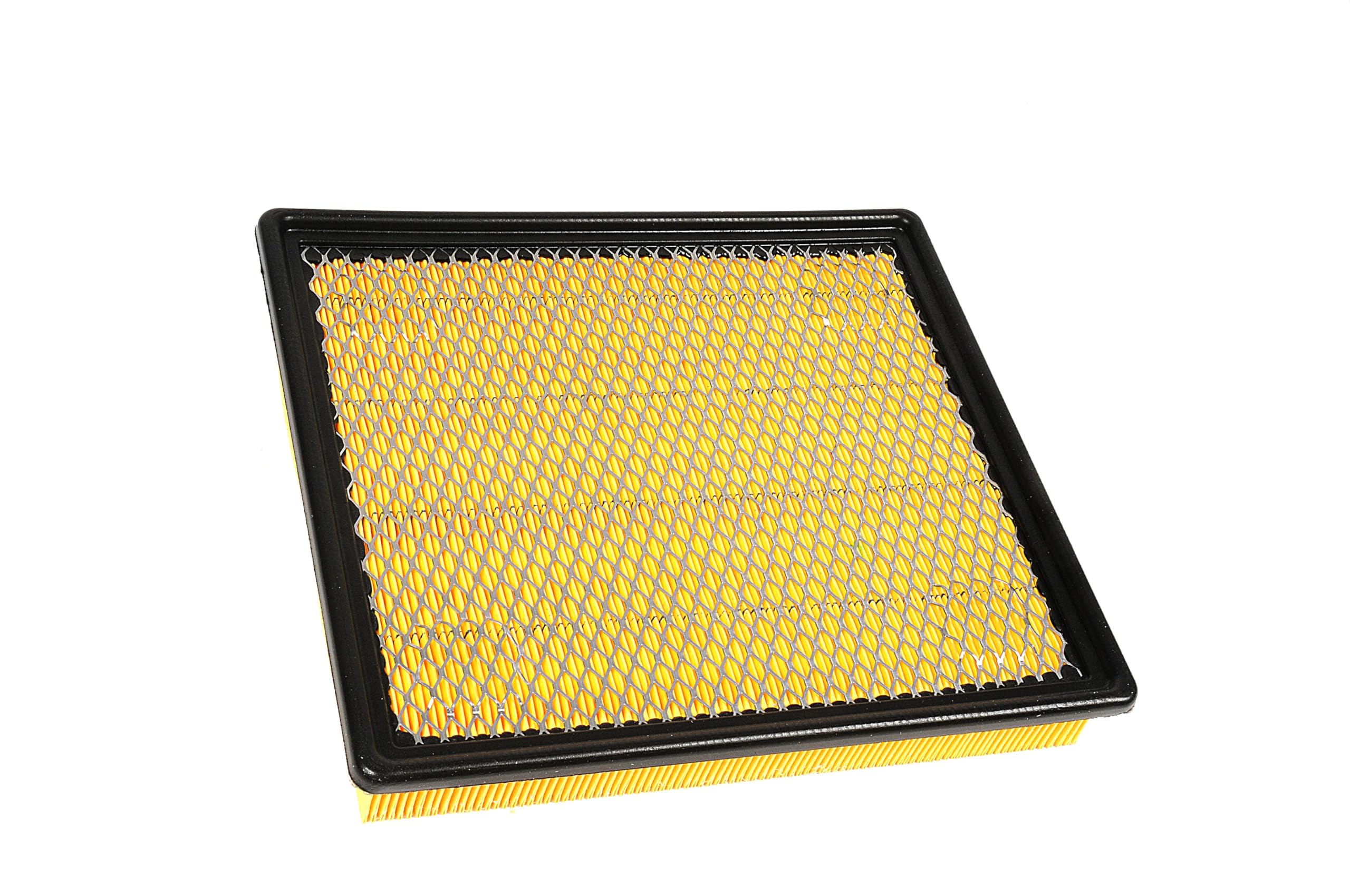
The ACDelco A3176C is the same part that rolls off the assembly line in GM vehicles, engineered to the exact tolerances your Impala’s HVAC housing was designed around. Every seal, pleat, and dimension matches the original factory specification, which means no wrestling with ill-fitting edges or worrying about air bypassing the media. This is the reference standard that aftermarket brands try to beat.
GM engineers validate these filters for consistent filter capacity and efficiency across the full temperature and humidity range your Impala encounters. The tight seals prevent unfilter air from sneaking past the frame, and the media density strikes a balance between particle capture and airflow that keeps the blower motor working within its designed range. Owner reports consistently note that installation takes minutes with zero modifications.
Where this filter truly earns its place at the top is the peace of mind that comes with OEM validation. You are not gambling on dimensional quirks or media claims. For Impala owners who plan to keep the car for years and want a part that will not cause secondary issues, the ACDelco A3176C is the definitive choice. It costs more than generic options, but the fit certainty and materials transparency justify the premium.
What works
- Exact OEM dimensions guarantee trouble-free installation
- Backed by GM engineering and validation testing
- Two-year manufacturer warranty for added assurance
- Seals tightly to prevent unfiltered air bypass
What doesn’t
- Higher cost compared to most aftermarket alternatives
- Does not include activated carbon for odor adsorption
2. JONHWI Cabin Air Filter CF11966
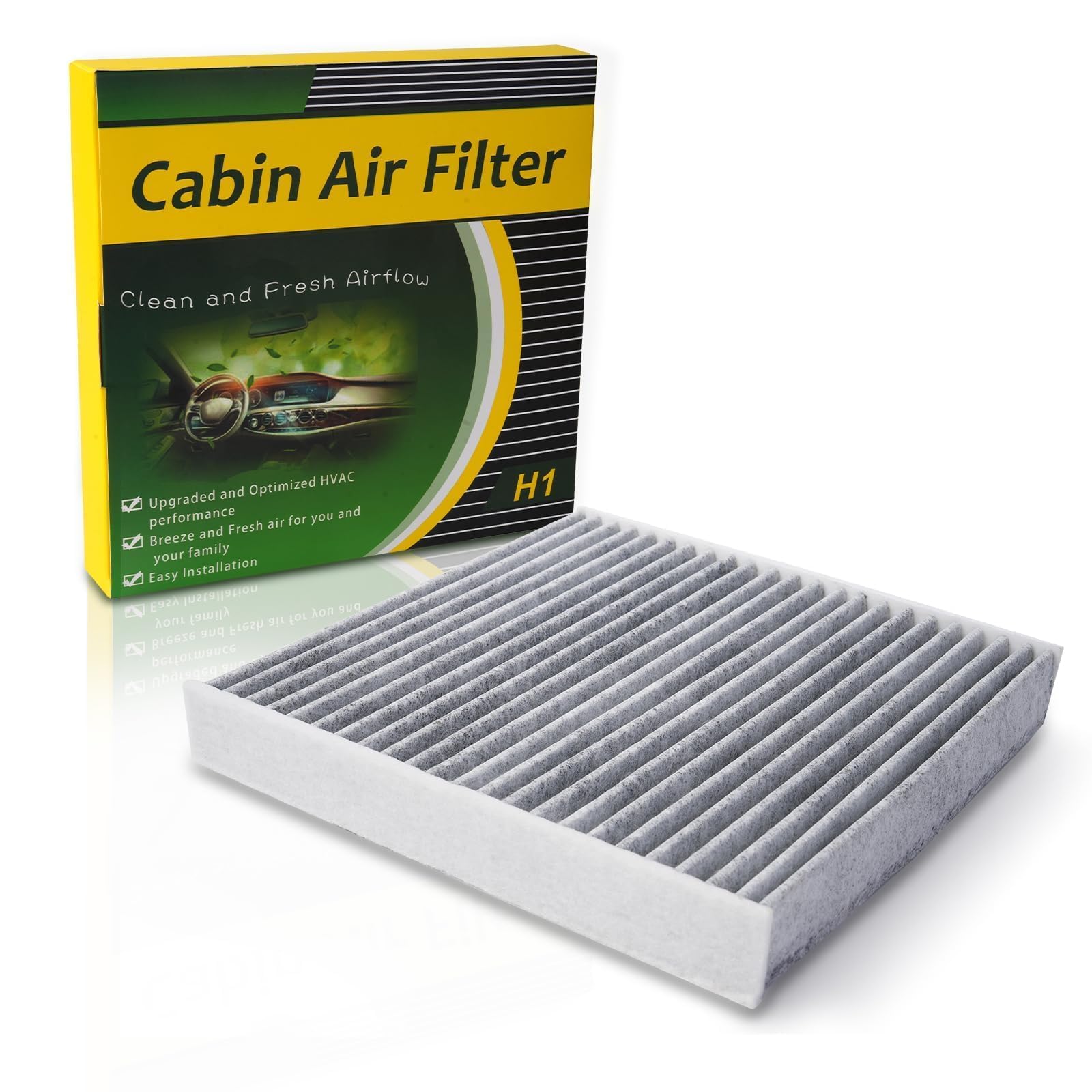
The JONHWI CF11966 positions itself as a serious contender for Impala owners who want carbon-level odor control without stepping up to the highest price tier. Its five-layer construction integrates carbon-infused media that targets exhaust fumes, cigarette residue, and the musty smell that builds up during humid months. The filter is compatible with 2014–2020 Impala models and a wide range of other GM vehicles.
What sets this filter apart is the attention to media density. The pleated layers are packed tightly enough to capture fine dust and pollen while still allowing sufficient airflow to keep the cabin comfortable during peak summer cooling. Owners have reported a noticeable reduction in stale AC odor within the first few days of installation, and the carbon layer continues working for the full service interval.
The frame feels rigid and well-molded, which helps it seat properly in the Impala’s filter housing without flexing or slipping out of alignment. For drivers who split time between highway commutes and city streets, the JONHWI delivers consistent air quality without the sticker shock of some premium brands. It represents a solid middle-ground option that does not cut corners on the media itself.
What works
- Five-layer carbon-infused media handles odors effectively
- Rigid frame simplifies installation and prevents shifting
- Broad GM compatibility for easy cross-vehicle use
- Balanced airflow resistance appropriate for daily driving
What doesn’t
- Carbon layer may deplete faster in heavy traffic conditions
- Not validated to OEM-specific efficiency standards
3. Forccord 2-Pack CF8392A Cabin Air Filter
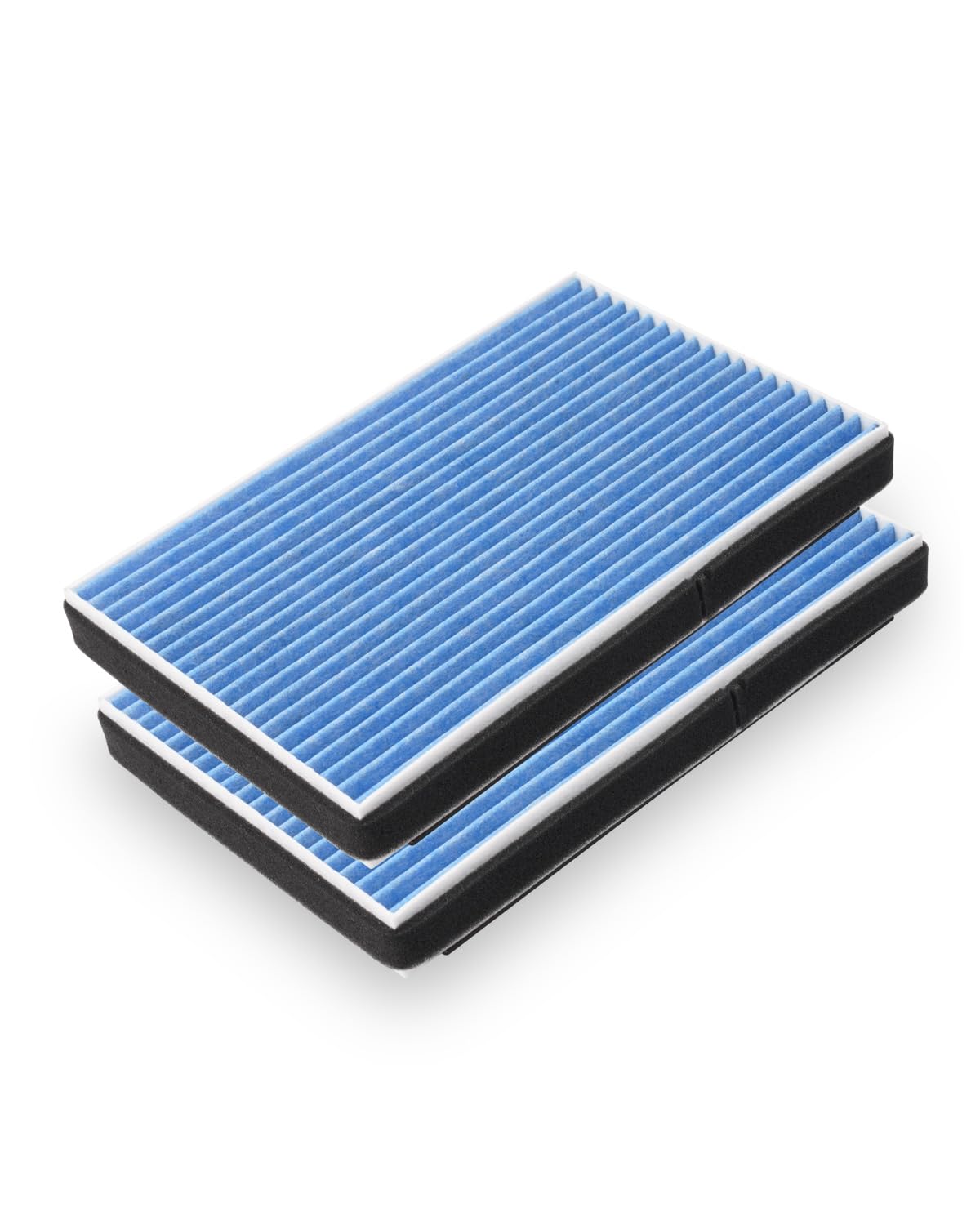
The Forccord 2-Pack CF8392A is designed for earlier Impala generations (2000–2013 models and the 2014–2016 Impala Limited), making it the go-to bundle for owners of those model years who want to stock up. Each filter uses a five-layer blue silk filter cloth combined with melt-blown media and double-layer HEPA-grade material to capture 99.9 percent of harmful pollutants including dust, pollen, and exhaust particulates.
With an advertised service life of up to 20,000 miles—roughly 30 percent longer than the standard 12,000-mile interval—this two-pack effectively covers about two years of normal driving. The activated carbon layer handles odor adsorption, while the dense pleating ensures that the filter does not clog prematurely. Owners of older Impalas have praised the straightforward installation and the noticeable improvement in cabin air freshness after swapping out an old filter.
What makes this bundle a smart pick is the cost efficiency over time. Buying two filters at once saves money compared to purchasing singles at regular intervals, and the extended life means fewer replacements overall. For owners of ninth-generation Impala models who plan to keep driving their car for several more years, the Forccord 2-Pack delivers reliable filtration without constant reordering.
What works
- Two-pack provides excellent long-term value
- Rated for 20,000 miles per filter
- Double-layer HEPA media removes 99.9% of pollutants
- Five-layer construction handles both particles and odors
What doesn’t
- Only fits 2000–2013 and Impala Limited models
- Paper-based media may feel less robust than synthetic blends
4. Spearhead Odor Defense Breathe Easy Cabin Filter (BE-966)
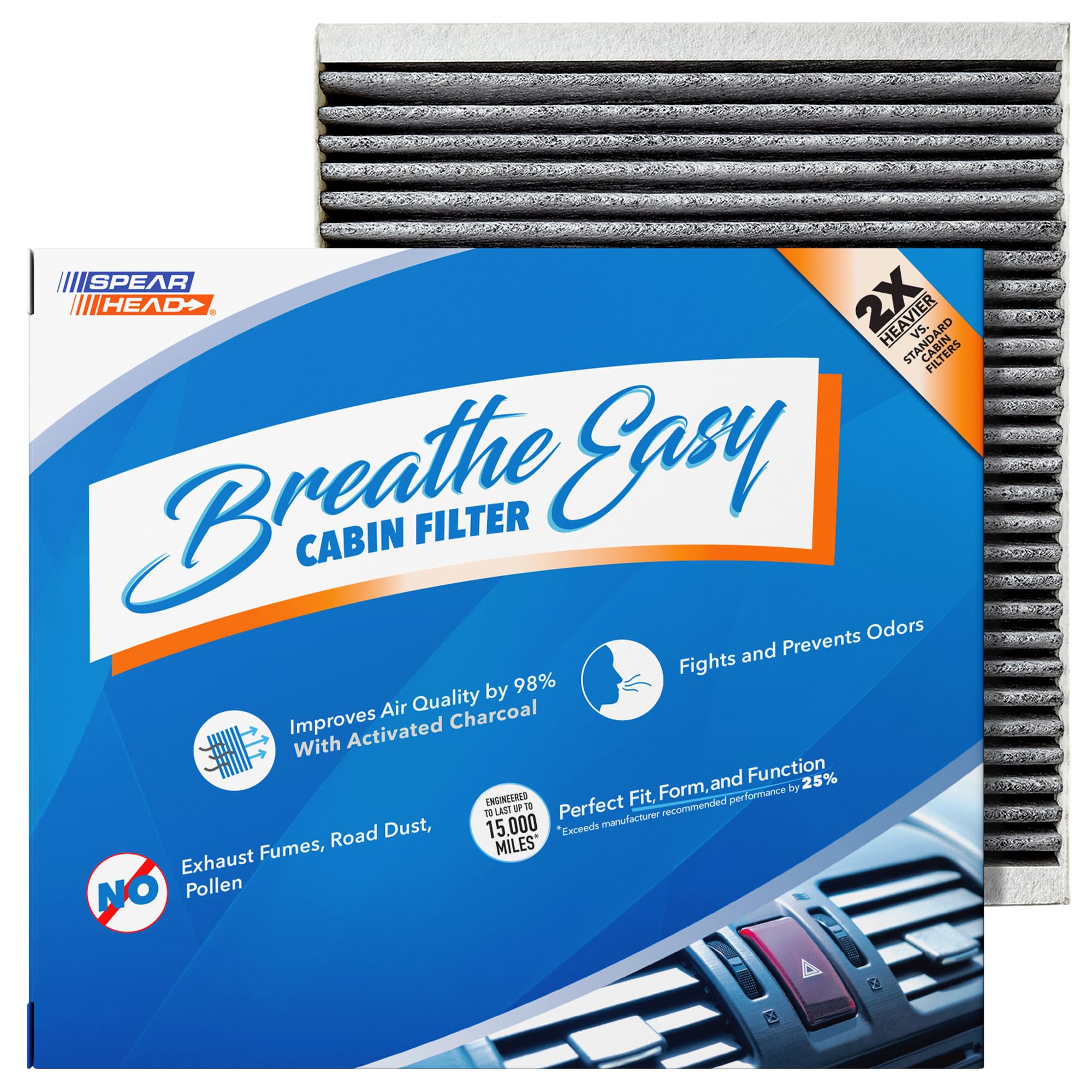
The Spearhead BE-966 brings real coconut-shell activated carbon to the mid-range price bracket, offering odor adsorption that rivals filters costing significantly more. It fits the 2014–2020 Impala along with a broad spectrum of GM vehicles, making it an easy recommendation for households with multiple compatible cars. The filter is designed to last up to 15,000 miles, which is 25 percent longer than the conventional 12,000-mile standard.
What separates this filter from other budget-friendly carbon options is the industrial-grade electrostatic media that Spearhead uses. The media is described as twice as heavy compared to standard cabin filters, which helps it attract and hold fine particles while the densely packed activated carbon layer tackles gases and odors. Owner feedback consistently highlights the crisp, clean air that follows installation, even in vehicles that previously had a stubborn musty smell.
For Impala owners who want the benefits of activated carbon without stepping up to the premium price tier, the Spearhead BE-966 hits a sweet spot. The inclusion of an installation manual and the brand’s straightforward fitment verification tool reduce the guesswork. It is a well-rounded filter that delivers tangible air quality improvements at a price point that makes replacing it on schedule painless.
What works
- Real coconut-shell activated carbon for effective odor control
- Electrostatic media is noticeably heavier than budget options
- Rated for 15,000 miles for longer service intervals
- Includes clear installation instructions
What doesn’t
- Carbon layer performance may taper toward end of life
- Frame feels adequate but not as rigid as premium alternatives
5. ZEZUT CF11966 Cabin Air Filter
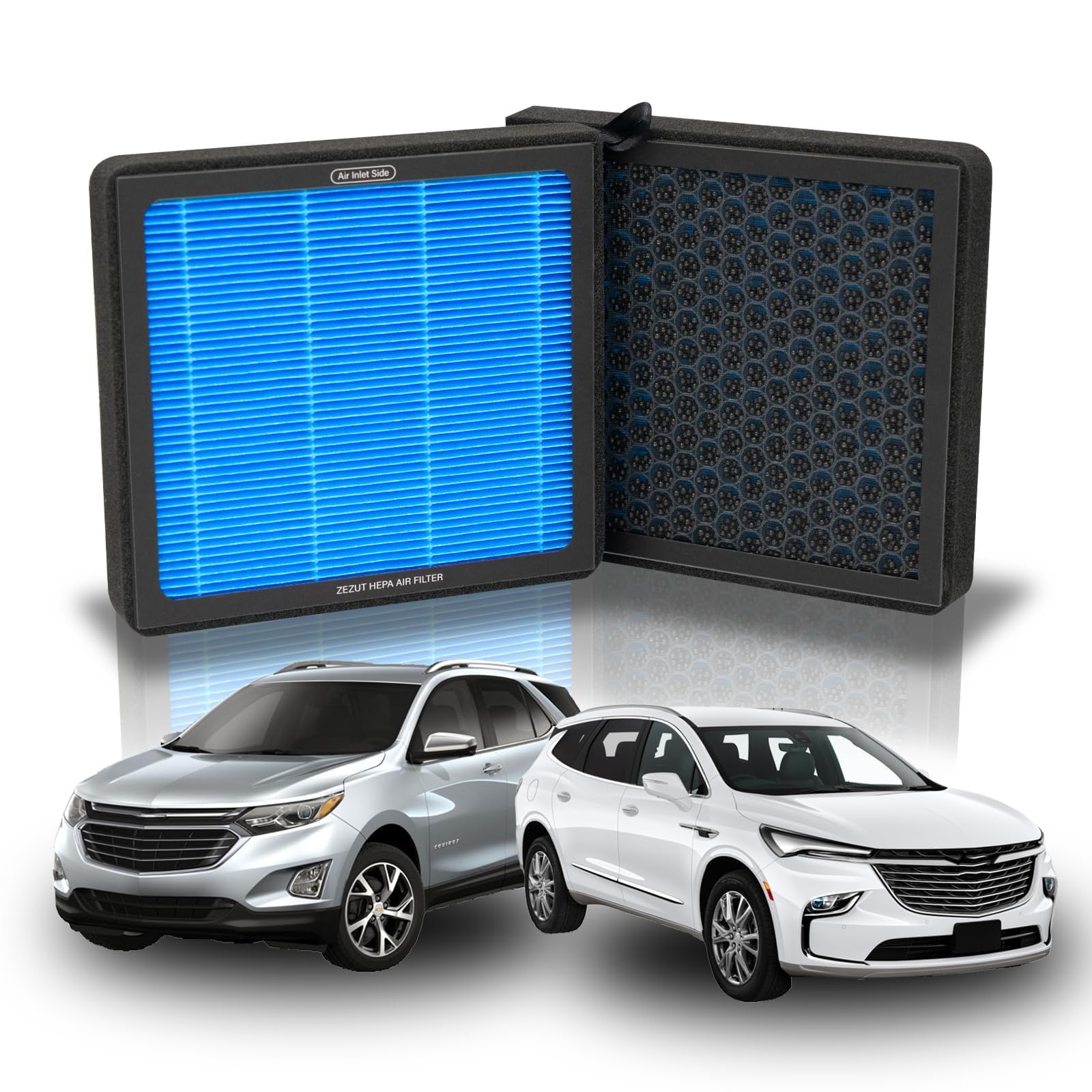
The ZEZUT CF11966 takes a slightly different approach by incorporating a honeycomb structure paired with activated carbon beads, aiming to maximize surface area for particle capture without choking airflow. It is tested to HEPA standards, removing up to 99.1 percent of minute airborne impurities, and fits the 2014–2020 Impala along with dozens of other GM vehicles. The packaging uses thick corrugated cardboard to protect the filter during shipping.
The honeycomb design is the standout feature here. Instead of relying solely on pleated media density, the honeycomb channels direct air through a larger effective surface area, which can help maintain consistent airflow as the filter loads with debris. The infused activated carbon beads handle odors from cigarette smoke, pet smells, and exhaust fumes. Owners have noted that the filter fits snugly into the Impala housing with no rattling or looseness.
For budget-conscious Impala owners who prioritize particle filtration efficiency and want carbon odor control without spending heavily, the ZEZUT provides a capable solution. The honeycomb core is a genuine design differentiator that sets it apart from the dozens of standard pleated filters in the same price range. It is a solid entry-level upgrade for anyone replacing a neglected factory filter for the first time.
What works
- Honeycomb structure maximizes surface area for capture
- HEPA-standard efficiency removes 99.1% of particulates
- Activated carbon beads neutralize common cabin odors
- Sturdy packaging prevents damage during shipping
What doesn’t
- Not certified as a true HEPA filter despite HEPA-standard testing
- Honeycomb design may feel less dense than premium pleated options
Hardware & Specs Guide
Filter Media Types
Cabin air filters for the Chevy Impala generally fall into three media categories. Standard pleated filters use electrostatic synthetic fibers to trap dust and pollen. Activated carbon filters add a layer of charcoal-infused material that adsorbs gaseous pollutants and odors. HEPA-grade filters use denser media to capture particles down to 0.3 microns. For the 2014–2020 Impala, the media dimensions are standardized at roughly 9.45 by 8.07 by 1.22 inches, though slight variations exist between brands. Choosing a media type depends on your driving environment—carbon filters excel in urban traffic with exhaust exposure, while standard pleated filters suffice for highway cruising.
Fitment and Housing Design
The Impala’s cabin air filter housing is located behind the glove box and uses a sliding tray that accepts filters with a specific frame profile. Tenth-generation Impala models (2014–2020) use the CF11966 form factor, while earlier generations require the CF8392A size. The frame must be rigid enough to seat flush against the housing seals without bulging. Filters with flexible frames can warp in humid climates, creating gaps that allow unfiltered air to bypass the media. Aftermarket options vary in frame thickness from 1.14 to 1.46 inches, so verifying the thickness against your original filter ensures a proper seal.
FAQ
How often should I replace the cabin air filter in my Chevy Impala?
Can I install a cabin air filter myself without any special tools?
What is the difference between an activated carbon filter and a standard filter for odor control?
Final Thoughts: The Verdict
For most buyers, the best chevy impala cabin air filter winner is the ACDelco A3176C because it delivers guaranteed OEM fitment and GM-backed validation that eliminates guesswork. If you want effective odor elimination with carbon media at a reasonable price, grab the JONHWI CF11966. And for owners of earlier Impala models looking for extended service life and bundle value, nothing beats the Forccord 2-Pack CF8392A.

Certification: BSc in Mechanical Engineering
Education: Mechanical engineer
Lives In: 539 W Commerce St, Dallas, TX 75208, USA
Md Amir is an auto mechanic student and writer with over half a decade of experience in the automotive field. He has worked with top automotive brands such as Lexus, Quantum, and also owns two automotive blogs autocarneed.com and taxiwiz.com.