Selecting a motocross helmet means navigating a landscape of impact standards, shell compositions, and ventilation layouts — each variable directly influences how well you ride and how protected you stay when things go sideways. The wrong choice can mean excess weight on long hauls, poor airflow on hot days, or worse, compromised impact absorption when you need it most.
I’m Amir — the founder and writer behind Four Wheel Ask. I’ve spent years studying motocross helmet specifications, impact protection technologies, and owner-reported durability data to help riders make informed decisions about their safety gear.
After reviewing specs and owner feedback across leading brands, this guide identifies the best mx helmet for trail riding and competitive motocross alike.
How To Choose The Best MX Helmet
Every off-road helmet balances weight, ventilation, impact protection, and fitment. Understanding the trade-offs between shell materials, impact liners, and certification levels helps you match a helmet to your specific riding terrain and frequency.
Shell Construction and Weight
The outer shell determines overall weight and how impact energy transfers to the EPS liner. Polycarbonate and ABS shells keep entry-level costs down but add grams compared to fiberglass composite or carbon-fiber shells found on premium models. Heavier shells contribute to neck fatigue over long motos, while lighter shells reduce strain without sacrificing structural integrity.
Rotational Impact Management
Systems like MIPS — a low-friction layer between the liner and shell — allow the helmet to rotate slightly on angled impacts, redirecting energy away from the brain. This technology has become standard on many mid-to-premium helmets and is worth prioritizing if you ride aggressive terrain where crashes often involve twisting forces rather than straight-on hits.
Ventilation and Moisture Management
Intake vent count, exhaust channel routing, and chin bar airflow all affect how quickly heat exits the helmet. High vent counts mean little if the channel design stagnates air. Look for helmets with multiple rear exhaust vents and deep internal channeling that pulls hot air out rather than trapping it. Removable, washable liners also extend the hygiene life of the helmet across seasons of heavy sweat exposure.
Quick Comparison
On smaller screens, swipe sideways to see the full table.
| Model | Category | Best For | Key Spec | Amazon |
|---|---|---|---|---|
| Bell Moto-9S Flex | Premium | Competition racers | Tri-Matrix shell, Flex Impact Management | Amazon |
| Fox Racing V Core MIPS | Mid-Range | Trail and track versatility | MIPS, magnetic visor release, 13 vents | Amazon |
| LS2 Subverter Evo | Premium | Lightweight all-day wear | Kinetic Polymer Alloy shell, multi-density EPS | Amazon |
| Bell MX-9 Adventure MIPS | Mid-Range | Adventure and dual-sport | MIPS, Velocity Flow ventilation, POV visor | Amazon |
| Shoei GT-Air II | Premium | Long-distance road and trail | Multi-Ply Matrix shell, QSV-2 sun shield | Amazon |
| Troy Lee Designs SE4 | Value | Budget-conscious safety | MIPS, 22 vents, EPP chin bar ventilation | Amazon |
| O’Neal 1SRS | Mid-Range | Stylish mid-tier protection | ABS shell, plush liner, Fidlock buckle | Amazon |
| O’Neal Sonus Deft | Value | Entry-level full-face | ABS shell, Fidlock magnetic buckle, 10 vents | Amazon |
| Giro Radix MIPS | Value | Budget MIPS integration | MIPS, Roc Loc 5 fit, Wind Tunnel ventilation | Amazon |
In‑Depth Reviews
1. Bell Moto-9S Flex

The Bell Moto-9S Flex represents the refinement of a long-standing industry benchmark, now offered at a more accessible tier without cutting corners on protective architecture. Its Tri-Matrix shell delivers strength comparable to carbon fiber construction while keeping the weight manageable for extended race days. The flexible segmented liner adapts to individual head shapes, reducing pressure points that can cause discomfort during long motos.
Three distinct material layers work together inside the shell to manage impacts at different speeds, and the integrated rotational energy management system redirects forces during angled falls. The Velocity Flow Ventilation system pulls air through the front intake ports and pushes it out through rear exhaust channels, maintaining consistent airflow even at lower trail speeds. The Flying Bridge Visor includes integrated air intake vents and adjusts to multiple positions for goggle accommodation.
Owner reports consistently highlight the fit precision and lightweight feel, with many noting that the helmet feels noticeably lighter than previous generation models. Some riders mention sizing runs slightly small due to the thicker interior padding, so careful measurement is advised. The magnetic closure system is intuitive and secure, and the included helmet bag adds practical storage value. For riders who want race-ready protection without stepping into the highest price bracket, this helmet delivers exceptional coverage.
What works
- Tri-Matrix shell offers premium strength at a mid-premium price point
- Three-layer impact system handles varied crash speeds effectively
- Segmented liner adapts to head shape for customized comfort
What doesn’t
- Padding runs snug; some riders need to size up
- Higher price point may exceed casual rider budgets
2. Fox Racing V Core MIPS

The Fox Racing V Core MIPS brings rotational impact protection to a mid-range price point without sacrificing the ventilation and fit characteristics the brand is known for on the pro circuit. The injection-molded polycarbonate and ABS shell combination provides a durable outer layer while keeping overall weight in check for long trail sessions. Four shell sizes and five EPS configurations ensure a more precise fit across different head shapes compared to one-size-fits-most designs.
Airflow is handled by nine intake and four exhaust vents that create a strong draft through the interior, pulling heat away from the crown and out the rear. The magnetic visor release system is engineered to detach cleanly during a crash, reducing the leverage that can strain the neck in a tumble. The helmet meets both DOT and ECE22.06 standards, giving riders confidence in its regulatory compliance across multiple markets.
Owners frequently comment on the secure, snug fit right out of the box, with several noting that the helmet feels substantially more stable at speed than previous budget models they had used. A few riders report the initial fit is very tight, but the padding breaks in after several rides. The matte white finish is clean and resists showing dirt, though like all matte surfaces it requires care during cleaning to avoid shiny spots. This is a strong choice for riders who want MIPS without jumping to premium pricing.
What works
- MIPS technology at a mid-range price point
- Magnetic visor release reduces neck strain risk in crashes
- Multiple shell sizes provide better fit precision
What doesn’t
- Initial fit can feel excessively tight before break-in
- Matte finish requires careful cleaning maintenance
3. LS2 Subverter Evo

The LS2 Subverter Evo stands out with bold graphic finishes and a Kinetic Polymer Alloy shell that balances weight reduction with structural rigidity. The multi-density EPS liner is engineered to absorb impacts across a range of force levels, from low-speed tip-overs to high-energy trail crashes. The overall package feels noticeably light on the head, which reduces neck strain during extended rides and makes it easier to maintain proper head positioning through rough sections.
Ventilation design follows a deep-channel approach, with large front intakes feeding air through internal routing that exits through rear spoiler vents. The chin bar is well-positioned to allow ample airflow without directing debris toward the face. The quick-release cheek pads make emergency removal straightforward, and the plush interior uses moisture-wicking fabric that resists odor buildup across multiple riding sessions.
Owner feedback emphasizes the vibrant color accuracy and glossy finish quality, with many noting that the helmet looks even better in person than in product photos. Several riders mention the cheek area is quite tight when new, requiring a break-in period before the padding conforms to facial contours. The included accessories — a sticker pack and helmet bag — add perceived value. For riders who prioritize lightweight feel and aggressive styling, the Subverter Evo delivers a compelling package.
What works
- Very lightweight shell reduces neck fatigue over long rides
- Bold graphic finishes with excellent color accuracy
- Multi-density EPS handles varied impact force levels
What doesn’t
- Cheek pads are very tight before break-in
- Designed for rounder head shapes; may not suit oval profiles
4. Bell MX-9 Adventure MIPS

The Bell MX-9 Adventure MIPS bridges the gap between motocross-focused helmets and adventure touring needs, offering a versatile platform for riders who split time between dirt trails and paved roads. The MIPS slip plane is integrated directly into the fit system, reducing rotational forces while maintaining the adjustable tension and fore-aft tilt adjustment riders rely on for fine-tuning fit. The Velocity Flow Ventilation system uses active front vents and passive rear exhaust ports to maintain a steady exchange of air across the crown.
The P.O.V. visor offers indexed adjustment positions, including a high storage slot for goggles above the brow line, which is especially useful during adventure rides where frequent transitions between goggles and clear visors occur. The shell is built to accommodate the variety of riding positions found in dual-sport use, with a profile that doesn’t catch the wind awkwardly at highway speeds. The helmet meets both DOT and ECE standards, giving it legal status across most regions.
Rider reports consistently praise the airflow volume, particularly in hot and humid environments where heat buildup can become unbearable with lesser helmets. Some owners note that the cold weather kit for this model is difficult to find in larger sizes, which limits winter usability. The overall fit is true to size for those with intermediate oval head shapes, though riders with rounder profiles may want to try before buying. This is a solid pick for adventure riders who want MIPS protection in a proven Bell platform.
What works
- Excellent airflow for hot-weather riding comfort
- Indexed visor with goggle storage position
- MIPS integrated into the fit system for seamless protection
What doesn’t
- Cold weather kits hard to source for larger sizes
- Best suited for intermediate oval head shapes
5. Shoei GT-Air II

The Shoei GT-Air II represents a shift toward road-oriented design, but its advanced noise reduction and ventilation engineering make it a compelling option for adventure riders who spend significant time on paved sections between trails. The Multi-Ply Matrix AIM shell combines fiberglass with proprietary organic fibers to create a structure that is both lightweight and impact-resistant. The QSV-2 internal sun shield deploys quickly to handle changing light conditions without swapping visors mid-ride.
Ventilation follows a three-intake, five-exhaust layout that creates a strong negative pressure draw, pulling air through the interior and expelling heat through rear ports. The 3D Max-Dry System II interior wicks moisture effectively and is fully removable for washing. The micro ratchet chin strap allows precise tension adjustment with one hand, and the helmet is compatible with the SENA SRL2 Bluetooth system for communication needs. The Pinlock EVO lens is included, providing reliable anti-fog performance in cold or wet conditions.
Owners consistently rate the fit and finish as exceptional, with many noting that the helmet feels quieter than competitors at highway speeds due to the refined aerodynamic shaping. The internal visor is praised for its convenience, though some riders wish it had a larger coverage area. A few reports mention that the helmet runs slightly warm in very slow technical terrain where airflow is limited. For riders who want a premium dual-purpose option with strong road manners, this is a top-tier choice.
What works
- Excellent noise reduction for highway-speed comfort
- Internal sun shield eliminates visor swapping
- Premium fit and finish with high-quality materials
What doesn’t
- Runs warm in slow, technical off-road sections
- Premium price point may not suit casual riders
6. Troy Lee Designs SE4 Polyacrylite MIPS
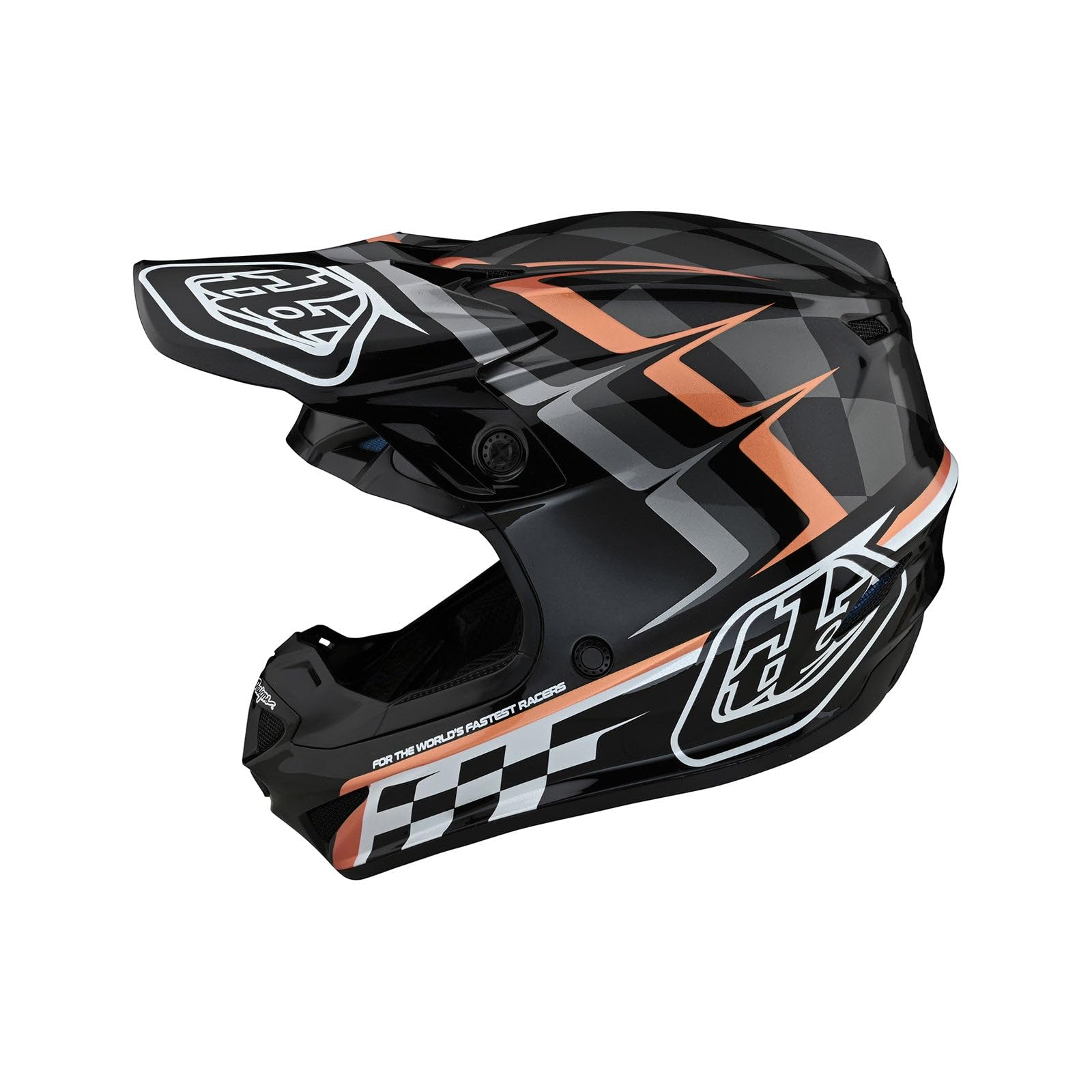
The Troy Lee Designs SE4 Polyacrylite brings the brand’s racing heritage and MIPS technology to a price point that undercuts most competitors offering similar rotational impact protection. The shell is constructed from a blend of ABS and polypropylene materials, with EPP foam in the chin bar that provides collarbone-friendly energy absorption during frontal impacts. Twenty-two vent ports are strategically placed across the shell and chin bar to maintain airflow even at lower speeds common on technical trails.
The removable and washable liner uses interchangeable cheek pads that allow riders to fine-tune fit across six standard sizes, accommodating a wider range of face shapes than fixed-pad designs. The double-ring closure is a traditional motocross standard, providing secure fastening that is easy to operate with gloved hands. The helmet meets both DOT FMVSS 218 and ECE 22.06 standards, giving it broad certification coverage for riders who travel across regions with different requirements.
Owners frequently note that the SE4 feels significantly lighter than expected given its price tier, and the ventilation is consistently praised for keeping heads cool during aggressive rides. Some riders mention the lack of a quick-release strap as a minor inconvenience compared to ratchet systems found on helmets at similar prices. The overall build quality and graphic finish are described as premium-feeling, with several owners saying the helmet attracts compliments on the trail. This is a standout value pick for riders who want MIPS without stretching their budget.
What works
- MIPS protection at a very competitive price point
- Lightweight feel despite ABS shell construction
- Large vent count keeps airflow strong during warm rides
What doesn’t
- Double-ring closure lacks quick-release convenience
- Some color options sell out quickly at discount pricing
7. O’Neal 1SRS Adult Dirt Bike Helmet
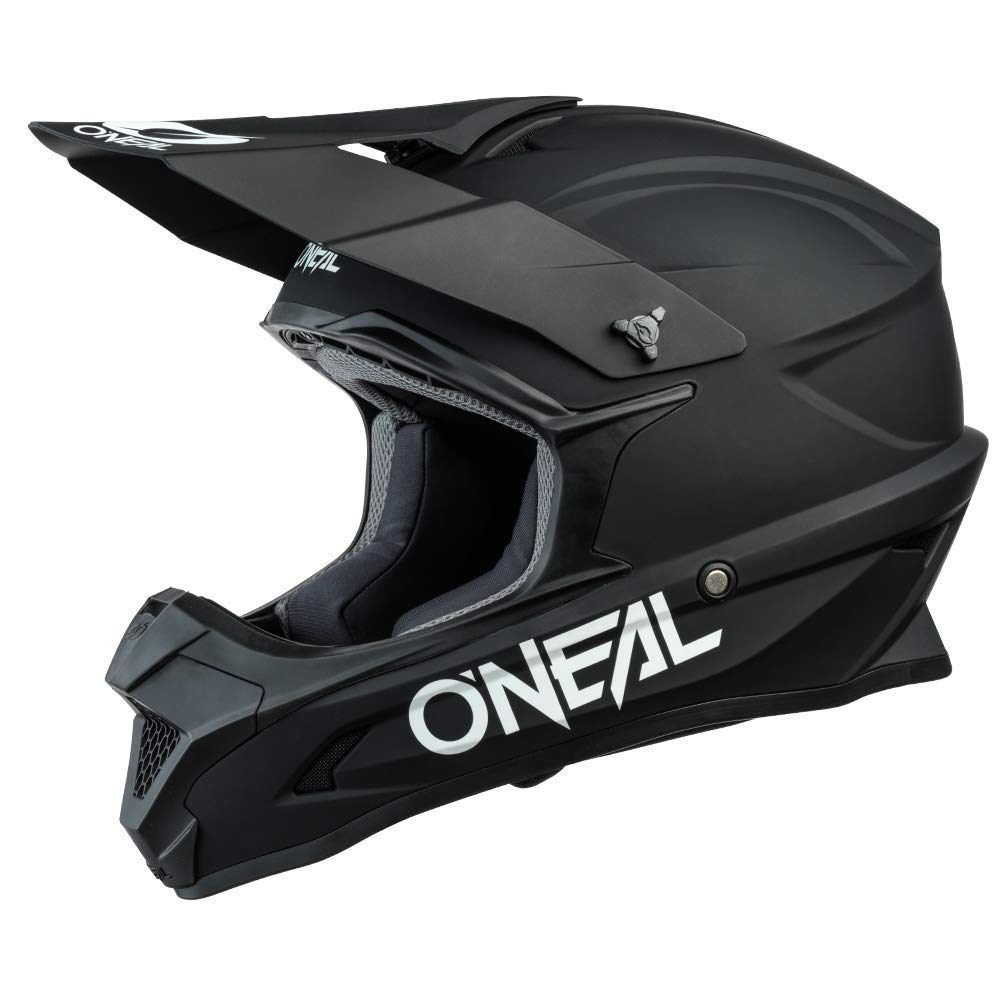
The O’Neal 1SRS is a straightforward motocross helmet that prioritizes solid build quality and a clean aesthetic without loading up on premium-priced extras. The ABS outer shell is paired with a multi-density EPS liner that provides progressive impact absorption, handling both low-speed falls and higher-energy impacts. The overall weight is reasonable for an all-ABS construction, and the helmet feels balanced on the head rather than top-heavy.
The interior uses plush, moisture-wicking padding that is fully removable for washing, which is essential for riders who log heavy hours in hot conditions. The visor is adjustable and positioned to work well with most goggle shapes without creating pressure points at the brow. The closure uses the traditional double-ring system, which remains the standard for motocross due to its reliability and ease of use with gloves.
Owner feedback emphasizes the helmet’s clean look and accurate fit, with several riders noting that sizing charts align well with actual head measurements. The helmet is frequently paired with O’Neal goggles, and users report a seamless interface between the two products. Some owners mention that while the ventilation is adequate, it doesn’t match the airflow volume of helmets with more aggressive channeling designs. For riders seeking a no-nonsense, well-built helmet at a comfortable price, the 1SRS delivers consistent value.
What works
- Reliable ABS shell with multi-density EPS liner
- Removable, washable interior padding for hygiene
- True-to-size fit based on head circumference
What doesn’t
- Ventilation is adequate but not class-leading
- Double-ring closure, no quick-release option
8. O’Neal Sonus Deft Mountain Bike Helmet

The O’Neal Sonus Deft offers a full-face design at an entry-level price point that makes it accessible to new riders or those on a strict budget. The ABS shell is lightweight and paired with a plush inner liner that uses sweat-absorbing materials to keep the interior comfortable during shorter rides. The Fidlock magnetic buckle is a standout feature at this price tier, allowing one-handed fastening and release that is especially convenient when fumbling with gloves on.
Multiple air vents are distributed across the shell and chin bar to promote airflow, though the channeling is simpler than what you find on higher-priced helmets. The helmet meets the EN1078 safety standard for bicycle helmets, so it is rated for mountain bike use rather than high-speed motorized riding. The removable liner is washable, which extends the useful life of the helmet across seasons of heavy use.
Owner reports frequently highlight the magnetic buckle as a major convenience upgrade over traditional strap systems, and the overall fit is described as comfortable with a secure feel. Several riders note that sizing up is advisable if you are between sizes, as the interior padding runs snug. Some users have successfully adapted this helmet for scooter and e-bike use, though it is important to respect its intended certification scope. For budget-focused riders who want a full-face shell with modern strap convenience, this is a practical entry point.
What works
- Fidlock magnetic buckle adds premium convenience at low cost
- Lightweight ABS shell reduces neck strain
- Removable, washable liner for extended hygiene
What doesn’t
- EN1078 rating limits use to non-motorized riding
- Runs snug; sizing up recommended for between sizes
9. Giro Radix MIPS Adult Dirt Bike Helmet

The Giro Radix MIPS is one of the most affordable helmets on the market that integrates MIPS rotational impact management, making it a significant value proposition for riders unwilling to compromise on brain protection. The hardshell construction uses an in-mold Hardbody lower wrap that fuses a polycarbonate lower shell to the EPS liner, providing durability without adding unnecessary weight. The Roc Loc 5 fit system is renowned in the cycling world for its ability to fine-tune both tension and fore-aft tilt with one hand, giving riders precise control over how the helmet sits on their head.
The Wind Tunnel ventilation system uses active intake vents and internal exhaust channels to push fresh air across the scalp while forcing heat out the rear ports. The P.O.V. visor adjusts through indexed steps, including a high position for goggle storage above the brow. Deep coverage at the rear of the skull provides added protection for riders who tend to lean back during descents, and the quick-dry padding resists moisture buildup during sweaty rides.
Owner feedback consistently praises the comfort and adjustability of the Roc Loc 5 system, with many noting that the helmet can be dialed in to eliminate pressure points. Some riders mention that goggle integration requires zip-tie modifications since the visor lacks dedicated goggle mounts. A few users note the helmet is designed for a round-to-intermediate head shape and may not suit those with very oval profiles. For budget-conscious riders who refuse to skip MIPS, the Radix delivers essential protection technology at a rock-bottom entry price.
What works
- MIPS protection at one of the lowest available price points
- Roc Loc 5 fit system offers precise adjustability
- Deep rear coverage enhances protection in fall zones
What doesn’t
- Visor lacks integrated goggle mounts; DIY mods needed
- Best suited for round-to-intermediate head shapes
Hardware & Specs Guide
Shell Materials
Polycarbonate and ABS are the most common entry-level shell materials — they are impact-resistant and affordable but add overall weight to the helmet. Fiberglass composite shells (used on the Bell Moto-9S Flex and Shoei GT-Air II) offer a higher strength-to-weight ratio, reducing neck fatigue during long rides. High-end options like carbon fiber or Tri-Matrix layups provide the lightest feel and best energy dispersion but come at a significant price premium. The shell material directly affects how impact energy transfers to the EPS liner, so choosing a lighter composite shell is worth the investment for frequent riders.
Impact Management Systems
MIPS (Multi-directional Impact Protection System) is the most widely adopted rotational force management technology, using a low-friction layer that allows the helmet to slide on angled impacts. Bell’s Flex Impact Management uses three material layers that work at different impact speeds, while the Troy Lee Designs SE4 integrates EPP foam in the chin bar for collarbone protection. Not all rotational management systems perform identically, but any helmet featuring MIPS or a similar system is preferable to one without it, especially for aggressive riders who crash at higher speeds with rotational force components.
Ventilation Architecture
Vent count alone does not determine cooling performance — the internal channel routing is equally important. Helmets with deep channeling and rear exhaust vents (like the Fox V Core and Bell MX-9) create a negative pressure effect that actively pulls hot air out rather than passively letting it escape. Chin bar vents are critical for reducing visor fog and supplying fresh air to the rider’s face. Entry-level helmets often have simpler channeling that works adequately at speed but stalls in slow technical sections. Removable liners also aid moisture management by allowing periodic washing of sweat-absorbing padding.
Certifications and Standards
DOT FMVSS 218 is the mandatory standard for motorcycle helmets in the United States, while ECE 22.06 is the European equivalent that involves more rigorous impact testing at varied angles and temperatures. SNELL 2020 is a voluntary standard that exceeds both DOT and ECE requirements, found on helmets like the Bell Moto-9S Flex. Riders who compete or ride in multiple countries should prioritize helmets with dual DOT and ECE certification to ensure legal and safety compliance across borders. EN1078 is a bicycle-specific standard and should not be considered adequate for motorized riding.
FAQ
How often should I replace my MX helmet?
What does MIPS actually do in a crash?
How do I know which helmet size fits my head?
Can I use a mountain bike helmet for dirt biking?
Final Thoughts: The Verdict
For most buyers, the best mx helmet winner is the Bell Moto-9S Flex because it delivers race-ready impact management, a lightweight Tri-Matrix shell, and three-layer impact absorption at a price well below true flagship models. If you want MIPS protection for trail riding without spending heavily, grab the Fox Racing V Core MIPS for its excellent ventilation and magnetic visor release. And for budget-conscious riders who still demand rotational impact protection, the Troy Lee Designs SE4 Polyacrylite MIPS offers the best value-to-safety ratio on the market.

Certification: BSc in Mechanical Engineering
Education: Mechanical engineer
Lives In: 539 W Commerce St, Dallas, TX 75208, USA
Md Amir is an auto mechanic student and writer with over half a decade of experience in the automotive field. He has worked with top automotive brands such as Lexus, Quantum, and also owns two automotive blogs autocarneed.com and taxiwiz.com.