EV battery fires behave nothing like gasoline fires. Standard ABC dry-chemical extinguishers struggle to stop the thermal runaway chain reaction inside a lithium-ion pack, often leaving smoldering cells ready to reignite hours later. The right suppression agent, nozzle design, and capacity matter far more than brand recognition when you are faced with a high-voltage fire in your garage or driveway.
I’m Amir — the founder and writer behind Four Wheel Ask. My research focuses on comparing suppression chemistry, UL ratings, and real-world owner reports to identify which extinguishers actually perform when a lithium-ion pack vents and ignites.
After evaluating suppression chemistry and thermal runaway data, our research identifies the best ev fire extinguisher as a top reliable pick for EV owners.
How To Choose The Best EV Fire Extinguisher
Selecting the right extinguisher for electric vehicles requires understanding how lithium-ion fires differ from conventional Class A, B, or C fires. Standard extinguishers may suppress flames temporarily without stopping the internal cell thermal runaway that causes reignition. Focus on these four criteria when evaluating options.
Suppression Agent Type
Water-based mist extinguishers cool the battery surface and reduce heat faster than dry chemical powder, which can be corrosive to electronics and leave residue that complicates cleanup. Gel-based agents specifically formulated for lithium-ion fires penetrate battery packs and interrupt the chemical chain reaction. Dry chemical ABC extinguishers remain effective for general use but lack the specialized heat-absorption needed for deep battery fires.
UL Rating and Certifications
Look for extinguishers rated for Class B (flammable liquids) and Class C (energized electrical equipment) fires. Some products carry additional certifications for lithium-ion battery fires, which indicates independent testing against thermal runaway scenarios. A higher UL rating correlates with more suppression capacity, not just flame knockdown.
Capacity and Spray Duration
Home-use extinguishers range from 14 ounces to 2.5 pounds of agent. Larger EV battery packs require more suppression material to cool multiple cells. A 2.5-pound unit provides roughly 10 to 14 seconds of continuous spray, while smaller aerosol cans deliver around 6 to 8 seconds. Consider the size of your vehicle battery and how much agent you need to cover the pack surface.
Temperature Range and Durability
Garages experience temperature extremes. An extinguisher that functions between -4°F and 140°F ensures reliable operation in winter cold and summer heat. Aluminum and steel bodies resist corrosion better than plastic housings in humid environments. Check the manufacturer’s stated operating range before storing an extinguisher in your vehicle trunk or garage wall mount.
Quick Comparison
On smaller screens, swipe sideways to see the full table.
| Model | Category | Best For | Key Spec | Amazon |
|---|---|---|---|---|
| Ougist ABC 2.5 lb | Dry Chemical | High-capacity home & garage coverage | 1‑A:10‑B:C, 2‑pack, steel body | Amazon |
| BurnBuster Gel | Lithium-Ion Gel | Specialized battery fire suppression | 14 oz, silicone‑based, 3‑year shelf life | Amazon |
| WPW 8-in-1 3‑Pack | Water‑Based | Multi‑location home & vehicle kits | 620 ml each, A/B/C/K, 13‑ft spray | Amazon |
| A+ Safety AS105 2‑Pack | Multi‑Class Aerosol | Compact storage in car or RV | Non‑toxic, no residue, wall mount | Amazon |
| Leyanny MSWJ620E | Water‑Based | Entry‑level home and kitchen use | 620 ml, A/B/C/K, aluminum body | Amazon |
In‑Depth Reviews
1. Ougist ABC Fire Extinguisher 2.5 lb 2‑Pack

The Ougist 2.5 lb extinguisher carries a 1‑A:10‑B:C rating, which places it above most consumer-grade units in suppression capacity. The patented handle design removes the safety pin without twisting, reducing hesitation during an emergency. Owner reports consistently note the solid construction and the included bracket, sign, and operating guide that make installation straightforward for any household member.
Rated for Class A, B, and C fires, this unit handles grease, electrical, and fuel fires that commonly occur in garages where EVs charge. The dry chemical agent works well for surface flames, though it leaves a powder residue that requires thorough cleanup after discharge. The steel body and screw-in mounting provide durable storage in high-traffic areas.
At 9.94 pounds per pair, the two-pack offers redundant coverage for a home with multiple vehicles. The thick-wall steel construction and high-performance formula deliver faster knockdown than lighter aerosol alternatives. For EV owners who want maximum agent volume and proven ABC performance, this is the most substantial option available.
What works
- High 1‑A:10‑B:C rating for serious fire volume
- Patented quick-release handle simplifies operation
- Two extinguishers with brackets provide multi-point coverage
- Steel body withstands garage temperature extremes
What doesn’t
- Dry chemical powder leaves messy residue after use
- Heavier than aerosol alternatives at nearly 10 lb for the pair
2. BurnBuster Lithium-Ion Fire Extinguishing Gel
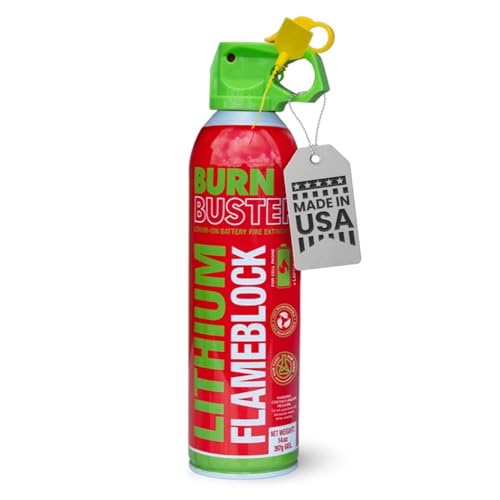
The BurnBuster gel is one of the few consumer-available extinguishers formulated specifically for lithium-ion battery chemistry. The silicone-based gel rapidly absorbs heat and cuts off oxygen at the cell level, directly targeting the thermal runaway that causes EV fires to spread. Unlike dry chemical or water-based agents, this gel is engineered to prevent reignition, which is the most dangerous phase of a battery fire.
Rated for Class A and C fires, the 14-ounce canister uses a simple point-and-spray aerosol system with no pins or levers to fumble with in an emergency. The compact size fits in a glove box, tool drawer, or under a seat, making it accessible when a phone, power tool, or EV accessory battery catches fire. The 3-year shelf life is reasonable for a specialized product meant to supplement a larger primary extinguisher.
Owner feedback highlights the non-toxic formulation that is safe for people and pets, with no corrosive residue that damages electronics. The main limitation is the 14-ounce capacity, which is best suited for small fires rather than full EV pack involvement. This gel works best as a first-response tool for catching a battery fire early before it grows beyond control.
What works
- Gel chemistry stops thermal runaway and prevents reignition
- No pins or levers required for operation
- Non-toxic and safe for electronics and surfaces
- Compact design fits in tight vehicle storage spaces
What doesn’t
- Limited 14 oz capacity for larger battery packs
- Only rated for Class A and C, not Class B liquid fires
3. WPW 620ml Upgraded 8-in-1 Fire Extinguisher 3‑Pack
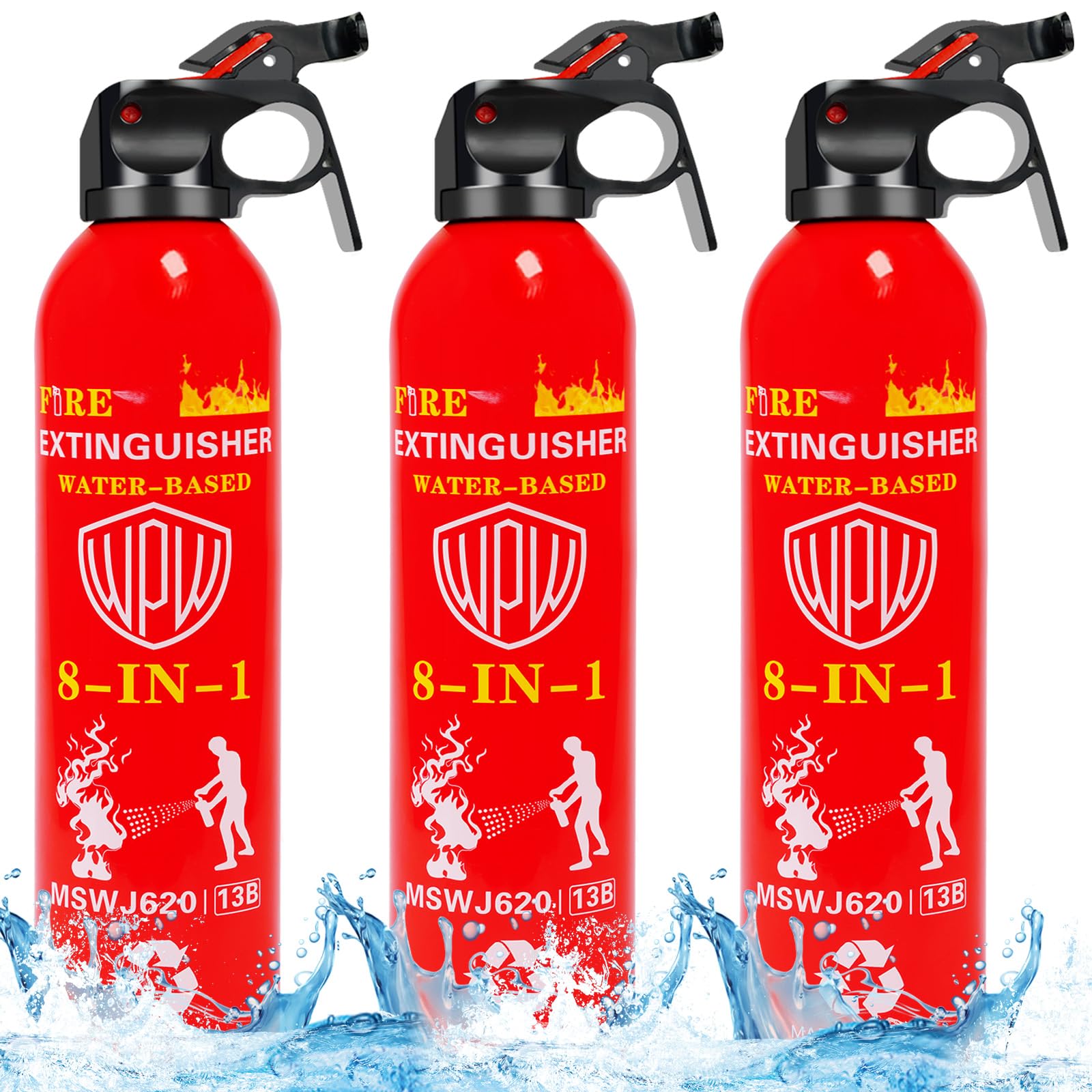
The WPW 8-in-1 extinguisher uses a water-based, biodegradable formula that handles Class A, B, C, and K fires while leaving no messy residue. The 620 ml canister delivers a maximum spray distance of 13 feet, giving you more standoff distance than many compact extinguishers when approaching a battery fire. The three-pack allows placement in the garage, kitchen, and vehicle for comprehensive household coverage.
The water-based agent cools burning surfaces rapidly, which helps reduce heat transfer to adjacent battery cells. The non-toxic formulation is safe to spray on individuals for personal protection during an evacuation, and cleanup requires only a wipe-down with a cloth. At 5.3 pounds for the three-pack, each unit remains portable enough for quick deployment.
Owner reviews emphasize the compact dimensions of 11.4 by 2.4 inches, which fit in door pockets, under seats, or on wall brackets. The main trade-off is that water-based suppressants are less effective than gel agents at penetrating deep into a battery pack to stop internal thermal runaway. For general home fire safety with EV charging nearby, this multi-pack provides excellent value and broad protection.
What works
- Biodegradable water-based formula leaves zero residue
- 13-foot spray distance provides safer standoff range
- Three extinguishers cover multiple rooms or vehicles
- Safe for use on people during emergency evacuation
What doesn’t
- Water-based agent less effective on deep battery thermal runaway
- Plastic components may degrade faster than aluminum in heat
4. A+ Safety Emergency Fire Extinguisher 2‑Pack
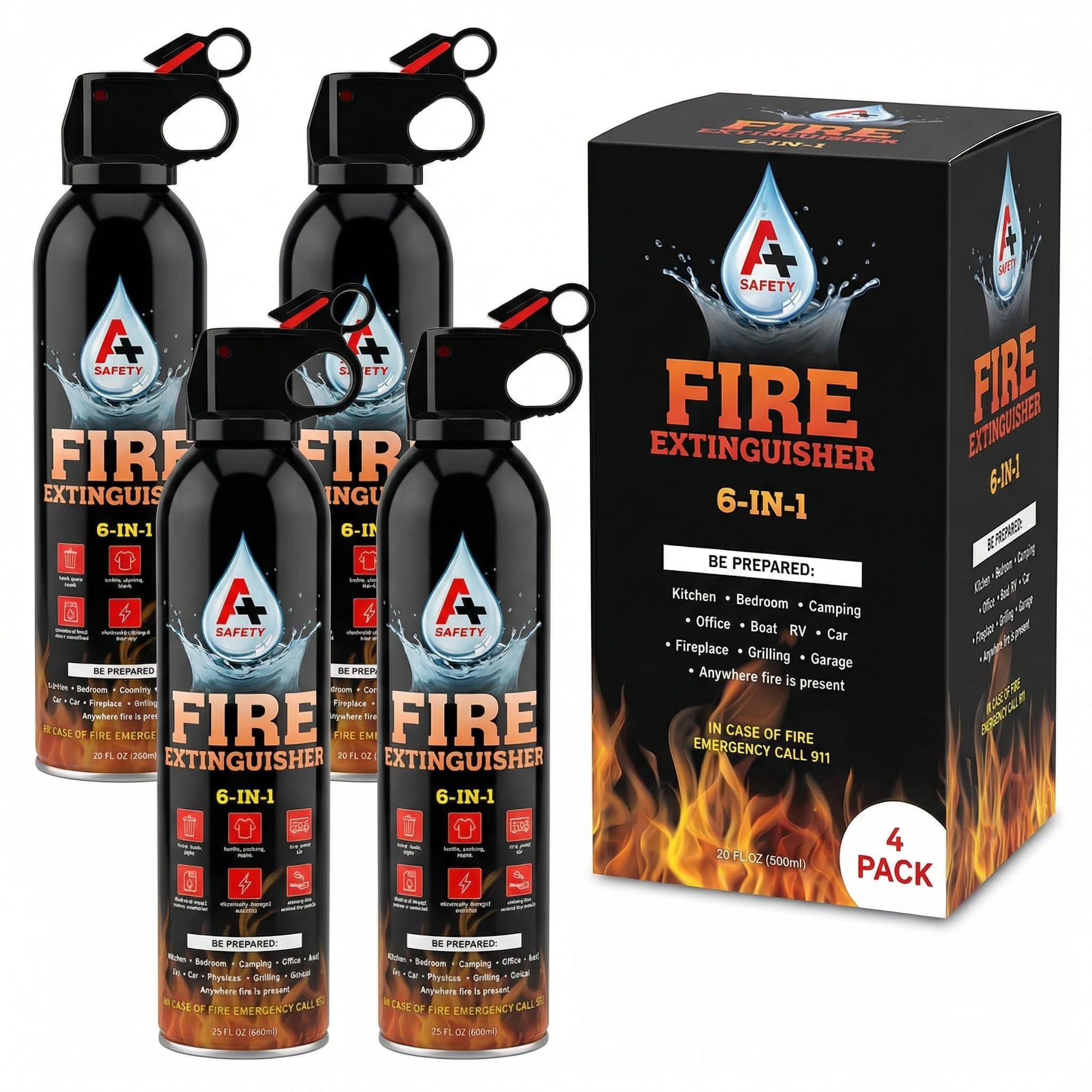
The A+ Safety extinguisher uses a multi-class formula that handles lithium battery fires, grease fires, and electrical fires in one compact aerosol can. The non-toxic chemistry avoids the caked yellow powder that traditional ABC dry-chemical units leave behind, which is a meaningful advantage when protecting sensitive EV electronics and charging equipment. The two-pack includes wall brackets for permanent mounting.
Designed for use in homes, kitchens, cars, boats, and RVs, this extinguisher covers the most common fire scenarios an EV owner might encounter. The non-toxic formula is safe around kids, pets, and food, and the small footprint fits in cup holders, door bins, or glove compartments. Owner reports note the intuitive pull-and-aim nozzle that requires no training to operate effectively.
At 7.28 pounds for the two-pack, the weight is reasonable for portable storage. The main limitation is the relatively small agent volume per canister, which limits sustained discharge time compared to larger 2.5-pound units. This extinguisher works best as a supplementary tool for quick response to small fires before they grow beyond the canister’s capacity.
What works
- Non-toxic formula safe around people and pets
- Handles lithium battery, grease, and electrical fires
- Compact size stores easily in vehicle compartments
- Brackets included for wall mounting
What doesn’t
- Limited agent volume restricts discharge duration
- Not UL rated for high-capacity fire suppression
5. Leyanny MSWJ620E Fire Extinguisher with Mount
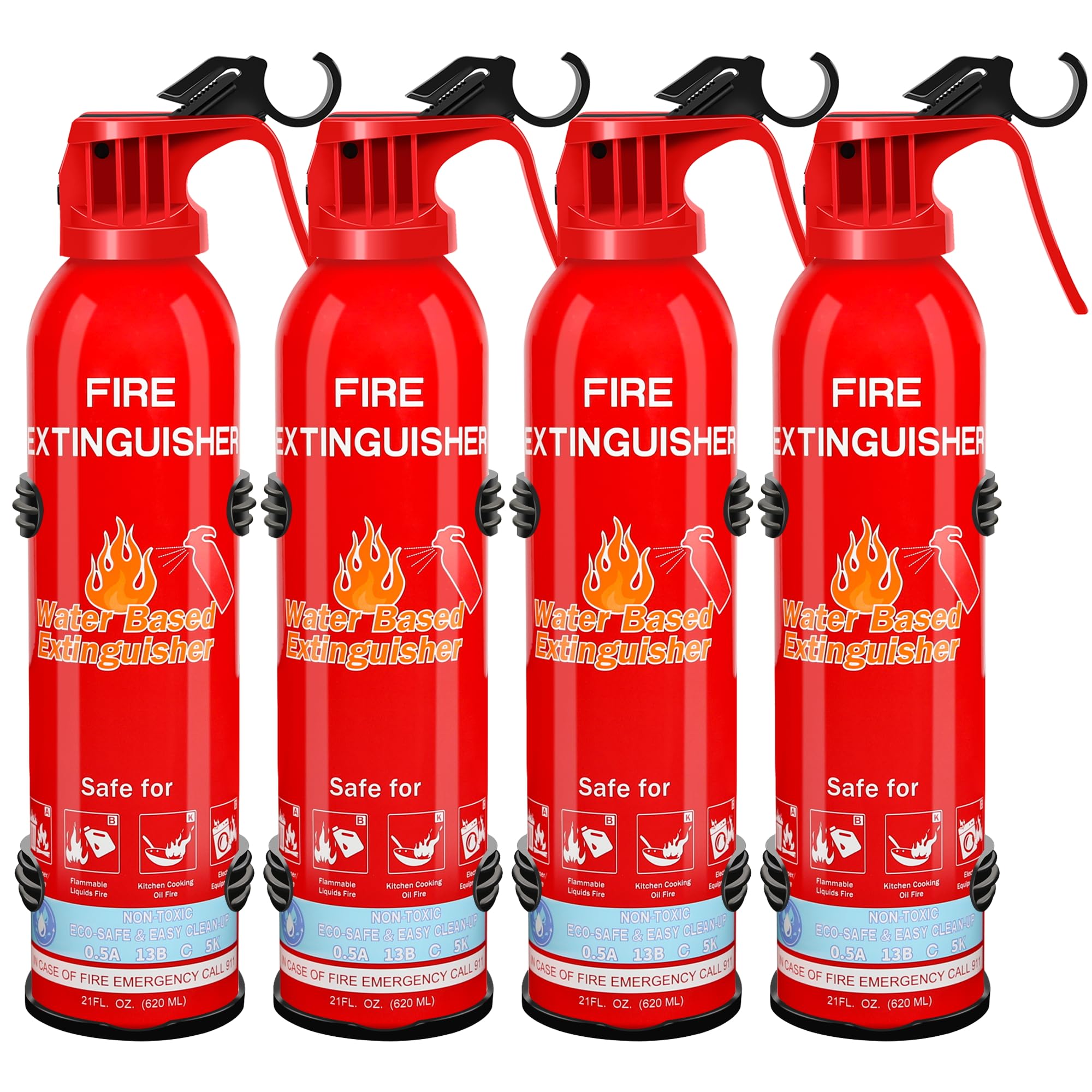
The Leyanny MSWJ620E uses a water-based formula effective against Class A, B, C, and K fires, packaged in a corrosion-resistant aluminum body that weighs only 6.6 pounds. The 620 ml canister measures 11.4 by 2.5 inches, making it one of the slimmest options for storing in a car door pocket or under a seat. The included mount allows wall installation for garage access.
Rated for operation between -4°F and 140°F, this extinguisher performs across the temperature extremes found in unheated garages or vehicle trunks during summer. The water-based solution is non-polluting and leaves no harmful residue, which simplifies cleanup after discharge. The simple pull-pin-and-squeeze operation makes it accessible for all family members.
Owner feedback frequently mentions the compact form factor and the peace of mind from having a dedicated extinguisher mounted near the EV charging station. The main drawback is the 620 ml capacity, which is adequate for small kitchen or vehicle fires but insufficient for a fully involved EV battery pack. This extinguisher serves best as an entry-level safety upgrade for households just beginning to prepare for EV-specific fire risks.
What works
- Lightweight aluminum body resists corrosion
- Rated for wide temperature range from -4°F to 140°F
- Non-toxic and residue-free cleanup
- Compact dimensions fit tight storage spaces
What doesn’t
- Single 620 ml canister limited to small fires
- Water-based agent less effective on deep thermal runaway events
Hardware & Specs Guide
Dry Chemical vs. Gel vs. Water-Based Agents
Dry chemical (monoammonium phosphate) smothers flames but leaves corrosive residue that damages EV electronics and requires extensive cleanup. Gel agents use silicone or polymer bases that adhere to battery surfaces, absorbing heat and suppressing thermal runaway at the cell level. Water-based mist agents cool rapidly and leave no residue but struggle to penetrate deep into battery packs. For EV fires, gel chemistry offers the best balance of thermal management and reignition prevention, while dry chemical provides maximum volume for general use.
UL Rating and Capacity
The UL rating indicates the fire size a unit can extinguish under controlled testing. A 1-A:10-B:C rating means it handles ten square feet of flammable liquid fire and energized electrical equipment. Higher B ratings correspond to more suppression capacity. For EV battery fires, look for at least a 10-B rating combined with a suppression agent specifically tested on lithium-ion cells. Capacity is measured in pounds of agent or fluid ounces; 2.5 pounds delivers roughly 10 to 14 seconds of continuous spray.
Spray Distance and Pattern
Spray distance determines how far you can stand from the fire while applying the agent. Compact aerosol cans typically deliver 6 to 10 feet of reach, while larger units with hose nozzles can reach 10 to 15 feet. A wide spray pattern covers more surface area on a battery pack but depletes the agent faster. Narrow stream patterns penetrate deeper into tight spaces between cells. Test the nozzle pattern in a safe outdoor area before relying on the extinguisher in an emergency.
Shelf Life and Maintenance
Most consumer extinguishers offer a 3 to 5 year shelf life before the agent degrades or the propellant loses pressure. Check the manufacture date stamped on the canister and replace units approaching their expiration. Temperature extremes above 140°F or below -4°F can degrade seals and reduce effectiveness. Visually inspect the pressure gauge monthly and verify the nozzle is clear of debris. Replace any unit that shows signs of corrosion, dents, or leaking.
FAQ
Will a standard ABC fire extinguisher work on an EV battery fire?
How many extinguishers should I keep near my EV charging station?
What is thermal runaway and why does it matter for EV fire safety?
Can I use water on an EV battery fire?
How do I dispose of an expired EV fire extinguisher?
Final Thoughts: The Verdict
For most buyers, the best ev fire extinguisher winner is the Ougist ABC Fire Extinguisher 2-Pack because it offers the highest suppression capacity, proven ABC rating, and two-unit coverage for home and garage. If you want specialized lithium-ion protection with reignition prevention, grab the BurnBuster Lithium-Ion Gel. And for multi-location value on a budget, nothing beats the WPW 8-in-1 3-Pack for spreading protection across your home, vehicle, and workshop.

Certification: BSc in Mechanical Engineering
Education: Mechanical engineer
Lives In: 539 W Commerce St, Dallas, TX 75208, USA
Md Amir is an auto mechanic student and writer with over half a decade of experience in the automotive field. He has worked with top automotive brands such as Lexus, Quantum, and also owns two automotive blogs autocarneed.com and taxiwiz.com.