A cooling system is only as strong as its weakest link, and on countless engine bays that link is a hose that softens, kinks, or blows at the worst possible moment. Whether you are piecing together a custom turbo build or refreshing a daily driver, the material and construction of the hose determine whether you get reliable coolant flow or a roadside steam bath. Silicone and EPDM offerings have largely replaced old rubber, but ply count, wall thickness, and temperature tolerance vary wildly between brands — and the cheap options often hide paper-thin walls behind a glossy finish.
I’m Amir — the founder and writer behind Four Wheel Ask. I spend my time breaking down product specifications, cross-referencing manufacturer claims with real owner feedback, and evaluating build quality data so you don’t have to guess which hose will hold up under heat and pressure.
Understanding material construction, reinforcement ply count, and temperature ratings guides you to the best flexible radiator hose for lasting reliability.
How To Choose The Best Flexible Radiator Hose
Selecting a replacement coolant hose involves more than matching the inner diameter. Material composition, reinforcement layers, temperature ceiling, and pressure rating all factor into whether the hose survives the first summer heat cycle or lasts for years. Here is what to look for before you click add to cart.
Material: Silicone vs. EPDM vs. Standard Rubber
Silicone offers the widest temperature range — typically -60°C to 260°C — and resists ozone, UV, and coolant additives better than standard rubber. EPDM rubber, found on many OEM-style replacements, provides good abrasion resistance and a lower price point but does not handle extreme heat as well. Standard rubber hoses deteriorate quickly under constant thermal cycling and should be avoided for any performance or long-term application.
Ply Count and Wall Thickness
Reinforcement layers, usually polyester or aramid fiber embedded between silicone layers, determine how much pressure the hose can handle before ballooning or bursting. A 2-ply construction suits most street-driven cooling systems, while 3-ply or 4-ply hoses are better suited for turbo builds and high-boost applications where burst pressure exceeds 200 PSI. Wall thickness also matters — thin walls kink more easily under tight routing and fatigue faster under vibration.
Temperature and Pressure Ratings
Every hose should list its continuous working temperature and burst pressure. For a standard coolant system, a working pressure of 60 PSI is adequate, but forced-induction setups benefit from 100 PSI or higher. Temperature ratings below 180°C risk softening during extreme driving conditions. Always verify that the rating covers both the coolant temperature and the underhood ambient heat.
Sizing and Fitment Accuracy
Inner diameter tolerance of ±0.4 mm or better ensures the hose clamps down evenly without leaking. Hoses that measure oversize may require double clamps to seal, while undersize hoses are nearly impossible to install on barbed fittings. Measure your existing hose or fitting outer diameter with calipers rather than trusting visual estimation — the difference between 5/8 inch and 16 mm matters more than most buyers expect.
Quick Comparison
On smaller screens, swipe sideways to see the full table.
| Model | Category | Best For | Key Spec | Amazon |
|---|---|---|---|---|
| KDP 5/8″ x 10 ft | Silicone | High-temp street and track cooling | 350°F max, 2-ply, 4.5 mm wall | Amazon |
| EVIL ENERGY 5/8″ 10 ft EPDM | EPDM | OEM-style overflow and heater circuits | 300 PSI burst, SAE 20R3 Class D-2 | Amazon |
| EVIL ENERGY 5/8″ 5 ft Silicone | Silicone | Budget-friendly heater hose swap | 60 PSI working, 356°F max, SAE 20R3 | Amazon |
| Taukealugs 90° Silicone Elbow | Silicone | Turbo intercooler and intake elbows | 245 PSI burst, 4-ply, includes clamps | Amazon |
| STEBER 3/8″ 3.2 ft Silicone | Silicone | Vacuum lines and small-bore coolant | 120 PSI max, 3-ply, 500°F max | Amazon |
In-Depth Reviews
1. KDP 5/8″ x 10 ft Silicone Heater Hose

The KDP hose delivers a wall thickness nearly three times that of economy-grade silicone, measuring 4.5 mm on a 5/8-inch inner diameter. That extra material translates to genuine kink resistance and a secure clamp seat even on worn fittings. The 2-ply polyester reinforcement supports a maximum working pressure of 145 PSI, which covers everything from naturally aspirated street cars to moderately boosted setups without the hose ballooning at the clamps.
Owner reports consistently highlight the fitment on older platforms where OEM hoses are discontinued — one reviewer used it on a 1985 Honda Interceptor cooling system and reported zero leaks after installation. The temperature range of -65°F to 350°F means it handles both cold-start thermal shock and extended track-day heat soak without the material becoming brittle or softening. The 10-foot length provides enough material for multiple short runs or a single long heater circuit.
The only common criticism involves the 2-ply feel compared to 3-ply alternatives; some users expected a stiffer wall. However, the hose remains flexible enough to route around tight engine bay obstacles while still holding its shape under full operating pressure. For the balance of thickness, temperature range, and pressure capacity, this is the most well-rounded option in the lineup.
What works
- Thick 4.5 mm wall resists kinking under tight routing
- High 350°F max temperature suits forced-induction cooling
- Generous 10-foot length offers installation flexibility
What doesn’t
- 2-ply construction feels less rigid than premium 3-ply hoses
- Price point sits higher than shorter budget alternatives
2. EVIL ENERGY 5/8″ 10 ft EPDM Heater Hose

EVIL ENERGY steps away from silicone with this EPDM rubber hose, and the decision makes sense for owners who prioritize abrasion resistance and a familiar OEM feel over extreme temperature headroom. The 300 PSI burst pressure exceeds what most silicone hoses at this price point offer, and the SAE 20R3 Class D-2 certification confirms it meets industry standards for wall thickness and material consistency. The 10-foot length provides ample material for radiator overflow lines, heater core circuits, and coolant crossover pipes.
User feedback emphasizes the heavy-wall construction that slides onto fittings without fighting the hose, yet clamps down tight without leaking. Multiple reviewers have used it on rear-mount radiator setups and custom sprayer applications, noting that the EPDM compound resists the surface cracking that sometimes appears on silicone after repeated heat cycles. The temperature range of -40°F to 257°F covers standard operating conditions but falls short of what silicone offers for high-boost or track applications.
The main trade-off is the lower continuous temperature ceiling compared to premium silicone hoses. If your engine bay sees sustained temperatures above 260°F near the hose surface, the EPDM will eventually harden and lose flexibility. For daily-driven vehicles and mild street performance, however, this hose delivers the durability and leak-free sealing that most owners need without the premium upcharge of multi-ply silicone.
What works
- 300 PSI burst pressure provides a wide safety margin
- EPDM compound resists abrasion and surface cracking
- SAE 20R3 Class D-2 certification guarantees spec compliance
What doesn’t
- Temperature limit of 257°F lags behind silicone alternatives
- Less flexible than silicone in sub-freezing installations
3. EVIL ENERGY 5/8″ 5 ft Silicone Heater Hose
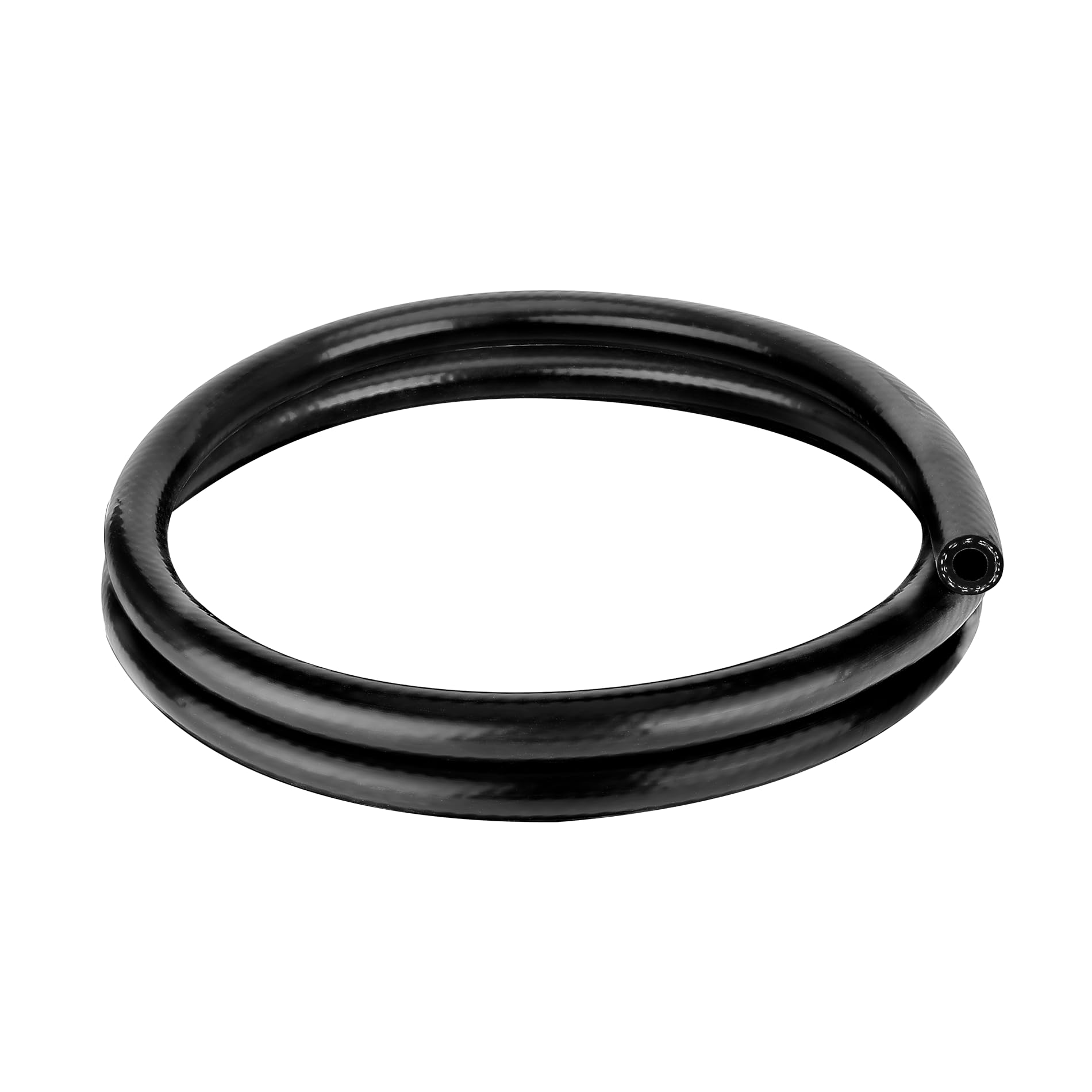
This 5-foot silicone hose from EVIL ENERGY hits the sweet spot for budget-conscious buyers who still want the heat resistance of silicone over standard rubber. The SAE 20R3 Class A rating means the hose meets the dimensional and material standards required for coolant and heater applications, and the braided polyester reinforcement keeps the working pressure at 60 PSI with a burst pressure of 246 PSI. The temperature range of -67°F to 356°F covers everything a typical street-driven cooling system will ever see.
Customer reports describe the hose as having good flexibility without collapsing on tight-radius bends, and several owners used it to replace factory rubber hoses on older trucks and SUVs with immediate improvement in coolant flow consistency. The 5/8-inch inner diameter fits most standard heater hose connections, and the material cuts cleanly with a razor knife without fraying. Multiple verified buyers note that the wall thickness feels substantial compared to generic parts-store hose at a similar price.
The most frequent caveat involves the SAE 20R3 Class A rating, which specifies a thinner wall than Class D hoses. Owners who need maximum abrasion resistance or plan to route the hose against sharp engine components may prefer a thicker-walled option. For straightforward heater core and radiator bypass applications, this hose delivers silicone performance at a price that undercuts most specialty brands by a wide margin.
What works
- Excellent temperature range from -67°F to 356°F
- 246 PSI burst pressure leaves room for system spikes
- Silicone material resists ozone and coolant degradation
What doesn’t
- Class A wall thickness is thinner than premium offerings
- 5-foot length may be short for long chassis routing
4. Taukealugs 90° Silicone Elbow Coupler 1.75″
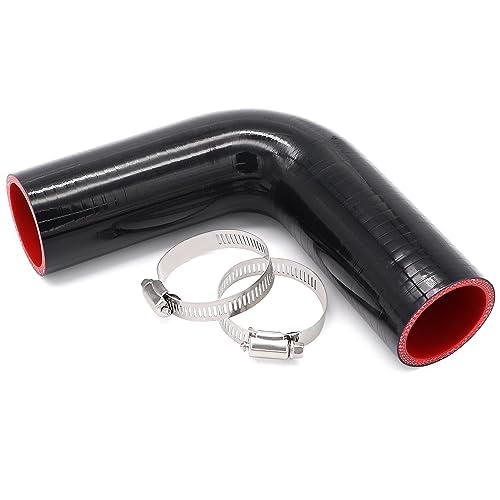
When a straight hose section will not clear the alternator, intake tube, or frame rail, a pre-formed 90-degree elbow saves the fabrication headache. This Taukealugs coupler uses a 4-ply silicone construction with a wall thickness of 0.2 inches, giving it a burst pressure of 245 PSI — impressive for a formed bend where stress concentrates at the inner radius. The 1.75-inch outer diameter fits standard turbo and intercooler piping, and the included T-bolt clamps provide even clamping force around the bead.
Real-world owner feedback includes a remarkable crash survival story where the coupler and clamps stayed intact during a collision that totaled the vehicle. Other users have successfully substituted this elbow for factory VW and Audi intercooler pipes, saving significant cost compared to dealer parts. The silicone compound handles temperatures from -76°F to 428°F, which covers both cold-air intake and post-turbo charge air applications without degradation.
The supplied T-bolt clamps have drawn mixed reviews — several owners report the clamps breaking during installation and recommend replacing them with heavy-duty worm-gear clamps. The 4-inch leg length also requires careful angle cutting for some installations, and the hose is not designed for continuous coolant submersion in the way that a straight heater hose is. For intake and intercooler plumbing, this is a strong budget-friendly elbow that outperforms its price point.
What works
- 4-ply reinforcement delivers 245 PSI burst strength
- Wide temperature range suits turbo and intake systems
- Pre-formed 90° angle eliminates custom bending work
What doesn’t
- Included T-bolt clamps are prone to breakage
- 4-inch leg length may require trimming for tight fits
5. STEBER 3/8″ 3.2 ft Silicone Coolant Hose

Small-diameter silicone hoses often get overlooked, but the STEBER 3/8-inch hose fills a critical niche for vacuum lines, boost reference lines, and small-bore coolant circuits. The 3-ply polyester reinforcement supports a maximum pressure of 120 PSI, which is overkill for most vacuum applications but provides peace of mind for coolant bypass lines where a burst would strand you. The temperature ceiling of 500°F exceeds what any cooling system will produce, and the UV-resistant silicone compound stays flexible even after years of underhood exposure.
Owner reviews highlight the hose’s versatility beyond strictly coolant duty — one user replaced all the vacuum lines on a 1996 Ford F-150 and reported a perfect fit on every barb fitting. The 3.2-foot length is enough for multiple short vacuum runs or a single coolant overflow line, and the material cuts cleanly without leaving frayed edges. The silicone compound has a smooth interior bore that minimizes flow restriction compared to ribbed or textured vacuum hose.
The main concern raised by buyers involves the wall thickness, which some describe as thinner than the product images suggest. The 0.17-inch wall is adequate for the pressure rating but feels less substantial than a dedicated heater hose of the same diameter. If the hose is routed near sharp metal edges or exhaust components, additional abrasion protection is advisable. For vacuum and low-pressure coolant duties, however, the STEBER hose offers reliable performance at a cost that makes stocking a spare length painless.
What works
- High 500°F temperature rating covers extreme underhood heat
- 3-ply reinforcement holds shape under vacuum and pressure
- UV and ozone resistant for long-term engine bay life
What doesn’t
- Wall thickness appears thinner than advertised photos
- 3.2-foot length limits use for long continuous runs
Hardware & Specs Guide
Silicone Construction
Premium flexible radiator hoses use silicone rubber compounded with reinforcing agents to withstand continuous exposure to ethylene glycol coolant, water, and air. Silicone resists the hardening and cracking that plagues standard rubber after repeated thermal cycling. The best hoses incorporate polyester or aramid fiber plies — typically 2 to 4 layers — embedded between silicone inner and outer walls. Each ply adds burst resistance without significantly reducing flexibility, which is why 4-ply elbows can still bend around tight engine bay obstacles while holding 245 PSI.
Temperature and Pressure Tolerances
A silicone coolant hose should maintain its shape and sealing force from -65°F up to at least 350°F for street use. Working pressure ratings around 60 PSI cover most stock cooling systems, but boosted engines and heavy-duty applications benefit from 100 PSI or higher. Burst pressure, typically 3 to 5 times the working rating, provides the safety margin that prevents catastrophic failure when a thermostat sticks or the cooling fan fails. EPDM hoses offer similar working pressure but cap out around 260°F, making them a better fit for low-stress circuits like heater cores and overflow lines.
Wall Thickness and Kink Resistance
Wall thickness directly correlates with the hose’s ability to resist collapsing on tight-radius bends. A 0.17-inch wall works for straight runs and gentle curves, but 0.2 inches or thicker is preferable when the hose must navigate a 90-degree turn without a pre-formed elbow. Thicker walls also provide more material for the hose clamp to compress, reducing the chance of coolant weeping past the fitting over time. Measuring the wall thickness with calipers before installation gives a reliable indication of whether the hose will hold up under your specific routing constraints.
Sizing and Dimensional Standards
The SAE 20R3 specification governs heater and coolant hose dimensions, with Class A through D designations indicating wall thickness tiers. Class A hoses have the thinnest wall and are suitable for low-pressure return lines, while Class D hoses feature the thickest wall for high-stress applications. Inner diameter tolerance should stay within ±0.4 mm to ensure a consistent seal across the full length of the hose. Measuring the actual inner diameter with a caliper rather than trusting the labeled size prevents ordering a hose that slips loose or refuses to slide onto the fitting.
FAQ
Can I use a silicone heater hose for my radiator upper or lower hose?
How do I know if I need a 2-ply or a 4-ply hose?
Will EPDM hose last as long as silicone in a daily driver?
What size hose clamp should I use with a 5/8-inch silicone hose?
Can I cut a silicone radiator hose to a custom length?
Final Thoughts: The Verdict
For most buyers, the best flexible radiator hose winner is the KDP 5/8″ 10 ft Silicone Hose because its thick wall, 350°F temperature ceiling, and 2-ply reinforcement cover everything from daily commuting to light track use without compromise. If you want the abrasion resistance and OEM-style feel of EPDM rubber, grab the EVIL ENERGY 10 ft Heater Hose. And for a budget-friendly silicone upgrade that still carries an SAE 20R3 rating, nothing beats the value of the EVIL ENERGY 5 ft Silicone Hose.

Certification: BSc in Mechanical Engineering
Education: Mechanical engineer
Lives In: 539 W Commerce St, Dallas, TX 75208, USA
Md Amir is an auto mechanic student and writer with over half a decade of experience in the automotive field. He has worked with top automotive brands such as Lexus, Quantum, and also owns two automotive blogs autocarneed.com and taxiwiz.com.