Cantilever brakes have a reputation for flex, noise, and frustrating setup — but the real story is more nuanced. Properly matched arms, pads, and levers transform a mushy lever into a precise, modulated stopper that clears mud better than any mini-V.
I’m Amir — the founder and writer behind Four Wheel Ask. I’ve spent years analyzing component specifications and aggregating owner feedback to identify what truly performs on the road and trail.
This guide cuts through the forum noise to highlight the builds that actually stop consistently. After reviewing owner feedback and build specs, the best cantilever brakes deliver reliable modulation and consistent rim contact across varied conditions.
How To Choose The Best Cantilever Brakes
Cantilever brakes are defined by their arm pivot spacing, straddle cable angle, and pad alignment. Getting these three factors right determines whether your setup feels vague or razor-sharp. This section covers the critical decision points that separate a frustrating build from a reliable stopper.
Arm Pivot Spacing and Stance Width
Wide-stance arms (parallel-pull) offer more mechanical advantage and better mud clearance but require careful toe-in adjustment. Narrow-stance arms feel stiffer but trap debris faster. The right choice depends on your frame’s brake bosses and typical riding conditions. For cyclocross and wet-weather touring, a wider stance with generous clearance is almost always preferable.
Pad Compound and Rim Compatibility
Cantilever brake pads vary widely in compound hardness. Softer compounds deliver stronger bite and modulation but wear faster, especially in gritty conditions. Harder compounds last longer but can feel glassy or squeal when wet. Many riders find a dual-compound pad — softer in the center, harder at the edges — offers the best balance for mixed-terrain use.
Straddle Cable and Lever Matching
Cantilevers require a specific straddle cable angle to achieve proper mechanical leverage. A too-shallow angle produces a wooden lever feel; a too-steep angle creates excessive cable travel and vague response. Matching your cantilever to the correct lever pull (short-pull for road/cyclocross, long-pull for some touring setups) is essential for consistent performance.
Quick Comparison
On smaller screens, swipe sideways to see the full table.
| Model | Category | Best For | Key Spec | Amazon |
|---|---|---|---|---|
| Avid Shorty Ultimate Front | Cantilever Brake | Cyclocross & gravel stopping power | CNC-machined aluminum, height-adjustable pads | Amazon |
| Origin8 DuoTrigger Levers | Brake Lever | Convertible flat-bar to drop-bar setups | Forged aluminum, two-finger lever | Amazon |
| SHIMANO BR-CT 91 RW | Cantilever Brake | MTB & touring reliability | Silver anodized aluminum, MTB/Tour intended use | Amazon |
| Shimano BR-CT91 Silver | Cantilever Brake | Entry-level replacement on a budget | Aluminum construction, satin finish | Amazon |
| Kool Stop V-Type E-Bike Pads | Brake Pad Set | E-bike stopping compound | E-bike specific formula, rim-friendly compound | Amazon |
| Odyssey Springfield U-Brake | U-Brake | BMX & cruiser tire clearance | Lightweight aluminum, single-spring design | Amazon |
| SRAM 900 Carbon Lever Set | Brake Lever | Road & cyclocross precision | Carbon fiber, adjustable reach, ergonomic hood | Amazon |
In‑Depth Reviews
1. Avid Shorty Ultimate Front Cantilever Brake

The Shorty Ultimate has long been the benchmark for performance cantilever brakes in cyclocross and gravel circles. The CNC-machined arm profile reduces weight without sacrificing stiffness, while the open design sheds mud and debris far better than closed-style brakes. Owner reports consistently highlight the predictable modulation and lack of flex under hard braking loads.
Setup is straightforward thanks to the height-adjustable pad posts and alloy straddle carrier with an in-line cable adjuster. The quick-release mechanism allows fast wheel changes without losing tension settings — a genuine time-saver during race day or wet commutes.
Compatibility is limited to short-pull levers, so riders with long-pull touring setups will need to confirm their lever match before purchasing. The included cartridge road pads offer good bite out of the box, though some owners swap to aftermarket compounds for extreme wet conditions.
What works
- Excellent mud clearance and debris shedding design
- CNC-machined arms provide low weight with high stiffness
- Quick-release feature simplifies wheel removal and re-installation
What doesn’t
- Requires short-pull levers — not compatible with long-pull setups
- Premium build cost places it above entry-level options
2. Origin8 DuoTrigger Convertible Cantilever Brake Levers

The DuoTrigger levers solve a specific but common problem: converting a flat-bar or BMX bike to use cantilever brakes while maintaining a clean cockpit. The forged aluminum body keeps weight reasonable without flexing under heavy pulls, and the two-finger lever shape provides ample leverage for confident modulation.
Ambidextrous hand orientation means these levers work on either side of the bar without swapping internals — a practical detail for custom builds. The clamp attachment fits standard 22.2 mm handlebars securely and the polished finish resists corrosion over time.
Some owners note that the lever reach is not adjustable, which can be an issue for riders with smaller hands or those who prefer a closer lever position. The unfinished exterior also shows wear faster than anodized alternatives if regularly exposed to grit and moisture.
What works
- Forged aluminum construction offers good stiffness without excess weight
- Ambidextrous design simplifies installation on either side
- Compatible with standard flat-bar and BMX clamp diameters
What doesn’t
- Lacks reach adjustment for different hand sizes
- Unfinished finish may show wear sooner than anodized options
3. SHIMANO Cantilever-Brake BR-CT 91 (Design: RW)

Shimano’s BR-CT91 in the RW design variant is a straightforward, no-surprises cantilever brake built for mountain and touring duty. The silver anodized finish provides consistent corrosion resistance and a clean look that matches polished frames and silver components. Intended use is clearly marked for MTB and touring, where reliability matters more than ultimate weight savings.
Arm pivot geometry follows Shimano’s proven wide-stance layout, offering good mud clearance and predictable brake feel with short-pull levers. The included hardware is standard Shimano quality — nothing flashy, but consistent and easy to source replacements if needed.
Pad compound is on the firmer side, which extends pad life but trades some initial bite compared to softer aftermarket options. Riders who prioritize longevity over ultimate modulation will appreciate the durability, while those seeking maximum stopping power may want to pair these with a softer pad.
What works
- Silver anodized finish offers strong corrosion resistance
- Wide-stance design provides good mud clearance for off-road use
- Standard Shimano hardware is easy to replace and maintain
What doesn’t
- Firm pad compound reduces initial bite compared to softer options
- Not the lightest option available for weight-conscious builds
4. Shimano BR-CT91 Cantilever Brake Silver

The BR-CT91 in its standard silver finish is effectively the same reliable cantilever brake as the RW variant, offered at a different price point for budget-conscious builders. The satin anodized aluminum arms hold up well against the elements and provide adequate stiffness for recreational riding, commuting, and light touring duties.
Shimano’s quality control ensures consistent arm pivot tension out of the box, which simplifies initial setup. The brake is designed for short-pull levers and delivers the predictable, progressive engagement that Shimano’s basic cantilever platform is known for across decades of production.
The included pads are functional but basic — riders who push their brakes hard in wet or muddy conditions will likely want to upgrade to a premium compound fairly quickly. The satin finish is less resistant to scratching than the hard anodized finish on the RW variant, though performance is identical between the two models.
What works
- Consistent Shimano quality with reliable pivot tension
- Satin aluminum finish provides adequate corrosion protection
- Easy setup and broad compatibility with standard cantilever frames
What doesn’t
- Basic included pads lack bite compared to aftermarket alternatives
- Satin finish is more prone to scratching than hard anodized variants
5. Kool Stop Lightweight Holder Version 2 V-Type Brake Pads for Electric Bikes

Kool Stop formulated these V-Type pads specifically for the higher speeds and increased weight of electric bikes, where standard rim brake pads can overheat or wear rapidly. The compound is designed to remain effective across a wider temperature range, providing consistent friction even during prolonged braking on descents with heavy loads.
The rim-friendly formulation reduces the risk of scoring or glazing brake tracks, which is a genuine concern with harder compounds on e-bikes. Each pad is manufactured in the USA, and the aluminum backing includes Kool Stop’s standard post fittings for broad compatibility with cantilever and V-brake arms.
Some owners report that the initial break-in period is slightly longer than with standard compounds, requiring a deliberate bedding process to achieve full bite. Once bedded, the pads offer predictable modulation with minimal noise, though wet-weather performance is good but not exceptional compared to sintered alternatives.
What works
- Formulated specifically for e-bike speeds and weight loads
- Rim-friendly compound reduces track wear and glazing risk
- Consistent friction across a wide temperature range
What doesn’t
- Requires a deliberate break-in period to achieve full bite
- Wet-weather performance is adequate but not best-in-class
6. Odyssey Brake Calliper Springfield Black
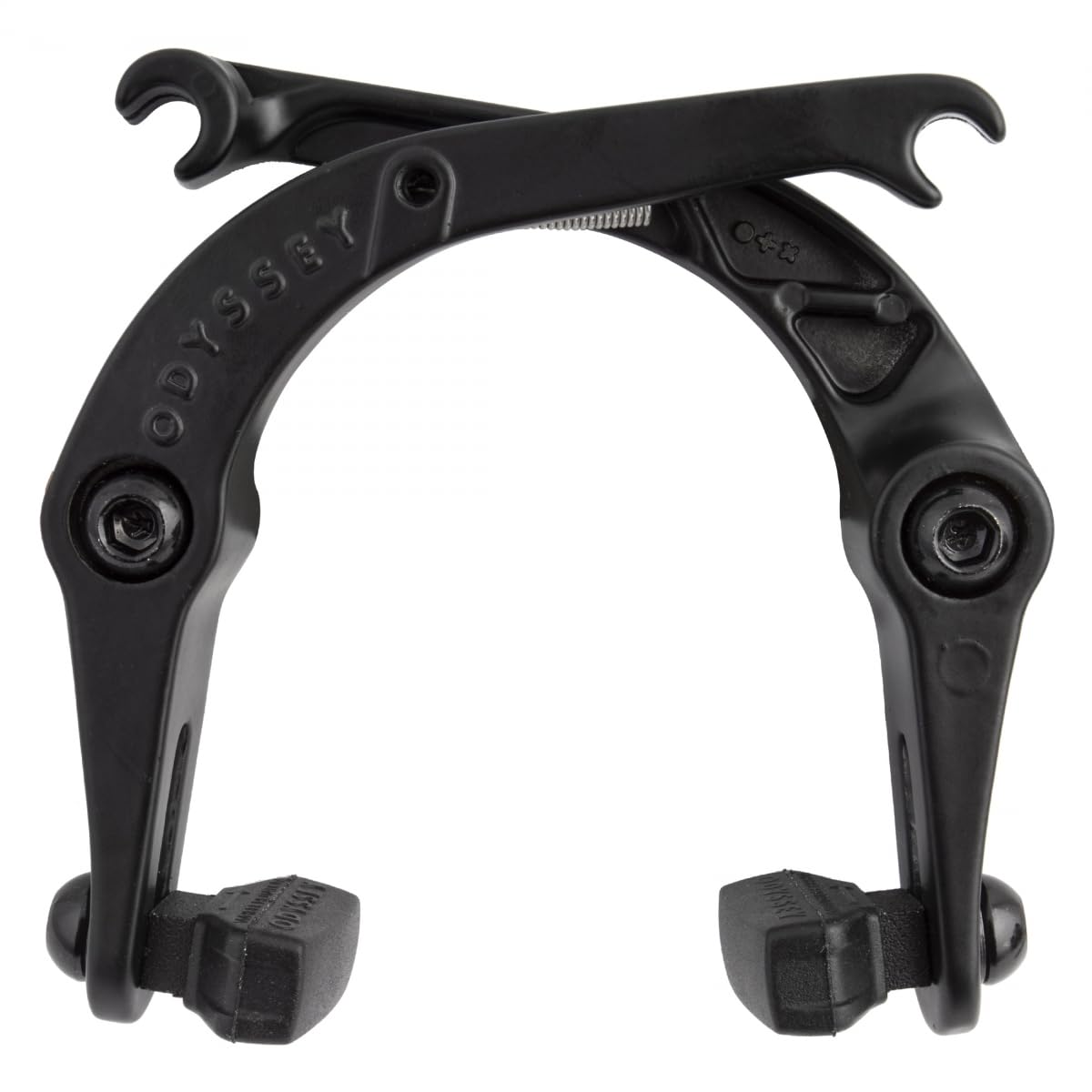
The Odyssey Springfield is technically a U-brake rather than a traditional cantilever, but it shares the same actuation principles and fits many frames that accept cantilever-style brakes. The simplified single-spring design reduces overall parts count and makes installation noticeably faster than dual-spring setups — a genuine advantage for builders who service their bikes frequently.
Lightweight aluminum arms keep the overall weight low, which matters on BMX and cruiser builds where unsprung mass affects handling. Enhanced clearance allows for larger tires, making this brake a strong candidate for bikes that need to fit wide rubber without sacrificing stopping power.
The included Odyssey Ghost pads provide reliable grip out of the box with minimal setup tweaking. Some owners note that the single-spring design lacks the independent arm tension adjustment of dual-spring cantilevers, which can make fine-tuning pad toe-in slightly more challenging for perfectionists.
What works
- Single-spring design simplifies installation and reduces parts count
- Lightweight aluminum arms improve handling response
- Enhanced tire clearance accommodates wider rubber
What doesn’t
- Single-spring design limits independent arm tension adjustment
- U-brake format may not fit all frames designed for traditional cantilevers
7. SRAM 900 Carbon Fiber Road Brake Lever Set

The SRAM 900 lever set brings carbon fiber construction to the brake lever category, reducing weight at the bar end where it most affects steering feel. The ergonomic hood shape mirrors SRAM’s DoubleTap shifter profile, providing a familiar hand position for riders who run SRAM drivetrains or appreciate a consistent cockpit feel across their controls.
Adjustable reach allows fine-tuning the lever distance from the bar, accommodating different hand sizes and gloved riding without compromising leverage. The black anodized coating on the aluminum internals resists wear from moisture and road grit, extending the service life of the pivot mechanism.
Compatibility extends to both disc and road calipers, but these are short-pull levers designed specifically for cantilever or road caliper brakes — they will not work correctly with long-pull V-brakes without an adapter. The right-hand orientation means riders need to order a pair for complete front and rear coverage on standard setups.
What works
- Carbon fiber construction reduces weight at the handlebar
- Adjustable reach accommodates various hand sizes and gloved riding
- Ergonomic hood shape matches SRAM shifter feel for consistent cockpit interface
What doesn’t
- Short-pull design incompatible with long-pull V-brakes without adapters
- Single right-hand orientation requires purchasing a pair for full coverage
Hardware & Specs Guide
Brake Arm Material
Cantilever arms are typically forged or CNC-machined from 6061 or 7075 aluminum alloys. Forged arms offer a good strength-to-weight ratio at a moderate cost, while CNC-machined arms shave grams and add stiffness but increase the price. Steel arms exist on very budget builds but add noticeable weight and corrode faster. For consistent stopping power in wet or muddy conditions, machined aluminum provides the best balance of durability and performance.
Pad Compound and Bedding
Pad material directly dictates bite, modulation, and wear rate. Sintered compounds last longer and perform better in wet conditions but can be harsh on rim surfaces. Organic compounds offer stronger initial bite and quieter operation but wear faster, especially in gritty environments. E-bike specific pads use a harder thermal formulation to resist fade under sustained heavy braking. Proper bedding — 20 to 30 moderate stops from speed — aligns the pad material with the rim surface and is essential for achieving full stopping power.
Straddle Cable and Lever Pull
The straddle cable angle determines the mechanical leverage ratio of a cantilever brake. A typical setup places the straddle cable yoke 90 to 110 mm above the tire for balanced leverage and tire clearance. Short-pull levers (designed for road calipers and cantilevers) move about 15 mm of cable per lever stroke. Long-pull levers (designed for V-brakes) move about 20 mm. Mismatching these can cause a wooden lever feel or excessive lever travel. Always confirm lever pull type before pairing components.
Pivot Hardware and Tension Adjustment
High-quality cantilever brakes use sealed pivot bushings or bearings to maintain consistent arm return tension over thousands of cycles. Open pivot bushings require periodic cleaning and light lubrication to prevent sticky arm movement. The tension adjustment screw controls each arm independently, allowing precise toe-in and centering. Dual-spring designs offer independent left-right tension, while single-spring designs rely on frame alignment and yoke tension. For predictable modulation and even pad wear, independent arm adjustment is strongly recommended.
FAQ
What is the difference between cantilever brakes and V-brakes?
Can I use cantilever brakes with drop bar levers?
Why do my cantilever brakes squeal and how do I fix it?
Are cantilever brakes still relevant for modern touring bikes?
Final Thoughts: The Verdict
For most buyers, the best cantilever brakes winner is the Avid Shorty Ultimate because it delivers the widest performance envelope for cyclocross, gravel, and touring use with reliable modulation and excellent mud clearance. If you want a value-oriented replacement that just works, grab the Shimano BR-CT91 for its consistent quality and easy setup. And for e-bike riders who need a pad compound that resists fade under heavy loads, nothing beats the Kool Stop V-Type E-Bike pads for thermal stability and rim protection.

Certification: BSc in Mechanical Engineering
Education: Mechanical engineer
Lives In: 539 W Commerce St, Dallas, TX 75208, USA
Md Amir is an auto mechanic student and writer with over half a decade of experience in the automotive field. He has worked with top automotive brands such as Lexus, Quantum, and also owns two automotive blogs autocarneed.com and taxiwiz.com.