A dull clear coat, a swirl-marked hood, or a deep scratch that catches your fingernail — each one creates the same question: which compound actually delivers without cutting through your paint? The market is flooded with pastes and liquids claiming to restore a mirror finish, but the real difference lies in the abrasive technology and the balance between cut depth and final clarity. Choosing wrong means extra work, wasted material, or worse, burned paint.
I’m Amir — the founder and writer behind Four Wheel Ask. My focus on automotive consumables involves dissecting manufacturer spec sheets, analyzing micron ratings, and cross-referencing hundreds of owner feedback reports to separate marketing from measurable performance.
Selecting the right abrasive formula determines whether your paint correction session ends in pride or a repaint. This guide breaks down grit types, work times, and wipe-off behavior to help you match the perfect best car buffing compound to your specific paint stage and tool setup.
How To Choose The Best Car Buffing Compound
Buffing compounds are not one-size-fits-all. The optimal choice depends on your paint’s condition, your tool (rotary, DA, or hand), and the final clarity you expect. Focus on these three factors to narrow the field.
Grit Level and Abrasive Technology
Compounds use either diminishing or non-diminishing abrasives. Diminishing abrasives break down during buffing, allowing you to refine the finish without switching products. Non-diminishing (or “SMAT”) abrasives maintain consistent cut throughout the work time. Make sure the product’s grit rating matches the scratch depth you need to remove — heavier cuts for deeper marks and finer polishes for haze and swirl removal.
Work Time and Dusting
How long the compound remains wet under the pad determines how much paint you can effectively level before it dries up. Premium formulations typically offer extended work cycles, which reduce the risk of burning through edges. Low-dust formulas also save cleanup time and keep your workspace clean, an often overlooked factor in long correction sessions.
Safety Margins: Silicone, Waxes, and Curing
Not all compounds are safe to use before a paint job or clear coat repair. Silicone fillers can cause fish-eyes in fresh paint, so body-shop-safe products advertise silicone-free formulas. Similarly, compounds loaded with waxes might hide defects temporarily rather than removing them. Look for labels that explicitly state “clear coat safe” and “silicone free” if you plan to repaint or apply a ceramic coating afterward.
Quick Comparison
On smaller screens, swipe sideways to see the full table.
| Model | Category | Best For | Key Spec | Amazon |
|---|---|---|---|---|
| Griot’s Garage BOSS Correcting Cream | Premium | Moderate swirls and clarity enhancement | 16 oz, SMAT formula, low dust | Amazon |
| Mothers Professional Rubbing Compound | Mid-Range | Water spots and light scratches | 12 oz, body shop formula | Amazon |
| Menzerna Super Finish Plus 3800 | Finishing | Mirror finish on dark paint | 8 oz, diminishing abrasive | Amazon |
| Menzerna Heavy Cut Compound 1000 | Heavy Cut | Deep scratches and sanding marks | 8 oz, aluminum oxide abrasive | Amazon |
| Malco Super Duty Heavy Cut Compound | Industrial | Heavy oxidation on large surfaces | 32 oz, wool pad compatible | Amazon |
In‑Depth Reviews
1. Griot’s Garage BOSS Correcting Cream

This correcting cream uses non-diminishing abrasive technology, meaning the cut remains consistent throughout the entire buffing cycle. That consistency is key when working with a dual-action polisher because you can make multiple passes without worrying about the product breaking down too early. The formula is remarkably low-dust, a feature that experienced detailers notice immediately when wiping panels.
Owner feedback frequently highlights the depth and clarity it restores to neglected paint. Multiple reports describe single-step corrections on 8-to-12-year-old vehicles where the paint looked beyond recovery, only to come back with impressive gloss. The work cycle is generous, allowing you to work a 2×2 foot section without the compound drying out prematurely.
The 16-ounce bottle costs less per ounce than many premium competitors, making it a strong mid-range value. The extended work time, low dusting, and high clarity finish put this compound ahead of many rivals for general defect removal and paint enhancement. It pairs best with the BOSS Fast Correcting Foam Pad for maximum efficiency.
What works
- Extended buff cycle with minimal dusting
- Restores clarity on faded single-stage and clear coats
- Versatile across a range of defect depths
What doesn’t
- Not aggressive enough for deep P800 or deeper sanding marks
- Requires a quality foam pad for best results
2. Mothers Professional Rubbing Compound
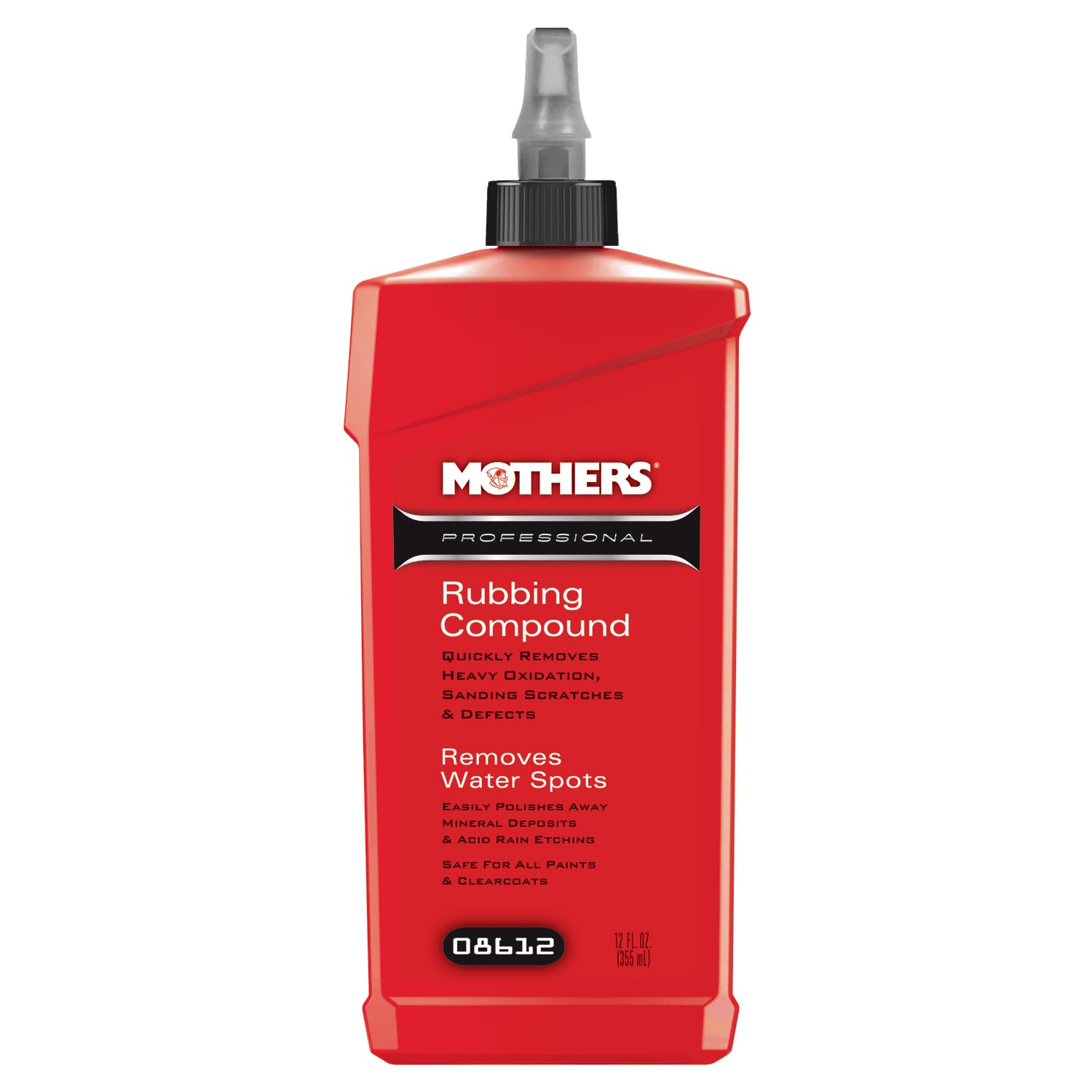
Mothers has a long-standing reputation in the detailing world, and this professional-grade rubbing compound lives up to that heritage. It is formulated to cut through water spots, heavy oxidation, and car wash scratches quickly, making it a go-to for restorations on older daily drivers. The product works well with both rotary and dual-action buffers, and user reports confirm effective results even by hand.
Reviewers note that this compound has a much milder abrasive effect than pure polishing compounds, which is actually a benefit when working on clear coats that are still intact. It acts as an intermediate step between a heavy cut compound and a finishing polish. Several owners mention using it to restore headlight lenses with excellent results, adding versatility to its value proposition.
The 12-ounce container sits at a very approachable price point for a product that pulls double duty on paint and plastic restoration. The formula can be dusty if allowed to dry out on the panel, so maintaining a proper working speed is important. For budget-conscious buyers looking for a reliable all-rounder, this compound delivers without the premium price tag.
What works
- Effective on water spots and light surface defects
- Simple to apply and remove
- Great value for the bottle size
What doesn’t
- Can produce dust if worked too dry
- Less effective on deep scratches
3. Menzerna Super Finish Plus 3800
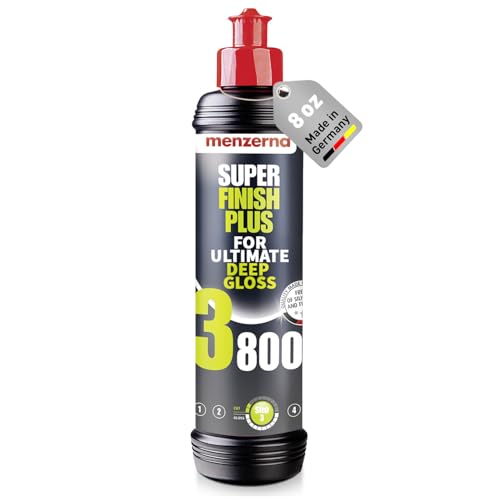
This is the finishing step Menzerna is famous for among professional detailers. The Super Finish Plus 3800 uses diminishing abrasive technology that breaks down as you work, allowing you to refine the surface to a high-gloss, hologram-free finish. It is specifically designed to remove the micro scratches and light haze left behind by a heavier cutting compound, making it a critical final step in a multi-stage correction.
Owners with dark colored paints — especially black and deep blue — report that this product delivers a noticeably deeper gloss than other finishing polishes they have tried. The silicone-free formula means it is safe to use before any paint work or ceramic coating application. The consistency is thin enough to spread easily across panels without dragging, which reduces the risk of creating new micro-marring.
The 8-ounce bottle is small, but a little goes a long way because this is a finish polish, not a heavy cut. It is best used with a soft foam pad for maximum clarity. For anyone building a two-step or three-step correction system, this is the polish that creates the showroom sheen you actually see in the sun.
What works
- Produces an exceptional mirror finish on dark paint
- Diminishing abrasive reduces holograms effectively
- Silicone-free and safe for paint prep
What doesn’t
- Small bottle size for the price
- Not a standalone scratch remover
4. Menzerna Heavy Cut Compound 1000
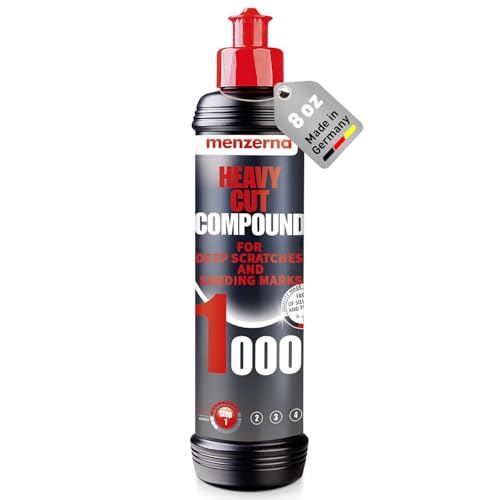
When the scratch catches your fingernail, you need a heavy cut, and Menzerna 1000 is built for exactly that scenario. This compound utilizes aluminum oxide abrasives to remove deep scratches, sanding marks, and holograms from previous correction attempts. It is aggressive enough to level orange peel and clear coat overspray while still finishing down with a usable gloss.
Feedback from owners who used it on severe parking lot scratches and careless clear coat applications is overwhelmingly positive. Multiple reviews note that a few passes with a rotary polisher removed defects they assumed required a repaint. The product demands respect — one reviewer cautioned that overworking it can cut through clear coat, which highlights the importance of proper technique and measuring paint thickness.
The 8-ounce bottle concentrates a lot of cutting power into a small package. It is not a finishing compound, so expect to follow it with a polish like the Menzerna 3800 for final clarity. For anyone restoring a heavily damaged panel, this is the first step that makes the rest of the correction possible.
What works
- Strong cut removes deep scratches and sanding marks
- Can be used by hand or with a rotary/DA
- Leaves a usable finish for a heavy compound
What doesn’t
- Requires careful technique to avoid paint damage
- Small bottle requires multiple passes for large vehicles
5. Malco Super Duty Heavy Cut Compound
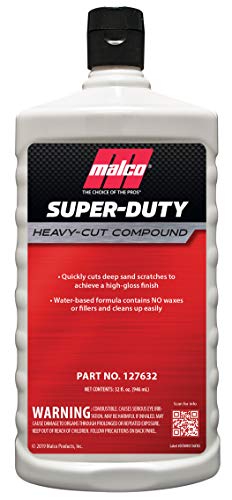
Malco’s Super Duty Heavy Cut Compound is the largest bottle in this roundup, offering 32 ounces of aggressive cutting power. It is designed to handle heavy oxidation, P1500 and finer sand scratches, and is frequently used on automotive clear coats, single-stage paints, and even marine gel coats. This product is built for high-volume work where speed matters.
Professional detailers and shop owners in the reviews praise its ability to cut through heavy oxidation on neglected daily drivers and boat surfaces. The compound works best with a wool cutting pad, which maximizes the mechanical abrasion. It cleans up relatively well, though some users note that using too much product can leave residue that requires extra wiping.
The large container makes it a budget-friendly option per ounce if you have multiple vehicles to correct. The formula is clear coat safe and VOC compliant, so it meets body shop standards. It is not designed for final finishing — expect to follow up with a medium cut or finishing polish for maximum gloss. For restoration work on large areas, this compound offers the best volume-to-performance ratio.
What works
- Excellent cut rate on heavy oxidation and sanding marks
- Large 32-ounce bottle offers strong value
- Works well with wool pads for fast correction
What doesn’t
- Can be slightly dusty on longer work cycles
- Needs a follow-up polish for a high-gloss finish
Hardware & Specs Guide
Abrasive Type: Diminishing vs. SMAT
Diminishing abrasives (like those in Menzerna 3800) break down into finer particles during buffing, allowing the same product to cut and then finish. SMAT (Super Micro Abrasive Technology) compounds, such as Griot’s BOSS Correcting Cream, maintain a consistent particle size throughout the work time. SMAT formulas are easier to learn because they don’t rely on particle breakdown for the finish, but diminishing polishes can achieve a deeper gloss in experienced hands.
Grit Ratings and Cut Depth
Manufacturers rarely publish exact micron sizes, but grit numbers offer a rough guide. Menzerna 1000 targets deeper scratches, while the 3800 is a finishing polish. The Malco Super Duty is rated for P1500 sand scratches. Understanding that heavier cuts demand a follow-up polish is critical — using a heavy compound alone often leaves a haze that must be refined for a true mirror finish.
Work Time and Lubricity
Long work time gives you more passes before the compound dries out, reducing the risk of burning through edges. Griot’s BOSS formula and Malco Super Duty both emphasize lubricity. Low dusting is a direct result of proper lubrication — products that dry out quickly create airborne abrasive dust that settles on the vehicle and in the lungs.
Silicone Content and Paint Safety
Compounds containing silicone fillers can cause “fish-eye” defects if you spray fresh paint over them. Menzerna explicitly markets their compounds as silicone-free, making them safe for repaint and ceramic coating prep. Some products also contain wax fillers that hide scratches temporarily. For true correction, choose a formula that removes defects without filling them.
FAQ
Can I use a car buffing compound by hand?
What grit should I start with for deep scratches?
Are buffing compounds safe for clear coat?
Final Thoughts: The Verdict
For most buyers, the best car buffing compound winner is the Griot’s Garage BOSS Correcting Cream because it offers the best balance of cut, clarity, and workability without breaking the bank. If you need an aggressive first step for heavy scratches, grab the Menzerna Heavy Cut Compound 1000. And for creating a flawless showroom shine on a dark finish, nothing beats the Menzerna Super Finish Plus 3800.

Certification: BSc in Mechanical Engineering
Education: Mechanical engineer
Lives In: 539 W Commerce St, Dallas, TX 75208, USA
Md Amir is an auto mechanic student and writer with over half a decade of experience in the automotive field. He has worked with top automotive brands such as Lexus, Quantum, and also owns two automotive blogs autocarneed.com and taxiwiz.com.