Finding a fuel container that seals tight and doesn’t let fumes seep into your garage or trunk is harder than the price tag suggests. Cheap plastic jugs warp in the sun, gaskets fail after a few refills, and vapor leakage slowly drains both your fuel and your patience.
I’m Amir — the founder and writer behind Four Wheel Ask. I’ve spent years analyzing fuel container specifications, safety certifications, and owner-reported sealing performance to separate well-engineered designs from disposable junk that belongs in the recycling bin.
After reviewing safety certifications, material quality, and sealing reliability, this guide identifies the best 2 gallon gas container for your needs.
How To Choose The Best 2 Gallon Gas Container
A 2-gallon gas container occupies a sweet spot: large enough to carry a meaningful fuel reserve but light enough to lift and pour without straining your back. Choosing the right one comes down to material integrity, seal quality, and the certifications that back up the manufacturer’s claims. Here are the factors that matter most.
Material Construction and Chemical Compatibility
High-density polyethylene (HDPE) is the standard for portable fuel containers because it resists corrosion, handles temperature swings, and won’t react with gasoline. Thicker wall sections reduce the risk of impact cracking, while UV-stabilized grades resist sun damage. A few premium options use multi-layer roto-molding to virtually eliminate vapor permeation — a key upgrade if you plan to store fuel for months rather than days.
Seal Integrity and Vapor Retention
A container that leaks fumes is just as wasteful as one that spills liquid. Look for threaded closures with integrated O-rings or gaskets that create a true vapor barrier. CARB-compliant designs go a step further with self-closing spouts and flame arrestors that also prevent vapor escape during transport. The difference between a cheap snap-cap and a proper safety seal is immediately noticeable in garage odor levels.
Certifications and Compliance
The California Air Resources Board (CARB) and Environmental Protection Agency (EPA) set strict limits on fuel container vapor emissions. A CARB-compliant container uses a certified low-permeation material and a spill-proof spout. If you store fuel inside a vehicle or attached to a roof rack, compliant containers are not optional — they are a safety and legal requirement. Always verify the label before purchasing.
Quick Comparison
On smaller screens, swipe sideways to see the full table.
| Model | Category | Best For | Key Spec | Amazon |
|---|---|---|---|---|
| Surecan Type-II | Safety Container | Vapor‑proof gas storage | 2 Gal, HDPE, CARB Compliant | Amazon |
| RotopaX RX-2S | Fuel Pack | Mountable off‑road fuel | 2 Gal, 3‑Layer Roto‑Molded | Amazon |
| Qianfenie Glass Jar | Glass Container | Fermentation and brewing | 2 Gal, 4.3″ Wide Mouth | Amazon |
| FastRack Water Jug | Water Jug | Emergency water storage | 2.5 Gal, BPA‑Free HDPE | Amazon |
| kitchentoolz Utility Jug | Utility Jug | Oil and fluid recycling | 2.5 Gal, Made in USA | Amazon |
In‑Depth Reviews
1. Surecan 2 Gallon Type-II Safety Container

The Surecan Type-II is a purpose-built safety container designed from the ground up for gasoline storage rather than adapted from a water jug or utility bucket. Its high-density polyethylene shell meets CARB low-permeation standards, which means the plastic itself resists vapor transmission — a critical detail that cheap commodity containers ignore.
The 9-inch hose gives you reach into tight tank openings without requiring a separate funnel, and the Type-II designation means the container is rated for flammable liquids with a flash point below 100°F. Owner reports consistently praise the leak-free seal and the absence of that telltale fuel odor in garages and truck beds during transport.
This container earns the top spot because it delivers genuine vapor-proof performance backed by safety certifications that matter. The red color signals hazardous contents clearly, and the sturdy handle makes pouring controlled even with one hand. For anyone storing gasoline, this is the benchmark.
What works
- Genuine CARB-compliant low-permeation construction
- Integrated 9-inch hose reaches deep filler necks
- Robust threaded seal eliminates vapor escape
What doesn’t
- Premium price reflects certification costs
- Basic appearance lacks visual flair
2. RotopaX RX-2S Storage Pack

The RotopaX RX-2S stands alone in this category because it uses a patented three-layer roto-molding process that creates a plastic barrier material with extremely low vapor permeability. This is the same technology used in military fuel cans, and it makes the RX-2S one of the few truly EPA and CARB compliant containers available nationwide.
The flat, packable shape is designed to bolt onto vehicle racks, trailer frames, or cargo plates, freeing up interior space for gear while keeping fuel accessible outside the cabin. Each unit is made in the USA by the original manufacturer of first-generation fuel and water packs, so the engineering pedigree is well established.
For overlanders, off-road enthusiasts, and anyone who needs fuel to travel with the vehicle rather than sit in the garage, the RotopaX platform is the most space-efficient solution. The 2-gallon size balances range extension with manageable weight, and the mounting ecosystem allows expansion to carry multiple units side by side.
What works
- Three-layer barrier virtually eliminates vapor permeation
- Flat shape mounts to racks and cargo plates
- EPA and CARB compliant for legal road use
What doesn’t
- Premium investment over conventional cans
- Mounting hardware purchased separately
3. Qianfenie 2 Gallon Glass Jar with Airtight Lid
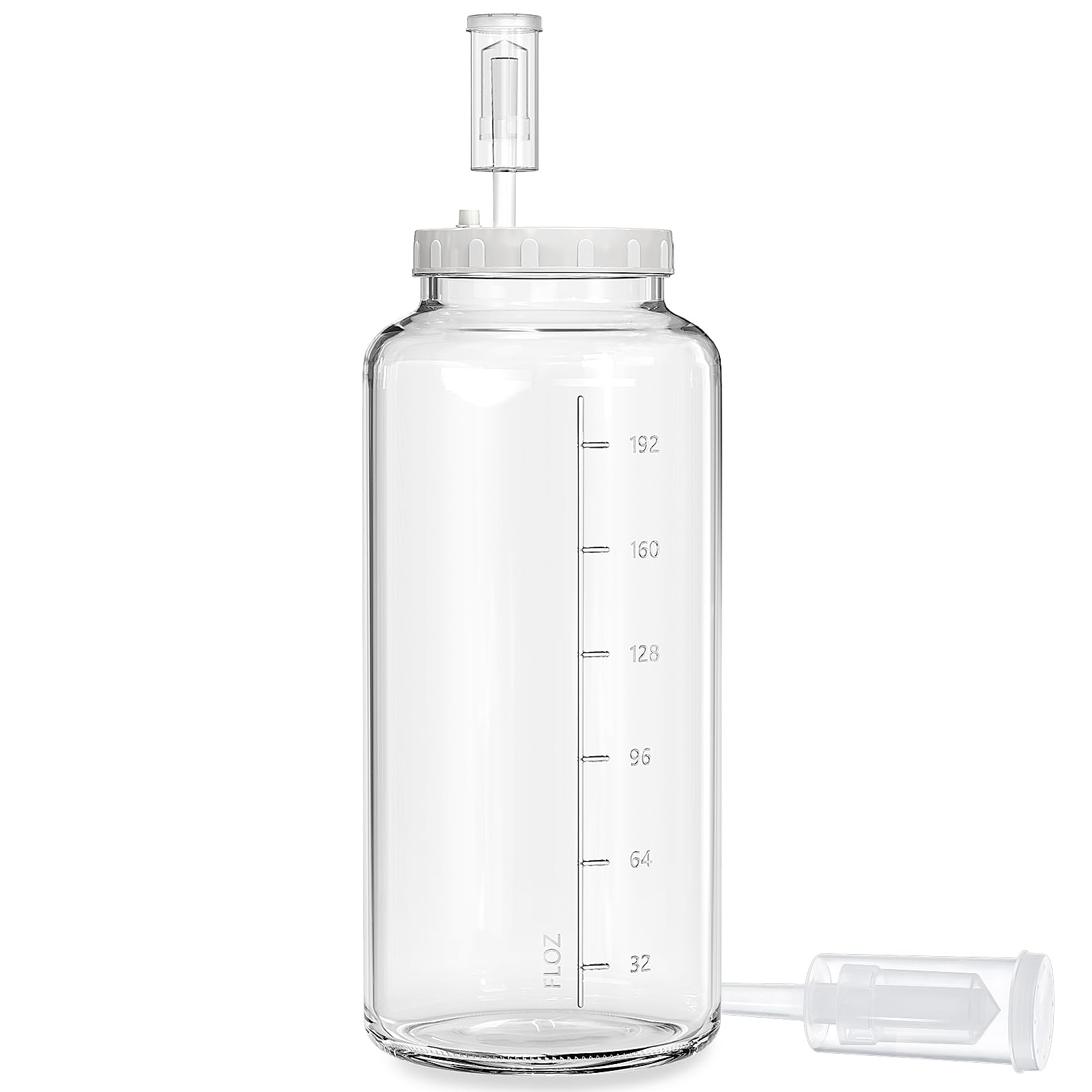
This 2-gallon glass jar from Qianfenie takes a completely different approach to liquid storage. The 4.3-inch wide mouth provides easy access for filling, cleaning, and adding ingredients, while the threaded lid with integrated gasket creates an airtight seal suitable for fermentation, pickling, or long-term food and beverage storage.
Clear glass lets you see the contents and condition at all times — a feature no opaque plastic container can match. The included pair of reusable airlocks transforms the jar into a dedicated fermentation vessel for kombucha, mead, beer, or wine, and the measurement markings in milliliters and ounces eliminate guesswork during recipe preparation.
This is not a fuel container, but it earns a place in the guide for buyers who need a 2-gallon vessel with a genuinely airtight seal for non-flammable liquids. The lead-free, BPA-free construction makes it food-safe, and the glass material will never absorb odors or flavors from previous contents.
What works
- Wide mouth simplifies filling and cleaning
- Glass won’t absorb odors or chemicals
- Includes two airlocks for fermentation use
What doesn’t
- Not rated or safe for gasoline storage
- Heavy and fragile compared to HDPE
4. FastRack 2.5 Gallon Water Jug
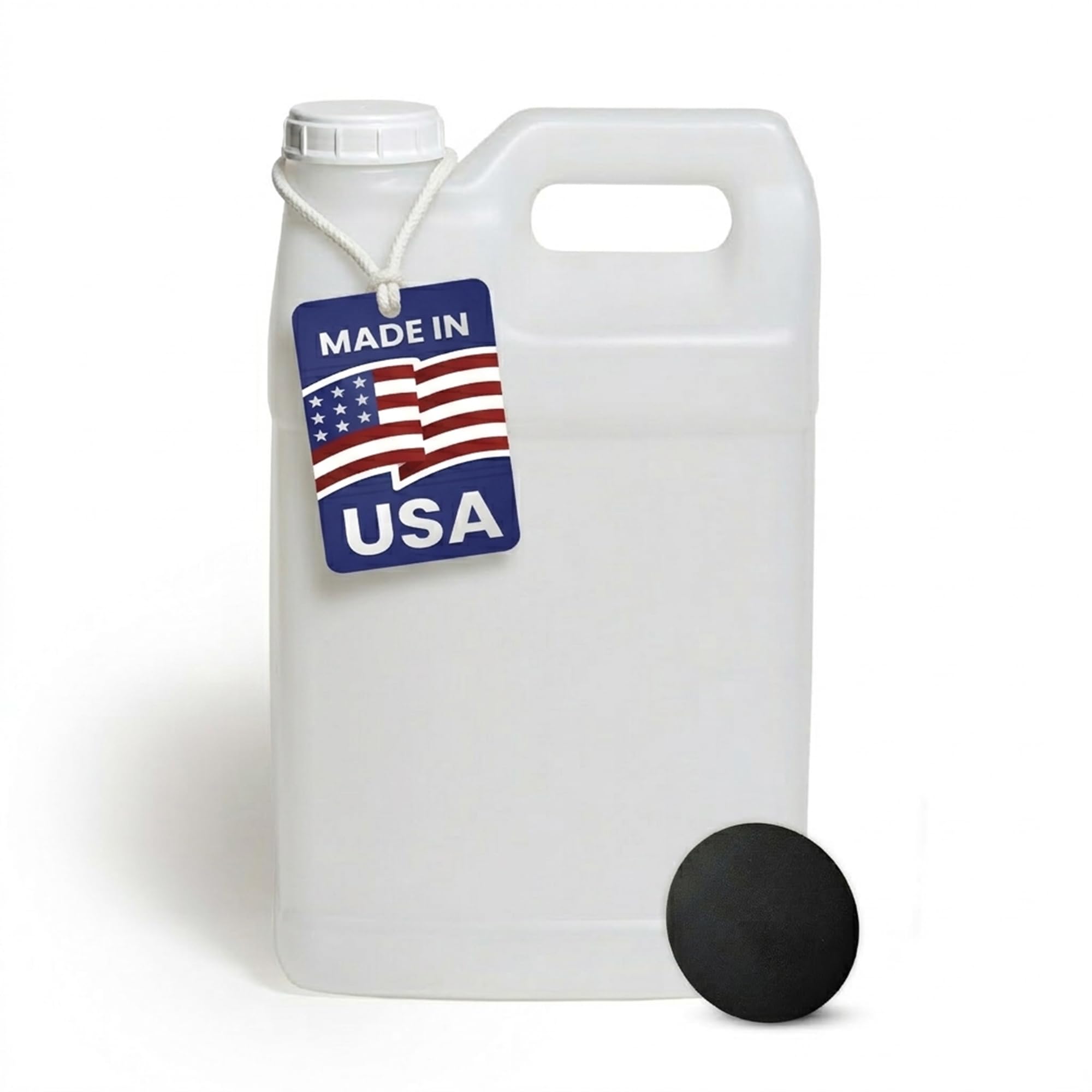
The FastRack 2.5-gallon water jug offers a budget-friendly entry point into bulk liquid storage with food-grade, BPA-free HDPE construction. The rectangular shape stacks efficiently in pantries, emergency kits, or camping bins, and the threaded cap with included rubber gripper provides a reliable seal for water, brewing ingredients, or waste oil collection.
Graduation marks on the side allow accurate measuring during mixing or filling, and the lightweight plastic is easy to carry even when full. The manufacturer’s backing for damaged or incomplete orders adds a layer of confidence that is rare at this price tier.
While this jug is not designed or certified for gasoline storage, it serves well as a water container for camping, emergency preparedness, or as a fermentation carboy alternative. The compact footprint and stackable geometry make it a practical choice for anyone who needs portable liquid capacity without spending heavily.
What works
- Very affordable entry into liquid storage
- Stackable shape saves shelf and bin space
- BPA-free food-grade material
What doesn’t
- Not rated for gasoline or flammable liquids
- Plastic may absorb flavors over time
5. kitchentoolz 2.5 Gallon Utility Jug

The kitchentoolz 2.5-gallon utility jug is manufactured entirely in the USA from rugged HDPE, giving it a quality pedigree that imported budget containers rarely match. The translucent body lets you see fluid levels at a glance, and the engraved measurement markings on the side support accurate mixing and dispensing for automotive fluids, coolant, or waste oil recycling.
The chemical-resistant construction makes this jug a reliable choice for garages and workshops where exposure to motor oil, antifreeze, or solvents is routine. The airtight lid seals securely for transport, and the F-style shape provides a stable footprint and a comfortable grip for controlled pouring.
Like the FastRack, this container is not a certified gasoline storage solution, but its heavy-duty build and domestic manufacturing make it a solid utility vessel for non-flammable workshop fluids. The Made in USA label also appeals to buyers who prioritize domestic production and quality control.
What works
- Manufactured entirely in the USA
- Chemical-resistant HDPE handles shop fluids
- Engraved measurement marks remain legible
What doesn’t
- Not certified for gasoline or fuel storage
- Limited to basic cap design
Hardware & Specs Guide
HDPE Material Grades
High-density polyethylene used in fuel containers is formulated differently from basic water-jug plastic. Fuel-grade HDPE includes UV stabilizers and uses a higher molecular weight to resist swelling and cracking when exposed to gasoline. Low-permeation grades add a fluorinated or multi-layer barrier that meets CARB standards. Always verify that the material specification matches the intended liquid.
CARB and EPA Compliance
CARB-certified containers undergo testing to ensure total hydrocarbon emissions fall below 0.3 grams per gallon per day. The certification applies to both the container body and the spout assembly. EPA compliance follows similar federal standards. Containers sold without these markings should not be trusted for gasoline storage inside vehicles or attached to exterior racks.
Spout and Pour Mechanisms
Type-II safety containers use a spring-loaded self-closing spout with a flame arrestor screen inside the nozzle. This design prevents vapor escape during pouring and stops liquid flow instantly when released. Flexible hoses add reach but require proper storage to prevent kinking. Rigid spouts are simpler and more durable but limit access to recessed filler necks.
Capacity Tolerances and Fill Levels
A 2-gallon container typically holds slightly more than its rated capacity to allow for thermal expansion. Never fill a gas container past 95% of its stated volume — gasoline expands significantly in warm weather, and an overfilled container can leak through the vent or deform the seal. Leave at least 10% headspace for safe transport and storage.
FAQ
What makes a gas container different from a water jug?
Are RotopaX containers worth the investment for occasional use?
How long can gasoline be stored in a 2 gallon container?
Final Thoughts: The Verdict
For most buyers, the best 2 gallon gas container winner is the Surecan 2 Gallon Type-II Safety Container because it delivers genuine CARB-compliant vapor-proof construction in a straightforward, reliable package. If you need a mountable fuel pack for overlanding or off-road travel, grab the RotopaX RX-2S. And for budget-conscious buyers who need a water or utility jug, the FastRack 2.5 Gallon Jug provides solid value at a friendly price point.

Certification: BSc in Mechanical Engineering
Education: Mechanical engineer
Lives In: 539 W Commerce St, Dallas, TX 75208, USA
Md Amir is an auto mechanic student and writer with over half a decade of experience in the automotive field. He has worked with top automotive brands such as Lexus, Quantum, and also owns two automotive blogs autocarneed.com and taxiwiz.com.