A stained, cracked concrete garage floor doesn’t just look unappealing—it collects dust, resists cleaning, and can even harbor moisture that seeps into stored tools and vehicle undercarriages. Interlocking garage floor tiles offer a permanent, DIY-friendly solution that transforms the space without the mess and expense of epoxy coatings.
I’m Amir — the founder and writer behind Four Wheel Ask. Over the years I’ve analyzed hundreds of garage flooring products, comparing polymer formulations, interlocking mechanisms, and long-term wear data from owner-reported experiences across multiple workshops and residential garages.
This guide evaluates seven distinct tile systems based on material composition, thickness, load ratings, surface texture, and verified buyer feedback compiled from hundreds of real-world installations. After reviewing gauge thickness, polymer composition, and long-term owner feedback, these best interlocking garage floor tiles suit any garage application.
How To Choose The Best Interlocking Garage Floor Tiles
Selecting the right garage floor tile system requires evaluating material type, dimensional specs, and installation compatibility with your specific space. The wrong choice can lead to cracking, buckling, or a surface that fails under vehicle weight. Here are the critical factors to consider before buying.
Material Composition: Polypropylene vs. Copolymer vs. PVC
Nearly all quality interlocking garage tiles use polypropylene (PP) or a copolymer blend. Polypropylene offers excellent chemical resistance against oil, antifreeze, and gasoline while remaining rigid enough to support vehicle loads without flexing. Copolymer blends, often found in premium systems like RaceDeck, add impact modifiers that improve cold-temperature performance and reduce brittleness over time. Avoid PVC-based tiles in garage environments—they tend to soften under heat and can react with hot tire compounds.
Thickness and Load Capacity
Tiles range from 0.38 inches to over 0.5 inches thick. The extra eighth of an inch makes a measurable difference in distributing point loads from jack stands or heavy tool chests. Look for a minimum of 0.5 inches if you plan to park a full-size truck or SUV. Load ratings vary widely—budget options may rate around 5,500 pounds per tile, while heavy-duty systems claim up to 80,000 pounds of rolling load. Consider rolling loads (vehicle tires) versus static loads (jack stands) when comparing specs.
Surface Pattern and Traction
Coin, diamond, and brick patterns each offer different grip characteristics. Coin patterns provide excellent all-around traction with a classic industrial look. Diamond patterns channel small amounts of liquid away underfoot while offering solid tire grip. Brick patterns mimic traditional flooring and tend to hide dirt well. For wet garages or snow-prone regions, a vented or free-flow design that allows water to drain through the tile is worth the premium.
Interlocking Mechanism Design
The number of locking loops and the precision of the snap-fit determine how well the floor stays flat over time. Tiles with four locking loops can work for low-traffic areas, but six-loop systems provide better resistance against lateral shifting when vehicles turn or heavy equipment rolls across the surface. Look for designs that engage with an audible click and require deliberate effort to separate—this indicates a secure fit that won’t loosen with temperature cycling.
Quick Comparison
On smaller screens, swipe sideways to see the full table.
| Model | Category | Best For | Key Spec | Amazon |
|---|---|---|---|---|
| RaceDeck Free-Flow | Premium | Heavy-Duty & Drainage | 80,000 lbs rolling load, self-draining | Amazon |
| Nitro Tiles Vented | Premium | Wet Area & Wash Bays | Self-draining, limited lifetime warranty | Amazon |
| Nitro Tiles Diamond | Premium | Daily Workshop Traffic | Diamond pattern, chemical resistant | Amazon |
| Speedway Diamond | Mid-Range | Showroom Aesthetics | 15-year warranty, residential grade | Amazon |
| boldworks Brick Pattern | Mid-Range | Value & UV Resistance | UV coating, 40,000 lbs load, anti-slip | Amazon |
| Big Floors GarageDeck | Mid-Range | DIY Installation & USA Made | Coin pattern, USA made, 40,000 lbs | Amazon |
| VEVOR Interlocking Tiles | Budget | Large Area Coverage | 5,500 lbs load, upgraded 6-loop lock | Amazon |
In‑Depth Reviews
1. Big Floors RaceDeck Free-Flow Garage Floor Tiles

The RaceDeck Free-Flow system from Big Floors sits at the top of the market for good reason. Made from high-impact polypropylene, these tiles use a patented open-rib design that allows water, snow melt, and oil drips to fall through to the underlying concrete rather than pooling on the surface. The 0.5-inch thickness combined with the impact-absorbing understructure provides an 80,000-pound rolling load rating that handles any passenger vehicle, truck, or SUV without flexing or cracking. Owners consistently report that the anti-fatigue feel underfoot is a welcome bonus during long hours in the garage.
Installation follows the standard snap-together method used by RaceDeck’s entire ecosystem—tiles click together with a satisfying lock and require no adhesive or special tools. The 48-pack covers 48 square feet, and the tiles are fully compatible with other RaceDeck patterns and colors, allowing for custom checkerboard layouts or border accents. The graphite color shown here hides dirt well while maintaining a clean, professional appearance that suits both working garages and show vehicles.
Owner feedback over extended periods indicates excellent long-term stability with minimal edge curling or joint separation. The Made in USA manufacturing ensures consistent quality control, and the non-toxic, odor-free construction means no off-gassing during hot summer months. Some users note that cutting tiles for perimeter fit requires a fine-tooth saw blade, but the polypropylene cuts cleanly without melting or chipping.
What works
- Self-draining design eliminates standing water and simplifies cleaning
- 80,000-pound rolling load rating supports heavy vehicles and equipment
- Compatible with entire RaceDeck ecosystem for custom layouts
- Impact-absorbing understructure reduces foot fatigue
What doesn’t
- Higher per-tile cost compared to solid-surface alternatives
- Open grid allows small debris to fall through onto concrete below
2. Nitro Tiles Vented by FlooringInc
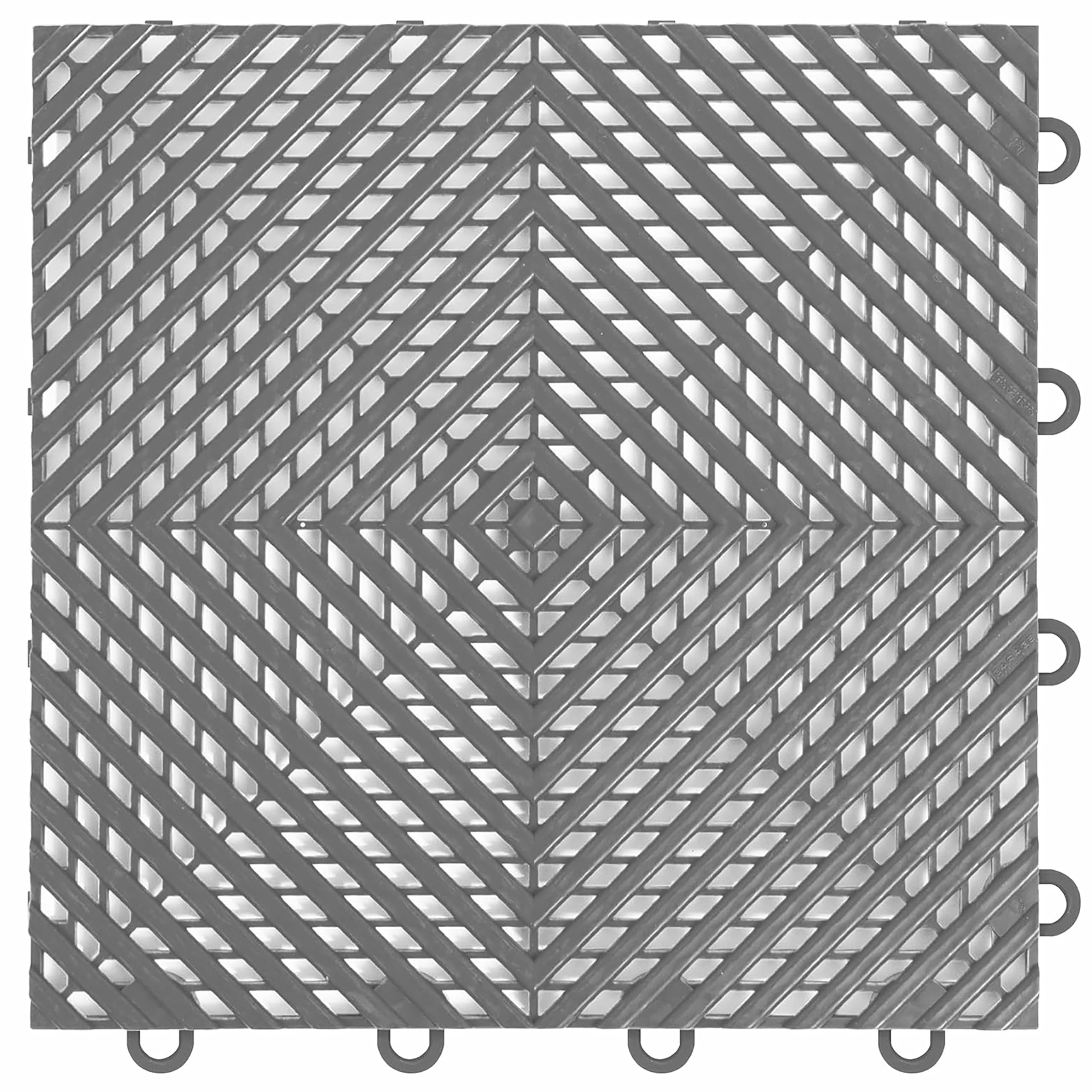
The Nitro Tiles Vented system addresses the one pain point that solid-surface tiles cannot solve: standing water. The open-grid design lets every drop of water, snow melt, oil drip, or chemical spill pass through to the concrete below rather than pooling on the floor. This makes the system particularly effective in garages where vehicles bring in rain and snow, near pool decks, in wash bays, or even under potted plants and bird baths in covered outdoor areas. The 12×12-inch tiles are molded from heavy-duty polypropylene that resists chemical attack and remains rigid under load.
Snap-together installation requires no adhesive and produces a floating floor that can be removed, reconfigured, or replaced tile by tile. The 52-pack covers 52 square feet, and the tiles are fully compatible with Nitro Diamond and Coin patterns, enabling users to create solid drainage zones mixed with textured walking surfaces. The non-slip surface provides reliable traction even when wet, and the open grid allows a shop vac or leaf blower to push debris straight through instead of trapping it in crevices.
Real owner experiences highlight how quickly the system installs—several reviewers completed a full two-car garage in under an hour with just one person laying tiles. The limited lifetime warranty from FlooringInc adds confidence for long-term use. A small number of owners reported that the vented tiles are slightly less rigid underfoot than solid tiles, which is an inherent trade-off of the open design, and cutting requires a fine-tooth blade to avoid fracturing the grid structure.
What works
- Open-grid design eliminates pooled water and improves drainage
- Limited lifetime warranty provides long-term coverage
- Compatible with other Nitro patterns for hybrid layouts
- Non-slip surface maintains traction in wet conditions
What doesn’t
- Open grid allows small debris to fall through onto subfloor
- Less rigid underfoot than solid-surface tiles
3. Nitro Tiles Diamond Pattern by FlooringInc
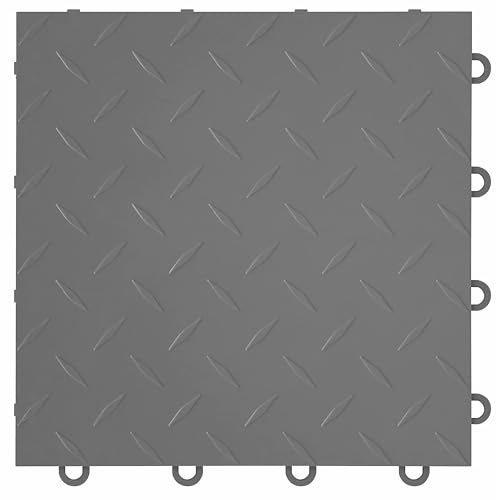
The Nitro Tiles Diamond pattern delivers a raised diamond texture that provides excellent slip resistance underfoot and under tires, even when the surface is wet or oily. These rigid polypropylene tiles are engineered for daily workshop traffic—parked vehicles, rolling tool chests, floor jacks, and constant foot traffic. The 0.38-inch thickness is slightly slimmer than some competitors, but the dense polymer formulation prevents flexing under normal loads, and the diamond surface resists scuffing and wear over time. Chemical resistance against oil, gasoline, and common shop solvents is a standout feature.
Snap-together installation follows the same tool-free approach as other Nitro systems, and the tiles are available in packs up to 52 pieces. The diamond pattern is compatible with Nitro Coin and Vented tiles, allowing users to create distinct zones within the same floor—solid diamond for the main parking area and vented near the entry where water accumulates. The graphite color shown here has a subtle sheen that cleans up well with a damp mop or shop vac, and the surface does not stain from typical garage spills when wiped promptly.
Owner reviews consistently praise the ease of installation and the clean, professional finish. Several users with home gyms and race simulators noted that the diamond texture provides enough grip for equipment placement without being abrasive to bare knees or hands during workouts. A few owners mentioned that the 0.38-inch thickness creates a slight step transition when abutting standard 0.5-inch tiles from other brands, so mixing systems requires attention to height matching.
What works
- Raised diamond texture offers reliable slip resistance in all conditions
- Chemical-resistant polypropylene withstands oil, fuel, and solvents
- Compatible with other Nitro patterns for custom zone layouts
- Easy snap-together installation with no glue or tools required
What doesn’t
- 0.38-inch thickness is thinner than some premium alternatives
- May require transition strips when abutting thicker tile systems
4. Speedway Garage Floor Diamond Tile

Speedway’s Diamond Tile system targets the residential user who prioritizes appearance alongside function. The 0.5-inch thick polypropylene tiles feature a crisp diamond surface that reflects light evenly, giving the garage floor a polished, showroom-ready look. The grey color option is noticeably lighter than most graphite or black tiles, which helps brighten the space and makes oil drips and dirt more visible for quick cleanup. The 50-piece set covers approximately 50 square feet—slightly less than the 52-tile packs from competitors due to a different effective coverage calculation.
Installation follows the standard interlocking method, and owners report that the tiles fit together with a secure engagement that stays flat under vehicle weight. Speedway includes a 15-year limited warranty, which is competitive for the mid-range price tier. The diamond pattern provides adequate traction for everyday use, and the tile surface is easy to clean with a wet mop or pressure washer. Speedway also offers transition strips and edge pieces designed specifically for this tile profile, though some owners noted these accessories are sold separately.
Owner feedback highlights the compatibility with boldworks tiles—several users confirmed the interlocking mechanism matches, allowing them to use Speedway tiles as a border or accent with the boldworks system. This cross-compatibility is rare and adds flexibility for those expanding or modifying an existing floor. A small number of buyers reported missing corner pieces in their shipment, though the seller resolved these cases through direct contact. The residential grade rating means these tiles are best suited for home garages rather than commercial or industrial shops.
What works
- Light grey color brightens the garage and improves visibility of spills
- 15-year limited warranty provides long-term coverage
- Compatible with boldworks tiles for expanded layout options
- Clean diamond surface looks polished and professional
What doesn’t
- Residential grade rating limits suitability for heavy commercial use
- Transition strips and edge pieces sold separately
5. boldworks Garage Floor Tiles Brick Pattern

The boldworks brick-pattern tiles bring a thoughtful engineering upgrade to the mid-range category. Made from impact-resistant polypropylene with a UV coating specifically designed to prevent buckling under sunlight exposure through garage windows, these tiles address a failure mode that plagues cheaper alternatives. The 0.5-inch thickness supports rolling loads up to 40,000 pounds, and the brick surface pattern provides excellent slip resistance while hiding dirt and minor stains between cleanings. The 48-pack covers 48 square feet in black.
Installation uses six interlocking loops per tile rather than the four found on many budget systems, creating a more secure connection that resists lateral shifting when vehicles turn or when heavy tool chests roll across the floor. The snap-lock mechanism engages with a distinct click, and separating tiles for adjustments requires deliberate prying—an indicator of a tight fit. The UV coating is a standout feature for garages with windows or light tubes, as uncoated polypropylene can soften and warp under prolonged direct sun exposure.
Owner reviews emphasize how quickly the floor transforms the space—several users completed a two-car bay in a single afternoon. The brick pattern is compatible with Speedway diamond tiles, giving buyers the option to mix textures for visual interest. A few owners mentioned that the black color shows dust and tire marks more readily than lighter shades, though regular sweeping or mopping restores the original appearance. The polypropylene material resists oil and chemical stains well, and the tiles cut cleanly with a table saw or circular saw fitted with a fine-tooth blade.
What works
- UV coating prevents buckling from sunlight exposure
- Six interlocking loops provide secure fit that resists shifting
- Brick surface pattern hides dirt and provides reliable traction
- Compatible with Speedway diamond tiles for mixed layouts
What doesn’t
- Black color shows dust and tire marks between cleanings
- Requires table saw or circular saw for perimeter cuts
6. Big Floors GarageDeck Coin Pattern Garage Floor Tiles

The Big Floors GarageDeck in coin pattern is the entry point into the SnapLock Industries ecosystem—the same parent company behind RaceDeck. These tiles use the same patented PowerLock technology found in the premium line, ensuring a secure connection that stays engaged under vehicle traffic. The 0.5-inch thick copolymer construction supports rolling loads over 40,000 pounds and resists oil, grease, antifreeze, and typical household chemicals. The coin pattern provides a classic industrial look with ample traction for both foot traffic and vehicle tires.
Installation is straightforward with no tools, glue, or extra hands required. The 24-pack covers 24 square feet, making it ideal for smaller garages, single-bay installations, or as a starter set to evaluate the system before expanding. The tiles are Made in the USA and carry the same material quality as the RaceDeck line, which means they will not warp, crack, or discolor under normal use. The coin surface is easy to clean—oil spills wipe up without staining, and dust and debris are easily swept or vacuumed away.
Owner feedback frequently draws comparisons to epoxy coatings, with many users noting that the GarageDeck tiles deliver a comparable visual transformation at a fraction of the installation effort and cost. The tiles can be arranged in any color combination for customized patterns, and they are compatible with other SnapLock Industries tiles for future expansion. Some owners noted that the 24-pack only covers a small area, so larger garages require multiple packs, and the per-tile cost is higher than budget-friendly alternatives from VEVOR or similar brands.
What works
- Patented PowerLock technology provides secure, lasting connections
- USA-made copolymer resists chemicals and supports heavy loads
- Coin pattern offers classic look with reliable traction
- Compatible with the entire SnapLock Industries ecosystem
What doesn’t
- 24-pack covers only 24 square feet—multiple packs needed for larger areas
- Higher per-tile cost compared to budget alternatives
7. VEVOR Garage Floor Tiles Interlocking 50 Pack

VEVOR’s entry into the garage tile market brings a thick 0.53-inch tile with a 5,500-pound load capacity and an upgraded six-loop interlocking system. The 2024 model features a redesigned locking mechanism that improves upon earlier versions, which some owners reported as less secure. The double-sided texture offers a 3D diamond pattern on one side and a rhombic grid on the reverse, giving buyers the option to choose their preferred surface at installation time. The 50-pack covers 50 square feet, making it one of the better value propositions for covering large areas on a budget.
Installation follows the standard snap-together method, and the 0.53-inch thickness is slightly above the 0.5-inch standard, providing a marginal increase in rigidity. The polypropylene material resists oil and chemical spills, and the tiles are easy to clean with a mop or shop vac. The upgraded interlocking loops are designed to prevent the popping and buckling issues that affected earlier VEVOR tiles, though the system is not compatible with tiles purchased before 2024 due to the revised connector geometry.
Owner reviews are mixed—while many users praise the ease of installation and the clean look, a notable subset reports cracking and breaking after several months of use. The 5,500-pound load rating is significantly lower than premium alternatives, and some owners with heavy vehicles or high-traffic workshops experienced tile shifting and separation over time. Heat-related buckling has also been reported by owners in warmer climates, particularly when the tiles are exposed to direct sunlight through garage windows. These tiles work best in low-traffic residential garages where the primary goals are appearance and easy cleaning rather than heavy-duty load bearing.
What works
- 0.53-inch thickness provides above-average rigidity for the price
- Double-sided texture offers installation flexibility for surface preference
- Upgraded six-loop locking mechanism improves connection security
- 50-pack covers substantial area at a budget-friendly per-tile cost
What doesn’t
- 5,500-pound load rating limits suitability for heavy vehicles
- Some owners report cracking, buckling, and shifting over extended use
- Pre-2024 tiles are not compatible with the updated interlocking system
Hardware & Specs Guide
Material Composition: Polypropylene vs. Copolymer
Garage floor tiles are predominantly made from polypropylene (PP), a thermoplastic polymer that offers excellent chemical resistance, dimensional stability, and rigidity. Premium systems like RaceDeck use a copolymer blend that incorporates impact modifiers and UV stabilizers for enhanced cold-weather performance and reduced brittleness over time. Pure PP tiles from brands like VEVOR and Nitro Tiles deliver solid performance in temperature-controlled garages but may become more rigid in freezing conditions. Copolymer formulations typically carry a slight cost premium but provide broader environmental tolerance across seasonal temperature swings.
Thickness and Load Capacity Ratings
Thickness is the single best predictor of load capacity. Tiles at 0.38 inches (Nitro Diamond) support daily passenger vehicle use but may flex under heavy static loads like jack stands. The 0.5-inch standard (RaceDeck, GarageDeck, boldworks, Speedway) supports rolling loads up to 40,000 pounds and is the recommended minimum for trucks and SUVs. The 0.53-inch VEVOR tile offers slightly more material but uses a lower-density polymer, resulting in a reduced 5,500-pound load rating. Always verify both thickness and the specific load rating—thicker is not always stronger if the polymer formulation differs.
FAQ
How do I prepare my garage floor before installing interlocking tiles?
What is the best thickness for garage floor tiles?
Can I install interlocking tiles over an existing epoxy floor?
How do I cut garage floor tiles for a custom fit?
Final Thoughts: The Verdict
For most buyers, the best interlocking garage floor tiles winner is the Big Floors RaceDeck Free-Flow because it combines the highest load capacity with a self-draining design that handles wet vehicles and simplifies cleaning better than any solid-surface alternative. If you want UV resistance and a secure six-loop locking system at a mid-range price, grab the boldworks Brick Pattern Tiles. And for large-area coverage on a tight budget with an upgraded interlocking system, nothing beats the VEVOR 50-Pack for entry-level garage floor transformation.

Certification: BSc in Mechanical Engineering
Education: Mechanical engineer
Lives In: 539 W Commerce St, Dallas, TX 75208, USA
Md Amir is an auto mechanic student and writer with over half a decade of experience in the automotive field. He has worked with top automotive brands such as Lexus, Quantum, and also owns two automotive blogs autocarneed.com and taxiwiz.com.