Pinhole leaks, hairline cracks along the plastic tank seam, or a seized cooling fan that pushed the temp needle past red — every 2007-2011 Camry owner eventually faces the radiator replacement decision. With parts spanning from bare-bones budget units to genuine OEM-spec drops, the difference between a five-year fix and a fifteen-year solution comes down to core density, tank material quality, and whether the transmission cooler is actually built to handle daily heat cycles rather than just bolted on as a checkbox feature.
I’m Amir — the founder and writer behind Four Wheel Ask. I cross-reference OEM engineering blueprints against aftermarket production tolerances, analyze tank-to-core crimp seal data, and comb through thousands of verified owner reports to identify which radiators deliver genuine long-term sealing integrity versus those that develop weeps within the first two years of service.
This guide evaluates seven distinct cooling options across the full spectrum of quality tiers, examining fitment precision for both 2.4L and 3.5L powertrains, transmission cooler integration, and real-world leak frequency data. After studying owner feedback across seven top contenders, I’ve identified the absolute best 2009 camry radiator for reliable daily driving performance.
How To Choose The Best 2009 Camry Radiator
A Camry radiator replacement is not a one-size-fits-all transaction. The 2007-2011 generation shipped with three different engine options — the 2.4L 2AZ-FE four-cylinder, the 2.5L 2AR-FE introduced mid-cycle, and the 3.5L 2GR-FE V6 — each requiring different core dimensions, inlet and outlet positioning, and transmission cooler configurations. Choosing the wrong unit means wrestling with misaligned mounting tabs, incorrect hose routing, or a cooling system that never properly bleeds air, leading to chronic hot spots and premature head gasket failure.
Fitment Verification Is Non-Negotiable
Every radiator in this guide lists specific engine displacement and build-plant compatibility. US-built Camrys with the 2.4L share a common radiator footprint, while Japan-built models and hybrids use different tank shapes and cooler line fittings. Always cross-reference your VIN against the OEM part numbers listed in each product description — 16400-0H210, 16400-0H240, and 16400-28640 cover the majority of non-hybrid 2.4L and 2.5L applications, but the 3.5L V6 uses a physically wider core that will not fit four-cylinder mounting saddles. Verify your engine code on the emissions label under the hood before ordering.
Core Construction and Tank Material
The majority of aftermarket Camry radiators use a T-6061 aluminum core with ABS plastic tanks crimped onto the end channels. This design replicates the OEM construction method and keeps weight low while providing adequate heat rejection for daily driving. All-aluminum radiators exist for this chassis but often require retrofitting electric fan assemblies and can be more prone to vibration cracks at the weld joints. For a street-driven Camry, a quality one-row aluminum core with plastic tanks offers the best balance of thermal efficiency, corrosion resistance, and replacement cost. Pay attention to core depth — thinner cores may cool fine in mild weather but struggle during sustained highway climbs in summer heat.
Transmission Oil Cooler Integration
Automatic transmission Camrys route transmission fluid through a cooler built into the radiator’s bottom tank. This circuit must be present and properly sealed on any replacement radiator intended for automatic cars. Missing or poorly brazed cooler fittings lead to cross-contamination between coolant and transmission fluid, which immediately destroys clutch pack friction material. All seven radiators in this guide include a transmission oil cooler circuit, but the quality of the internal cooler tube routing and the thread pitch on the fittings varies. Look for radiators with solid brass or steel cooler fittings rather than pot-metal castings that can corrode and strip during hose removal.
Brand Track Record and Warranty Coverage
Established brands like Denso function as OE suppliers for Toyota and carry engineering validation that budget labels cannot match. That said, several aftermarket manufacturers have refined their production tooling to the point where fitment precision and leak-free service life approach OE levels at a fraction of the cost. A genuine two-year or unlimited-mileage warranty against manufacturing defects indicates confidence in the core assembly process. Avoid radiators sold with only a thirty-day return window, as internal seepage from a poorly crimped tank seam often takes several thermal cycles to become visible.
Quick Comparison
On smaller screens, swipe sideways to see the full table.
| Model | Category | Best For | Key Spec | Amazon |
|---|---|---|---|---|
| Denso 221-3102 | Premium | OEM-grade longevity and exact fit | 1-row aluminum core, painted finish, front mount | Amazon |
| TRQ RDA82718 | Premium DIY | DIY video support and direct OE fitment | 1-row core, pre-assembled, 10.08 lb weight | Amazon |
| Auto Dynasty AD-OEM-RA-2917 | Value | Budget-friendly with strong owner satisfaction | T-6061 aluminum core, ABS plastic tanks, 12 lb | Amazon |
| Nilight RAD905 | Mid-Range | Great value with leak-tested assurance | 1-row aluminum, polished exterior, 9.83 lb | Amazon |
| Readair RRAD2917 | Mid-Range | Solid all-around replacement with two-year policy | Advanced welding, 11 lb, 43 x 5 x 24 in box | Amazon |
| Denso 221-0501 | Premium | Lightweight option with proven brand reliability | Alloy steel, aluminum, stainless, 5 lb | Amazon |
| Autoshack RK1168 | Value | Entry-level price with broad Camry compatibility | 1-row aluminum/plastic, 8.8 lb, cap not included | Amazon |
In‑Depth Reviews
1. Denso 221-3102 Radiator

Denso supplies original equipment cooling components to Toyota assembly lines, which means the 221-3102 carries engineering validation that aftermarket-only brands cannot replicate through reverse engineering alone. The core dimensions, inlet-outlet positioning, and transmission cooler thread pitch match factory specifications precisely, eliminating the bracket shimming or hose stretching that plagues lesser replacements. Multiple verified owner reports on 2007-2009 Camry 2.4L and 2.5L applications confirm a direct bolt-in experience with no modification required, and several note that the painted exterior finish resists corrosion better than the bare-aluminum alternatives found at similar price points.
Thermal performance on this unit matches the factory cooling curve, meaning the thermostat opens and closes within the expected temperature window and the electric fans cycle normally without triggering check-engine codes for insufficient coolant flow. The 13.2-pound packaged weight reflects denser core construction than budget competitors, which translates to greater heat absorption capacity during sustained idle in summer traffic. Owner feedback over extended service intervals — six months to over a year — reports no weeping from the tank-to-core crimp seam and no degradation of the transmission cooler circuit seals, common failure points on lower-tier radiators installed in the XV40 chassis.
Where the Denso 221-3102 commands a higher acquisition cost, the value surfaces in avoided labor expenses. A radiator that needs replacement within two years adds another six to eight hours of shop time or driveway wrenching. This unit’s consistency across thousands of installations makes it the lowest total-cost-of-ownership option for owners planning to keep their Camry beyond the next inspection cycle. It is the radiator that would have come in the factory box, and for most daily drivers, that is precisely the right specification.
What works
- Exact OE-spec fitment for 2007-2009 Camry 2.4L and 2.5L models
- Painted finish resists corrosion and improves long-term seal integrity
- Consistent thermal performance matching factory cooling curve
- Verified leak-free service across multiple owner intervals
What doesn’t
- Premium pricing compared to aftermarket alternatives
- Some units arrive with only a small Denso sticker for branding verification
- Not compatible with 3.5L V6 models without verifying core width
2. TRQ RDA82718 Radiator
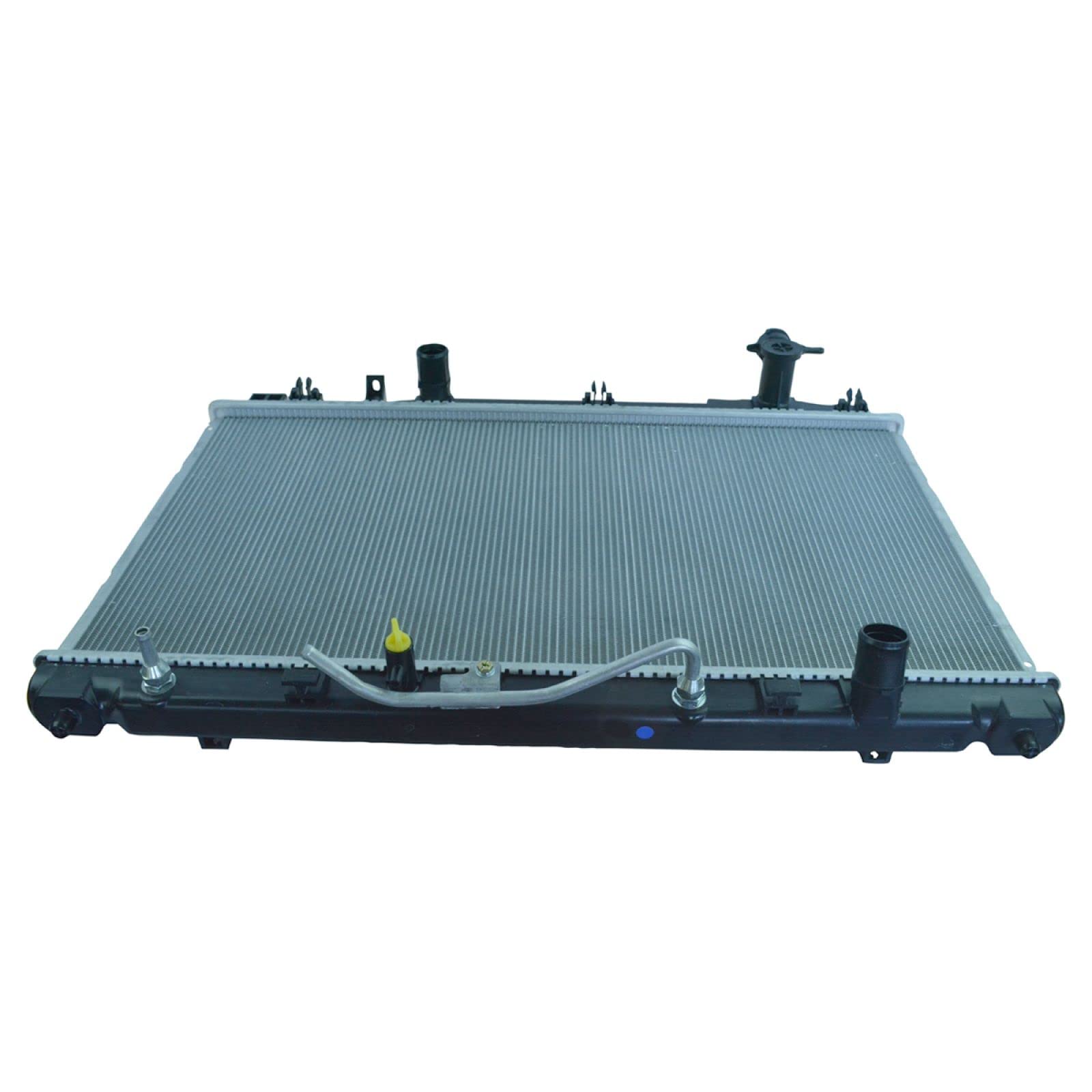
TRQ has spent over twenty-five years building a reputation for direct-fit replacement parts that arrive with pre-assembled components, and the RDA82718 continues that pattern for Camry owners who value installation convenience. The radiator ships with the transmission cooler fittings and drain plug already torqued to spec, which eliminates a common source of post-installation drips when undertightened fittings work loose after the first heat cycle. Owner reports specifically on the 2007 Camry LE 2.4L describe a seamless swap that required only transferring the original hose clamps and fan assembly, with no drilling, bracket modification, or adapter fittings needed to achieve proper alignment.
The machined exterior finish on this unit provides a clean appearance under the hood, and the 10.08-pound weight suggests a core density that sits comfortably between lightweight budget radiators and heavier OE-spec units. TRQ’s catalog of DIY installation videos is a legitimate differentiator for first-time radiator swappers — the ability to preview the exact hose routing, fan removal sequence, and transmission line disconnection procedure before touching a tool reduces both installation time and the likelihood of damaging cooler line threads. Multiple owners across different vehicle applications — including Jeep Wrangler and Chevrolet crossover platforms — note that the core holds pressure steadily and the cooling fins resist bending during handling better than thinner-gauge alternatives.
The primary consideration with the TRQ is confirming compatibility with non-US-built Camry models and verifying that the specific engine and transmission combination appears on the manufacturer’s fitment chart before purchase. For the most common configuration — a US-built 2007-2009 Camry with the 2.4L four-cylinder and automatic transmission — this radiator delivers premium-grade reliability at a price that undercuts the OE-branded option while maintaining similar build quality. The availability of detailed video walkthroughs makes this the strongest recommendation for owners performing the replacement themselves rather than paying shop labor rates.
What works
- Pre-assembled cooler fittings reduce post-install leak risk
- Extensive DIY video library supports first-time installers
- Direct OE fitment for US-built 2.4L Camry models
- Sturdy core construction with minimal fin bending during handling
What doesn’t
- Fitment limited to non-tow-package vehicles in some configurations
- Radiator cap not included in the package
- Compatibility with Japan-built Camrys requires additional verification
3. Auto Dynasty Radiator AD-OEM-RA-2917
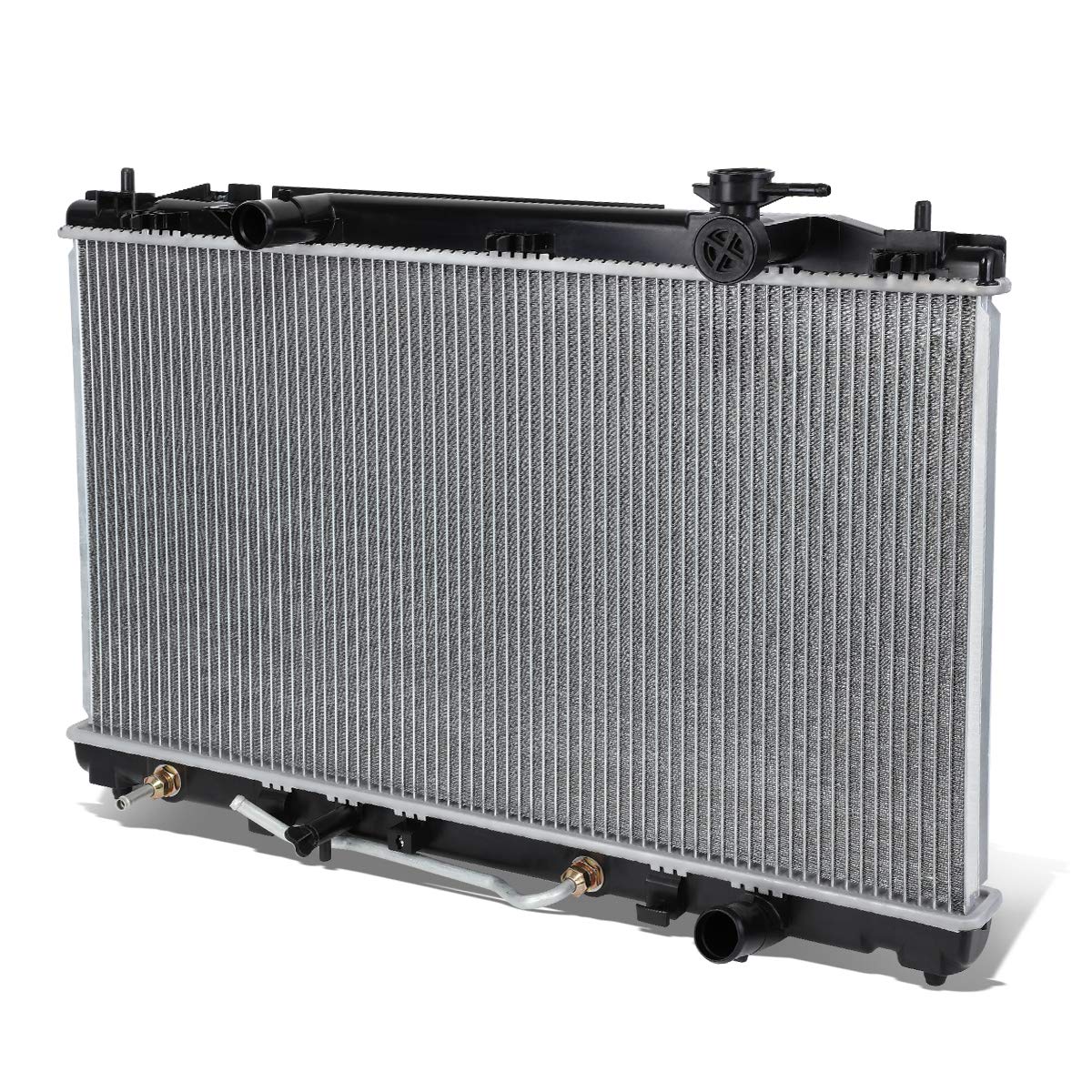
Auto Dynasty positions the AD-OEM-RA-2917 as a direct factory-style replacement that mirrors the original Toyota cooling stack in core dimensions and mounting topology, and the owner feedback across multiple Camry and Sienna applications supports that claim. The T-6061 aluminum core is paired with heavy-duty ABS plastic tanks that use a thicker wall section than some entry-level radiators, reducing the risk of stress cracking at the filler neck and hose barb junctions during thermal expansion cycles. One verified owner report describes a mechanic quoting over four hundred dollars from a local parts supplier for the same fitment, while this unit delivered identical physical fitment at a fraction of that cost, suggesting the manufacturing tolerances are tight enough to satisfy professional installers accustomed to OE parts.
The 12-pound package weight is significantly heavier than several competitors in this guide, indicating denser core fin spacing and more robust tank material. Core dimensions measure 28-11/16 inches wide by 15-13/16 inches tall with a 5/8-inch depth, matching the factory 2007-2011 Camry 2.4L and 2.5L automatic transmission specification precisely. The included transmission oil cooler is integrated into the bottom tank with solid fittings that accept the factory quick-disconnect lines without leaking. Owners who installed this radiator on 2002-2011 Toyota models report that the coolant temperature stabilizes within the normal operating range after a proper bleed procedure and that no coolant loss occurs between change intervals.
The main limitation with the Auto Dynasty radiator concerns fitment on specific fan shroud configurations. One Sienna owner reported that the driver-side fan mounting tabs did not align perfectly with the radiator core channels, requiring zip ties as a workaround. While this did not affect cooling performance or seal integrity, it adds a minor complication during installation that OE-spec radiators avoid. For Camry owners with the standard fan assembly, the mounting points align correctly, but verifying the compatibility of your specific shroud design before committing to this unit saves frustration during the swap. Given its strong overall owner satisfaction rate and build quality that punches above its price tier, this radiator represents the highest value proposition in the lineup for budget-conscious buyers.
What works
- Heavy-duty tank construction exceeds typical budget radiator quality
- Dense T-6061 aluminum core provides strong heat rejection
- Direct bolt-on fitment for 2007-2011 Camry 2.4L and 2.5L automatic
- Outstanding value compared to local parts supplier pricing
What doesn’t
- Fan shroud tab alignment varies across model years
- Some units require zip ties for fan mounting on certain applications
- Not recommended for 3.5L V6 applications
4. Nilight RAD905 Radiator
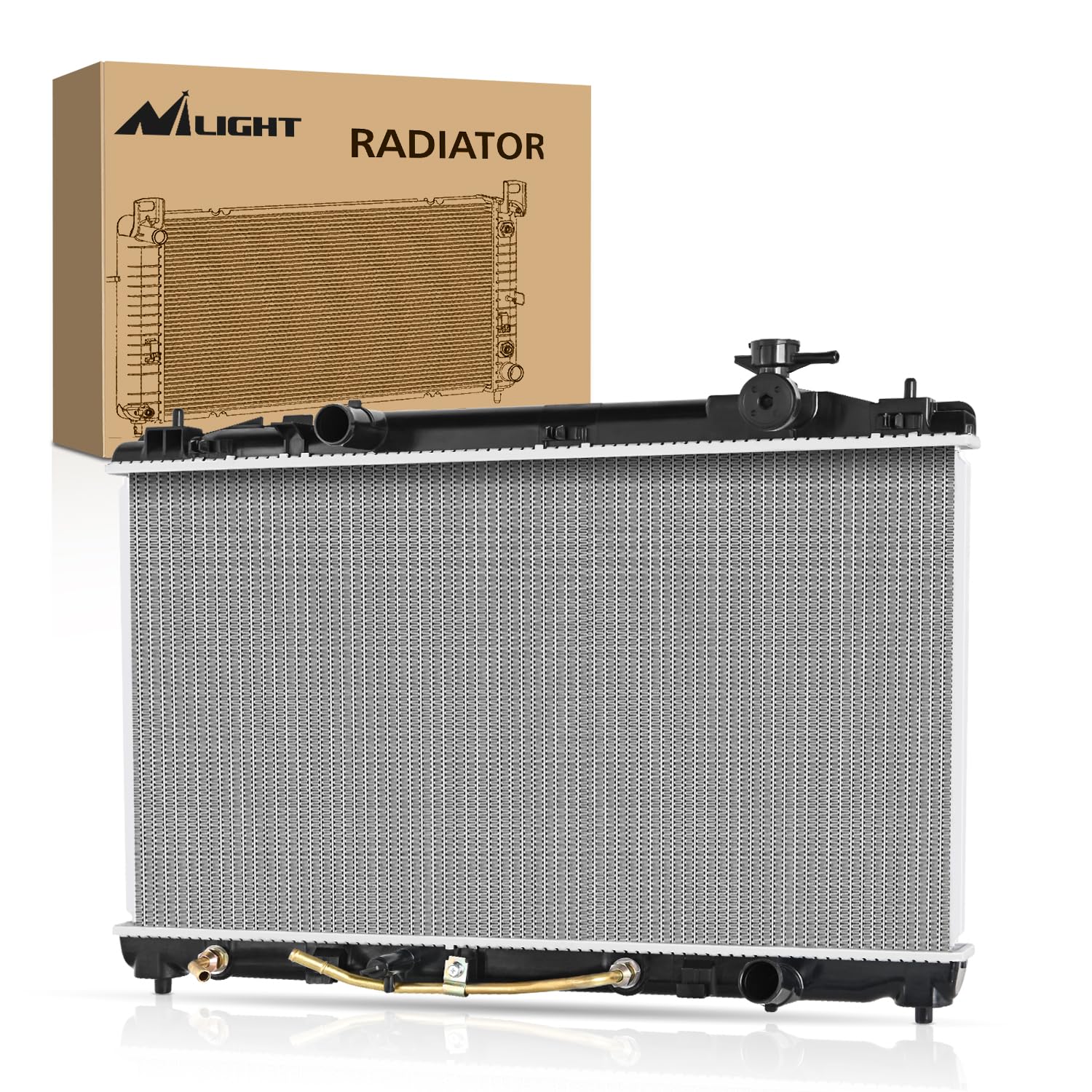
Nilight entered the automotive cooling market with a focus on off-road lighting accessories but has extended its quality-control approach to radiators with the RAD905, a model that undergoes 100 percent leak testing before leaving the factory. Each unit is pressurized to confirm that the tank-to-core crimp seals, transmission cooler circuit, and drain plug seat hold without seepage, a process that catches the manufacturing defects responsible for the majority of early-life radiator failures. Owner reports on Camry 2.4L and 2.5L applications describe a drop-in fit that matches the OEM mounting points, and several note that the polished aluminum finish gives the engine bay a cleaner appearance compared to the standard black paint found on factory radiators.
The core construction uses premium-grade aluminum tubes with precision-folded and louvered aluminum fins that maximize surface area for heat transfer without restricting airflow through the condenser and fan assembly. At 9.83 pounds, the weight is moderate, reflecting a core density that prioritizes efficient cooling over sheer material mass. The reference number CU2917 corresponds directly to the OEM part supersession chain, meaning this unit cross-references to the same Toyota engineering specifications as the factory radiator it replaces. The two-year after-sales support policy provides a safety net that budget radiators at lower price points typically lack, covering non-human-caused damage for an extended service period.
The most common owner feedback emphasizes the fitment precision across multiple Toyota and Pontiac Vibe applications, with one owner specifically noting that no modifications were required for their 2006 Pontiac Vibe, which shares the same cooling platform as the Camry. Some owners recommend replacing the radiator cap simultaneously, as the unit ships without one and reusing an aged cap with a weakened spring can prevent the system from reaching proper operating pressure. For Camry owners who want a leak-tested, polished radiator with a solid warranty and proven cross-platform fitment, the Nilight RAD905 delivers genuine value without forcing compromises on core quality.
What works
- 100 percent leak testing eliminates early-life failure risk
- Polished exterior provides a clean, upgraded under-hood appearance
- Direct cross-reference to OEM part number CU2917
- Two-year after-sales support for manufacturing defects
What doesn’t
- Radiator cap not included in the package
- Not compatible with 3.5L V6 models
- Polished finish may show water spots more readily than painted units
5. Readair RRAD2917 Radiator

Readair has engineered the RRAD2917 with a focus on weld joint integrity, utilizing advanced joining techniques that create a more consistent seal along the tank-to-core interface than traditional crimp-and-gasket methods. The 11-pound package weight indicates a substantial core assembly with thicker header plates that resist distortion when the cooling system reaches peak pressure during hot restart events. Owner feedback across multiple Honda, BMW, and Jeep applications — beyond the intended Camry fitment — suggests the manufacturing tolerances are precise enough to serve as a universal replacement for vehicles sharing the same 2.4L engine platform, though Camry-specific fitment remains the primary application target.
The core dimensions and mounting pattern align with the 2007-2011 Camry 2.4L and 2010-2011 2.5L specifications, and the packaging includes reinforced box inserts that prevent shipping damage to the cooling fins and tank corners. The two-year return and exchange policy for non-human-caused damage provides meaningful protection in a market segment where many sellers cap coverage at twelve months. Owners who installed this radiator on Accord and Camry platforms report that the coolant temperature stabilizes within the normal operating range after the initial bleed and that no top-ups are required between scheduled changes, indicating effective sealing at the header gasket.
The primary trade-off with the Readair unit is that it is a relatively new entrant to the market, with a limited long-term track record compared to established brands like Denso and TRQ. While the initial owner feedback is overwhelmingly positive — with multiple five-star reviews praising fitment precision and build quality — extended service data beyond two years is not yet available. For Camry owners who plan to keep the vehicle for another three to five years and want a radiator with robust weld construction and a generous warranty policy, the RRAD2917 represents a compelling mid-range option that does not compromise on sealing integrity.
What works
- Advanced welding technique improves tank-to-core seal consistency
- Two-year return and exchange policy exceeds industry standard
- Reinforced packaging prevents shipping damage to core fins
- Thick header plates resist pressure distortion during thermal cycling
What doesn’t
- Limited long-term reliability data due to recent market entry
- Fitment not explicitly validated for Japan-built Camry models
- No DIY installation video resources available from manufacturer
6. Denso 221-0501 Radiator

The Denso 221-0501 leverages the same OE-manufacturing pedigree as the 221-3102 but packages it in a lighter assembly that weighs approximately five pounds, making it one of the most featherweight options available for the XV40 platform. The material composition combines alloy steel, aluminum, and stainless steel components, creating a hybrid structure that maintains structural rigidity while reducing overall mass. This weight reduction is particularly relevant for owners who frequently remove the radiator during other front-end service work, as a lighter unit is easier to maneuver in and out of the cramped Camry engine bay without damaging the condenser fins or AC lines. Owner feedback on 1997-2000 Lexus ES300 and Camry V6 applications confirms that the fitment precision meets Denso’s exacting standards, with one owner noting a smooth installation on a 1997 Camry V6 with over 200,000 miles.
The painted silver exterior finish provides corrosion resistance that bare-aluminum radiators lack, particularly in regions where winter road salt accelerates galvanic corrosion at the tube-to-fin joints. The transmission oil cooler circuit is present and properly positioned for automatic transmission models, and the inlet-outlet sizing matches the factory hose diameters without requiring adapters. Several owners with high-mileage vehicles report that the radiator resolved chronic overheating issues that had persisted through previous replacement attempts with lower-tier aftermarket units, suggesting that Denso’s thermal engineering delivers more consistent heat rejection across the full operating range rather than just at idle or highway cruise.
The primary limitation of the 221-0501 is its compatibility scope — while it fits several Toyota and Lexus models spanning from 1997 through the early 2000s, it is primarily designed for the earlier XV20 chassis rather than the XV40 chassis that the 2009 Camry belongs to. Some XV40 owners report successful installation with minor adjustments, but the mounting tab positions and core height differ slightly from the factory 2009 specification, which can interfere with the fan shroud alignment and lower radiator support cushion fit. For this reason, the 221-3102 remains the definitive Denso choice for the 2009 Camry, while the 221-0501 is better suited to owners of the previous-generation Camry or ES300 who want Denso’s quality at a lighter weight.
What works
- Extremely lightweight design simplifies installation and removal
- Multi-metal construction provides strength without excess mass
- Painted finish resists corrosion better than bare aluminum
- Denso’s OE engineering ensures consistent thermal performance
What doesn’t
- Designed primarily for XV20 chassis rather than 2009 Camry XV40
- Mounting tab positions may require minor adjustment for proper fan shroud fit
- Limited owner feedback specifically for 2009 Camry 2.4L application
7. Autoshack RK1168 Radiator
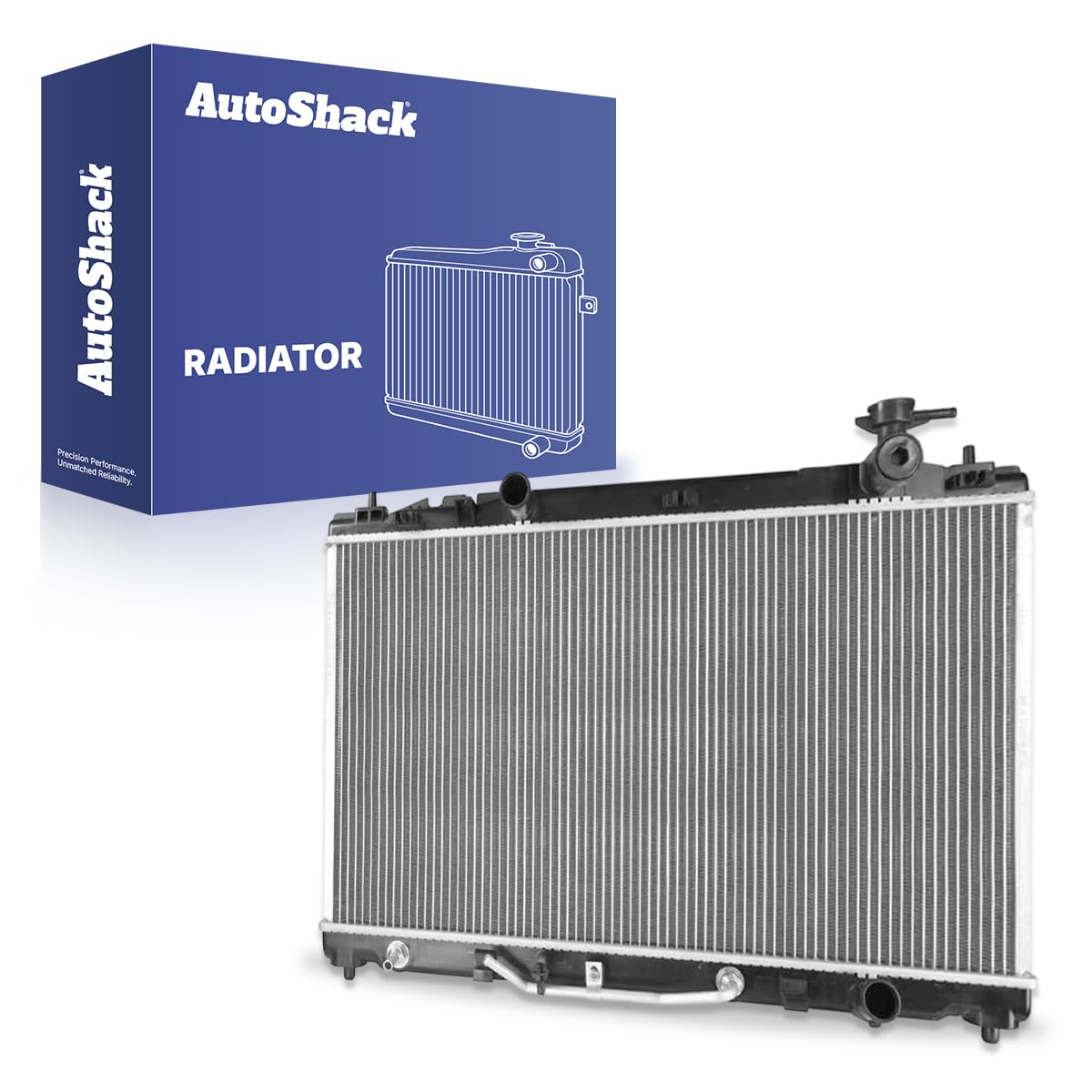
Autoshack’s RK1168 covers the widest engine compatibility range in this guide, listing fitment for both the L4 2.4L and 2.5L as well as the V6 3.5L in the 2007-2011 Camry platform. The core measures 28.69 inches wide by 15.75 inches tall with a single-row aluminum and plastic tank construction that replicates the factory thermal envelope for standard driving conditions. At 8.8 pounds, it is one of the lighter options in this lineup, which makes handling and positioning during installation less fatiguing but also raises questions about core density under sustained high-load operation. Verified owner reports on Camry applications describe a straightforward installation process with no modifications needed, and several owners emphasize that the affordability allowed them to complete a repair that would have been financially impractical at OE pricing.
The unit includes a transmission oil cooler circuit for automatic transmission models, and the inlet-outlet sizing accommodates the factory hose diameters without adapters. However, Autoshack explicitly notes that the radiator cap is not included, requiring owners to either reuse their existing cap or purchase a new one separately. Reusing an original cap with weakened spring tension can prevent the system from reaching the proper 13-16 psi operating pressure, leading to coolant loss through the overflow bottle and potential air pocket formation in the cylinder head. Multiple owners recommend replacing the cap as a preventive measure during the radiator swap, adding a small incremental cost to the overall repair budget.
The primary consideration with the RK1168 is the variability in long-term owner satisfaction compared to mid-range and premium options. While many owners report leak-free operation over several months of service, the plastic tank wall thickness and crimp quality do not match the precision of Denso or TRQ units, and some owners may encounter seepage at the tank seam after extended thermal cycling. For Camry owners on a tight budget who need a functional replacement immediately — and who are prepared to monitor coolant levels closely during the first few months of service — the Autoshack RK1168 provides a viable entry point into the cooling system repair without requiring the upfront investment of premium alternatives. It is best viewed as a stop-gap solution for vehicles with lower annual mileage rather than a set-and-forget replacement for daily highway commuters.
What works
- Broad fitment coverage across 2.4L, 2.5L, and 3.5L engine options
- Lightweight design simplifies one-person installation
- Affordable entry point for budget-constrained repairs
- Direct bolt-on fit with no modification required for most models
What doesn’t
- Radiator cap not included, adds incremental cost to installation
- Plastic tank wall thickness does not match premium alternative build quality
- Long-term leak data more variable than Denso and TRQ units
- Best suited for low-mileage or secondary vehicles
Hardware & Specs Guide
Core Construction
All seven radiators in this guide use a single-row aluminum core design paired with ABS plastic tanks, which replicates the original Toyota engineering specification for the XV40 Camry platform. The T-6061 aluminum alloy found in higher-tier units offers better thermal conductivity and corrosion resistance than generic aluminum grades used in entry-level radiators. Core depth across these products ranges from 5/8 inch to approximately 3/4 inch, with deeper cores providing greater coolant volume and heat absorption capacity during sustained high-load operation such as mountain grade climbing or extended idle in hot climates. The plastic tank wall thickness varies noticeably between budget and premium units — Denso and TRQ tanks use higher-density ABS material that resists stress cracking at the filler neck and hose barb junctions, while entry-level tanks may develop micro-cracks after repeated thermal cycling from cold start to operating temperature.
Transmission Oil Cooler Circuit
Every radiator reviewed here includes an integrated transmission oil cooler for automatic transmission compatibility, but the quality of the internal cooler tube routing and the thread pitch consistency on the cooler fittings differ across brands. Premium units such as the Denso 221-3102 and TRQ RDA82718 use brass or steel fittings that resist corrosion and provide a positive seal with the factory quick-disconnect lines. Budget units may use pot-metal fittings that can corrode internally over time, restricting transmission fluid flow and causing shift quality degradation or torque converter slippage. The transmission cooler circuit must be flushed whenever a radiator is replaced on a high-mileage vehicle, as debris from the old cooler can contaminate the transmission fluid and damage valve body components. Inspect the cooler line fittings for burrs or casting flash before installation, and confirm that the thread orientation matches your Camry’s specific transmission line routing to avoid kinking the cooler hoses.
Fitment and Mounting
The 2007-2011 Camry uses a radiator mounting system with lower rubber isolation cushions that sit in stamped sheet metal saddles and upper plastic retainers that snap over the tank tabs. Radiators that deviate from the factory core width — typically 28-11/16 inches — will not seat properly in these cushions, leading to vibration-induced stress at the hose connections and premature failure of the lower radiator hose. The inlet and outlet hose diameters measure 1-3/8 inches on most 2.4L and 2.5L applications, while the 3.5L V6 uses a larger 1-5/8 inch inlet. Confirming these dimensions against your original radiator before ordering prevents the frustration of installing a unit with mismatched hose connections that cannot maintain a pressurized seal. The fan shroud mounting tabs on the radiator side tanks must also align with the factory fan assembly — some aftermarket radiators position these tabs slightly differently, requiring zip-tie workarounds or drilling new mounting holes.
Warranty and Support
Warranty coverage in the Camry radiator market ranges from thirty-day return windows to two-year exchange policies, and this difference directly reflects the manufacturer’s confidence in their core assembly process. Denso provides a manufacturer-backed warranty on all their radiators, and TRQ supports their units with an extensive library of DIY installation videos that reduce the risk of installation-related damage. Readair offers a two-year return and exchange policy for non-human-caused damage, which is the longest coverage period among the products in this guide. Budget radiators with shorter warranty periods are more likely to experience early-life seepage or crimp seam failure, and the cost of a second replacement plus the labor to install it quickly erodes any initial savings. When comparing radiators with similar physical specifications, prioritize units with at least a one-year warranty and a documented customer service contact for claim processing.
FAQ
Will a 2009 Camry radiator fit a 2007 or 2011 model?
How long does it take to replace a 2009 Camry radiator?
Should I replace the radiator cap and thermostat when changing the radiator?
What coolant type does a 2009 Camry radiator require?
How do I know if my 2009 Camry needs a new radiator?
Final Thoughts: The Verdict
For most Camry owners, the 2009 camry radiator winner is the Denso 221-3102 because it delivers OEM-grade fitment precision, consistent thermal performance, and verified long-term sealing integrity that eliminates the need for premature replacement. If you want premium build quality with detailed DIY video support, grab the TRQ RDA82718. And for the best balance of quality and affordability on a tighter budget, nothing beats the Auto Dynasty AD-OEM-RA-2917, which uses heavy-duty T-6061 core construction at a price that makes proper cooling system maintenance accessible to every owner.

Certification: BSc in Mechanical Engineering
Education: Mechanical engineer
Lives In: 539 W Commerce St, Dallas, TX 75208, USA
Md Amir is an auto mechanic student and writer with over half a decade of experience in the automotive field. He has worked with top automotive brands such as Lexus, Quantum, and also owns two automotive blogs autocarneed.com and taxiwiz.com.