An RV roof takes the full force of sun, rain, snow, and road vibration, and a weak sealant turns a weekend getaway into a costly repair project. The difference between a watertight rig and a damp, moldy interior comes down to choosing the right formula for your roof material and climate exposure. With lap sealants, liquid coatings, and silicone top coats dominating the market, the decision requires matching the product’s flexibility and adhesion profile to your specific roof type.
I’m Amir — the founder and writer behind Four Wheel Ask. My approach to RV roof sealants involves cross-referencing manufacturer technical data sheets with long-term owner reports to identify which formulations actually hold up through seasonal expansion cycles and UV degradation.
After evaluating flexibility, UV resistance, and ease of application across leading formulas, we found the most reliable best roof sealant for rv for your rig.
How To Choose The Best Roof Sealant For RV
Selecting the correct sealant for your RV roof starts with understanding your roof substrate and the type of exposure it endures. EPDM rubber, TPO, fiberglass, and aluminum each react differently to sealant chemistries, and applying the wrong product can lead to adhesion failure within a single season. Beyond material compatibility, you need to weigh application method, cure time, and long-term flexibility against your budget and skill level.
Sealant Chemistry: Self-Leveling vs. Non-Leveling vs. Coating
Self-leveling lap sealants are designed for horizontal surfaces such as roof seams, vent flanges, and screw heads. They flow into gaps and form a smooth, even seal without manual spreading. Non-leveling sealants remain stiff and are suited for vertical walls or sidewall joints where gravity would cause a runny product to sag. Full roof coatings, typically acrylic or silicone-based, are applied with a roller or brush and create a monolithic waterproof membrane over the entire roof surface. Each serves a different purpose, and many RV owners use lap sealants for detail work alongside a coating for overall coverage.
Material Compatibility: EPDM, TPO, Fiberglass, and Metal
The single most common failure point in RV roof sealing is using a sealant that is not compatible with the roof substrate. EPDM rubber requires a sealant that remains flexible and will not shrink or crack as the rubber expands and contracts. TPO roofs demand a product that bonds without plasticizer migration, which can cause the sealant to lose adhesion over time. Fiberglass and aluminum roofs are less finicky but still require proper surface preparation. Always check the manufacturer’s compatibility list before purchasing, and never apply sealant over silicone unless the product explicitly allows it.
Environmental Resistance: UV, Temperature Range, and Ponding Water
An RV roof sealant must endure direct UV exposure for years without becoming brittle or chalky. Look for products with UV stabilizers and a high solar reflective index to reduce interior temperatures. Temperature range ratings indicate how well the sealant will perform in both freezing winters and scorching summers. Ponding water resistance is critical for flat or low-slope roofs where water may sit for extended periods. Silicone-based coatings generally excel in ponding water scenarios, while acrylic coatings may require better drainage to avoid premature degradation.
Quick Comparison
On smaller screens, swipe sideways to see the full table.
| Model | Category | Best For | Key Spec | Amazon |
|---|---|---|---|---|
| Marlin Coatings 100% Silicone | Premium Silicone | Full roof waterproofing | Single-coat, UV reflective, ponding water rated | Amazon |
| Liquid Rubber Lap Sealant | Mid-Range Lap | Detail sealing around vents | Self-leveling, 22 ft per tube, flexible barrier | Amazon |
| Ziollo RV Roof Lap Sealant | Mid-Range Lap | Seam and vent sealing | Self-leveling, 25 ft per tube, non-hazardous | Amazon |
| Wadities RV Roof Coating | Premium Acrylic | Full roof coating projects | Solar reflective, 50 sq ft per gallon, UV stable | Amazon |
| Protect All Rubber Roof Treatment | Premium Protectant | UV protection and cleaning reduction | Anti-static, anti-chalking, reduces maintenance | Amazon |
| Dicor 501LSW-1 Lap Sealant | Mid-Range Lap | Secondary seal on edges and vents | Self-leveling, EPDM/TPO compatible, universal fit | Amazon |
| Kohree RV Roof Sealant 2 Pack | Budget Lap | Entry-level seam repair | Self-leveling, low odor, multi-surface bonding | Amazon |
In-Depth Reviews
1. Marlin Coatings 100% Silicone Roof Sealant
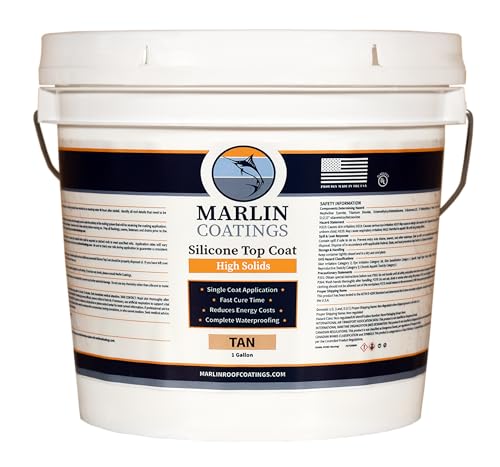
Marlin Coatings delivers a 100 percent silicone formulation that eliminates the need for annual recoating, a major advantage for RV owners who want a set-and-forget solution. The chemistry resists UV degradation and ponding water, two of the most common causes of sealant failure on flat or low-slope RV roofs. With a Solar Reflective Index of 113, this coating actively lowers interior temperatures, which translates to reduced cooling demand during summer travel.
The single-coat application is a genuine time saver for owners covering an entire roof. Unlike acrylic coatings that require multiple coats and extended cure times, Marlin’s silicone can be brushed, rolled, or sprayed in one pass, with coverage averaging around 60 square feet per gallon. The product bonds to EPDM, TPO, PVC, fiberglass, spray foam, and metal, making it one of the most versatile options on the market. Owner feedback consistently highlights the absence of shrinking or cracking even after multiple freeze-thaw cycles.
Surface preparation remains critical, as silicone will not adhere to existing silicone without proper removal. The upfront cost is higher than lap sealants and acrylic coatings, but the longevity and reduced maintenance schedule offset the investment over time. For owners seeking a permanent solution rather than a seasonal patch, this is the benchmark product in the category.
What works
- Exceptional UV and ponding water resistance
- Single-coat application saves significant labor
- High reflectivity lowers interior heat buildup
What doesn’t
- Higher upfront investment per gallon
- Requires thorough removal of old silicone before application
2. Liquid Rubber RV Lap Sealant
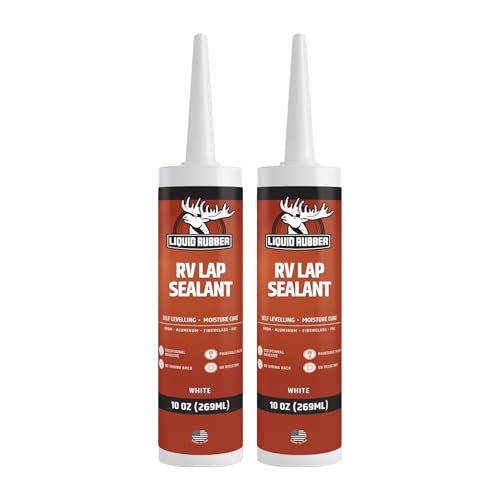
Liquid Rubber has engineered a self-leveling lap sealant that prioritizes controlled flow and flexible adhesion around RV roof details. The formula is specifically designed for horizontal surfaces such as vents, skylights, AC units, antenna mounts, and roof seams, and it intentionally flows during application to create a smooth, uniform barrier. Each 10-ounce tube covers roughly 22 linear feet at a 5/16-inch bead, and a typical 30-foot RV requires about four tubes for complete detail sealing.
The sealant forms a flexible waterproof membrane that accommodates temperature-driven expansion and road vibration without cracking. Compatibility extends to EPDM, TPO, fiberglass, metal, aluminum, PVC, and ABS, provided the surface is clean and dry. Notably, the product will not adhere to silicone, so any existing silicone must be fully removed before application. This is a critical step that owners sometimes overlook, leading to adhesion failure.
Liquid Rubber positions this lap sealant as part of a complete roof system, recommending its use alongside seam tape and full roof coating for maximum protection. The coverage rate is honest and realistic, helping buyers plan their project accurately. For owners who want a reliable detail sealant from a brand with a comprehensive RV roof product line, this is a strong mid-range contender.
What works
- Controlled self-leveling action for clean results
- Broad material compatibility across roof types
- Flexible membrane resists temperature cycling
What doesn’t
- Requires silicone removal for proper adhesion
- Multiple tubes needed for full RV detail sealing
3. Ziollo RV Roof Lap Sealant

Ziollo offers a self-leveling lap sealant that delivers 25 linear feet of coverage per 10-ounce tube, slightly more than several competitors in the same price tier. The formulation is designed to flow seamlessly into seams and around fixtures without requiring manual spreading, which speeds up application for owners sealing multiple roof penetrations. The product bonds to EPDM rubber, TPO, metal, fiberglass, and other common RV roof substrates without complicated prep work beyond cleaning and drying.
A standout feature is the non-hazardous, solvent-free formula that makes it safe to use around occupants and pets. This is a meaningful consideration for DIY owners who prefer not to deal with strong chemical odors or ventilation requirements during application. The sealant maintains flexibility through extreme temperature swings, from desert heat to freezing mountain conditions, which directly addresses the expansion-contraction cycle that causes rigid sealants to fail.
Ziollo positions this product as a long-term solution, and owner reports indicate that it holds up well against UV exposure without significant chalking or embrittlement. The four-tube pack provides ample material for a standard RV roof detail job, reducing the need for mid-project supply runs. For owners who prioritize ease of application and safety alongside solid coverage rates, this is a compelling mid-range choice.
What works
- Excellent coverage per tube reduces total tubes needed
- Non-hazardous, low-odor formula for safe indoor use
- Holds flexibility across wide temperature range
What doesn’t
- Not intended for vertical surface application
- Requires clean, dry surface for optimal bond
4. Wadities RV Roof Coating White

Wadities delivers a thick acrylic roof coating that emphasizes flexibility and solar reflectivity for RV owners seeking full roof coverage. The formulation contains a higher concentration of solid materials compared to thinner alternatives, which translates to better film build and more effective waterproofing per coat. The manufacturer recommends a minimum of two to three heavy coats, with each gallon covering approximately 50 square feet per coat, making it suitable for RVs up to 30 feet in length.
The coating includes UV stabilizers that prevent the sun from degrading the product over time, and the white finish reflects a significant portion of solar radiation to keep interior temperatures lower. Application is straightforward using a brush, roller, or paint sprayer, and the product is safe for use around humans and pets. The flexibility rating of 1000 percent means the membrane can stretch substantially without losing adhesion, a critical feature for roofs that undergo thermal expansion.
Wadities positions this coating for multiple surfaces beyond RV roofs, including metal buildings, flat roofs, gutters, planter boxes, foundations, and fences. This versatility adds value for owners who want a single product for multiple sealing projects. The kit includes a brush and polyester cloth, which simplifies the purchase for first-time applicators. For owners who prefer a brush-applied coating with strong flexibility and reflective properties, this is a solid premium option.
What works
- High solids content for durable film thickness
- Excellent flexibility prevents adhesion failure
- Versatile application across multiple surface types
What doesn’t
- Multiple coats required for optimal protection
- Not a self-leveling product; requires manual spreading
5. Protect All RV Rubber Roof Treatment

Protect All takes a different approach by offering a treatment designed specifically for EPDM rubber roofs rather than a traditional sealant. The formula coats the roof surface with a tough polymer that includes anti-static properties, which actively prevents grime and dirt from adhering to the rubber. This reduces the powdery chalking effect that causes gray streaks down the side of the RV, a common complaint among EPDM roof owners. The gallon container provides ample coverage for a full roof application.
The product creates a UV barrier that extends the life of the rubber substrate by blocking harmful radiation that causes embrittlement and cracking. Unlike lap sealants or full coatings, this treatment is not a thick waterproofing membrane but rather a protective layer that reduces maintenance. The manufacturer claims a reduction in cleaning frequency of up to 75 percent, which translates to significant time savings for full-time RVers or those who store their rigs outdoors year-round.
Application is straightforward and does not require specialized equipment. The treatment can be applied with a brush or sprayer and dries to a clear finish that does not alter the appearance of the roof. It is important to note that this product is a complement to, not a replacement for, lap sealants and roof coatings. Owners should use it as a maintenance layer over a properly sealed roof. For those focused on protecting their EPDM roof from UV degradation and reducing chalk buildup, this is a specialized and effective solution.
What works
- Anti-static formula reduces dirt accumulation
- UV protection extends EPDM rubber lifespan
- Significantly reduces roof cleaning frequency
What doesn’t
- Not a waterproofing sealant; requires underlying seal
- Limited to EPDM rubber roofs only
6. Dicor 501LSW-1 Lap Sealant

Dicor is a well-established name in the RV sealant space, and the 501LSW-1 lap sealant continues that reputation with a self-leveling formula designed for horizontal roof surfaces. The product creates a secure secondary seal along roof edges, air vents, vent pipes, and screw heads, areas where water intrusion most frequently occurs. The two-tube pack provides enough material for a typical detail sealing job on a standard RV, and the white color blends cleanly with most roof membranes.
The sealant is compatible with both EPDM and TPO sheeting, the two most common RV roofing materials, which makes it a safe choice for owners who are unsure of their exact roof substrate. The self-leveling action allows the product to flow into gaps and form a consistent seal without requiring manual tooling. Dicor specifies that this sealant is intended for horizontal surfaces only, and attempting to use it on vertical walls will result in sagging and poor adhesion.
Owner feedback frequently cites the reliable performance of Dicor sealants across multiple seasons, with many users reporting no cracking or peeling after several years of exposure. The universal fit designation means it works across a wide range of RV brands and roof configurations. For owners who want a trusted name with proven long-term results and straightforward application, the Dicor 501LSW-1 is a dependable mid-range choice that has earned its place in the market through consistency rather than novelty.
What works
- Proven long-term reliability across multiple seasons
- Compatible with both EPDM and TPO roofs
- Self-leveling action creates clean, uniform seal
What doesn’t
- Not suitable for vertical surface application
- Limited to detail sealing, not full roof coverage
7. Kohree RV Roof Sealant 2 Pack

Kohree enters the RV sealant market with a self-leveling lap sealant that focuses on quick leveling action and broad surface compatibility. The formula is designed to self-level within 30 seconds of application, forming a flat surface from a linear bead to effectively cover and seal gaps. The two-pack configuration provides a practical entry point for owners who need to address a few specific problem areas rather than reseal an entire roof.
The sealant uses a harmless, low-odor formula that is safe for indoor and outdoor use, making it accessible for DIY owners working in confined spaces or around family members. Compatibility extends across multiple surfaces including EPDM, TPO, PVC, aluminum, brass, steel, glass, mortar, and wood, giving it versatility beyond just RV roof applications. The working temperature range spans from -40 to 200 degrees Fahrenheit, accommodating extreme climate conditions without cracking.
Kohree emphasizes the elastic and breathable nature of the cured sealant, which allows it to move with the roof substrate during temperature changes. The production date is marked on the bottle rather than an expiration date, which is useful for inventory management. For owners who need a budget-friendly option for targeted repairs or who are new to RV roof maintenance and want to start with a lower investment, the Kohree two-pack delivers functional performance without requiring a significant upfront commitment.
What works
- Fast self-leveling action for quick application
- Low-odor, safe formula for enclosed workspaces
- Broad surface compatibility beyond RV roofs
What doesn’t
- Less established track record than legacy brands
- Two-pack may not cover full roof detail job
Hardware & Specs Guide
Self-Leveling vs. Non-Leveling Sealants
Self-leveling sealants are formulated with a viscosity that allows the material to flow and settle into a smooth, even layer after application. They are ideal for horizontal surfaces where gravity can assist in creating a uniform seal without manual tooling. Non-leveling sealants, by contrast, maintain a thicker consistency that resists sagging, making them suitable for vertical walls and sidewall joints. Choosing the wrong type for your application surface is one of the most common errors in RV roof sealing.
Cure Time and Application Temperature
Most lap sealants require 24 to 48 hours to fully cure, depending on temperature and humidity. Application should occur when ambient temperatures are between 40 and 90 degrees Fahrenheit, and the surface must be completely dry. Rain within the first few hours of application can compromise the seal before it forms a skin. Plan your project around a weather window that allows uninterrupted curing time.
Coverage Rate Calculations
Coverage rates vary significantly between lap sealants and full roof coatings. A standard 10-ounce tube of lap sealant covers approximately 20 to 25 linear feet at a 5/16-inch bead. A gallon of roof coating covers between 50 and 70 square feet per coat, depending on the solids content and application thickness. Always measure your roof area and count the number of penetrations before purchasing to avoid running short mid-project.
UV Resistance and Solar Reflectivity
UV resistance is quantified by how long a sealant maintains its flexibility and adhesion under continuous sun exposure. Products with UV stabilizers or a high Solar Reflective Index (SRI) degrade more slowly and help keep the RV interior cooler. Silicone-based coatings typically offer the highest SRI values and the best resistance to UV degradation, while acrylic coatings require higher film thickness to achieve comparable longevity.
FAQ
What type of RV roof sealant lasts the longest?
Can I apply RV roof sealant over old sealant?
How often should I reseal my RV roof?
What is the difference between lap sealant and roof coating?
Final Thoughts: The Verdict
For most buyers, the best roof sealant for rv winner is the Marlin Coatings 100% Silicone because it offers the longest service life, single-coat convenience, and superior UV and ponding water resistance. If you want a reliable detail sealant for vents and seams without the full coating investment, grab the Liquid Rubber RV Lap Sealant. And for a budget-friendly entry point for targeted repairs, nothing beats the Kohree RV Roof Sealant 2 Pack.

Certification: BSc in Mechanical Engineering
Education: Mechanical engineer
Lives In: 539 W Commerce St, Dallas, TX 75208, USA
Md Amir is an auto mechanic student and writer with over half a decade of experience in the automotive field. He has worked with top automotive brands such as Lexus, Quantum, and also owns two automotive blogs autocarneed.com and taxiwiz.com.