Dropped calls, buffering maps, and no signal when you need it most — that familiar dread when the bars disappear on a remote stretch of highway. A dedicated antenna transforms your vehicle into a rolling hotspot, pulling weak signals out of thin air and holding them steady through valleys and open plains.
I’m Amir — the founder and writer behind Four Wheel Ask. Over years of cross-referencing datasheets, field reports, and owner forums, I’ve mapped exactly which antenna designs deliver real-world gain without installation headaches.
Whether you are overlanding or commuting daily, choosing the right signal booster begins with selecting the best car wifi antenna that matches your vehicle, carrier, and range expectations — and this guide breaks down every worthy contender.
How To Choose The Best Car WiFi Antenna
Selecting the right antenna means matching radiation pattern, gain, band support, and physical design to your specific vehicle and usage scenario. A mismatch in any of these areas can leave you with an expensive decoration on your roof.
Omnidirectional vs. Directional
Omnidirectional antennas pick up signals from all directions — ideal for moving vehicles where the tower location constantly changes. Directional antennas (Yagi or parabolic) focus on a single tower up to 20 miles away, but require aiming and are best for stationary or parked use. Most drivers should prioritize omni designs unless you camp in one spot frequently.
Frequency Bands and 5G Readiness
Modern antennas must cover 600–6000 MHz to support all 4G LTE and sub-6 5G bands used by North American carriers. Older antennas that top out at 2700 MHz will miss low-band 5G and some LTE extended-range frequencies, reducing performance in fringe areas.
MIMO Configuration
Multiple-input multiple-output (MIMO) antennas use two or four internal elements to send and receive data simultaneously. A 2×2 MIMO antenna roughly doubles throughput versus a single-element design; 4×4 MIMO offers even greater gains for modern gigabit-class routers. Your router or modem must support the same MIMO count to benefit.
Build Quality and Mounting
Vehicle antennas face wind, rain, vibration, and road salt. Look for NEMA or military-standard ratings, stainless steel hardware, and UV-stable radomes. A spring base or impact-resistant design prevents damage from low-clearance obstacles. Match the connector type — SMA, N‑Female, TS‑9 — to your booster or router cable.
Quick Comparison
On smaller screens, swipe sideways to see the full table.
| Model | Category | Best For | Key Spec | Amazon |
|---|---|---|---|---|
| Proxicast ANT-126-002 | Omni | Overall mobile use | 10 dBi, 600–6000 MHz | Amazon |
| Bolton Technical Long Ranger | Parabolic | Extreme rural range | +28 dBi, 20‑mile range | Amazon |
| Waveform QuadPro 4×4 MIMO | Panel | Maximum data speeds | 9.1 dBi, 4×4 MIMO | Amazon |
| weBoost 311229 Trucker | Omni | Semi-truck work | 40″ max height, MIL‑810H | Amazon |
| weBoost Overland 311248 | Omni | Overland replacement | 5G, 2‑year warranty | Amazon |
| Proxicast ANT-121-M22 | MIMO | Low-profile installs | 2×2 MIMO, 3″ tall | Amazon |
| HiBoost Travel 3.0 Truck | Booster Kit | Complete truck system | 50 dB gain, 3‑year warranty | Amazon |
In‑Depth Reviews
1. Proxicast High Gain 10 dBi Omni (ANT-126-002)

This Proxicast antenna delivers a genuine 10 dBi of omnidirectional gain across the full 600–6000 MHz spectrum, covering every North American 4G LTE and sub-6 5G band. The white ABS radome and stainless steel mounting bracket resist weather and impact, making it equally suited for RV roofs, marine applications, and permanent pole mounts. Owners consistently report jumping from two bars to five bars on Netgear Nighthawk hotspots after installation.
The integrated female N‑connector eliminates the need for a separate ground plane, simplifying installs on fiberglass or aluminum surfaces. At 9.1 inches tall, it remains aerodynamic enough for highway travel while still providing serious signal reach. Feedback from users in fringe areas confirms that careful aiming is rewarded with stable, usable data speeds where previously there was none.
Pairing this antenna with a compatible cellular modem or router yields immediate, measurable improvement in both signal strength and data throughput. The wideband design future-proofs against carrier band expansions, and the build quality justifies the investment for users who need reliable connectivity every day.
What works
- True 10 dBi gain across all 4G/5G bands
- No ground plane required for installation
- Weatherproof ABS and stainless steel hardware
What doesn’t
- White color stands out on dark vehicles
- Requires N‑to‑SMA adapter for most routers
2. Bolton Technical Long Ranger (BT974822)
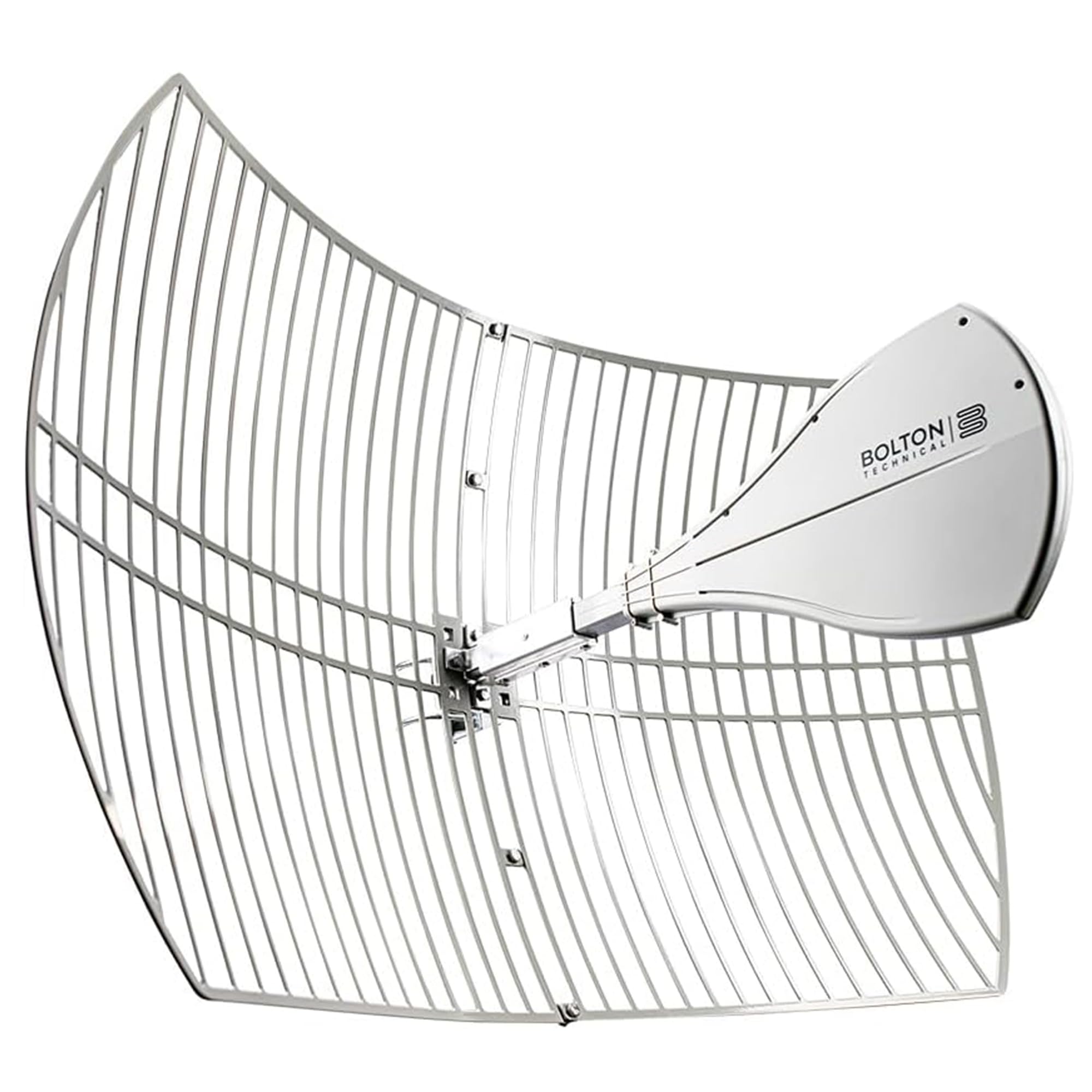
The Long Ranger is a purpose-built parabolic antenna that achieves up to +28 dBi of gain — enough to lock onto a cell tower more than 20 miles away. Its 39‑inch reflector and 10‑degree beamwidth demand precise aiming, but the payoff is extraordinary: owners in rural Alberta and deep-south farming communities report jumping from zero bars to four bars of 5G after alignment.
Frequency coverage spans 600–6500 MHz, encompassing all 4G, 5G, WiFi 2.4/5 GHz, and even GPS and military bands. The feedhorn and N‑Female connection ports are weatherproofed, and the single-setting design reduces complexity. Users pair it with boosters like the Cel-Fi Go X or weBoost systems to turn unusable locations into fully connected homes or vehicles.
This antenna is large — 39 inches wide — and requires a sturdy mast or mount. It is overkill for suburban driving but absolutely transformative for those who live or work beyond the reach of standard omni antennas. The gain claims hold up under real-world testing, making it the go-to for extreme rural connectivity.
What works
- Industry-leading +28 dBi directional gain
- Works reliably beyond 20-mile tower distance
- Covers 600–6500 MHz including WiFi 6
What doesn’t
- Large size requires substantial mounting space
- Narrow beam needs careful alignment
3. Waveform QuadPro 4×4 MIMO Panel Kit

The QuadPro is a 4×4 MIMO panel antenna that ships as a complete kit with 20 feet of UltraFlex-Quad cable, a window entry cable, FlexMount, and weatherproofing boots — no drilling required. It delivers up to 9.1 dBi per element across 600–6000 MHz, supporting every 4G and 5G band from AT&T, Verizon, T-Mobile, and US Cellular. Users consistently report turning inconsistent T-Mobile Home Internet connections into reliable gigabit-class service.
Directional aiming is required — the included FlexMount and detailed install guide make alignment straightforward even for first-time installers. The kit includes SMA and U.FL adapters to connect with nearly any modern 5G router or gateway. Owner feedback highlights the thorough engineering: the window entry cable alone eliminates the most common install friction point.
For those serious about maximizing data speeds at a fixed location — a cabin, RV site, or home on the fringe — the QuadPro delivers measurable, repeatable gains that justify its position as a premium solution. The three-year warranty provides additional peace of mind.
What works
- True 4×4 MIMO for maximum data throughput
- No-drill installation with window entry cable
- Supports all US carriers and 5G bands
What doesn’t
- Requires aiming at a specific tower
- Investment is high for casual users
4. weBoost 311229 4G-OTR Trucker Edition
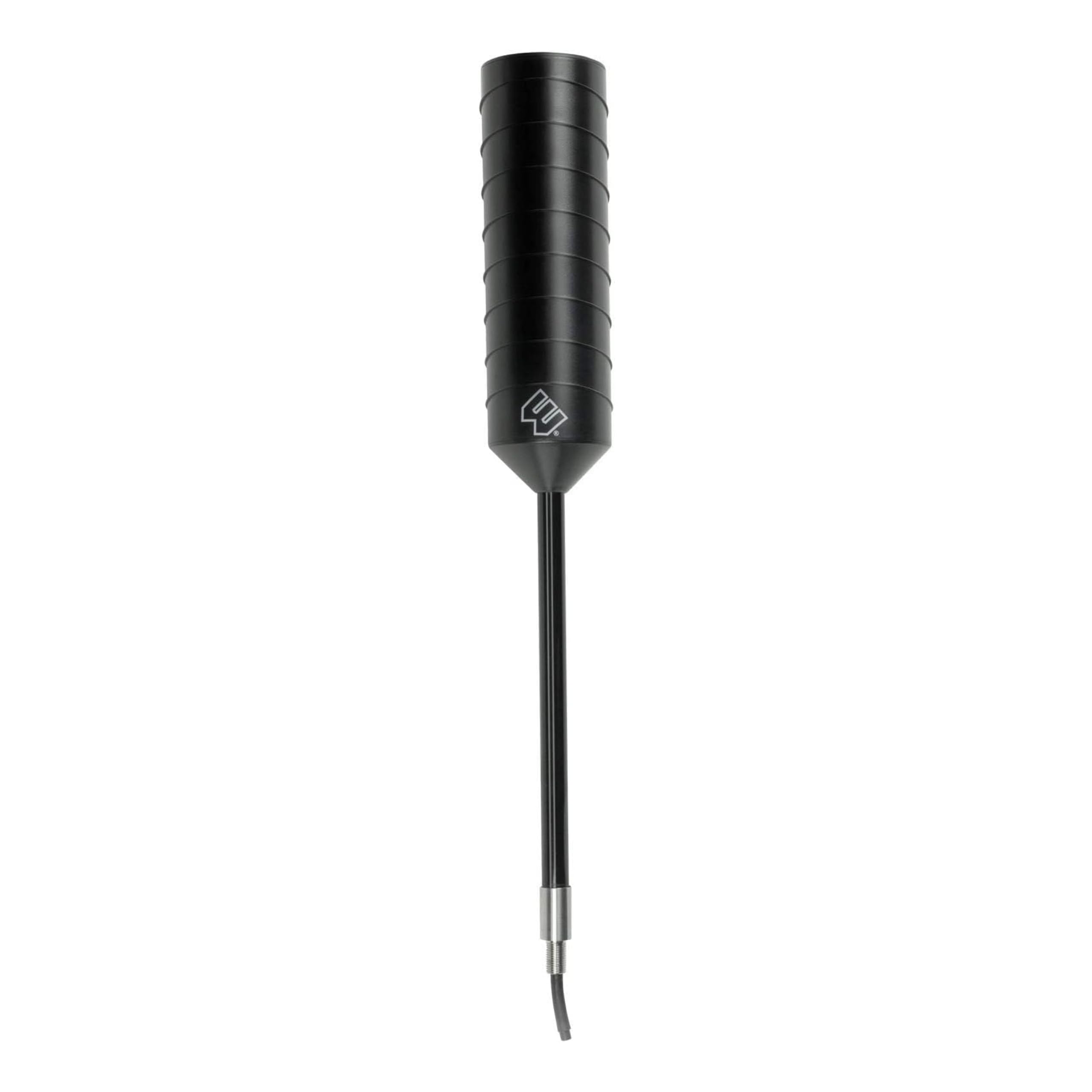
Built specifically for the semi-truck environment, the weBoost 311229 extends from 7.5 to 40 inches and meets US Military 810H and NEMA IP66 standards for dust and water ingress. The spring base absorbs vibration and impacts from low-clearance obstacles, while the included 16‑foot low-loss cable, threadlocker, and three-way mount simplify installation on mirror brackets or roof racks.
This antenna is designed to pair with weBoost Drive Reach boosters, and owners report dramatic improvements over the stock shark-fin antenna — turning one-bar fringe zones into usable calling and data areas. It supports all US carriers and networks including 5G, with optimal performance on 700, 900, 1700, 1900, and 2200 MHz frequencies.
Some users note that the mast plastic can fracture under extreme vibration, though weBoost customer support addresses replacements promptly. For overlanders and fleet operators who need rugged, reliable signal in remote areas, this antenna package delivers exceptional value.
What works
- Rugged MIL‑810H and IP66 construction
- Adjustable 7.5–40″ height
- Includes spring base and mounting hardware
What doesn’t
- Plastic mast can crack under heavy vibration
- Requires weBoost booster for operation
5. weBoost Overland Antenna for Drive Reach (311248)

The weBoost Overland antenna is a direct replacement for the standard antenna included with Drive Reach booster kits, offering improved 5G compatibility and military-grade NEMA durability. Owners report noticeably better reception and signal strength after swapping out the factory antenna, with installation taking only minutes thanks to the compatible connector and perfect fitment.
Rated to US military and NEMA standards, this antenna holds up on dusty trails, torrential rain, and freezing temperatures without performance degradation. It supports all US carrier networks including Verizon, AT&T, T-Mobile, and more. The 50‑ohm impedance matches standard booster and router inputs, and the 15‑foot cable provides flexibility in mounting placement.
One owner in the desert used it with a T-Mobile home internet unit and went from unusable signal to a steady connection for remote work. The two-year manufacturer warranty and US-based customer support add confidence for long-term overland use. This is the go-to upgrade for existing weBoost users seeking better 5G performance.
What works
- Drop-in replacement for Drive Reach kits
- 5G ready with full carrier support
- Rugged military and NEMA build
What doesn’t
- Must be used with weBoost booster
- No mount or cable included
6. Proxicast Vandal Resistant 2×2 MIMO ANT-121-M22

Standing just 3.2 inches tall, the Proxicast ANT-121-M22 is one of the most discreet 2×2 MIMO antennas available. It contains two identical isolated omnidirectional elements covering 600–6000 MHz, making it compatible with all North American and worldwide 4G/5G networks. The vandal-resistant design uses rugged materials suited for fleet vehicles, buses, and permanent outdoor installations where low visibility is critical.
Ten-foot SMA male coax leads connect directly to most 2×2 MIMO routers and modems from Cradlepoint, Digi, MoFi, Peplink, and others. Users report immediate 10 dB gains in signal strength and elimination of hotspot dropouts during gaming or streaming in semi-trucks. Some owners note that optimal performance requires mounting on a flat metal surface to serve as a ground plane.
The low profile makes it ideal for urban drivers who want improved connectivity without a conspicuous antenna. While the 3–4 dBi gain per element is modest compared to larger omni designs, the MIMO architecture delivers meaningful throughput improvements in moderate fringe areas.
What works
- Ultra-low 3″ profile for discreet mounting
- True 2×2 MIMO for improved data speeds
- Worldwide band coverage
What doesn’t
- Works best with a metal ground plane
- Gain lower than larger omni antennas
7. HiBoost Travel 3.0 Truck Cell Booster Kit

The HiBoost Travel 3.0 Truck is a complete signal booster kit designed specifically for trucks and SUVs, including a high-gain outdoor antenna, indoor antenna, booster unit, and all cabling. The booster delivers 50 dB max gain and supports all major US carriers with FCC approval. Owners in remote Wyoming and Colorado mountains report going from zero bars to reliable voice and data connectivity.
The outdoor antenna features a shockproof, rustproof spring base that withstands harsh road conditions, while the booster is protected by a rubber cover and uses thicker cables for stable signal transmission. Installation is straightforward with the included 15‑foot outdoor cable and 9.8‑foot indoor cable. The system covers the complete vehicle interior with boosted signal.
HiBoost backs this kit with a three-year warranty and US-based support. Users praise the customer service for helping with phone compatibility issues and firmware updates. For truckers, overlanders, and remote workers who need a turnkey solution rather than assembling components separately, this kit delivers reliable, measurable improvement.
What works
- Complete kit with everything needed for install
- 50 dB gain with industrial-grade build
- Three-year warranty and US support
What doesn’t
- Not compatible with all phone models
- Requires 12V power connection
Hardware & Specs Guide
Gain (dBi)
Gain measures how effectively an antenna focuses radio energy. Higher dBi values mean stronger signal reception in a specific direction. Omnidirectional antennas typically range from 3 to 10 dBi; directional designs can reach 28 dBi or more. The trade-off is coverage area — high-gain omnis have a flatter, donut-shaped pattern that may miss signals from steep hills.
Frequency Range
Modern cellular antennas must cover 600–6000 MHz to support all 4G LTE and sub-6 5G bands. Low-band frequencies (600–900 MHz) travel farther and penetrate buildings better; mid-band (1700–2700 MHz) offers balanced speed and range; high-band (3500–6000 MHz) provides fastest speeds but shorter range. A wideband antenna ensures compatibility across carriers and future band expansions.
MIMO Configuration
MIMO uses multiple antenna elements to send and receive independent data streams simultaneously. A 2×2 MIMO antenna can roughly double throughput compared to a single element. 4×4 MIMO offers even greater gains but requires a router or modem that supports four spatial streams. For mobile use, 2×2 MIMO is the practical sweet spot; for stationary setups, 4×4 MIMO maximizes data rates.
Impedance and Connectors
Almost all vehicle cellular antennas use 50‑ohm impedance — matching the standard for routers, boosters, and modems. Common connector types include SMA (most routers), TS‑9 (some hotspots), and N‑Female (high-end antennas). Using mismatched connectors adds signal loss; gold-plated adapters minimize degradation. Cable quality also matters — low-loss cable like LMR‑200 or UltraFlex preserves signal over longer runs.
FAQ
What is the difference between omnidirectional and directional antennas?
Do I need a ground plane for a car WiFi antenna?
Can I use a cellular antenna for WiFi?
What does MIMO mean in car antennas?
Final Thoughts: The Verdict
For most buyers, the best car wifi antenna winner is the Proxicast ANT-126-002 because it combines high 10 dBi gain with full 600–6000 MHz coverage, no ground plane requirement, and weatherproof construction at a balanced price. If you need extreme rural range, grab the Bolton Technical Long Ranger for its class-leading +28 dBi parabolic performance. And for the ultimate 4×4 MIMO data speeds in a complete no-drill package, nothing beats the Waveform QuadPro.

Certification: BSc in Mechanical Engineering
Education: Mechanical engineer
Lives In: 539 W Commerce St, Dallas, TX 75208, USA
Md Amir is an auto mechanic student and writer with over half a decade of experience in the automotive field. He has worked with top automotive brands such as Lexus, Quantum, and also owns two automotive blogs autocarneed.com and taxiwiz.com.