Struggling with stubborn fuel line clips and brittle plastic connectors often turns a straightforward repair into a frustrating, time-consuming ordeal. Without a dedicated disconnect tool, you risk snapping a fitting or damaging the line, which adds unnecessary cost and delay to the job.
I’m Amir — the founder and writer behind Four Wheel Ask. My analysis focuses on combing through thousands of verified owner reviews, studying material specifications, and comparing build quality across dozens of products to separate tools that perform reliably from those that leave you searching for a backup plan.
Whether you maintain your own fleet or work in a professional shop, having a proper disconnect tool in your box saves time and spares your knuckles. After analyzing dozens of fuel line disconnect tools and thousands of owner reviews, I have identified the true best fuel disconnect tool for your needs.
How To Choose The Best Fuel Disconnect Tool
Fuel line quick‑connects come in several designs, and the right tool depends on the fitting type, access space, and how often you work on vehicles. Focus on these factors to avoid buying a tool that sits unused in your drawer.
Understand the Fitting Type
Most modern vehicles use plastic quick‑connect fittings with internal locking tangs or spring‑lock collars. Some tools are designed specifically for Toyota‑ and Nissan‑style 5/16‑inch main lines, while others work across domestic and import brands. Identify the connectors you encounter most before choosing.
Jaw Angle and Reach
Tools with a straight or slightly angled jaw work well on exposed lines, but a 45‑degree or 30‑degree bend is essential for reaching connectors tucked behind the engine, against the firewall, or on top of the fuel tank. Low‑profile designs can mean the difference between a five‑second disconnect and a twenty‑minute ordeal.
Build Material and Durability
Hardened steel or CRV (chromium‑vanadium) steel jaws resist spreading and wear over repeated use. Aluminum tools are lighter but can deform under heavy force. Look for tools with a corrosion‑resistant finish if you work in a humid or salt‑belt environment.
Single Tool vs. Complete Kit
A single dedicated tool works well if you only service one or two vehicle families. A multi‑piece kit covers more connector styles and line sizes, making it the better choice for a home mechanic who works on multiple vehicles or a pro who needs versatility without reaching for separate tools.
Quick Comparison
On smaller screens, swipe sideways to see the full table.
| Model | Category | Best For | Key Spec | Amazon |
|---|---|---|---|---|
| TOOLEAGUE 6Pcs Set | Kit | All‑around versatility | 6 tools, hardened CRV steel, storage case | Amazon |
| Lisle 37140 | Pliers | Tight engine bay access | 45° bent tip, low‑profile | Amazon |
| Orion Motor Tech 26pc | Master Kit | Pro coverage for many makes | 26 pieces, color‑coded, blow‑molded case | Amazon |
| Lisle 39210 | Specialty | Toyota / Nissan main lines | 5/16 in., hinged, fully tapered end | Amazon |
| WAMEIJU 4 Pieces | Value Set | Budget‑minded DIY starters | 4 tools, high‑carbon steel, rubber grips | Amazon |
In‑Depth Reviews
1. TOOLEAGUE Fuel Line Pliers Set 6Pcs

The TOOLEAGUE 6Pcs set delivers a well‑rounded collection that covers the most common fuel line and hose tasks without overwhelming your toolbox. It includes a hose remover plier, a 9‑inch fuel filter caliper, a fuel hose clamp removal plier, a 30‑degree bent disconnect plier, a flat hose clamp plier, and a trim removal tool. This range makes it suitable for everything from fuel tank disconnects to coolant spring clips.
The hardened CRV steel construction gives the jaws excellent resistance to spreading, even when you need to apply serious leverage on a rusted or crusted fitting. The ergonomic PVC grips reduce hand fatigue during repetitive use, and the 30‑degree bent plier is especially handy for reaching connectors tucked behind intake manifolds or under the dash. Owners consistently describe the set as feeling heavy‑duty and not cheap.
One minor drawback reported by a handful of users is that a tool can separate from the handle if the case is handled roughly during shipping, though this does not affect the overall durability of the steel head. For the home mechanic who works on multiple vehicles, this kit offers the best balance of breadth, build quality, and everyday usefulness.
What works
- Covers six essential functions in one compact bundle
- Hardened CRV steel jaws resist spreading and wear
- 30‑degree bent plier accesses tight engine compartments
- Included storage case keeps everything organized
What doesn’t
- Handle attachment can loosen if the case is dropped
- Trim tool is basic compared to dedicated interior kits
2. Lisle 37140 Disconnect Pliers, 45 Degree

When working space is measured in inches, the Lisle 37140 earns its place with a low‑profile head and a 45‑degree bend that slips into gaps where straight tools simply cannot fit. It is purpose‑built for disconnecting fuel line, EVAP line, and DEF fittings, particularly on late‑model vehicles where components are packed tightly around the engine bay and fuel tank.
The plastic handle provides a secure grip, and the angled tip lets you engage the release tang without having to contort your hand into an awkward position. Owners report that it works exceptionally well on crusted‑up DEF disconnects on diesel trucks, where corrosion around the fitting often makes finger pressure useless. The tool is light enough to maneuver with one hand, which is critical when you are holding a rag or a catch pan with the other.
Because it is a single‑purpose plier, it does not include the range of a multi‑tool kit, and some users wish for a longer handle for extra leverage on extremely stubborn clips. However, for dedicated access to recessed connectors, the 45‑degree design and low profile make this a weapon of choice among experienced techs.
What works
- 45‑degree bend reaches connectors that straight tools cannot
- Low‑profile head slides into tight gaps above fuel tanks
- Effective on corroded DEF and EVAP fittings
- Comfortable one‑handed operation
What doesn’t
- Not a multi‑tool; covers only disconnect tasks
- Handle could be longer for max leverage
3. Orion Motor Tech 26pc Master Quick Disconnect Tool Kit
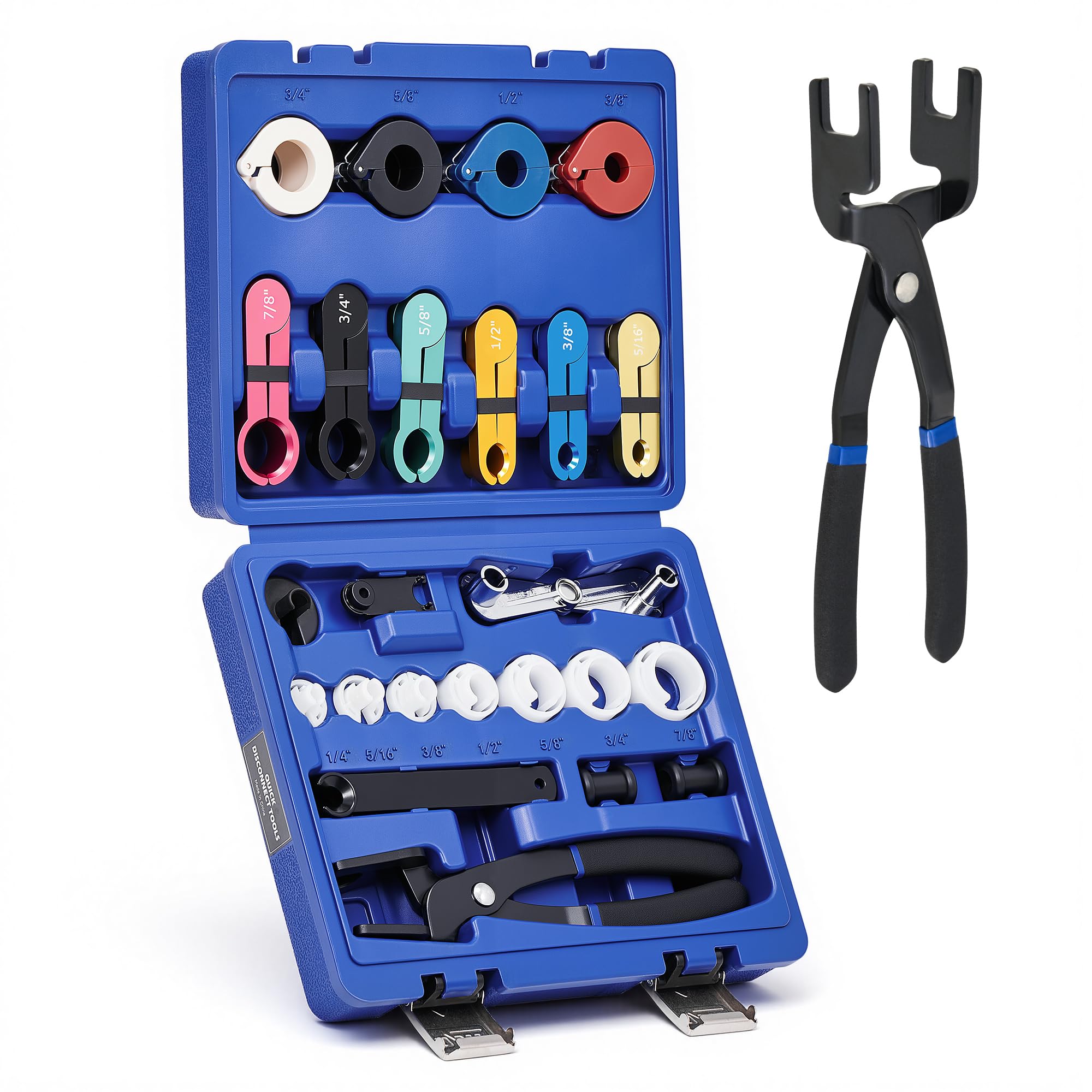
Orion Motor Tech’s 26‑piece master kit is the most comprehensive option in this lineup, designed to handle fuel line, AC hose, transmission cooler, and spring‑lock connectors across a wide range of domestic vehicles. The set includes six aluminum clip removers, seven fuel line removers, four spring‑lock removers, two oil cooler line removers, a scissor‑style disconnect tool, plus dedicated fuel and AC disconnect pliers — all in commonly needed SAE sizes.
The color‑coded organization makes grabbing the right tool quick, and the blow‑molded case keeps everything secure during transport. The included scissor‑style tool is particularly useful for two‑step collar connectors found on many Ford and GM applications, while the extended‑handle pliers provide extra leverage for stubborn AC line fittings. Owners appreciate that this kit eliminates the need to buy separate tools for different vehicle brands.
The only trade‑off is that the sheer number of pieces can feel overwhelming if you only ever work on a single make. Some users note that the aluminum clip removers are best suited for moderate use rather than daily professional abuse. For a shop that sees a mix of domestic vehicles or a serious DIYer who wants one‑and‑done coverage, this kit delivers unmatched breadth.
What works
- Broadest coverage for domestic makes and multiple systems
- Color‑coded tools speed up job selection
- Includes scissor‑style and plier‑style disconnect options
- Blow‑molded case provides organized storage
What doesn’t
- Aluminum removers are not as durable as steel equivalents
- More tools than needed for single‑make owners
4. Lisle 39210 Main Fuel Line Disconnect for Toyota and Nissan

The Lisle 39210 is a focused, no‑compromise tool for a very specific job: disconnecting the 5/16‑inch main fuel line from the fuel rail on Toyota and Nissan vehicles. Its hinged design and fully tapered end allow it to slide into the quick‑connect fitting smoothly, and the tool engages the internal tang with a simple push—no prying or twisting required.
Owners report that it disconnects fuel lines in seconds on models ranging from a 2001 Corolla to a 2014 Altima and a 2010 Frontier. The lightweight plastic construction keeps the tool easy to handle, and the compact size lets you work in tight engine bays without removing other components. Many users note that attempting to disconnect these fittings without the tool often results in broken clips or damaged O‑rings.
The downside is obvious: this tool only fits 5/16‑inch Toyota‑ and Nissan‑style connectors. It will not work on domestic vehicles, European makes, or larger‑diameter lines. Some owners also recommend tying a string to the tool before use because its small size makes it easy to drop into the engine bay. If your fleet is dominated by Toyota and Nissan products, this is an indispensable addition.
What works
- Disconnects Toyota and Nissan main lines in seconds
- Hinged tapered end slides smoothly into the fitting
- Compact and lightweight for tight spaces
- Prevents broken clips and damaged seals
What doesn’t
- Limited to 5/16‑inch Toyota and Nissan connectors only
- Easy to drop due to small size; a tether helps
5. WAMEIJU 4 Pieces Electrical Disconnect Pliers
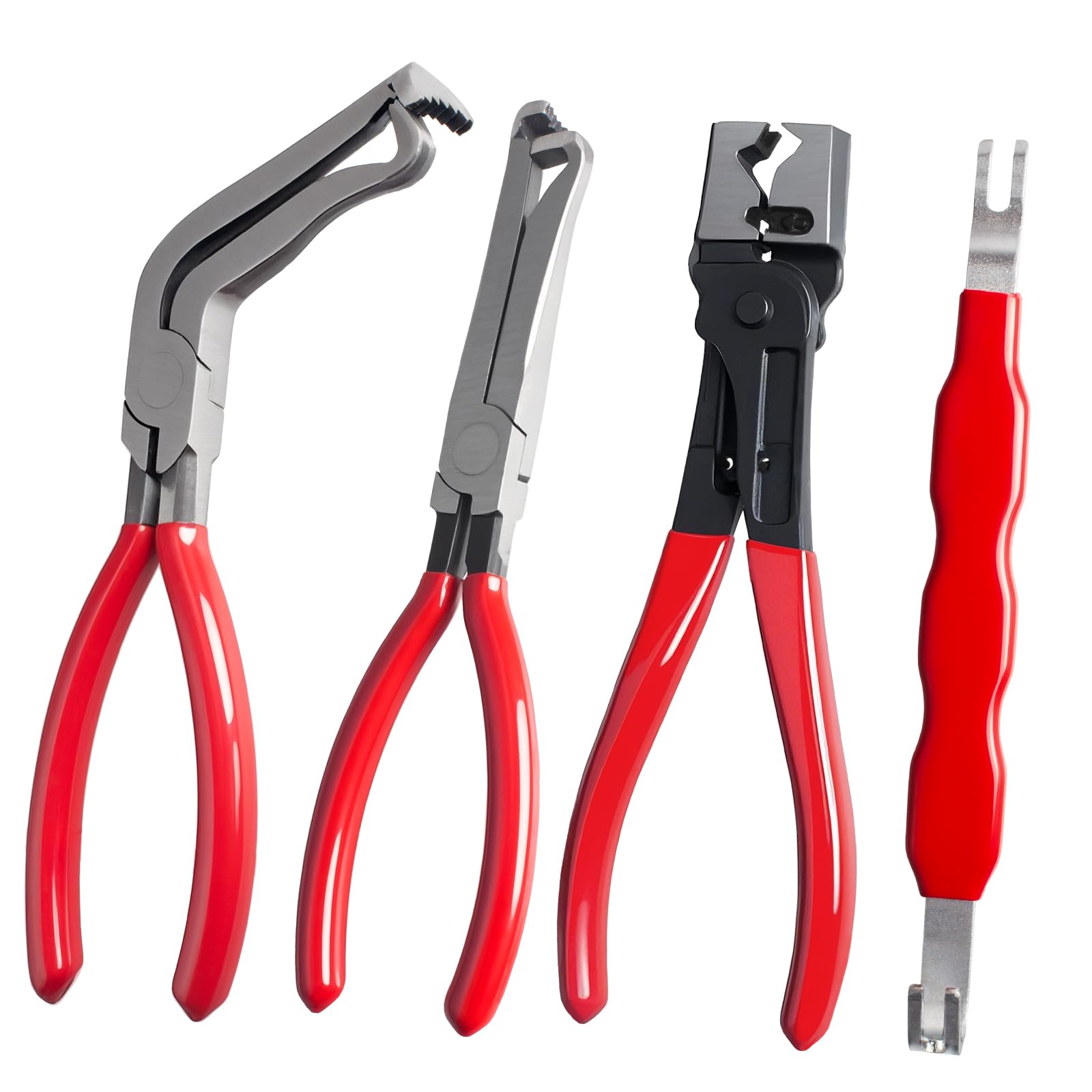
The WAMEIJU 4‑piece set offers an entry‑point for DIYers who want a basic assortment of disconnect tools without a large upfront investment. The kit includes a straight electrical disconnect plier, a 60‑degree bent plier, a double‑ended terminal connector separator tool, and a hose clamp plier. Each tool is made from high‑carbon steel with a plastic‑coated handle for slip resistance.
Users report that the straight and 60‑degree pliers effectively release locking push‑tab connectors on mass air flow sensors, ignition coils, and fuel injectors. The hose clamp plier handles spring‑type clamps on coolant hoses, and the separator tool works well on weather‑pack and similar terminal connectors. The rubberized grips provide decent comfort, and the set is light enough to store in a glove box or road‑kit bag.
The steel quality is adequate for occasional hobbyist use, but the tools may show wear faster under frequent professional demands. The double‑ended separator tool has a narrow tip that can bend if used aggressively on tight connectors. For the weekend DIYer who encounters a stubborn clip every few months, this set provides a practical way to avoid using screwdrivers or pliers that risk breaking the fitting.
What works
- Covers four common disconnect tasks at a reasonable entry cost
- 60‑degree bent plier reaches some angled connectors
- Rubber grips reduce hand fatigue during use
- Compact and easy to store in a vehicle kit
What doesn’t
- Steel quality is better suited for occasional rather than daily use
- Separator tool tip can bend under heavy force
Hardware & Specs Guide
Jaw Material and Finish
The jaw material determines how well a disconnect tool resists spreading and corrosion over time. Tools made from hardened CRV or high‑carbon steel maintain their shape under repeated high‑leverage use, while aluminum jaws are lighter but can deform on stubborn fittings. A corrosion‑resistant coating, such as nickel plating or a black oxide finish, extends the tool’s life in humid or salt‑exposed environments.
Handle Ergonomics and Grip
Comfort matters when you are working in a cramped engine bay for extended periods. Rubber or PVC‑coated handles provide a non‑slip grip even with greasy hands, while fully plastic handles keep weight low. Ergonomic contours that fill the palm reduce hot‑spots and allow you to apply maximum squeezing force without discomfort.
Tool Angle and Access
Straight tools work well on exposed connectors, but angled tips (30‑degree, 45‑degree, or 60‑degree) are essential for reaching fittings tucked behind the engine, against the firewall, or on top of the fuel tank. Low‑profile heads that measure less than half an inch thick can fit into gaps where bulkier tools simply cannot go.
Kit Completeness vs. Specialization
A comprehensive kit with multiple pliers, removers, and adapters covers different connector styles and line sizes, making it ideal for mixed‑fleet owners. A single specialized tool, such as a Toyota/Nissan main‑line disconnect, offers a faster, more precise fit for one specific connector but leaves other fittings uncovered. Choose based on how many different vehicles you typically service.
FAQ
Will a fuel disconnect tool fit all vehicle brands?
Can I use a standard flathead screwdriver instead of a disconnect tool?
What is the difference between a fuel line plier and a disconnect tool?
How do I know which size disconnect tool I need?
Final Thoughts: The Verdict
For most buyers, the best fuel disconnect tool winner is the TOOLEAGUE 6Pcs Set because it provides the broadest coverage of common tasks without overshooting the needs of a home garage. If you need a tool that fits into extremely tight engine compartments, grab the Lisle 37140 with its 45‑degree low‑profile head. And for all‑out professional coverage across domestic makes, nothing beats the comprehensive Orion Motor Tech 26pc Master Kit.

Certification: BSc in Mechanical Engineering
Education: Mechanical engineer
Lives In: 539 W Commerce St, Dallas, TX 75208, USA
Md Amir is an auto mechanic student and writer with over half a decade of experience in the automotive field. He has worked with top automotive brands such as Lexus, Quantum, and also owns two automotive blogs autocarneed.com and taxiwiz.com.