A Ford C4 transmission that shifts poorly or slips under load often signals a fluid mismatch rather than a mechanical failure. Selecting the wrong automatic transmission fluid—whether Dexron, Mercon, or a universal blend—can alter clutch friction, accelerate wear, and shorten the life of this classic three-speed. The C4 was engineered around specific hydraulic characteristics, and deviating from its original formulation introduces variables that owners rarely anticipate until the damage surfaces.
I’m Amir — the founder and writer behind Four Wheel Ask. I analyze automotive fluid specifications, OEM engineering bulletins, and long-term owner feedback to help enthusiasts match the right lubricant to their vintage drivetrain.
Understanding which fluid preserves the C4’s clutch-pack timing and band apply pressure is critical for anyone maintaining a Ford from the 1960s through early 1980s. Choosing the wrong fluid damages your classic automatic, so this expert guide to the best ford c4 transmission oil ensures you pick Type F for smooth shifts.
How To Choose The Best Ford C4 Transmission Oil
The Ford C4 transmission uses hydraulic pressure to apply clutches and bands through a valve body that was calibrated for a specific fluid friction curve. Most C4 units produced between 1964 and the early 1980s originally called for Type F fluid, which has a higher static coefficient of friction than Dexron. Choosing the wrong fluid can lead to delayed shifts, clutch slippage, or harsh engagement. The key factors to evaluate are fluid type, viscosity, additive package, and compatibility with any aftermarket modifications such as shift kits or high-stall torque converters.
Type F vs. Dexron: Why the Difference Matters
Type F fluid was developed by Ford for the C4 and C6 transmissions. It provides a higher coefficient of friction when clutches engage, which gives the C4 its characteristic firm, positive shift feel. Dexron, used by General Motors, introduces friction modifiers that produce a softer, longer shift overlap. Using Dexron in a C4 can cause band overlap and early clutch failure because the valve body was not designed for the lower friction curve. Always consult your transmission tag or rebuild documentation to confirm whether your C4 requires Type F or the later Mercon/Dexron spec introduced after 1977.
Viscosity and Thermal Stability
Most C4 applications use a fluid viscosity around 7.0 to 8.5 cSt at 100°C. Synthetic or synthetic-blend fluids offer better viscosity retention under high heat, which is important for C4 units used in towing, stop-and-go traffic, or performance driving. Thermal oxidation resistance prevents varnish buildup inside the valve body, which can block fluid passages and cause delayed engagement. Look for fluids with a high flash point—above 200°C—and that meet or exceed the original Ford M2C33-F (Type F) or M2C33-G (Mercon) specification.
Additive Packages and Clutch Protection
Anti-wear additives such as zinc dithiophosphate (ZDDP) and phosphorus compounds protect planetary gears, pump rotors, and thrust washers. Friction modifiers control shift quality—Type F fluids contain fewer modifiers than Dexron blends, so adding a universal synthetic ATF that advertises “smooth shifts” may actually reduce clutch grip in a C4. Avoid fluids that market broad compatibility across dozens of vehicle brands, as the additive balance rarely matches the original Ford formulation for the C4’s clutch material and separator plates.
Quick Comparison
On smaller screens, swipe sideways to see the full table.
| Model | Category | Best For | Key Spec | Amazon |
|---|---|---|---|---|
| Valvoline Type F ATF | Type F | Classic C4 restoration | High static friction coefficient | Amazon |
| Motorcraft XT11QDC | Mercon V | OEM-grade peace of mind | Synthetic formulation | Amazon |
| Castrol Transmax ATF+4 | ATF+4 | Multi-vehicle backup | Full synthetic, high temp | Amazon |
| Mobil 1 LV ATF HP | Dexron HP | Performance builds | Thermal stability to -78°F | Amazon |
| Idemitsu CVTF Type SB2 | CVT | Subaru TR580 applications | CVT-specific additive pack | Amazon |
In‑Depth Reviews
1. Valvoline Type F Automatic Transmission Fluid 1 QT (Case of 6)

Valvoline Type F is formulated to meet Ford’s original M2C33-F specification, which made it the factory-fill fluid for the C4 transmission throughout its early production run. This fluid delivers the high static coefficient of friction that the C4’s clutch packs and bands require for positive engagement without overlap. The case of six quarts provides a complete fill volume for most C4 units—typically 8.5 to 10 quarts dry—with enough left over for a partial flush or top-off after service.
The fluid’s oxidation resistance helps prevent varnish formation in the valve body at operating temperatures common in vintage Ford applications. Lab data indicates a flash point around 200°C, which supports stable viscosity retention during extended highway cruising or stop-and-go driving. Valvoline’s additive package includes anti-wear compounds that protect the transmission pump and planetary gears, addressing the higher wear rates seen in high-mileage C4 rebuilds that run without an auxiliary cooler.
For owners restoring a classic Mustang, Bronco, or F-100 equipped with the C4, this fluid matches the original shift character better than any universal Dexron or Mercon blend. Its consistent friction profile across temperature ranges makes it the most predictable choice for stock valve bodies and shift kits alike.
What works
- Meets original Ford Type F spec for C4 transmissions
- Strong resistance to thermal oxidation and varnish buildup
- Six-quart case covers a full C4 fill with spare capacity
What doesn’t
- Not compatible with post-1977 C4 units that specify Mercon
- May feel too firm for drivers accustomed to shift-kit smoothness
2. Motorcraft XT11QDC Transmission Fluid

Motorcraft XT11QDC is Ford’s current factory-formulated automatic transmission fluid designed for backward compatibility with earlier Mercon and Mercon V applications. As a synthetic blend, it provides improved low-temperature flow compared to conventional mineral-oil ATFs, which helps the C4’s pump prime faster in cold weather and reduces time-to-pressure during initial startup. The fluid’s additive package is engineered to protect brass and steel components commonly found in older Ford valve bodies.
The XT11QDC formulation includes friction modifiers that match the later Mercon V spec, so owners of post-1977 C4 transmissions that were updated to Mercon fluid will see correct shift timing without harshness. Viscosity retention at 100°C remains within the range that supports the C4’s hydraulic circuit, preventing band slippage under load. The single-quart bottle size allows owners to purchase exactly the amount needed for a top-off after a pan drop and filter change.
Where this fluid stands out is for C4 units paired with later-model engines where the transmission has been rebuilt with updated seals and clutch materials that specify Mercon V. Owners who prefer OE-branded components across their drivetrain will appreciate the engineering validation behind Motorcraft’s formulation.
What works
- OEM Ford formulation with proven quality control
- Synthetic blend improves cold-start pump prime
- Compatible with updated C4 builds using Mercon V spec
What doesn’t
- Mercon V friction curve is softer than original Type F
- Higher cost per quart compared to aftermarket equivalents
3. Castrol Transmax ATF+4 Automatic Transmission Fluid (1 Quart, Pack of 6)

Castrol Transmax ATF+4 is a full-synthetic automatic transmission fluid engineered primarily for Chrysler applications that require ATF+4, but its wide viscometric range and robust additive package make it a viable option for certain Ford transmissions that specify ATF+4 or earlier ATF+3 formulations. The fluid uses a high-viscosity-index base oil that maintains shear stability at elevated temperatures, which is relevant for C4 transmissions operating with auxiliary coolers in towing or desert conditions.
At low temperatures, the Transmax formulation stays fluid enough to reach -40°F without thickening, which reduces the risk of pump cavitation during cold starts in northern climates. The six-pack configuration brings the per-quart cost down, making it an economical choice if multiple vehicles in the household share the ATF+4 specification. Castrol’s synthetic technology also improves oxidation life compared to conventional fluids, extending service intervals for low-mileage seasonal vehicles.
For C4 owners, this fluid is best suited to later-model units that have been upgraded with ATF+4-compatible seal materials and friction plates. Early C4 transmissions built for Type F fluid will not benefit from the friction modifier balance in this formulation and may experience delayed clutch engagement.
What works
- Full-synthetic base provides excellent shear stability
- Exceptional low-temperature fluidity down to -40°F
- Six-pack offers strong value for multi-vehicle households
What doesn’t
- ATF+4 spec not designed for original Type-F C4 units
- Friction modifier profile softens shift feel
4. Mobil 1 Full Synthetic LV Automatic Transmission Fluid HP (6-Pack of 1 Quart)

Mobil 1 LV ATF HP is a high-performance synthetic fluid formulated to meet the Dexron HP specification, which is required by late-model GM transmissions but also delivers exceptional thermal stability and frictional consistency for performance-oriented automatic builds. Its low-viscosity formulation (LV) reduces parasitic drag inside the transmission, which can improve fluid flow through the valve body at high RPM and help maintain consistent band apply pressure during hard shifting events.
The fluid’s oxidation resistance is among the highest in the ATF category, with a flash point above 230°C, meaning it resists breakdown even in C4 transmissions that see sustained 250°F sump temperatures behind high-torque V8s. Mobil 1’s additive technology also keeps the valve body and clutch surfaces clean over extended drain intervals, reducing the risk of sticky spool valves that cause delayed or harsh shifts. At -61°F, the fluid still flows sufficiently to prevent pump starvation in vehicles stored in extreme cold climates.
For C4 owners building a high-horsepower or road-race application where heat management is critical, this fluid provides a safety margin that conventional Type F fluids cannot match. It is not intended for stock C4 units built before the Mercon era, but for a fully rebuilt transmission with modern seals and a shift kit, the thermal headroom and cleanliness add real durability.
What works
- Outstanding thermal stability for high-heat applications
- Low-viscosity improves flow in performance valve bodies
- Operates reliably down to -61°F for cold climates
What doesn’t
- Dexron HP spec incompatible with original C4 friction materials
- Premium price per quart with no Type F equivalent available
5. Idemitsu CVT Transmission Fluid Type SB2 (5-Quart Bottle)
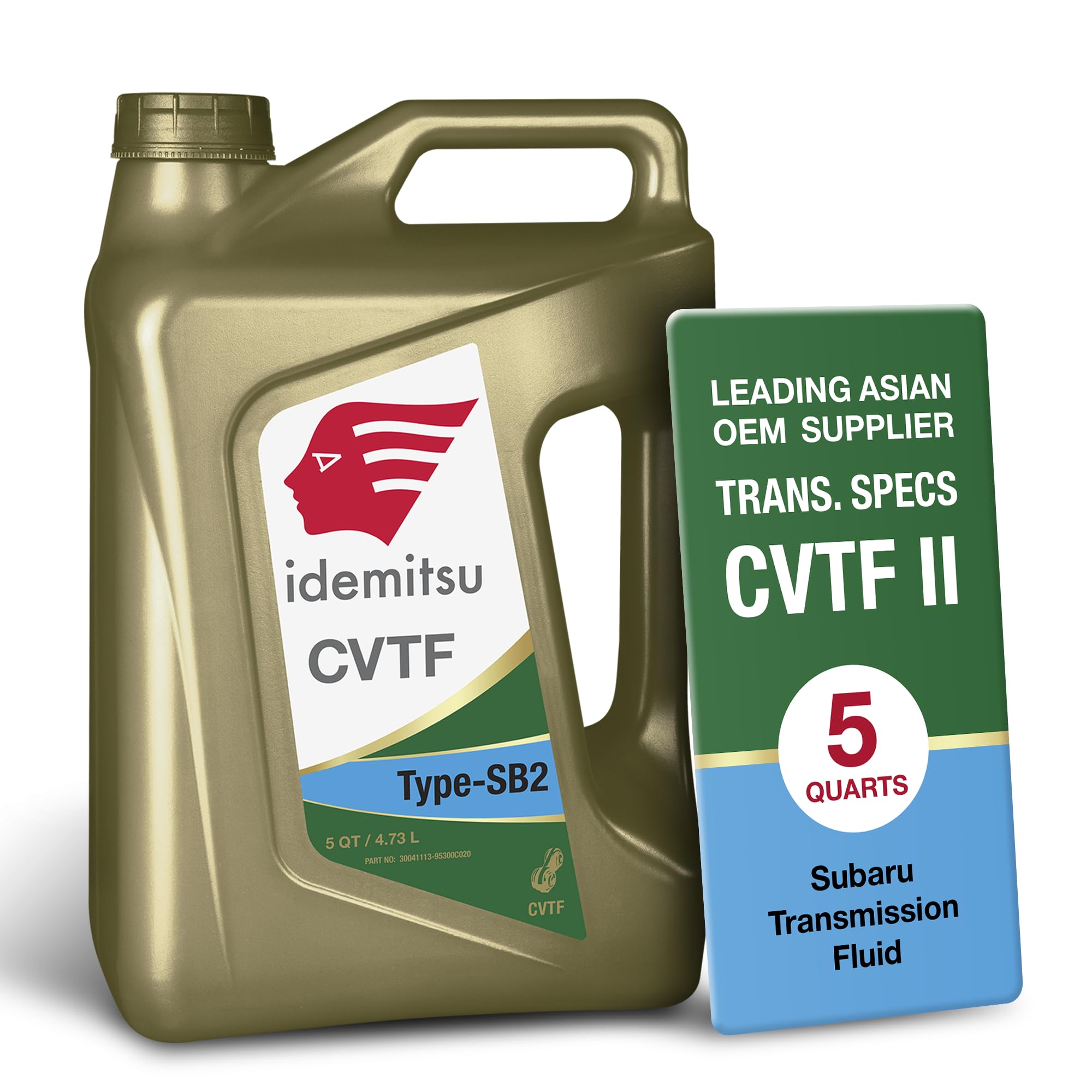
Idemitsu CVTF Type SB2 is a continuously variable transmission fluid engineered specifically for Subaru TR580 CVT units that require the SB2 specification. Its formulation focuses on belt-pulley friction characteristics rather than the clutch-and-band engagement profile that a Ford C4 transmission demands. The fluid uses a specialized additive package to prevent belt slip and reduce pully wear under the variable ratio conditions unique to CVT operation.
The 5-quart bottle design reduces packaging waste and simplifies storage for shops that service multiple CVT-equipped vehicles. Idemitsu’s viscosity specification for this fluid, approximately 30.9 cSt at 40°C, reflects the higher flow demands of a CVT’s hydraulic circuit and is substantially different from the 7.0–8.5 cSt at 100°C range typical of automatic transmission fluids used in the C4. Anti-wear technology in this fluid protects the steel push belts and pulleys rather than the bronze thrust washers and steel planetary gears found in a C4.
While this product is precision-engineered for its intended Subaru application, it does not share the friction curve or viscosity profile required by the Ford C4’s hydraulic system. Owners seeking a fluid for a C4 transmission should prioritize Type F or Mercon formulations rather than CVT-specific gearbox oils.
What works
- Engineered specifically for Subaru SB2 CVT applications
- Bulk 5-quart bottle reduces per-ounce cost for CVT users
- Strong anti-wear protection for belt-pulley systems
What doesn’t
- CVT formulation not compatible with C4 clutch-and-band design
- Viscosity profile does not match Ford automatic transmission requirements
Hardware & Specs Guide
Type F vs. Mercon vs. Dexron
The Ford C4 transmission originally required Type F fluid meeting Ford specification M2C33-F. Type F has a higher static coefficient of friction (typically around 0.45 to 0.50) compared to Dexron (around 0.35 to 0.40). After 1977, Ford transitioned C4 production to Mercon fluid, which has a friction curve closer to Dexron. Using Type F in a post-1977 transmission designed for Mercon can cause harsh shifts, while using Dexron in a pre-1977 Type-F unit leads to clutch slippage and band overlap. Always verify the year and spec tag on your transmission before selecting fluid.
Viscosity & Thermal Limits
Most C4 transmissions operate best with a fluid viscosity between 7.0 and 8.5 cSt at 100°C. The original Type F mineral oils typically delivered around 7.5 cSt. Synthetic and semi-synthetic fluids can maintain this range across a wider temperature window, with pour points as low as -50°F and flash points above 400°F. For towing or performance use, a fluid with a flash point above 220°C and a viscosity index above 150 will resist thermal breakdown longer than conventional mineral ATF.
Friction Modifiers and Shift Feel
Type F fluid contains minimal friction modifiers, which allows the clutch plates to lock up quickly and produce a firm shift. Dexron and Mercon use organic friction modifiers that extend shift overlap time for a smoother feel. Adding a shift kit to a C4 changes the hydraulic apply rate, so the fluid choice must match the kit manufacturer’s recommendation. Many aftermarket shift kit installers specify Dexron or Mercon after the kit is installed because the modified valve body alters clutch apply timing independently of the fluid friction curve.
Service Intervals and Capacity
A dry C4 transmission holds approximately 8.5 to 10 quarts of fluid depending on the torque converter size and cooler circuit length. A typical pan-drop and filter change replaces 3 to 4 quarts. Ford originally recommended fluid changes every 24,000 miles for normal service and 12,000 miles for severe duty. With modern synthetic fluids, many owners extend the interval to 30,000 miles if the transmission has a cooler and operates within the normal temperature range. Always check fluid level with the engine running and the transmission in Park on a level surface.
FAQ
What type of automatic transmission fluid does a Ford C4 require?
Can I use Dexron in a Ford C4 transmission?
How much transmission fluid does a Ford C4 hold?
Is synthetic ATF better for a Ford C4 transmission?
Can I mix Type F and Mercon in a C4 transmission?
Final Thoughts: The Verdict
For most buyers, the best ford c4 transmission oil winner is the Valvoline Type F ATF because it matches the original M2C33-F specification that the C4 was engineered to use, delivering the correct clutch friction, shift timing, and thermal resistance for stock and lightly modified units. If you want OEM-grade confidence for a later-model C4 that specifies Mercon, grab the Motorcraft XT11QDC. And for a high-horsepower build where thermal headroom matters most, nothing beats the Mobil 1 LV ATF HP for its oxidation stability and cold-flow performance.

Certification: BSc in Mechanical Engineering
Education: Mechanical engineer
Lives In: 539 W Commerce St, Dallas, TX 75208, USA
Md Amir is an auto mechanic student and writer with over half a decade of experience in the automotive field. He has worked with top automotive brands such as Lexus, Quantum, and also owns two automotive blogs autocarneed.com and taxiwiz.com.