Aluminum wheels demand a cleaner that dissolves baked-on brake dust without etching or staining the bare or clear-coated surface. The wrong formula leaves hazy patches or pitted rims after just a few uses, so choosing a chemistry that targets iron particles while preserving the wheel’s finish is the difference between showroom shine and permanent damage.
I’m Amir — the founder and writer behind Four Wheel Ask. My approach to wheel cleaners relies on cross-referencing chemical formulations with real-world owner reports to identify which products actually remove contamination without compromising anodized, painted, or machined aluminum surfaces.
This guide breaks down five top-rated wheel cleaners, comparing their formulas, application methods, and real-world effectiveness. Through deep analysis of owner feedback and dozens of formulations, the best wheel cleaner for aluminum wheels delivers safe cleaning without harsh acids.
How To Choose The Best Wheel Cleaner For Aluminum Wheels
Not all wheel cleaners treat aluminum the same. Acidic formulas strip heavy oxidation but can damage clear coats and machined surfaces over time. Matching the cleaner chemistry to your wheel type and contamination level ensures safe, repeatable results.
Acid-Free vs. Acid-Based Formulas
Acid-free cleaners rely on alkaline detergents and chelating agents to lift brake dust and road grime without etching. These are the safer daily choice for clear-coated, painted, or polished aluminum. Acid-based products remove stubborn calcium and mineral deposits faster but require strict dwell-time control and full rinsing to avoid residue staining. For most modern aluminum wheels, acid-free is the lower-risk option.
Iron-Reacting Technology
Cleaners with iron-reacting additives change color when they contact embedded metallic particles from brake pads. This visual cue tells you where contamination still clings and when the product has finished working. It reduces guesswork and prevents over-scrubbing on soft aluminum surfaces.
Application and Safety Features
High-viscosity formulas cling to vertical wheel faces and barrels longer, giving the chemistry more time to dissolve grime. Non-corrosive, biodegradable ingredients lower the risk to surrounding paint, plastic wheel wells, and the environment. A product that sprays on thick and rinses clean with minimal agitation saves time and protects your rims over many wash cycles.
Quick Comparison
On smaller screens, swipe sideways to see the full table.
| Model | Category | Best For | Key Spec | Amazon |
|---|---|---|---|---|
| KOCHCHEMIE Magic Wheel Cleaner | Acid-Free | Color-changing feedback | 500 ml | Amazon |
| P & S Brake Buster | Non-Acid | Versatile foam action | 1 Quart | Amazon |
| MAD Acid Heavy Duty | Acid-Based | Heavy deposit removal | 16 oz | Amazon |
| 303 Products Heavy Duty | Acid-Free | All-wheel safety | 15.5 oz | Amazon |
| 3D Yellow Degreaser | Degreaser | Multi-surface use | 16 oz | Amazon |
In‑Depth Reviews
1. KOCHCHEMIE Magic Wheel Cleaner

KOCHCHEMIE Magic Wheel Cleaner uses a high-viscosity formula that clings to the wheel face and barrel, giving it extended dwell time on vertical surfaces. The acid-free chemistry is safe on painted alloy wheels, high-quality chrome rims, and steel wheels, making it a versatile choice for mixed-wheel households. The noticeable red discoloration as it dissolves iron particles provides real-time feedback so you know exactly when contamination has been lifted.
German-formulated and trusted by professional detailers since 1968, this cleaner balances strong chelating agents with a pH profile that won’t attack clear coats or machined aluminum. Owners report that the thick spray adheres well and requires minimal agitation for moderate brake dust buildup. The 500-milliliter bottle covers multiple wheels, and the lack of harsh odors makes interior garage use more comfortable than with solvent-based alternatives.
Where it truly stands out is the visual confirmation of cleaning action — you see the purple spray turn red as it works, then rinse to bare, bright aluminum. That feedback loop reduces the temptation to over-scrub and helps protect soft alloy surfaces from abrasion. For daily drivers and weekend detailing sessions alike, this delivers professional-grade results without guesswork.
What works
- Color-changing action confirms when iron particles are fully dissolved
- High-viscosity spray clings to vertical wheel surfaces without dripping
- Acid-free formula safe on clear-coated, chrome, and painted aluminum
What doesn’t
- Higher per-ounce cost compared to basic degreasers
- May require a second pass on heavily caked brake dust
2. P & S Brake Buster Wheel and Tire Cleaner

P & S Brake Buster creates a generous foam that lifts brake dust, oil, and road grime from aluminum, steel, chrome, powder-coated, and painted wheels without requiring harsh acids. The ready-to-use formula can also be diluted in a foam sprayer for lighter maintenance cleaning, giving you flexibility based on contamination levels. Its acid-free chemistry means no etching or hazing on clear-coated aluminum faces over repeated use.
Owner feedback consistently highlights that the foam clings well to both the wheel face and tire sidewall, breaking down embedded iron particles with minimal brushing. The product also leaves a clean matte finish on tires, which helps dressings adhere better later. Multiple verified reviews note that even years of baked-on brake dust on neglected factory wheels lifted after a short dwell and a soft-bristle brush pass.
Beyond cleaning, Brake Buster leaves a protective layer that helps repel future grime buildup — extending the time between deep cleans. The one-quart size offers solid value for frequent detailers, and the proven track record from P & S (part of The Rag Company since 1999) adds confidence in formulation consistency. For owners who want a single product that handles both wheels and tires effectively, this is a strong contender.
What works
- Foaming action lifts heavy brake dust with less scrubbing effort
- Safe on all wheel types including clear-coated and powder-coated aluminum
- Leaves a protective film that slows future grime buildup
What doesn’t
- Sprayer mechanism may wear out before the bottle is empty
- Very stubborn deposits may need a dedicated iron-remover follow-up
3. MAD Acid Heavy Duty Wheel Cleaner

MAD Acid Heavy Duty Wheel Cleaner targets the toughest brake dust, rust, and hard water spots that standard pH-neutral cleaners struggle to shift. Its acid-based formulation is designed specifically for chrome, clear-coated, alloy, and painted wheels where mineral deposits and calcium buildup have created stubborn white spots or etched stains. The manufacturer recommends a short dwell time of 15 to 20 seconds, followed by a pressure rinse — a workflow that suits heavily soiled wheels.
This cleaner shines when dealing with neglected wheels that have layers of baked-on contamination. The acid chemistry breaks the bond between metallic particles and the wheel surface more aggressively than alkaline alternatives, which reduces the need for vigorous scrubbing that could scratch soft aluminum. Owners report that it restores a bright, reflective finish on chrome and polished aluminum rims after just one application.
Because the formula is acid-based, it demands stricter attention to dwell time and thorough rinsing to prevent residue from drying on the wheel. It is best suited for detailers who understand the importance of wetting the wheel first and neutralizing afterward. For deep-cleaning sessions where heavy contamination is the norm, this product delivers results that milder cleaners simply cannot match.
What works
- Breaks down hard water spots and calcium deposits effectively
- Short dwell time reduces overall cleaning effort
- Restores bright finish on chrome and polished aluminum
What doesn’t
- Acid formula requires careful dwell-time management to avoid etching
- Not ideal for frequent maintenance washes on clear-coated wheels
4. 303 Products Heavy Duty Wheel Cleaner

303 Products Heavy Duty Wheel Cleaner brings professional-grade cleaning to a wider audience with an acid-free, non-corrosive formula that is safe on aluminum, chrome, steel, and alloy wheels. The purple iron-indicating chemistry changes color as it dissolves brake dust, giving you a clear visual signal when the product has finished working. The manufacturer recommends a simple spray-on, two-minute dwell, and rinse process that keeps the workflow efficient for busy owners.
Feedback from long-term users emphasizes the cleaner’s mild odor compared to many competitors, which makes it more pleasant to use in enclosed garage spaces. The formula does not require heavy agitation for moderate brake dust layers — a soft rinse removes most contamination, and a light brush handles any remaining spots. For over 40 years, 303 Products has built a reputation for reliable surface-safe cleaners, and this wheel cleaner fits that legacy.
The bottle size is compact at 15.5 fluid ounces, making it a good entry-point for owners who want to test an iron-indicating formula without committing to a gallon. While very heavy buildup may require a second application, the all-wheel safety and simple rinse process make this a solid mid-range choice for regular maintenance detailing on aluminum wheels.
What works
- Purple-to-color-change visually confirms cleaning progress
- Non-corrosive formula safe across all wheel finishes
- Mild scent makes garage use more comfortable
What doesn’t
- Smaller bottle size may not suit heavy-use detailers
- Requires multiple passes on severely neglected wheels
5. 3D Yellow Degreaser
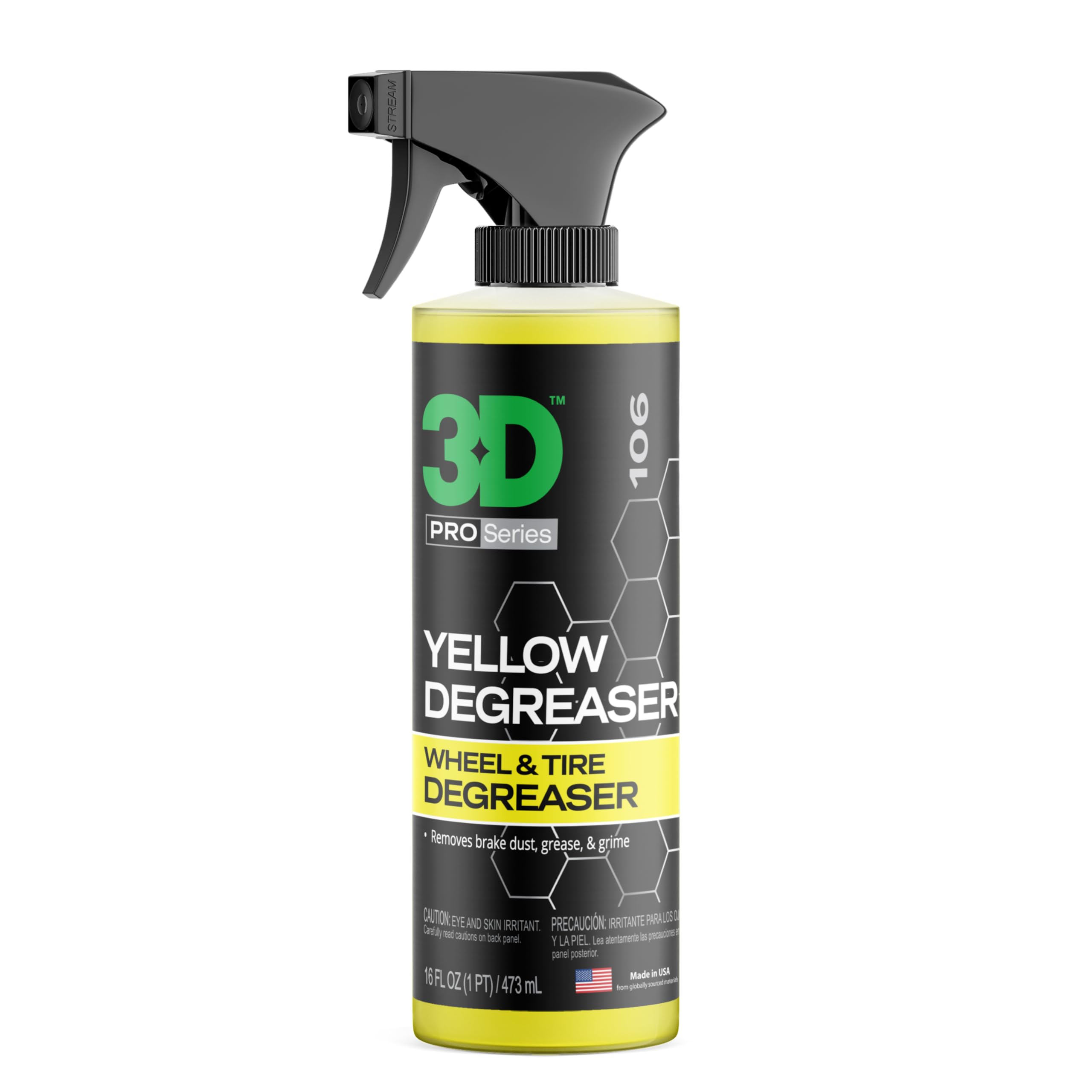
3D Yellow Degreaser takes a broader approach by functioning as both a wheel cleaner and a multi-surface degreaser for tires, wheel wells, and even whitewalls. Its acid-free formula relies on alkaline detergents to break the oily bond that holds brake dust and silicone residue to aluminum surfaces. The result is a cleaner that handles grime without the corrosive risk associated with acid-based alternatives, while remaining biodegradable and eco-conscious.
Owners who use this product often pair it with a dedicated iron remover for heavy contamination, but for routine maintenance cleaning it performs well on its own. The degreaser lifts built-up tire dressings and road film from the wheel barrels and back faces, restoring a clean substrate for sealants. Made in the USA by 3D’s research team, the formulation is backed by professional detailer input and designed for repeated, safe use across multiple vehicle surfaces.
Where the 3D Yellow Degreaser earns its place is in versatility — you can use it on wheels, tires, engine bays, and exterior plastic without worrying about chemical incompatibility. The 16-ounce size is a practical starting point, and the lack of harsh acids means you can let it dwell longer without monitoring the clock. For owners who want one product that covers several detailing tasks, this is a practical, budget-friendly option.
What works
- Versatile formula works on wheels, tires, and engine bay surfaces
- Biodegradable and eco-conscious chemistry
- Acid-free and safe for repeated use on aluminum finishes
What doesn’t
- Not formulated for heavy iron deposit removal
- May require a dedicated wheel cleaner for caked-on brake dust
Hardware & Specs Guide
Iron-Reacting vs. Standard Cleaners
Iron-reacting formulas contain ammonium thioglycolate or similar compounds that change color upon contact with ferrous particles. This visual feedback is especially useful on aluminum wheels because it shows exactly where embedded brake dust still clings, preventing over-agitation that can mar the soft metal. Standard cleaners lack this indicator and rely entirely on dwell time and physical scrubbing.
Viscosity and Vertical Cling
High-viscosity wheel cleaners are formulated to stay on upright wheel faces and barrels rather than running off onto the tire or driveway. Thicker gels and foams provide longer chemical contact, which improves brake dust breakdown without requiring more product. Lower-viscosity sprays work well for horizontal surfaces but often need multiple applications on vertical spokes.
pH Range and Wheel Finish Compatibility
Acid-free wheel cleaners typically operate in a pH range of 8 to 10 (alkaline), which lifts grime without attacking clear coats, anodized layers, or polished aluminum. Acid-based formulas fall below pH 4 and can strip mineral deposits but also risk etching clear coats if left on too long. Matching the pH to your wheel’s protective layer is critical for long-term finish preservation.
Biodegradability and Safety Certifications
Many modern wheel cleaners feature biodegradable surfactants and low-VOC formulations that reduce environmental impact during runoff. Products marketed as non-corrosive and free of harsh acids also pose lower risk to adjacent painted panels, plastic wheel well liners, and rubber brake components. Checking for these certifications helps ensure the cleaner is safe for frequent use on a daily driver.
FAQ
Can I use a regular car soap to clean aluminum wheels?
How often should I deep clean my aluminum wheels?
Will an acid-free cleaner remove heavy brake dust buildup?
What is the best way to apply wheel cleaner for even coverage?
Final Thoughts: The Verdict
For most buyers, the wheel cleaner for aluminum wheels winner is the KOCHCHEMIE Magic Wheel Cleaner because it combines iron-reacting color feedback with an acid-free formula safe for clear-coated and machined rims. If you want thick foam action that handles both wheels and tires in one pass, grab the P & S Brake Buster. And for heavy contamination and hard water spots, nothing beats the MAD Acid Heavy Duty Wheel Cleaner.

Certification: BSc in Mechanical Engineering
Education: Mechanical engineer
Lives In: 539 W Commerce St, Dallas, TX 75208, USA
Md Amir is an auto mechanic student and writer with over half a decade of experience in the automotive field. He has worked with top automotive brands such as Lexus, Quantum, and also owns two automotive blogs autocarneed.com and taxiwiz.com.