A battery terminal clamp is one of those parts you ignore until your car refuses to start at the worst possible moment. Its material composition, contact geometry, and corrosion resistance dictate how much current reaches your starter and how long the connection stays clean under hood heat and road salt. Picking the wrong alloy or a flimsy design can turn a routine replacement into a recurring headache.
I’m Amir — the founder and writer behind Four Wheel Ask. I’ve spent years analyzing automotive electrical component market data, comparing build specifications across brands, and aggregating owner feedback to identify what separates durable terminals from those that cause intermittent electrical issues.
After evaluating the latest offerings in this category, I’ve narrowed down the options to five distinct sets that deliver real performance at various investment levels. To find the best car battery terminal clamp, compare the material conductivity, corrosion resistance, and how securely multiple battery leads connect.
How To Choose The Best Car Battery Terminal Clamp
Terminal clamps are small components that carry big electrical responsibility. Choosing based on material quality, corrosion protection, and connection flexibility separates a set that lasts years from one that causes voltage drop and starting trouble within months.
Material Conductivity and Durability
The metal used in the clamp determines how much resistance the current encounters. Pure copper offers the highest conductivity but is softer and more expensive. Brass is a strong, corrosion-resistant alloy that provides excellent power transfer at a reasonable cost. Lead terminals, common on older vehicles, deliver adequate conductivity but oxidize faster. Cheap zinc-alloy terminals should be avoided — they corrode quickly and can cause intermittent electrical faults.
Corrosion Resistance Features
Battery acid fumes, heat cycling, and moisture create a corrosive environment. Look for terminals with anti-corrosion washers (often impregnated with protective compounds), sealed covers that block fumes, and finishes like marine-grade chrome or tinned copper that resist oxidation. These features dramatically extend the usable life of the connection.
Terminal Configuration and Lead Capacity
Modern vehicles often have multiple accessory cables — amplifiers, winches, lighting, or auxiliary fuse blocks — that need to attach at the battery. A terminal with multiple output posts (typically two or three separate studs) allows clean, secure connections without stacking several ring terminals on a single bolt. Check that the output sizes match your cable gauges (0, 2, 4, or 8 AWG).
Compatibility and Installation
Not all terminals fit every battery post. Top-post designs clamp onto standard SAE posts, while military-style terminals use a side-bolt mechanism that grips a wider range of post diameters. Verify the clamp opening size and whether the kit includes adapters or shims. Most quality sets include hardware, heat shrink tubing, and covers for a complete installation.
Quick Comparison
On smaller screens, swipe sideways to see the full table.
| Model | Category | Best For | Key Spec | Amazon |
|---|---|---|---|---|
| Recoil PBT-S04 | Premium Brass | Conductivity & build quality | Forged brass, 2/4/8 ga outputs | Amazon |
| Fastronix Military Spec | Military Lead | Rugged heavy-duty use | Lead construction, USA made | Amazon |
| Bateria Power Copper Kit | Pure Copper | Corrosion resistance value | 99.9% copper, full accessory kit | Amazon |
| DLronwey Military Kit | Alloy Military | Complete budget upgrade | Alloy build, copper lugs included | Amazon |
| DLronwey Basic Pair | Entry Military | Simple no-frills replacement | Alloy pair with washers | Amazon |
In‑Depth Reviews
1. Recoil PBT-S04 Premium Brass Battery Terminals
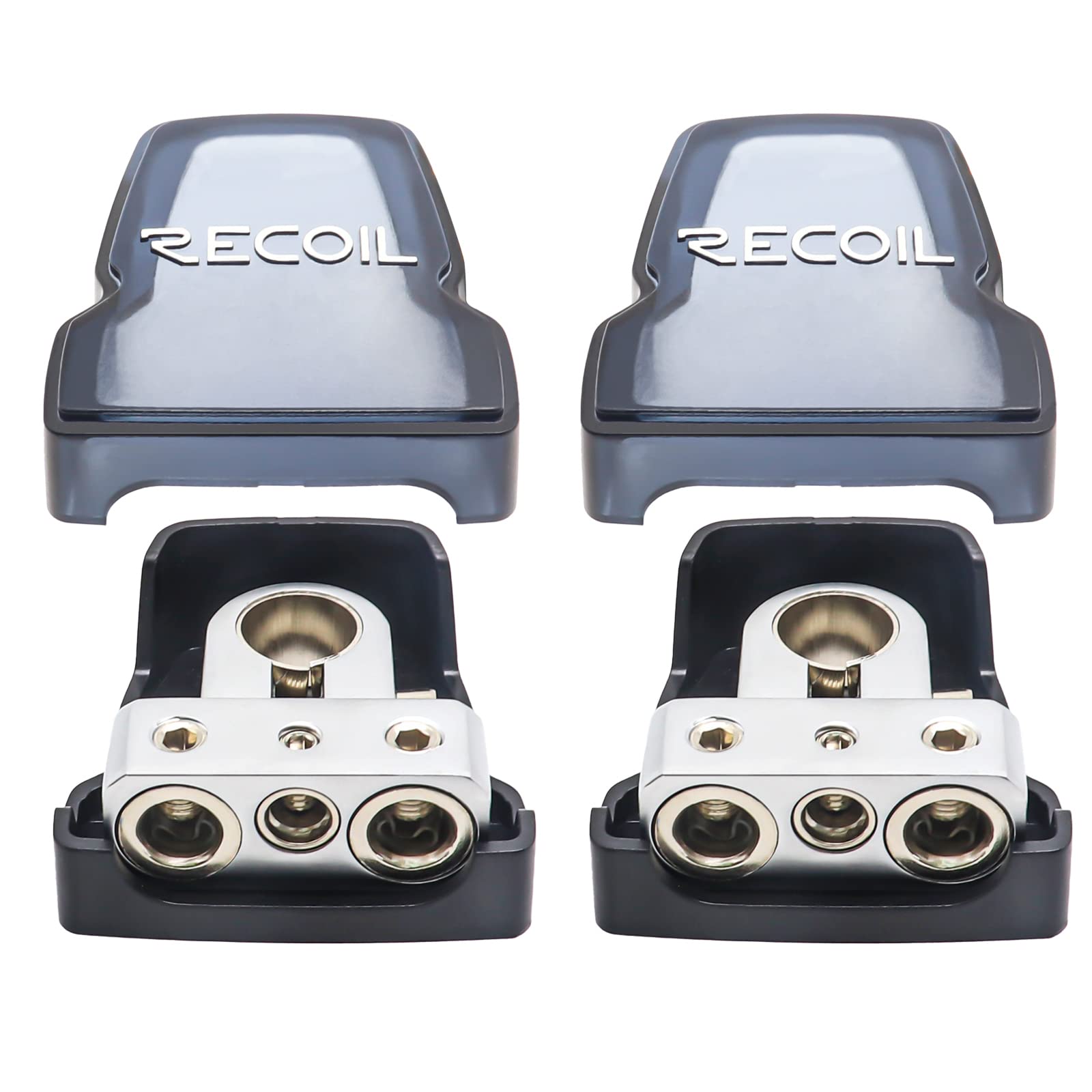
The Recoil PBT-S04 set is machined from forged and precision-machined brass rather than cast zinc or alloy, giving it superior conductivity and structural rigidity. Each terminal splits into three separate output posts — two accepting 0, 2, or 4 AWG cable and one handling 4 or 8 AWG — so you can run multiple accessories without stacking connectors on a single stud. The oversized convex screws bite into the cable lug firmly, reducing the chance of loosening from vibration.
A marine-grade satin chrome finish provides excellent corrosion resistance, and the high-temperature polycarbonate cases insulate the terminals while allowing visual inspection of the connection. The adapter collars let the clamp fit both standard and slightly oversized battery posts, which broadens compatibility across different battery brands.
Owner feedback consistently highlights the solid feel of the brass construction and the ease of installing multiple cables cleanly. The only trade-off is that the brass material is heavier than alloy alternatives, and the set does not include anti-corrosion washers or heat shrink tubing — those must be purchased separately if desired.
What works
- Forged brass delivers outstanding conductivity
- Three separate output posts for clean wiring
- Marine-grade chrome finish resists corrosion
- Oversized convex screws hold cables securely
- Polycarbonate covers provide insulation
What doesn’t
- Heavier than alloy or aluminum terminals
- No anti-corrosion washers included
- Heat shrink tubing not part of the package
2. Fastronix Top Post Military Spec Terminal and Cover Kit

Fastronix builds this terminal kit in the USA using lead construction — a material that has proven reliable for decades in automotive electrical systems. The military-spec design uses a side-bolt clamping mechanism that grips the battery post firmly without the spreading or cracking that can affect stamped terminals. Each terminal can accommodate multiple cable leads, making it practical for vehicles with several accessory circuits.
The included durable military-style covers snap over the terminals to protect against accidental short circuits and reduce exposure to corrosive fumes. The 3/8-inch bolt holds all leads tightly against the connector body, and the lead material provides good current-carrying capacity with minimal voltage drop under heavy loads.
Feedback from owners of off-road vehicles, boats, and older trucks indicates that the lead construction stands up well to vibration and temperature swings. The main limitation is that lead oxidizes faster than brass or copper, so periodic cleaning of the contact surfaces is recommended. The kit also lacks heat shrink tubing and anti-corrosion washers.
What works
- Made in the USA with proven lead construction
- Military-style side-bolt clamping grips securely
- Holds multiple battery cable leads
- Durable covers protect against shorts and fumes
What doesn’t
- Lead oxidizes faster than brass or copper
- No anti-corrosion washers in the kit
- No heat shrink tubing included
3. Bateria Power Pure Copper Battery Terminal Connectors Kit
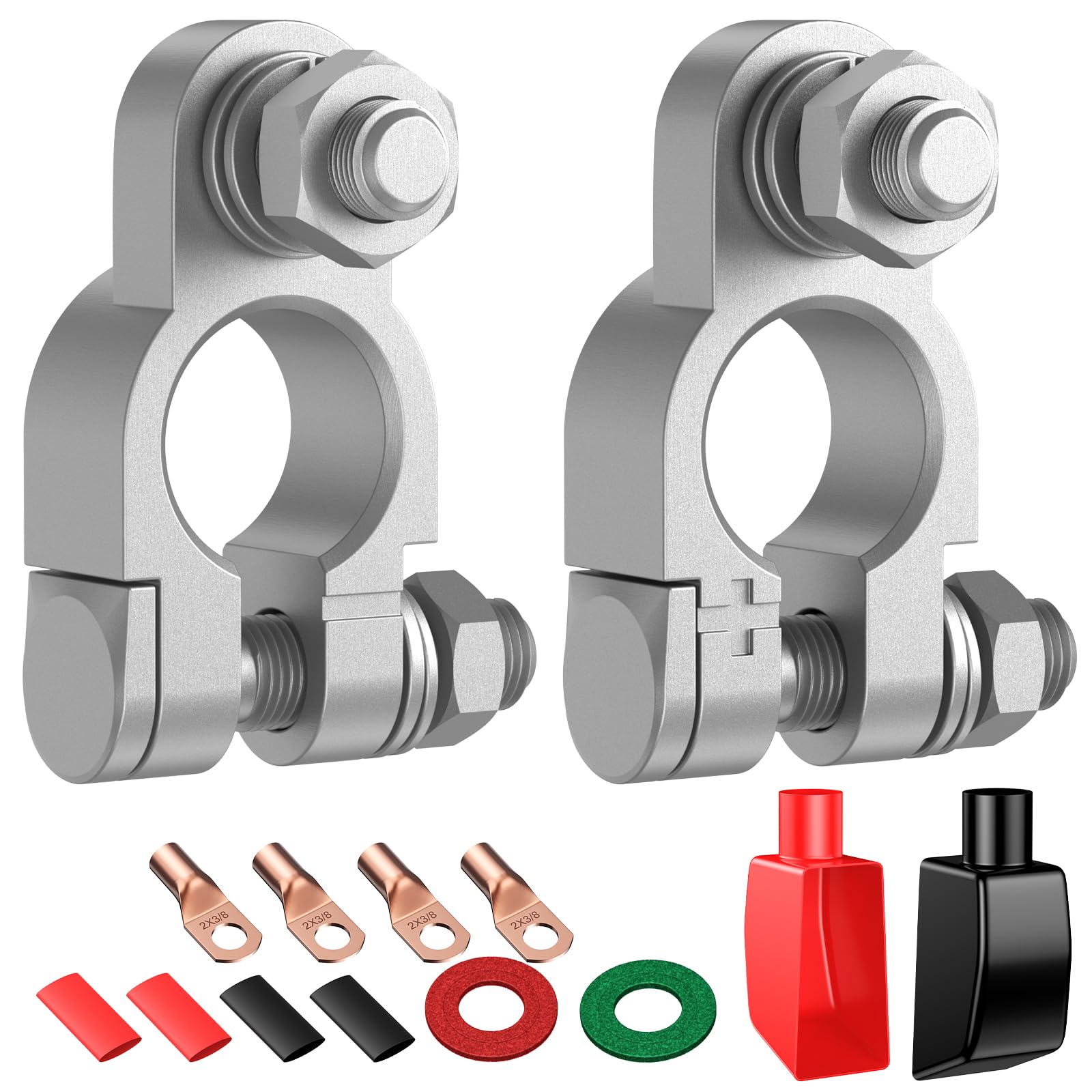
Bateria Power uses 99.9 percent pure copper for this terminal set, which gives it the highest conductivity of any option in this lineup. The copper construction also provides superior corrosion resistance compared to alloy or lead terminals, and the material stays cool under heavy current draw. The kit arrives with two heavy-duty battery terminals, positive and negative anti-corrosion washers, four heat shrink tubes, two protective covers, and four 2-gauge 3/8-inch copper lugs — a comprehensive package for a complete installation.
The included anti-corrosion washers are a practical addition that most competitors omit — they sit between the terminal base and the battery post to block acid creep and fume damage. The red and black covers snap on securely, and the heat shrink tubing insulates the cable-to-lug connections. Each terminal accommodates multiple wires, and the bolts and nuts are machined for easy tightening and removal.
User reports note that the pure copper terminals deliver noticeably cleaner voltage readings on multi-meter tests compared to alloy units they replaced. The only downside is that the copper material is softer than brass, so over-tightening the bolts can deform the metal slightly. The 2-gauge lugs are also specific to that wire size, so larger or smaller cables need separate lugs.
What works
- 99.9% pure copper for maximum conductivity
- Complete kit with washers, tubes, covers, and lugs
- Anti-corrosion washers block acid damage
- Runs cooler than alloy alternatives
What doesn’t
- Softer metal can deform if over-tightened
- Lugs are 2-gauge only — not universal
- Heat shrink tubing is basic grade
4. DLronwey Military Spec Battery Terminal Kit
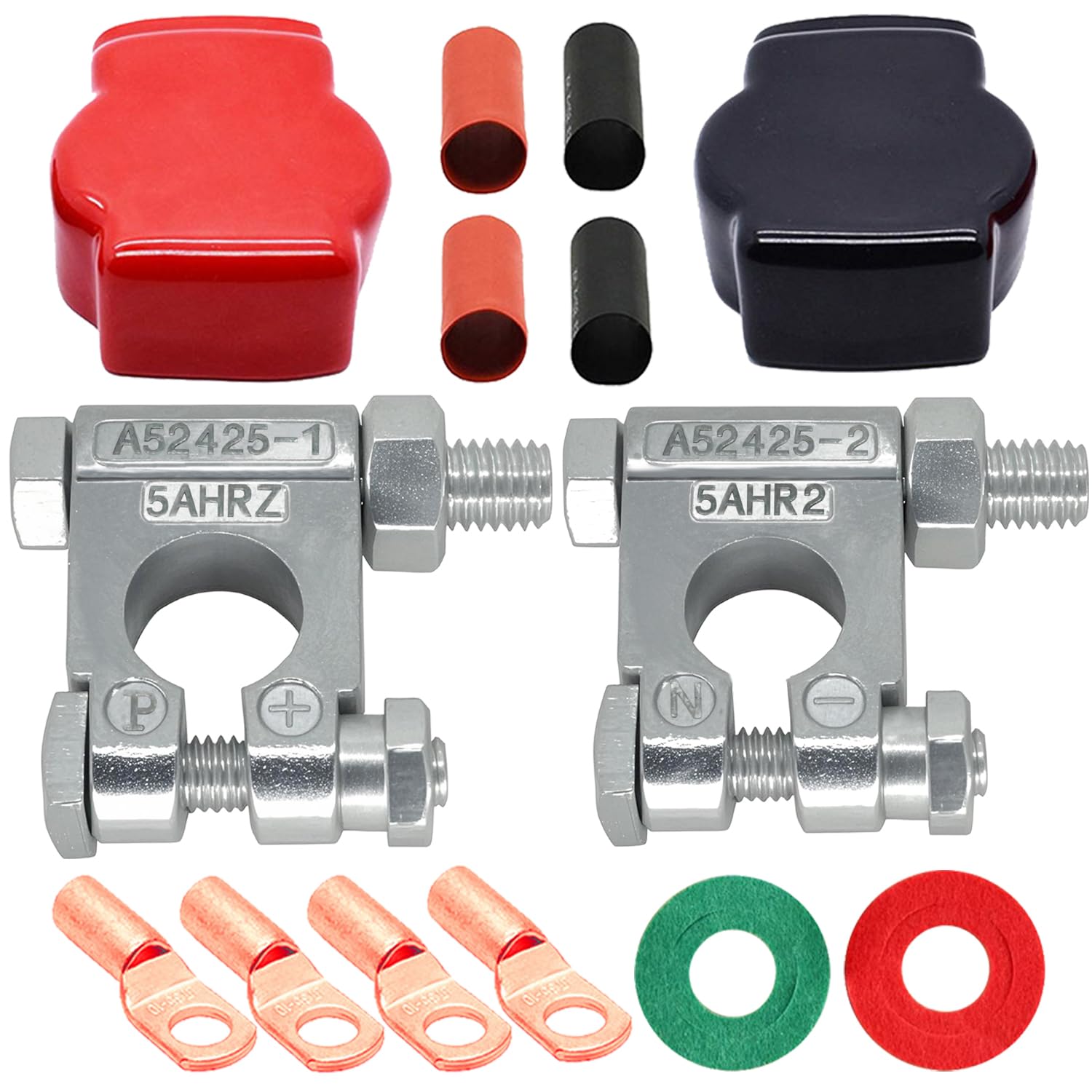
DLronwey delivers a military-style terminal kit built from alloy material for a balance of conductivity and long-term corrosion resistance. The set includes two heavy-duty terminals, red and black military-style covers, two anti-corrosion gaskets, four heat shrink tubes, and four 2-gauge 3/8-inch copper lugs, all packed in a storage case. The alloy construction keeps weight low while the copper lugs ensure a quality connection at the cable end.
The terminals are clearly marked for positive and negative with distinct colors, reducing the chance of installation errors. Each terminal can accept multiple battery wires, which is useful when wiring amplifiers, inverters, or auxiliary fuse blocks. The one-year guarantee provides a safety net, and the manufacturer commits to responding to issues within 24 hours based on customer reports.
Buyers note that the alloy material performs well in daily-driven vehicles and light marine applications, but it does not match the conductivity of pure copper or brass. The included copper lugs are a nice addition, though they are limited to 2-gauge wire. Some users also mention that the storage case is compact and keeps the hardware organized during installation.
What works
- Complete kit with covers, washers, lugs, and tubing
- Lightweight alloy construction
- Clear positive and negative markings
- Storage case keeps parts organized
What doesn’t
- Alloy conductivity is lower than copper or brass
- Copper lugs are 2-gauge only
- Not ideal for high-amperage systems
5. DLronwey Heavy Duty Battery Terminals (Basic Pair)
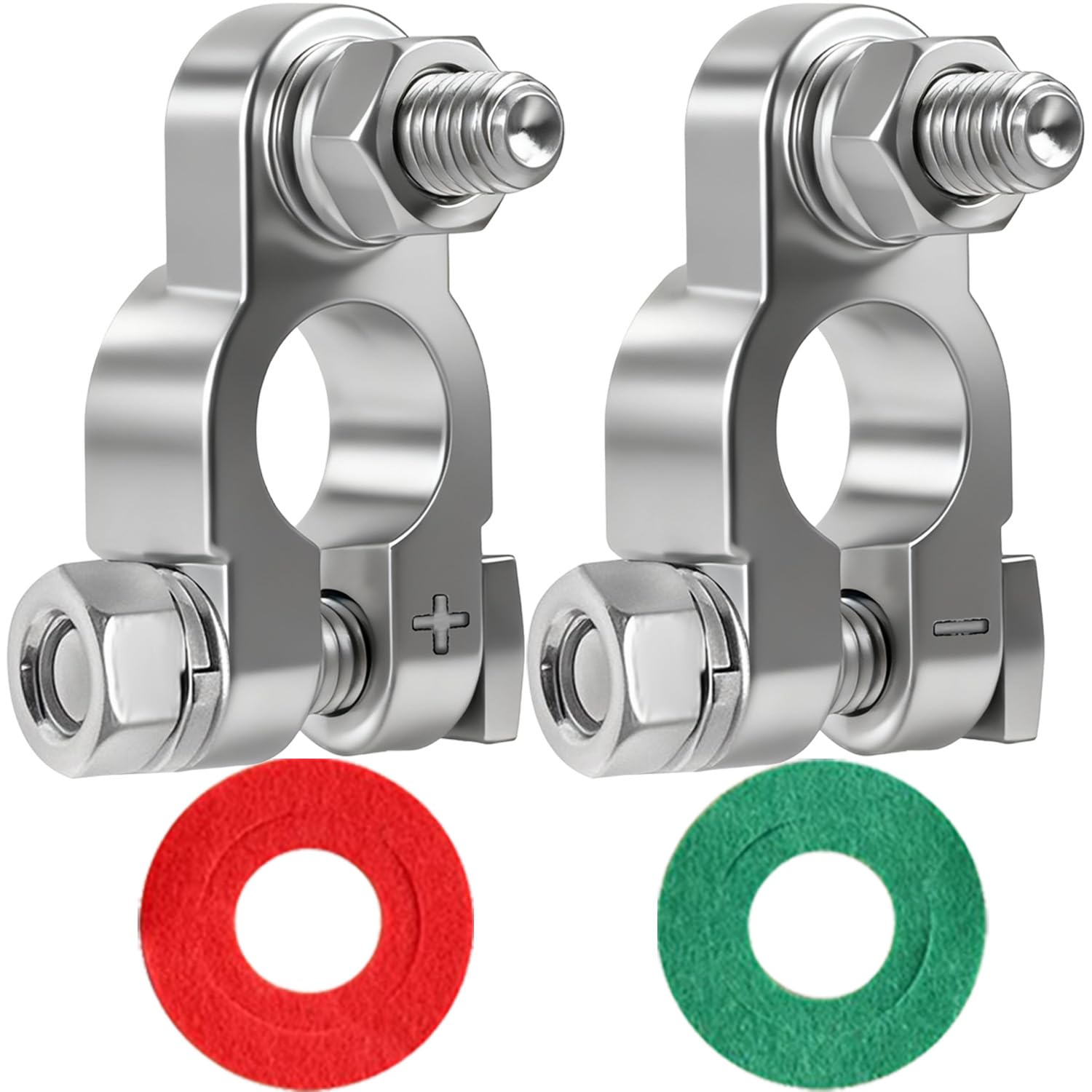
This pair of DLronwey terminals strips the kit down to the essentials: two heavy-duty military-style clamps and two anti-corrosion gaskets. The alloy construction mirrors the material used in the larger DLronwey kit, offering decent corrosion resistance and mechanical strength at a lower entry point. The terminals are clearly labeled for positive and negative posts and can hold multiple battery wires with the included bolts.
The military-style side-bolt design provides a secure grip on standard SAE battery posts, and the anti-corrosion washers help mitigate acid fume damage at the base of the terminal. This set is aimed at buyers who already have their own heat shrink, lugs, and covers and just want a solid pair of clamps without extra components.
Owner feedback indicates that these terminals work well for basic replacement needs in cars, trucks, and marine applications. The alloy material does not offer the conductivity of brass or copper, and the absence of covers or heat shrink means you will need to supply those separately. For a straightforward swap on a budget, the set gets the job done without unnecessary extras.
What works
- Budget-friendly bare-bones pair
- Anti-corrosion gaskets included
- Clear positive and negative markings
- Military-style side-bolt holds securely
What doesn’t
- No covers, heat shrink, or lugs included
- Alloy conductivity is limited
- Not suited for high-current builds
Hardware & Specs Guide
Material & Conductivity
The terminal material directly determines current flow efficiency. Pure copper (99.9%) offers the highest conductivity but is softer and more expensive. Forged brass provides excellent conductivity with greater mechanical strength, making it the preferred choice for multi-lead setups. Lead has adequate conductivity for standard applications but oxidizes faster. Zinc alloy is the lowest-cost option but corrodes rapidly and should be avoided in any vehicle where reliability matters. Always choose terminals rated for your system voltage (typically 12V DC) and verify that the contact surfaces are clean and free of plating defects before installation.
Corrosion Resistance & Protection
Corrosion at the battery terminal is a leading cause of intermittent electrical faults and failed starts. Quality terminals combat this through multiple strategies: anti-corrosion washers impregnated with protective compounds sit between the terminal base and battery post; marine-grade satin chrome or tinned finishes resist oxidation; and sealed polycarbonate or rubber covers block acid fumes and moisture. Heat shrink tubing over cable-to-lug connections adds another layer of protection. For vehicles in humid, coastal, or off-road environments, selecting a kit with as many of these features as possible dramatically extends service life.
FAQ
What material is best for battery terminal clamps?
Do I need anti-corrosion washers on my terminals?
Are military spec battery terminals better than standard ones?
Final Thoughts: The Verdict
For most buyers, the best car battery terminal clamp winner is the Recoil PBT-S04 because its forged brass construction delivers superior conductivity and the three-output design allows clean wiring for multiple accessories. If you want a complete drop-in package with anti-corrosion washers and heat shrink included, grab the Bateria Power pure copper kit. And for a rugged, USA-made option that handles vibration-heavy environments, nothing beats the Fastronix military spec set.

Certification: BSc in Mechanical Engineering
Education: Mechanical engineer
Lives In: 539 W Commerce St, Dallas, TX 75208, USA
Md Amir is an auto mechanic student and writer with over half a decade of experience in the automotive field. He has worked with top automotive brands such as Lexus, Quantum, and also owns two automotive blogs autocarneed.com and taxiwiz.com.