A well-chosen entry-level RC plane separates the pilots who stick with the hobby from those who give up after a single broken prop. The difference comes down to stabilization tech, durability, and whether the manufacturer bothered to build a forgiving flight envelope—not just a low sticker.
I’m Amir — the founder and writer behind Four Wheel Ask. My research process involves dissecting owner reports across flight forums, comparing gyro calibration methods, and tracking failure points like stripped gearboxes and brittle foam hinges over hundreds of user-submitted flight logs.
For newcomers wanting controlled aerobatics, the best affordable rc airplanes combine a 6-axis gyro with mode-switching to eliminate frustration and build piloting confidence fast.
How To Choose The Best Affordable RC Airplanes
Choosing your first RC airplane means weighing stabilization technology against material quality and battery runtime. A budget-friendly entry point doesn’t have to mean fragile or uncontrollable—you just need to know which features prevent walk-of-shame retrievals.
Stabilization and Flight Modes
The single most impactful feature for new pilots is a 6-axis gyro stabilizer paired with switchable flight modes. Beginner mode limits bank angle and automatically self-levels, effectively turning a twitchy 4-channel warbird into a stable trainer. Intermediate mode relaxes the assist, and expert mode hands you full manual control. Without this system, you are learning on hard mode.
Material Construction
EPP (expanded polypropylene) foam bends and bounces back after impacts, making it ideal for crash-prone learners. EPS foam is lighter and smoother but cracks or crumbles on hard landings. Always check the material spec before buying—EPP adds a meaningful layer of forgiveness that extends the life of any affordable airplane.
Motor, Battery, and Runtime
Brushed motors are common at entry-level prices, but they wear out faster than brushless alternatives. Battery capacity measured in mAh directly correlates to flight time, though twin battery packs (two 400mAh or 600mAh packs) offer convenient hot-swapping. Look for a low-voltage alarm to prevent over-discharging the LiPo, which degrades the cells permanently.
Quick Comparison
On smaller screens, swipe sideways to see the full table.
| Model | Category | Best For | Key Spec | Amazon |
|---|---|---|---|---|
| LEAMBE P51 Mustang | Warbird | Best Overall Trainer | Xpilot gyro, 3 flight modes, 12min runtime | Amazon |
| SYMA X550 | Military | Best for Kids & Light Duty | One-key takeoff, high/low speed, stunt modes | Amazon |
| volantexrc BF109 | Fighter | Best Scale Detail & Modes | Xpilot gyro, dual batteries, gearbox system | Amazon |
| DEERC F-16 (X-62A) | Jet | Best High-Speed Entry | 6-axis gyro, dual 400mAh, 4400KV motor | Amazon |
| Top Race Seaplane | Seaplane | Best Versatility & Modes | 3-position rate mode, propeller saver, durable build | Amazon |
| volantexrc Ranger600 | Glider | Best Long Flight Time | Pusher glider design, Xpilot stabilizer, 656ft range | Amazon |
| Radiolink A560 | 3D/Stunt | Best for Skill Progression | 6 flight modes, 2.5mi range, brushless motor | Amazon |
In‑Depth Reviews
1. LEAMBE 4 Channel RC Plane P51 Mustang
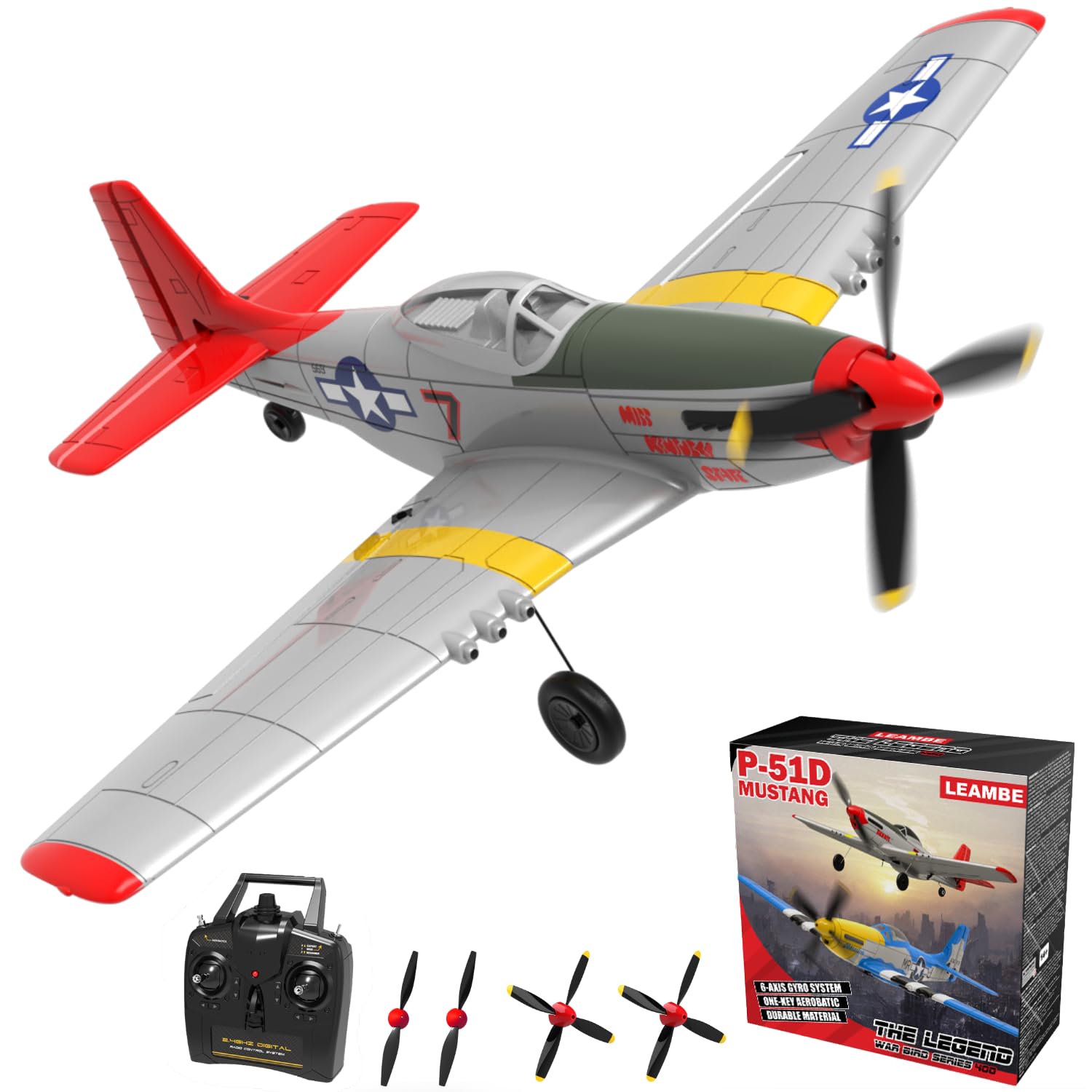
The LEAMBE P51 Mustang represents the sweet spot where stabilization technology meets realistic scale design without the price climbing past what most hobbyists consider entry-level. Its Xpilot gyro stabilizer provides ultra-stable self-leveling that makes this 4-channel warbird feel more like a trainer than a hot-rodded fighter. The three distinct modes—Beginner, Intermediate, and Expert—let you progress at your own pace without purchasing additional equipment.
Owner reports consistently highlight the durability of the lightweight elastomer foam construction. Many users describe repeated hard landings and even full-speed crashes with only minor cosmetic damage, often repairing a popped-off landing gear with simple glue. The new propeller saver technology adds another layer of forgiveness, allowing the prop to disengage on impact rather than snapping the motor mount.
With a 14-inch fuselage and 15-inch wingspan, this park flyer fits easily into small spaces and remains controllable in light wind conditions. The 2.4GHz radio offers a solid 656-foot range, and the 8mm coreless motor delivers enough thrust for basic aerobatics. Flyers upgrading from toy-grade 3-channel planes find the transition to full aileron control remarkably smooth thanks to the gyro assistance.
What works
- Flight modes accelerate learning without crashing
- EPP-like material bounces back from impacts
- Propeller saver prevents motor damage on nose-ins
What doesn’t
- Batteries not included for transmitter
- 12-minute flight time feels short for beginners
2. SYMA X550 RC Plane
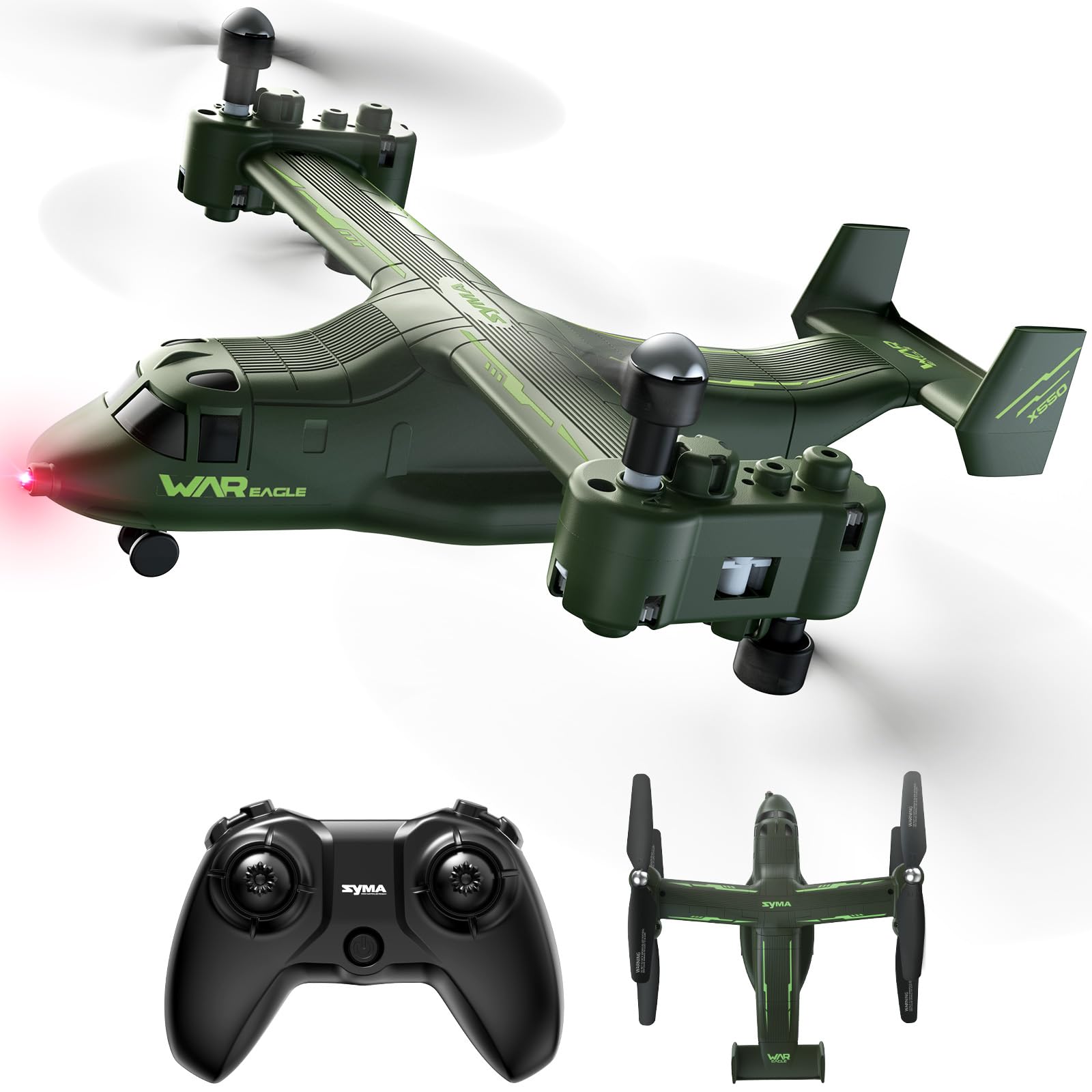
The SYMA X550 steps away from the warbird trend with a modern military-inspired aesthetic that catches attention on the shelf and in the air. Its green army-style livery and 4-channel control layout make it accessible for kids and adults alike. One-key takeoff and landing remove the most stressful part of flying for new pilots, letting them focus on steering and throttle management.
Multiple stunt flight modes including 360° spins and circular routes add replay value once basic control is mastered. The high/low speed switch provides a genuine training curve—start in low for indoor or calm-weather flying, then dial it up for outdoor thrill sessions. Owner feedback from families with children aged 5 to 12 indicates very short learning curves, with most kids flying independently after two or three battery cycles.
The lithium polymer battery delivers reasonable runtime for a plane at this price tier. While some owners report wanting longer flight durations, the quick recharge cycle partially compensates. The plastic construction feels sturdy for its weight class, and the included rechargeable battery avoids the frustration of buying proprietary cells. This is the pick for gift-givers who want a low-risk introduction to the hobby.
What works
- One-key takeoff simplifies the launch sequence
- Stunt modes keep interest high after basics are learned
- Low speed setting works well indoors
What doesn’t
- Battery life leaves pilots wanting more air time
- Advanced flyers will outgrow the capabilities quickly
3. volantexrc BF109 Fighter RC Plane

The volantexrc BF109 brings genuine WWII scale detail to the budget-friendly category without compromising flight performance. Its transparent cockpit, realistic panel lines, and choice of a 3-blade propeller for authenticity or a 2-blade for optimal thrust give pilots flexibility that rare at this tier. The Xpilot gyro stabilizer system remains the backbone here, offering the same three-mode assistance found on premium Volantex models.
Where the BF109 distinguishes itself is the inclusion of a gearbox motor system that increases thrust efficiency and extends flying time. With two rechargeable batteries included, pilots can achieve up to 40 minutes of cumulative flight duration—substantially more than single-battery competitors. Owner reviews consistently praise the durability, with many reporting dozens of crashes that left the EPP foam intact and the electronics fully functional.
The 2.4GHz radio provides a control range of 656 feet with strong anti-interference capability, allowing multiple pilots to fly simultaneously without cross-talk. Compact dimensions (12.5 x 3.9 x 15.75 inches) make it easy to transport fully assembled. For the hobbyist who wants a display-worthy scale fighter that also flies reliably, this represents exceptional value.
What works
- Dual batteries give extended field time
- Gearbox motor improves efficiency and speed
- Authentic detailing with optional blade count
What doesn’t
- Foam can arrive with cosmetic scuffs from shipping
- Expert mode still feels twitchy for absolute beginners
4. DEERC F-16 Style RC Airplane (X-62A Vista)
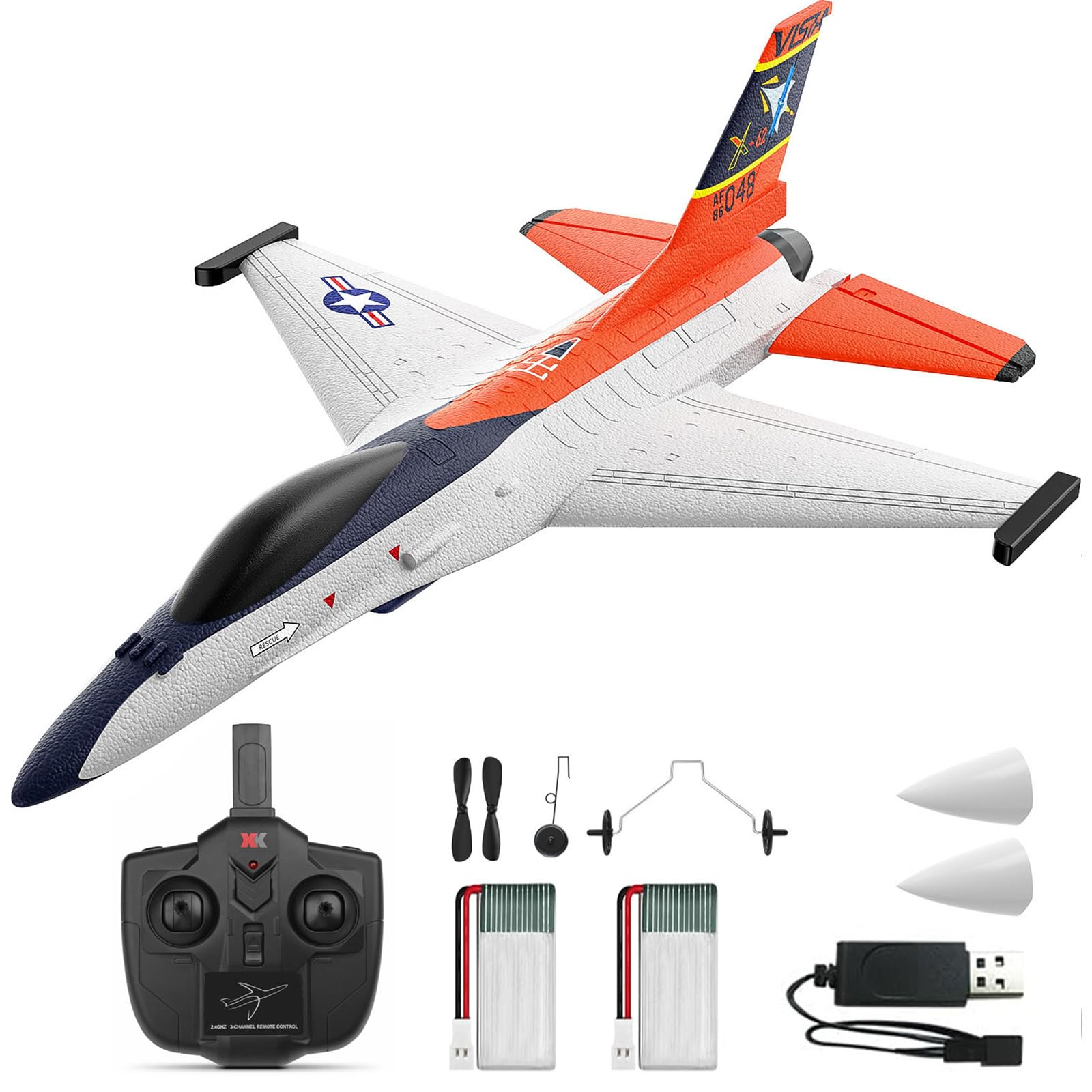
Modeled after the iconic F-16 fighter, the DEERC X-62A Vista delivers a jet-inspired flight experience with modern stabilization safety nets. The 6-axis gyro stabilizer and dual takeoff modes provide stability for new pilots while the 4400KV coreless motor offers explosive thrust for experienced flyers wanting high-speed passes and aerobatic rolls. The EPP foam construction with a soft rubber nose absorbs the kind of impacts that would destroy lesser planes.
The dual 400mAh LiPo battery configuration yields over 20 minutes of total flight time—a significant advantage for learners who need repetition to build muscle memory. Owners appreciate the low-battery alert that provides a safe return window, preventing premature crashes from power loss. The 2.4GHz interference-free control system supports group flying without channel conflicts.
Some owners note that the gyro remains permanently engaged with no option for full manual override, which limits the plane’s potential for advanced aerobatics. However, for the target audience of beginner and intermediate pilots, this permanent assist reduces crash frequency. A spare nose cone and tail wing are included, acknowledging that takeoff practice involves occasional torque-rolls.
What works
- Dual batteries deliver generous combined runtime
- 4400KV motor provides thrilling climb rate
- Spare parts included for common crash repairs
What doesn’t
- Gyro cannot be switched off for manual practice
- EPP feels flimsy to experienced hobbyists
5. Top Race Remote Control Airplane (Seaplane)
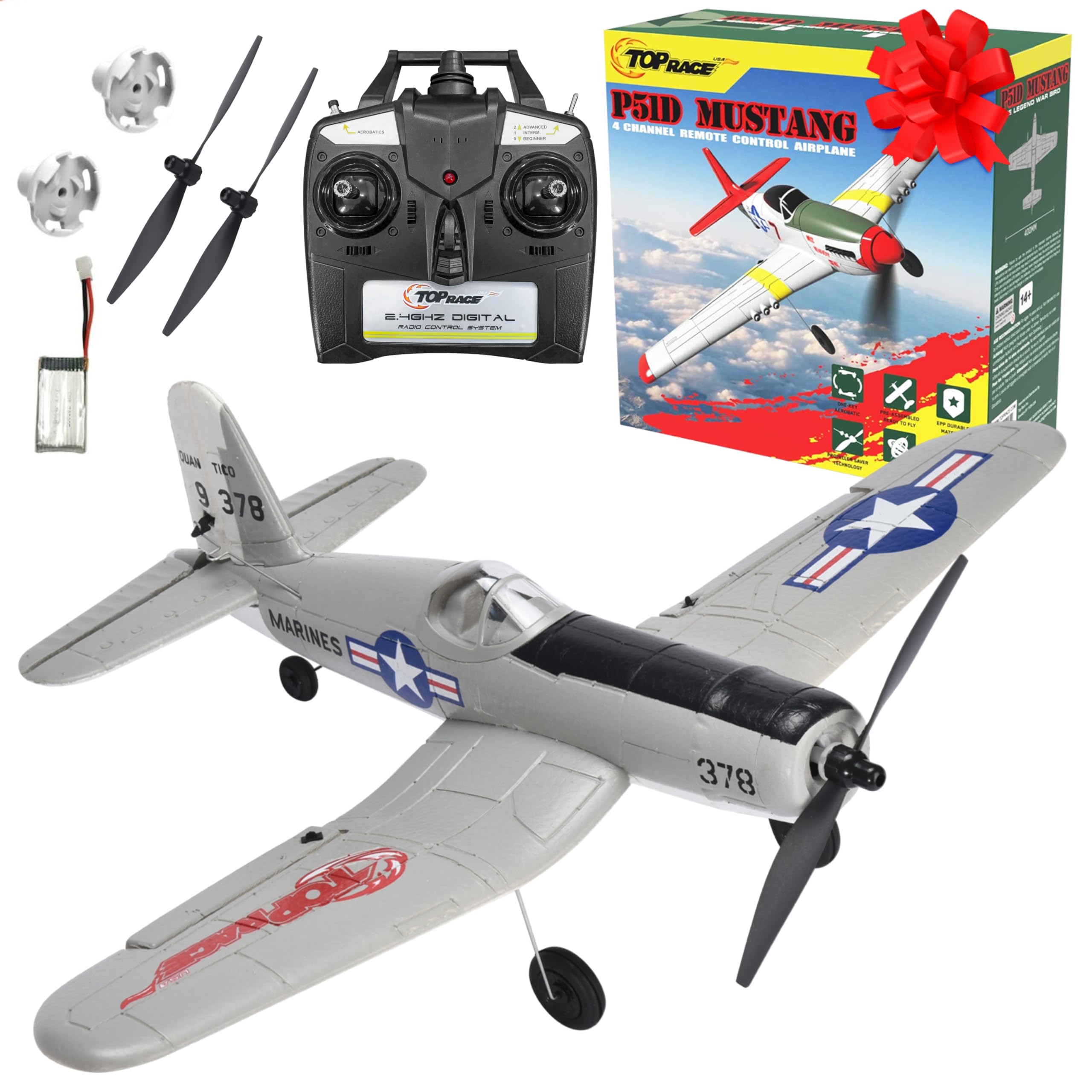
The Top Race military seaplane stands out for its hybrid design that works from both land and water surfaces, expanding the locations where you can fly. Its 4-channel control with multi-gyro sensors delivers the same three-position beginner/intermediate/expert mode layout found on more expensive warbirds. This makes it an excellent trainer for pilots who want water takeoff capability without moving to complex floatplane setups.
Owner feedback from intermediate pilots notes that the seaplane handles well in small fields and can perform basic aerobatics easily. The propeller saver system—a common feature among Top Race models—reduces maintenance frequency when learning loops and rolls. The durable construction resists the dings that come from water landings on choppy surfaces, giving it a longer usable life than some park flyers.
Transmitter batteries are not included, and some owners have reported occasional radio link loss after several flights, suggesting the RF module may have inconsistent quality control. That said, the majority of verified buyers describe the flight characteristics as smooth and stable, with the beginner mode particularly effective at preventing panic-induced crashes. This is a versatile option for flyers near ponds or calm lakes.
What works
- Water and land capability increases flying site options
- Propeller saver extends component life
- Three flight modes adapt to skill level
What doesn’t
- Transmitter requires separate AA batteries
- Some units report intermittent signal loss
6. volantexrc Ranger600 RC Glider Plane

The volantexrc Ranger600 takes a fundamentally different approach to affordable flight by using a pusher glider configuration. Rather than relying on constant motor power, this design allows the plane to soar and glide without thrust, extending flight times significantly compared to conventional warbirds. The Xpilot stabilizer maintains smooth flight even in light breeze conditions, making it an ideal platform for learning to read wind and manage energy.
Three-level flight assists—beginner full assist, intermediate partial assist, and expert manual—guide pilots through the transition from gyro-dependent flying to true manual control. Owner reports indicate that the learning curve is gentler than with 4-channel fighters because the glider’s natural stability masks many input errors. The 20.86-inch wingspan provides excellent visibility at altitude, making orientation easier for new pilots.
The included portable packing box simplifies transport and storage, a thoughtful detail for pilots who travel to flying sites. The 2.4GHz radio offers the standard 656-foot range, and the pusher design means the propeller is protected during belly landings. For pilots who prioritize long, serene flights over aerobatic excitement, the Ranger600 is the clear choice.
What works
- Glider design extends flight times beyond typical park flyers
- Xpilot stabilizer handles light wind gracefully
- Pusher prop stays safe during landings
What doesn’t
- Not suitable for aerobatic or stunt flying
- Larger wingspan demands more open space
7. Radiolink A560 Ready to Fly RC Airplane
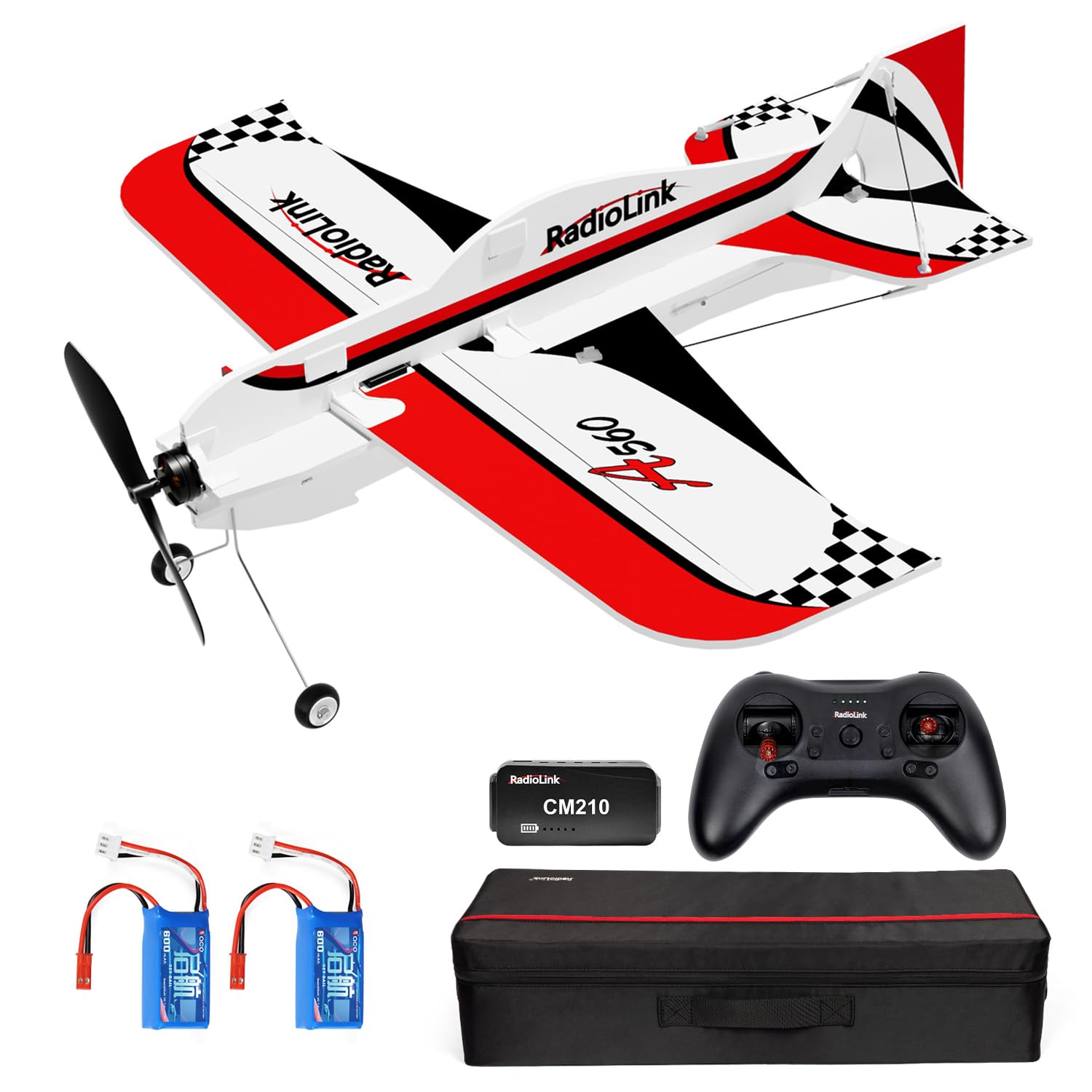
The Radiolink A560 represents a genuine step up in capability for pilots ready to move beyond basic trainer modes. Its six flight modes range from Stable and Gyro assists through Manual, Acrobatic, and two unique Vertical Flight modes that emulate both fixed-wing and quadcopter behavior. The Byme-A gyro flight controller and brushless motor system deliver performance that approaches hobby-grade territory at a price that remains accessible.
The FHSS communication system provides a stunning 2.5-mile range with real-time RSSI and battery voltage telemetry displayed on the T8S transmitter. This capability is rare at this tier and gives pilots confidence to explore larger flying fields. The reinforced PP foam construction resists deformation even after repeated high-impact landings, and the modular tool-free assembly allows the plane to fit in its included carry bag in under a minute.
Experienced owners praise the brushless motor’s thrust-to-weight ratio, allowing vertical climbs and solid 3D aerobatics. The two included 600mAh LiPo batteries each deliver approximately 14 minutes of aggressive flying. While the setup requires some initial binding and calibration, the packed documentation and online community support smooth the process. For the pilot who wants one plane that grows with them from beginner to intermediate aerobatics, the A560 is the strongest contender.
What works
- Six flight modes cover everything from learner to 3D
- 2.5-mile range with real-time telemetry is class-leading
- Reinforced PP foam withstands hard impacts
What doesn’t
- Initial setup requires careful binding and calibration
- Some units reported signal loss on first flights
Hardware & Specs Guide
Gyro Stabilization Systems
The 6-axis gyro is the most important safety feature in affordable RC airplanes. It measures pitch, roll, and yaw across three axes and applies corrective inputs automatically. In beginner mode, it limits bank angles to prevent spiral dives. The Xpilot and Byme-A implementations used by Volantex and Radiolink are considered the most refined at this tier, offering smooth transitions between assist levels. DEERC and SYMA use simpler stabilization that cannot be disabled, which provides consistent safety but prevents skill progression.
Battery Chemistry and Care
All seven planes use Lithium Polymer (LiPo) cells, which offer high energy density but require careful handling. 400mAh to 600mAh packs are typical for this class, providing 10-15 minutes per flight. Never discharge LiPo below 3.2 volts per cell; most planes with low-voltage alarms cut power at 3.4V to protect the pack. Store LiPo packs at storage voltage (around 3.8V per cell) if not flying for more than a week. Dual battery kits mitigate the runtime limitation but add charging time if you only have one charger.
Foam Types Explained
EPP (expanded polypropylene) is the gold standard for beginner planes because it bends and flexes rather than cracking upon impact. The Radiolink A560 and DEERC F-16 use reinforced variations of EPP-like materials. EPS (expanded polystyrene) is lighter and provides crisper mold lines for scale detailing, but it shatters on hard impacts. The LEAMBE and Top Race models use a hybrid elastomer foam that sits between EPS and EPP in flexibility. Always verify the material before purchase if crash survival is your priority.
4-Channel vs 3-Channel Control
Three-channel planes control throttle, rudder, and elevator—simple but limited. Four-channel adds aileron control, enabling true banking turns and aerobatic maneuvers. All seven planes reviewed are 4-channel, reflecting the industry standard for capable affordable flyers. New pilots should start in beginner mode that limits aileron authority, then gradually increase as muscle memory develops. The one-key takeoff function on the SYMA X550 bypasses the learning curve entirely for children or absolute first-timers.
FAQ
Why do I need a gyro stabilizer in my first RC airplane?
How long do affordable RC airplane batteries typically last?
Can I fly these RC airplanes indoors?
What does Ready to Fly (RTF) mean?
Final Thoughts: The Verdict
For most buyers, the best affordable rc airplanes winner is the LEAMBE P51 Mustang because its Xpilot gyro, three-mode flight assistance, and impact-resistant construction deliver the most forgiving learning curve at a reasonable entry cost. If you want maximum flight time with glider efficiency, grab the volantexrc Ranger600. And for the pilot who plans to grow into 3D aerobatics without buying a second plane, nothing beats the Radiolink A560 with its six-flight-mode versatility and class-leading 2.5-mile range.

Certification: BSc in Mechanical Engineering
Education: Mechanical engineer
Lives In: 539 W Commerce St, Dallas, TX 75208, USA
Md Amir is an auto mechanic student and writer with over half a decade of experience in the automotive field. He has worked with top automotive brands such as Lexus, Quantum, and also owns two automotive blogs autocarneed.com and taxiwiz.com.