Bike suspension transforms how your mountain bike handles rough terrain, but choosing the wrong fork can leave you fighting the trail instead of flowing through it. The difference between a vague, bouncy ride and precise, planted control comes down to damper quality, stanchion stiffness, and air spring tuning — all specs that separate entry-level components from serious performers.
I’m Amir — the founder and writer behind Four Wheel Ask. I specialize in analyzing mountain bike component specifications, comparing damper architectures, and aggregating long-term owner feedback to identify which suspension forks deliver consistent performance across real-world trail conditions.
After digging through hundreds of owner reports and studying build quality across brands like RockShox, Fox, and emerging value players, I’ve narrowed the field to the models that actually hold up. Through extensive research of owner feedback and technical specifications across multiple brands, I have identified the best bike suspension options that deliver real trail performance.
How To Choose The Best Bike Suspension
Selecting a suspension fork comes down to wheel size compatibility, steerer tube type, travel length, and damper technology. Each spec directly affects how the fork performs on climbs, descents, and flat trail sections. Understanding these variables helps you match a fork to your frame and riding style without overspending or underbuilding.
Wheel Size and Steerer Tube Compatibility
Your fork must match your wheel diameter — 26, 27.5, or 29 inches — and your frame’s steerer tube specification. Straight 1-1/8 inch steerers fit most older frames and budget headsets, while tapered steerers (1.5 to 1-1/8 inch) offer greater stiffness for aggressive riding. Check your head tube before buying, because a tapered fork will not fit a straight-only frame without an adapter.
Travel Length and Riding Discipline
Travel determines how much impact the fork can absorb. Cross country bikes typically run 80 to 100 mm, trail bikes use 120 to 140 mm, and enduro or downhill rigs need 160 mm or more. Matching travel to your frame’s geometry is critical — too much travel slackens the head angle, while too little leaves you underbiked on rough descents.
Damper Technology and Adjustability
The damper controls compression and rebound, which govern how the fork feels on successive bumps. Entry-level forks use coil springs or basic oil damping, while mid-range and premium forks feature air springs with adjustable rebound and lockout. External adjustments let you tune for rider weight and terrain without disassembling the fork, which is a major advantage for frequent trail riders.
Quick Comparison
On smaller screens, swipe sideways to see the full table.
| Model | Category | Best For | Key Spec | Amazon |
|---|---|---|---|---|
| RockShox Recon Silver RL | Premium | Trail Riding | 100 mm Solo Air | Amazon |
| Fox Racing Shox 38 Float | Premium | Enduro/Downhill | 170 mm Kashima | Amazon |
| RockShox Judy Silver TK | Mid-Range | Cross Country | 100 mm Motion Control | Amazon |
| ZTZ Double Shoulder 180 mm | Mid-Range | Aggressive Trail | 180 mm Dual Arch | Amazon |
| BUCKLOS 140 mm Travel | Mid-Range | All Mountain | 140 mm 34 mm Stanchions | Amazon |
| BUCKLOS LUTU Air Fork | Budget-Mid | Trail Riding | 120 mm Rebound Adjust | Amazon |
| ZTZ 120 mm Air Fork | Budget-Mid | Cross Country | 120 mm Air Fork | Amazon |
| BOLANY 120 mm Travel | Budget | Trail Riding | 120 mm Air Fork | Amazon |
| BOLANY Magnesium Alloy Fork | Budget | Entry Level | 100 mm Magnesium | Amazon |
In‑Depth Reviews
1. RockShox Recon Silver RL Suspension Fork

The RockShox Recon Silver RL sits at the sweet spot of the suspension market — delivering proven Motion Control damper technology and Solo Air spring adjustability at a price that undercuts many competitors with similar feature sets. Its 100 mm travel and 51 mm offset are optimized for 29-inch wheels, making it a natural fit for modern cross country and trail hardtails. The 9 mm QR axle keeps installation simple and compatible with a wide range of hubs.
Owner feedback consistently highlights the fork’s predictable damping curve and reliable lockout performance for climbing efficiency. The Motion Control damper provides a firm platform under pedaling forces while still opening up for chunkier descents. External rebound adjustment lets riders fine-tune the return speed without tools, a convenience that entry-level forks often omit. The Solo Air spring also allows precise pressure tuning across a wide rider weight range.
Build quality is where the Recon separates itself from budget alternatives — the aluminum steerer and 32 mm stanchions offer a stiffness-to-weight ratio that inspires confidence on technical climbs and fast singletrack. Compared to similarly priced models from BUCKLOS or ZTZ, the Recon delivers more refined damping and better long-term seal durability according to owner reports spanning multiple seasons.
What works
- Proven Motion Control damper with reliable lockout
- Solo Air spring offers wide tuning range
- Consistent build quality and seal longevity
What doesn’t
- Limited to 100 mm travel — not for aggressive trail use
- No remote lockout option included
2. Fox Racing Shox 38 Float 27.5 Grip 2 Factory Boost Fork

The Fox 38 Float Factory represents the pinnacle of production mountain bike suspension, combining a 38 mm chassis with Fox’s most advanced Grip 2 damper and the iconic Kashima coating. Designed for enduro and downhill riding, this fork delivers 170 mm of plush, controlled travel that absorbs repeated big hits without packing down. The 1.5-inch tapered steerer and Boost axle spacing provide the torsional stiffness needed for aggressive cornering at speed.
What sets the Grip 2 damper apart is its independent high-speed and low-speed compression adjustment, allowing riders to fine-tune small-bump sensitivity separately from bottom-out resistance. Owner feedback from enduro racers emphasizes how this tuning range transforms the fork from a plush trail eater into a supportive race weapon with just a few clicks. The Kashima coating on the stanchions reduces friction noticeably compared to standard aluminum, which translates to improved small-bump compliance on rocky terrain.
At a weight of 2180 grams, the 38 Float is not the lightest fork in its class, but the stiffness and damping performance justify the mass for riders who prioritize control over grams. The lower leg design uses Fox’s proprietary air bypass channels to reduce pressure build-up during hard compression, maintaining consistent feel through long descents. For riders who demand the best available damping and chassis rigidity, this fork sets the benchmark.
What works
- Grip 2 damper with independent high/low speed adjustment
- Kashima coating reduces friction and improves feel
- 38 mm chassis delivers exceptional stiffness
What doesn’t
- High cost places it beyond casual riders
- Weight is higher than XC-focused forks
3. RockShox Judy Silver TK Fork

The RockShox Judy Silver TK is the entry point into RockShox’s legendary suspension lineage, sharing chassis DNA with the Pike but scaled for cross country and light trail duty. It features the Motion Control RL damper with external rebound and a TurnKey lockout that provides a firm pedaling platform with a simple crown dial. The 100 mm travel version is ideal for 27.5-inch XC bikes, while the Boost-compatible spacing accommodates modern plus-size tires up to 2.8 inches.
Owner reports frequently praise the Judy for its reliability and ease of setup — the Solo Air spring requires only a shock pump and rider weight chart to get within the ballpark. The Fast Black aluminum upper tubes reduce friction compared to standard coatings, which improves small-bump sensitivity at the top of the stroke. For riders transitioning from a rigid or coil fork, the Judy offers a noticeable jump in trail comfort without overwhelming complexity.
Where the Judy Silver TK differentiates itself from budget forks like BOLANY or ZTZ is in its damper consistency. The Motion Control platform uses a sealed cartridge design that resists oil dilution and maintains damping performance across temperature changes and long descents. While it lacks the high-speed compression adjustment of pricier RockShox models, the Judy delivers predictable, fade-free damping that entry-level forks simply cannot match.
What works
- Reliable Motion Control damper with quiet lockout
- Fast Black uppers reduce friction effectively
- Compatible with 2.8-inch plus tires
What doesn’t
- No high-speed compression adjustment
- Limited to 100-120 mm travel range
4. ZTZ 26/27.5/29 inch Double Shoulder Air Suspension Fork

The ZTZ Double Shoulder fork breaks from the single-crown norm by offering a dual-crown chassis with 180 mm of travel at a fraction of the cost of traditional downhill forks. Built around a forged 7000-series aluminum crown and 32 mm stanchions, this fork targets riders who want aggressive trail or enduro performance without the premium price of mainstream brands. The 1-1/8 inch straight steerer limits frame compatibility but keeps installation straightforward for older frames.
Owner feedback highlights the fork’s impressive stiffness compared to single-crown designs of similar travel — the double crown reduces flex during hard cornering and braking, which improves tracking through rock gardens and off-camber sections. The air spring allows pressure adjustment across a wide rider weight range, and the external rebound knob offers 20 clicks of fine-tuning. At 2400 grams, it is heavier than a single-crown fork but comparable to other dual-crown options.
The damper uses an oil-gas hybrid system that maintains consistent performance on sustained descents, though it lacks the high-speed compression circuits found on forks like the Fox 38. Reports indicate that the fork benefits from a break-in period of several rides before the damping smooths out. For budget-conscious riders building an aggressive hardtail or older enduro bike, the ZTZ Double Shoulder delivers travel and stiffness that punches above its price point.
What works
- Double crown eliminates flex in rough terrain
- 180 mm travel suits aggressive riding
- Competitive pricing for a dual-crown fork
What doesn’t
- Limited to straight 1-1/8 steerer frames
- Heavier than single-crown alternatives
5. BUCKLOS 140 mm Travel MTB Air Suspension Fork
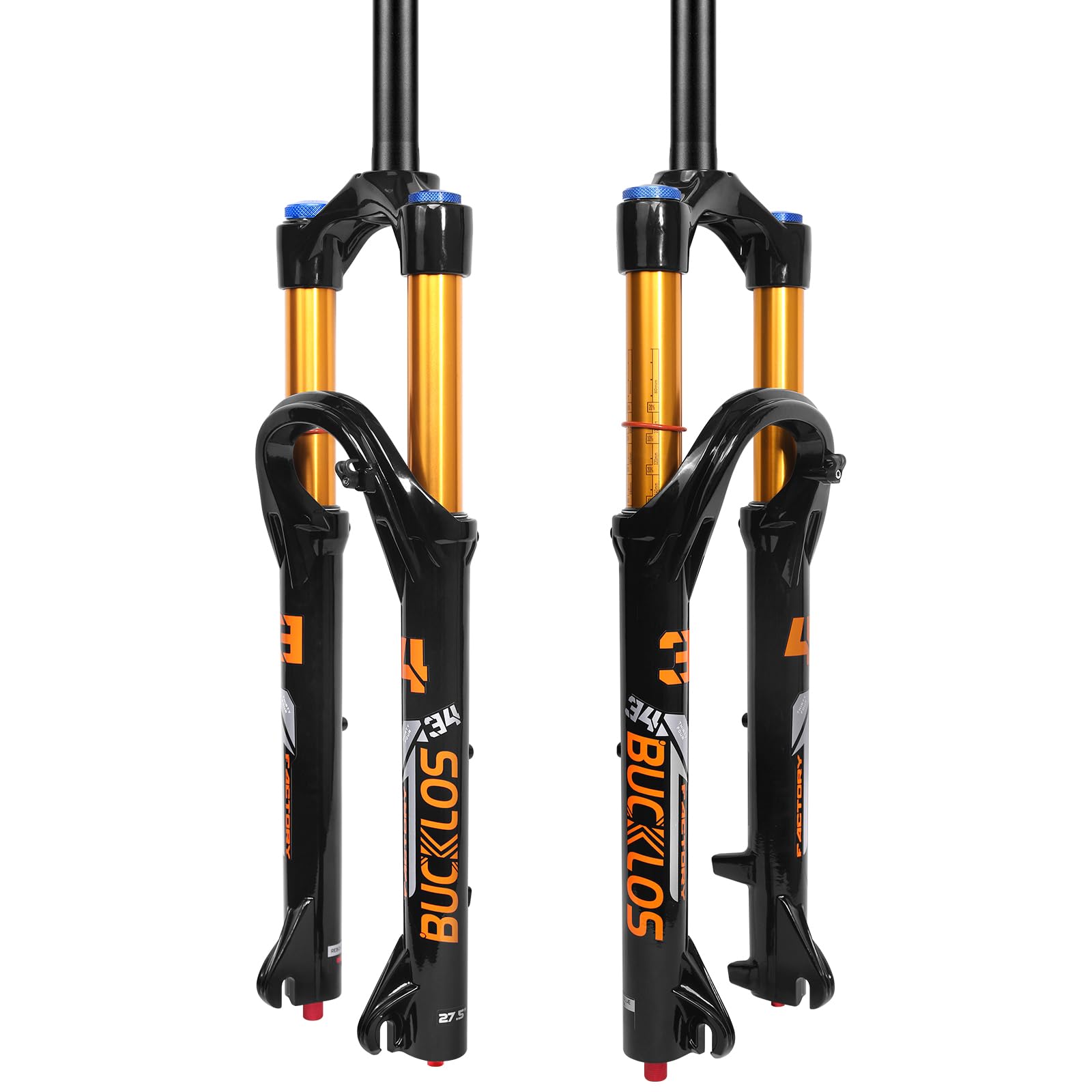
The BUCKLOS 140 mm travel fork introduces 34 mm aluminum-magnesium alloy stanchions to the budget-mid category, offering increased bending stiffness over the more common 32 mm standard. This fork targets all-mountain and trail riders who want the confidence of thicker legs for aggressive line choices without stepping up to premium brand pricing. The 28.6 mm threadless straight steerer and 9 mm QR axle maintain compatibility with a wide range of trail hardtails.
Spec highlights include a crown-mounted manual lockout with ABS-style anti-bottoming on the compression stroke and an external rebound knob with 20 clicks of adjustability. The air spring is tunable for riders between 50 and 120 kg, which covers the vast majority of adult mountain bikers. Owner reports note that the lockout is effective for climbing, firming up the fork sufficiently to prevent bobbing without feeling completely rigid.
Compared to the BUCKLOS LUTU (120 mm), this 140 mm version sacrifices a small amount of small-bump sensitivity at the very top of the stroke in exchange for greater mid-stroke support and bottom-out resistance. The 34 mm stanchions also resist binding during heavy braking on steep terrain, a common complaint with slimmer forks. For riders who want more travel and chassis stiffness than the budget segment typically offers, this BUCKLOS model delivers genuine value.
What works
- 34 mm stanchions improve stiffness significantly
- 20-click rebound offers fine-tuning range
- Lockout effective for climbing efficiency
What doesn’t
- Small-bump sensitivity trails premium forks
- Limited color options available
6. BUCKLOS LUTU Air MTB Suspension Fork

The BUCKLOS LUTU is a lightweight air fork designed for XC and trail riders who value low weight and adjustability at an accessible price. Weighing approximately 1675 grams, it is competitive with forks costing significantly more, thanks to its aluminum-magnesium alloy construction. The 120 mm travel with manual crown lockout suits riders who split time between climbs and descents and want the ability to stiffen the fork on paved or smooth sections.
Rebound adjustment is handled via an external knob at the bottom of the right leg, allowing easy tuning without tools. The air spring uses an oil-gas hybrid system that provides a progressive feel, ramping up resistance toward the end of the stroke to prevent harsh bottom-outs. Owner feedback highlights the fork’s consistent performance out of the box — setup typically requires only a shock pump and a few minutes of air pressure adjustment.
Available in Black and Black Gold colorways, the LUTU offers a polished aesthetic that punches above its price segment. The 32 mm stanchions are adequate for XC and light trail duty, though more aggressive riders may notice flex during hard cornering. Compared to the BOLANY air fork at a similar price, the BUCKLOS LUTU offers smoother damping and a wider rebound adjustment range, making it the better choice for riders who plan to keep the fork for multiple seasons.
What works
- Lightweight 1675 g build suits XC riding
- Oil-gas hybrid spring provides progressive feel
- Rebound adjust accessible without tools
What doesn’t
- 32 mm stanchions flex under hard cornering
- Manual lockout only — no remote option
7. ZTZ 26/27.5/29 inch MTB Air Suspension Fork
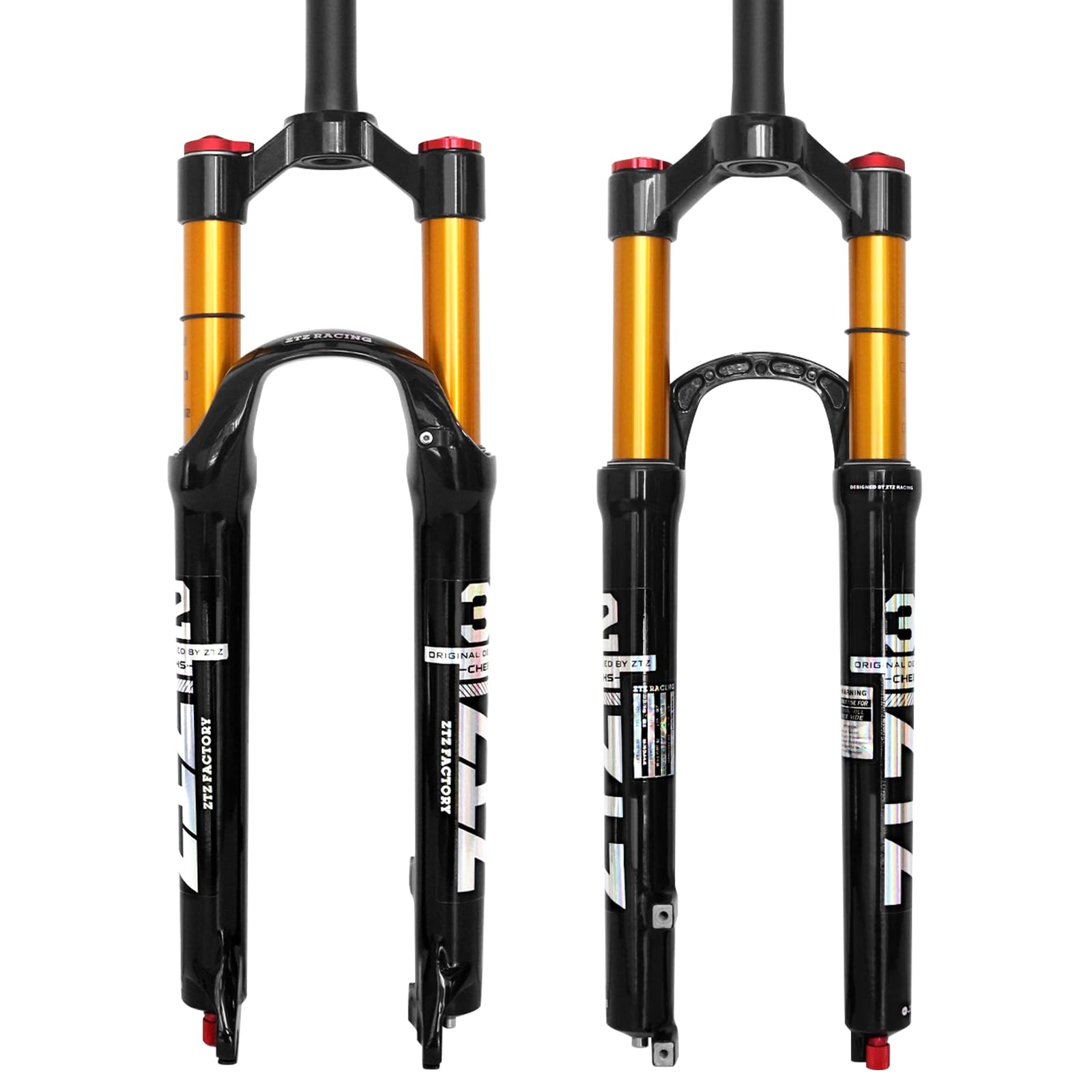
The ZTZ 120 mm air fork is a well-rounded entry-to-mid option that combines a lightweight aluminum-magnesium chassis with a manual crown lockout and oil-gas damping. It is available in sizes matching 26, 27.5, and 29-inch wheels, making it a versatile upgrade for older frames that still use a 1-1/8 inch straight steerer and 9 mm QR dropouts. The fork weighs approximately 1700 grams, placing it in the same weight class as the BUCKLOS LUTU.
Owner feedback frequently praises the fork’s smooth break-in process and the effectiveness of its air spring adjustment — the recommended starting pressure range covers most adult rider weights, and fine-tuning is straightforward with a standard shock pump. The external rebound adjustment provides noticeable changes in return speed, allowing riders to dial in a planted feel or a snappier response depending on trail conditions.
Compared to the cheaper BOLANY forks, the ZTZ offers a noticeably more refined damper with less stiction at the top of the stroke and a quieter lockout mechanism. The included ZTZ sticker on the arch is easily removable for riders who prefer a clean look. For those replacing a worn coil fork on a budget hardtail, the ZTZ air fork delivers a genuine performance upgrade in terms of weight, adjustability, and trail comfort without requiring a frame upgrade.
What works
- Smooth air spring adjustment with wide range
- Quieter damping than similarly priced forks
- Available in three wheel sizes
What doesn’t
- No remote lockout option
- 32 mm stanchions limit aggressive use
8. BOLANY 26/27.5/29 inch Bike Suspension Fork
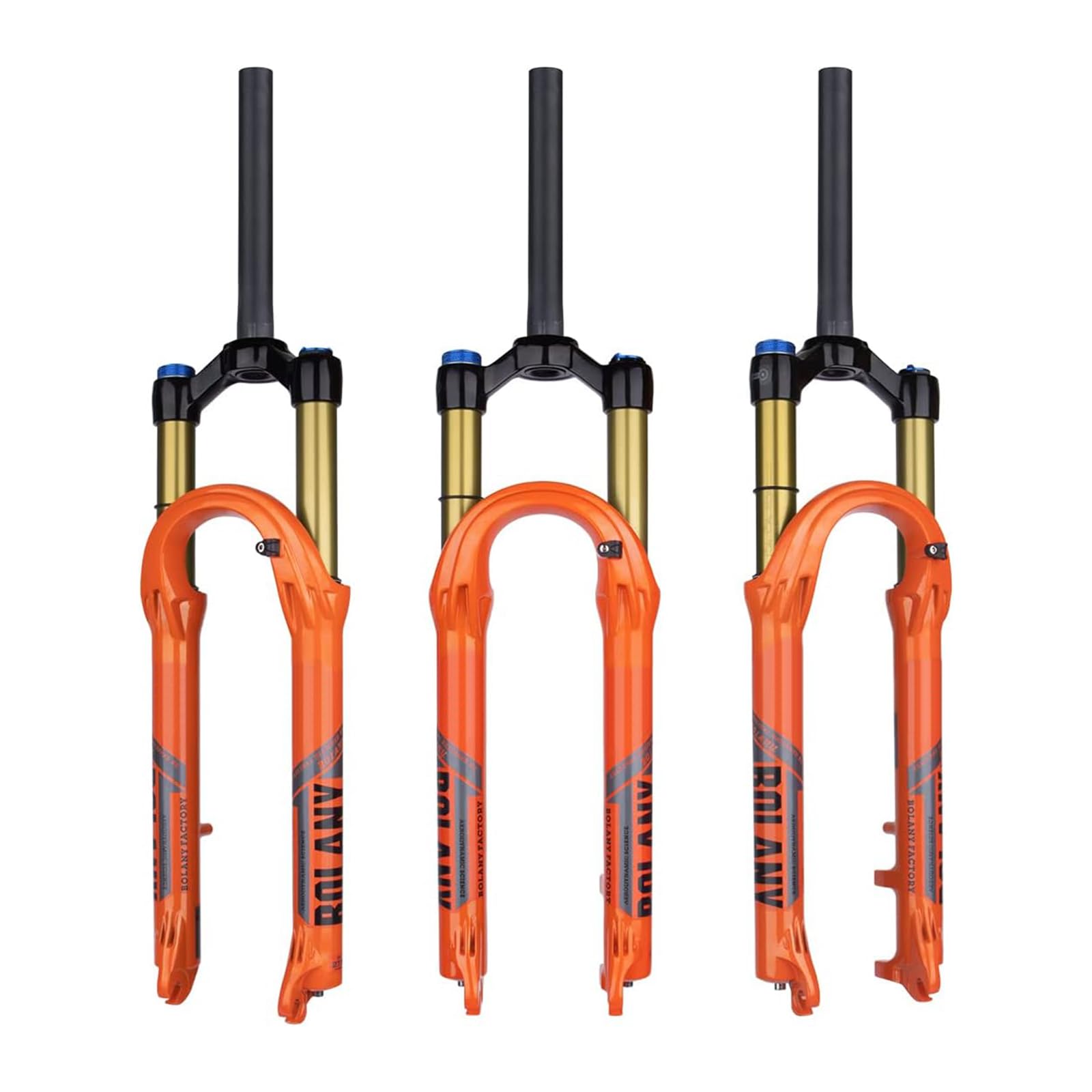
The BOLANY 120 mm fork distinguishes itself from the brand’s entry-level model with embedded Teflon self-lubricating bearings in the stanchions, replacing traditional plastic bushings. This upgrade reduces friction and noise while maintaining continuous lubrication, which improves small-bump sensitivity at the top of the stroke. The fork uses an air spring instead of a coil, keeping weight down while offering progressive damping for trail riding.
Available in manual and remote lockout versions, this fork gives riders the option of handlebar-mounted lockout for quick switching between climbs and descents. The 32 mm stanchions with magnesium alloy lowers keep weight manageable, and the 9 mm QR axle ensures compatibility with most budget and mid-range hubs. Owner feedback notes that the sponge ring wiper seals do a good job of keeping contaminants out of the upper tube area.
Compared to the ZTZ fork at a similar price, the BOLANY 120 mm offers a more modern damper design with the Teflon bearing upgrade, but it has a slightly shorter track record in the market — the product was introduced in early 2023. Early owner reports are largely positive, though a few mention that the lockout lever feels less positive than higher-end RockShox implementations. For entry-level riders looking for an affordable air fork upgrade with modern features, this BOLANY represents solid value.
What works
- Teflon bearings reduce friction and noise
- Remote lockout option is available
- Magnesium alloy lowers save weight
What doesn’t
- Lockout lever feels less positive than premium forks
- Limited track record since 2023 launch
9. BOLANY Magnesium Alloy MTB Suspension Fork
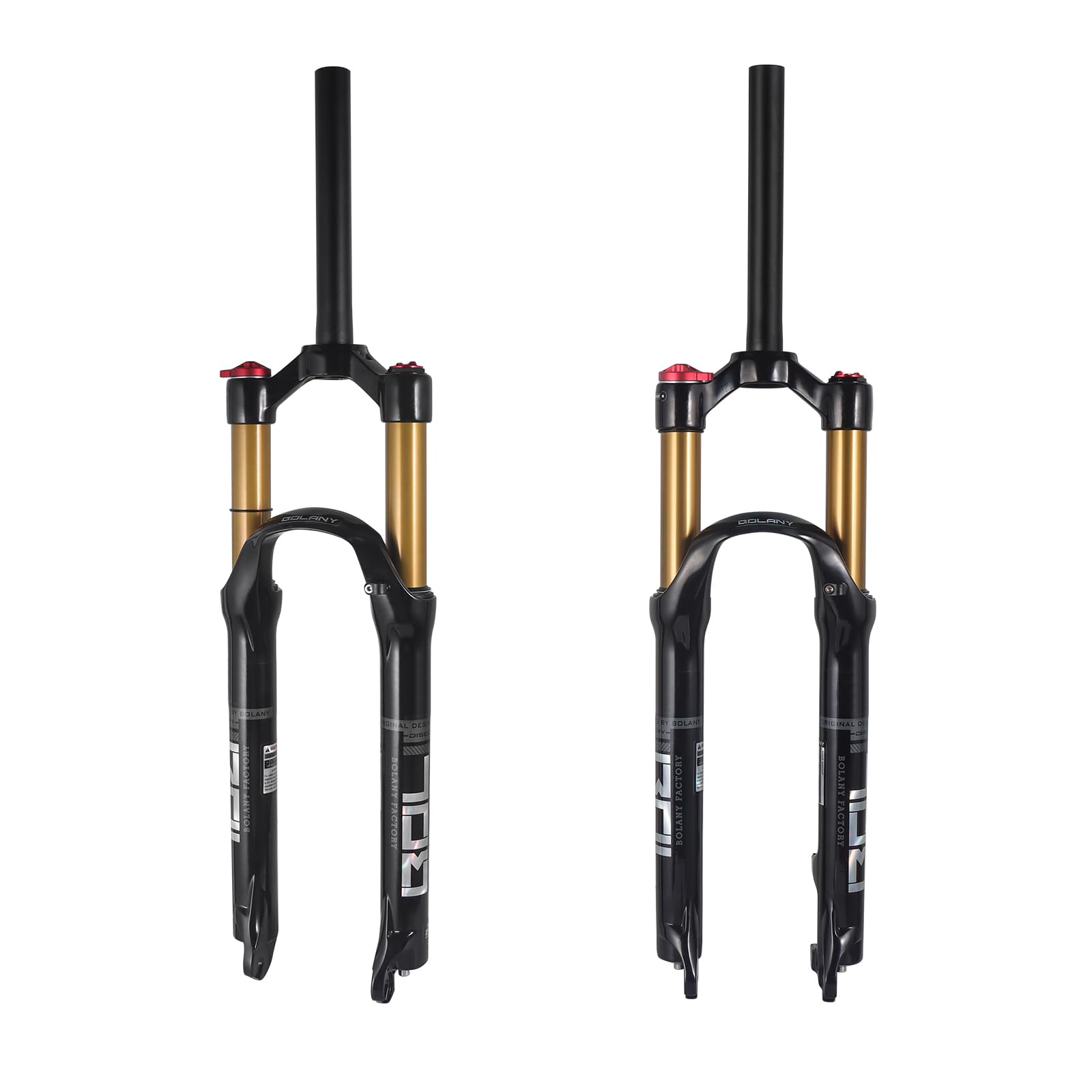
The BOLANY Magnesium Alloy fork is the most budget-conscious entry in this guide, offering a functional air suspension fork at a price that competes with basic coil units. It uses an oil-gas damping structure with 100 mm of travel and is available with either manual or remote lockout. The fork comes in both straight and tapered steerer versions, which is rare at this price point and expands compatibility to a wide range of frames.
Construction uses an aluminum alloy upper tube paired with a magnesium alloy lower, keeping weight reasonable while providing enough stiffness for XC and light trail use. The fork includes a water bottle in the box — a small but appreciated bonus for first-time buyers. Owner feedback emphasizes that the fork works well for casual trail riding and bike path use, though it is not designed for aggressive downhill or jump line duty.
Compared to the other budget forks on this list, the BOLANY Magnesium Alloy model has the shortest travel at 100 mm and the most basic damper circuit, which limits its capability on rougher terrain. However, for riders upgrading a department store mountain bike or replacing a worn-out coil fork on a budget, it provides a functional air spring experience with lockout capability at the lowest possible entry cost. Realistic expectations are key — this fork smooths out fire roads and flow trails competently.
What works
- Available in straight and tapered steerer versions
- Oil-gas damping at an entry-level price
- Remote lockout option for climbing
What doesn’t
- 100 mm travel limits terrain capability
- Basic damper lacks refinement for aggressive riding
Hardware & Specs Guide
Stanchion Diameter
Stanchion diameter directly affects fork stiffness and weight. Most XC and trail forks use 32 mm tubes, which balance weight and rigidity for general riding. Forks with 34 mm or 38 mm stanchions, like the BUCKLOS 140 mm and Fox 38, offer greater bending stiffness for aggressive cornering and heavy braking. Thicker stanchions add weight but reduce flex, improving tracking through rough sections.
Air vs. Coil Springs
Air springs are lighter and adjustable with a shock pump, making them the standard for most modern mountain bike forks. Coil springs offer a linear feel and require no pump, but they are heavier and less tunable. All nine forks in this guide use air springs, which allow riders to dial in sag and progression based on their weight and riding style. The trade-off is that air forks can feel harsh at the top of the stroke if not set up correctly.
Lockout Mechanisms
Lockout stiffens the fork for efficient climbing by reducing bobbing. Manual lockout uses a dial on the crown, while remote lockout routes a cable to a handlebar lever for on-the-fly adjustment. Crown lockout is simpler and lighter, but remote lockout lets you switch without taking a hand off the bar. Most budget and mid-range forks offer manual lockout, while some BOLANY models include a remote option.
Rebound Adjustment
Rebound controls how fast the fork extends after compressing. Too fast and the fork feels pogo-like; too slow and it packs down over successive bumps. External rebound knobs, found on the BUCKLOS LUTU, ZTZ air fork, and all RockShox models, allow quick tuning without tools. Forks without rebound adjustment rely on factory settings, which may not suit all riders or terrain types.
FAQ
What travel length do I need for trail riding?
Can I install a suspension fork on any bike frame?
Is an air fork better than a coil fork?
How often should I service my suspension fork?
Final Thoughts: The Verdict
For most buyers, the best bike suspension winner is the RockShox Recon Silver RL because it delivers proven Motion Control damping and reliable Solo Air adjustability at a price that working riders can justify. If you want maximum stiffness and Kashima-coated luxury for enduro duty, grab the Fox Racing Shox 38 Float Factory. And for budget-conscious trail riders seeking 34 mm stanchions and 140 mm of travel, nothing beats the BUCKLOS 140 mm Travel Fork.

Certification: BSc in Mechanical Engineering
Education: Mechanical engineer
Lives In: 539 W Commerce St, Dallas, TX 75208, USA
Md Amir is an auto mechanic student and writer with over half a decade of experience in the automotive field. He has worked with top automotive brands such as Lexus, Quantum, and also owns two automotive blogs autocarneed.com and taxiwiz.com.