A single rusted bolt or stripped screw can turn a thirty-minute repair into an afternoon of swearing. The difference between saving the fastener and destroying it comes down to the extraction tool in your hand — wrong choice means drilling, tapping, and lost time you never get back.
I’m Amir — the founder and writer behind Four Wheel Ask. I’ve spent years digging through technical specifications, metallurgy data, and thousands of owner experiences to understand exactly what separates a reliable extraction kit from a drawer filler.
Whether fighting rusted bolts or stripped screws, the right extraction kit saves hours of frustration — that’s what a best fastener removal tool delivers.
How To Choose The Best Fastener Removal Tool
Fastener extraction is not one-size-fits-all. The tool that effortlessly removes a rounded bolt head may do nothing for a broken screw below the surface, and a dedicated clip plier is useless on a rusted exhaust flange. Understanding the three core differentiators — extraction mechanism, material composition, and drive compatibility — ensures you pick the right tool for the job rather than buying three kits later.
Extraction Mechanism: Spiral Flute vs Straight Flute vs Impact
Spiral flute extractors bite progressively harder as you turn counterclockwise, making them ideal for rounded or stripped bolt heads where the head is still partially intact. Straight flute extractors work better on broken screws and studs because they seat into a pre-drilled pilot hole and grip along the entire shaft. Impact drivers, by contrast, deliver a rotational hammer blow to shock rusted fasteners loose without rounding them further — a completely different approach that suits heavily corroded assemblies like motorcycle engine cases or brake caliper brackets.
Material Quality and Heat Treatment
Chrome-molybdenum steel (Cr-Mo) offers the best balance of toughness and brittleness resistance for high-torque extraction work. S2 steel provides superior hardness for impact-rated bits but can chip under extreme side loads. High-carbon steel works for occasional use but lacks the fatigue life of alloy steels. Heat treatment consistency matters enormously — a poorly treated extractor may snap off inside the fastener, turning a simple job into a machining nightmare. Premium kits clearly specify both the alloy and the hardness rating.
Drive Size and Tool Compatibility
Most bolt extractor sets use a 3/8-inch drive to connect directly to impact wrenches, ratchets, and breaker bars. Some larger extractors step up to 1/2-inch drive for higher torque capacity. Screw extractors typically use a hex shank compatible with T-handle holders or drill chucks. Before buying, verify that the extractor’s drive system matches your existing tools — an extra adapter introduces slop that can reduce grip and increase the chance of cam-out.
Quick Comparison
On smaller screens, swipe sideways to see the full table.
| Model | Category | Best For | Key Spec | Amazon |
|---|---|---|---|---|
| Orion Motor Tech | Bolt Extractor Set | Rusted bolts & stripped nuts | 13 SAE & Metric sizes, Cr-Mo steel | Amazon |
| GEARWRENCH 720DD | Screw Extractor Set | Broken screws & studs | 5 piece straight flute, high carbon steel | Amazon |
| ARES 71134 | Clip Removal Plier | Trim & upholstery clips | Spring loaded, ergonomic handle | Amazon |
| XEWEA Professional | Bolt Extractor Set | Rounded & damaged bolts | 14 piece, Cr-Mo steel, 3/8-inch drive | Amazon |
| jixinlar Impact Driver | Manual Impact Driver | Corroded & frozen fasteners | 12 piece, S2 steel bits, reversible | Amazon |
In‑Depth Reviews
1. Orion Motor Tech Impact Nut and Bolt Extraction Tool Set

The Orion Motor Tech set strikes the most practical balance between size coverage and build quality in this comparison. With 13 sockets spanning both SAE (1/4-inch through 3/4-inch) and metric (8 mm through 19 mm), it covers the vast majority of automotive and light-industrial fastener sizes without filler pieces. Each socket is forged from chrome-molybdenum steel, a material choice that provides the toughness needed to survive repeated high-torque extraction without cracking.
The six-point spiral grip interior is the standout design feature. As you apply counterclockwise torque, the spiral flutes dig progressively deeper into the damaged fastener head, creating a mechanical lock that improves with load rather than slipping off. The 3/8-inch drive works directly with impact wrenches, air ratchets, and breaker bars without adapters that could introduce play. The blow-molded storage case keeps the set organized and protects the sockets from moisture between jobs.
Owner feedback consistently highlights the set’s ability to remove rusted exhaust bolts and rounded brake caliper brackets that other extractors failed to budge. The one-year warranty provides a reasonable safety net, though Cr-Mo steel of this grade typically lasts through years of regular shop use. For anyone doing general automotive or motorcycle repair, this kit offers the most versatile extraction capability per dollar.
What works
- Dual SAE and metric size coverage eliminates the need for two separate sets
- Chrome-molybdenum steel construction withstands high torque without deformation
- Spiral grip design increases bite under load for reliable extraction
- Compact blow-molded case keeps sockets organized and portable
What doesn’t
- Limited to 3/8-inch drive; larger bolts may require a 1/2-inch adapter
- Case latch can loosen after repeated use in a toolbox
2. GEARWRENCH 5 Pc. Straight Fluted Screw Extractor Set – 720DD
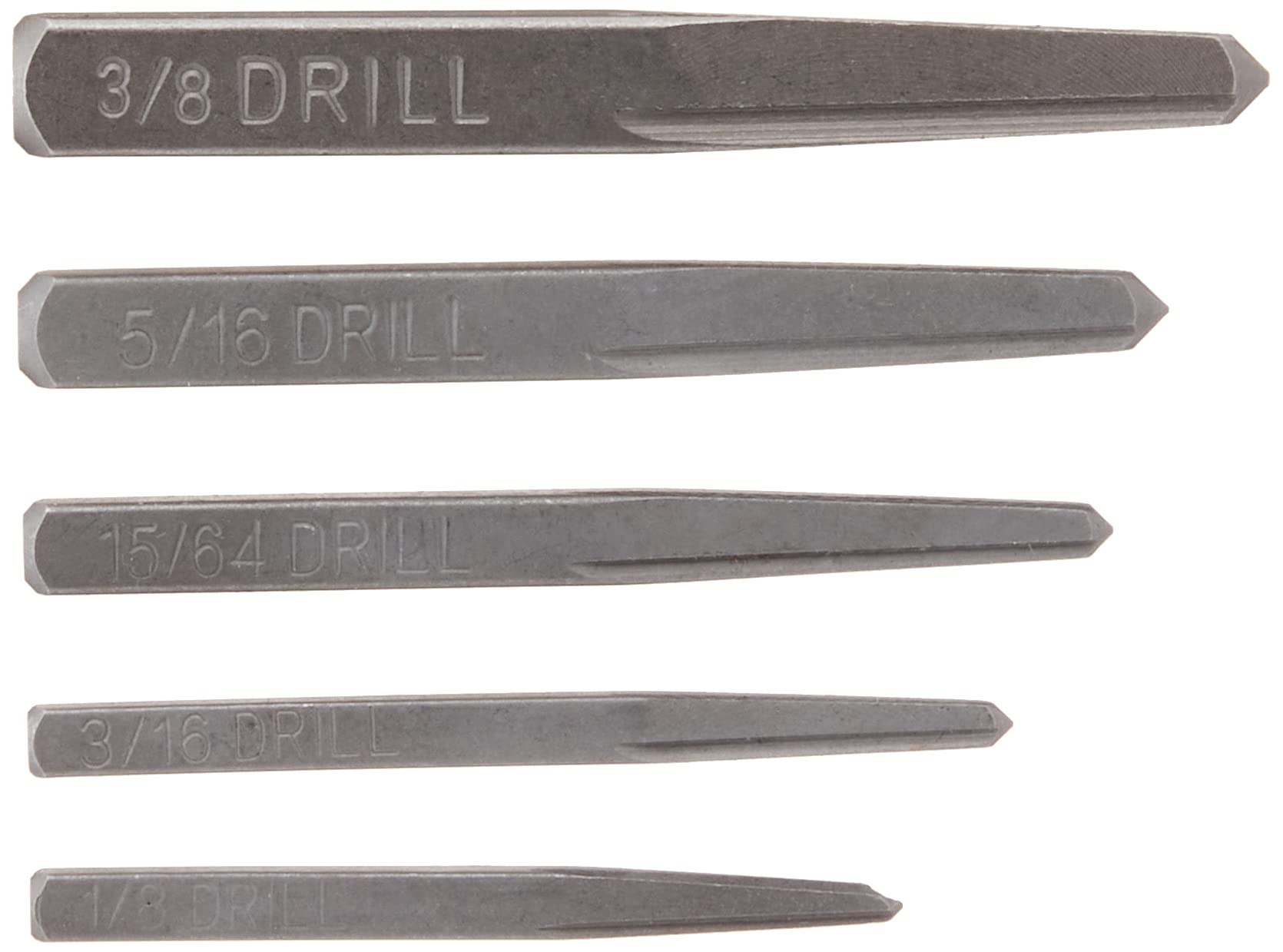
GEARWRENCH has built a reputation for precision-engineered hand tools, and the 720DD straight fluted screw extractor set reflects that manufacturing discipline. Rather than the spiral flute design used by most bolt extractors, this set employs straight flutes that require drilling a pilot hole into the broken fastener before insertion. The straight flutes then bite along the full contact length of the extractor, making this the superior choice for screws and studs that have snapped off flush with or below the surface.
The high-carbon steel construction undergoes a heat treatment process that produces a hard, wear-resistant cutting edge while retaining enough toughness to resist torsional failure. The powder-coated finish provides corrosion protection in shop environments where moisture and solvents are present. Each extractor features a hex drive shank that works with standard T-handle tap holders, tap wrenches, or a 1/4-inch hex chuck on a drill or impact driver, offering flexibility across different tool systems.
Field reports from mechanics indicate that the five sizes cover the most common screw and stud diameters encountered in automotive, appliance, and equipment repair. The compact form factor — the entire set weighs just over two ounces — makes it easy to keep in a pocket or drawer without taking up toolbox real estate. For technicians who regularly deal with broken fasteners rather than merely rounded heads, this set delivers the precise engagement that general-purpose extractors cannot match.
What works
- Straight flute design provides superior grip on broken screws below the surface
- Heat-treated high-carbon steel resists snapping under high torque
- Hex shank compatibility with multiple tool types increases versatility
- Powder-coated finish resists shop chemicals and moisture
What doesn’t
- Requires drilling a pilot hole before use, adding a step to the process
- Limited to five sizes; larger fasteners may not be covered
3. ARES 71134 Clip Removal Plier

The ARES 71134 takes a completely different approach to fastener removal by targeting the plastic and metal push-clips that secure interior door panels, trim pieces, and upholstery in virtually every modern vehicle. These clips are designed to be single-use in many cases, and prying them off with a screwdriver almost always damages both the clip and the surrounding panel. The ARES plier solves this with a spring-loaded, two-blade design that slides under the clip head and applies even pressure for clean removal.
The ergonomic handle reduces hand fatigue during extended interior work, which matters when removing a full set of door panels or a dashboard assembly that may involve dozens of clips. The flat blade profile fits into the tight gaps typical of automotive trim without scratching painted surfaces or leather — a common complaint about improvised tools like trim spoons or flathead screwdrivers. The plier works across a wide range of vehicle brands including Honda, Toyota, GM, Chrysler, and Ford.
The Performance Assurance Limited Lifetime Warranty provides long-term confidence, and the plastic construction keeps the tool lightweight at under seven ounces. While this plier does nothing for rusted bolts or broken screws, it is the correct tool for a specific and very common fastener type that other extractors in this list cannot address. For anyone working on interior repairs, sound deadening installation, or audio system upgrades, this plier saves both time and broken trim clips.
What works
- Spring-loaded mechanism removes clips cleanly without panel damage
- Ergonomic handle design reduces fatigue during repetitive use
- Flat blade profile fits tight trim gaps without scratching surfaces
- Lifetime warranty backs the tool for long-term ownership
What doesn’t
- Not suitable for bolts, screws, or metal fasteners
- Plastic handle may not withstand heavy-duty commercial shop abuse
4. XEWEA Professional 14PCS Bolt Extractor Set

The XEWEA Professional set packs 14 dedicated extractor sockets into a single kit, covering sizes from 1/4-inch up to 3/4-inch with corresponding metric equivalents. Every piece in this set is a functional extractor — there are no filler adapters or extension bars padding the count. The reverse spiral flute design engages damaged fastener heads with increasing grip as torque ramps up, making it effective on bolts that have been rounded by previous attempts with standard sockets.
Each socket is forged from chrome-molybdenum steel, the same alloy used by premium tool brands, and the internal reverse spiral flutes are machined to tight tolerances for consistent bite across all sizes. The 3/8-inch drive connects directly to impact wrenches, reducing the need for adapters that can compromise torque transfer. The blow-molded storage case keeps the set organized and includes clear size labeling on each socket for quick identification during a job.
The lifetime warranty adds significant value at this price tier, and owner reports confirm that the set handles automotive exhaust bolts, suspension fasteners, and industrial equipment repairs without extractor breakage. The 14-size range is among the most comprehensive in this comparison, covering small fasteners like 8 mm and 10 mm bolts up to larger 19 mm and 3/4-inch hardware. For budget-conscious buyers who still want professional-grade material quality, this set delivers the best piece-to-dollar ratio.
What works
- 14 genuine extractor sockets with no filler pieces maximize coverage
- Chrome-molybdenum steel construction equals premium brand durability
- Reverse spiral flute design tightens grip under torque for reliable extraction
- Lifetime warranty protects the investment against defects
What doesn’t
- Case does not have a foam insert, so sockets may shift during transport
- Some sizes may fit tight on fasteners with minimal head remaining
5. jixinlar 1/2″ Hand Manual Reversible Impact Driver Set

The jixinlar impact driver takes a fundamentally different approach to fastener removal by using mechanical impact force rather than torsional grip. This manual tool converts a hammer strike into rotational torque through an internal cam mechanism, delivering a sharp rotational shock that breaks the corrosion bond between threaded fasteners and their mating surfaces. It is particularly effective on fasteners that are frozen by rust or thread-locking compounds rather than simply rounded off.
The driver body is constructed from #45 carbon steel with a chrome-plated corrosion-resistant finish, and the bit holder accepts any 3/8-inch drive bit tip or hex nut driver. The included 12-piece bit set spans slotted, Phillips, and hex sizes in S2 alloy steel, which offers high hardness for impact applications. The reversible mechanism allows the tool to both loosen and tighten fasteners, making it useful for disassembly and reassembly in a single session without changing tools.
Motorcycle technicians and small-engine mechanics frequently rely on this style of tool for carburetor bolts, engine case screws, and brake caliper fasteners that have seized from heat cycling and moisture exposure. The compact 7.6-inch length allows access to tight engine compartments where power tools cannot fit. While the impact mechanism requires a hammer and consumes more physical effort than a socket-based extractor, it remains the most reliable method for breaking loose fasteners that have not moved in years.
What works
- Impact mechanism breaks corrosion bonds without rounding fastener heads
- Reversible design allows tightening and loosening with one tool
- Compact length reaches into tight engine bay and motorcycle spaces
- Bit set includes the most common drive profiles for general repair
What doesn’t
- Requires a hammer and physical striking, which is slower than power tools
- Not effective on fasteners with completely rounded or stripped heads
Hardware & Specs Guide
Spiral Flute vs Straight Flute Extraction
Spiral flute extractors are designed for fasteners with an intact head that has become rounded or stripped. The helical flutes bite deeper as torque increases, creating a wedging action that locks the extractor onto the fastener. Straight flute extractors require drilling a pilot hole into the broken fastener and are optimized for screws and studs that have snapped below the surface — the straight flutes engage along the full length of the hole for maximum grip.
Alloy Selection and Heat Treatment
Chrome-molybdenum steel (Cr-Mo or chromoly) offers the highest impact resistance and fatigue life for extraction tools. S2 steel provides superior surface hardness for impact-rated bits but is more brittle under side loads. High-carbon steel is adequate for occasional use but lacks the toughness for repeated high-torque applications. Proper heat treatment ensures the extractor is hard enough to cut into the damaged fastener without being so brittle that it snaps off inside the hole.
Drive Compatibility and Torque Transfer
Bolt extractor sockets with a 3/8-inch square drive connect directly to the most common impact wrench and ratchet size in automotive repair. Some larger extractors require a 1/2-inch drive or a step-up adapter, which introduces a potential failure point. Screw extractors with hex shanks fit into tap holders, T-handle wrenches, or 1/4-inch hex chucks on power drills. Matching the drive system to your existing tools eliminates slop and ensures maximum torque reaches the fastener.
Size Coverage and Incremental Fit
The ideal extraction set provides continuous size coverage across the most common fastener diameters without large jumps that leave you under- or over-sized for a given bolt. SAE sizes from 1/4-inch to 3/4-inch and metric sizes from 8 mm to 19 mm cover passenger car, light truck, and motorcycle fasteners. The best sets label each socket clearly and store them in a case that prevents the loss of individual pieces between jobs.
FAQ
What is the difference between a bolt extractor and a screw extractor?
Can I use bolt extractor sockets with an impact wrench?
How do I prevent damaging the fastener further during extraction?
Final Thoughts: The Verdict
For most buyers, the best fastener removal tool winner is the Orion Motor Tech Impact Nut and Bolt Extraction Tool Set because it combines the most useful size range with durable chrome-molybdenum steel construction at a reasonable entry point. If you primarily deal with broken screws and studs rather than rounded bolt heads, grab the GEARWRENCH 720DD Straight Fluted Screw Extractor Set. And for interior trim work where plastic clips dominate, nothing beats the ARES 71134 Clip Removal Plier.

Certification: BSc in Mechanical Engineering
Education: Mechanical engineer
Lives In: 539 W Commerce St, Dallas, TX 75208, USA
Md Amir is an auto mechanic student and writer with over half a decade of experience in the automotive field. He has worked with top automotive brands such as Lexus, Quantum, and also owns two automotive blogs autocarneed.com and taxiwiz.com.