Whether you are blending a quarter panel after a parking lot scrape or patching a rust bubble before it spreads, the line between a respectable home repair and a botched job is almost always drawn by the quality of the materials under the paint. Auto body work is a discipline where surface preparation and material science dictate the final result, and using the right supply kit separates a permanent fix from a recurring headache.
I’m Amir — the founder and writer behind Four Wheel Ask. My recommendations here are based on months of cross-referencing product specifications, analyzing owner feedback across DIY forums and professional bodyshop networks, and evaluating the material science used in modern automotive finishing compounds.
This guide breaks down the top-rated best auto body supplies for achieving professional-grade results without the bodyshop overhead.
How To Choose The Best Auto Body Supplies
Selecting the right materials for auto body repair depends entirely on the substrate you are working with, the depth of the repair, and your available equipment. Understanding the specific role of each product category ensures you don’t overpay for features you don’t need or under-spec a material for a demanding structural repair.
Matching Filler Type to Substrate
Polyester fillers are the standard for steel and aluminum panels, but vary widely in weight, sandability, and bonding strength. Lightweight fillers reduce sanding fatigue on large areas, while fiberglass-reinforced putties are essential for structural gaps and backing out holes. Always check compatibility data for galvanized steel and aluminum to avoid galvanic corrosion issues under the filler.
Primer Chemistry and Your Topcoat
Epoxy primers provide the highest adhesion and corrosion resistance, making them ideal for bare metal. Urethane primers offer excellent build and sanding properties but require a full curing cycle. The choice between 2K aerosol and gun-applied systems depends on your volume of work and ventilation setup.
Hidden Costs in Surface Preparation
Sanding blocks, guide coats, and mixing accessories add up quickly. A dry guide coat eliminates solvent mess and reveals surface defects instantly. Accurate ratio mixing cups and clean strainers prevent contamination that leads to fisheyes and adhesion failure. Investing in these ancillaries often yields a better final finish than upgrading the filler itself.
Quick Comparison
On smaller screens, swipe sideways to see the full table.
| Model | Category | Best For | Key Spec | Amazon |
|---|---|---|---|---|
| Evercoat Z-Grip | Body Filler | Sanding Efficiency | Lightweight, clog-free, Hattonite additive | Amazon |
| SprayMax 2K Epoxy Primer | Primer | Corrosion Resistance | Professional 2K in an aerosol can | Amazon |
| TotalBoat Structural Putty | Structural Putty | High-Strength Bonding | Marine-grade, long strand fibers | Amazon |
| Bondo Body Filler | Body Filler | Quick Repair | Original non-shrink formula, 20-min cure | Amazon |
| U.S. Chemical Special Lite | Lightweight Filler | Easy Sanding | Creamy texture, non-sag formula | Amazon |
| Dura-Gold Guide Coat Kit | Guide Coat | Defect Detection | 7 oz black powder with applicator pad | Amazon |
| Pouring Masters Mixing Kit | Accessory Kit | Complete Setup | 12 cups, sticks, strainers & mixer blade | Amazon |
In‑Depth Reviews
1. Evercoat Z-Grip Lightweight Body Filler

Evercoat has a reputation in collision repair circles for producing fillers that reduce sanding time significantly, and the Z-Grip formula is the culmination of that engineering. The Hattonite additive reduces heat and friction during sanding, which translates to less clogging on 80-grit discs and a smoother surface profile with fewer passes. This is a lightweight filler that spreads like a thick cream and cures without the hard edges that cause extra blocking time.
What sets Z-Grip apart from standard polyester fillers is its verified adhesion to difficult substrates. The formulation holds well on galvanized steel, aluminum, fiberglass, and older OEM finishes when properly scuffed. Owner feedback consistently highlights the lack of pinholes after sanding, which reduces the need for multiple glazing putty applications before primer.
For professional shops and serious DIY enthusiasts, Z-Grip justifies its mid-premium price point by reducing labor hours. The can size provides good coverage for multiple panel repairs, and the consistency allows for thin, feather-edge applications without cracking or shrinkage over time.
What works
- Sands effortlessly even with coarse paper
- Strong adhesion to aluminum and galvanized steel
- Clog-free formula extends sanding disc life
What doesn’t
- Premium cost compared to general-purpose fillers
- Can be harder to find in local auto parts stores
2. SprayMax 2K Epoxy Primer Black
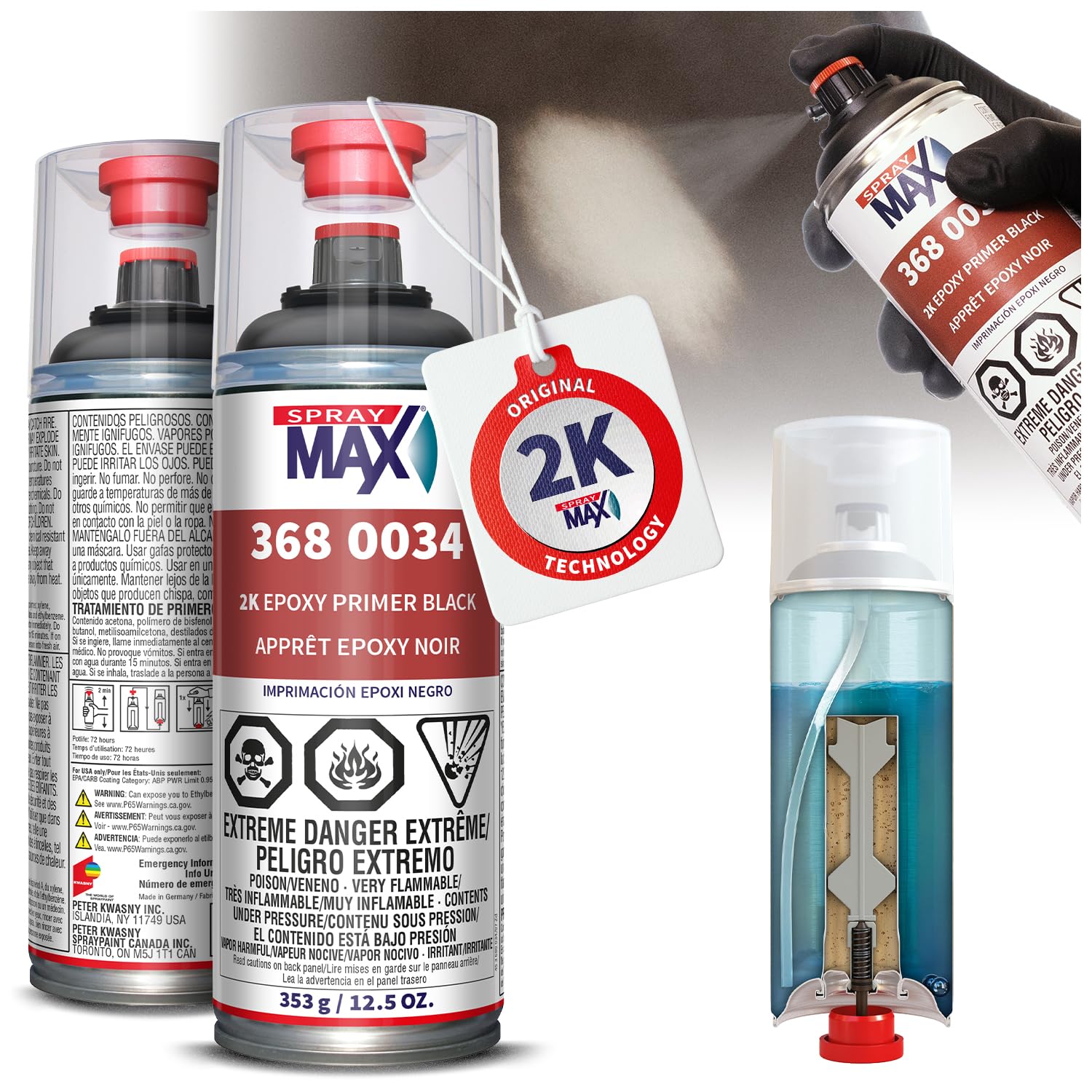
The SprayMax 2K Epoxy Primer delivers genuine two-component urethane chemistry in an aerosol can, eliminating the need for a compressor and spray gun for small to medium repair jobs. This system uses an internal activator that, once released, provides the same cross-linking reaction as professional mixed primers. The result is a hard, chemical-resistant film that seals bare metal and provides a flawless foundation for any topcoat.
Corrosion resistance is the standout feature here. Working on bare steel or aluminum, this primer forms a moisture-proof barrier that prevents flash rusting and undercutting at scratch lines. The black pigment also acts as a guide coat, revealing sanding imperfections clearly when block-sanded with 400-grit or finer paper. The drying cycle is fast enough to allow same-day priming and painting under most workshop conditions.
For restoration projects or custom paint work, the SprayMax system ensures professional-grade bonding without the investment in HVLP equipment. The variable nozzle provides excellent control over fan pattern and material deposition, reducing orange peel and runs even for less experienced applicators.
What works
- Professional 2K epoxy chemistry without a spray gun
- Exceptional corrosion resistance on bare metal
- Dust-dry in 15 minutes for efficient workflow
What doesn’t
- Limited pot life once activated
- Higher per-can cost compared to standard aerosol primers
3. TotalBoat Polyester Structural Repair Putty

TotalBoat’s Structural Repair Putty is a pre-thickened, fiber-reinforced polyester that bridges the gap between a standard body filler and a full laminating resin. The inclusion of long strand glass fibers provides significant impact resistance and tensile strength, making it suitable for repairing structural components like door jambs, floor pans, and composite body panels where flexing occurs.
The material stays in place perfectly on vertical surfaces without sagging, even when applied thickly. This non-sag property is critical when filling large holes or backing out rust perforations before final finishing. The working time at standard temperature is generous enough for careful shaping, yet the resin cures quickly enough to maintain project momentum.
While the marine-grade labeling suggests a narrow use case, the bonding characteristics translate directly to automotive structural repairs. It bonds aggressively to cured polyester, fiberglass OEM panels, wood, and metals, making it a versatile option for custom fabrication work and heavy restoration projects where standard filler would lack the necessary rigidity.
What works
- High structural strength with long glass fiber reinforcement
- Non-sag formula ideal for vertical panel repairs
- Bonds dissimilar materials effectively
What doesn’t
- Overkill for shallow dents and minor ding repairs
- Requires careful MEKP ratio measurement
4. Bondo Body Filler (3M Original)

Bondo has been the benchmark for consumer and entry-level professional auto body repair for decades, and the 3M-owned original formula remains a reliable workhorse for a reason. The two-part cream system mixes easily on a clean surface and spreads smoothly, filling deep scratches, dings, and rusted areas with a single application. The twenty-minute cure time allows for efficient same-day repair cycles.
The formulation is non-shrinking when mixed correctly, which means repairs stay true to shape after curing. This predictability is valuable for beginners who may not have the experience to compensate for material behavior during the blocking process. Bondo sands predictably with 40- to 80-grit paper, loading paper slightly more than premium fillers but still manageable with standard abrasives.
Bondo remains the most widely available body filler on the market, stocked at virtually every hardware store and automotive retailer. While newer formulations offer lighter weight and easier sanding, Bondo’s proven durability and low cost per volume make it an excellent choice for large-scale repairs where material cost is a primary concern.
What works
- Industry-standard reliability with predictable results
- Fast twenty-minute cure time for rapid repairs
- Works on wood, steel, aluminum, and fiberglass
What doesn’t
- Heavier than modern lightweight fillers
- More prone to pinholes if mixing ratio is off
5. U.S. Chemical & Plastics Special Lite
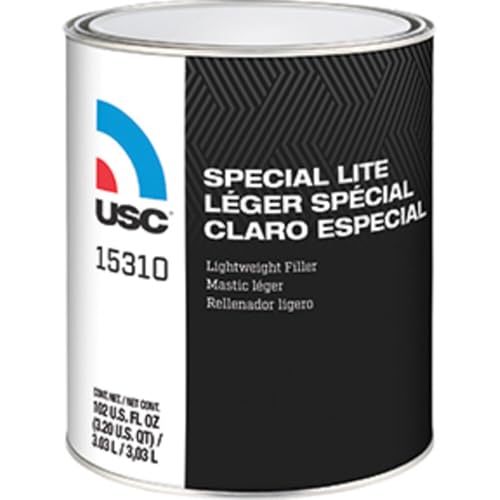
The USC Special Lite filler addresses the fatigue factor inherent in large-area body repairs. Its lightweight cream formula requires significantly less effort to spread and sand compared to standard fillers, making it a preferred choice for full panel refinishing and roof or hood repairs where weight and sanding time compound quickly.
Vertical application is where this filler truly shines. The non-sag chemistry holds firmly on quarter panels and doors without running or slumping, even in thicker builds. The creamy texture also minimizes air entrapment, leading to fewer pinholes and less need for spot putty between primer coats.
Compatibility with metal and fiberglass substrates is solid, though it is optimized for use over properly prepared steel panels. The full cure cycle allows for same-day primer application, and the sanded finish is uniformly smooth without hard spots that cause sand-through when blocking.
What works
- Very lightweight reduces sanding fatigue
- Non-sag formula ideal for vertical body panels
- Smooth creamy texture with fewer pinholes
What doesn’t
- Not as strong structurally as standard fillers
- Higher cost per volume than general-purpose options
6. Dura-Gold Premium Black Dry Guide Coat Kit

A guide coat is the single most effective tool for verifying surface quality before primer, and Dura-Gold’s dry powder system offers a cleaner alternative to aerosol guide coats. The 7-ounce cartridge applicator dispenses a fine black powder that sticks to the repair surface without solvent overspray, masking, or the mess associated with spray cans. This dry application method eliminates the risk of solvent incompatibility with fresh filler or primer.
The high-contrast black coating immediately reveals sanding scratches, pinholes, and low spots as soon as the block hits the surface. Aggressive scratches from 80-grit stand out clearly, allowing targeted sanding that reduces the risk of burning through edges. The powder remains visible during both wet and dry sanding processes, maintaining contrast throughout the blocking stage.
Dura-Gold’s kit includes the applicator pad and enough powder for multiple vehicles. The lack of propellants and solvents makes it a smarter choice for home workshops without industrial ventilation. For anyone serious about achieving a straight, defect-free paint job, this guide coat system pays for itself in reduced rework.
What works
- No aerosol overspray or solvent mess
- High contrast reveals defects instantly
- Large 7 oz quantity lasts for multiple repairs
What doesn’t
- Powder can be messy if applicator is over-loaded
- Sponge applicator wears out and needs replacement
7. Pouring Masters Paint Mixing Cup Kit

Accurate mixing ratios are non-negotiable in auto body work, and the Pouring Masters kit removes the guesswork with graduated markings for ounces, milliliters, and common mixing ratios. The kit includes twelve cups across four sizes, ensuring you have the right container for mixing small batches of spot putty or large volumes of primer and clear coat.
Beyond the cups, the kit bundles practical ancillaries that are easy to forget: twelve 190-mesh paint strainers, twelve wooden mixing paddles, a drill mixer blade, and a can opener. The inclusion of strainers alone justifies the purchase, as strained material is the easiest single step to prevent fisheyes and contamination in your final coat. The cups are made from high-clarity PET that resists solvent degradation long enough for working times.
For anyone building a home auto body toolkit from scratch, this kit covers the consumables needed for the first several projects. The value proposition is strong, providing professional-quality mixing and straining hardware without the markup of individually packaged painter’s supplies.
What works
- Comprehensive kit with cups, strainers, and stir sticks
- Clear graduated markings for accurate mixing ratios
- Solvent-resistant PET cups hold up during working time
What doesn’t
- Disposable plastic creates waste per project
- Cups not suitable for high-head applications
Hardware & Specs Guide
Filler Chemistry: Polyester vs Epoxy
Polyester fillers cure by chemical reaction with a peroxide hardener and are the standard for cosmetic and semi-structural repairs. They sand easily and are cost-effective for large areas. Epoxy fillers offer superior adhesion and chemical resistance but are harder to sand and typically used as a thin skim coat or structural adhesive. Choose polyester for general dent repair, epoxy for bare metal sealing and high-stress joints.
Primer Systems: 2K vs 1K
2K (two-component) primers contain an isocyanate hardener that creates a dense, chemical-resistant film. These provide maximum corrosion protection and are sandable within hours. 1K primers are single-component and dry by solvent evaporation; they are easier to use but offer less durability and require longer flash times before sanding. For bare metal repairs, a 2K epoxy primer is the recommended foundation layer.
Abrasives and Surface Profile
Proper grit progression prevents sand scratches from telegraphing through paint. Start with 40-80 grit for shaping filler. Switch to 180-220 grit for primer surface. Finish with 400-600 grit for sealer or basecoat. A guide coat applied between grit stages reveals low spots and scratches that would otherwise show after painting.
Mixing Accessories and Strainers
Accurate measurement using graduated cups is critical for correct curing. A 190-mesh paint strainer removes lumps and contaminants from mixed paint or primer before it enters the gun. Using a drill mixer attachment ensures thorough blending of pigment and hardener without introducing excessive air bubbles that cause pinholes.
FAQ
What is the difference between body filler and spot putty?
How do I ensure my body filler doesn’t crack or shrink?
Can I apply 2K epoxy primer over existing paint?
What grit sandpaper should I use between coats of primer?
Is an aerosol guide coat as good as a powder guide coat?
Final Thoughts: The Verdict
For most buyers looking to stock a home workshop or professional bay with reliable best auto body supplies, the winner is the Evercoat Z-Grip because it combines the fastest sanding performance with strong adhesion to modern substrates. If you are working with bare metal and want maximum corrosion protection, grab the SprayMax 2K Epoxy Primer. And for a comprehensive toolkit that ensures you never run out of mixing cups, strainers, or stir sticks at a critical moment, the Pouring Masters Mixing Cup Kit delivers unbeatable value.

Certification: BSc in Mechanical Engineering
Education: Mechanical engineer
Lives In: 539 W Commerce St, Dallas, TX 75208, USA
Md Amir is an auto mechanic student and writer with over half a decade of experience in the automotive field. He has worked with top automotive brands such as Lexus, Quantum, and also owns two automotive blogs autocarneed.com and taxiwiz.com.