An RV roof endures relentless UV exposure, pounding rain, and extreme temperature swings that degrade most coatings within a season. The difference between a dry interior and a slow, costly leak often comes down to choosing the right formulation for your specific roof material. This guide cuts through the marketing claims to help you match a coating to your roof type, climate, and budget without wasting time on products that peel or chalk prematurely.
I’m Amir — the founder and writer behind Four Wheel Ask. I spend my time reading ASTM data sheets, comparing polymer formulations, and synthesizing feedback from thousands of owner reports to identify which coatings deliver on their stated performance claims.
The right coating can turn a hot interior into a tolerable living space and add years to your roof’s service life. This analysis of the best rv roof coatings organizes the market by material compatibility, application ease, and long-term durability so you can make an informed purchase.
How To Choose The Best RV Roof Coating
Selecting the wrong coating is an expensive mistake that leads to peeling, chalking, and continued leaks. Focus on three criteria: material compatibility, solid content, and application method.
Match the Coating to Your Roof Substrate
EPDM rubber roofs require a flexible acrylic or silicone coating that moves with the membrane. TPO roofs need a primer or a dedicated TPO-compatible coating to avoid chemical incompatibility. Metal roofs benefit from a high-reflectivity elastomeric coating that expands and contracts with temperature changes. Check the manufacturer’s compatibility chart before purchasing.
Evaluate Solid Content vs. Thinner Formulas
Higher solid content means more of the product stays on the roof after the water or solvent evaporates. Coatings with high solid levels usually require fewer coats and provide a thicker, more durable membrane. Thinner coatings may be cheaper per gallon but demand multiple applications to build adequate film thickness, which increases labor cost.
Consider Reflectivity and UV Stability
White coatings with high solar reflective index (SRI) reduce interior temperatures by reflecting infrared radiation. Silicone coatings typically maintain reflectivity longer than acrylics because they resist UV degradation and chalking. If you park in full sun, prioritize a silicone top coat rather than an acrylic sealant.
Quick Comparison
On smaller screens, swipe sideways to see the full table.
| Model | Category | Best For | Key Spec | Amazon |
|---|---|---|---|---|
| Dicor RP-MRC-1 | Acrylic Coating | Metal RV roofs needing heat reflection | 200 sq ft per gallon | Amazon |
| Liquid Rubber Lap Sealant | Self-Leveling | Sealing vents, skylights, and seams | 22 linear ft per 10 oz tube | Amazon |
| Protect All 68128 | UV Protectant | EPDM rubber roof maintenance | 1 gallon coverage varies | Amazon |
| Wadities White Coating | Flexible Sealant | General RV and metal building roofs | 50 sq ft per gallon (1 coat) | Amazon |
| Liquid Rubber EPDM Primer | Adhesion Primer | Prepping EPDM for top coat | 250 sq ft per gallon | Amazon |
| Marlin 100% Silicone | Silicone Top Coat | Long-term protection on rubber & fiberglass | 60 sq ft per gallon (1 coat) | Amazon |
| Rust-Oleum 750 | Elastomeric Coating | Large roofs needing high reflectivity | 1.5 gal per 100 sq ft (1st coat) | Amazon |
In‑Depth Reviews
1. Marlin 100% Silicone Roof Sealant
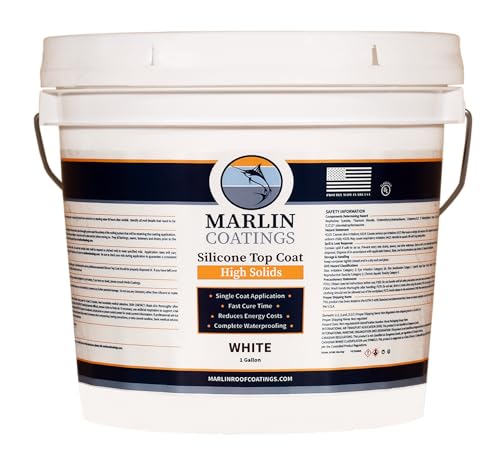
This 100% silicone formulation skips the acrylic or rubber additives that degrade under UV exposure, making it one of the few coatings that genuinely resists chalking and cracking for years. Owners of motorhomes and fifth wheels report that a single coat at the recommended thickness eliminated leaks and lowered interior temperatures noticeably. The self-leveling behavior means it flows into hairline cracks and uneven seams without manual spreading, reducing the risk of thin spots.
Application requires clean, dry surfaces and a minimum six-thousand PSI sprayer if you go that route, but rolling on works fine for most DIY setups. The bright white finish has a Solar Reflective Index of 113, which translates to measurable cooling inside the cabin on hot afternoons. Multiple user reports confirm that the coating stays flexible through freeze-thaw cycles and doesn’t become brittle over time.
The main downside is the premium cost per gallon compared to acrylic alternatives. Additionally, if the coating is ripped or punctured, peeling can occur along the edge of the damage rather than staying localized. For a permanent solution that does not need recoating every two to three seasons, this silicone top coat sets the standard.
What works
- True single-coat coverage saves significant labor
- Superior UV resistance prevents chalking and yellowing
- Self-leveling fills cracks and low spots automatically
- High reflectivity reduces interior cabin heat
What doesn’t
- Higher per-gallon investment than acrylic options
- Damaged sections can peel if not repaired immediately
- Requires careful surface prep for maximum adhesion
2. Rust-Oleum 750 Elastomeric Roof Coating

The Rust-Oleum 750 is a thick, latex-based elastomeric coating that delivers high initial reflectivity and a durable rubbery finish after curing. It is designed for large surfaces, and the five-gallon pail provides enough material to cover an average RV roof plus some for a second coat. User reports consistently note that it goes on smoothly with a roller, levels itself acceptably, and dries to a bright white membrane that feels cool to the touch on sunny days.
Application is straightforward if you work in sections and avoid applying too thick in one pass, because heavy coats can take more than eighteen hours to dry fully. The coating becomes rain-resistant in roughly four hours, but a second coat is strongly recommended for a uniform, waterproof seal. Owners who applied two thin coats reported excellent weatherproofing and a clean appearance that lasted through several seasons.
The main complaint is that the coating can wash off if rain hits it before full cure. It also requires a dry, warm window of at least twenty-four hours for the best results. For budget-conscious owners who need to cover a large roof without breaking the bank, this elastomeric coating offers proven performance at a competitive price per square foot.
What works
- Very easy to apply with standard roller equipment
- High reflectivity keeps interior noticeably cooler
- Large pail size reduces per-coat cost significantly
- Stays flexible and rubbery after full cure
What doesn’t
- Thick coats take a long time to dry completely
- Rain before full cure can wash the coating off
- Requires a second coat for best waterproofing
3. Wadities RV Roof Coating White

Wadities markets this as a high-solids acrylic formulation that offers exceptional flexibility—advertised at one-thousand percent elongation—to prevent adhesion failure as the roof expands and contracts. The included polyester cloth adds reinforcement for patching problem areas. Owners report that it spreads easily, dries relatively quickly, and successfully stopped leaks that previous products failed to seal.
One reviewer noted that two years after application the coating held strong without peeling, a common failure point for thinner acrylics. The manufacturer recommends two to three heavy coats for a full waterproof membrane, and the one-gallon container covers a thirty-foot RV with multiple coats. Application methods include brush, roller, or sprayer, giving flexibility depending on the surface complexity.
Coverage is somewhat limited per gallon compared to thicker coatings, so larger roofs will require buying multiple pails. Some users also reported that the product is cream-like rather than runny, which helps control drips on vertical transitions. For owners who prioritize flexibility and a reinforced application, this is a strong mid-range option.
What works
- Very flexible formulation resists cracking from roof movement
- Comes with reinforcement cloth for patching
- Multiple application methods available
- Dries quickly and stops leaks effectively
What doesn’t
- Coverage per gallon is lower than some competitors
- Large roofs may require several pails
- Long-term durability beyond 2 years still unverified by many users
4. Dicor RP-MRC-1 Acrylic Elastomeric Coating

Dicor is a well-known name in the RV industry, and this acrylic elastomeric coating is formulated specifically for metal roofs. Owner reports from overlanding rigs and older aluminum trailers highlight its ability to transform a surface that was painfully hot to the touch into one that stays cool even on ninety-degree days. The brilliant white finish provides superior reflectivity, which translates into lower interior temperatures during summer travel.
A detailed six-year review from an owner who applied this coating with a conditioner and sealant caulk reported that the roof remained leak-free for the entire period before needing a recoat. The coating can run or thin if applied on a hot afternoon with insufficient drying time, so temperature control during application is key. Users recommend a high-nap roller and at least two hours of direct sun for proper cure.
This product is not recommended for EPDM or TPO roofs, so it only fits a subset of the RV market. For metal roof owners, however, it offers a proven, budget-friendly solution that reduces heat absorption and provides a clean, white finish. The trade-off is that long-term durability is heavily dependent on proper surface preparation.
What works
- Excellent heat deflection on aluminum and steel roofs
- Proven long-term performance in overlanding conditions
- Easy to apply with a roller and brush
- Low cost per gallon for the performance delivered
What doesn’t
- Not compatible with EPDM, TPO, or fiberglass
- Can run and drip if applied in hot weather
- Requires a conditioner and sealant for best results
5. Liquid Rubber EPDM and TPO Primer

This water-based primer is designed to improve adhesion on EPDM and TPO surfaces before applying a top coat. The primer dries to a tacky finish that creates a mechanical bond for the subsequent rubber coating, significantly reducing the risk of delamination. Owners who used this as part of a complete Liquid Rubber system reported that the top coat adhered tenaciously and resisted peeling even in high-heat environments.
Application is straightforward with a brush or roller, and the thin consistency means it spreads a long way—one gallon covers two hundred fifty square feet. The primer is incredibly sticky when wet, so it is not recommended to walk on the surface during application. A twenty-four-hour cure time is required before adding the top coat, which adds a full day to the project timeline.
Some users noted that the primer alone is not a waterproofing layer and must be followed by a coating. For owners planning to apply a Liquid Rubber or similar elastomeric top coat, this primer is a worthwhile step that improves long-term system integrity. It is also suitable for use on trailers and camper roofs that need a fresh base before resealing.
What works
- Greatly improves adhesion of rubber top coatings
- Thin formula provides excellent coverage per gallon
- Works on both EPDM and TPO surfaces
- Easy to apply with standard tools
What doesn’t
- Adds an extra day of curing time to the project
- Very sticky when wet, difficult to clean up
- Must be used with a compatible top coating
6. Liquid Rubber RV Lap Sealant

This self-leveling lap sealant is formulated for horizontal roof details like vents, skylights, AC unit mounts, and roof seams. It flows into gaps on its own, creating a smooth, waterproof seal that moves with the RV through temperature changes and road vibration. The four-pack provides enough material for a typical thirty-foot RV, with each tube covering roughly twenty-two linear feet at the recommended bead size.
User feedback emphasizes how easy it is to apply compared to traditional putty tapes or non-leveling sealants. The self-leveling action eliminates the need to tool the bead, and the sealant sets up without air bubbles. It forms a durable, rubbery barrier that remains flexible and has survived rain exposure within minutes of application according to one owner.
Heads up that this product is very runny and will drip down vertical surfaces if over-applied near edges, so cleanup can be necessary. It also will not adhere to silicone, meaning old silicone sealant must be fully removed before application. For detailing roof fixtures and ensuring a watertight seal around penetrations, this is a reliable choice.
What works
- Self-leveling design creates a smooth, professional finish
- Flexible seal moves with the RV without cracking
- Quick rain resistance allows use in variable weather
- Compatible with EPDM, TPO, fiberglass, and metal
What doesn’t
- Very runny, requires careful application on edges
- Won’t adhere to old silicone residue
- Needs 24 hours for full waterproof cure
7. Protect All 68128 Rubber Roof Treatment

Protect All is not a roof coating in the traditional sense—it is a polymer-based treatment designed for EPDM rubber roofs that reduces chalking, repels dirt, and provides UV protection. The anti-static property prevents grime from sticking, which means fewer gray streaks running down the sides of the RV after rain. Owners report that consistent biannual application keeps the roof looking clean and extends the life of the rubber membrane.
The treatment is extremely easy to apply using a sponge mop or pad on a long handle, and a one-gallon container covers a typical thirty-foot trailer with product left over. Users have noted a noticeable reduction in the white chalky runoff after the treatment is applied, and the roof remains slick to the touch for several months. It is not a waterproofing layer, so it will not seal existing leaks.
For owners who already have a sound roof with no leaks and simply want to preserve it and reduce cleaning effort, this is a low-cost maintenance solution. It is not suitable for roofs that need structural repair or a new waterproof membrane. As a preventive treatment, it reduces the frequency of deep cleaning and helps the rubber stay pliable.
What works
- Reduces chalky runoff that stains RV sidewalls
- Quick application with a pole mop
- Anti-static formula repels dust and dirt
- UV protection helps keep rubber pliable
What doesn’t
- Not a waterproof coating, will not seal leaks
- Requires reapplication every 6-12 months
- Does not repair cracks or damaged rubber
Hardware & Specs Guide
Acrylic vs. Silicone Formulations
Acrylic coatings are water-based, easy to clean up, and generally less expensive, but they can chalk and degrade under prolonged UV exposure. Silicone coatings resist UV degradation significantly better and maintain their reflectivity over a longer lifespan, but they are more difficult to recoat and require careful surface prep. For roofs that see direct sun for most of the day, silicone is the longer-lasting choice despite the higher initial cost.
Surface Preparation and Primer Use
All coatings require a clean, dry, and oil-free surface to adhere properly. EPDM and TPO roofs benefit from a dedicated primer that creates a tacky bonding layer, especially if the roof has previous sealant residue. Metal roofs need to be free of rust and loose paint. Skipping surface prep is the most common cause of premature coating failure, regardless of the product quality.
FAQ
Can I apply a new coating over an old one?
How many coats should I apply for a waterproof seal?
Final Thoughts: The Verdict
For most buyers, the best rv roof coatings winner is the Marlin 100% Silicone Roof Sealant because it combines genuine single-coat convenience with excellent UV resistance and long-term durability. If you want a budget-friendly option for a large metal roof, grab the Rust-Oleum 750 Elastomeric Coating for its high reflectivity and easy application. And for maintaining an EPDM roof that is still in good condition, nothing beats the Protect All 68128 for reducing chalk and keeping the surface clean.

Certification: BSc in Mechanical Engineering
Education: Mechanical engineer
Lives In: 539 W Commerce St, Dallas, TX 75208, USA
Md Amir is an auto mechanic student and writer with over half a decade of experience in the automotive field. He has worked with top automotive brands such as Lexus, Quantum, and also owns two automotive blogs autocarneed.com and taxiwiz.com.