Brake dust bonds hard. A quick wipe never cuts it, and cheap sprayers leave streaks or clog after a few uses. The right tool blasts away carbon, grease, and road film in seconds — without wasting solvent or leaving a mess behind.
I’m Amir — the founder and writer behind Four Wheel Ask. Over the last several years I’ve compared dozens of brake cleaning tools, analyzing spray patterns, material compatibility, valve durability, and the real-world feedback owners leave after months of shop use.
Choosing between pneumatic guns, refillable pressurized tanks, and standard aerosol cans comes down to your workspace and frequency of use. Analyzing spray patterns, materials, and refillability reveals the best brake clean sprayer for consistent professional shop results you can trust.
How To Choose The Best Brake Clean Sprayer
Brake cleaners are aggressive by design. Choosing the wrong delivery system leads to wasted product, poor coverage, or equipment that degrades after a few refills. Focus on delivery type, material build, and nozzle control before buying.
Delivery Method
Aerosol cans offer convenience but generate disposal waste and limit spray angle. Pneumatic guns use compressed air to siphon bulk solvent — they reach tight spots and allow adjustable flow. Refillable pressurized tanks combine the portability of aerosol with the cost savings of bulk fluid. Your air setup and frequency of use determine the best fit.
Material & Chemical Resistance
Brake solvents attack cheap plastics and standard rubber seals. Look for high-density polyethylene bottles, stainless steel springs, and Teflon or chemical-resistant valve cores. A sprayer that fails after three refills costs more than upgrading to a properly built unit from the start.
Nozzle Control & Spray Pattern
Fine mist covers large brake rotors evenly. A pin stream targets caliper pistons and bleeder screws. Adjustable nozzles let you switch between the two without changing tools. Fixed tips limit your reach and force you to overspray just to hit a small spot.
Quick Comparison
On smaller screens, swipe sideways to see the full table.
| Model | Category | Best For | Key Spec | Amazon |
|---|---|---|---|---|
| SURE SHOT A1000G | Pressurized Tank | Professional Shop Use | 32oz Steel, 200 PSI | Amazon |
| 3M High Power Brake Cleaner | Aerosol | Quick One-Time Jobs | 14oz Can, Fast-Drying | Amazon |
| Denco #1930 Case | Aerosol Bulk | Volume Cleaning | 12 x 15.3oz, Non-Chlorinated | Amazon |
| QWORK Air Blow Gun | Pneumatic Gun | Tight Engine Bay Access | 4ft Hose, Syphon Action | Amazon |
| Heluva Green 32oz | Manual Sprayer | Multi-Purpose Detailing | 2-Pack, HDPE Bottles | Amazon |
In‑Depth Reviews
1. SURE SHOT A1000G 1-Quart Non Aerosol Sprayer

The SURE SHOT A1000G replaces disposable aerosol cans with a refillable pressurized steel canister that holds a full quart of solvent. It operates on shop air up to 200 PSI and delivers consistent pressure from first spray to last. The steel body, chemical-resistant valve core, and Teflon filler cap are built to survive repeated exposure to aggressive brake cleaners without degrading.
Two brass nozzles ship with the unit — a pin-stream nozzle for targeted caliper work and a mist nozzle for wide rotor coverage. Owners report that the spray quality rivals or exceeds aerosol cans, with the added benefit of choosing your own solvent brand and concentration. The unit is made in the USA by a family-owned company, and rebuild parts are available separately, extending the service life well beyond disposable alternatives.
The main trade-off is the upfront investment and the need for a separate air compressor. Users also note that the fill hole is narrow, requiring a funnel to avoid spills. Once dialed in, this system pays for itself over the course of a few refills compared to buying cases of single-use aerosol cans.
What works
- Durable steel construction rated for heavy shop use
- Adjustable mist-to-stream pattern covers rotors and calipers
- Rebuildable design with available replacement parts
- Reduces aerosol waste and long-term solvent cost
What doesn’t
- Higher initial purchase price
- Requires a separate air compressor hookup
- Fill port is small and needs a funnel
2. 3M High Power Brake Cleaner, 08880, 14 oz

3M’s High Power Brake Cleaner is a straight-aerosol solution formulated to remove oil, grease, tar, and brake dust up to two times faster than standard formulas, according to the manufacturer. The 14-ounce can delivers high-pressure flushing action that reaches into caliper bores and between rotor vanes without requiring any external tools or air supply.
The multi-purpose chemistry works on most braking components, including pads, rotors, calipers, and backing plates. Users report that thorough cleaning with this product helps eliminate brake squeal and chatter caused by surface contaminants. The fast-drying nature means parts are ready for reassembly almost immediately after the solvent evaporates.
The clear limitation is per-can capacity and ongoing cost. A single 14-ounce can covers a modest brake job, but frequent users will go through multiple cans quickly. There is no nozzle adjustment — you get the factory spray pattern, which is adequate but not tailored for precision work like bleeding screws or small fittings.
What works
- Fast solvent action reduces scrubbing time
- High-pressure aerosol flushes debris from tight areas
- No air compressor needed for use
- Trusted brand with consistent formulation
What doesn’t
- Per-use cost adds up for frequent work
- Fixed spray pattern limits precision targeting
- Aerosol waste requires proper disposal
3. Denco #1930 Brake & Parts Cleaner Spray, Case of 12
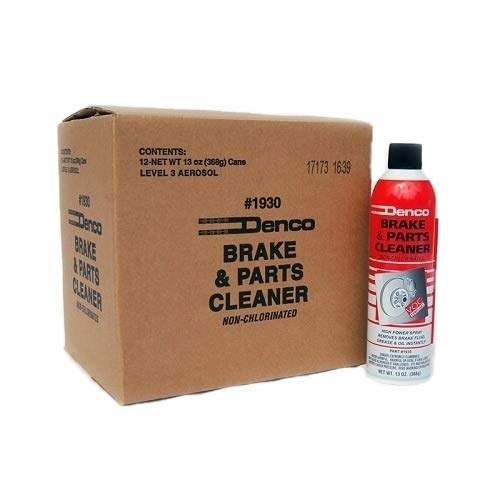
Denco’s #1930 is an aggressive, non-chlorinated brake cleaner packaged in a case of twelve 15.3-ounce aerosol cans. The formulation targets heavy grease, oil, and brake sludge found on calipers, rotors, and undercarriage components. It is safe for use on ABS sensors, plastic connectors, and rubber hoses, according to the manufacturer.
Users consistently describe the cleaning power as comparable to or better than premium national brands, with faster drying and less lingering odor than chlorinated alternatives. The per-can cost lands significantly below retail single-can pricing, making this case a practical choice for shops or DIYers who service multiple vehicles per month. The aerosol format requires no compressor or refill equipment.
The downsides are tied to the bulk format — you commit to twelve cans at once, and the storage footprint is considerable. The spray pattern is fixed, and the cans lack the precision nozzle that some users prefer for small-diameter ports and bleeder screws. Aerosol waste is still a factor, though the value per can offsets some of that concern.
What works
- Low per-can cost compared to retail singles
- Fast-drying, non-chlorinated formula
- Safe for ABS sensors and rubber components
- Strong cleaning performance on heavy deposits
What doesn’t
- Large case takes up storage space
- Fixed spray pattern limits control
- Aerosol waste still applies
4. QWORK Air Blow Gun Pneumatic Engine Cleaning Gun
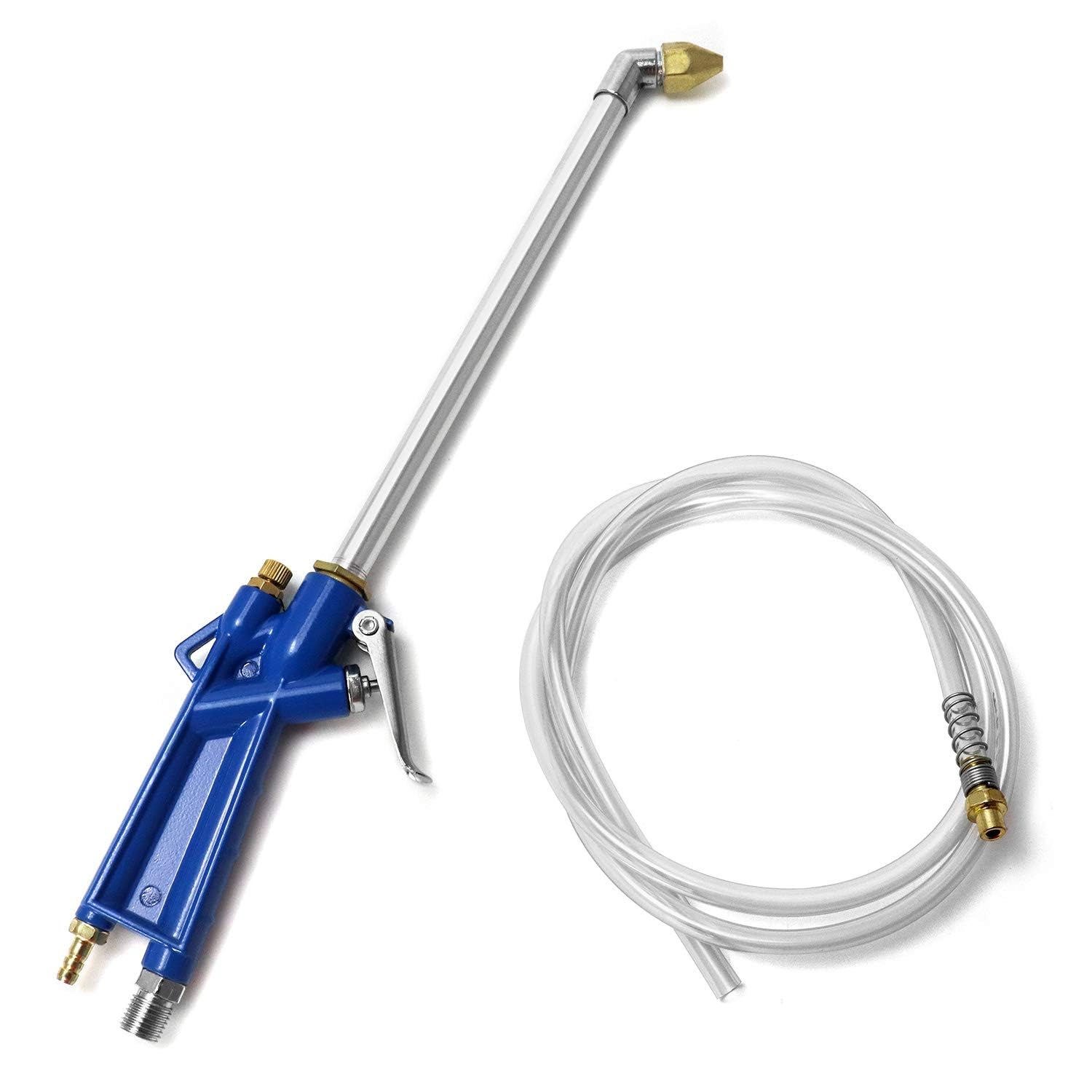
The QWORK Air Blow Gun converts compressed air into a siphon-action sprayer that pulls solvent from a separate container through a 4-foot hose. The long metal nozzle reaches into tight engine bay crevices, wheel barrels, and behind brake dust shields where a standard aerosol can cannot fit. The trigger allows variable liquid flow control.
Owners report strong cleaning force at the tip, with enough pressure to blast caked-on grease and brake dust quickly. The adjustable flow screw on the body lets you fine-tune the solvent-to-air ratio. At this price point, the gun offers an affordable entry into pneumatic cleaning without committing to a pressurized tank system. The package includes the gun and hose but does not include a solvent container.
The build quality reflects the low cost — several users note that the threading feels coarse and requires PTFE tape to seal properly. A separate male air fitting adapter is also needed to connect to standard quick-couplers, which is not included. Despite these compromises, the gun delivers functional cleaning performance for occasional use.
What works
- Very low entry price for pneumatic cleaning
- Long nozzle reaches tight, deep areas
- Adjustable liquid-to-air flow ratio
- Works with bulk solvent to reduce waste
What doesn’t
- Coarse threading may leak without tape
- Separate male air adapter required
- Plastic body feels less durable than metal alternatives
5. Heluva Green Heavy Duty 32oz Plastic Spray Bottles, 2-Pack
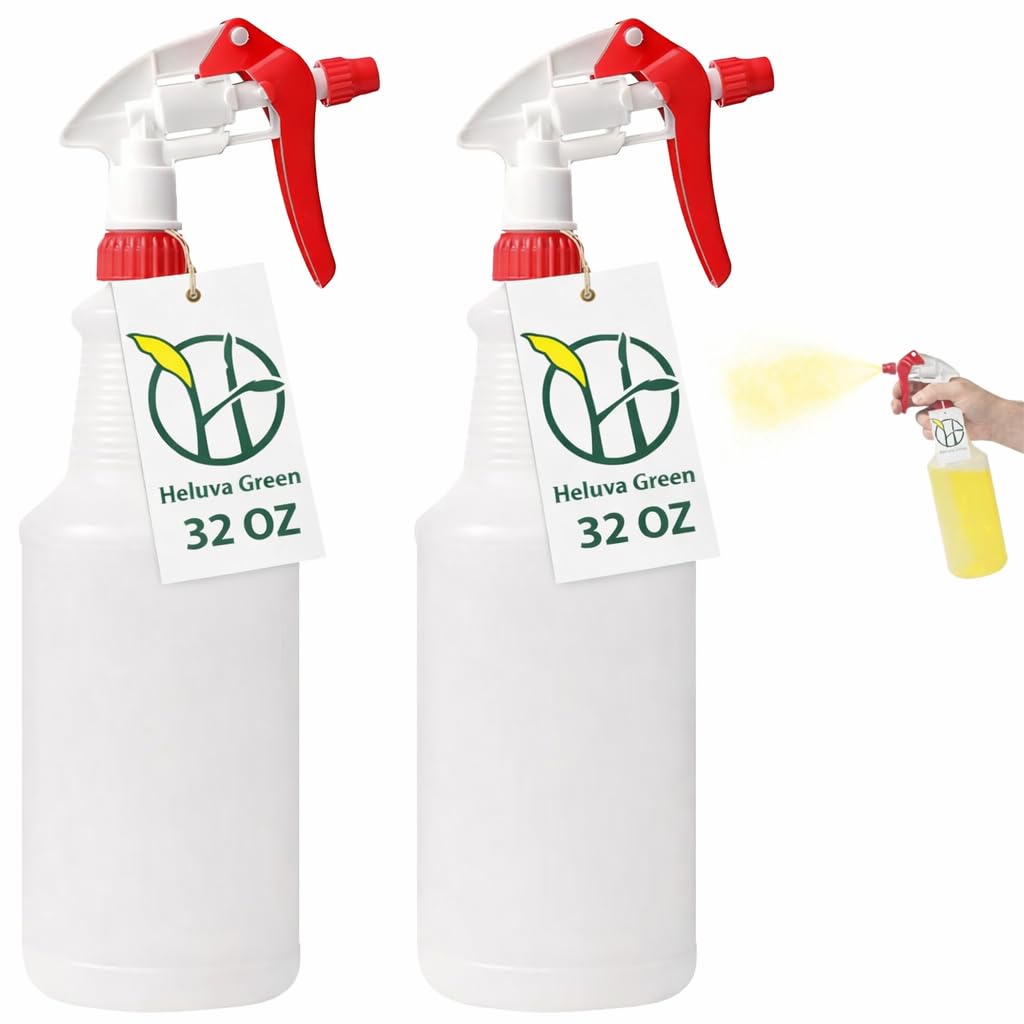
The Heluva Green 32-ounce bottles are manual trigger sprayers built for chemical resistance. The nozzles use a stainless steel 304 spring and a glass internal ball valve, both of which resist corrosion from solvents, degreasers, and acidic cleaners. The high-density polyethylene bottle body does not crack or swell with repeated exposure to brake cleaner fluids.
Each trigger has three settings — stream, spray, and off — plus a particle filter to prevent clogging. The adjustable dip tube can be trimmed to fit different bottle depths. The ergonomic three-finger handle reduces hand fatigue during extended cleaning sessions. Users report that the spray strength with brake cleaner is strong and consistent, with no vacuum lock or drip issues that plague cheaper sprayers.
The limitation is manual operation — you must pump the trigger continuously, which slows down large brake jobs compared to pneumatic or pressurized options. The plastic construction, while durable for its class, will not match the longevity of a steel tank. For light-duty detailing or one-axle brake cleans, these bottles deliver solid performance at a very accessible price.
What works
- Chemical-resistant materials (HDPE, stainless, glass)
- Three spray patterns for different tasks
- Two-pack provides backup or dedicated solvent bottles
- No air compressor needed
What doesn’t
- Manual pumping slows down larger jobs
- Plastic build less durable than metal tanks
- Not compatible with aerosol-style pressure delivery
Hardware & Specs Guide
Pneumatic vs Manual vs Aerosol
Pneumatic sprayers use compressed air to atomize solvent and require an air compressor rated for at least 90 PSI at the tool inlet. The SURE SHOT A1000G stores pressurized fluid in a refillable tank, while the QWORK gun siphons from a separate container. Manual trigger bottles like the Heluva Green rely on hand force, which limits coverage speed but removes the need for any external power source. Aerosol cans are self-contained and ready to use out of the box, but each can only delivers a fixed volume of solvent before disposal.
Material Compatibility
Brake solvents — especially non-chlorinated formulas — attack standard polypropylene and PVC components. The SURE SHOT uses a Teflon filler cap and chemical-resistant valve core to handle repeated solvent contact. The Heluva Green bottles incorporate a stainless steel spring and glass ball valve for the same reason. The 3M and Denco aerosol cans are sealed units with no user-serviceable parts. The QWORK gun relies on a brass siphon tube and a plastic body that holds up well if flushed after use, but the threading benefits from sealant tape to prevent solvent weepage.
FAQ
Can I use any brake cleaner in a refillable sprayer?
How do I prevent clogging in a brake clean sprayer?
Is a pneumatic sprayer better than aerosol for brake jobs?
Final Thoughts: The Verdict
For most buyers, the best brake clean sprayer winner is the SURE SHOT A1000G because it eliminates aerosol waste, delivers consistent pressure, and rebuilds over years of shop use. If you want grab-and-go convenience, grab the 3M High Power Brake Cleaner. And for budget-conscious buyers who already own an air compressor, nothing beats the value of the QWORK Air Blow Gun.

Certification: BSc in Mechanical Engineering
Education: Mechanical engineer
Lives In: 539 W Commerce St, Dallas, TX 75208, USA
Md Amir is an auto mechanic student and writer with over half a decade of experience in the automotive field. He has worked with top automotive brands such as Lexus, Quantum, and also owns two automotive blogs autocarneed.com and taxiwiz.com.