A dual battery box does more than hold batteries — it determines whether your power system stays reliable through rough roads, wet decks, and long stretches off the grid. The wrong box introduces corrosion, loose connections, and voltage drops at the worst possible moment.
I’m Amir — the founder and writer behind Four Wheel Ask. I’ve analyzed dozens of battery box designs, studied owner-reported durability across marine and RV forums, and compared build quality, sealing methods, and port integration to find what actually holds up.
Whether you need a marine-grade enclosure or a lockable steel box for your trailer, the right choice protects your investment. To keep your equipment powered reliably on the road, the best dual group 31 battery box comes down to build quality, port options, and proper protection.
How To Choose The Best Dual Group 31 Battery Box
Selecting the right enclosure means matching your battery dimensions, verifying the material can handle your environment, and checking that the built-in ports match your charging and load requirements. Overlooking any of these three factors leads to a box that either doesn’t fit, corrodes quickly, or limits your power distribution.
Battery Group Size and Internal Fit
Group 31 batteries measure roughly 13 by 6.8 by 9.4 inches, but terminal placement and case height vary between manufacturers. Measure your battery before buying — especially if you run lithium variants that sometimes differ in height. A box that claims Group 31 compatibility should leave enough internal clearance for cables and terminal covers without forcing the lid closed.
Material and Sealing
Polymer boxes resist corrosion and weigh less, but they can crack under extreme cold or impact. Steel boxes offer better physical protection and lockability but require rust-resistant coatings or stainless steel construction to survive marine environments. For vented gas from lead-acid batteries, look for a hose port that routes fumes outside the compartment.
Port Configuration and Circuit Protection
Smart battery boxes integrate USB outputs, cigarette sockets, Anderson-style connectors, and voltmeters directly into the lid. That convenience matters if you power accessories directly from the box. Verify that each output is fused or protected by a resettable circuit breaker, and confirm the external terminal posts can handle your inverter or trolling motor draw without voltage drop.
Quick Comparison
On smaller screens, swipe sideways to see the full table.
| Model | Category | Best For | Key Spec | Amazon |
|---|---|---|---|---|
| GEARMEISTER Power Center | Smart Box | Group 31 versatility | 50A Anderson plugs, LCD voltmeter | Amazon |
| ALL-TOP Smart Battery Box | Power Station | DIY power center | 2x 50A connectors, USB, voltmeter | Amazon |
| SUNAPEX Pro Box | Multi-Port | USB-C / PD charging | PD Type-C, QC 3.0, 16A breaker | Amazon |
| Sidasu Stainless Steel Box | Steel Enclosure | Heavy-duty trailer use | Stainless steel, waterproof top | Amazon |
| Peastorm Steel Box | Lockable Box | RV dual battery storage | Steel construction, lockable lid | Amazon |
| SeaSense Deluxe Station | Marine Box | Small boat power | Built-in tester, 12V socket | Amazon |
| Camco 55370 Vented Box | Dual Marine | Side-by-side battery mounting | USCG approved, vented design | Amazon |
In‑Depth Reviews
1. GEARMEISTER Trolling Motor Power Center Station
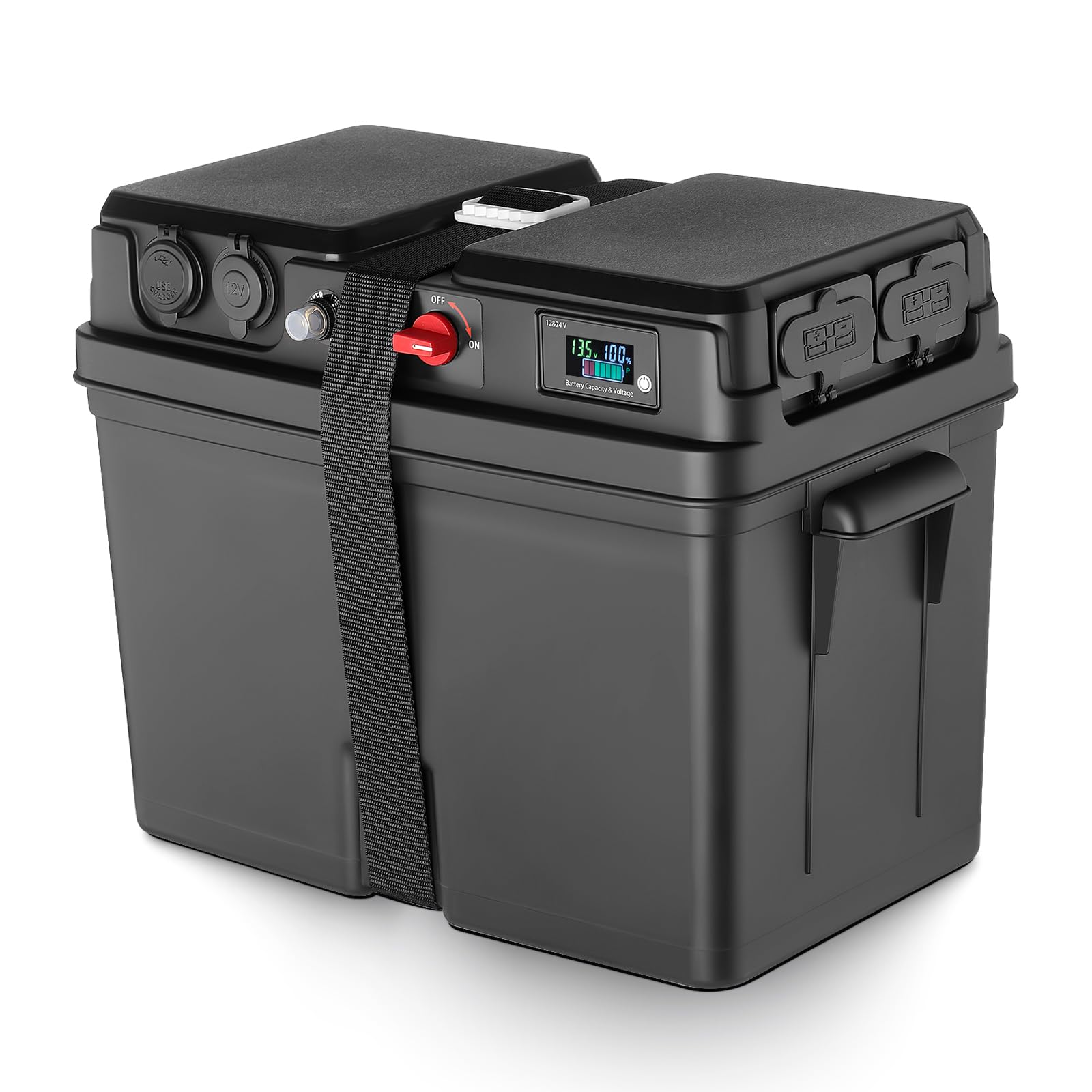
The GEARMEISTER Power Center is one of the few boxes explicitly designed to accept Group 31 batteries while offering a full suite of integrated ports. The PP housing is impact-resistant and lightweight, with a top cover that reduces water seepage during rain or spray. Internal dimensions measure 13.3 by 7.6 by 8.8 inches, providing enough clearance for most Group 31 lead-acid and lithium batteries without forcing the lid.
Port selection includes a USB Type-A QC 3.0 port, a USB Type-C PD port, a 12V cigarette lighter socket, and two 50A Anderson-style plugs — all pre-wired and fused. The built-in LCD voltmeter displays battery percentage and real-time voltage, and a 10A resettable circuit breaker protects the lower-current outputs. Owners report that the wiring is clean from the factory and the Anderson connectors handle trolling motor and solar input without issue.
The box isn’t fully waterproof — there are no O-ring seals on the lid — and the included strap feels basic for permanent installations. The voltmeter accuracy has been questioned by some users who saw discrepancies between the meter reading and a multimeter. Despite those minor compromises, the combination of Group 31 compatibility, integrated fusing, and multiple high-current ports makes this the most versatile option for most buyers.
What works
- Explicitly accepts Group 24, 27, and 31 batteries
- Pre-wired Anderson, USB-C, and cigarette ports reduce DIY work
- Resettable circuit breaker protects sensitive outputs
What doesn’t
- Lid lacks O-ring seal so not fully waterproof
- Voltmeter reported inaccurate by some owners
- Plastic housing feels less rugged than steel alternatives
2. ALL-TOP Smart Battery Box

The ALL-TOP Smart Battery Box converts a standard battery into a multi-function power center without requiring custom drilling or soldering. It supports Group 24, 27, and 31 batteries, including AGM and lithium chemistries, and houses a 100Ah LiFePO4 battery without issue according to owner reports. The box includes external screw terminals, two 50A quick connectors compatible with Anderson SB50 plugs, dual USB ports, a 12V cigarette socket, and a digital voltmeter.
Circuit protection is handled by 60A fuses on each 50A quick connector and a 16A resettable breaker on the USB and cigarette ports — ensuring that high-current loads like a fridge or inverter don’t damage the lower-rated outputs. The external terminals remain unfused for direct high-current connections, which is useful for larger inverters. Owners frequently pair this box with a solar controller mounted inside the lid to create a complete off-grid power station.
The box does not include a carry handle, which makes transporting a fully loaded 100Ah battery cumbersome. The cigarette lighter socket has been reported as somewhat fragile, and several owners replaced it with a higher-quality unit. For the price, however, the ALL-TOP delivers an impressive array of fused outputs and Group 31 compatibility that rivals boxes costing significantly more.
What works
- Direct support for Group 31 AGM and lithium batteries
- Individual fusing on each high-current connector
- Compact enough to mount a solar controller inside the lid
What doesn’t
- No carry handle included for transport
- Cigarette socket feels below average in build quality
- No internal battery retention frame for smaller batteries
3. SUNAPEX Smart Battery Box Pro
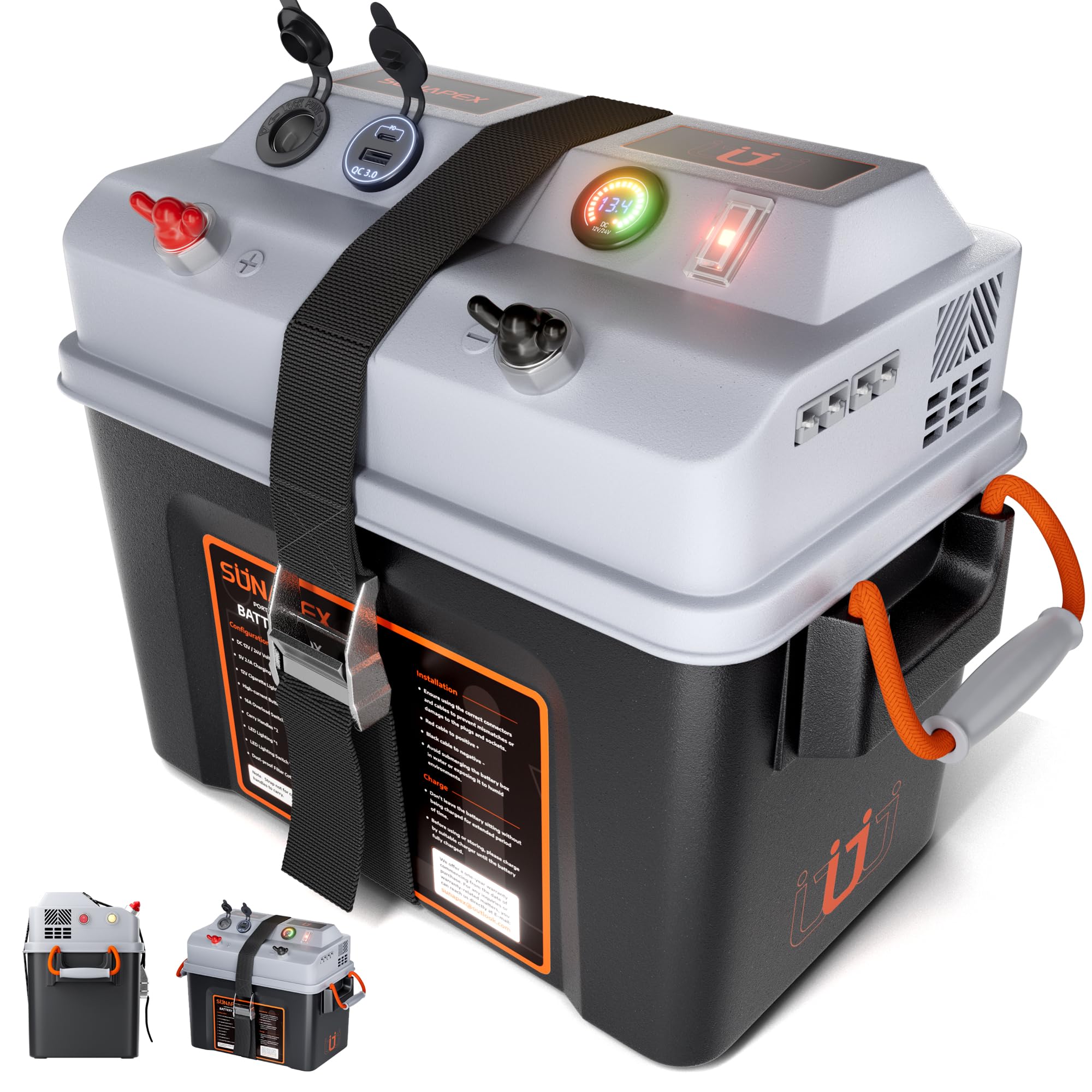
The SUNAPEX Pro Box stands out for its port diversity and integrated lighting, making it a strong choice for campers and boaters who need to charge modern devices directly from the battery box. Internal dimensions measure 13.1 by 8.2 by 7.8 inches, which fits most Group 31 batteries and many lithium prismatic cells. The box includes a 16A overload switch protecting the USB and cigarette outputs, plus 30A fuses on the Anderson connector and high-current terminal posts.
Port selection is among the best in this category: a QC 3.0 USB-A port, a PD USB-C port, a 12V cigarette lighter socket, one 30A Anderson-style plug, and external screw terminals for direct inverter or trolling motor connections. A built-in LED light on the left side provides illumination in low-light conditions, and ergonomic handles on both sides make carrying easier than single-handle designs. Owners upgrading from older boxes frequently note that the PD USB-C charges phones and tablets at full speed without an extra adapter.
The main compromises are material-related: the plastic base feels less substantial than the premium price suggests, and the integrated rope handles, while comfortable, lack the durability of molded-in handholds. The ventilation holes on the side could allow water ingress during heavy rain if the box is mounted in an exposed location. For users who prioritize charging versatility and built-in lighting, however, the SUNAPEX offers a well-thought-out feature set.
What works
- PD USB-C and QC 3.0 ports charge devices at full speed
- Integrated LED light is genuinely useful in dark compartments
- Dual ergonomic carry handles improve portability
What doesn’t
- Plastic housing feels less premium than price suggests
- Ventilation holes may let in rain in exposed mounts
- Rope handle quality may not match long-term durability
4. Sidasu Stainless Steel Dual Battery Box

The Sidasu battery box is built from stainless steel with a black anti-rust coating, offering a level of physical protection that polymer boxes cannot match. Internal dimensions measure 21.7 by 8 by 11 inches, designed to hold two 12V batteries in an end-to-end configuration. The waterproof top cover uses a recessed design that prevents moisture from seeping into the terminal area, and the base sits on detachable non-slip feet that improve ventilation underneath.
Details like the rubber ring around the cable pass-through, the padded bumpers inside the box, and the handrails on both sides show attention to installation ease. The box includes adjustable mounting hardware and screws for securing it to a trailer tongue or boat deck. Owners installing large lithium batteries like the Li Time 320Ah report that the internal dimensions accommodate taller cells without lid interference, and the stainless steel construction resists corrosion far better than painted steel alternatives.
The main drawback is that the stainless steel is difficult to drill through if you need to add custom ports or cable glands — pre-plan your wiring before installation. The box also lacks integrated outlets or voltmeters, so you must add your own distribution panel or use external battery monitors. For users who prioritize a rugged, weather-sealed enclosure that will outlast the batteries inside it, the Sidasu delivers exceptional build quality.
What works
- Stainless steel construction resists corrosion and physical damage
- Waterproof lid design with recessed seal prevents moisture ingress
- Non-slip feet and adjustable mounting hardware included
What doesn’t
- Very difficult to drill through for adding custom ports
- No integrated outlets, voltmeter, or fusing included
- Not compatible with Group 31 batteries wider than 8 inches
5. Peastorm Trailer RV Marine Battery Box
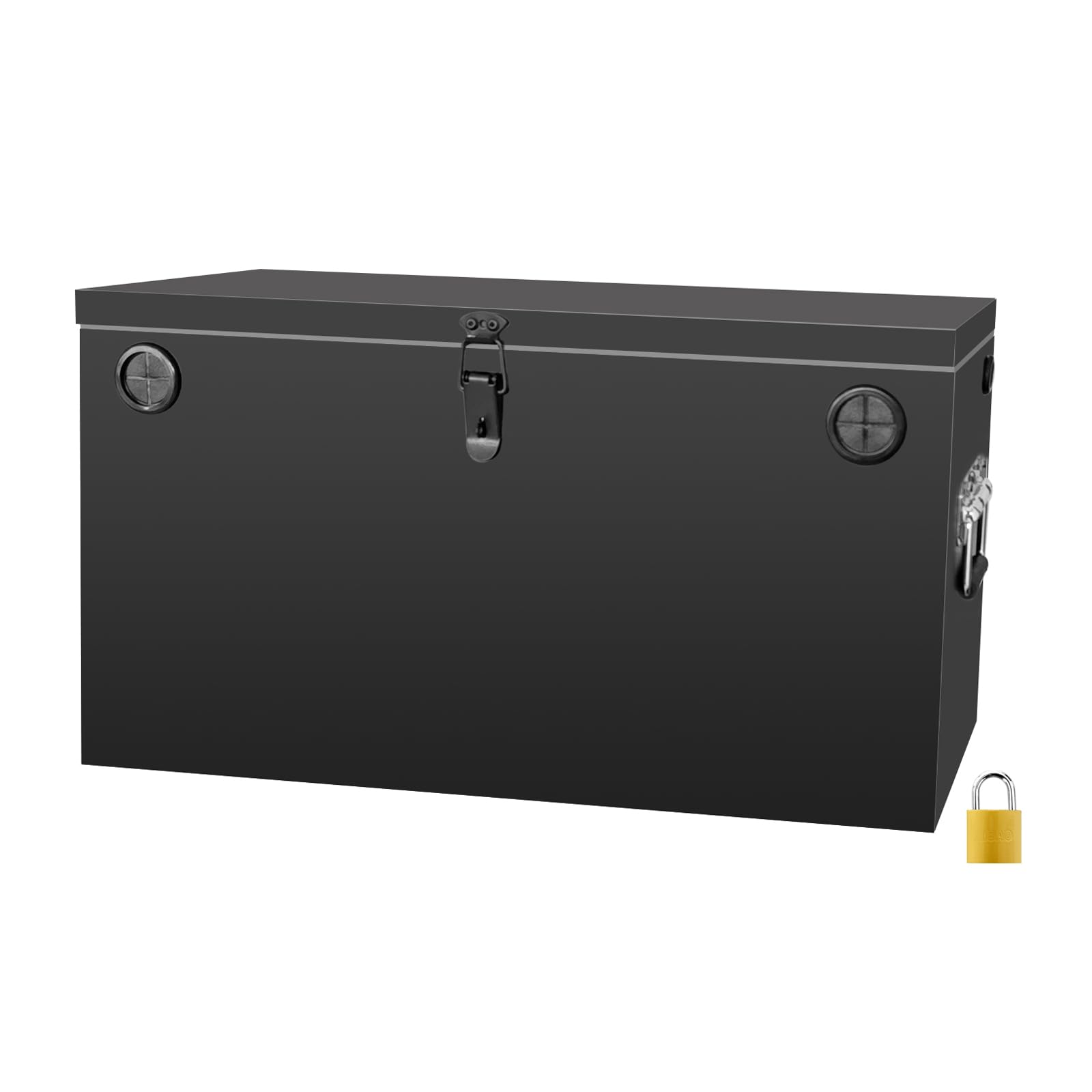
The Peastorm steel battery box is a straightforward, lockable enclosure designed for dual battery installations in RVs, trailers, and marine applications. Constructed from heavy-duty steel with a black sprayed coating, it offers fire resistance and UV protection that polymer boxes cannot provide. Maximum internal capacity measures 22 by 8.5 by 11.5 inches, which accommodates two standard Group 24 or Group 27 batteries, or smaller Group 31 cells depending on terminal placement.
Security features include a latch that accepts a padlock (one is included, though owners recommend upgrading to a Masterlock for serious theft deterrence). Multiple pre-drilled holes with rubber grommets keep cable pass-throughs clean and prevent chafing. The box comes with four mounting screws, and the bottom has pre-marked fixing holes that align with common trailer tongue and RV battery tray patterns. Owners report that the box fits perfectly on A-frame trailers and that the locking latch feels secure once engaged.
The main concern is rust: several owners noted surface rust forming around the handles and latch within six months, particularly in humid coastal environments. The steel is not stainless, so a secondary rust-proofing treatment is advisable for marine use. The lid also sits flush without an O-ring, so it is not fully waterproof in heavy rain. For dry, protected compartments or trailers that see limited salt exposure, the Peastorm offers solid value for a lockable dual battery enclosure.
What works
- Lockable lid adds theft deterrence for trailer batteries
- Pre-drilled holes with grommets simplify cable routing
- Steel construction is fire-resistant and UV-stable
What doesn’t
- Surface rust reported around handles within months
- Lid lacks O-ring seal for full waterproofing
- Included padlock is low quality and should be replaced
6. SeaSense Deluxe Power Station Battery Box

The SeaSense Deluxe Power Station is a smart entry-level option for small boats, kayaks, and pontoons that need basic power monitoring and a 12V accessory outlet. It fits Group 24 or Group 27 batteries — not Group 31 — but earns a spot here for its integrated battery tester and simplicity. One touch of the external button lets you check the battery condition without opening the box, which is genuinely convenient for trolling motor setups where the battery is stored in a tight compartment.
The box includes external screw terminals for easy connection, a built-in 12V accessory socket with a cap, and vinyl-coated steel wing nuts that resist corrosion better than bare hardware. A 10A circuit breaker provides short-circuit protection for the accessory socket. Owners report that the box keeps batteries dry in spray-heavy environments and that the integrated tester, while not as precise as a multimeter, gives a useful ballpark reading of battery state.
The carrying strap tends to loosen under the weight of a Group 27 battery, making the top handle essentially unusable for transport. The USB port, when present, charges at standard rates rather than fast-charging modern phones. This box is best viewed as an affordable marine power station for smaller batteries rather than a heavy-duty dual group 31 enclosure. For basic 12V accessory power and state-of-charge checking, it delivers reliable function at a reasonable entry point.
What works
- One-touch battery tester is convenient for quick checks
- External terminals reduce the need to open the box
- 10A circuit breaker protects accessory socket from shorts
What doesn’t
- Does not fit Group 31 batteries
- Carrying strap loosens under load, handle becomes unusable
- USB charging is standard speed, not fast charging
7. Camco 55370 Vented RV/Marine Battery Box
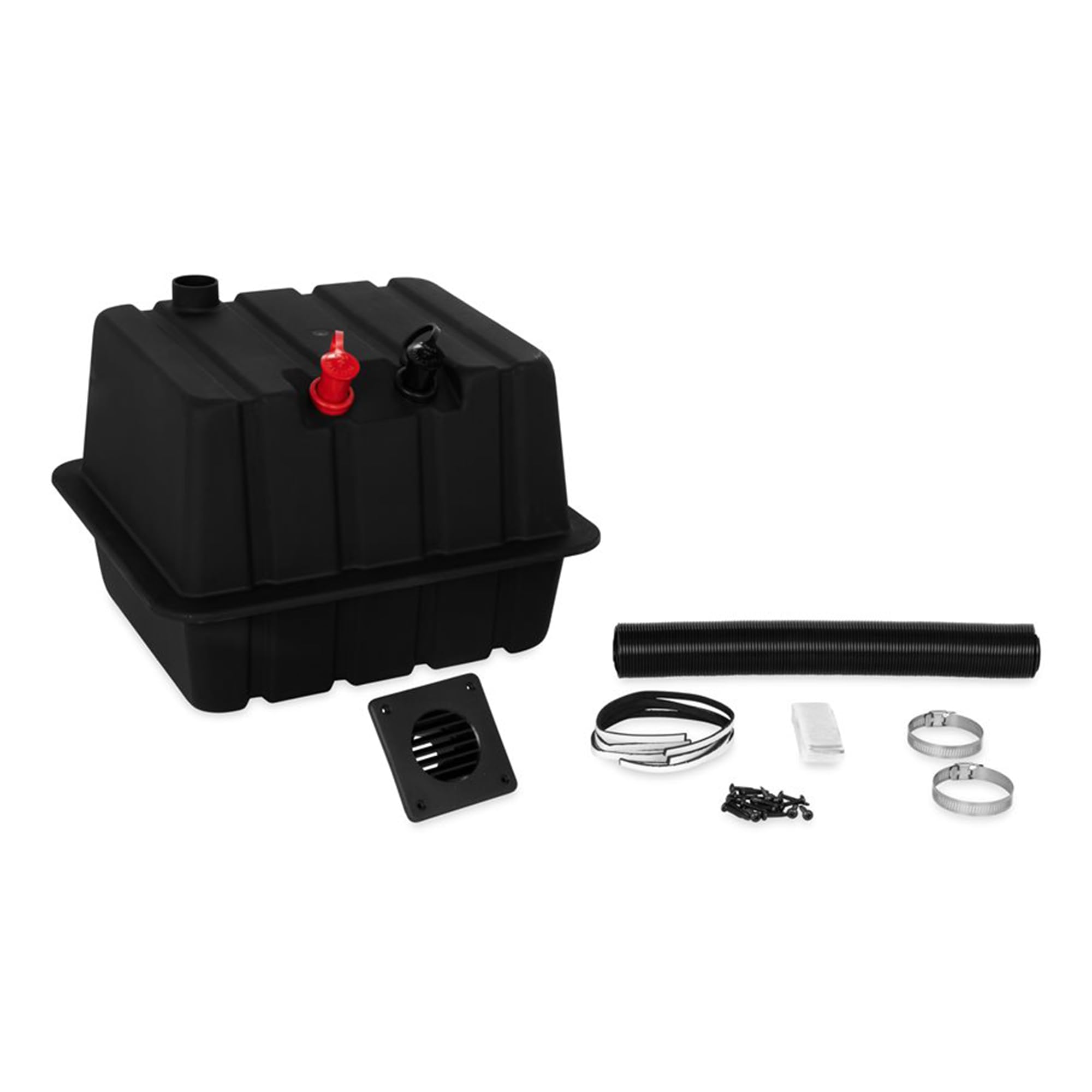
The Camco 55370 is a dual side-by-side battery box designed primarily for two Group 24 batteries, but owners have successfully fit GC2 golf cart batteries and some smaller Group 31 cells depending on terminal height. It meets US Coast Guard CFR 183.420 and ABYC E-10.7 specifications, making it a safe choice for enclosed compartments where hydrogen gas venting is required. The box includes a louvered vent grille, a hose, clamps, and a hose mount plate to route explosive gases outside the storage area.
Construction uses durable polymer with a 17.6 by 15.5 by 13.9 inch external footprint, and the included positive and negative battery terminals with 3/8-inch studs simplify cable connections. The box ships with foam tape, putty tape, and all mounting hardware needed for installation. Owners replacing damaged boxes after a battery explosion report that the Camco contained the damage within the unit, which speaks to the structural integrity of the enclosure.
The main limitation is that the box is designed for Group 24 batteries — Group 31 batteries are a tight squeeze or may not fit at all, especially with tall terminal posts. Some units ship with missing components like the positive terminal connection, suggesting inconsistent quality control. The polymer construction, while durable, does not offer the same theft deterrence as a lockable steel box. For those running dual Group 24 batteries in a vented compartment, this is a well-engineered safety solution that meets marine certification standards.
What works
- USCG and ABYC certified for safe vented installation
- Contained battery explosion damage in owner-reported incident
- Includes all mounting hardware, terminals, and vent hose
What doesn’t
- Designed for Group 24 batteries, tight for Group 31
- Quality control issues with missing terminal components
- No lockable latch for theft prevention
Hardware & Specs Guide
Internal Dimensions
The most critical measurement when selecting a battery box. Group 31 batteries measure approximately 13 by 6.8 by 9.4 inches, but terminals, handles, and cable routing add height and width. Always measure your specific battery — including terminal protrusion — and compare against the box’s internal length, width, and height. A box that claims Group 31 compatibility must offer at least 13.2 inches of internal length and 9.5 inches of internal height to accommodate most batteries without forcing the lid.
Material and Corrosion Resistance
Polymer boxes (polypropylene or polyethylene) are lightweight, corrosion-proof, and inexpensive, but they crack under extreme cold or impact. Steel boxes with powder coating offer better impact resistance but will rust if the coating is scratched. Stainless steel boxes provide the best corrosion resistance and structural rigidity, but they are heavy, expensive, and difficult to modify. For marine environments, stainless steel or marine-grade polymer is recommended; for dry trailer compartments, painted steel or polymer works fine.
Venting Requirements
Flooded lead-acid batteries release hydrogen gas during charging, which is explosive in confined spaces. A vented battery box routes this gas outside the compartment via a hose. The Camco 55370 and any box with a vent port meets USCG and ABYC standards for enclosed installations. AGM and lithium batteries do not vent hydrogen during normal operation, so venting is optional for those chemistries. If you ever plan to use flooded batteries, choose a vented box or one with a vent port you can connect to a hose.
Circuit Protection and Fusing
Smart battery boxes typically include fuses or resettable circuit breakers on each output. The ALL-TOP uses 60A fuses on the Anderson connectors and a 16A breaker on the USB/cigarette circuit. The GEARMEISTER uses a 10A breaker for its low-current outputs. External terminal posts are often unfused for direct high-current connections to inverters or trolling motors. Verify that the box you choose has appropriate fusing for your loads — unprotected wiring is a fire risk, especially in enclosed compartments with limited airflow.
FAQ
Will a Group 31 battery fit in a standard dual battery box?
Do I need a vented battery box for lithium batteries?
What is the difference between Anderson and SAE connectors on a battery box?
Can I mount a battery box inside my RV or boat cabin?
How do I secure a dual battery box to my trailer tongue?
Final Thoughts: The Verdict
For most buyers, the best dual group 31 battery box winner is the GEARMEISTER Power Center Station because it explicitly accepts Group 31 batteries, offers pre-wired Anderson and USB-C ports, and includes a circuit breaker for safe operation. If you want a versatile power station with the most port options for off-grid charging, grab the ALL-TOP Smart Battery Box. And for heavy-duty trailer storage where physical protection and weather resistance are the priority, nothing beats the Sidasu Stainless Steel Dual Battery Box.

Certification: BSc in Mechanical Engineering
Education: Mechanical engineer
Lives In: 539 W Commerce St, Dallas, TX 75208, USA
Md Amir is an auto mechanic student and writer with over half a decade of experience in the automotive field. He has worked with top automotive brands such as Lexus, Quantum, and also owns two automotive blogs autocarneed.com and taxiwiz.com.