Cycling safety depends on knowing what’s behind you without craning your neck or losing momentum. A well-chosen rear mirror transforms shoulder checks into a quick glance, keeping your eyes on the road ahead and your hands steady on the bars. The challenge lies in finding a mirror that delivers a stable, clear image across different handlebar types and riding conditions.
I’m Amir — the founder and writer behind Four Wheel Ask. My research focuses on analyzing owner-reported durability data and comparing optical quality across mirror designs to identify which models genuinely hold up over time without shifting or vibrating loose.
After reviewing dozens of mirror options across five build categories, the selection below focuses on glass lens clarity, mounting security, and adjustment range. Analyzing owner feedback and build quality data, the best bike rear mirror balances optical clarity with vibration resistance for safer rides.
How To Choose The Best Bike Rear Mirror
Not all bike mirrors deliver equal clarity or stay put after a few miles of road vibration. Three factors separate a mirror that becomes invisible in use from one that constantly needs re-adjustment or delivers a blurry image.
Mounting Type and Handlebar Compatibility
Handlebar clamps are the most common, but they must match your bar diameter — typically 22.2 to 25.4 mm for flat and riser bars. Eyeglass mirrors attach directly to the frame of your glasses, offering head-movement tracking but requiring thin temple arms for a secure grip. Bar-end mirrors plug into open drop bars and stay out of the way, though they trade some adjustability for a low-profile fit. Choosing the wrong mount type means constant slippage or no install option at all.
Lens Material and Curvature
Glass lenses resist scratches and maintain optical clarity far longer than acrylic or plastic alternatives. Convex lenses widen the field of view, letting you spot approaching vehicles with a small glance, but they shrink the apparent size of objects behind you. Flat lenses offer truer distance perception at the cost of a narrower viewing angle. The best mirrors use automotive-grade convex glass for a balance of safety and awareness.
Build Materials and Vibration Control
Aluminum alloy stems and reinforced nylon or ABS clamps provide the stiffness needed to kill handlebar vibration before it reaches the mirror face. Mirrors with ball-and-socket joints or three-point locking screws allow fine adjustment without loosening mid-ride. Cheaper plastic joints drift over bumps, creating dangerous blind spots when the mirror angle shifts without warning.
Quick Comparison
On smaller screens, swipe sideways to see the full table.
| Model | Category | Best For | Key Spec | Amazon |
|---|---|---|---|---|
| RBRL Bike Mirror | Handlebar | Riders wanting vibration-free stability | Aluminum alloy stem, 360° foldable | Amazon |
| Hafny Handlebar Mirror | Handlebar | MTB and cruiser bike owners | HD blast-resistant glass, nylon frame | Amazon |
| Hafny Drop Bar Mirror | Bar-End | Road and gravel bike riders | Fits 16–24 mm drop bars, convex glass | Amazon |
| Zacro 2 Pack | Handlebar | Budget-conscious twin-pack buyers | 42% larger view, ABS + aluminum clamp | Amazon |
| Third Eye Eyeglass Mirror | Eyeglass | Riders who wear cycling glasses | Ball-and-socket joint, vibration-free | Amazon |
In‑Depth Reviews
1. RBRL Bike Mirror

The RBRL mirror combines an automotive-grade glass lens with an aluminum alloy stem and base to minimize vibration transfer from the handlebar. Owner reports consistently highlight how the three rear locking screws keep the mirror angle fixed even on rough pavement, eliminating the drifting that plagues cheaper ball-joint designs. The extended arm reaches past the rider’s shoulder for a clear view around wider torsos, a common complaint with shorter stems.
Installation takes minutes with the included Allen wrench, and the patented rotating shaft allows the mirror to fold inward on impact rather than snap during a tip-over or tight storage situation. Several long-term reviews note that after hundreds of miles the clamp remains tight without requiring re-torquing, which speaks to the anti-loosening system built into the bracket. The convex glass delivers a wide-angle view that lets riders track approaching vehicles while keeping their eyes forward.
The mirror fits flat handlebars between 22.2 and 25.4 mm in diameter, covering mountain bikes, e-bikes, city bikes, scooters, and folding models. One reviewer reported a stripped hex screw that required forcing into position, but the majority of feedback across multiple e-bike models confirms durable hardware and straightforward assembly that stays solid over time.
What works
- Aluminum alloy construction resists vibration better than plastic stems
- Three locking screws maintain adjustment on bumpy roads
- Foldable design protects mirror during parking or crashes
What doesn’t
- One hex screw reported as stripped in a small number of units
- Extended arm may feel bulky on very narrow handlebars
2. Hafny Handlebar Bike Mirror

Hafny builds this handlebar mirror with a high-impact nylon frame reinforced with fiber and a black anodized aluminum clamp that grips bars between 21 and 26 mm in diameter. The HD automotive-grade glass uses a blast-resistant treatment that resists shattering from road debris or drops, and the convex lens provides a distortion-free image without the dizziness some wide-angle mirrors produce. A built-in reflector on the back adds visibility during night rides.
Owner feedback emphasizes the secure bolt mount that prevents the mirror from loosening mid-ride, a common failure point on gooseneck-style mirrors that shift after every bump. The 360-degree adjustable arm extends past the handlebar to clear the rider’s forearm, and multiple reviewers note that once set, the mirror stays in position across consecutive rides without drifting. Installation requires a 5 mm Allen key, and the Taiwan-made assembly fits MTB, e-bike, and cruiser handlebars — though it does not work with drop bars.
A few riders on rough terrain report noticeable vibration at higher speeds, and some wish the mirror surface area were slightly larger for an expanded view. Overall, the combination of durable materials and a clamp that does not loosen makes this a reliable choice for commuters and recreational cyclists who prefer a set-and-forget mirror. The bolt-on design eliminates the fragile plastic clips found on budget alternatives.
What works
- Bolt mount stays tight without loosening over time
- HD glass resists shattering and delivers clear optics
- Reflector on the back improves nighttime visibility
What doesn’t
- Vibrates noticeably on rough roads at higher speeds
- Mirror surface area feels small to some riders
3. Hafny Drop Bar Bike Mirror
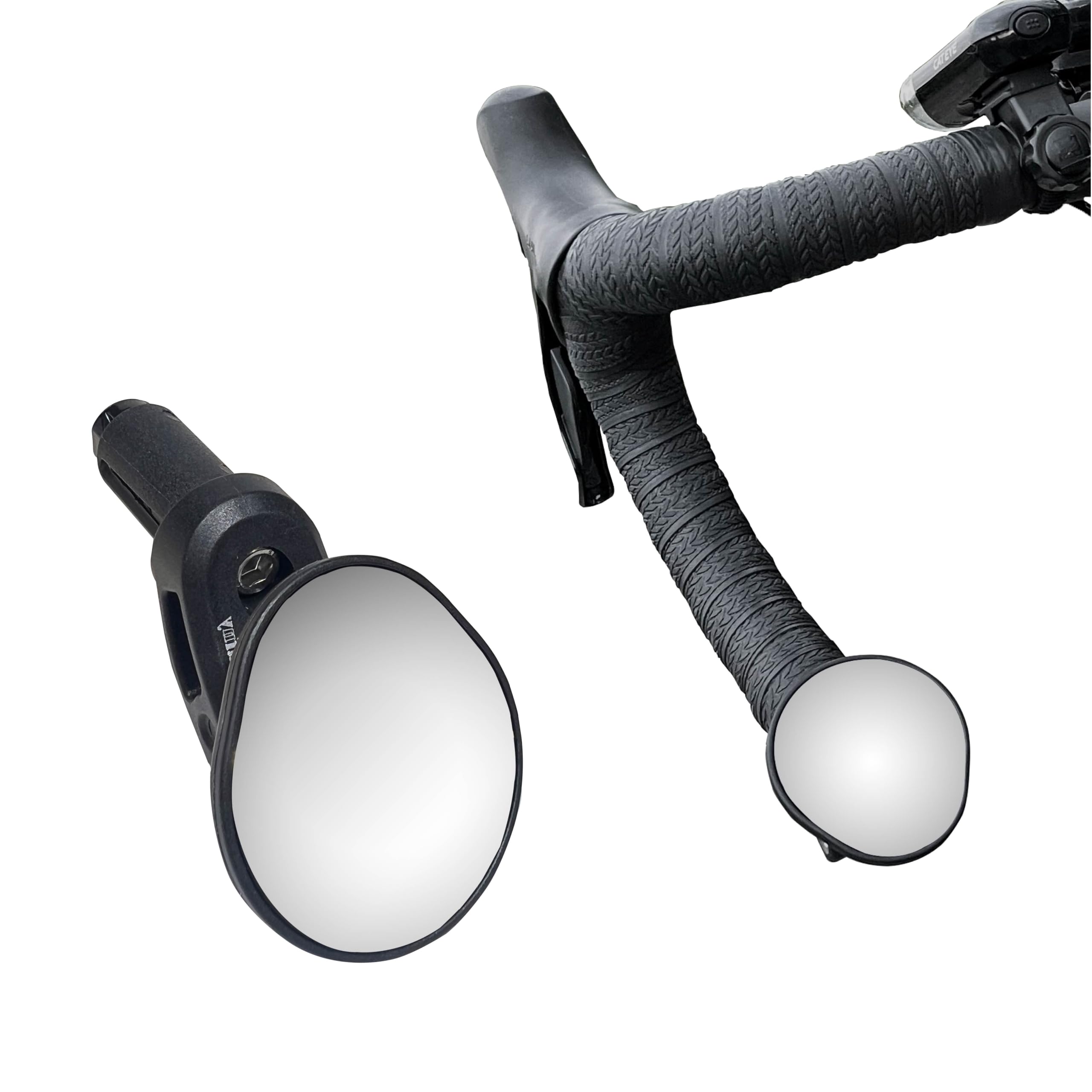
Designed exclusively for drop bars, this Hafny bar-end mirror fits handlebar inner diameters from 16 to 24 mm and requires an open-ended bar end for installation. The HD anti-glare convex glass delivers crystal-clear reflectivity without the blue tinted distortion found in some competitor models. The 360-degree adjustable joint accommodates both left and right mounting positions, making it versatile for road and gravel bike riders who need a low-profile mirror that does not snag on clothing or gear.
Multiple long-term reviews from commuters in dense traffic report that the mirror stays firmly in place after installation, unlike spring-loaded bar-end mirrors that shift during rides. The glass lens provides a slightly wide-angle field of view that balances magnification with situational awareness, letting riders see approaching vehicles close enough to react without losing depth perception entirely. Setup takes about two minutes with basic tools, and the compact design keeps the mirror tucked inside the bar profile for a clean aesthetic.
Some riders note that the standard clear glass option provides better visibility in low light compared to the blue anti-glare version, which can appear too dark with tinted cycling glasses. The viewing area is modest by design — convex curvature trades image size for breadth of coverage — and a few less experienced cyclists find the bar-end position takes adjustment time. Combined with a radar system, however, this mirror provides a comprehensive rear awareness setup for drop bar users.
What works
- Stays firmly in place without shifting on rough roads
- Low-profile design does not snag on gear or clothing
- Anti-glare glass reduces eye strain in bright conditions
What doesn’t
- Blue-tinted version may be too dark with sunglasses
- Small viewing area trades size for wide-angle coverage
4. Zacro 2 Pack Bike Mirror

Zacro’s twin-pack delivers two handlebar mirrors with an ABS high-impact frame and an aluminum alloy base clamp that fits handlebars from 22.2 to 25 mm in diameter. The convex glass lens is marketed with 42 percent larger rearview area compared to standard mirrors, offering a broad field of vision that helps riders spot traffic without shifting position. Each mirror provides 360-degree rotation combined with a 90-degree vertical tilt, reducing the chance of blind spots in the rear arc.
Installation requires no specialized tools beyond the included hex wrench, and the screw-based clamp secures the mirror base without plastic ratchets that strip over time. Owner feedback across e-bike, scooter, and mountain bike builds confirms that the large mirror face provides excellent visibility, though some riders on smaller bikes find the mirror size disproportionately large for the handlebar space. The pack includes installation gaskets and spare mounting hardware for non-standard bar shapes.
A minority of reviewers note that the extended arm is too short on certain bikes, causing the mirror to angle into the rider’s arm rather than clearing the shoulder for an unobstructed view. One report mentions brittle rubber components on the clamp that broke during first installation. For riders with standard flat bars who want a budget-friendly two-mirror setup for left and right coverage, this pack offers functional optics with manageable compromises on adjustability.
What works
- Large glass surface provides wide rear visibility
- Two mirrors included for left and right coverage
- Easy screw-clamp installation with included hardware
What doesn’t
- Extended arm may be too short for clear shoulder clearance
- Some clamp rubber components reported as brittle
5. Third Eye Eyeglass Bicycle Mirror

Third Eye’s eyeglass mirror uses a unique ball-and-socket joint that attaches directly to the temple arm of your cycling glasses, moving with your head for constant rear awareness without needing to glance down at a handlebar mount. The mirror itself uses real silvered glass for high reflection quality and minimal distortion, and the flat lens curvature provides accurate distance perception — a trade-off against the wider field of convex designs. The frame is hard black plastic, and the entire assembly weighs just 0.06 pounds, making it virtually unnoticeable during rides.
Experienced cyclists with over 15 years of use report that the mirror requires a two-to-three-week adaptation period, after which it becomes an essential tool for group rides, racing, and traffic navigation. The ball-and-socket allows fine-tuned angle adjustment, and because the mirror turns with the rider’s head, it eliminates the blind spot that fixed handlebar mirrors create when leaning into a turn. Several reviewers note that the clip fits best on thin glasses frames under 1 cm wide; thicker temple arms may prevent secure attachment and require a cable-tie or tape workaround.
The mount is the most fragile component — owners report that the plastic clip can snap if removed repeatedly or fitted to oversize frames, though a permanent glue or cable-tie installation on dedicated riding glasses solves this. The mirror glass itself is described as unbreakable in normal use, and the ball joint allows enough swivel to compensate for different face shapes. For riders who prefer a glasses-mounted solution over handlebar hardware, this mirror delivers proven head-tracking visibility in an ultra-light package.
What works
- Head-tracking mirror moves with your field of vision
- High-quality glass provides distortion-free reflection
- Ultra-light weight is unnoticeable on glasses
What doesn’t
- Clip may break on thick glasses temple arms
- Requires adaptation period to use effectively
Hardware & Specs Guide
Lens Material & Type
Glass lenses deliver superior scratch resistance and optical clarity compared to acrylic or polycarbonate alternatives. Convex glass widens the field of view, making it easier to spot approaching vehicles, but reduces the apparent size of objects behind you. Flat glass provides accurate distance perception at the cost of a narrower viewing window. Most premium mirrors use automotive-grade convex glass with anti-glare coatings to reduce eye strain in bright conditions.
Mounting Systems
Handlebar clamps secure mirrors to the bar using screw-tightened brackets that fit diameters from 22.2 mm to 25.4 mm. Bolt-on designs with metal clamping surfaces resist loosening better than plastic ratchet straps. Eyeglass mirrors use spring-loaded clips or ball-and-socket joints attached to the temple arm, requiring frame widths under 1 cm for a secure grip. Bar-end mirrors plug into open drop bar ends with expanding rubber bungs or compression sleeves, requiring an inner diameter between 16 mm and 24 mm for proper fitment.
FAQ
What type of bike mirror gives the clearest view?
Can I install a handlebar mirror on any bicycle?
How do I reduce vibration in my bike mirror?
Final Thoughts: The Verdict
For most buyers, the best bike rear mirror winner is the RBRL Bike Mirror because it combines an aluminum alloy anti-shake stem with a wide-angle convex glass lens that stays locked in position across rough terrain. If you ride a drop bar road bike and need a low-profile solution, grab the Hafny Drop Bar Mirror for its secure bar-end fit and anti-glare optics. And for glasses-wearing cyclists who want head-tracking visibility without handlebar hardware, the Third Eye Eyeglass Mirror delivers proven performance in an ultra-light package.

Certification: BSc in Mechanical Engineering
Education: Mechanical engineer
Lives In: 539 W Commerce St, Dallas, TX 75208, USA
Md Amir is an auto mechanic student and writer with over half a decade of experience in the automotive field. He has worked with top automotive brands such as Lexus, Quantum, and also owns two automotive blogs autocarneed.com and taxiwiz.com.