A microfiber towel is the single most important tool in any detailer’s arsenal. Use the wrong weave or a low-grade blend, and you risk embedding micro-marring into clear coat that compounds alone may not fully correct. The right towel lifts contaminants away without pressure, absorbs water faster than any chamois, and leaves zero lint behind.
I’m Amir — the founder and writer behind Four Wheel Ask. My approach combines side-by-side specification analysis, GSM and fiber-blend comparisons, and synthesis of hundreds of verified owner reports to determine which towels actually hold up to repeated washing cycles without shedding or scratching.
Below, you will find a curated selection of microfiber cloths that meet strict criteria for pile density, edge finishing, and material composition. Every option listed here has been evaluated for its ability to deliver a swirl-free, smear-free result. This guide will help you identify the best car detailing towels to protect your paint investment.
How To Choose The Best Car Detailing Towels
Not all microfiber cloths are created equal. GSM, blend ratio, edge finishing, and pile height directly affect how a towel interacts with painted surfaces. Understanding these specs helps you avoid buying a rag that feels soft out of the package but sheds lint after the first wash.
GSM: The Density Benchmark
GSM stands for grams per square meter. Towels at 300 GSM or below are typically thin and best for glass or interior dusting. A 350–450 GSM towel offers the ideal balance for paint-safe drying and polish removal. Above 500 GSM provides maximum plushness for final buffing but can drag on applicators. Know your GSM before you buy.
Edge Construction
Raw-cut edges fray over time and can scratch clear coat. Look for towels with satin-stitched borders, edgeless laser-cut design, or rolled hems. Edgeless towels like the Eagle Edgeless eliminate any risk of edge-induced marring and wash more consistently without unraveling.
Fiber Blend: 70/30 vs. 80/20
A 70% polyester / 30% polyamide blend is the gold standard for paint-contact towels. The higher polyamide content increases absorbency and creates split fibers that trap dirt. An 80/20 blend is softer to the touch but less absorbent and more prone to linting. For wax removal and drying, a 70/30 blend holds more liquid and releases debris more effectively.
Quick Comparison
On smaller screens, swipe sideways to see the full table.
| Model | Category | Best For | Key Spec | Amazon |
|---|---|---|---|---|
| The Rag Company Eagle Edgeless 450 | Premium | Final buffing and wax removal | 450 GSM, 70/30 Korean blend, edgeless | Amazon |
| SINLAND 380 GSM 6-Pack | Premium | Full-vehicle drying | 380 GSM, 80/20 blend, 16×24 inch | Amazon |
| WEAWE Dual-Pile 6-Pack | Performance | Dual-side wash and buff | 70/30 blend, high/low pile, 23.6×15.7 inch | Amazon |
| POLYTE 350 GSM 12-Pack | Value | Color-coded general cleaning | 350 GSM, 16×16 inch, no sewn tag | Amazon |
| MR.SIGA 12-Pack | Budget | Light interior and glass cleaning | 300 GSM, 12.6×12.6 inch, reinforced edge | Amazon |
In‑Depth Reviews
1. The Rag Company Eagle Edgeless 450 (6-Pack)

The Eagle Edgeless 450 from The Rag Company sets a high bar for what a dedicated detailing towel should deliver. Constructed from 100% South Korean AA-grade split microfiber in a 70/30 polyester-to-polyamide ratio, this towel achieves a fiber density of over 600,000 strands per square inch. The 450 GSM weight places it firmly in the plush buffing category, yet the towel remains flexible enough to contour around mirrors and door handles without dragging compound across adjacent panels.
Owner feedback consistently highlights the towel’s ability to glide over freshly polished paint without introducing micro-marring. The edgeless construction eliminates any risk of a stitched hem scratching the finish, and the tagless design prevents dirt traps that can accumulate in sewn labels. Users report that the material softens further after several machine-wash cycles with a dedicated microfiber detergent, and the 16×16-inch size is large enough to fold into quarters for multiple clean sides during a single buffing session.
This pack of six provides ample coverage for a complete exterior detail including wax removal, sealant buffing, and final wipe-down. While the upfront cost is higher than generic bulk towels, the longevity and consistent lint-free performance make it a cost-effective choice for anyone serious about paint preservation. For a do-it-all premium towel that handles polish removal and final inspection equally well, this is the reference standard.
What works
- Edgeless design eliminates scratch risk entirely
- Extremely plush 450 GSM pile lifts residue without pressure
- Improves with washing; no lint or fraying after dozens of cycles
What doesn’t
- Premium pricing reflects the build quality
- 16×16 inch size may feel small for drying large panels
2. SINLAND Microfiber Car Drying Towels 380 GSM (6-Pack)
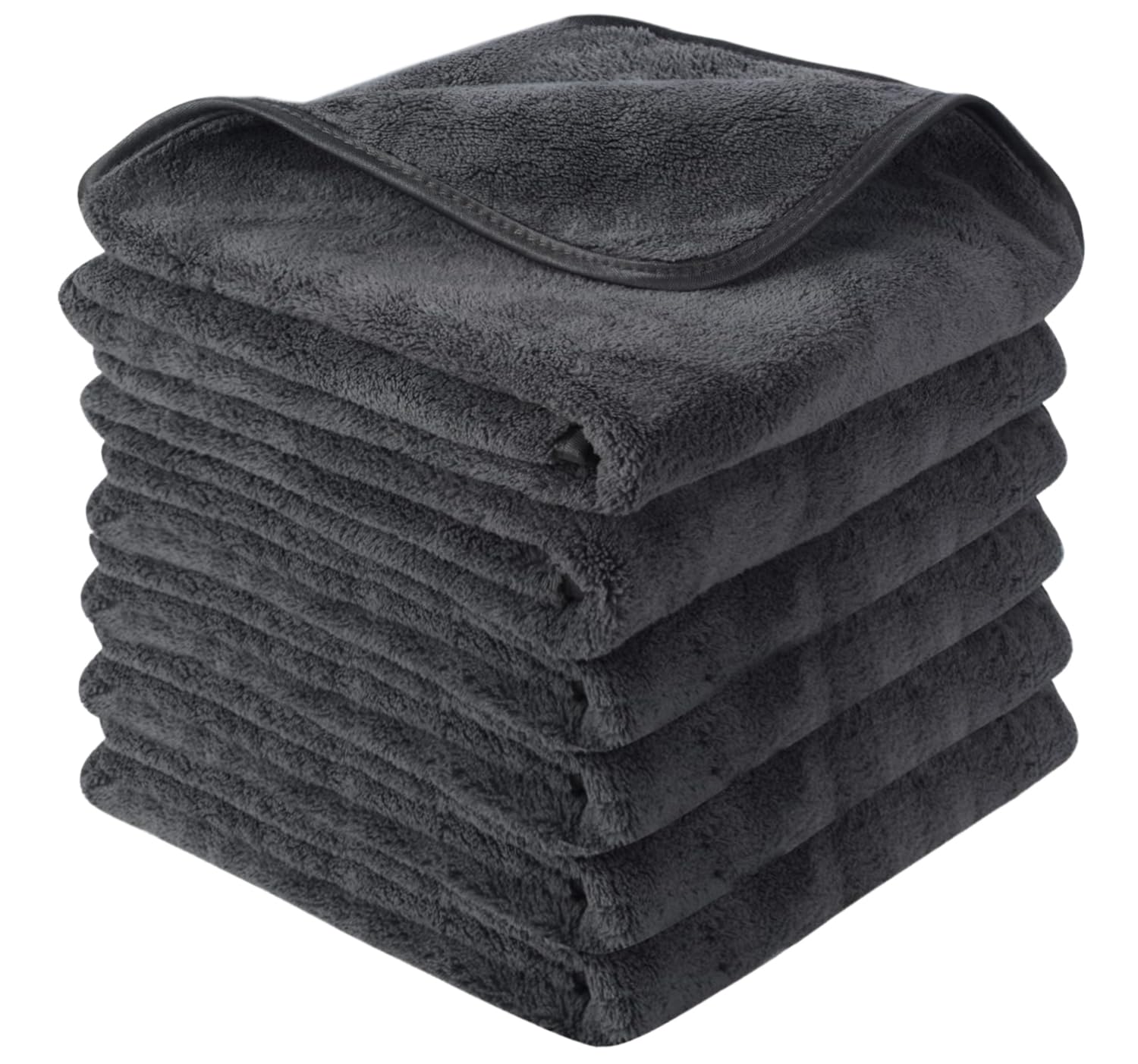
The SINLAND 380 GSM drying towel is purpose-built for one task: wicking standing water off automotive paint without leaving streaks or water spots. The 16×24-inch format provides significantly more surface area than standard 16×16 detailing cloths, allowing a single towel to dry a full hood or roof panel in one pass. The blend is 80% polyester and 20% nylon, which produces a plush, almost fleece-like hand feel that customers describe as safe enough for use on clear coat without hesitation.
Verified buyers with midsize SUVs like the Jeep Cherokee report that two towels are sufficient to dry the entire vehicle from a standard hand-wash. The double-sided construction means that as one side becomes saturated, you can flip to the dry side to finish the panel. Unlike cheaper microfiber that smears moisture or leaves behind lint trails, SINLAND towels are cited for leaving a spotless finish even when used on dark-colored paint where imperfections are most visible.
The reinforced edges hold up well to repeated washing, and the towels remain soft after multiple cycles when laundered without fabric softener. The grey color hides staining from polish residue better than lighter fabrics. While the 80/20 blend is slightly less absorbent by weight than a 70/30 ratio, the larger surface area more than compensates. This pack represents a strong choice for detailers who prioritize speed and coverage during the drying phase.
What works
- Large 16×24 size covers panels quickly
- Soft pile is safe on clear coat and won’t scratch
- Two towels dry an entire SUV efficiently
What doesn’t
- 80/20 blend is less absorbent than premium 70/30 towels
- Stitching may eventually fray if washed aggressively
3. WEAWE Dual-Pile Microfiber Towels (6-Pack + 1 Bonus)

WEAWE takes a two-sided approach to detailing with a high-pile face designed for water absorption and a short-pile side engineered for buffing wax and removing dried sealant. The fabric uses a 70% polyester and 30% polyamide blend, which is the optimal ratio for maximizing water retention while maintaining the split-fiber structure that traps dirt away from the paint. Each towel measures 23.6 x 15.7 inches, giving it the reach of a large drying cloth with the versatility of a dual-purpose tool.
Customer feedback emphasizes that the towels are lint-free straight out of the package and do not require multiple pre-washes to shed loose fibers. The reinforced edge stitching is designed to resist fraying over hundreds of cleaning cycles, and the material does not pill or develop rough spots after repeated machine washing. The set includes six deep-pile cloths plus one blue non-pile towel for wheels or engine bay use, providing a complete kit for a full exterior detail.
The 70/30 blend gives these towels a clear performance edge over bargain-bin microfiber. They absorb water instantly and release it readily when wrung out, making them suitable for both initial drying and final wipe-downs. The only compromise is that the dual-pile design means neither side is as plush as a dedicated single-purpose towel at the same price point. For detailers who want one towel that can do both wash and buff stages, this pack offers strong utility.
What works
- Two distinct pile types for wash and wax stages
- Premium 70/30 blend absorbs water efficiently
- Large format covers more area per pass
What doesn’t
- Neither pile matches the plushness of a dedicated 450 GSM towel
- Blue non-pile cloth is thin and less useful for paint contact
4. POLYTE 350 GSM Microfiber Towels (12-Pack)

The POLYTE 12-pack delivers a compelling combination of volume, GSM density, and color-coding at a moderate price point. Each towel weighs in at 350 GSM with a 70/30 blend, hitting the sweet spot where the fabric is thick enough for safe paint contact but not so plush that it drags on applicators. The 16×16-inch dimensions are the standard detailing size, and the no-sewn tag construction eliminates the risk of labels scratching clear coat.
Verified owners highlight the towel’s ability to hold eight times its weight in water while drying twice as fast as conventional cotton or cheaper microfiber blends. The three-color set — blue, camel, and gray — allows users to assign each color to a specific task: blue for paint, gray for wheels, camel for interior. This color-coded system helps prevent cross-contamination of grit from one surface to another, a practice that professional detailers rely on to maintain a scratch-free workflow.
The rounded corners and satin-like edge finish resist fraying, although some users note that the towels feel slightly thinner than expected based on the 350 GSM rating. They clean up well with a dedicated detergent like Rags to Riches and maintain their absorbency through repeated wash cycles. For a budget-conscious detailer who needs a large quantity of reliable towels for both paint and general tasks, this pack delivers strong value without sacrificing essential performance characteristics.
What works
- 12 towels per pack offer excellent value and quantity
- Three colors enable task-specific segregation
- No sewn tags reduce scratch risk
What doesn’t
- 350 GSM feels slightly thinner than some competitors
- May develop edge fraying after many aggressive washes
5. MR.SIGA Microfiber Cleaning Cloths (12-Pack)

MR.SIGA’s 12-pack of 12.6 x 12.6-inch cloths is designed for the user who needs an entry-level microfiber solution for light automotive detailing and household cleaning alike. The towels are made from a soft, non-abrasive microfiber blend that is marketed as scratch-free for sensitive surfaces. The reinforced edge stitching adds durability that helps the cloths withstand repeated machine washing without unraveling, a common failure point on ultra-budget towels.
While the GSM is not explicitly stated, the fabric weight and feel place it in the 250–300 GSM range, making these towels best suited for interior dusting, glass cleaning, and light dashboard work rather than heavy paint-contact tasks like wax removal or drying. Owners report that the cloths are streak-free on windows and mirrors and can be used either wet or dry. The compact size is convenient for smaller hands or tight interior crevices but requires multiple cloths to cover a full exterior detail.
The pack of 12 provides enough volume to keep a steady rotation during a weekend project. The primary limitation is that the lower GSM means the towels saturate quickly on wet surfaces and do not have the plushness to safely remove polish residue without dragging. For the price-conscious buyer who needs a bulk supply for non-critical tasks such as wiping door jambs, cleaning glass, or drying wheels separately from paint, this set fills that role affordably.
What works
- Very affordable 12-pack for high-volume use
- Reinforced edges add durability for the price point
- Works well for glass and interior surfaces
What doesn’t
- Low GSM means poor absorbency for drying paint
- Small size requires many cloths for full exterior detail
Hardware & Specs Guide
GSM and Absorbency
GSM directly correlates with how much water a towel can hold before dripping. A 300 GSM towel is suitable for glass and interior dusting, absorbing roughly three times its weight in fluid. A 450 GSM towel can hold up to eight times its weight, making it ideal for panel drying. Higher GSM also creates a deeper pile that encapsulates dirt particles, reducing the risk of scratching clear coat during final wipe-downs.
Fiber Blend Ratios
The industry standard for paint-safe microfiber is a 70% polyester / 30% polyamide split. The polyamide component is what creates the split fiber structure that traps dirt. An 80/20 blend is softer to the touch but less effective at holding liquid and more prone to linting. Towels with 100% polyester are typically for non-paint applications such as glass cleaning or wheel well scrubbing.
Edge Finishing Types
Edgeless towels use laser cutting or ultrasonic sealing to prevent fraying and eliminate scratch-prone stitched borders. Satin-stitched edges are durable but can trap dirt in the thread over time. Rolled hems provide a balance of durability and cost but may create a thicker edge that can drag across paint. For primary paint contact, edgeless construction is the safest choice.
Washing and Longevity
Microfiber towels degrade quickly when washed with fabric softener, bleach, or high heat. Use a dedicated microfiber detergent like Rags to Riches or a free-and-clear liquid soap. Machine wash on warm (below 40°C / 104°F) and tumble dry on low or air dry. Avoid dryer sheets. Properly cared for, a good 350+ GSM towel can last over 100 wash cycles without shedding or losing absorbency.
FAQ
How many detailing towels do I need for a full car detail?
Can I use fabric softener on microfiber detailing towels?
What GSM is best for removing wax and sealant?
How often should I replace my microfiber towels?
Final Thoughts: The Verdict
For most buyers, the best car detailing towels winner is the Rag Company Eagle Edgeless 450 because it combines edgeless safety, plush 450 GSM density, and a proven 70/30 Korean blend that outlasts cheaper alternatives. If you prioritize drying speed and panel coverage, grab the SINLAND 380 GSM 6-Pack. And for a cost-effective bulk solution with color-coded organization, the POLYTE 12-Pack delivers reliable performance without stretching your budget.

Certification: BSc in Mechanical Engineering
Education: Mechanical engineer
Lives In: 539 W Commerce St, Dallas, TX 75208, USA
Md Amir is an auto mechanic student and writer with over half a decade of experience in the automotive field. He has worked with top automotive brands such as Lexus, Quantum, and also owns two automotive blogs autocarneed.com and taxiwiz.com.