Selecting the wrong lubricant for a two-stroke engine leads to carbon buildup, ring sticking, and premature failure that no amount of tuning can fix. The chemistry of the oil you mix directly determines piston cleanliness, exhaust port deposits, and overall longevity.
I’m Amir — the founder and writer behind Four Wheel Ask. I’ve spent years studying two-stroke lubrication chemistry and analyzing owner reports to match oils with specific engine types and operating conditions.
After analyzing dozens of formulations and real-world owner feedback, this guide clearly identifies the best two stroke oil for your specific engine.
How To Choose The Best Two Stroke Oil
The right oil for your two-stroke depends on more than brand loyalty. Operating temperature, engine metallurgy, and intended duty cycle all play a role in which formulation protects best. Understanding three core factors will narrow your options considerably.
Viscosity and Mix Ratio Fit
Oils with higher viscosity, such as those in the SAE 40–50 range, cling to bearings and cylinder walls longer under high heat. Lower-viscosity oils flow better at cold start but may not protect during sustained wide-open throttle. The recommended mix ratio (25:1, 40:1, 50:1) is a baseline — engines with higher compression or advanced port timing often benefit from slightly oil-rich mixtures, while modern lubricants can safely run leaner ratios without sacrificing film strength.
Synthetic vs. Conventional Base Stocks
Full synthetic oils use chemically engineered esters and polyalphaolefins that resist thermal breakdown far better than mineral-based conventional oils. Synthetics also burn cleaner, leaving fewer deposits on the piston crown, exhaust port, and spark plug. Conventional oils cost less upfront but may require more frequent plug changes and decarbonization. Blended oils offer a middle ground with partial synthetic content for moderate-duty use.
Certification Standards (JASO, API, ISO)
JASO FD is the highest rating from the Japanese Automotive Standards Organization for two-stroke oils, indicating superior lubrication, detergency, and low smoke. API TC is a common U.S. standard that ensures basic performance for air-cooled engines. ISO-L-EGD is a newer global standard that overlaps with JASO FD. Matching the cert to your engine manufacturer’s spec ensures the oil contains the right additive package for that specific power head design.
Quick Comparison
On smaller screens, swipe sideways to see the full table.
| Model | Category | Best For | Key Spec | Amazon |
|---|---|---|---|---|
| Motul 800 2T | Racing Oil | High-Performance Engines | 1L, 100% Synthetic Ester | Amazon |
| Yamaha Yamalube 2M | Marine Oil | Yamaha Outboards | 1 Gal, Semi-Synthetic | Amazon |
| Echo Power Blend | Power Blend | Outdoor Power Equipment | 2 Gal Mix, FD Rated | Amazon |
| Arnold TruFuel 50:1 | Pre-Mixed Fuel | Convenience & Storage | 6-Pack 32oz, 50:1 Premix | Amazon |
| Red Line 40603 | Racing Synth | Power & Cleanliness | 16oz, Dyno-Proven Gains | Amazon |
In‑Depth Reviews
1. Motul 800 2T Road Racing Oil

Motul’s 800 2T is a full ester synthetic oil engineered for sustained high-rpm operation in road racing and high-compression two-stroke engines. The ester base offers exceptional film strength at elevated temperatures, reducing the risk of seizure during extended wide-open throttle runs. Owner feedback consistently notes that engines running this oil exhibit clean pistons and minimal exhaust port deposits even after hard seasons of use.
The oil’s high flash point means it stays in the combustion chamber longer before burning off, which provides a thicker lubricating layer under load. Many users report using it in chainsaws, blowers, and paramotors with equal success, citing noticeably less smoke at idle compared to conventional blends. The red tint makes fuel mixing verification simple and reduces the chance of an unmixed tank.
Because of its viscosity, Motul 800 performs best in engines that sustain higher operating temperatures. It is not ideal for low-load, stop-and-go use where the oil may not reach its optimal working temperature, leading to wet exhaust deposits. For engines that see sustained high load, this formulation is among the most protective available.
What works
- Exceptional high-temperature film strength resists seizure
- Leaves very low carbon deposits on pistons and rings
- Easy to see in fuel thanks to the red dye
What doesn’t
- Higher viscosity can cause splooge in low-load applications
- Priced above most conventional blends
2. Yamaha Yamalube 2M Marine Oil

Yamaha’s Yamalube 2M is a semi-synthetic marine formulation developed specifically for Yamaha outboard two-stroke engines. The additive package targets ring stick and carbon buildup, two of the most common failure modes in saltwater and freshwater outboards. Owner reports indicate that motors running this oil produce noticeably less exhaust smoke compared to generic TC-W3 oils.
The corrosion inhibitors in this blend are tailored for the marine environment, where humidity and salt spray accelerate wear on power head components. The 128-ounce gallon size provides enough volume for multiple fill-ups on a typical mid-size outboard, making it a practical choice for boat owners who want factory-specified protection. Users also note improved cold-start behavior and smoother idle after switching from standard mineral oils.
Yamaha specifies this oil for its own outboards and does not recommend it for land-based equipment such as chainsaws or dirt bikes. The formulation prioritizes corrosion resistance and low smoke over the extreme high-rpm film strength required by racing engines. For owners of Yamaha outboards, this is the reference standard that all other marine oils should be compared against.
What works
- Specifically formulated for Yamaha marine engines
- Reduces visible smoke compared to conventional blends
- Anti-corrosion additives suited for saltwater use
What doesn’t
- Not recommended for land-based two-stroke equipment
- Gallon size may be excessive for low-volume users
3. Echo Power Blend Oil 50:1

Echo’s Power Blend Oil carries the JASO FD certification, the highest two-stroke classification, at a price that undercuts many premium competitors. This six-pack of individual bottles mixes to a combined 2 gallons of fuel, making it a straightforward option for homeowners and light commercial users who want certified lubrication without measuring. Owners report a noticeably milder exhaust odor compared to generic hardware-store oils.
The FD rating ensures the oil has strong detergency to keep pistons, rings, and exhaust ports clean over extended use. Echo designed this blend for its own line of trimmers, blowers, and chainsaws, but the formulation works well in any air-cooled engine that calls for a 50:1 ratio. Users running it in Stihl, Husqvarna, and Ryobi equipment report no starting or performance issues after switching.
The six-pack format requires some advance planning since each bottle treats a specific volume of fuel. Mixing partial bottles means marking containers or using a measuring cup, which adds a step compared to single-mix bottles. For users who go through fuel quickly, the bulk pricing makes this one of the most economical FD-rated options on the market.
What works
- JASO FD certified at a very reasonable per-gallon cost
- Milder exhaust smell compared to conventional oils
- Works across multiple brands of outdoor power equipment
What doesn’t
- Each bottle treats 2 gallons, requiring partial-use planning
- Not designed for high-compression racing engines
4. Arnold TruFuel 50:1 Pre-Mixed

Arnold TruFuel is a ready-to-use ethanol-free premix that eliminates the need for measuring, shaking, or storing separate oil and gasoline. Each 32-ounce can contains 92-octane fuel with the oil already blended at a 50:1 ratio. Owners consistently report that equipment stored with TruFuel starts on the first pull even after several months of inactivity, a direct result of the ethanol-free formula.
The absence of ethanol eliminates phase separation and the related carburetor corrosion that plagues stored two-stroke equipment. This makes TruFuel particularly valuable for seasonal tools like snow blowers, leaf blowers, and backup generators that sit unused for long periods. The six-pack provides enough fuel for multiple fill-ups without the need to stabilize or rotate fuel stock.
The premium per-can cost is significantly higher than mixing your own fuel, so heavy-use operators will find it expensive as a daily fuel source. For light users or those who value instant reliability after long storage, the cost is offset by the elimination of carburetor repairs. This is not a racing oil — it is a convenience product for equipment that sees intermittent use.
What works
- Ethanol-free fuel prevents carburetor varnish and corrosion
- Equipment starts reliably even after months of storage
- No measuring or mixing required
What doesn’t
- Significantly higher cost per gallon than self-mixed fuel
- 50:1 ratio cannot be adjusted for engines needing richer mixes
5. Red Line 40603 Racing Synthetic Oil
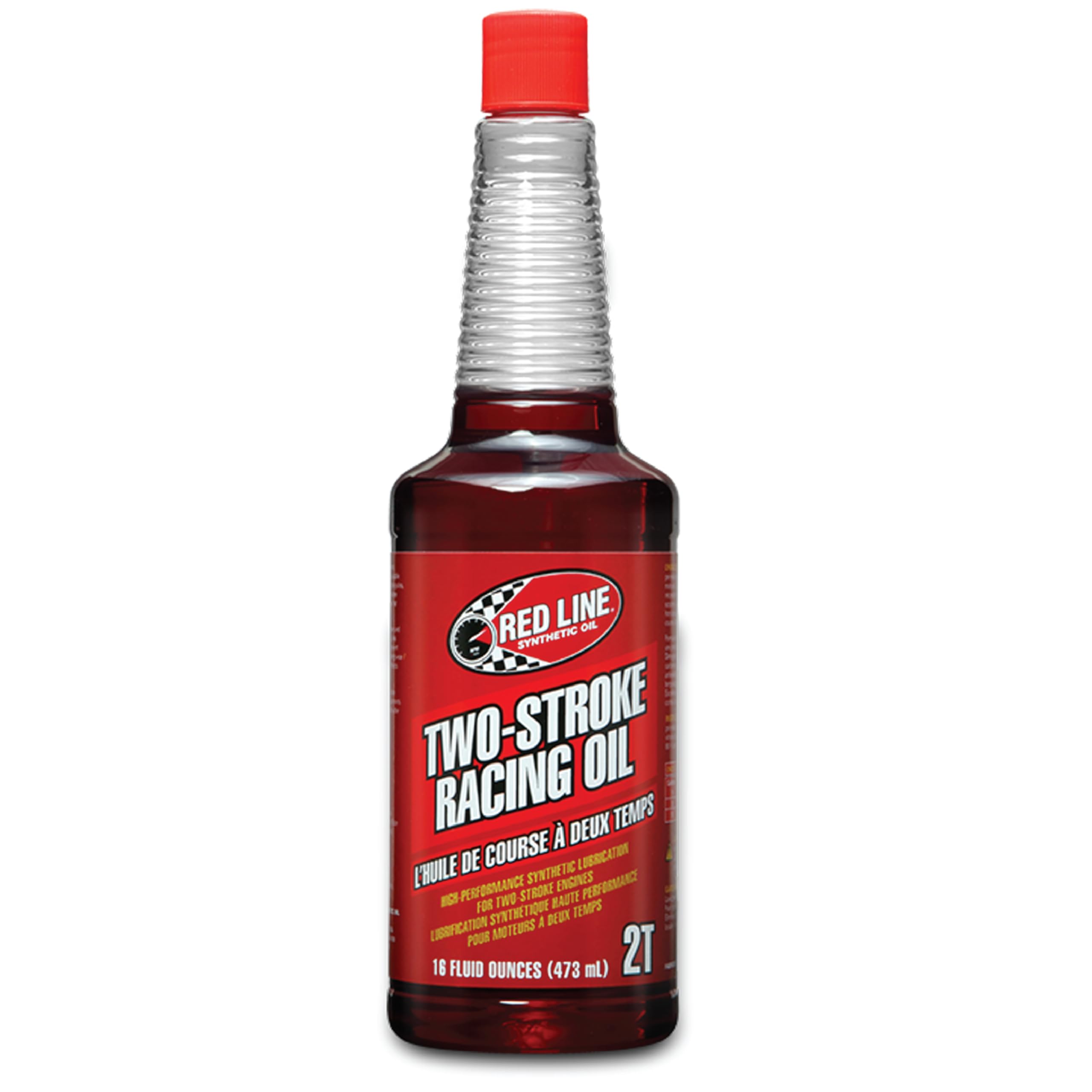
Red Line 40603 is a fully synthetic racing oil formulated for maximum power output and extreme cleanliness. The manufacturer cites dyno-proven gains of three to five percent over conventional oils, with performance sustained over longer runs due to high-temperature stability. Owner reports spanning more than a decade of use describe pistons that look nearly new upon disassembly, even after hundreds of hours of hard operation.
The oil is recommended at a 50:1 ratio but can be used as rich as 100:1 depending on operating conditions, offering flexibility for tuners and racers. It is popular across a wide range of applications including motorcycles, snowmobiles, marine engines, and large-scale RC aircraft. Users mixing at 45:1 for added protection report no fouling or excessive smoke, suggesting a generous margin of safety in the formulation.
The 16-ounce bottle size is small relative to gallon jugs, so heavy users will need to purchase multiple units. The price per ounce is higher than semi-synthetic options, though the cleanliness and power retention benefits justify the cost for performance-oriented owners. This oil is best suited for engines that operate at sustained high rpm and benefit from minimal deposit buildup.
What works
- Dyno-verified power gains of three to five percent
- Exceptional deposit control keeps pistons and ports clean
- Flexible mix ratio range suits multiple applications
What doesn’t
- Small bottle size requires multiple purchases for heavy users
- Higher per-ounce cost than conventional blends
Hardware & Specs Guide
Understanding Viscosity Grades
Two-stroke oils are typically graded by SAE viscosity, with common ratings of SAE 30, 40, and 50. A higher number indicates a thicker film at operating temperature. SAE 50 oils like the Red Line 40603 provide maximum bearing protection under sustained high load, while SAE 30 oils like the Echo Power Blend flow more easily at cold start and are suitable for moderate-duty air-cooled engines. The ideal viscosity depends on your engine’s operating temperature range, bearing clearances, and intended duty cycle.
Decoding Certification Standards
JASO FD, API TC, and ISO-L-EGD are the primary certifications for two-stroke oils. JASO FD is the highest grade from the Japanese Automotive Standards Organization, indicating superior lubrication, detergency, and low smoke output. API TC is a minimum standard for air-cooled engines. ISO-L-EGD matches JASO FD requirements. Oils carrying these certifications have passed standardized tests for ring sticking, piston cleanliness, and exhaust port blocking, giving you a reliable benchmark regardless of brand claims.
FAQ
What does a 50:1 mix ratio actually mean?
Can I use automotive engine oil in a two-stroke?
Is full synthetic oil always better than conventional?
Can I mix different brands of two-stroke oil together?
Final Thoughts: The Verdict
For most buyers, the best two stroke oil winner is the Motul 800 2T because it combines ester-based synthetic protection with proven deposit control across a wide range of high-performance engines. If you need a marine-specific formulation for Yamaha outboards, grab the Yamaha Yamalube 2M. And for reliable, no-mix convenience in seasonal equipment, nothing beats the Arnold TruFuel 50:1.

Certification: BSc in Mechanical Engineering
Education: Mechanical engineer
Lives In: 539 W Commerce St, Dallas, TX 75208, USA
Md Amir is an auto mechanic student and writer with over half a decade of experience in the automotive field. He has worked with top automotive brands such as Lexus, Quantum, and also owns two automotive blogs autocarneed.com and taxiwiz.com.