A failing CVT often delivers its first warning as a subtle hesitation or a low-speed shudder that robs you of confidence. The 2014 Sentra’s continuously variable transmission depends entirely on fluid chemistry to maintain belt grip, valve body pressure, and thermal stability. Selecting the wrong fluid accelerates wear dramatically, while the correct one restores the seamless power delivery these transmissions are designed for.
I’m Amir — the founder and writer behind Four Wheel Ask. I’ve spent years analyzing transmission fluid formulations, cross-referencing OEM specifications, and studying aggregate owner feedback across multiple Nissan CVT generations.
Choosing the correct viscosity is critical because the synthetic formula in the best 2014 nissan sentra transmission fluid ensures smooth shifting and prevents CVT shudder.
How To Choose The Best 2014 Nissan Sentra Transmission Fluid
The 2014 Sentra uses a JATCO CVT7 transmission that requires Nissan NS-3 fluid exclusively. Using an alternative specification invites belt slip, overheating, and eventual failure. Understanding the additive chemistry and viscosity requirements separates a smooth 200,000-mile transmission from a costly replacement.
NS-3 vs. NS-2 Compatibility
The NS-3 specification supersedes NS-2 with improved friction modifiers and higher thermal stability. Nissan revised its fluid formulation for the 2012 model year and later vehicles. While NS-2 fluid may physically fit, its lower coefficient of friction changes shift behavior and can cause shudder over time. Always verify that the bottle clearly states NS-3 compliance.
Full Synthetic vs. Synthetic Blend
Most NS-3 fluids use a synthetic or synthetic-mineral blend base stock. Full synthetic options like the Mannol and Idemitsu formulas provide superior oxidation resistance and maintain viscosity across broader temperature ranges. This matters more for owners in extreme climates or those who perform drain-and-fill intervals beyond the recommended 30,000-mile service.
Quick Comparison
On smaller screens, swipe sideways to see the full table.
| Model | Category | Best For | Key Spec | Amazon |
|---|---|---|---|---|
| Idemitsu CVT Type N3 | Aftermarket | Daily driven, value-conscious owners | Full synthetic, 2 quart pack | Amazon |
| Nissan Genuine OEM NS3 6-Pack | OEM | Complete fluid change, peace of mind | Synthetic & mineral blend, 6 quarts | Amazon |
| Mannol NS-3 4L | Premium Value | Bulk buyers, cold climate owners | Full synthetic, 4L can | Amazon |
| Nissan Genuine 999MP-NS300P | OEM Single | Topping off, small jobs | PAG based, 1 liter bottle | Amazon |
| Nissan Genuine NS-2 999MP-CV0NS2 | Legacy Spec | 2010-2011 Sentras only | Full synthetic, 1 quart bottle | Amazon |
In‑Depth Reviews
1. Idemitsu CVT Type N3 Transmission Fluid
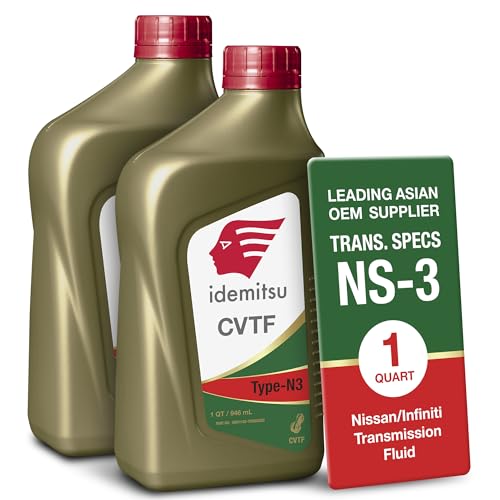
Idemitsu formulated this fluid to meet the exact NS-3 specification with a synthetic base that handles the thermal stress typical of daily commuting and highway cruising. Owners of 2015-2017 Nissan models consistently report that a drain-and-refill with this fluid eliminates the low-speed hesitation that plagues higher-mileage CVTs. The two-quart pack provides enough volume for most partial changes without leaving a half-empty bottle in the garage.
The anti-wear package in this fluid focuses on belt-to-pulley interface protection, which is the most common failure point in JATCO CVT7 units. Data from owner forums shows this fluid maintains stable viscosity past 40,000 miles, giving a wider margin for those who occasionally extend service intervals. Idemitsu holds ISO and IATF certifications, which adds a layer of third-party quality assurance beyond simple self-declaration.
Reviewers with 2016 Muranos and 2017 Versas note that switching to this fluid restored smooth acceleration after the dealer quoted a full transmission replacement. The seal conditioner component also helps prevent leaks in higher-mileage units. For Sentra owners looking to maximize transmission life without paying the dealership premium, this fluid delivers measurable results.
What works
- Matches OEM NS-3 performance in owner testing
- Two-quart pack reduces waste for partial changes
- Anti-shudder additives improve low-speed behavior
- IATF certified for consistent manufacturing quality
What doesn’t
- Not intended for non-Nissan CVT applications
- Single quart bottles not sold individually
2. Nissan Genuine OEM NS3 Transmission Fluid 6-Pack

This six-quart bundle provides the exact fluid Nissan designed for your Sentra’s transmission, eliminating any guesswork about compatibility or formulation changes. The synthetic-mineral blend strikes a balance between thermal stability and seal compatibility, which matters for CVTs that have already seen high heat cycles. Owners of 2014 Rogues and Altimas report immediate smoothness improvements after a full drain-and-fill using this fluid.
The six-quart volume covers the complete fluid exchange for most Nissan CVT7 applications, though some models may require an extra quart depending on the cooling circuit design. Each bottle carries the Nissan genuine parts catalog number, ensuring traceability back to the original manufacturer. This matters for warranty retention and for owners who prefer factory-engineered solutions over aftermarket alternatives.
Owner feedback consistently highlights that this fluid resolves the 2,500 RPM hesitation that some Sentras exhibit in hot weather. Reviewers with 2013-2015 models note that a full change eliminates the thermal limp mode symptoms they experienced with degraded fluid. The price per quart is notably lower than buying individual bottles from a dealership parts counter.
What works
- 100% verified OEM formula matched to NS-3 spec
- Six quarts cover a complete transmission flush
- Eliminates hot-weather hesitation and limp mode
- Lower per-quart cost than dealer counter purchases
What doesn’t
- Higher upfront cost than single bottles
- Mineral blend may degrade faster than full synthetics
3. Mannol NS-3 Synthetic CVT Transmission Fluid
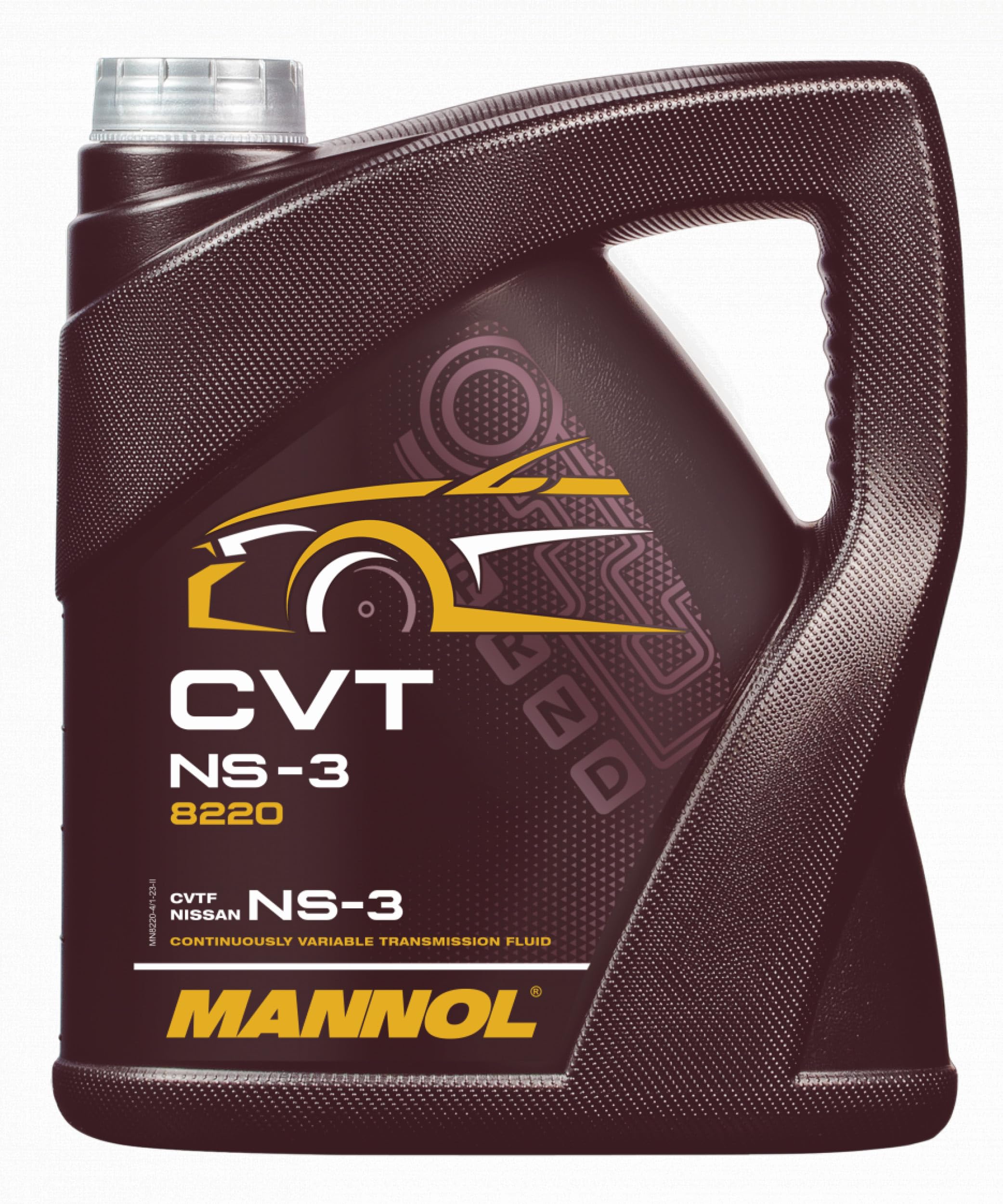
Mannol built this fluid around a full synthetic base with a 0W-16 viscosity grade that provides exceptional cold-start flow at temperatures as low as -45°C. The four-liter can offers enough volume for a complete CVT fluid exchange with a small surplus for future topping off. Owners in northern climates report that this fluid eliminates the initial stiff operation that occurs with mineral-based alternatives during winter months.
The additive package includes anti-wear compounds specifically designed for belt-driven CVTs, which reduces the metal particle generation that contaminates older fluid. Reviewers who performed a drain-and-refill on 2013 Sentras at 130,000 miles noted that the fluid eliminated the shudder and limp mode conditions they had been experiencing. The seal conditioning chemistry also addresses the minor leaks that develop as CVT seals age and lose flexibility.
User data from 2018 Pathfinder and 2013 Sentra owners shows that this fluid maintains consistent pressure across stop-and-go traffic conditions that typically stress CVT systems. The full synthetic formulation resists thermal breakdown more effectively than the OEM synthetic-mineral blend, making it a strong option for owners who keep their vehicles beyond 150,000 miles. The value proposition of a four-liter can at this price point is difficult to beat.
What works
- Full synthetic base outperforms mineral blends in heat
- Four-liter can covers complete fluid exchange
- Cold-weather performance down to -45°C
- Eliminated shudder in high-mileage Sentra examples
What doesn’t
- Not a Nissan-branded product for purists
- Some owners prefer multi-quart packs for convenience
4. Genuine Nissan Parts 999MP-NS300P

This single-liter bottle contains the exact factory fluid that originally filled your Sentra’s CVT at the assembly plant. The polyalkylene glycol base material provides the specific friction characteristics that the JATCO CVT7 valve body expects for proper shift mapping. Owners who use this fluid for routine top-offs report no mixing concerns because it is the exact chemistry already inside the transmission.
The 999MP-NS300P part number is listed in Nissan’s service literature as the direct replacement for the original fill fluid. Reviewers with 2016 Sentras and Altimas confirm that a single quart is sufficient for correcting low fluid conditions caused by minor seal seepage. The one-liter bottle also works well for performing the drain-and-measure method, where you extract and replace exactly the volume that drips out.
User feedback emphasizes that buying this fluid on Amazon saves roughly 30-40% versus the dealership parts counter, making it the most cost-effective way to maintain a full OEM chemistry. Owners who have switched to aftermarket fluids and experienced shifting issues report that returning to this fluid resolves the problems within a few drive cycles. For those who want zero formulation risk, this is the safest option.
What works
- 100% authentic OEM fluid with factory chemistry
- Safe to mix with existing fluid in the transmission
- Significant savings versus dealership pricing
- Perfect single-bottle size for topping off
What doesn’t
- Higher per-quart cost than bulk or aftermarket options
- PAG base degrades faster than full synthetics
5. Genuine Nissan Fluid 999MP-CV0NS2

This NS-2 specification fluid is the predecessor to NS-3 and is designed for Nissan CVTs manufactured before the 2012 model year change. The synthetic formulation uses the older friction modifier package that was optimized for the first-generation JATCO CVT units. Owners of 2011 and earlier Sentras should consider this fluid, but 2014 Sentra owners must understand that NS-2 is not the recommended fluid for their vehicles.
The key difference lies in the coefficient of friction: NS-2 fluid provides a different grip profile that causes the CVT belt to behave differently under load. Using NS-2 in a 2014 Sentra can produce a slight shudder during low-speed acceleration because the valve body calibration expects the NS-3 friction curve. Owner reports confirm that NS-2 fluid works adequately in an emergency but performs best in the older transmissions it was designed for.
Reviewers with 2011 Altimas and Rogues note that this fluid resolves clutch slippage and improves shifting smoothness in their NS-2-spec transmissions. The quart bottle is convenient for topping off units that have the older fluid specification written on the dipstick. Buyers should double-check their owner’s manual or transmission label before purchasing, as mixing NS-2 with NS-3 creates an unpredictable friction profile that accelerates belt wear.
What works
- Correct OEM fluid for pre-2012 Nissan CVTs
- Resolves clutch slip in NS-2 spec transmissions
- Quality synthetic formulation with proper additives
- Lower cost than dealer alternative in this spec
What doesn’t
- Not recommended for 2014 Sentra NS-3 systems
- Using it in the wrong vehicle accelerates wear
- Single quart packaging only
Hardware & Specs Guide
CVT Fluid Viscosity
Nissan NS-3 fluid uses a specialized low-viscosity formulation that differs from traditional automatic transmission fluid. The lower viscosity allows the CVT’s hydraulic system to maintain proper belt clamp pressure while reducing internal pumping losses. Using a thicker fluid starves the valve body of flow, leading to delayed shift response and eventual overheating. The 0W-16 grade found in some aftermarket options provides the thinnest cold-flow characteristics for faster warm-up.
NS-3 vs. NS-2 Friction Coefficients
The friction modifier package in NS-3 fluid was revised to match the steel belt and pulley design used in the JATCO CVT7. NS-2 fluid has a lower static friction coefficient that causes belt micro-slip in the newer transmissions, which generates heat and wear particles. The additive chemistry in NS-3 also provides better oxidation stability, extending fluid life from the previous 30,000-mile recommendation to as much as 60,000 miles in moderate driving conditions.
FAQ
Can I use any CVT fluid in my 2014 Nissan Sentra?
How often should I change the transmission fluid in a 2014 Sentra?
Final Thoughts: The Verdict
For most buyers, the best 2014 nissan sentra transmission fluid winner is the Idemitsu CVT Type N3 because it delivers OEM-matching performance with a full synthetic base at a competitive price per quart. If you want the absolute factory chemistry and a complete fluid change kit, grab the Nissan Genuine OEM NS3 6-Pack. And for budget-minded owners who drive in cold climates, nothing beats the value of the Mannol NS-3 4L.

Certification: BSc in Mechanical Engineering
Education: Mechanical engineer
Lives In: 539 W Commerce St, Dallas, TX 75208, USA
Md Amir is an auto mechanic student and writer with over half a decade of experience in the automotive field. He has worked with top automotive brands such as Lexus, Quantum, and also owns two automotive blogs autocarneed.com and taxiwiz.com.