Replacing a worn brake light bulb on your 2014 Hyundai Sonata is one of the simplest maintenance tasks you can tackle, yet the sheer number of aftermarket options can turn a five-minute job into a research rabbit hole. LED upgrades promise dramatic brightness gains over stock halogen bulbs, but differences in base design, color output, and voltage requirements mean the wrong choice can lead to fitment issues or hyper-flash warnings.
I’m Amir — the founder and writer behind Four Wheel Ask. I specialize in analyzing automotive lighting specifications and aggregating owner feedback to identify the most reliable replacement components for popular vehicle platforms.
This guide cuts through the confusion by comparing five distinct bulb options across brightness, build quality, and real-world compatibility. Sourcing the correct best 2014 hyundai sonata brake light bulb improves your vehicle’s stopping visibility and provides greater safety during your nighttime driving.
How To Choose The Best 2014 Hyundai Sonata Brake Light Bulb
Selecting the correct replacement bulb for your Sonata involves more than just pulling up a product page. The factory tail light housing is designed around specific base geometries and power draw characteristics, so straying too far from those parameters can produce subpar results or annoying dashboard warnings.
Base Type and Fitment
The 2014 Sonata brake light circuit uses a BAY15D base — commonly referred to as an 1157 bulb — with two contact points and an offset keyway. Products sharing the same base design will seat correctly, while bulbs with a single-contact BA15S base (1156) or a W21W/T20 base (7443) require adapters or simply will not lock into the socket. Always verify that the product listing explicitly mentions BAY15D or 1157 compatibility before ordering.
Brightness and Color Output
LED bulbs generally produce more lumens per watt than incandescent bulbs, but raw lumen numbers do not tell the whole story. A brake light needs a clear red or amber signal to remain legally compliant — white LEDs used in a brake application can confuse other drivers. Look for bulbs that list a color temperature in the 6000K range for white or a dedicated red lens coating for brake-specific use. Strobe or flashing patterns add an extra layer of attention-grabbing visibility but must comply with local vehicle codes.
Heat Management and Lifespan
LEDs generate concentrated heat at the base, so well-designed bulbs incorporate aluminum housings or built-in driver circuits to dissipate thermal energy. Quality components from brands such as Philips or Yorkim also include constant-current IC drivers that stabilize voltage fluctuations, extending operating life beyond 30,000 hours. Incandescent bulbs, while less efficient, produce heat evenly across the glass envelope and remain a proven, low-cost option for owners who prefer OEM-grade reliability.
Quick Comparison
On smaller screens, swipe sideways to see the full table.
| Model | Category | Best For | Key Spec | Amazon |
|---|---|---|---|---|
| Yorkim 1157 LED Red | LED Brake Light | Brightness & Correct Fitment | 1628LM, BAY15D Base, Red | Amazon |
| FANTELI 1157 Flashing Red | Strobe LED | Attention-Grabbing Safety | 1100LM, 3-Flash Strobe, Red | Amazon |
| LEDYOTRY 7443 Red | LED Multi-Pack | Multiple Bulb Replacement | 1000LM, 4-Pack, Red | Amazon |
| Philips 2357NA LongerLife | Incandescent | OEM-Style Reliability | 2-Pack, Double Standard Life | Amazon |
| Tomhasa 1156 White | Budget LED | Entry-Level Upgrade | 1600LM, BA15S Base, White | Amazon |
In‑Depth Reviews
1. Yorkim 1157 LED Bulb Red

The Yorkim 1157 LED Red strikes the ideal balance between brightness, fitment compatibility, and cost. With 54 3014 chips and 4 3030 chips packed into a BAY15D base, it delivers just over 1600 lumens of red light — a figure that essentially quadruples the output of a standard halogen bulb. The red lens coating means the light emitted is already the correct color for brake application, so no additional filter is needed. Owners of the 2014 Sonata will appreciate the non-polarity design that makes installation a true plug-and-play experience without worrying about reverse polarity.
Built-in constant-current IC driver technology stabilizes voltage fluctuations, which is especially important in a vehicle that can see voltage swings during cold starts or accessory draw. Yorkim rates the operating life at 50,000 hours, a figure that far exceeds incandescent bulbs and makes this set a long-term investment. The compact 39mm length also fits comfortably inside the Sonata tail light housing without contacting the lens.
It is worth noting that using this bulb as a turn signal will require an external load resistor to prevent hyper-flash. For dedicated brake and tail light use, however, no additional components are necessary. The 12V-24V operating range also covers the Sonata’s standard electrical system without any voltage conversion concerns.
What works
- Exceptional brightness with correct red output
- Plug-and-play installation with no polarity issues
- Long 50,000-hour lifespan lowers replacement frequency
What doesn’t
- Requires load resistor if used for turn signals
- Red lens may appear slightly darker than clear when off
2. FANTELI 1157 LED Bulb Flashing Brake Lights

The FANTELI 1157 Flashing Red bulb introduces a strobe function that pulses three times before settling into a steady glow. This behavior is designed to grab the attention of following drivers more effectively than a static light, reducing the risk of rear-end collisions in heavy traffic or poor visibility. The 21 SMD 2835 chips produce 1100 lumens per bulb — roughly triple the output of a stock halogen filament — while maintaining the correct BAY15D base for direct Sonata compatibility.
Beyond the flashing feature, the bulb uses an intelligent IC driver that drops power consumption from 16 watts down to 4.5 watts per bulb. Lower draw means less strain on the vehicle’s electrical system and significantly reduced heat output — operating temperature falls from roughly 1000°F for halogen to about 150°F. The 30,000-hour lifespan, while lower than some other LEDs, still represents years of reliable service under normal driving conditions.
Installation is straightforward thanks to the non-polarity design and true 1:1 halogen shape. The pack includes two bulbs, making it a complete rear axle replacement. Buyers should note that the strobe pattern may not be street-legal in all jurisdictions, so checking local regulations before installation is advised. For those who prioritize visibility and don’t mind the flashing behavior, this is a compelling safety upgrade.
What works
- Three-flash strobe pattern enhances stopping visibility
- Low power consumption reduces electrical load
- Pack of 2 covers both sides of the vehicle
What doesn’t
- Strobe mode may not comply with all local vehicle codes
- Lower lumen output than some non-strobe competitors
3. LEDYOTRY 7443 LED Bulb Red
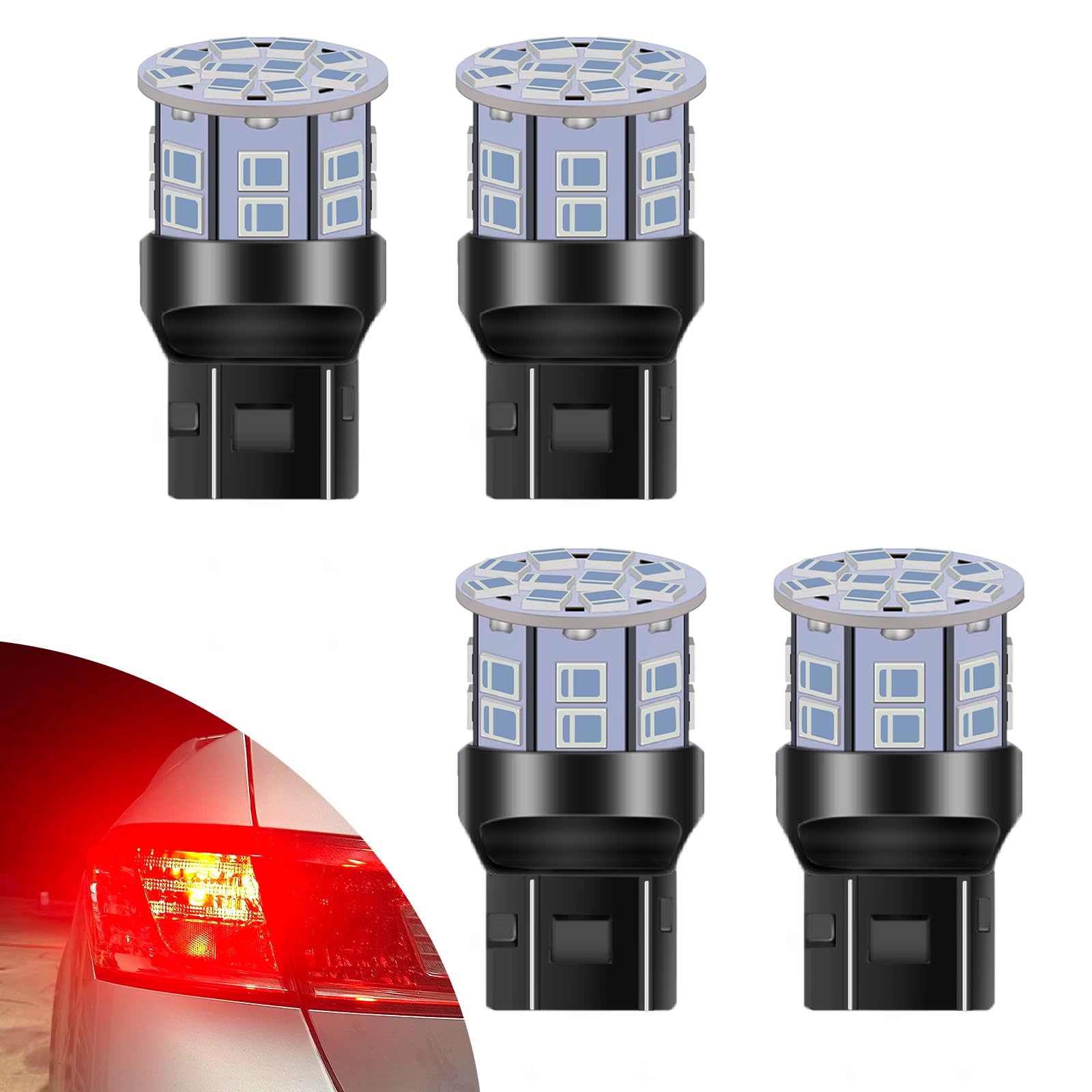
The LEDYOTRY 7443 Red pack delivers four bulbs in one box, making it an economical choice if you need to replace brake, tail, or turn signal bulbs across multiple positions. Each bulb uses 24 high-quality 2835 chips arranged in a 360-degree pattern, producing 1000 lumens of red light with even beam distribution and no dark spots. The T20 (7443) base is common in many Hyundai and Kia models, though the 2014 Sonata primarily uses the BAY15D socket for the main brake light — verifying your specific socket type before purchase is essential.
Built around a smart IC driver, the LEDYOTRY bulbs maintain consistent current flow and include a protection circuit that prevents overheating during prolonged use. Rated for 50,000 hours of operation, these bulbs significantly outlast standard incandescent units. The red lens coating ensures the emitted light is the correct brake color without requiring external filters, and the non-polarity design makes installation as simple as removing the old bulb and inserting the new one.
With four bulbs included, this pack works well for owners who want to refresh both rear brake lights and add matching tail or turn signal bulbs. When used as turn signals, an external load resistor will be required to avoid hyper-flash. Considering the per-bulb cost, the LEDYOTRY set offers strong value for multi-position upgrades without sacrificing build quality.
What works
- Four-bulb pack provides excellent per-unit value
- 360-degree illumination ensures even light output
- 50,000-hour lifespan reduces long-term replacement cost
What doesn’t
- 7443 base differs from Sonata’s BAY15D brake socket
- Requires resistor for turn signal applications
4. Philips 2357NA LongerLife Miniature Bulb

Philips has been manufacturing automotive lighting for over a century, and the 2357NA LongerLife bulb represents the company’s approach to OEM-grade incandescent replacement. Rated for twice the lifespan of standard miniature bulbs, this 2-pack uses a robust filament and precision glass envelope to deliver consistent light output without the electronics or heat-sink complexity of LED alternatives. For owners who prefer a drop-in replacement that behaves exactly like the factory bulb, this is the most predictable choice.
The 2357NA designation indicates a higher-output version of the standard 1157, producing more lumens while maintaining the same BAY15D base geometry. The Sonata’s existing bulb holders and wiring remain fully compatible, and there is zero risk of hyper-flash, CAN-bus errors, or compatibility warnings. The 12V rating aligns perfectly with the vehicle’s electrical system, and the included pair allows symmetrical replacement on both sides — crucial because bulbs dim over time and mismatched brightness can appear uneven.
Installation follows the same procedure as the original bulb: a simple quarter-turn twist to remove and replace. The glass must not be touched with bare fingers, as skin oils create hot spots that shorten filament life. While the incandescent technology does not match LED efficiency or lifespan, the predictable performance, immediate compatibility, and Philips build quality make these bulbs a strong choice for owners who prioritize reliability over peak brightness.
What works
- Direct OEM-style fitment with zero electronic issues
- Double the lifespan of standard incandescent bulbs
- Reputable brand with consistent quality control
What doesn’t
- Lower brightness and shorter life than LED alternatives
- Glass bulb requires careful handling during installation
5. Tomhasa 1156 LED Bulb White Super Bright

The Tomhasa 1156 White LED uses a BA15S single-contact base — a design that differs from the 2014 Sonata’s BAY15D brake light socket. While it will not seat correctly in the brake position, this bulb is well suited for backup or reverse light applications where a white 6000K output is desired. The 36 SMD 2835 chips produce 1600 lumens per bulb, and the 1:1 halogen shape simplifies installation in compatible sockets. Owners looking for a bright reverse light upgrade will find this a budget-friendly option.
Constructed with an aviation aluminum body and a constant-current IC driver, the Tomhasa bulb manages heat effectively and draws only 4.2 watts per bulb while maintaining rated output. The 12V-24V wide voltage range covers any standard passenger car system, and the non-polarity design eliminates guesswork during installation. Operating life is significantly longer than incandescent bulbs, reducing the frequency of future replacements.
The 6000K cool white light provides excellent rearward visibility during reversing, especially in low-light conditions. When used in brake or turn signal applications, a 50W 6-ohm load resistor may be required to prevent hyper-flash, and the white color may not comply with regulations for red brake lights in all regions. For dedicated reverse light use, however, this bulb delivers high output and a clean aesthetic at a very accessible price point.
What works
- Very bright 1600-lumen output for reverse lighting
- Low power draw and good heat dissipation
- Straightforward plug-and-play installation
What doesn’t
- BA15S base is not compatible with Sonata brake socket
- White light not ideal for brake light application
Hardware & Specs Guide
LED vs Incandescent Output
LED bulbs typically produce between 1000 and 1600 lumens while drawing only 4 to 5 watts, compared to an incandescent bulb that delivers roughly 400 lumens at 16 to 18 watts. The efficiency advantage translates to lower electrical system load and significantly longer service life — 30,000 to 50,000 hours for LEDs versus roughly 1000 to 2000 hours for standard halogen filaments. However, LEDs generate concentrated heat at the base, so quality units incorporate aluminum heat sinks or IC driver boards to prevent thermal damage inside the tail light housing. Incandescent bulbs produce heat evenly across the glass envelope and do not require additional thermal management.
Bulb Base Identification
The 2014 Hyundai Sonata brake light circuit uses a BAY15D (1157) base with two contact points and an offset keyway. The BA15S (1156) base has a single contact point and will not lock into the same socket. The T20 (7443) base uses a different keyway design entirely. Installing the correct base type is essential for a secure electrical connection and proper bulb retention. Always check the product listing for explicit BAY15D or 1157 compatibility and confirm the socket visually before purchasing.
Color Temperature and Legality
Brake lights are legally required to emit red light in virtually all jurisdictions. LED bulbs labeled as 6000K produce a cool white light that is suitable for reverse or DRL applications but not for brake or tail duties. Red-coated LED bulbs or bulbs with built-in red chips emit the correct wavelength without external filters. Strobe or flashing brake light patterns may violate local vehicle codes, so verify regional regulations before installing bulbs with pulsing functions.
Load Resistors and CAN-Bus Compatibility
Many modern vehicles use pulse-width modulation or CAN-bus monitoring to detect burned-out bulbs. LEDs draw significantly less current than incandescent bulbs, which can trigger a hyper-flash warning or error code on the dashboard. Installing a load resistor with the correct wattage rating (typically 50W, 6 ohm) in parallel with the LED bulb restores the expected current draw. Some premium LED bulbs include built-in resistors or CAN-bus drivers to eliminate this issue without additional wiring.
FAQ
What bulb type does a 2014 Hyundai Sonata use for brake lights?
Can I use an LED bulb as a direct replacement in my Sonata?
Do I need to replace both brake light bulbs at the same time?
Why does my new LED brake light bulb cause hyper-flash?
Are flashing or strobe brake light bulbs street legal?
Final Thoughts: The Verdict
For most buyers, the best 2014 hyundai sonata brake light bulb winner is the Yorkim 1157 LED Red because it delivers strong lumen output, correct BAY15D fitment, and a long service life at a reasonable investment. If you want the added safety of a flashing pattern, grab the FANTELI 1157 Strobe Red. And for OEM-grade simplicity with zero electronic fuss, nothing beats the Philips 2357NA LongerLife.

Certification: BSc in Mechanical Engineering
Education: Mechanical engineer
Lives In: 539 W Commerce St, Dallas, TX 75208, USA
Md Amir is an auto mechanic student and writer with over half a decade of experience in the automotive field. He has worked with top automotive brands such as Lexus, Quantum, and also owns two automotive blogs autocarneed.com and taxiwiz.com.