A side-by-side that cranks weak or dies mid-trail turns a day of adventure into a frustrating recovery operation. The battery is the single most overlooked component in UTV ownership, yet it dictates whether your machine starts reliably in freezing weather, powers your winch through a mud hole, and keeps your accessories running all day without a voltage drop. Spec-savvy owners know that choosing the right chemistry and capacity is not optional — it is the difference between a faith in your machine and constant electrical anxiety.
I’m Amir — the founder and writer behind Four Wheel Ask. Over the years I have analyzed hundreds of battery datasheets, cross-referenced owner-reported failure patterns, and studied the differences between AGM, flooded lead-acid, and lithium iron phosphate chemistries to understand what actually holds up under real off-road abuse.
Picking the ideal best battery for side by side requires matching chemistry type, capacity, and cold cranking amps to your specific riding terrain.
How To Choose The Best Battery For Side By Side
Selecting the right battery for your UTV goes beyond finding something that fits in the tray. You need to evaluate chemistry stability, discharge characteristics, and how the battery interacts with your machine’s charging system. Side-by-sides endure vibration, temperature swings, and deep discharge cycles that would kill a standard car battery quickly. Here are the critical factors to weigh before committing.
Chemistry: LiFePO4 vs AGM vs Flooded Lead-Acid
Lithium iron phosphate (LiFePO4) batteries dominate the premium segment because they deliver consistent voltage until fully discharged, weigh roughly one-third of an equivalent lead-acid battery, and last thousands of cycles with proper care. The trade-off is a higher upfront investment and the need to verify your stator and regulator output stays within the 14.4V to 14.8V range. AGM (Absorbent Glass Mat) batteries offer a solid middle ground — spill-proof, vibration-resistant, and compatible with most stock charging systems without modification. Flooded lead-acid batteries are the budget option but require venting, periodic water checks, and are more prone to damage from deep discharge, making them the least practical choice for serious off-road use.
Capacity and Cold Cranking Amps
Capacity, measured in amp-hours (Ah), determines how long your battery can power accessories like lights, winches, and audio systems without the engine running. For a typical side-by-side used for trail riding with moderate accessories, 30Ah to 50Ah is a practical minimum. If you run a high-output winch or plan extended camping trips, 100Ah or more in a deep cycle configuration is advisable. Cold Cranking Amps (CCA) measure raw starting power in cold weather. A 400 CCA rating is generally sufficient for most UTV engines down to freezing temperatures, but larger displacement machines or those used in extreme cold benefit from 600 CCA or higher.
BMS and Charging System Compatibility
Lithium batteries require a Battery Management System (BMS) to balance cells, prevent overcharge, and cut off during low-temperature charging. Not all BMS units are equal — look for one that offers low-temperature cut-off, overcurrent protection, and cell balancing. AGM batteries are more forgiving but still require a regulated charging voltage — most stock UTV stators output between 13.8V and 14.5V, which is safe for both AGM and LiFePO4. If your machine has an older unregulated charging system, an AGM battery is the safer choice unless you install a regulator.
Quick Comparison
On smaller screens, swipe sideways to see the full table.
| Model | Category | Best For | Key Spec | Amazon |
|---|---|---|---|---|
| ECO-WORTHY 280Ah | LiFePO4 | Heavy off-grid use | 280Ah, 200A BMS, Bluetooth | Amazon |
| ODYSSEY AGM28L | AGM | Reliable cranking | 330 CCA, 52 min reserve | Amazon |
| WEIZE 100Ah Deep Cycle | SLA | Budget deep cycle | 100Ah, Group 31, 1150A max | Amazon |
| yeagulch 300Ah | LiFePO4 | High capacity, compact | 314Ah, 200A BMS, 4019Wh | Amazon |
| Litime 200Ah 2-Pack | LiFePO4 | Massive system builds | 200Ah, 2560Wh, 2-pack | Amazon |
| MARXON Group 34 | AGM | Start-stop compatibility | 55Ah, 650 CCA, BCI34 | Amazon |
| Goodyear GYTX30L | AGM | Universal ATV/UTV fit | 32Ah, 400 CCA, 22 lbs | Amazon |
| Dumfume 300Ah | LiFePO4 | Long life, high density | 314Ah, 3840Wh, 57 lbs | Amazon |
| TYKOOL LFP14-BS-STD | LiFePO4 | Lightweight replacement | 400 CCA, 8Ah, LCD display | Amazon |
In-Depth Reviews
1. ECO-WORTHY 12V 280Ah Metal Case LiFePO4 Battery
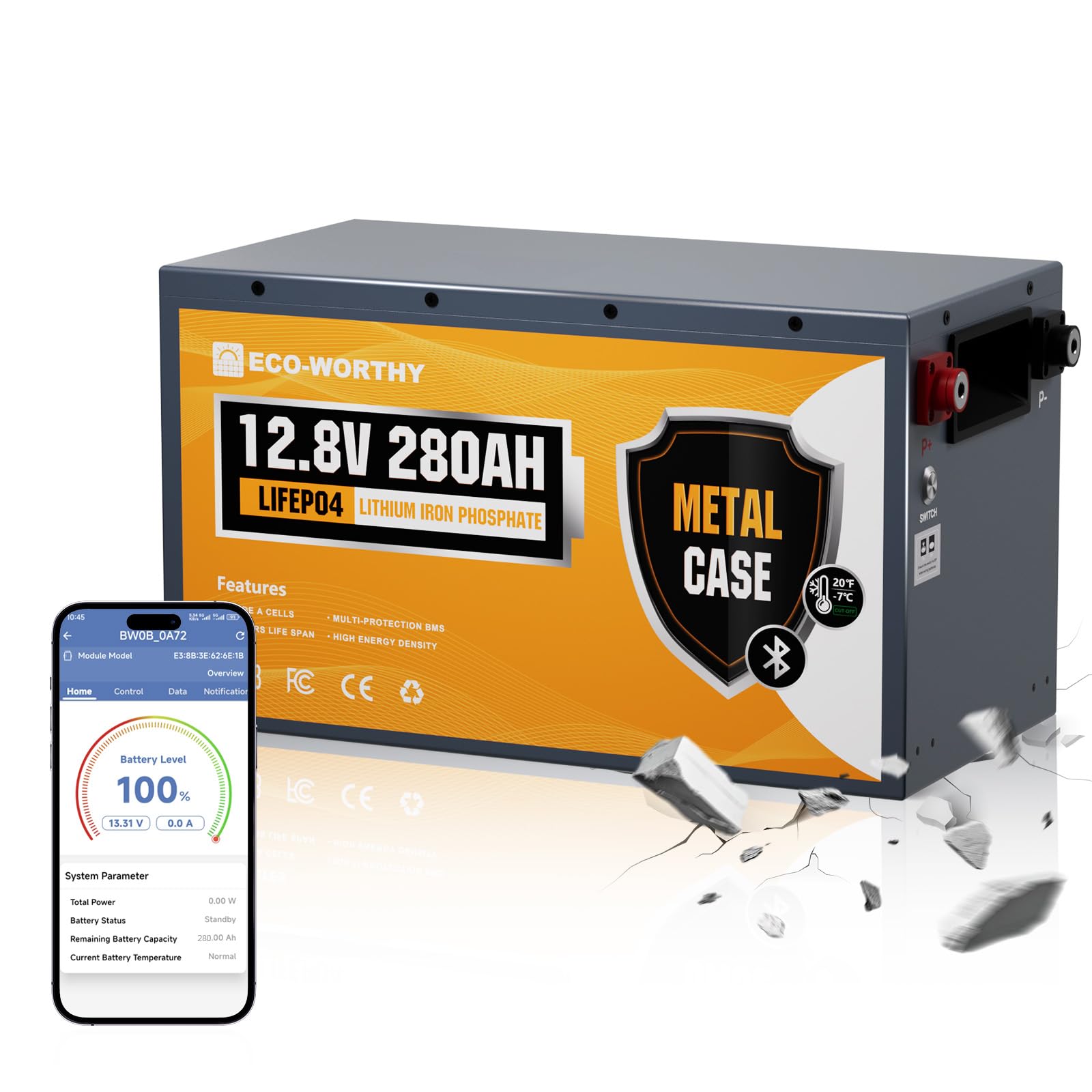
The ECO-WORTHY 280Ah LiFePO4 battery stands out because of its heavy-duty metal enclosure, which provides superior heat dissipation and fire resistance compared to typical plastic-cased lithium batteries. The built-in 200A BMS handles high-draw applications like winching and inverter loads without tripping, and the Bluetooth monitoring allows real-time voltage, capacity, and charge status checks from your phone. This is a battery designed for owners who treat their side-by-side as a mobile power station for extended off-grid trips.
The low-temperature charging cut-off protects the cells during winter storage, and the inclusion of mounting feet means no separate battery box is required. The reinforced metal shell also resists vibration and impacts better than standard designs, which is critical for UTVs that see rough trail duty. With Grade A LiFePO4 cells and a 200A BMS that covers overcharge, overdischarge, and short-circuit scenarios, the safety and longevity profile is strong.
Owner feedback consistently highlights the accurate Bluetooth readouts and the ability to run accessories for extended periods without voltage sag. The 280Ah capacity is generous enough for most off-grid setups, though the physical footprint is larger than smaller capacity units — measure your tray before committing. The three-year manufacturer warranty provides additional peace of mind for a battery at this level.
What works
- Rugged metal case eliminates need for extra battery box
- Bluetooth monitoring provides real-time system insight
- Low-temp cut-off protects cells in freezing weather
What doesn’t
- Heavier than some plastic-case lithium rivals at 68.5 lbs
- Requires compatible charger for optimal performance
2. ODYSSEY ODYSSEYODYODS-AGM28L Battery

The ODYSSEY AGM28L is a benchmark for high-performance absorbed glass mat batteries. It delivers 330 CCA and a 52-minute reserve capacity in a compact package that fits many side-by-side battery trays designed for Group 28 or PC925 form factors. The pure lead construction enables faster recharge compared to standard flooded or budget AGM batteries, and the 3-10 year service life claim is backed by a replacement warranty that is among the best in the lead-acid segment.
Vibration resistance is a standout feature — the internal plate bonding and compression fit design protect against the constant jarring that kills lesser batteries in off-road vehicles. Operating temperature range of -40°F to 113°F means it handles both northern winter starts and desert summer heat without degradation. The AGM chemistry is also non-spillable, allowing flexible mounting positions as long as the terminals remain accessible.
Users consistently report reliable cranking even after periods of storage, and the 70% longer cycle life compared to conventional deep-cycle batteries means this unit tolerates accessory discharge better than standard starting batteries. The trade-off is that AGM technology cannot match lithium’s weight savings or cycle count, but for owners who want proven reliability without Lithium compatibility concerns, the ODYSSEY remains a top-tier pick. Note that it cannot be returned after purchase and has additional shipping restrictions.
What works
- Extreme vibration resistance ideal for rough terrain
- Fast recharge capability recovers quickly after winching
- Strong warranty coverage up to 4 years full replacement
What doesn’t
- Heavier than lithium equivalents at 26 lbs
- Limited capacity for extended accessory use
3. WEIZE 12V 100Ah Deep Cycle Battery, Group 31

The WEIZE 100Ah deep cycle battery is a sealed lead-acid (SLA) workhorse that delivers honest capacity at a fraction of what lithium costs. The Group 31 case dimensions (12.99 x 6.73 x 8.43 inches) fit many larger UTV trays, and the 1150A maximum discharge current supports winch operation and inverter loads without voltage collapse. The maintenance-free, spill-proof design means you can install it without worrying about acid leaks or periodic water refills.
This battery is built for applications where deep cycling is the primary demand — running lights, radios, and accessories for hours without the engine running. The self-discharge rate of around 3% per month allows it to sit for weeks between rides without significant voltage loss. Terminal configuration (positive left, negative right when facing the battery) matches many standard side-by-side layouts, though some machines may require adapter cables.
Owner reports indicate that this battery delivers on its 100Ah rating for trolling motors and RV use, and the same performance translates to side-by-side accessory power. The weight of 60 lbs is substantial, making installation a two-person job, and the SLA chemistry means you will see voltage drop-off earlier than with lithium as the battery discharges. For owners on a budget who need reliable deep-cycle capacity rather than raw cranking power, the WEIZE offers strong value.
What works
- Genuine 100Ah capacity at an accessible price point
- Low self-discharge suits seasonal riding patterns
- Spill-proof and maintenance-free design
What doesn’t
- Heavy weight complicates installation and adds load
- Voltage sag under heavy draw compared to LiFePO4
4. yeagulch 12V 300Ah (314Ah) LiFePO4 Battery
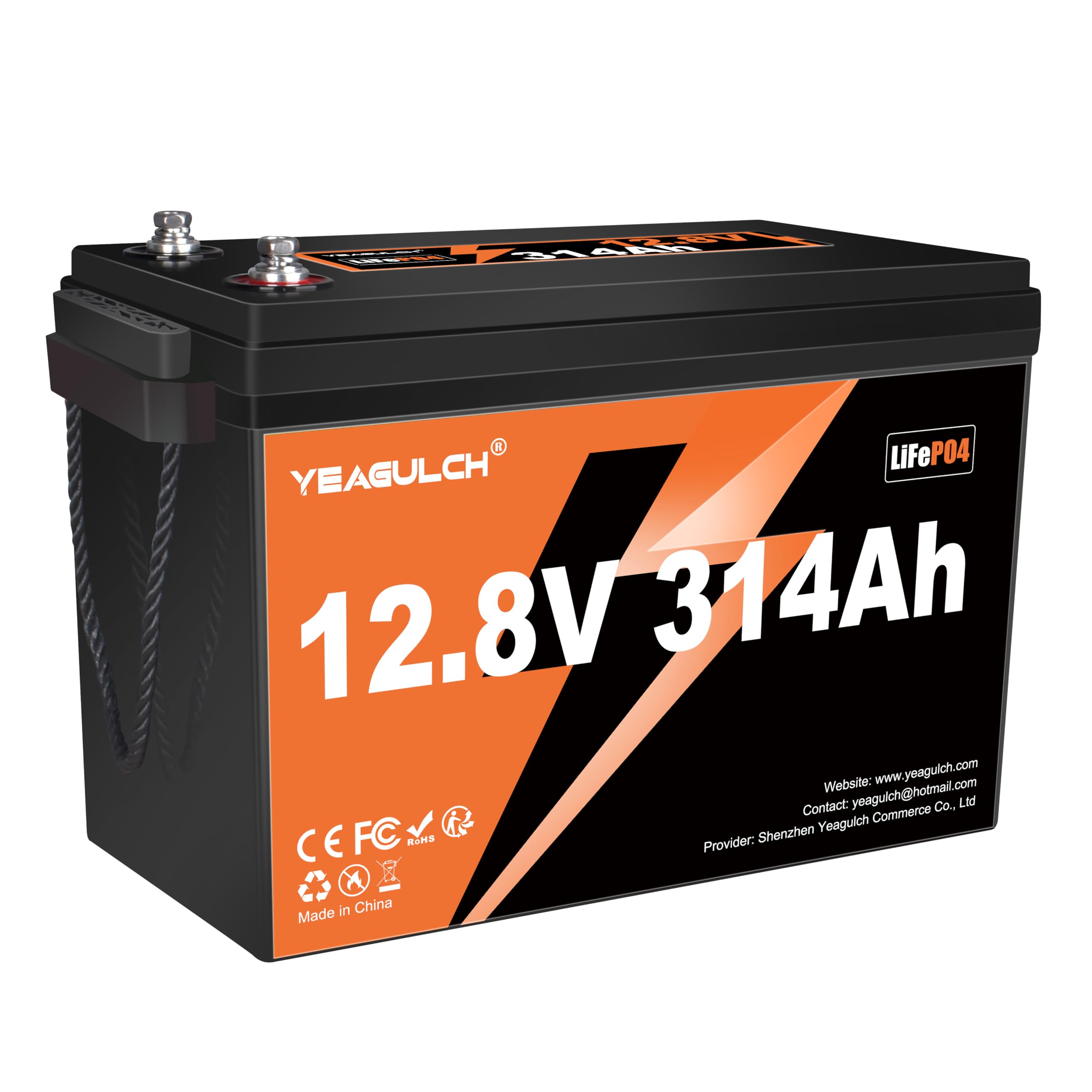
The yeagulch 314Ah LiFePO4 battery delivers 4019Wh of usable energy in a package that measures just 15.16 x 7.6 x 9.84 inches — compact relative to its capacity. The 200A continuous BMS supports high-draw applications like large inverters and heavy winching without tripping, and the Grade A automotive-grade lithium cells are rated for 4000 cycles at 100% depth of discharge, translating to over a decade of regular use. This is a battery for owners who demand maximum runtime from a single unit.
Series and parallel expansion capability allows building a 48V system or doubling capacity with up to four units in parallel, making it future-proof for those expanding their electrical system. The lightweight construction at 57.28 lbs is approximately one-third the weight of an equivalent lead-acid setup, significantly reducing the load on your side-by-side’s chassis and suspension. The integrated BMS provides overcharge, overdischarge, overcurrent, and short-circuit protection with automatic temperature cut-off.
User feedback emphasizes the real-world capacity matching the rated specs and the compact footprint saving tray space. The five-year warranty indicates confidence in the cell quality. The only notable caveat is verifying charging system voltage stays within the acceptable range for LiFePO4 — an unregulated stator output above 15V could trigger BMS disconnection and require a regulator upgrade.
What works
- Exceptional energy-to-size ratio for tight compartments
- 200A BMS handles demanding accessory loads
- 4000-cycle lifespan reduces long-term replacement cost
What doesn’t
- Requires voltage regulation confirmation before installation
- No Bluetooth monitoring on standard version
5. Litime 12V 200Ah Lithium Battery, LiFePO4 (2 Pack)
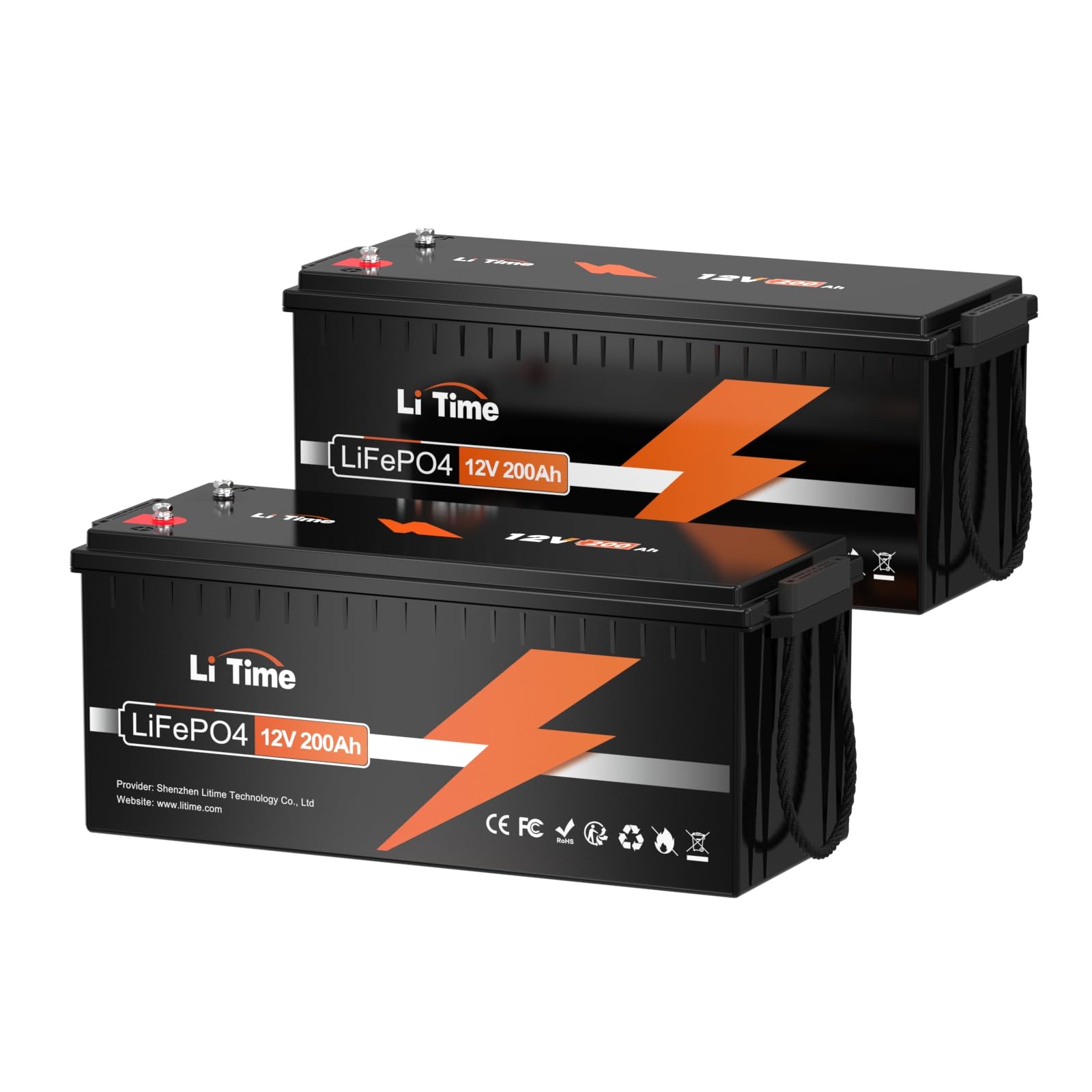
The Litime 12V 200Ah two-pack delivers a total of 400Ah of usable LiFePO4 capacity, translating to 5120Wh of stored energy for extended off-grid adventures or heavy accessory loads. Each unit features a 100A BMS, IP65 dustproof and waterproof rating, and Grade A lithium cells rated for 4000+ cycles at 100% depth of discharge. The package includes two batteries, simplifying the process of building a high-capacity parallel bank without sourcing identical units separately.
The IP65 rating is notable — it protects against dust ingress and low-pressure water jets, making it suitable for open-tray installations that see mud splashes or rain exposure. The 56 Wh/lb energy density means each 200Ah battery weighs 48.3 lbs, which is significantly lighter than a comparable lead-acid bank. The BMS covers overcharge, overdischarge, overcurrent, over-temperature, and short-circuit scenarios, and the salt spray resistance adds durability for coastal riding environments.
Owners who use their side-by-side for base-camp power or run high-draw inverters report that the two-pack configuration eliminates the need for a generator in many scenarios. The parallel expansion capability allows up to 16 batteries (4P4S) for a 48V 800Ah system if needed, though most UTV owners will find the 400Ah configuration more than sufficient. The primary consideration is physical space — two batteries require a substantial mounting area and appropriate cables for safe parallel connection.
What works
- Massive 400Ah total capacity with matched pair
- IP65 waterproof rating handles wet conditions
- Grade A cells with strong cycle life rating
What doesn’t
- Requires significant tray space for both units
- Higher upfront investment than single-battery solutions
6. MARXON Group 34 Start and Stop Car Battery AGM

The MARXON Group 34 AGM battery delivers 650 CCA in a BCI Group 34 form factor, making it a strong starting battery for side-by-sides that require high cold cranking power for larger displacement engines or cold-weather operation. The 55Ah capacity provides reasonable reserve for accessories, though it is not designed for sustained deep-cycling like a dedicated deep-cycle battery. The AGM construction is maintenance-free, spill-proof, and provides good vibration resistance for off-road use.
The start-stop compatibility is a carryover from automotive applications, but the feature translates to UTVs that idle frequently during trail stops — the AGM chemistry handles repeated restart cycles better than standard flooded batteries. The manufacturer claims 40% faster charging than SLA batteries, which is beneficial when your stator has limited charge time between starts. The patented alloy construction improves corrosion resistance compared to budget AGM options.
Users have noted that the battery fits many UTV and ATV applications that use a Group 34 or equivalent size, and the strong CCA rating delivers reliable cranking even after storage. The 42 lb weight is typical for this class, and the warranty support from a US-based office is a positive. The primary limitation is that this is fundamentally a starting battery with limited deep-cycle endurance — repeated deep discharges will shorten its service life compared to a true deep-cycle or LiFePO4 battery.
What works
- High 650 CCA for reliable cold starts
- AGM construction resists vibration and leaks
- Faster charging acceptance than standard SLA
What doesn’t
- Limited deep-cycle endurance for accessory-heavy use
- Heavier and lower cycle life than lithium options
7. Goodyear GYTX30L 12 Volt AGM Battery
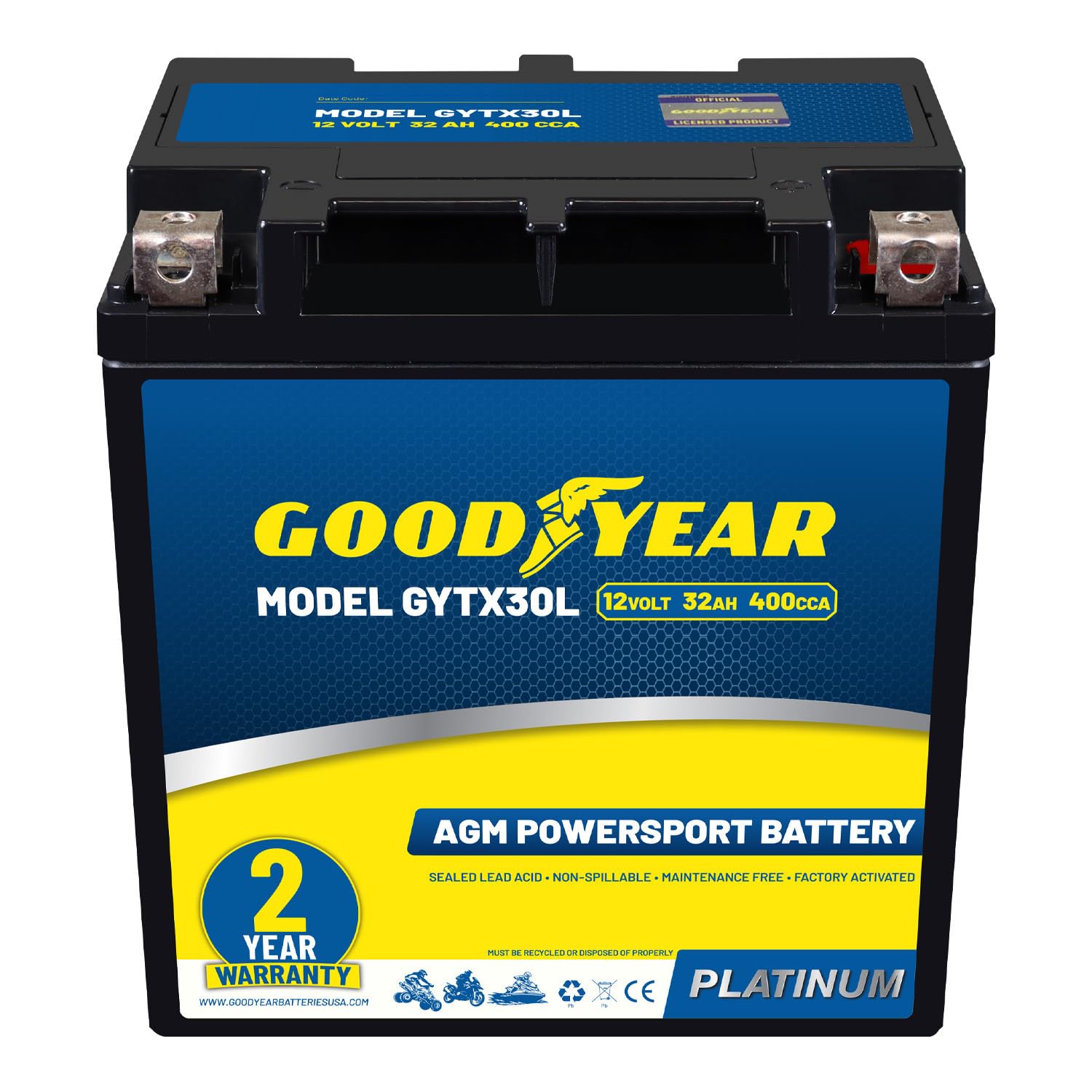
The Goodyear GYTX30L is a sealed AGM battery specifically designed for powersports applications including ATVs, UTVs, motorcycles, and snowmobiles. With 400 CCA and 32Ah capacity, it provides enough starting power for most mid-displacement side-by-side engines and moderate accessory loads. The maintenance-free, spill-proof design allows flexible mounting in any orientation except inverted, giving installation flexibility in tight compartments.
The battery is built to resist shocks and vibrations through internal plate support, and the CE certification combined with ISO facility production indicates consistent manufacturing standards. The compact dimensions (6.50 x 4.90 x 6.90 inches) make it a direct fit for many OEM battery trays without modification. The high discharge rate and deep-discharge recovery characteristics improve reliability in machines that see intermittent use during hunting or seasonal riding.
Owner feedback highlights the value proposition — the Goodyear brand recognition combined with reliable AGM performance at a mid-range price point. The two-year manufacturer warranty is competitive for this class. The limitations are typical of AGM technology: it is heavier than a lithium equivalent at 22 lbs, and the 32Ah capacity means extended accessory use without the engine running will deplete the battery faster than a deep-cycle-specific unit. It is best suited for riders who prioritize starting reliability over auxiliary power runtime.
What works
- Compact size fits most OEM UTV battery trays
- 400 CCA provides reliable starting in cold weather
- Good balance of performance and running cost
What doesn’t
- Limited capacity for sustained accessory loads
- Heavier and lower cycle count than LiFePO4
8. Dumfume 12V 300Ah (314Ah) LiFePO4 Battery
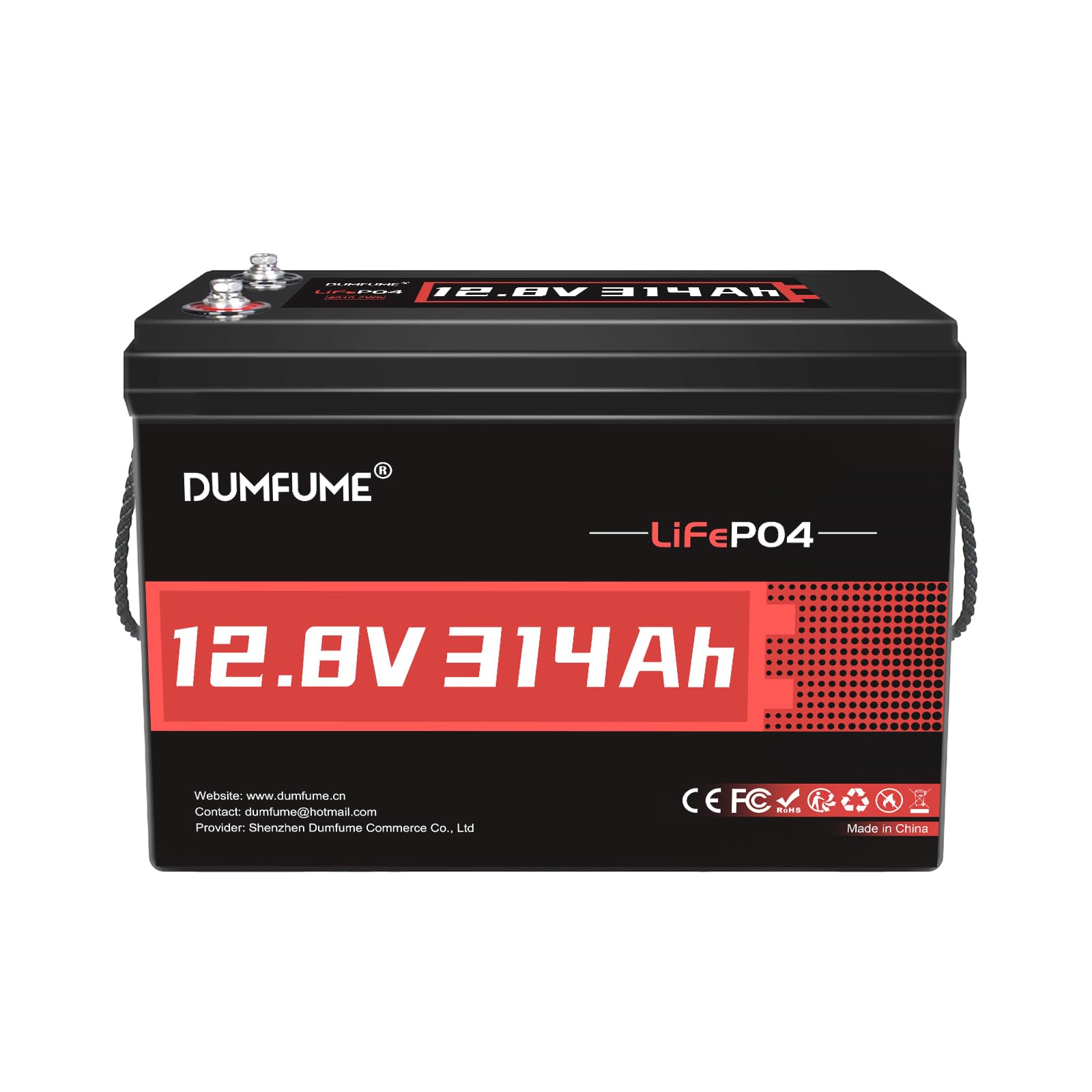
The Dumfume 314Ah LiFePO4 battery delivers 3840Wh of energy in a package weighing only 57 lbs, achieving roughly double the energy density of lead-acid. The 200A BMS provides comprehensive protection including low-temperature charging cut-off, which automatically disconnects the charging circuit when cell temperatures fall below freezing — a critical safety feature for riders who store their machines in unheated garages or ride in cold climates. The 4000-cycle rating at 100% depth of discharge translates to approximately 10 years of daily use under normal conditions.
The high-strength ABS casing with added impact and flame resistance provides a degree of protection against physical damage that is relevant for side-by-sides operating in rocky terrain or tight trails. Series and parallel connection capability allows system voltage and capacity scaling. The claimed 15,000 cycles at 60% DOD is noteworthy for owners who discharge partially rather than fully, which is common in accessory-heavy setups.
Users note that the real-world capacity closely matches the rated specs and that the compact footprint simplifies installation. The manufacturer emphasizes that performance requires ambient temperatures of 5°C or higher, so riders in extreme cold conditions should consider heated battery options or confirm the BMS low-temp cut-off behavior meets their needs. Return shipping for low-temperature charging issues is not covered, so verifying your charging setup before purchase is important. The five-year warranty provides reasonable coverage for a premium lithium battery.
What works
- Excellent energy density for extended runtime
- Low-temperature cut-off protects battery in winter
- ABS casing resists impacts and flame exposure
What doesn’t
- Requires temperatures above 5°C for charging
- No Bluetooth monitoring for diagnostics
9. TYKOOL LFP14-BS-STD Lithium Battery
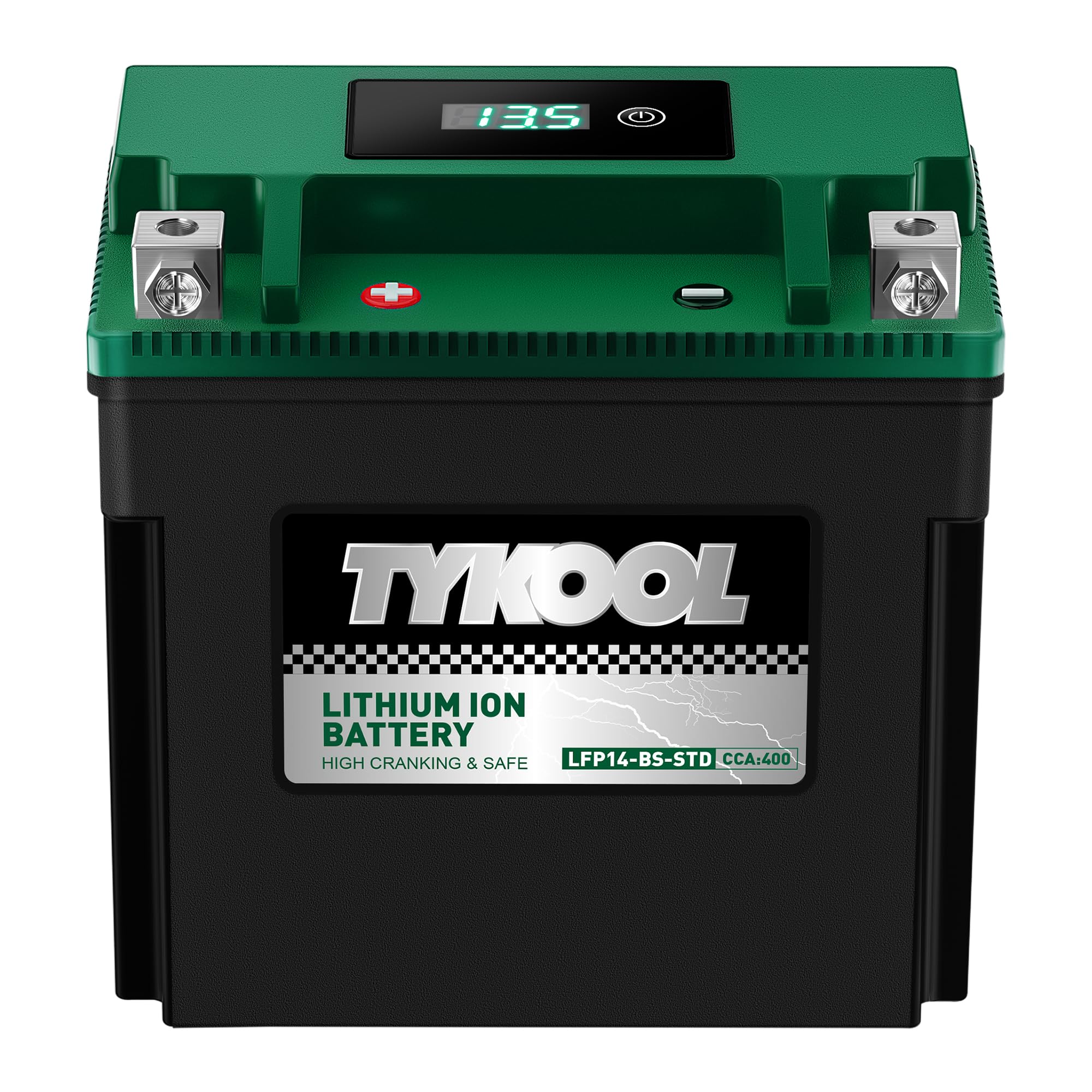
The TYKOOL LFP14-BS-STD is a YTX14-BS drop-in lithium replacement that weighs just 2.49 lbs — shedding nearly 8 lbs compared to a standard AGM battery in the same size. The 400 CCA rating provides reliable starting for most mid-size UTV and ATV engines, and the integrated LCD voltage display offers immediate status checks without a multimeter. For owners looking to reduce weight and improve cranking response on a tight budget, this is a compelling entry point into lithium technology.
The LiFePO4 chemistry with smart BMS provides overcharge, overdischarge, overcurrent, and short-circuit protection, with a flat discharge curve that maintains consistent cranking voltage until the battery is nearly depleted. The ultra-low self-discharge rate (less than 1% per month) means the battery can sit for extended periods between rides without significant power loss. The IP66 waterproof casing protects against mud, rain, and pressure washing, which is relevant for side-by-sides that see wet or muddy conditions.
Users highlight the easy installation and noticeable weight reduction during maneuvering. The LCD display makes voltage monitoring simple and helps catch charging issues early. The one-year warranty is shorter than some competitors, and with only 8Ah capacity, this battery is best suited for starting duties with minimal accessory draw — it is not designed for extended winching or heavy accessory use without the engine running. Owners with CAN-bus machines should verify compatibility before purchase.
What works
- Significant weight savings over lead-acid batteries
- Integrated LCD display for quick voltage checks
- IP66 waterproof rating handles wet environments
What doesn’t
- Limited 8Ah capacity restricts accessory use
- Requires compatible charging system under 15V
Hardware & Specs Guide
Understanding LiFePO4 vs AGM Chemistry
LiFePO4 (lithium iron phosphate) batteries use a lithium-based chemistry that provides a flat voltage discharge curve — meaning your accessories see consistent voltage until the battery is fully depleted, unlike AGM batteries where voltage gradually drops as the battery discharges. LiFePO4 also offers roughly 4000 cycles at 100% depth of discharge compared to 400-500 cycles for typical AGM, and weighs about one-third as much for the same usable capacity. The trade-offs are higher upfront investment and the need for a charging system that stays below 15V — most modern side-by-side stators with regulators comply, but older unregulated machines may require a regulator upgrade. AGM batteries are more tolerant of imperfect charging conditions and generally work with any stock system, making them the simpler choice for owners who do not want to verify voltage parameters.
Capacity, CCA, and Reserve Minutes Explained
Amp-hours (Ah) tell you the total energy storage — a 100Ah battery theoretically delivers 5 amps for 20 hours or 10 amps for 10 hours. Cold Cranking Amps (CCA) measures the current a battery can deliver at 0°F for 30 seconds while maintaining at least 7.2 volts. For side-by-sides, 400 CCA is a practical baseline for most engines in moderate climates, while 600+ CCA benefits big-displacement machines or extreme cold. Reserve Capacity (RC) is the number of minutes a battery can deliver 25 amps at 80°F before dropping below 10.5 volts — a higher RC helps keep accessories running if the charging system fails. For machines used primarily for starting with minimal accessories, prioritize CCA. For accessory-heavy builds, prioritize Ah and RC over raw starting power.
Battery Management System (BMS) Features
A BMS is essential for lithium batteries and helpful for AGM longevity monitoring. The primary functions include cell balancing to keep all internal cells at equal voltage, overcharge protection that disconnects charging if voltage exceeds a threshold, overdischarge protection to prevent cell damage, and low-temperature charging cut-off that stops charging below freezing (typically around 0°C or 32°F). Advanced BMS units add Bluetooth monitoring for real-time voltage, state-of-charge, and fault logging. For side-by-side owners, the low-temperature cut-off feature is critical if your machine is stored in unheated spaces during winter — charging a frozen lithium battery causes permanent damage. AGM batteries using lead-acid chemistry do not require low-temperature cut-off, making them simpler for year-round cold-weather use.
Physical Fitment and Mounting Considerations
Battery group sizes (like BCI Group 31 or Group 34) standardize external dimensions and terminal locations, but side-by-side battery trays vary by make and model. Before purchasing, measure your tray length, width, height, and note the terminal orientation (left positive vs right positive). Lithium batteries are often smaller than their lead-acid counterparts for the same capacity, which can leave gaps in the tray — foam blocks or rubber shims prevent movement. Metal-case lithium batteries like the ECO-WORTHY model include mounting feet that bolt directly to the tray. Always secure the battery with a hold-down bracket or strap; movement from trail vibration can damage terminals and internal connections regardless of battery chemistry.
FAQ
Can I replace my side-by-side’s lead-acid battery with a lithium battery directly?
How many amp-hours do I need for my side-by-side?
What does low-temperature cut-off mean on a lithium battery?
How long should a side-by-side battery last?
Can I use a car battery in my side-by-side?
Final Thoughts: The Verdict
For most buyers, the battery for side by side winner is the ECO-WORTHY 12V 280Ah Metal Case LiFePO4 because it delivers the best combination of rugged construction, Bluetooth monitoring, and true deep-cycle capacity for extended off-grid use. If you want proven AGM reliability without lithium compatibility concerns, grab the ODYSSEY AGM28L. And for the best value in deep-cycle capacity for accessory-heavy builds, nothing beats the WEIZE 100Ah Deep Cycle.

Certification: BSc in Mechanical Engineering
Education: Mechanical engineer
Lives In: 539 W Commerce St, Dallas, TX 75208, USA
Md Amir is an auto mechanic student and writer with over half a decade of experience in the automotive field. He has worked with top automotive brands such as Lexus, Quantum, and also owns two automotive blogs autocarneed.com and taxiwiz.com.