A vehicle left unattended in a parking lot, driveway, or street carries an undeniable risk—one that a well-chosen security system can neutralize before an intruder ever gets comfortable. The difference between a quick deterrent and a full-blown theft often comes down to sensor accuracy, siren output, and how intelligently the system discriminates between a passing truck and a hand on the door handle.
I’m Amir — the founder and writer behind Four Wheel Ask. I spend my time analyzing product specifications, build quality reports, and aggregated owner feedback to separate marketing claims from genuine performance in the automotive security space.
After sifting through dozens of models and hundreds of verified owner reports, I’ve narrowed the field to the seven systems that deliver real protection without guesswork. Whether you drive a daily commuter, a weekend project car, or a fleet vehicle, the best car intruder alarms share one trait: they trigger only when a real threat appears and stay silent the rest of the time.
How To Choose The Best Car Intruder Alarms
Selecting a car alarm isn’t simply about picking the loudest siren or the flashiest LED. Real-world protection depends on sensor technology, ease of integration with your vehicle’s existing electrical system, and whether the system offers layered deterrence beyond audible noise.
Sensor Technology and False Alarm Immunity
The most common complaint among car alarm owners is false triggers from passing traffic, weather, or parking lot bumps. Dual-stage shock sensors help by distinguishing a light tap from a genuine intrusion attempt—only the second stage triggers the full siren. Microwave or proximity sensors add another layer by detecting motion inside the cabin, which is especially useful for convertibles or vehicles with soft tops.
Siren Output and Placement
Siren loudness is measured in decibels (dB), but the decibel number alone doesn’t tell the full story. A 120dB siren mounted under the hood with the horn pointed downward will sound far more menacing than the same unit buried behind the bumper. Look for systems with weather-resistant external sirens or those that integrate with your existing car horn for maximum attention-grabbing power.
Keyless Entry and Remote Features
Many modern alarms bundle keyless entry with the security system, which simplifies installation and reduces fob clutter. Two-way systems send confirmation back to the remote so you know the alarm armed. Others offer trunk release, car finder, and even smartphone integration. Decide whether you need remote start functionality—that pushes you into a higher tier of system with additional wiring complexity.
Engine Immobilization and Starter Interrupt
An alarm that only makes noise stops being effective once the thief ignores it. Systems with starter interrupt or an engine cut-off relay physically prevent the vehicle from starting, even if the intruder has access to the ignition. This feature alone can mean the difference between a stolen car and a frustrated thief walking away.
Quick Comparison
On smaller screens, swipe sideways to see the full table.
| Model | Category | Best For | Key Spec | Amazon |
|---|---|---|---|---|
| Viper 3100V | Premium | Proven brand reliability | 2-stage shock sensor, engine immobilization | Amazon |
| Crimestopper SP-402 | Premium Combo | Remote start + security | 2300ft range, 5-button transmitters, 120dB siren | Amazon |
| VOXX Prestige APS25Z | Premium | Easy DIY installation | Dual-stage shock sensor, automatic arming | Amazon |
| BANVIE Car Alarm | Mid-Range | Full feature set on a budget | Microwave + shock sensor, engine cut-off | Amazon |
| Avital 3100LX | Mid-Range | Simple keyless entry + alarm | 3-channel security, starter kill relay | Amazon |
| Electop 120dB | Value | Standalone cabin protection | 3D motion sensor, 120dB siren, rechargeable battery | Amazon |
| CHADWICK CW-8101 | Budget | Minimal install, basic protection | 7-level sensitivity, 2 remote controls, 12V DC | Amazon |
In‑Depth Reviews
1. Viper 3100V 1-Way Security System

The Viper 3100V is the benchmark that other entry-level security systems are measured against. It comes from Directed Electronics, the same parent company behind Viper’s premium lines, and includes a two-stage shock sensor that learns to ignore environmental vibration while catching real hits. The system also monitors doors, bonnet, and boot for open-circuit triggers and flashes the parking lights on arm, disarm, and alarm activation.
Owner reports consistently highlight the ignition immobilization as the standout feature—even with the key in the ignition, the vehicle won’t start if the alarm is armed. This single function transforms the 3100V from a noise-maker into a genuine theft preventer. Multiple long-term users report zero false alarms over years of ownership, which is rare in this price tier. The included remotes are compact and the programming procedure, while not immediately intuitive, becomes straightforward after following the manual once.
The siren output is adequate rather than ear-splitting—owners describe it as loud enough to draw attention in a well-lit area but not so piercing that it causes discomfort inside the cabin. Installation requires a solid understanding of automotive wiring; several experienced users recommend professional installation unless you are comfortable tracing 12V, ground, lock, and unlock circuits. The 366-meter remote range is more than sufficient for most parking lots and driveways.
What works
- Ignition immobilization prevents hot-wiring
- Two-stage shock sensor nearly eliminates false alarms
- Proven brand with strong owner community support
What doesn’t
- Installation manual lacks clarity on wire functions
- Siren volume is moderate, not ear-piercing
- No trunk release or remote start included
2. Crimestopper SP-402 Car Alarm with Remote Start

The Crimestopper SP-402 is a rare combination: a full security system, keyless entry, and remote start all in one package at a mid-premium price point. It features five onboard relays for remote start, four auxiliary outputs, and a 120dB single-tone siren that one owner described as “loud enough to wake the neighborhood.” The dual-stage shock sensor provides the same false-alarm discrimination found on more expensive units.
The standout specification here is the remote range—up to 2,300 feet according to the manufacturer, which owners confirm is realistic in open conditions. The two five-button transmitters have a brushed aluminum trim that feels substantially better than the all-plastic fobs found on budget systems. The system also includes twin data ports for Fortin and ADS modules, plus a smartphone interface port for those who want remote monitoring later.
Owner feedback is overwhelmingly positive on the alarm and keyless entry functions, but the remote start reliability shows some variance. A handful of users report the remote start failing after a few days, often tracing back to a hood-pin switch ground issue rather than the brain itself. The installation manual is generic, so owners of non-standard vehicles should budget extra time for wiring research. For the mechanically inclined, the installation takes roughly three hours with a vehicle-specific wiring diagram.
What works
- Exceptional 2,300ft remote range
- Integrated remote start with five onboard relays
- Can be upgraded to a 2-way system later
What doesn’t
- Remote start reliability varies by vehicle
- Generic installation manual lacks detail
- Customer support responsiveness is inconsistent
3. VOXX Electronics Prestige APS25Z

The VOXX Prestige APS25Z is a no-nonsense security system from a manufacturer with deep roots in automotive electronics. It includes a dual-stage shock sensor, parking light flasher, and intrusion alert with memory—meaning the LED flashes differently if the alarm was triggered while you were away. The automatic arming and automatic locking features are particularly useful for owners who frequently forget to manually secure their vehicle.
Owners who have installed the APS25Z describe it as one of the more straightforward systems to wire, especially for those with previous alarm installation experience. The two three-button transmitters are 1-way, meaning they send commands to the vehicle but don’t confirm the alarm status back to the remote. The 800-foot range is solid for urban and suburban use, though dense parking structures can reduce effective range significantly.
Verified buyers consistently note the value proposition—they paid significantly less than comparable Viper or DEI-branded systems while getting the same core features. The 30-decibel audible noise rating in the technical specs appears to be a listing error; owners describe the siren as adequately loud for a standard passenger vehicle. The main compromise is the absence of remote start or smartphone connectivity, but for buyers who only need reliable intrusion protection, that’s not a loss.
What works
- Automatic arming and locking for forgetful owners
- Intrusion alert memory shows past trigger events
- Clean, straightforward wiring for experienced installers
What doesn’t
- No remote start or 2-way confirmation
- Siren rating listed incorrectly at 30dB
- Range drops noticeably inside concrete parking garages
4. BANVIE Car Alarm System with Microwave Sensor

The BANVIE car alarm punches above its price point by including both a shock sensor and a microwave proximity sensor—two detection layers typically reserved for more expensive systems. The microwave sensor monitors the cabin interior for motion, meaning a thief leaning through an open window will trigger the alarm even without physical vibration. The system also includes an engine cut-off relay that kills power to the starter when the alarm is armed.
Keyless entry functions are comprehensive: lock, unlock, trunk release, car finder, and light flash are all standard. The central door locking automation is configurable—doors can auto-lock when the vehicle reaches driving speed and unlock when the ignition is turned off, a useful safety feature for families. The zinc-alloy-framed remotes feel substantial and the buttons have good tactile feedback, though the manual translation is poor and requires some interpretation.
Owner reviews reveal a mixed experience with the sensitivity calibration. The shock and microwave sensors are both single-stage, meaning they either trigger fully or not at all—there’s no graduated warning stage. A few owners report that the sensors are overly sensitive out of the box, requiring careful adjustment. The included siren is described as “quiet” compared to standalone sirens, and the wiring uses thinner gauge aluminum-core wire that requires gentle handling during installation.
What works
- Microwave sensor adds interior motion detection
- Engine cut-off relay prevents hot-wiring
- Full keyless entry with auto-lock feature
What doesn’t
- Sensors are single-stage, no warning chirp
- Thin aluminum wiring feels fragile
- Poorly translated manual, customer support unreachable
5. Avital 3100LX Security System

The Avital 3100LX is a Directed Electronics product (same family as Viper) stripped down to the essentials: keyless entry, a starter kill relay, and a bright red LED status indicator. There is no siren included in the box—buyers pair it with a DEI-compatible siren or integrate it with their existing vehicle horn. This makes it an excellent choice for owners who want a clean factory-like installation or who already have a siren from a previous system.
Owner reports consistently praise the 3100LX as a drop-in replacement for aging DEI and Viper systems. Multiple buyers report that the wiring harness matched their existing setup perfectly, allowing a 15-minute swap without cutting a single wire. The three-button transmitters have deep button recesses that prevent accidental activations in pockets—a small but thoughtful design detail. The onboard starter kill relay is built into the brain, eliminating the need for an external relay module.
The main trade-off is the lack of a shock sensor in the base configuration—the system relies on door trigger inputs for alarm activation. Owners who want vibration detection need to add an aftermarket shock sensor. The installation manual, as with many DEI products, is dense and assumes familiarity with automotive electrical systems. Dome light supervision requires a separate relay, which is not included. For buyers comfortable with wiring, this is a rock-solid foundation that can be expanded over time.
What works
- Drop-in compatible with older DEI/Viper systems
- Onboard starter kill relay simplifies wiring
- Compact fobs with recessed buttons prevent pocket triggers
What doesn’t
- No siren included in the package
- No onboard shock sensor—must be added separately
- Manual is confusing for first-time installers
6. Electop 120dB Car Alarm with Motion Sensor
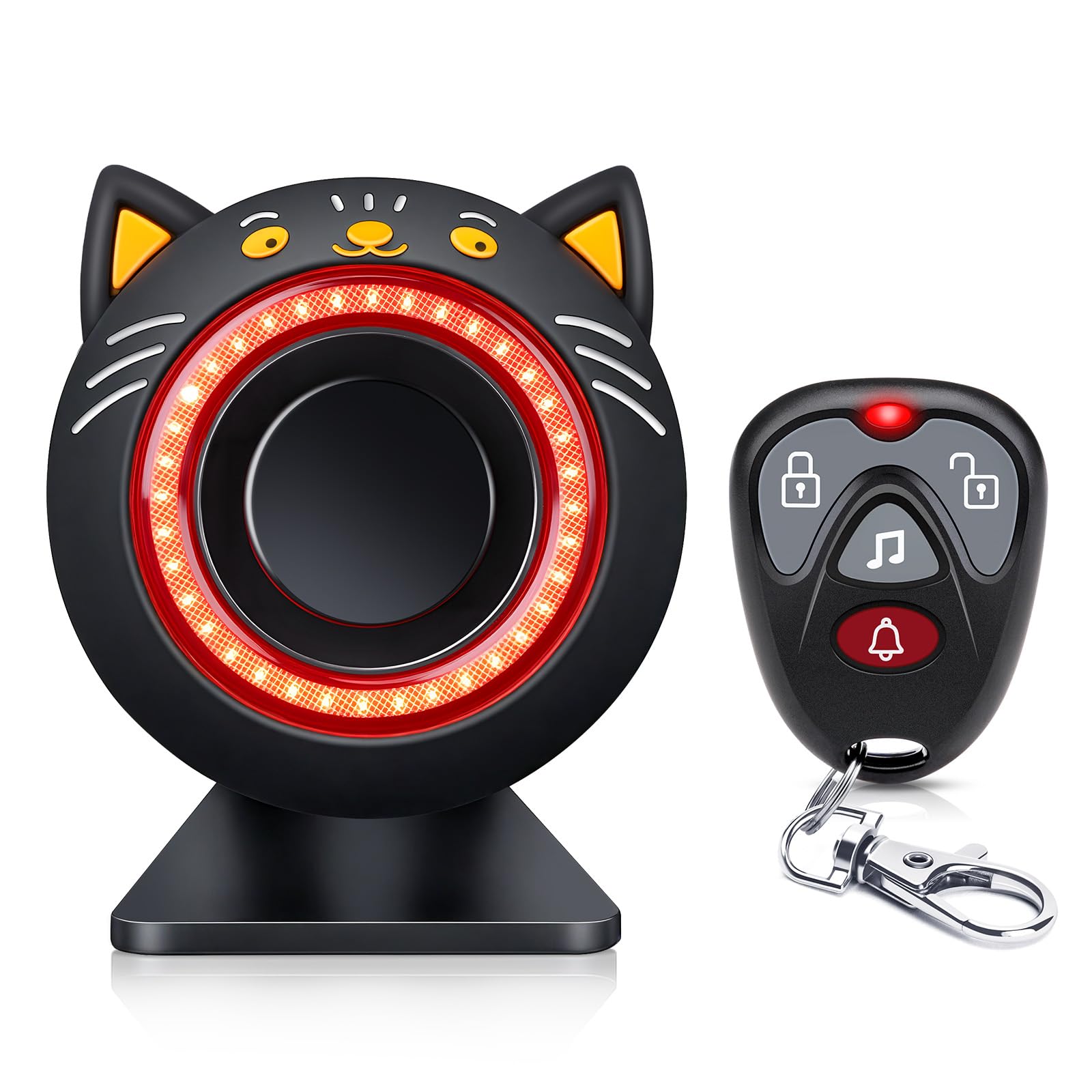
The Electop 120dB alarm takes a fundamentally different approach from the other systems in this guide—it is a self-contained, battery-powered unit that sits inside the cabin and uses a 3D motion sensor to detect intrusion. No wiring, no professional installation, no integration with the vehicle’s electrical system. This makes it ideal for rental cars, vehicles with factory alarm systems that need reinforcement, or owners who want a portable unit they can move between vehicles.
The standout feature is the AI-driven motion sensor that the manufacturer claims reduces false alarms. Owners report that the system does a reasonable job of ignoring light taps while triggering fully on anything resembling a forced entry attempt. The newly upgraded ring-shaped strobe light provides 360-degree visibility, which is a genuine improvement over older single-LED designs. The 120dB siren is confirmably loud—owners describe hearing it from hundreds of feet away, though interior soundproofing does muffle it somewhat.
Battery life is the critical consideration here. The manufacturer claims three months of continuous operation on a full charge, but real-world owner reports suggest approximately two to three weeks before needing a recharge. This is fine for regular drivers who can charge the unit weekly, but it does require remembering to top it off. The cat-shaped design is polarizing—some find it charming, others wish for a more discreet appearance. The charging port is hidden under the face cover, which keeps the unit looking clean when mounted.
What works
- Zero-wire installation, fully portable
- AI motion sensor reduces nuisance triggers
- 120dB siren with 360-degree strobe light
What doesn’t
- Battery lasts 2-3 weeks, not months
- Sound muffled by cabin soundproofing
- Cat-shaped design may not appeal to all owners
7. CHADWICK CW-8101 Car Horn Siren Alarm
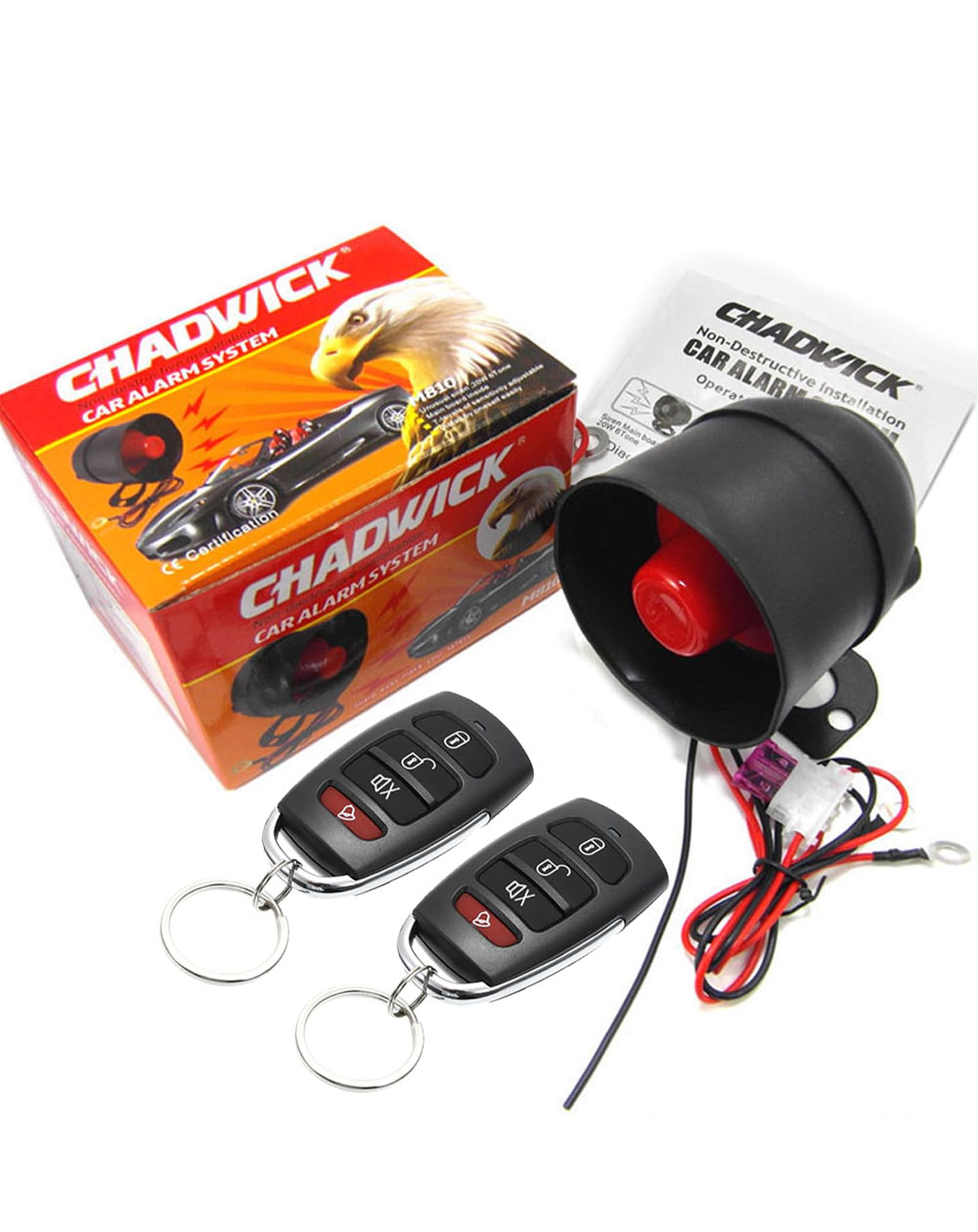
The CHADWICK CW-8101 is the most budget-friendly hardwired alarm in this lineup, designed for owners who want basic vibration detection without the complexity of a full security system. The two-wire installation—positive and ground—is genuinely simple, and the main control unit is compact enough to hide behind the dashboard or under a seat. The system includes two remote controls and a 110dB siren that triggers when the vibration sensor detects a disturbance.
Owner feedback highlights the 7-level sensitivity adjustment as both a strength and a learning curve. Set too high, the alarm triggers on passing trucks and nearby thunder. Set too low, a solid door slam won’t activate it. Experienced owners recommend starting at level 6 for door trigger detection and adjusting downward if false alarms become an issue. The remote range is adequate for driveways and small parking lots, though dense urban environments reduce it noticeably.
Long-term reliability reports are generally positive, with several owners reporting one to two years of trouble-free operation. The unit uses a standard 12V DC connection with a static current draw of only 10mA, making it suitable for vehicles that sit for extended periods without draining the battery. The main compromises are the lack of an engine immobilizer, no keyless entry integration, and the siren is mounted internally so it is less effective than an external horn for attracting attention from a distance.
What works
- Extremely simple two-wire installation
- 7-level sensitivity allows fine-tuning
- Ultra-low 10mA standby current drain
What doesn’t
- No engine immobilizer or keyless entry
- Internal siren is muffled by cabin insulation
- Sensitivity calibration can be frustrating
Hardware & Specs Guide
Decibel Ratings and Real-World Loudness
Siren output is measured in decibels (dB) on a logarithmic scale, meaning a 3dB increase represents roughly double the sound energy. A 110dB siren is comparable to a live rock concert or a car horn at close range, while 120dB sits at the threshold of physical discomfort for most listeners. However, the siren’s mounting location, vehicle soundproofing, and whether it is a piezo or electromagnetic design all affect how the alarm sounds from outside the vehicle. External sirens mounted in the engine bay with a downward-facing horn produce the most effective deterrence.
Shock Sensors: Single-Stage vs. Dual-Stage
A single-stage shock sensor triggers the full alarm as soon as vibration exceeds a preset threshold. A dual-stage sensor issues a warning chirp (stage one) at lower vibration levels, then triggers the full siren (stage two) only if the vibration continues or intensifies. Dual-stage sensors dramatically reduce false alarms from wind, passing traffic, and parking lot bumps. Most mid-range and premium systems in this guide use dual-stage sensors, while budget options rely on single-stage detection that requires careful sensitivity tuning.
Engine Immobilization vs. Starter Interrupt
Both features prevent the vehicle from starting while the alarm is armed, but they work differently. Engine immobilization (found on the Viper 3100V and BANVIE) communicates with the vehicle’s ECU or ignition system to disable starting on a digital level. Starter interrupt (found on the Avital 3100LX) physically cuts the starter wire using a relay. Both are effective, but immobilization is harder for thieves to bypass because it doesn’t rely on a visible relay that can be jumped.
Remote Frequency and Range
Most aftermarket car alarms operate on the 433.92 MHz ISM band, which offers a good balance of range and penetration through building materials. Range specifications (from 196 feet to 2,300 feet in this guide) are measured in open-field conditions with a clear line of sight. Real-world range inside parking structures, through multiple walls, or behind metal barriers can drop to 20-50% of the advertised figure. Buyers who park in underground garages should prioritize systems with longer advertised ranges.
FAQ
Can I install a car alarm myself without electrical experience?
What is the difference between a 1-way and a 2-way car alarm?
Will a car alarm drain my battery when the vehicle is parked?
Do car alarms actually prevent theft or just deter it?
Final Thoughts: The Verdict
For most buyers, the best car intruder alarms winner is the Viper 3100V because it combines proven two-stage shock detection with a reliable engine immobilizer at a price that undercuts premium competitors while outperforming budget alternatives. If you want integrated remote start and maximum remote range, grab the Crimestopper SP-402. And for a no-wire, portable solution that works in any vehicle, nothing beats the Electop 120dB.

Certification: BSc in Mechanical Engineering
Education: Mechanical engineer
Lives In: 539 W Commerce St, Dallas, TX 75208, USA
Md Amir is an auto mechanic student and writer with over half a decade of experience in the automotive field. He has worked with top automotive brands such as Lexus, Quantum, and also owns two automotive blogs autocarneed.com and taxiwiz.com.