Direct injection delivers better fuel economy and power, but it comes with a hidden cost: carbon deposits build up on intake valves because there is no fuel spray washing over them. Over time, those deposits rob your engine of performance, throttle response, and efficiency. The right fuel additive can slow or reverse that buildup, but only if you pick one formulated for the unique demands of a GDI engine.
I’m Amir — the founder and writer behind Four Wheel Ask. My analysis combines deep specification research with verified owner feedback to identify the most effective fuel additives for modern GDI powertrains.
Thorough market analysis of real owner data reveals the best fuel additive for gdi engines fights carbon buildup better than standard cleaners available on store shelves today.
How To Choose The Best Fuel Additive For GDI Engines
Not every bottle on the shelf is designed for the unique carbon problem that GDI engines face. The detergents that work well in port-injected engines may not reach the intake valves in a direct-injection setup. Understanding a few key formulation details will help you avoid wasting money on additives that simply cannot do the job.
PEA vs. PIBA Detergent Chemistry
Polyether Amine (PEA) is the gold standard for cleaning GDI intake valves because it survives high combustion temperatures and continues to clean as it passes through the combustion chamber. Polyisobutylene Amine (PIBA) works best in the intake tract but does not handle the heat of a GDI combustion chamber as well. Any additive you consider for a GDI engine should list PEA as its primary active detergent.
Concentration and Treatment Volume
The concentration of PEA in the bottle determines how aggressively it cleans. A maintenance formula with a lower PEA concentration works well when used every oil change, while a high-concentration “shock” treatment can knock off heavier deposits in a single tank. Check the label for the percentage of PEA, not just marketing terms like “high performance” or “professional grade.”
Compatibility With Your Engine Family
Some additives include extra lubricants or corrosion inhibitors that matter more in certain platforms. Turbocharged GDI engines tend to run hotter and may benefit from a formula that also addresses fuel system lubrication. Naturally aspirated GDI engines are less demanding but still need a high-temperature stable detergent to keep the intake valves clean over the long haul.
Quick Comparison
On smaller screens, swipe sideways to see the full table.
| Model | Category | Best For | Key Spec | Amazon |
|---|---|---|---|---|
| BG 44K Platinum (2-Pack) | Premium Cleaner | Heavy carbon removal in one treatment | PEA-based, 11 oz per bottle | Amazon |
| Liqui Moly Jectron (2-Pack) | Injection Cleaner | Fuel injector and valve maintenance | PEA-based, 300 ml per bottle | Amazon |
| Lucas Oil Fuel Injector Cleaner (12-Pack) | Bulk Value Cleaner | Ongoing maintenance for multiple vehicles | PEA-based, 5.25 oz per bottle | Amazon |
| Liqui Moly Truck Series Gas System Cleaner | System Cleaner | Complete fuel system cleaning on a budget | PEA-based, 500 ml per bottle | Amazon |
| Opti-Lube XPD All-Season Diesel Additive (Gallon) | Diesel Additive | Diesel engine lubrication and deposit control | Treats 512 gallons, demulsifier formula | Amazon |
In‑Depth Reviews
1. BG 44K Platinum (2-Pack)

BG 44K has been a reference point in professional fuel system cleaning for decades, and the Platinum version is formulated specifically for modern direct-injection platforms. The PEA chemistry in this bottle is aggressive enough to break down baked-on carbon deposits that accumulate on GDI intake valves, which is the primary failure point for these engines. Owner reports consistently describe noticeable improvements in idle smoothness and throttle response after a single treatment, often within the first tank of fuel.
The two-pack format gives you a full system clean and a follow-up maintenance dose at a reasonable per-treatment cost. BG stamps a born-on date on each can, which reflects real attention to shelf-life management — PEA degrades over time, so fresh chemistry matters. The formula also includes corrosion inhibitors and a stabilizer that helps reduce engine knock tendencies in higher-mileage GDI engines.
On the downside, the treatment interval is shorter than some competing products because the concentration is high enough that you should not use it every fill-up. Overuse can dilute engine oil if you add it too frequently, so sticking to the recommended 3,000 to 5,000 mile schedule is important. For owners who want a proven, shop-grade cleaner without stepping into a dealership, this is the strongest option available.
What works
- High PEA concentration cuts through heavy valve deposits in one treatment
- Born-on date ensures fresh chemistry and reliable performance
- Noticeable improvement in idle quality and throttle response reported by owners
What doesn’t
- Cannot be used at every fill-up; requires 3,000 to 5,000 mile intervals
- Premium pricing compared to basic fuel system cleaners
2. Liqui Moly Jectron (2-Pack)

Liqui Moly Jectron is a PEA-based fuel injection cleaner that targets both the fuel injectors and the intake valves in GDI engines. The two-pack format gives you a reasonable supply for consecutive treatments, which is the recommended approach for engines that already have visible carbon buildup. Owner data suggests that a two-treatment cycle — one bottle per full tank, back to back — delivers the best cleaning results on engines with more than 40,000 miles.
The formulation is designed to lower fuel consumption as it cleans, which makes sense because carbon deposits disrupt the air-fuel mixture and force the engine to compensate with more fuel. Many owners report a return to factory fuel economy figures after the second treatment, along with smoother idling and better throttle response. The PEA content is high enough to be effective but not so aggressive that it risks damaging fuel system seals or injector tips.
One limitation is that the 300 ml bottle treats a smaller fuel tank volume than some competitors, so larger vehicles with 20-gallon or bigger tanks may need two bottles per treatment to reach the recommended concentration. The price per bottle is modest, but the effective cost per treatment can add up if you drive a full-size SUV or truck with a GDI engine. For compact and midsize GDI cars, this is a very effective maintenance option.
What works
- PEA chemistry effectively cleans injectors and intake valves in GDI engines
- Owners report restored fuel economy after a two-treatment cycle
- Smooth idle and improved throttle response are consistently noted
What doesn’t
- Small bottle size requires multiple units for larger fuel tanks
- Best results require back-to-back treatments on higher-mileage engines
3. Lucas Oil Fuel Injector Cleaner (12-Pack)

Lucas Oil is a familiar name in the automotive additive space, and this fuel injector cleaner uses PEA chemistry to address deposits in both the injectors and the combustion chamber. The 12-pack format is aimed at owners who want to stock up for multiple vehicles or establish a consistent maintenance schedule without reordering every month. Each 5.25-ounce bottle treats a standard fuel tank, making it easy to dose on a regular basis.
The formulation includes lubricity additives that help protect high-pressure fuel pumps, which is a smart addition for GDI engines that put significant stress on the pump. Owner feedback indicates that the cleaner works well as a maintenance product — it prevents new deposits from forming rather than aggressively removing thick existing carbon. For drivers who stay on top of their maintenance, this approach keeps the intake valves in good shape over the long term.
The main trade-off is the relatively low concentration of PEA compared to shock-treatment products like BG 44K. If your engine already has noticeable carbon buildup symptoms — rough idle, reduced power, or higher fuel consumption — this Lucas formula may not be strong enough to fully clean the valves in one go. It works best as a preventive maintenance tool rather than a restorative cure for neglected engines.
What works
- PEA formula with added lubricity agents protects high-pressure fuel pumps
- Excellent value for owners who want to run a cleaner every oil change
- Convenient 12-pack format reduces per-bottle cost significantly
What doesn’t
- Lower PEA concentration struggles with heavy existing carbon deposits
- Not designed as a single-treatment shock cleaner for neglected engines
4. Liqui Moly Truck Series Complete Gasoline System Cleaner

The Liqui Moly Truck Series Complete Gasoline System Cleaner is a 500 ml PEA-based formula that cleans the injection system, intake valves, and combustion chamber in a single treatment. Despite the “Truck Series” name, the formulation is fully compatible with gasoline GDI engines in passenger cars and SUVs. The larger bottle volume gives you more cleaning agent per dollar compared to smaller 300 ml options, making it a strong value pick for regular maintenance.
This cleaner also includes corrosion inhibitors that protect the entire fuel system from moisture-related damage, which is a relevant feature for vehicles that sit for extended periods or experience seasonal temperature swings. Owner reports highlight the smooth idle and reduced exhaust emissions after treatment, which aligns with the product claim that it normalizes fuel compensation values. The 500 ml bottle treats up to 20 gallons of fuel, so it works well for larger tanks without needing a second bottle.
On the downside, the PEA concentration is formulated for complete system cleaning rather than aggressive valve deposit removal, so it works best as a maintenance product rather than a heavy-duty decarbonizer. Engines with severe carbon buildup may require multiple consecutive treatments to achieve the same results that a higher-concentration product delivers in one dose. For owners who clean their fuel system every 5,000 to 7,000 miles, this is a cost-effective and reliable choice.
What works
- Larger 500 ml bottle treats up to 20 gallons in a single dose
- Corrosion inhibitors protect fuel system components during storage periods
- Owners report cleaner idle and reduced emissions after treatment
What doesn’t
- Moderate PEA concentration struggles with heavy valve deposits
- Multiple treatments may be needed for neglected or high-mileage engines
5. Opti-Lube XPD All-Season Diesel Fuel Additive (Gallon)
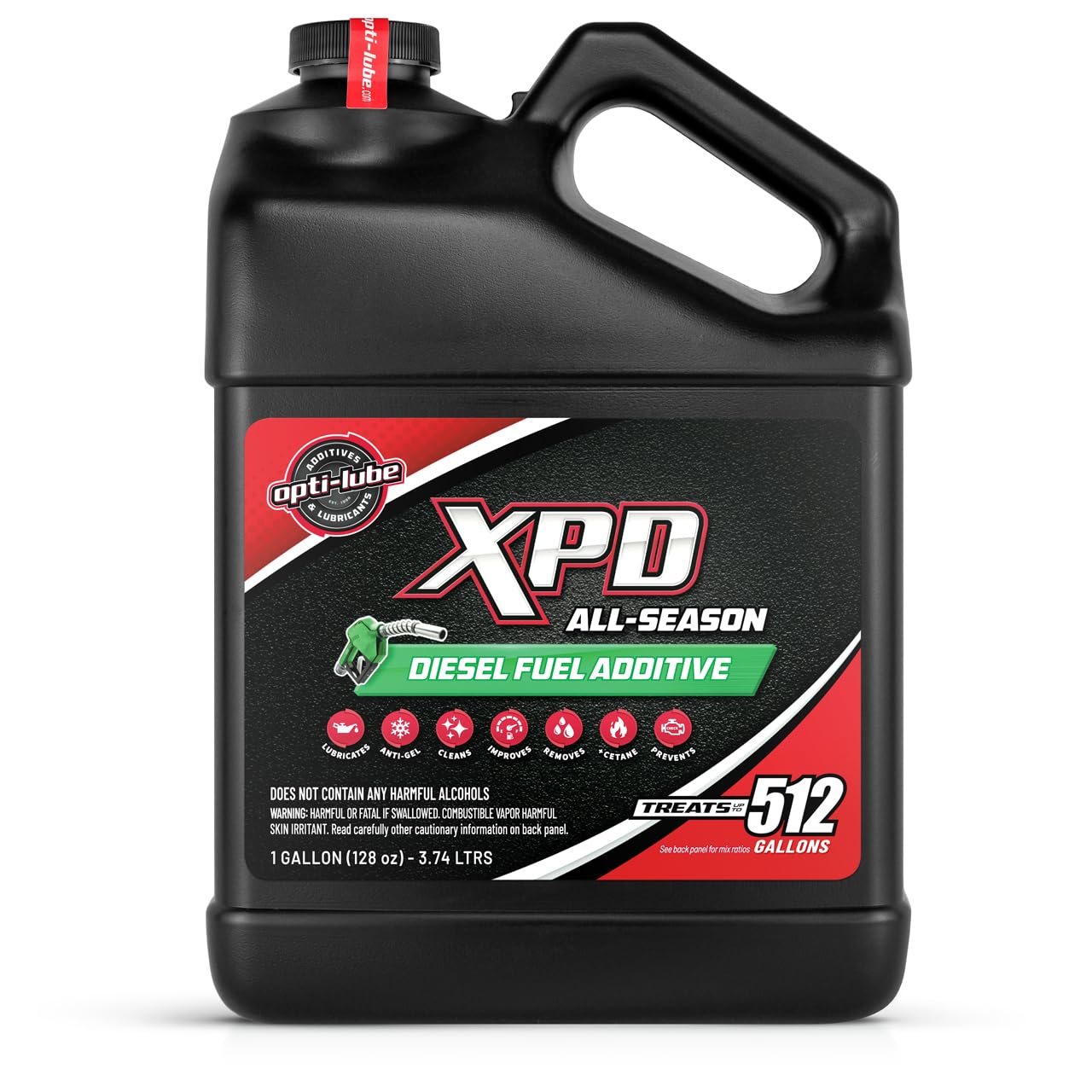
Opti-Lube XPD is a diesel-specific fuel additive formulated for use with ultra-low-sulfur diesel (ULSD) fuel. It is not designed for gasoline GDI engines and should only be used in diesel-powered vehicles. The product focuses on restoring lubricity to modern diesel fuel, which helps protect injection pumps and injectors from wear. It also includes a demulsifier that separates water from diesel fuel to prevent corrosion in the fuel system.
The gallon container treats up to 512 gallons of diesel fuel, which makes it a cost-effective option for owners of diesel trucks, farm equipment, or construction vehicles. The formula also provides anti-gel protection down to -10°F, which is useful for cold-weather operation. Owner feedback from the diesel community emphasizes the improvement in fuel economy and the reduction in injector noise after regular use.
It is important to note that this product is not compatible with gasoline GDI engines. Adding a diesel additive to a gasoline fuel system can cause damage to injectors, oxygen sensors, and catalytic converters. This listing is included for diesel vehicle owners who search for fuel additives and want a high-quality option for their diesel engine maintenance routine.
What works
- Excellent lubricity restoration for ULSD fuel in diesel engines
- High treatment volume saves money per gallon of fuel treated
- Anti-gel properties keep fuel flowing in winter conditions
What doesn’t
- Designed exclusively for diesel engines — do not use in gasoline GDI engines
- Gallon container is bulky and may be excessive for occasional users
Hardware & Specs Guide
PEA Concentration Percentage
The percentage of Polyether Amine in the bottle determines cleaning strength. Maintenance formulas typically contain 10 to 20 percent PEA, while high-concentration shock treatments can reach 40 percent or more. Check the Safety Data Sheet (SDS) for the exact percentage rather than relying on label claims.
Carrier Oil Composition
The carrier oil that suspends the PEA matters because it affects how the additive behaves in the combustion chamber. A light mineral oil carrier evaporates cleanly, while heavier carriers may leave their own residue. The best GDI additives use a carrier that fully burns away without contributing to deposit formation.
Treatment Volume Per Bottle
Bottles range from 5.25 ounces to 500 ml or more. A larger bottle is not always better if the concentration is low. Multiply the bottle volume by the PEA percentage to get the actual cleaning agent dose. A smaller high-concentration bottle can outperform a larger low-concentration bottle.
Corrosion and Lubricity Additives
Some GDI additives include extra components that protect the high-pressure fuel pump and fuel rails from wear. These additives are especially valuable in turbocharged GDI engines that run hotter and place more stress on the fuel system. Look for formulations that mention corrosion inhibition or fuel pump lubrication.
FAQ
Do fuel additives actually work on GDI engines?
How often should I use a fuel additive in my GDI engine?
Can a fuel additive fully clean GDI intake valves without media blasting?
What is PEA and why is it better for GDI engines?
Final Thoughts: The Verdict
For most buyers, the best fuel additive for gdi engines winner is the BG 44K Platinum because its high PEA concentration delivers real carbon removal in a single treatment that owners can feel. If you want a budget-friendly maintenance option you can run every oil change, grab the Liqui Moly Truck Series Gas System Cleaner. And for a solid injector and valve maintenance routine on compact and midsize GDI cars, nothing beats the Liqui Moly Jectron for consistency and value.

Certification: BSc in Mechanical Engineering
Education: Mechanical engineer
Lives In: 539 W Commerce St, Dallas, TX 75208, USA
Md Amir is an auto mechanic student and writer with over half a decade of experience in the automotive field. He has worked with top automotive brands such as Lexus, Quantum, and also owns two automotive blogs autocarneed.com and taxiwiz.com.