Road noise, wind buffeting, and panel vibrations turn a peaceful commute into a fatiguing ordeal. The right sound deadening transforms your car interior into a sanctuary, reducing outside intrusion and letting your audio system perform at its best.
I’m Amir — the founder and writer behind Four Wheel Ask. My approach relies on comparing material composition data, analyzing adhesive performance across temperature ranges, and studying hundreds of owner reports to identify which products deliver lasting results.
After evaluating material composition, installation ease, and real-world owner feedback, the best car door soundproofing options prioritize butyl rubber formulations and adequate surface coverage.
How To Choose The Best Car Door Soundproofing
Selecting the right sound deadener for your car doors comes down to understanding material composition, thickness, and the specific noise issues you want to address. Below are the key factors that separate effective products from those that underdeliver.
Material Type: Butyl Rubber vs. Closed-Cell Foam
Butyl rubber-based mats add mass to panels, converting vibrational energy into low-level heat and stopping resonance at the source. Closed-cell foam, by contrast, absorbs airborne noise and provides thermal insulation. Many effective door treatments combine a butyl layer for damping with a foam layer for absorption. Products using asphalt-based compounds should be avoided in warm climates, as they can soften and drip over time.
Thickness and Coverage Requirements
Thickness directly influences low-frequency damping capability. Materials in the 50 to 80 mil range work well for general noise reduction, while 120 mil options provide maximum vibration control for demanding audio setups. For a standard car door, plan on roughly 3 to 4 square feet per door for a single layer, and double that if you intend to apply both an inner and outer skin layer. Buying in bulk reduces per-square-foot cost.
Adhesive Quality and Installation Ease
Premium butyl formulations maintain adhesion across temperature extremes from freezing winters to hot summer interiors. Peel-and-stick application simplifies installation, but surface preparation—cleaning with isopropyl alcohol and using a roller to ensure full contact—makes the difference between lasting results and panels that eventually sag. Pre-cut kits save time for specific vehicles, while sheets allow custom coverage.
Brand Reputation and Warranty
Established brands with decades of production data and consistent formulation quality offer reliable performance. Products made in the USA or Europe often face tighter quality controls. Customer review patterns revealing adhesion failures or odor issues after several months are red flags that outweigh positive first-impression ratings.
Quick Comparison
On smaller screens, swipe sideways to see the full table.
| Model | Category | Best For | Key Spec | Amazon |
|---|---|---|---|---|
| Siless Max 120 mil | Sound Deadening Mat | Maximum noise reduction | 120 mil / 30 sqft | Amazon |
| Dynamat Xtreme Door Kit | Door Kit | Pre-cut door installation | 12 sqft / 2-door kit | Amazon |
| Dynamat Xtreme Single Sheet | Sound Deadening Sheet | Proven brand performance | 4 sqft per sheet | Amazon |
| CANOPUS 50 mil | Sound Deadening Mat | Value and performance | 50 mil / 18 sqft | Amazon |
| FatMat 100 sqft Bulk | Bulk Sound Deadening | Large coverage projects | 100 sqft / 50 mil | Amazon |
| GOSCHE 394 mil | Foam Sound Deadener | Thermal and noise insulation | 10mm thick / 16 sqft | Amazon |
| uxcell Acoustic Foam | Acoustic Foam | Affordable entry point | 16 sqft / foam material | Amazon |
In‑Depth Reviews
1. Siless Max 120 mil 30 sqft Car Sound Deadening Mat

The Siless Max 120 mil stands apart from most competitors by using a Bmastic formulation that delivers industrial-grade damping without the industrial price tag. At 120 mils thick, this material targets low-frequency road noise and panel resonance more aggressively than thinner alternatives. The 30 square feet of coverage in a single package is enough to treat all four doors with material left over for the trunk floor or rear deck.
Owner feedback consistently highlights the easy peel-and-stick application process and the material’s ability to conform to compound curves without lifting. The butyl-based composition remains pliable during installation yet firms up once rolled, creating a permanent bond that resists heat softening even in vehicles parked under direct sun. Users pairing this with upgraded audio systems report noticeably tighter bass response and reduced distortion at higher volumes.
One area where Siless deliberately cut cost is the omission of an installation roller, so you will need to supply your own or use a plastic trim tool to ensure full adhesion. The 120 mil thickness also adds measurable weight, which is a consideration for fuel-conscious owners. For those prioritizing maximum noise reduction per dollar, this remains the most compelling package in the segment.
What works
- Excellent low-frequency damping from the thick 120 mil butyl layer
- Generous 30 sqft coverage fits most sedans completely
- Strong adhesive that holds well across temperature ranges
What doesn’t
- No installation roller included in the package
- Adds noticeable weight compared to thinner mats
2. Dynamat Xtreme Sound Deadening Door Kit 10435

Dynamat Xtreme is the benchmark that every other sound deadener is measured against, and the 10435 Door Kit exemplifies why the brand has dominated this category since 1989. This kit delivers four pre-cut sheets measuring 12 by 36 inches each, totaling 12 square feet of coverage specifically sized for two standard car doors. The butyl rubber formulation is proprietary and has been refined over decades to balance damping performance with ease of handling.
The pre-cut dimensions reduce installation time significantly because you avoid the measuring and trimming that sheet goods require. Each piece is designed to cover the outer door skin with ample material to address the inner panel as well. The adhesive uses a thick, aggressive tack that bonds instantly to clean metal, and the 0.07-inch thickness keeps added weight minimal while still providing meaningful vibration control. Professional installers and custom builders consistently choose Dynamat for builds where long-term reliability is non-negotiable.
The trade-off for this convenience is a higher cost per square foot compared to bulk rolls or generic alternatives. If you are treating a full vehicle beyond just the doors, the per-panel pricing becomes harder to justify. Additionally, the 0.07-inch thickness is thinner than premium competitors in the 80 to 120 mil range, so owners seeking maximum damping for high-SPL audio systems may need to double-layer. For standard noise reduction on a daily driver, this kit delivers proven, predictable results.
What works
- Pre-cut sheets save significant installation time and waste
- Proven proprietary butyl formulation with decades of field data
- Made in the USA with consistent quality control
What doesn’t
- Higher per-square-foot cost versus bulk alternatives
- Thinner than premium damping mats from competitors
3. Dynamat Xtreme Single Sheet Hex Pack 10425

The Dynamat Xtreme 10425 Hex Pack offers the same trusted butyl rubber formulation as the door kit but in a single 18 by 32-inch sheet covering 4 square feet. This format is ideal for owners who want to start with a single door, test the product, or patch specific problem areas like the firewall or rear deck. The hex pattern on the aluminum facing adds surface grip and reduces the risk of the material shifting during installation.
Installation simplicity is a hallmark of this product line. The peel-and-stick backing exposes a tacky butyl layer that adheres aggressively to clean metal, plastic, and painted surfaces. A handheld roller ensures full contact, and the material remains workable for repositioning within the first few minutes. The 0.2-centimeter thickness is consistent across every sheet, which matters when you need predictable damping performance across multiple panels. Users report immediate door-sound improvement, with the hollow thud of a bare door becoming a solid, muted tone.
Because this is a single sheet, the value proposition diminishes if you need to cover multiple doors or a large area. The cost per square foot is higher than bulk options, and the 4-square-foot coverage means treating a full vehicle requires purchasing multiple packs. For targeted applications where only the Dynamat brand reputation and formulation consistency will do, this sheet is the correct building block.
What works
- Industry-standard butyl formulation with proven long-term performance
- Easy to cut and position with simple peel-and-stick installation
- Hex pattern facing reduces slipping during application
What doesn’t
- Only 4 sqft per pack — multiple packs needed for full coverage
- Higher cost per square foot compared to bulk rolls
4. CANOPUS 50 mil 18 sqft Sound Deadening Mat

The CANOPUS 50 mil sound deadener targets the sweet spot between affordability and effective damping. At 50 mils thick, this butyl mat provides sufficient mass to control panel resonance and reduce road noise without the weight penalty of thicker materials. The 18-square-foot pack contains nine sheets, each sized conveniently for cutting and fitting into door cavities, floor pans, and trunk panels.
Installation feedback from owners emphasizes the clean, mess-free application process. The butyl formulation does not leave sticky residue on hands or tools, and the material cuts cleanly with standard scissors or a utility knife. When applied to a properly cleaned surface and rolled firmly, the adhesion holds reliably through seasonal temperature changes. Users note that the 50-mil thickness is pliable enough to press into contoured panels without preheating, which speeds up the workflow on complex door shapes.
The main limitation is that 50 mils, while adequate for general noise reduction, will not deliver the same low-frequency suppression as 80 or 120 mil materials. Owners with high-performance audio systems or extreme road noise issues may need to double-layer for satisfactory results. For the typical driver seeking a noticeable improvement in cabin quietness without overspending, this is a balanced choice.
What works
- Great balance of cost and performance for daily drivers
- Clean installation with no sticky residue on tools
- Easy to cut and conforms well to curved panels
What doesn’t
- 50 mil thickness requires layering for maximum noise reduction
- Not ideal for high-SPL audio applications alone
5. FatMat Self-Adhesive 100 Sqft Sound Deadener Bulk Pack
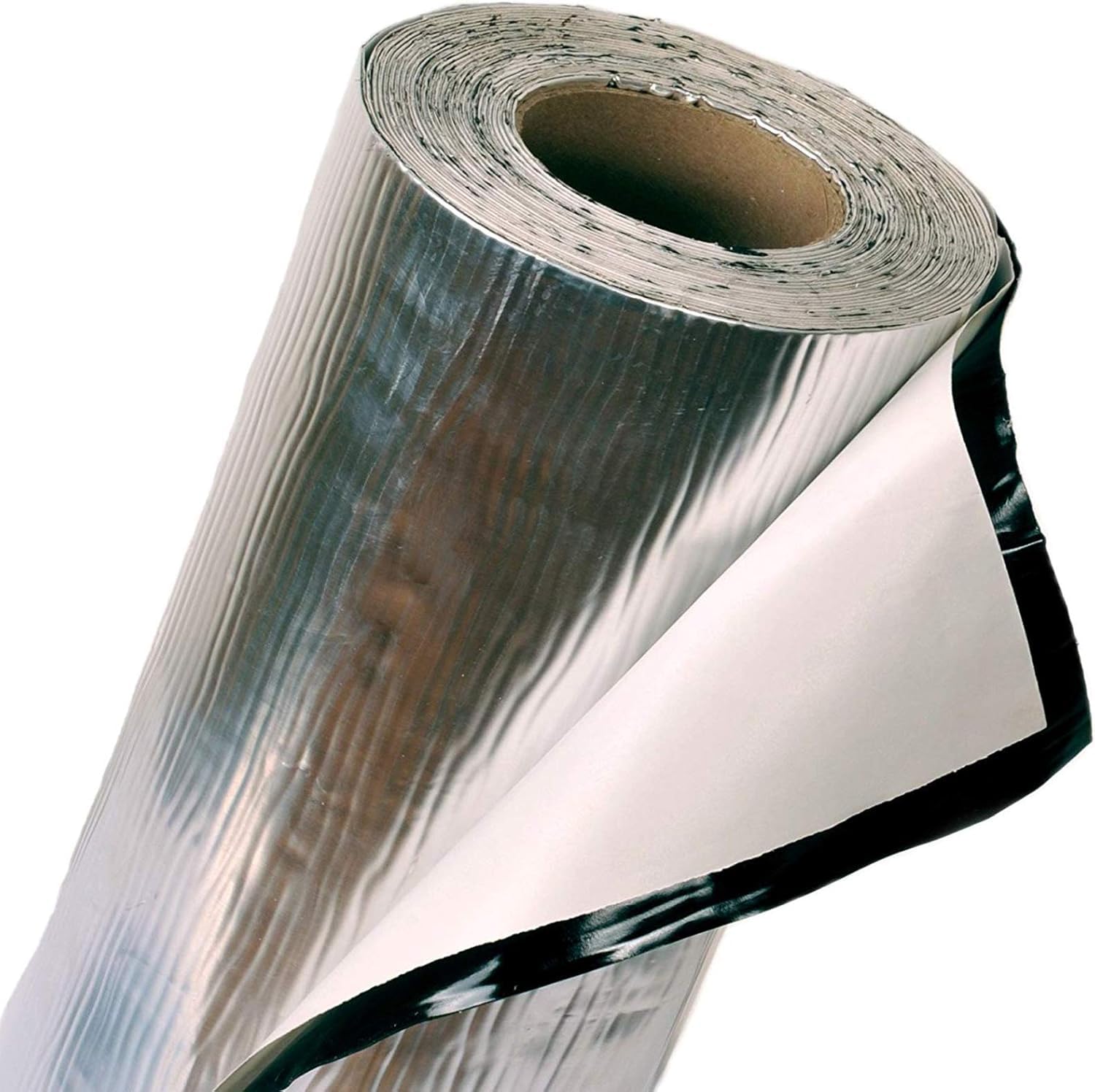
FatMat’s 100-square-foot bulk pack is purpose-built for owners tackling full-vehicle soundproofing projects. At 50 mils nominal thickness, this aluminum-faced asphalt-free deadener provides consistent damping across large surface areas. The 18-inch-wide roll format delivers 804 linear inches of material, which translates to complete coverage for doors, floor, trunk, and rear deck in most sedans and SUVs with generous leftovers for error or double-layering.
The included install kit sets this apart from most bulk options. FatMat supplies a roller, cutting knife, and easy-to-follow instructions, so you have everything needed to begin immediately. The self-adhesive backing uses a pressure-sensitive formulation that bonds firmly to clean metal and plastic. Owners working on larger vehicles appreciate not having to make separate purchases for application tools. The material cuts cleanly and can be layered for increased thickness in high-noise areas like wheel wells.
The 50-mil thickness, while economical for wide coverage, means this material is competing with thinner options in the damping category. For maximum resonance control on thin door skins, a thicker butyl mat in the 80 to 120 mil range will outperform FatMat per layer. The asphalt-free formulation is a plus for odor sensitivity, but the aluminum facing can be noisy to handle during installation. For large-scale projects where budget per square foot is the primary driver, this pack delivers exceptional value.
What works
- Massive 100 sqft coverage at an excellent per-square-foot cost
- Includes roller, knife, and instructions for immediate installation
- Asphalt-free formulation with minimal odor concerns
What doesn’t
- 50 mil thickness requires layering for heavy damping needs
- Aluminum facing can be loud and crinkly during installation
6. GOSCHE 394 mil 16 sqft Sound Deadener Mat

The GOSCHE 394 mil sound deadener approaches noise control from a different angle than traditional butyl mats. Rather than adding mass to dampen resonance, this 10-millimeter-thick closed-cell foam absorbs airborne noise and provides substantial thermal insulation. The 16-square-foot pack contains 15 pre-cut pieces sized at 9.8 by 15.7 inches, making it straightforward to install on flat interior panels like doors, floors, and the firewall.
The dual-function design appeals to owners who want to reduce road noise while also managing cabin temperature. The foam structure blocks engine and exhaust heat in summer and retains warmth in winter, adding comfort beyond what mass-loaded deadeners provide. Installation follows the same peel-and-stick method, and the material compresses easily to fit into tight spaces. Users report that the 10mm thickness feels substantial and creates a noticeable barrier against tire roar and wind noise when applied to door cavities.
The limitation of this approach is that closed-cell foam does not address panel resonance the way butyl rubber does. If your primary complaint is door panel vibration or rattling from speaker bass, this material alone will not solve it. It works best as a second-layer absorber over a butyl damping mat. Additionally, the foam’s thickness can interfere with door panel reinstallation on some vehicles, requiring careful trimming or selective placement.
What works
- Excellent thermal insulation alongside noise absorption
- Thick 10mm foam creates a substantial barrier
- Easy peel-and-stick installation on flat surfaces
What doesn’t
- Does not dampen panel resonance or vibration effectively
- Thickness may cause fitment issues with door panels
7. uxcell Studio Sound Acoustic Absorption Foam 16 sqft

The uxcell Studio Sound deadener is a cotton-blend acoustic foam liner designed for broad-spectrum noise absorption rather than mass damping. The 19.7 by 118-inch roll covers 16 square feet, offering flexible coverage for doors, hoods, ceilings, and trunk compartments. This material is engineered to handle both heat insulation and noise reduction, making it a versatile option for owners addressing multiple cabin comfort issues simultaneously.
One of the standout characteristics is the material’s resistance to moisture and oil, which polyurethane foam absorbers cannot match. The closed-cell structure does not absorb water, preventing mold growth and long-term degradation in damp door cavities. It also resists petrol and oil exposure, which matters when applied near engine bays or fuel system areas. Users applying this as a hood liner report noticeable reductions in engine bay noise transfer and heat soak into the cabin.
The trade-off for these properties is that cotton-blend foam lacks the mass needed for significant vibration damping. Owners using this as a standalone door treatment will still hear panel resonance unless they pair it with a butyl layer underneath. The adhesive backing is functional but not as aggressive as premium butyl mats, and some users report the need to supplement with spray adhesive on vertical surfaces over time. For budget-conscious shoppers seeking a multi-role absorber, this fills a specific niche.
What works
- Moisture and oil resistant — no water absorption or mold risk
- Provides both thermal insulation and noise absorption
- Flexible roll format adapts to multiple vehicle areas
What doesn’t
- Lacks mass for effective vibration and resonance damping
- Adhesive may weaken on vertical surfaces over time
Hardware & Specs Guide
Butyl Rubber vs. Closed-Cell Foam
Butyl rubber mats function as constrained-layer dampers: they add mass to a panel, and when the panel vibrates, the butyl layer shears internally converting kinetic energy into heat. This directly reduces resonance at the source. Closed-cell foam, by contrast, traps air in sealed pockets and absorbs airborne sound waves as they pass through the material. Foam also provides thermal resistance (R-value) that butyl does not. The most effective door treatments use a butyl base layer for damping topped with a foam layer for absorption and insulation. Products thinner than 50 mils generally underperform on resonance control; 80 mils is the practical minimum for noticeable door improvement.
Coverage Calculation
A standard sedan door panel requires roughly 3 to 4 square feet per door for a single inner-skin layer. Double that to 6 to 8 square feet per door if you plan to treat both the outer skin and the inner panel. The rear deck and trunk floor add another 10 to 15 square feet. For a four-door sedan with trunk, budget for 28 to 40 square feet total. Buying a 30 to 50 square foot pack gives you room for error and allows double-layering on the front doors where road noise is most intrusive. Overshooting coverage by 15 percent is cheaper than running short mid-project.
Temperature Tolerance
Butyl rubber formulations vary significantly in their high-temperature performance. Premium compounds maintain adhesion and dimensional stability up to 300°F, while lower-cost asphalt blends can soften and drip above 180°F. In vehicles parked in direct sunlight, interior door cavity temperatures can exceed 160°F, and black-painted vehicles in summer climates push past 200°F. Always verify the temperature range of the adhesive if you live in a hot climate. Foam products generally have wider thermal tolerance but can degrade from UV exposure if not covered by a door panel.
Installation Best Practices
Surface preparation determines more than 80 percent of long-term adhesion success. Clean all target surfaces with isopropyl alcohol at 70 percent or higher concentration to remove oils, dust, and mold release agents. Apply material at room temperature — below 60°F, butyl becomes stiff and will not flow into surface irregularities. Use a roller with firm pressure to ensure full contact across the entire sheet, paying special attention to edges where peeling typically starts. Allow 24 hours for the adhesive to fully cure before reassembling door panels or exposing the vehicle to extreme temperatures.
FAQ
How much sound deadening material do I need for car doors?
What is the difference between butyl rubber and foam sound deadeners?
Can I install sound deadening material myself?
Does sound deadening improve audio quality?
What thickness of sound deadening is best for car doors?
Final Thoughts: The Verdict
For most buyers, the best car door soundproofing winner is the Siless Max 120 mil because it delivers premium-grade damping thickness at a per-square-foot cost that undercuts established brands. If you want pre-cut convenience and a brand with decades of proven performance, grab the Dynamat Xtreme Door Kit. And for budget-conscious owners covering a full vehicle, nothing beats the sheer value of the FatMat 100 sqft Bulk Pack with its included installation tools.

Certification: BSc in Mechanical Engineering
Education: Mechanical engineer
Lives In: 539 W Commerce St, Dallas, TX 75208, USA
Md Amir is an auto mechanic student and writer with over half a decade of experience in the automotive field. He has worked with top automotive brands such as Lexus, Quantum, and also owns two automotive blogs autocarneed.com and taxiwiz.com.