A failing battery on a third-gen Acura TL doesn’t announce itself with subtlety — you get slow cranks, flickering interior lights, or the dreaded click of a starter solenoid with no turnover. The 2006 model year sits in a sweet spot where the charging system demands a precise balance of cold cranking amperage, reserve capacity, and thermal tolerance. Owners who chase the cheapest option often end up replacing the unit again within 18 months, while those who overspec on CCA alone may find their alternator working harder than necessary. The right match lives at the intersection of group size, chemistry type, and real-world driving patterns — not just a price tag or brand badge.
I’m Amir — the founder and writer behind Four Wheel Ask. My work focuses on dissecting product specifications, cross-referencing owner-reported longevity data, and evaluating build quality across multiple price tiers to identify which components actually hold up under daily use.
Reliable starting power matters most. Choosing the best 06 acura tl battery means balancing CCA, reserve capacity, and durability for reliable daily use.
How To Choose The Best 06 Acura TL Battery
The 2006 Acura TL uses a Group Size 47 (H5) battery with a standard top-post configuration. The factory spec calls for roughly 550 to 700 CCA and a reserve capacity above 90 minutes. Going too low on CCA leads to weak cold starts, especially in northern winters. Overshooting CCA without adjusting for alternator load can shorten the battery’s service life. The key is matching the chemistry — flooded or AGM — to how you drive. AGM units handle deeper discharge better and resist vibration, but they cost more and require compatible charging voltage from the alternator. Flooded batteries remain a solid choice for moderate climates with consistent driving patterns. Always verify terminal orientation: positive on the right, negative on the left for this chassis.
CCA, RC, and Group Size Explained
Cold Cranking Amps measure the battery’s ability to start the engine at low temperatures. Reserve Capacity tells you how long the battery can run the electrical system if the alternator fails. Group Size is purely physical — the 47 (H5) footprint measures roughly 9.5 x 6.9 x 7.5 inches. For the TL, a minimum of 600 CCA and 90 RC provides a safe margin for stock electrical loads. Higher CCA helps in freezing conditions but offers no benefit in moderate weather. Owners running aftermarket audio or additional lighting should look for AGM chemistry with higher RC rather than inflated CCA numbers.
Flooded vs. AGM Chemistry
Flooded lead-acid batteries remain the most affordable option and perform well when driven daily. They are sensitive to deep discharge — leaving lights on or short trips can shorten their lifespan significantly. AGM (Absorbent Glass Mat) batteries resist vibration, tolerate deeper discharge cycles, and recharge faster. The TL’s alternator output works with both chemistries, but AGM units require a charging voltage between 14.4 and 15.0 volts for optimal performance. If your alternator is aging or outputs below 14.2 volts, a flooded battery may actually last longer because it doesn’t need the higher absorption voltage. Check your alternator output with a multimeter before deciding.
The Role of the Alternator
The alternator and battery form a closed system. A weak alternator under 13.5 volts at idle will never fully recharge any battery, regardless of brand or price. Conversely, a strong alternator pushing over 14.8 volts can overcharge a flooded battery and cause water loss. The TL’s factory alternator typically outputs 130 amps, which is sufficient for the stock configuration. If you are replacing the battery and the old one failed prematurely, test the alternator output first. A failing alternator will destroy a new battery in weeks. Some owners choose to replace both simultaneously to avoid chasing intermittent electrical gremlins.
Quick Comparison
On smaller screens, swipe sideways to see the full table.
| Model | Category | Best For | Key Spec | Amazon |
|---|---|---|---|---|
| Weize Platinum AGM 94R | AGM Battery | Premium daily driver | 850 CCA / 80 Ah | Amazon |
| Interstate MTX-24F | AGM Battery | Long-life investment | 710 CCA / Pure Lead AGM | Amazon |
| OPTIMA YellowTop DH5 | AGM Battery | Vibration resistance | 700 CCA / Group 47 | Amazon |
| MARXON Group 94R | AGM Battery | Start-stop value | 850 CCA / 80 Ah | Amazon |
| Autocessking H5 Group 47 | AGM Battery | Direct TL fitment | 680 CCA / 60 Ah | Amazon |
| ACDelco Gold AUX14-200 | Auxiliary AGM | Secondary battery role | 200 CCA / 12 Ah | Amazon |
| Weize Platinum AGM 24F | AGM Battery | Higher reserve capacity | 710 CCA / 70 Ah | Amazon |
| Farrme 11099 Alternator | Alternator | Charging system upgrade | 130 Amp / 6-Groove | Amazon |
| Youxmoto YXALT016168 | Alternator | Budget charging fix | 130 Amp / S6 Pulley | Amazon |
In‑Depth Reviews
1. Weize Platinum AGM Battery BCI Group 94R

The Weize Platinum AGM 94R delivers 850 CCA and 80 Ah in a Group 94R (H7) case, making it a strong candidate for TL owners who want starting power that punches above the factory spec. The 140-minute reserve capacity provides considerable runway if the alternator cuts out, and the AGM construction eliminates maintenance while improving vibration resistance over flooded units. Owner reports consistently note that the battery arrived at a usable state of charge, with many installations showing immediate improvement in cranking speed and electrical system stability.
Fitment data shows the 12.4 x 6.89 x 7.48-inch dimensions require the factory hold-down clamp to be adjusted slightly for the longer H7 footprint compared to the stock H5. The tapered terminals match the TL cable ends without modification. Multiple verified buyers report successful installations in Honda and Acura models with the 3.2L and 3.5L V6 engines, noting that the higher CCA provides confident starts even after several days of inactivity. The 36-month warranty adds a layer of protection that budget batteries do not offer.
A small number of owners experienced early failures, but the replacement process was handled promptly under warranty — a sign that the manufacturer stands behind the product. The AGM chemistry requires a charging system output of 14.4 to 15.0 volts; TL owners should verify their alternator voltage before purchasing. For daily drivers seeking a reliable AGM upgrade without paying the premium price of legacy brands, this unit represents a compelling balance of cost and capability.
What works
- High 850 CCA delivers strong cold-weather starts
- 140 RC provides exceptional reserve capacity
- 36-month warranty with responsive customer support
What doesn’t
- H7 length requires hold-down adjustment in Group 47 trays
- AGM charging profile needed for optimal lifespan
2. Interstate Batteries MTX-24F AGM
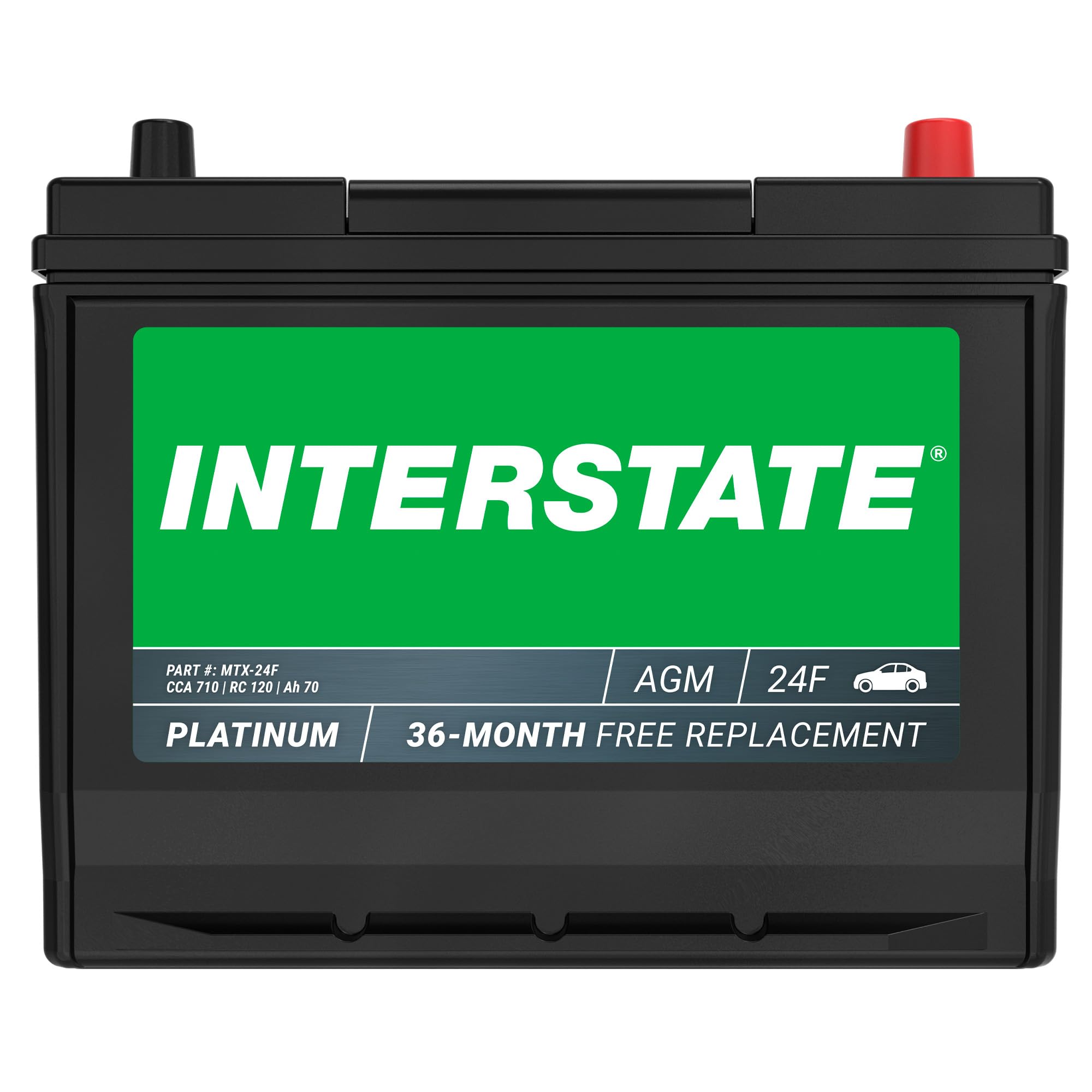
Interstate’s MTX-24F uses pure lead AGM construction, which packs more active material into the same footprint compared to lead-alloy designs. The 710 CCA rating and 70 Ah capacity target vehicles with start-stop systems, but the technology translates well to the TL platform where electrical loads from the climate control, audio, and lighting systems demand consistent voltage. The spill-proof AGM design allows flexible mounting positions, and the valve-regulated system prevents acid leakage even if the battery is tipped during installation.
Owner feedback highlights the 45.3-pound weight as evidence of dense plate construction, and several verified buyers report using this battery as an upgrade over factory units in Honda, Acura, and Chrysler vehicles. The top-post terminals are compatible with the TL cable configuration, but the Group 24F case dimensions (10.75 x 6.81 x 8.98 inches) differ from the stock Group 47. This means the battery tray and hold-down may require modification for a secure fit. Owners who successfully installed it noted improved reserve capacity and stable voltage during accessory-heavy operation.
One verified owner reported that the battery drained quickly when the vehicle sat for extended periods, though the issue was resolved by switching to a conventional battery — this likely points to an alternator voltage mismatch rather than a defect. The 3-year warranty is standard for this tier, and Interstate’s brand recognition among automotive professionals adds confidence. For TL owners willing to adapt the mounting hardware for a larger case, the MTX-24F offers a robust pure lead AGM option with proven longevity in high-demand applications.
What works
- Pure lead AGM delivers 2-3x longer life than flooded designs
- Spill-proof and vibration-resistant construction
- Strong reserve capacity for accessory loads
What doesn’t
- Group 24F case requires tray modification for TL
- Higher price point than comparable AGM options
3. OPTIMA YellowTop DH5 Group 47

OPTIMA’s YellowTop DH5 uses spiral-wound AGM technology with 99.99 percent pure lead compressed into radial grid plates. The 700 CCA rating and 64 Ah capacity are paired with a 115-minute reserve capacity, making it one of the most vibration-resistant automotive batteries on the market. The Group 47 case dimensions (9.53 x 6.88 x 7.5 inches) match the factory TL battery footprint closely, which means the factory hold-down and terminals align without modification. The SpiralCell design provides up to 15 times the vibration resistance of flooded batteries, a meaningful advantage for TL owners who encounter rough roads or track use.
Verified owner reports confirm direct fitment in multiple vehicles including the Honda CR-V, Hyundai Veloster, and Subaru models, with several noting that the battery solved chronic drain issues that plagued previous units. The 700 CCA exceeds the factory spec comfortably while remaining within the alternator’s charging capacity. The YellowTop’s dual-purpose design supports both starting and moderate deep-cycling, so it handles extended accessory use better than a standard starting battery. The faster charging capability also means shorter recovery time after engine start.
The main consideration is the price point, which sits well above comparable AGM options from Weize and MARXON. OPTIMA’s brand reputation is built on decades of reliability, and the battery’s construction quality is visible in the heavy terminal hardware and sealed case. For TL owners who prioritize vibration resistance and need a Group 47 battery that drops in without any tray modifications, the YellowTop DH5 delivers proven performance with a strong warranty backing from a trusted manufacturer.
What works
- 15x vibration resistance over flooded batteries
- Direct Group 47 fitment with no tray modifications
- Dual-purpose design handles deep discharge cycles
What doesn’t
- Premium price significantly higher than competitors
- Capacity lower than some Group 94R alternatives
4. MARXON Group 94R H7 L4 AGM
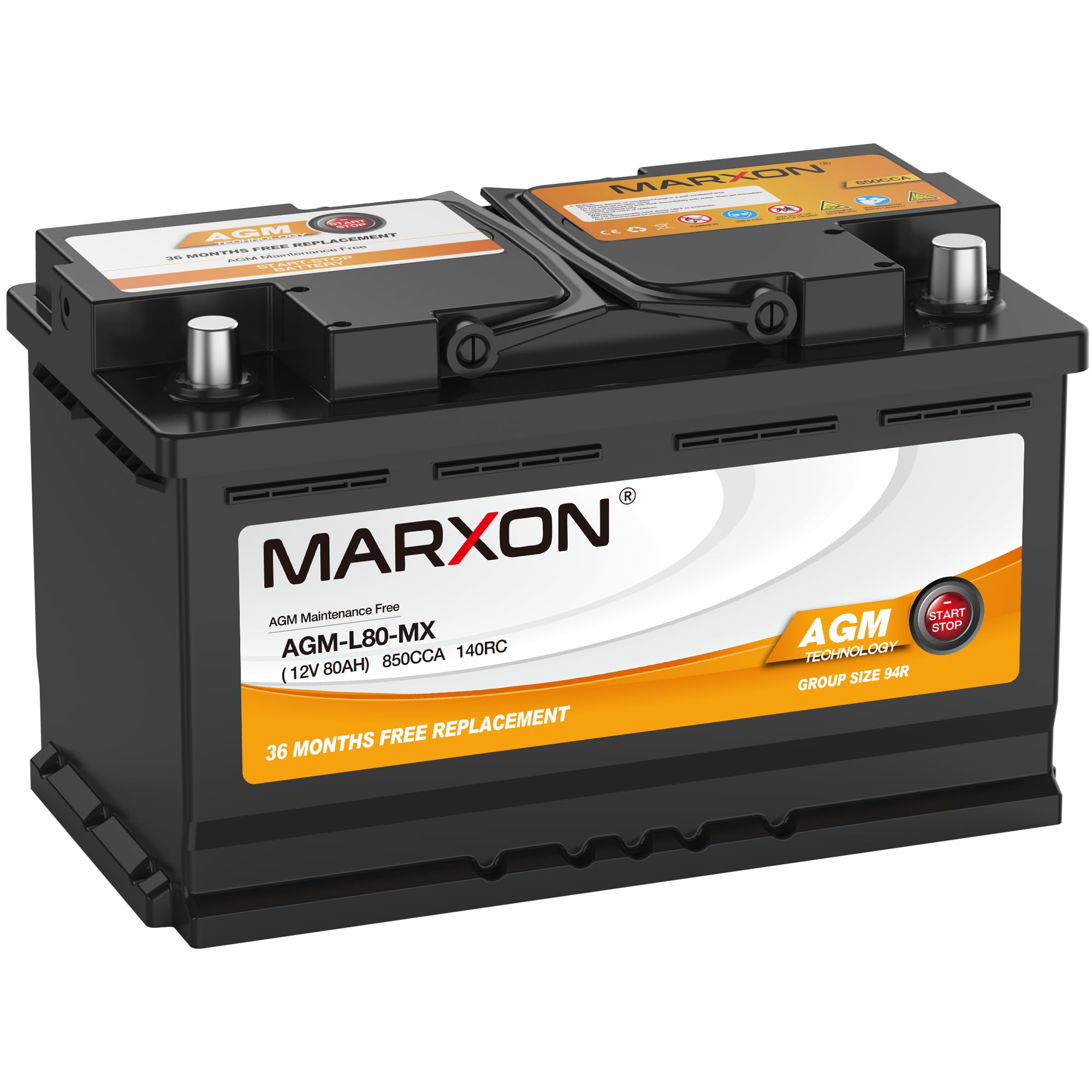
The MARXON Group 94R delivers 850 CCA and 80 Ah in an AGM format that competes directly with premium brands at a more accessible price. The 12.4 x 6.89 x 7.48-inch case uses the H7/L4 footprint, which is longer than the stock TL Group 47 but provides higher capacity and reserve power. Owner reports across multiple vehicle platforms — including Mitsubishi Outlander, Toyota RAV4, and Hyundai Elantra — indicate consistent performance with no fitment issues on vehicles that originally spec a 94R or H7 battery. The start-stop compatibility is a bonus for TL owners who may upgrade to newer vehicles in the future.
Verified reviews highlight the battery’s ability to recover from deep discharge events better than flooded alternatives. One owner noted that a 3.7L V6 started successfully at 11.2 volts after the battery had been partially drained — a stress test that would destroy many flooded units. The 36-month warranty aligns with industry standards for AGM batteries, and the fast charging acceptance reduces the time needed to replenish after short trips. Several buyers mentioned the cost savings compared to local auto parts store prices as a primary reason for purchase.
The unknown factor is long-term durability beyond the first year, as MARXON is a newer brand in the automotive battery space. While the initial quality appears strong, the track record is shorter than established competitors like OPTIMA or Interstate. The H7 case requires the same hold-down adjustment mentioned with other 94R options. For TL owners who want AGM performance and high CCA without paying for legacy brand premiums, the MARXON offers a well-specced alternative that performs reliably out of the box.
What works
- 850 CCA provides excellent cold-start confidence
- Fast charging acceptance shortens recovery time
- Competitive price with 36-month warranty coverage
What doesn’t
- Limited long-term owner data for durability validation
- H7 footprint requires tray adjustment on TL
5. Autocessking H5 Group Size 47 AGM
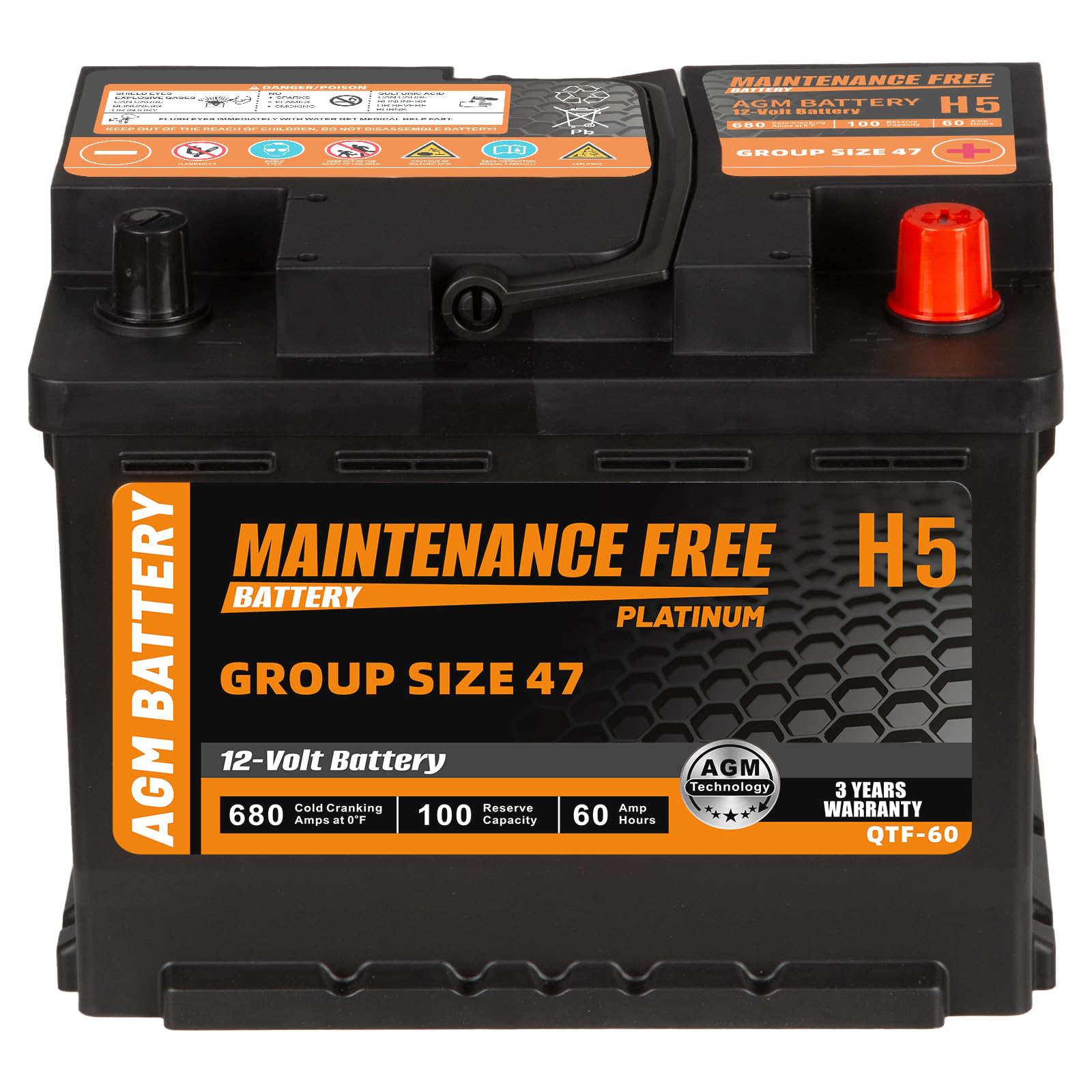
The Autocessking H5 Group 47 battery is one of the few aftermarket AGM options built specifically for the stock TL battery footprint. The 9.57 x 6.89 x 7.48-inch dimensions and left-negative, right-positive terminal layout match the factory configuration exactly, which means the factory hold-down, cables, and trim all fit without any modification. The 680 CCA rating falls within the OEM spec range, and the 100-minute reserve capacity provides adequate margin for standard electrical loads. Verified owner reports confirm direct fitment in 2019 Honda Accord and 2022 Honda Civic applications, suggesting consistent QC on case dimensions.
The AGM construction uses high-density negative paste that improves conductivity and extends cycle life compared to flooded batteries. The manufacturer claims 4 times the cycle life of conventional units and 18 times the vibration resistance. The 3-year warranty adds peace of mind, and the maintenance-free design means no water level checks. Several buyers noted the battery arrived well-charged and provided noticeably faster cranking compared to the aging flooded units they replaced. The 38.76-pound weight reflects the dense plate construction typical of AGM designs.
The lower CCA compared to Group 94R alternatives means this battery works best for TL owners in moderate climates or those who drive daily and don’t leave the car sitting for extended periods. The 60 Ah capacity is smaller than the 80 Ah offered by larger-case AGM units, so heavy accessory loads will deplete the reserve faster. For owners who value direct bolt-in convenience and don’t want to modify the battery tray, the Autocessking H5 provides a correctly sized AGM upgrade that maintains factory fitment.
What works
- Direct Group 47 fitment with no tray modifications needed
- AGM technology with 4x cycle life over flooded
- 3-year warranty with positive owner feedback
What doesn’t
- 680 CCA is adequate but not generous for extreme cold
- 60 Ah capacity limits extended accessory use
6. ACDelco Gold AUX14-200 AGM
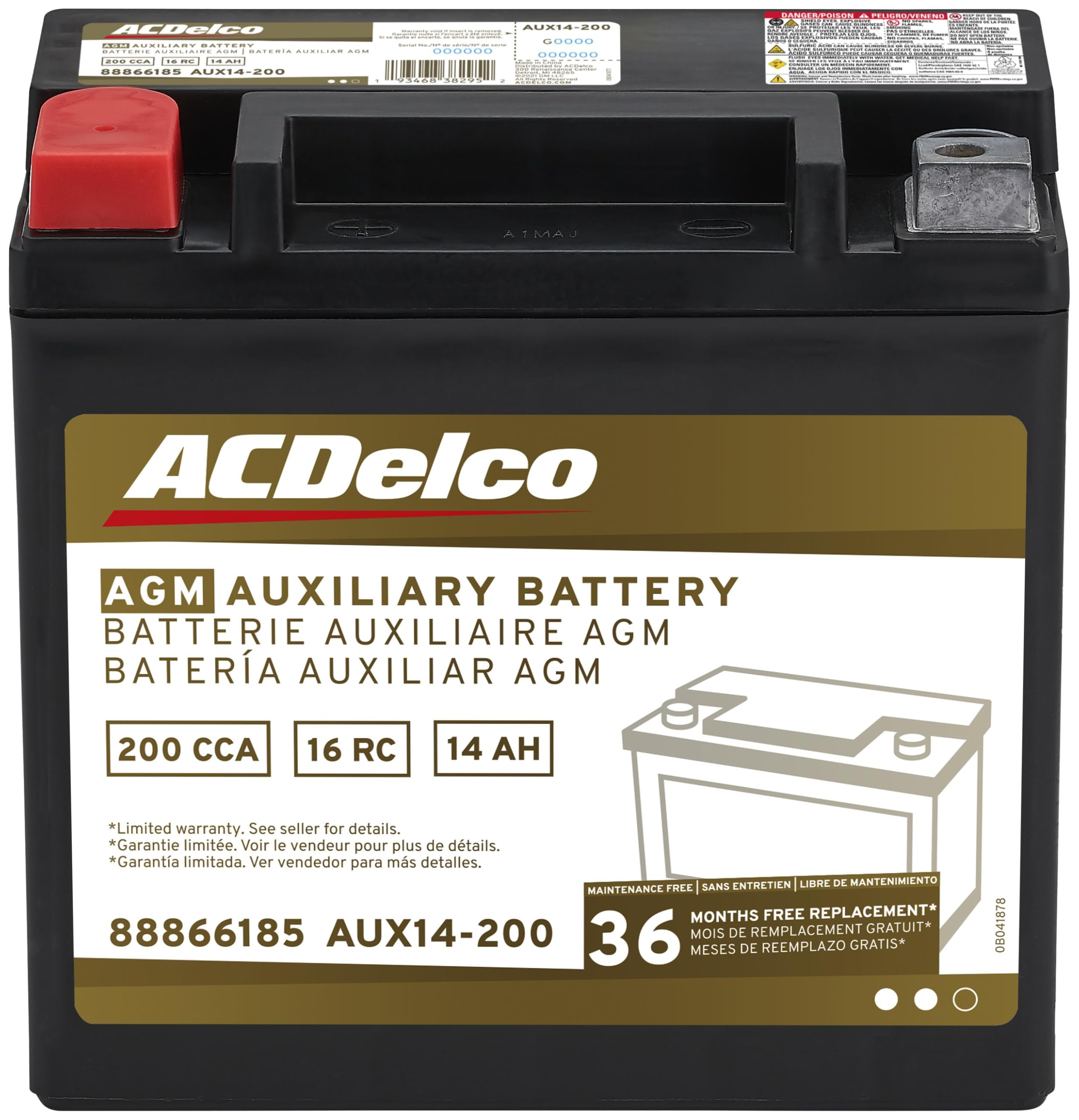
The ACDelco Gold AUX14-200 is a small-format AGM battery designed primarily for auxiliary or secondary battery roles in vehicles with start-stop systems or hybrid powertrains. With 200 CCA and 12 Ah capacity in a compact 5.9 x 3.4 x 5.7-inch case, it is not intended to serve as the main starting battery for a TL’s 3.2L V6. Instead, this battery is relevant to TL owners who have added aftermarket electrical systems — such as audio amplifiers, auxiliary lighting, or inverter setups — and need a dedicated reserve battery isolated from the main starting circuit.
Owner reports confirm successful use as a secondary battery in Chrysler Pacifica, Mercedes SL550, and Dodge Durango applications where the factory installed a dedicated auxiliary battery for start-stop or accessory support. The AGM construction is leak-proof and maintenance-free, and the 200 CCA is sufficient for powering moderate auxiliary loads. The 36-month warranty is standard for ACDelco Gold parts, and the GM heritage provides confidence in build quality. Several buyers noted the battery arrived fully charged and ready for installation with no priming required.
The compact size and top-post terminals make it easy to mount in custom battery trays or enclosed compartments. However, the limited capacity means it is not a substitute for the main battery in any vehicle with a V6 engine. TL owners considering this should only do so as part of a dual-battery setup with an isolator. For single-battery applications in the TL, the CCA is far too low to crank the engine reliably, especially in cold weather. This is a niche product for those building out auxiliary power systems.
What works
- Compact size fits custom auxiliary battery mounts
- AGM construction is leak-proof and maintenance-free
- GM-backed quality with 36-month warranty
What doesn’t
- 200 CCA is insufficient for TL main battery duty
- 12 Ah capacity limits run time for accessories
7. Weize Platinum AGM Group 24F

The Weize Platinum AGM Group 24F offers 710 CCA and 70 Ah in a case measuring 10.75 x 6.81 x 8.98 inches. This is a larger footprint than the stock TL Group 47, but the extra length provides increased plate surface area for better power delivery and reserve capacity. The AGM construction includes high-density negative paste and a leak-proof valve system that prevents acid spills even in adverse mounting orientations. Owner reports across multiple platforms show consistent performance with improved electrical system stability compared to factory flooded batteries.
The 24F group size is common in many Honda, Acura, and Toyota vehicles from the same era, and verified buyers have successfully installed this battery in applications where the original equipment called for a Group 24F or similar. The 710 CCA rating meets or exceeds the TL’s factory spec, and the 70 Ah capacity provides sustained power for extended accessory operation. The 3-year warranty matches other premium AGM offerings, and Weize’s customer support has been noted as responsive in the event of early failures. The tapered terminals match the TL cable ends without adapters.
The primary challenge is fitment: the 24F case requires the battery tray and hold-down to accommodate a longer and wider footprint than the stock Group 47. Some TL owners report success with minimal modification, while others find that the battery contacts the hood insulation or fender liner. Measuring the available space before purchasing is essential. For owners who can confirm adequate clearance, the Weize 24F provides strong AGM specifications at a price that undercuts many mainstream competitors.
What works
- 710 CCA provides reliable starting in cold conditions
- Large 70 Ah capacity for sustained accessory use
- Competitive pricing with 3-year warranty coverage
What doesn’t
- 24F case requires tray modification for TL fitment
- Clearance issues possible with hood or fender liner
8. Farrme 11099 Alternator 130A
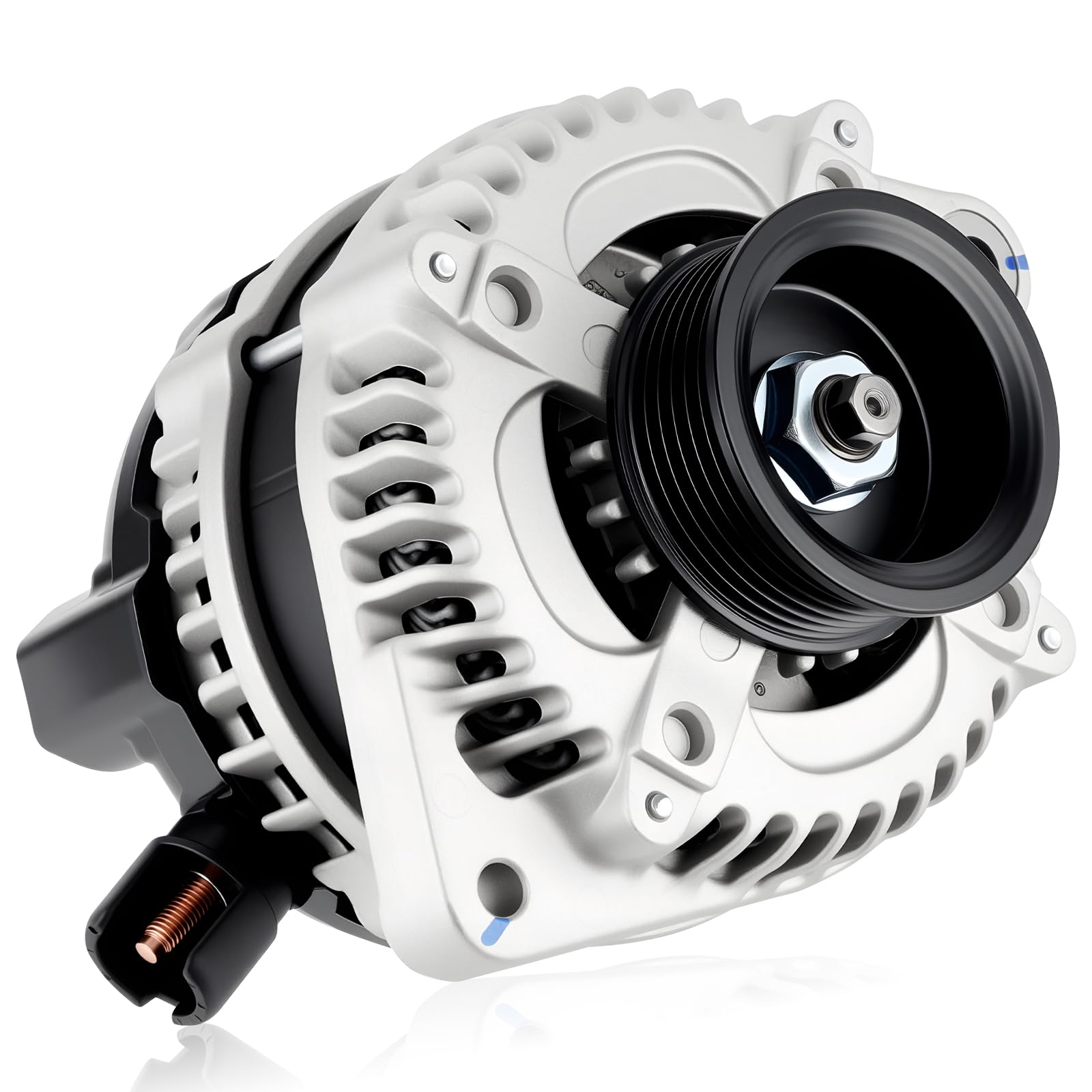
The Farrme 11099 alternator is a direct replacement for the TL’s factory charging unit, rated at 130 amps with a clockwise rotation and a 6-groove pulley. It is compatible with the 2006-2008 Acura TL 3.2L V6, as well as the 2007-2008 3.5L TL, and covers a wide range of Honda and Acura applications including the Odyssey, Pilot, Ridgeline, MDX, and RL. The unit uses pure copper windings, die-cast aluminum construction, and an external insulating coating to resist heat and corrosion. Owner feedback shows that the alternator arrives well-packaged and typically works immediately upon installation.
Verified buyers report successful installations in Honda Odyssey and Acura TL applications, with many noting the price advantage over local auto parts store alternatives. The 130-amp output matches the factory specification, so it does not increase the electrical system capacity beyond what the wiring harness was designed to handle. The internal fan and regulator design keep operating temperatures in check during sustained highway driving. Several owners commented that the alternator operates quietly compared to the worn units they replaced.
The main concern from long-term reviews is durability: one verified owner reported intermittent failure after five months, with voltage dropping from 14.3 to 11.9 volts. While this could be an installation or wiring issue, the report highlights the importance of checking all connections and belt tension before assuming the alternator is defective. The importance of verifying the regulator plug connection is mentioned in the product documentation. For TL owners who need a functional replacement at a competitive price, the Farrme alternator offers a viable option with the caveat that professional installation and thorough electrical system inspection are recommended.
What works
- 130A output matches OEM TL specification
- Pure copper windings and die-cast aluminum construction
- Broad vehicle coverage for Honda/Acura V6 models
What doesn’t
- Reported intermittent failure in one instance at five months
- Installation requires careful attention to plug and belt connections
9. Youxmoto YXALT016168 Alternator 130A
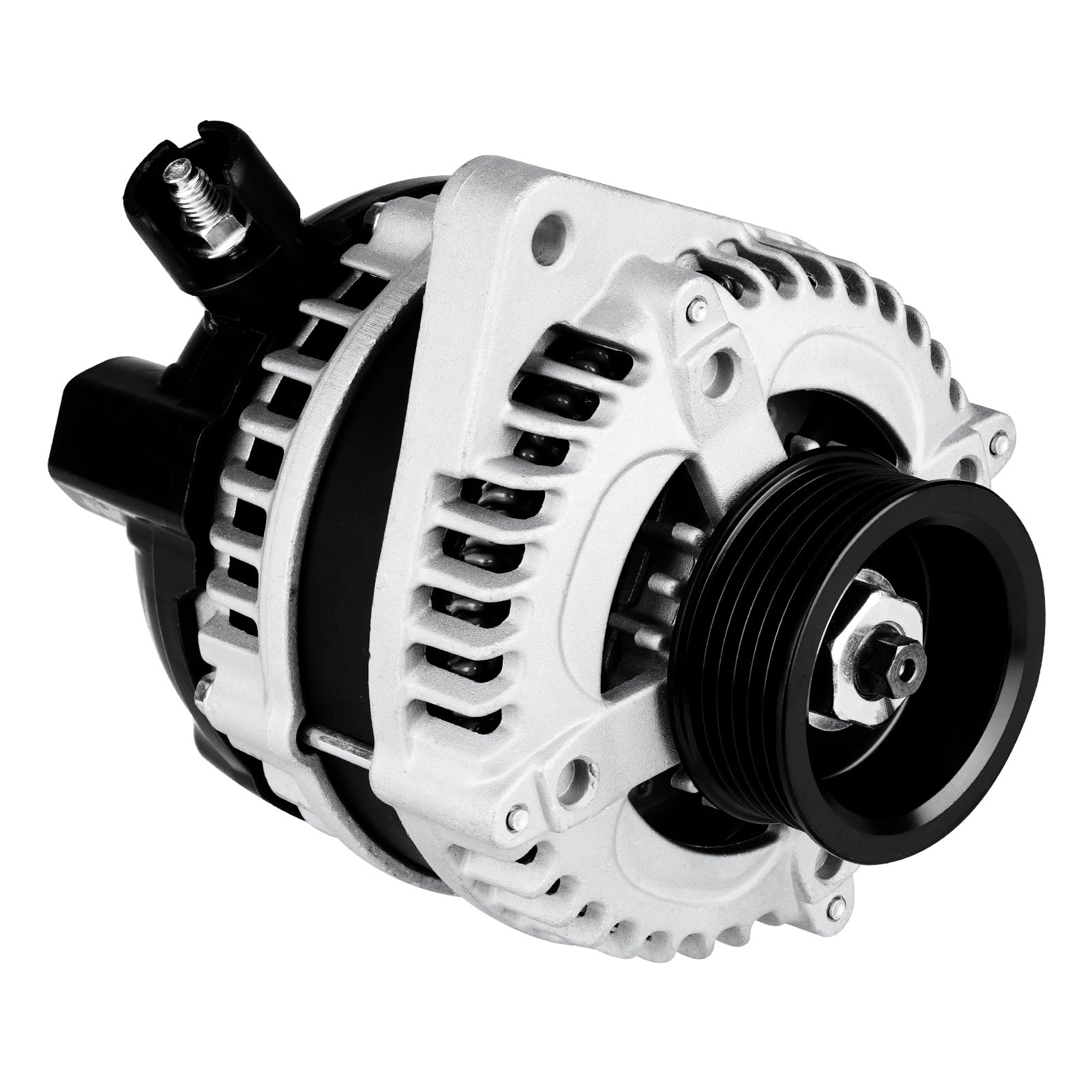
The Youxmoto YXALT016168 alternator provides 130 amps at 12 volts with a clockwise rotation and S6 pulley class, covering the same broad range of Honda and Acura V6 applications as the Farrme unit — including the Acura TL 3.2L and 3.5L from 2004 through 2008. The aluminum housing with pure copper thickened coils and external insulating coating mirrors the construction approach of mid-tier remanufactured units. Owner reports across multiple vehicle platforms show consistent fitment and functional performance immediately after installation.
Verified buyers specifically mention successful installations in 2006-2008 Acura TL and 2005-2007 Honda Odyssey applications, with several noting that the alternator resolved charging issues and battery drain problems that had been plaguing their vehicles. The 1-year free replacement policy provides a safety net, and the manufacturer emphasizes the importance of confirming vehicle make, model, year, and engine before ordering. The internal regulator and fan design are configured for standard V6 charging requirements, and the S6 pulley matches the factory serpentine belt routing without adjustment.
The budget price reflects cost-saving measures in manufacturing and quality control compared to OEM or premium aftermarket units. While the majority of owner feedback is positive — with reports of no issues after 1500 miles of use — the long-term durability data is limited compared to established brands like Denso or Bosch. The alternator is best suited for TL owners who need a functional replacement now and are comfortable with the possibility of earlier replacement compared to a premium unit. Thorough inspection of the belt, wiring, and battery condition before installation is essential for reliable service.
What works
- 130A output matches TL charging system requirements
- Copper coil and aluminum construction for heat management
- Positive fitment feedback from Acura TL and Honda owners
What doesn’t
- Limited long-term reliability data available
- Budget pricing may reflect lower QC standards
Hardware & Specs Guide
Group Size 47 (H5) Physical Specs
The 2006 Acura TL uses a Group 47 (H5/ L2) battery case measuring approximately 9.5 x 6.9 x 7.5 inches. The terminal layout is left negative, right positive with standard top posts. The factory hold-down uses a J-hook and clamp system on the lower edge of the tray. Group 94R (H7) and Group 24F cases are longer and wider, requiring modification to the battery tray or hold-down bracket. Always measure the available space and verify terminal orientation before purchasing an alternate group size.
Cold Cranking Amps and Reserve Capacity
Factory CCA specification for the 3.2L V6 ranges from 550 to 700 CCA depending on the original equipment supplier. Reserve Capacity should be at least 90 minutes to cover standard electrical loads during alternator failure. AGM batteries generally provide higher RC per unit of CCA compared to flooded batteries. Owners in climates below freezing should target 650 CCA or higher. In moderate climates, 550 to 600 CCA is sufficient and reduces strain on the alternator.
Alternator Output Verification
Before installing a new battery, test the alternator output at idle with all electrical loads off. A healthy alternator should produce 13.8 to 14.8 volts at the battery terminals. Output below 13.5 volts indicates the alternator is not charging properly and will prevent any new battery from reaching full state of charge. Output above 15.0 volts can overcharge AGM batteries and cause premature failure. Test at the battery posts, not at the alternator itself, to account for wiring resistance.
AGM vs. Flooded Decision Factors
AGM batteries cost more upfront but offer longer service life in vibration-heavy environments and tolerate deeper discharge cycles. Flooded batteries are cheaper and perform well in daily-driven vehicles with consistent charging patterns. AGM requires a charging voltage of 14.4 to 15.0 volts for optimal absorption; if your alternator outputs below 14.2 volts, a flooded battery may last longer because it does not need the higher voltage to reach full charge. Check your alternator voltage with a multimeter before choosing chemistry.
FAQ
What battery group size does a 2006 Acura TL use?
Should I choose AGM or flooded battery for my TL?
How often should I replace the battery in my 06 Acura TL?
Can a failing alternator damage a new battery?
Final Thoughts: The Verdict
For most buyers, the 06 acura tl battery winner is the Weize Platinum AGM 94R because it delivers 850 CCA and 140 RC in a proven AGM package with a 36-month warranty at a price that undercuts legacy brands. If you want direct bolt-in simplicity without tray modifications, grab the Autocessking H5 Group 47 — it slides into the factory location with zero adjustments. And for maximum vibration resistance and a brand with decades of racing heritage, nothing beats the OPTIMA YellowTop DH5, provided you are comfortable with the premium price.

Certification: BSc in Mechanical Engineering
Education: Mechanical engineer
Lives In: 539 W Commerce St, Dallas, TX 75208, USA
Md Amir is an auto mechanic student and writer with over half a decade of experience in the automotive field. He has worked with top automotive brands such as Lexus, Quantum, and also owns two automotive blogs autocarneed.com and taxiwiz.com.