Outboard motors live on the edge of failure every time they run. Saltwater, high RPM operation, and long storage periods create a perfect storm for wear, corrosion, and sludge. The oil you pour into that powerhead is the single most important variable separating a reliable season from a costly rebuild.
I’m Amir — the founder and writer behind Four Wheel Ask. I spend my time digging into technical bulletins, analyzing lab data, and cross-referencing thousands of owner reviews to separate marketing fluff from real engineering value in marine lubricants.
For the reliability-minded boater, I analyzed hundreds of owner reviews and technical data to deliver this ultimate guide on the best outboard motor oil.
How To Choose The Best Outboard Motor Oil
Selecting the right outboard oil comes down to engine type, operating conditions, and base oil chemistry. A mismatch can lead to excessive smoke, ring sticking, or outright engine failure. Focus on these three criteria before making a decision.
Two-Stroke Versus Four-Stroke Formulations
Two-stroke outboards mix oil with fuel for combustion and lubrication simultaneously. These oils must burn cleanly while leaving minimal ash and carbon deposits. Four-stroke outboards separate oil from fuel entirely, so the lubricant must withstand high shear forces and prevent foaming at sustained high RPM. Using the wrong type damages seals, fouls plugs, and accelerates wear.
Viscosity Grade and Operating Environment
SAE 30 and 10W-30 dominate the four-stroke marine segment because they maintain film strength at operating temperature while allowing cold starts. Heavier grades like 40-weight can work in warm climates but reduce flow during startup. Two-stroke oils use a TC-W3 rating rather than SAE viscosity, so always follow the manufacturer’s spec rather than guessing based on climate alone.
Synthetic Versus Conventional Base Oils
Full synthetic formulations resist thermal breakdown at high RPM and provide superior corrosion protection during storage. Conventional oils cost less upfront but tend to oxidize faster, especially in engines that sit for weeks between trips. If you run your outboard in saltwater or store it for extended periods, synthetic base stocks pay for themselves in reduced rust and fewer carbon deposits.
Quick Comparison
On smaller screens, swipe sideways to see the full table.
| Model | Category | Best For | Key Spec | Amazon |
|---|---|---|---|---|
| Valvoline 4-Stroke Marine | Full Synthetic | Marine 4-Stroke Outboards | 10W-30, 1 Gallon | Amazon |
| Yamaha Yamalube 2-Stroke | Semi-Synthetic | 2-Stroke Yamaha Outboards | TC-W3, 1 Gallon | Amazon |
| Royal Purple SAE 30 | Full Synthetic | Small Engines & Pumps | SAE 30, 1 Quart | Amazon |
| Lucas Oil 75W-140 | Synthetic Blend | Gears & Differentials | 75W-140, 1 Quart | Amazon |
| Valvoline 4-Stroke ATV/UTV | Full Synthetic | ATV & UTV Engines | 10W-40, 6×1 Quart | Amazon |
In-Depth Reviews
1. Valvoline 4-Stroke Marine Full Synthetic Engine Oil
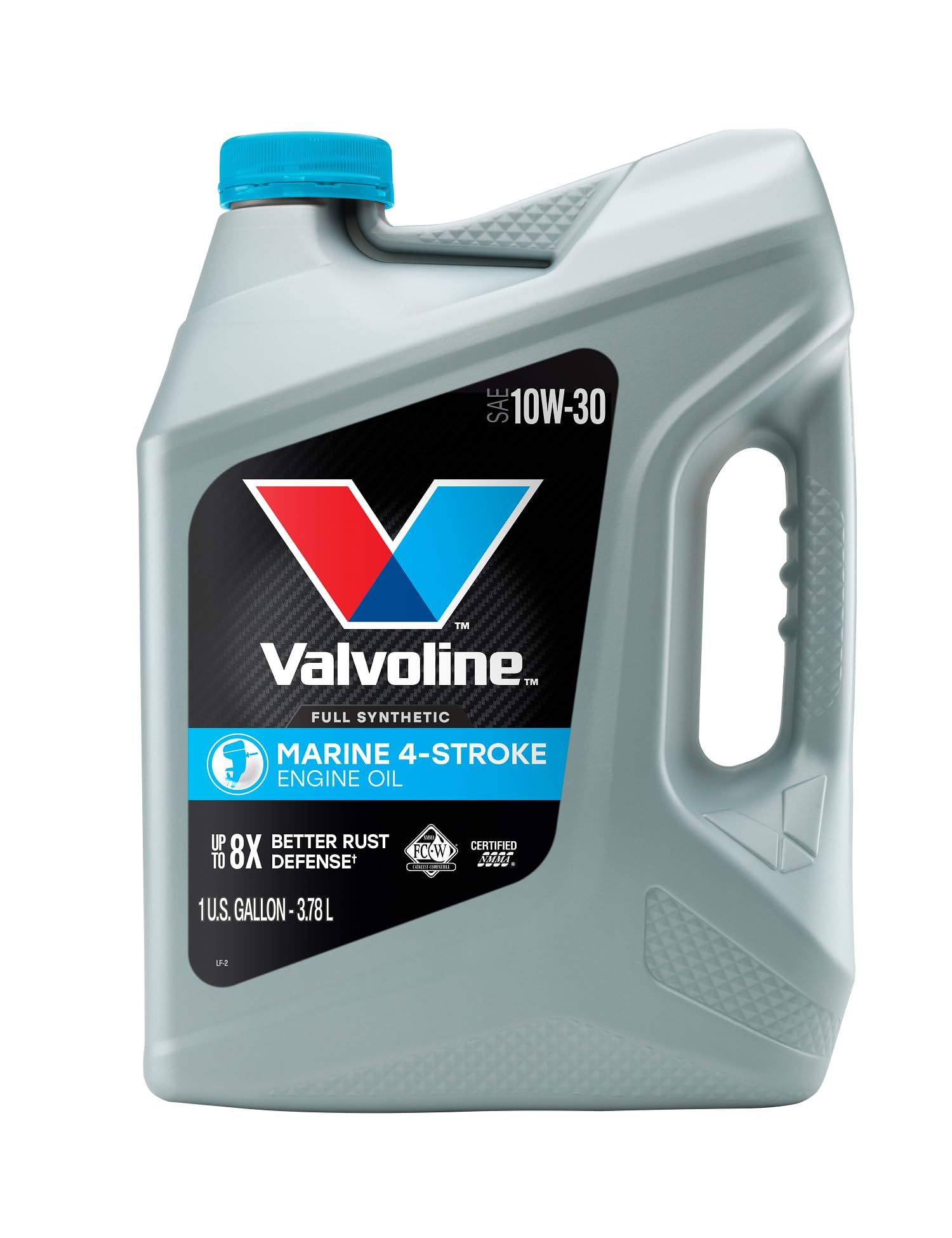
Valvoline designed this oil specifically for the extreme heat and higher RPM demands of four-stroke marine engines, not as a repurposed automotive oil with a marine label. The full synthetic base resists thermal breakdown at sustained WOT operation, and the additive package delivers up to eight times better rust defense compared to conventional lubricants. Owner reports confirm that the engine runs noticeably smoother after switching, with minimal smoke and consistent idle quality even after long runs.
The 10W-30 viscosity strikes the right balance between cold-start flow and high-temperature film strength for the vast majority of outboards. Testing data shows 50 percent stronger wear protection against the kind of boundary-layer stress that occurs during hard acceleration and planing. The one-gallon jug design also simplifies pouring into a sump or transfer tank, reducing mess during oil changes.
Long-term owner feedback from Mercury 90 outboard users highlights consistent performance across multiple oil change intervals, with clean drain samples and no evidence of sludge formation. Given the price point relative to other marine-specific synthetics, this oil represents the strongest combination of protection, corrosion resistance, and value in the four-stroke outboard category.
What works
- Excellent rust and corrosion protection for saltwater use
- Full synthetic base handles sustained high RPM without breakdown
- Clean burn characteristics with minimal smoke reported
What doesn’t
- Not compatible with two-stroke outboard engines
- Limited availability in some local retail stores
2. Yamaha Yamalube Outboard 2M Marine 2-Stroke Oil

Yamaha engineered this semi-synthetic oil specifically for its own two-stroke outboard lineup, and the additive chemistry reflects decades of proprietary testing on ring sticking and carbon buildup. The formulation exceeds TC-W3 requirements while using exclusive additives that target the combustion chamber deposits common in prolonged trolling and idle operation. Owner reports consistently note a dramatic reduction in visible exhaust smoke after switching from generic two-stroke oils.
The 1-gallon container delivers 128 fluid ounces, which translates to roughly 50 gallons of pre-mixed fuel at a standard 50:1 ratio. Field reports from Yamaha outboard owners emphasize cleaner spark plugs and noticeably easier cold starts, particularly on engines that previously suffered from fouled plugs due to carbon buildup. The anti-wear and anti-corrosion protection also matters for motors that sit for months between seasons.
One important caveat: Yamaha explicitly advises against using this oil in land-based equipment, WaveRunner watercraft, or sport boats. This is a dedicated outboard formulation, and the detergent package reflects that narrow focus. For owners of Yamaha two-stroke outboards who want OEM-grade protection without aftermarket guesswork, this oil eliminates uncertainty.
What works
- OEM-specific formulation eliminates compatibility guesswork
- Noticeably less smoke than generic two-stroke oils
- Excellent anti-carbon and anti-ring-stick protection
What doesn’t
- Not recommended for non-Yamaha or land-based engines
- Higher cost per gallon compared to universal two-stroke oils
3. Royal Purple SAE 30 Heavy Duty High Performance Synthetic Motor Oil
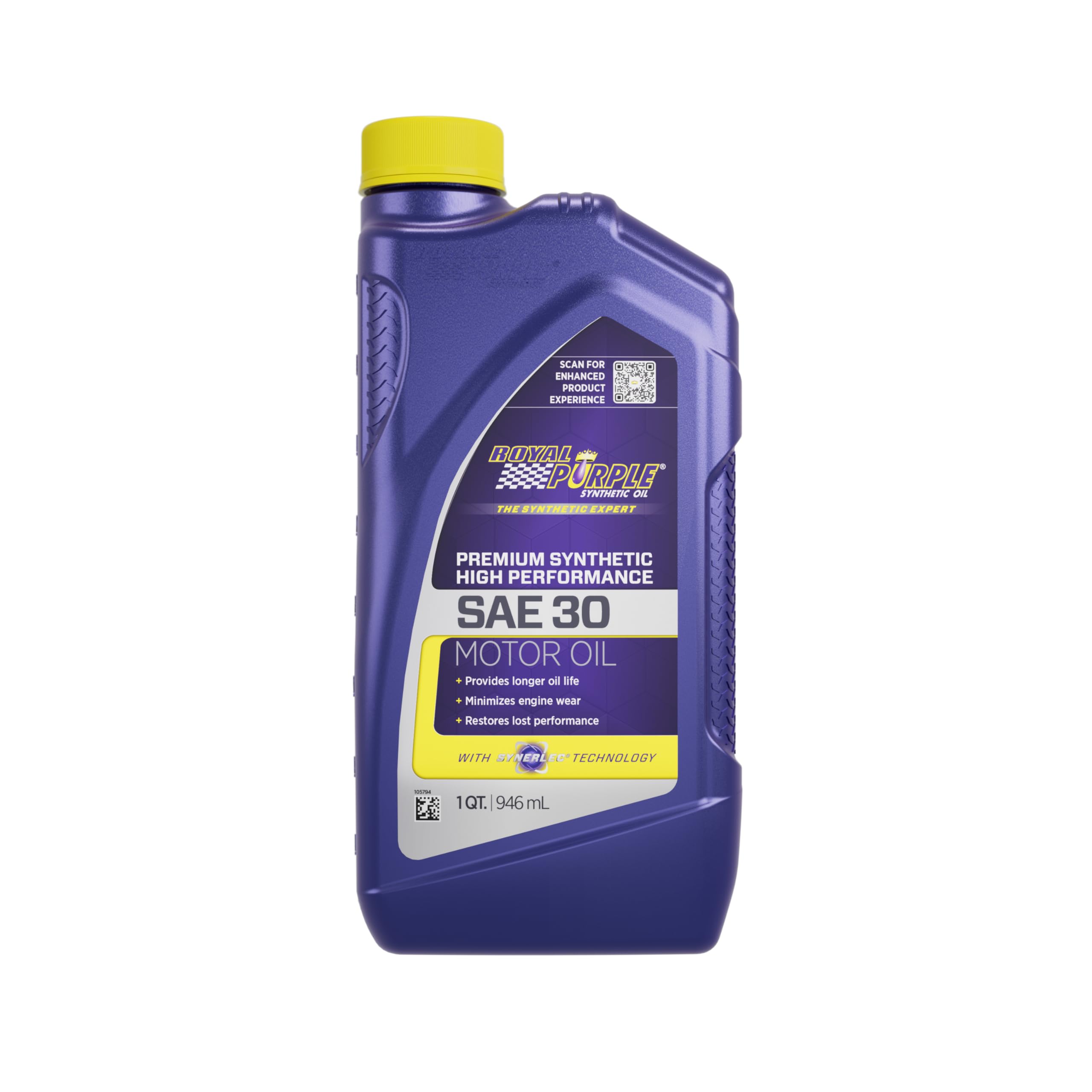
Royal Purple brings its well-known synthetic base stock technology to a straight SAE 30 viscosity grade that works across a wide range of small engines, including many older outboards, generators, and pressure washers. The additive package prioritizes wear protection and fuel efficiency, with a flash point of 232 degrees Celsius that indicates strong thermal stability for an oil in this viscosity class. Owners running it in small marine engines report smoother operation and reduced need for choke during cold starts.
At a single-quart bottle size, this oil works well for engines with small sump capacities or for topping off between changes. The universal fit designation means it can serve double duty in lawn equipment and generators, making it a practical single-bottle solution for boat owners who maintain multiple small engines. Owner feedback spanning several seasons shows consistent performance with no sludge or varnish formation when changed at recommended intervals.
While this is not a marine-specific formulation, the heavy-duty synthetic base provides better oxidation resistance than conventional SAE 30 oils, which matters for engines that see intermittent use. The main trade-off is that it lacks the specialized rust inhibitors found in purpose-built marine oils, so saltwater users should be more diligent about storage procedures and change intervals.
What works
- Strong thermal stability for a straight-weight oil
- Works across multiple small engine types beyond marine
- Owner reports show consistent wear protection over seasons
What doesn’t
- Not specifically formulated for marine corrosion protection
- Single-quart size requires multiple bottles for larger engines
4. Lucas Oil SAE 75W-140 Synthetic Gear Oil

Lucas Oil 75W-140 is not an engine oil but a dedicated gear and differential lubricant designed for high-torque applications like outboard lower units and marine transmissions. The synthetic blend formulation maintains lubricity under extreme pressure while reducing gear noise and extending bearing life. Owners running this in their outboard lower units report noticeably quieter operation and a reduction in the metal-on-metal chatter that often precedes gear failure.
Performance data indicates the oil stands up to high operating temperatures while maintaining film strength, which directly addresses the primary failure mode in marine gearcases: thermal breakdown leading to scuffed gears and failed bearings. One long-term owner documented 10,000 miles in a truck differential with clean fluid at drain time, suggesting strong oxidation resistance that translates well to marine use cases with similar shear loads.
The odor profile is notably less offensive than many conventional gear oils, a minor but appreciated detail during servicing. While this is not a motor oil and should not be used in the powerhead, it is the correct choice for the lower unit on most outboards that specify a 75W-140 or similar viscosity gear lubricant.
What works
- Excellent extreme-pressure protection for gears and bearings
- Reduces gear noise compared to conventional lubricants
- Good thermal stability for sustained high-load operation
What doesn’t
- Not for use in the engine powerhead—gear oil only
- Some owners note price increases reduced value advantage
5. Valvoline 4-Stroke ATV/UTV SAE 10W-40 Motor Oil

Valvoline formulated this 10W-40 oil specifically for the extreme operating environments found in ATV and UTV engines, which share many design characteristics with small outboards including wet clutch systems and high-revving four-stroke architectures. The additive package includes shear-stable viscosity improvers that resist film breakdown under heavy load, along with cleaning agents that prevent deposit formation on pistons and valve trains. Owner reports from Honda Rancher 350 and Arctic Cat applications confirm strong wet clutch compatibility and smooth shifting.
The case of six quarts provides a practical volume for multiple oil changes or for servicing a fleet of small engines. The 10W-40 viscosity works well in warmer climates where an outboard might see sustained high-RPM operation, offering slightly thicker high-temperature protection than 10W-30 while still allowing reasonably cold starts. Owners using this in inverter generators report stable oil pressure and clean drain intervals up to 100 hours of run time.
While this oil is not marketed as a marine product, its wet clutch compatibility and shear stability make it a viable option for four-stroke outboards that specify a 10W-40 or similar viscosity. The main consideration is the absence of marine-specific rust inhibitors, so saltwater operators should prioritize shorter change intervals to compensate.
What works
- Wet clutch safe with strong friction modifier compatibility
- Shear-stable formulation resists viscosity breakdown
- Excellent value per quart in the six-pack configuration
What doesn’t
- No marine-specific corrosion inhibitors in the package
- 10W-40 may be too thick for cold-weather starting
Hardware & Specs Guide
Viscosity Grades Explained
SAE viscosity ratings describe an oil’s flow characteristics at specific temperatures. A 10W-30 oil flows like a 10-weight at cold temperatures for easier starting and thickens to a 30-weight at operating temperature for film strength. Straight-weight oils like SAE 30 lack the cold-flow improvers, so they work best in stable warm climates. Two-stroke oils use the TC-W3 standard, which focuses on ash content and lubricity rather than SAE viscosity.
Synthetic vs. Conventional Base Stocks
Full synthetic oils use engineered molecules that resist thermal breakdown, oxidation, and viscosity shear far longer than conventional mineral oils. In marine applications, this translates to better corrosion protection during storage and reduced carbon deposits at high RPM. Conventional oils cost less but require shorter change intervals and offer less protection against the moisture ingress that plagues marine engines.
Additive Packages in Marine Oils
Marine-specific oils contain elevated levels of rust inhibitors, anti-wear agents, and detergents tailored for the unique stresses of outboard operation. Rust inhibitors combat the moisture that enters through crankcase ventilation in humid marine air. Anti-wear additives like zinc dialkyldithiophosphate protect cam lobes and lifters under high spring pressure. Detergents keep piston rings free of carbon that forms during extended low-RPM trolling.
Flash Point and Thermal Stability
Flash point indicates the temperature at which oil vapors can ignite — a higher number generally means better resistance to evaporation and thermal breakdown. Marine oils with flash points above 230 degrees Celsius provide a safety margin during sustained high-RPM operation. Lower flash points suggest a lighter base stock that may consume more oil through evaporation, especially in engines that run hot for extended periods.
FAQ
Can I use automotive oil in an outboard motor?
How often should I change outboard motor oil?
What does TC-W3 mean on two-stroke oil?
Is synthetic oil worth the extra cost for an older outboard?
Final Thoughts: The Verdict
For most boat owners, the best outboard motor oil winner is the Valvoline 4-Stroke Marine Full Synthetic because it delivers dedicated marine rust protection, a full synthetic base, and consistent owner approval at a fair price point. If you run a two-stroke Yamaha outboard and want zero guesswork, grab the Yamaha Yamalube 2-Stroke. And for maintaining multiple small engines on a budget, the Royal Purple SAE 30 covers a surprising range of equipment without cutting corners on base oil quality.

Certification: BSc in Mechanical Engineering
Education: Mechanical engineer
Lives In: 539 W Commerce St, Dallas, TX 75208, USA
Md Amir is an auto mechanic student and writer with over half a decade of experience in the automotive field. He has worked with top automotive brands such as Lexus, Quantum, and also owns two automotive blogs autocarneed.com and taxiwiz.com.