A 1/2-inch hose looks like a simple purchase, but choosing the wrong material or pressure rating transforms a routine replacement into a tow bill or a safety hazard. Whether you are plumbing a fuel system, rerouting a coolant line, or connecting a permanent gas grill supply, the rubber compound, SAE rating, and temperature tolerance dictate whether the hose lasts a season or a decade.
I’m Amir — the founder and writer behind Four Wheel Ask. My analysis relies on deep market research, cross-referencing material specifications, SAE standards, and owner-reported failure patterns to cut through marketing claims and identify components that earn their place under the hood or in the appliance trench.
After reviewing material compounds, pressure tolerances, and real-world durability data across dozens of options, this analysis cuts through the confusion to identify the truly reliable components for your application within the best 1/2 fuel hose.
How To Choose The Best 1/2 Fuel Hose
Selecting a 1/2-inch hose requires matching the fluid type, system pressure, and environmental temperature to the hose’s construction. Cutting corners on material compatibility leads to swelling, hardening, or catastrophic rupture.
Material Composition Matters
Nitrile rubber (NBR) resists petroleum-based fluids like gasoline, diesel, and motor oil, making it the standard for fuel and oil systems. EPDM rubber handles coolant, water, and antifreeze but degrades rapidly when exposed to hydrocarbons. Natural gas hoses often use a synthetic rubber core with a stainless steel braid for weather resistance and leak prevention. Verify the material against your specific fluid before purchasing.
Pressure and Temperature Thresholds
Working pressure indicates the continuous safe operating limit, while burst pressure is the point of failure. Gravity-fed fuel systems may only see a few PSI, but fuel injection systems and coolant circuits can push over 50 PSI with spikes reaching much higher. Ensure the hose’s rated working pressure exceeds the maximum pressure your system can generate. Temperature range is equally critical—engine bays and exhaust proximity can exceed 250°F, which is beyond the limits of standard fuel hose.
SAE Ratings and Certifications
SAE 30R7 is the common standard for low-pressure fuel and emission systems. SAE 30R9 offers higher heat and pressure tolerance for fuel injection applications. SAE 20R3 covers coolant and heater hoses. For natural gas appliances, CSA or UL certification confirms the assembly meets safety standards for gas tightness and flame resistance. Ignoring these ratings risks voiding insurance and creating dangerous leaks.
Quick Comparison
On smaller screens, swipe sideways to see the full table.
| Model | Category | Best For | Key Spec | Amazon |
|---|---|---|---|---|
| Jeemeter 1/2″ ID Fuel Line | Fuel Hose | Durability & Value | 25FT, SAE 30R7, 1160 PSI Burst | Amazon |
| AC PERFORMANCE 1/2″ ID Push On | Push-On Hose | Fuel & Oil Systems | 10FT, NBR, 800 PSI Burst | Amazon |
| CALPOSE 15FT Natural Gas Hose | Natural Gas | Outdoor Grills & Ovens | 15FT, SS Braided, Quick Connect | Amazon |
| GasSaf 10FT Natural Gas Hose | Natural Gas | Certified Permanent Install | 10FT, CSA Certified, QC Fittings | Amazon |
| EVIL ENERGY 1/2″ Heater Hose | Heater Hose | Coolant & Radiator | 10FT, EPDM, SAE 20R3 | Amazon |
In-Depth Reviews
1. Jeemeter 1/2″ ID Fuel Line Hose 10FT
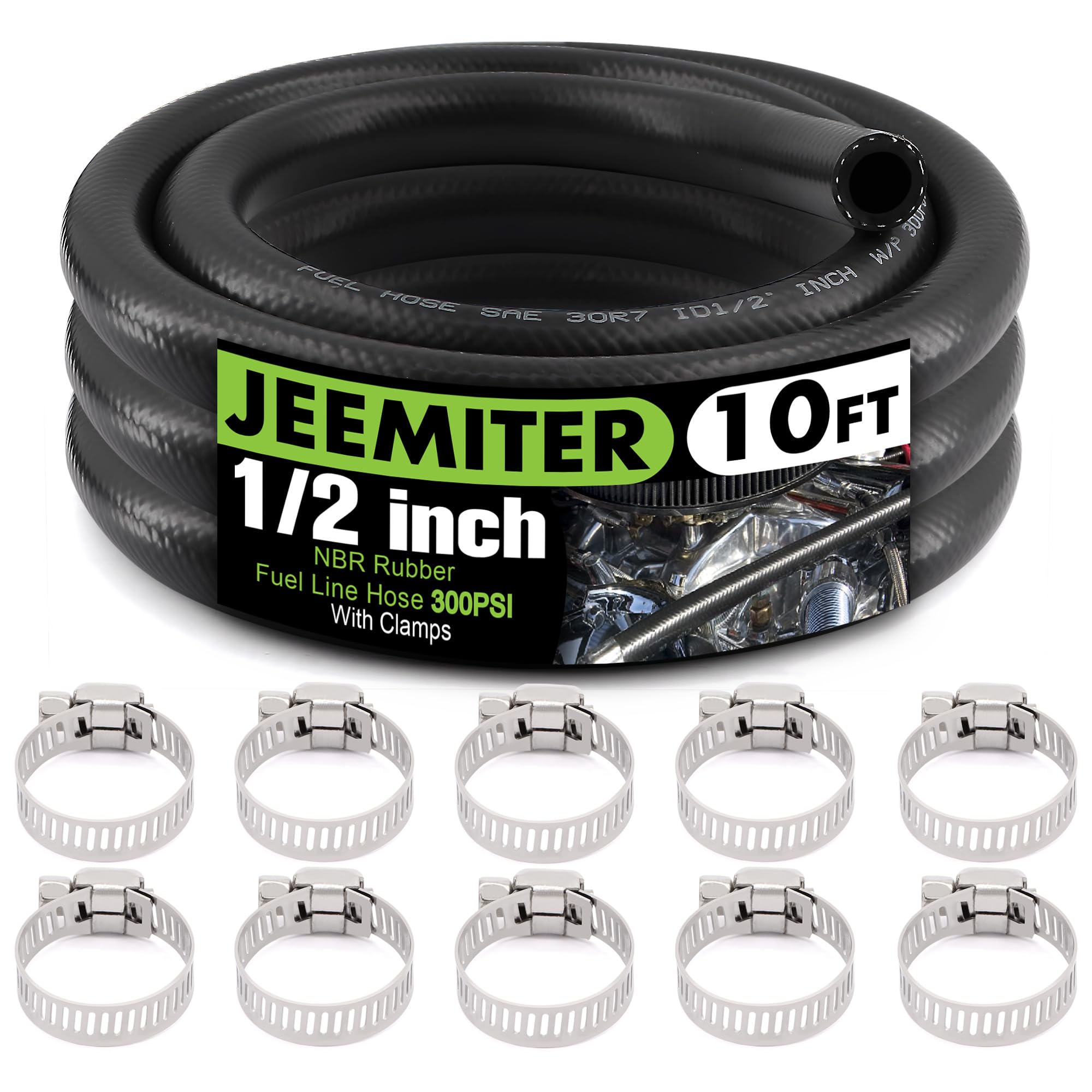
The Jeemeter fuel line is constructed from high-quality NBR rubber and meets SAE 30R7 standards, ensuring reliable performance with diesel, gasoline, biodiesel, and oils. Its 1160 PSI burst pressure provides an enormous safety margin over its 300 PSI working pressure, making it overkill for most automotive and marine fuel systems but highly desirable for critical applications where failure is not an option. The 10-foot length offers generous run capacity for most engine swaps, lawn tractor repairs, or industrial equipment.
Owner reports consistently highlight the hose’s flexibility and heavy wall construction, which resists kinking during tight-radius routing. The material remains pliable in cold weather yet maintains its shape under hot oil exposure. Users have successfully adapted it for PCV systems and oil cooler lines, noting that the inner lining stays intact without flaking or swelling over months of continuous use. The included stainless clamps are functional for light-duty work, though experienced builders may prefer upgrading to a worm-gear clamp with a 5.5mm hex head for higher clamping force.
For the combination of length, pressure rating, and broad fuel compatibility, this hose delivers the best overall value and performance for the vast majority of 1/2-inch fuel system needs. It bridges the gap between bargain hose and high-end racing line without the boutique price tag.
What works
- High burst pressure provides a massive safety factor
- Flexible NBR construction resists kinking
- Generous 10-foot length for long runs
What doesn’t
- Included clamps are basic and suit light duty only
- 1/2″ ID fits tight on some standard barb fittings
2. AC PERFORMANCE 1/2″ ID NBR Push on Hose
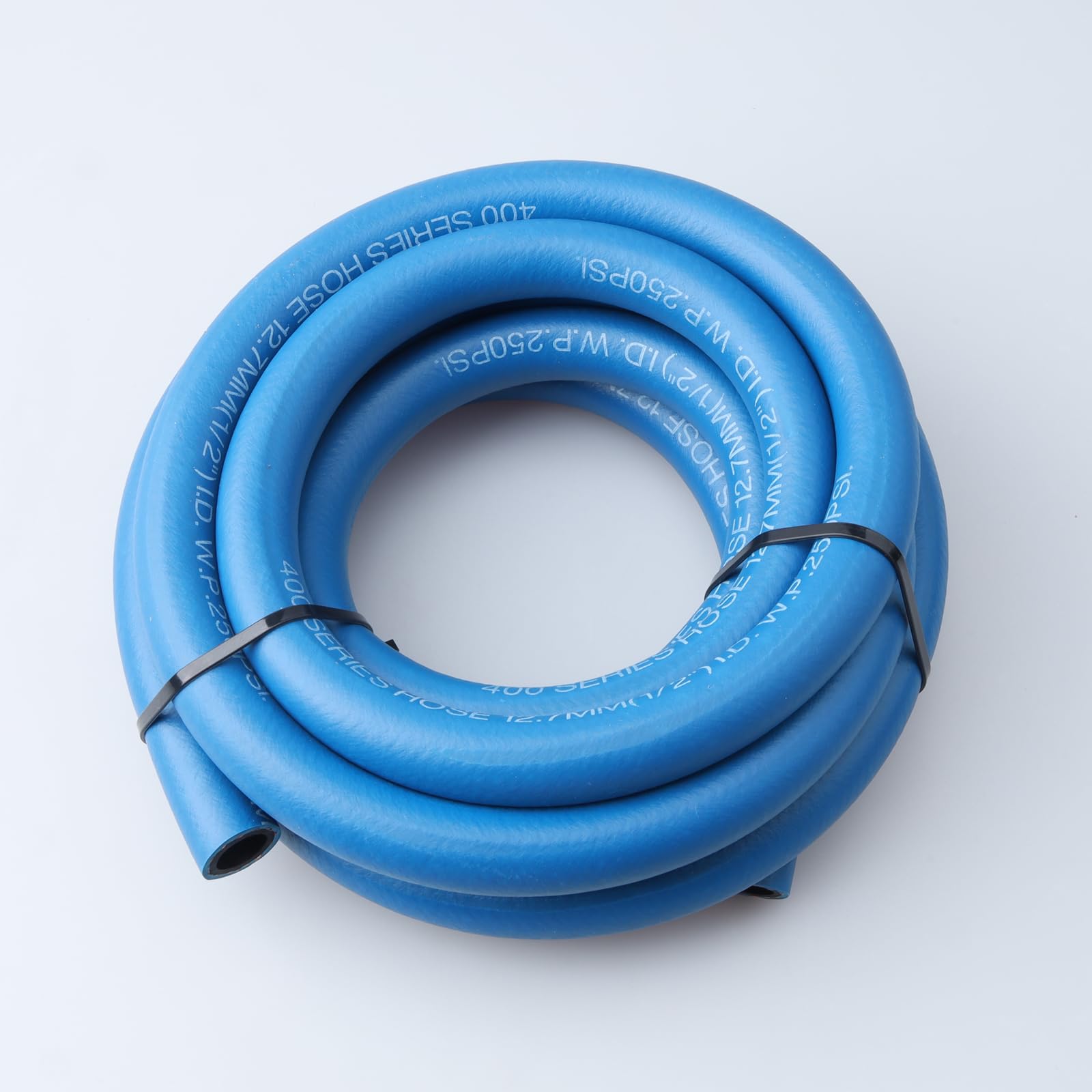
The AC PERFORMANCE push-on hose uses high-grade NBR reinforced with textile, covered by elastomer, giving it a distinct advantage for high-heat fuel and oil systems. With a working pressure of 280 PSI and an 800 PSI burst rating, it handles return lines and low-pressure fuel injection circuits with ease. The striking blue color isn’t just aesthetic—it helps identify the hose as a specific fuel-rated line in a crowded engine bay.
Engineers designed this hose to work with push-on AN fittings (400 and 510 series), eliminating the need for clamps in permanent installations. Owners report needing a small amount of lubricant to slide the hose onto barbed fittings due to its tight tolerance, which actually enhances leak resistance once seated. The temperature range of -40°F to 212°F covers most automotive applications, though extreme coolant applications near thermostat housings may push its limits.
This is an excellent choice for custom builds, marine engines, and classic car restorations where a clean, clamp-free look is desired. The AN sizing convention aligns perfectly with aftermarket fuel system components, reducing adapter headaches.
What works
- Compatible with push-on AN fittings for a clean install
- High burst pressure suitable for boosted applications
- Visible blue color for easy system identification
What doesn’t
- Shorter 10-foot length limits long routing options
- Stiff material requires effort to push onto fittings
3. CALPOSE 15FT Natural Gas Grill Hose

The CALPOSE natural gas hose shifts from rubber to a hybrid construction featuring a natural rubber outer layer and a flexible stainless steel inner structure, paired with solid brass quick-connect fittings. This design prioritizes weather resistance, UV protection, and physical abuse tolerance, making it ideal for permanent outdoor installations. The 15-foot length provides ample reach from a 1/2-inch gas supply line to grills, pizza ovens, fire tables, or patio heaters.
Owner feedback specifically praises the 1/2-inch male quick-disconnect plug and 3/4-inch-16UNF female flare fittings, which matched existing residential gas outlets without additional adapters. The stainless steel braid prevents rodent damage and accidental cuts from landscaping tools—a common failure point on standard rubber gas hoses. Multiple users confirmed leak-free operation after installation, with the quick connect allowing easy appliance removal for storage or cleaning.
This hose is designed exclusively for low-pressure natural gas or propane applications. It lacks the pressure rating for high-pressure gas systems, but within its intended residential outdoor use, it offers a robust, code-friendly solution.
What works
- Stainless steel braid resists cuts and UV damage
- Solid brass fittings provide leak-free connections
- Weather-resistant design for permanent outdoor install
What doesn’t
- Not compatible with high-pressure gas systems
- Heavier and less flexible than rubber fuel hose
4. GasSaf 10FT Natural Gas Hose With Quick Connect

The GasSaf natural gas hose carries CSA certification, which is often a non-negotiable requirement for permitted installations and insurance compliance. The assembly features a 1/2-inch ID hose with 1/2-inch female flare by 1/2-inch female NPT quick-disconnect fittings, covering the most common interface sizes for residential gas supply lines. The included dust cap and plug protect the brass fittings from debris and moisture when disconnected.
Users consistently note that the quick-connect mechanism snaps together securely and releases smoothly, with no gas odor detected around the seal. The rubber outer layer is durable enough for outdoor exposure but remains flexible enough for routing around corners and obstacles. One long-term owner reported 4.5 years of trouble-free service before the hose developed a wear hole where it contacted a sharp edge—underscoring the need for abrasion protection in any installation.
For DIY homeowners looking to convert a charcoal grill to natural gas or extend a supply line to a generator, the GasSaf hose provides a certified, straightforward solution that local inspectors will approve without pushback.
What works
- CSA certification simplifies permit and insurance approval
- Quick-connect fittings are robust and easy to operate
- Includes both dust cap and plug for fitting protection
What doesn’t
- Rubber outer layer can wear through against sharp edges
- Relatively short 10-foot length limits placement options
5. EVIL ENERGY 1/2″ Heater Hose Coolant Radiator 10FT
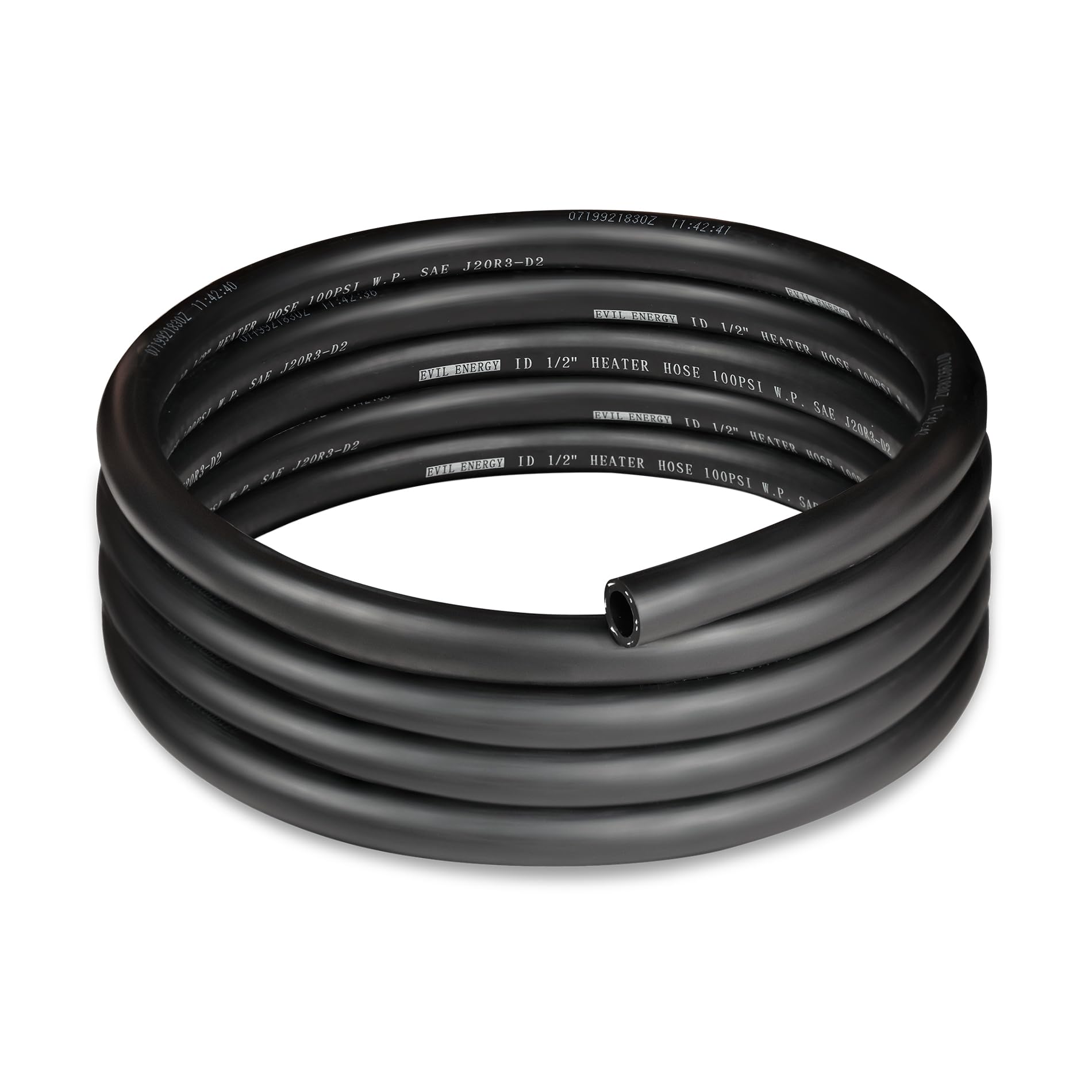
The EVIL ENERGY heater hose is constructed from EPDM rubber and meets SAE 20R3 standards, making it a strong choice for coolant, heater, and radiator bypass circuits. With a working pressure of 100 PSI and a burst pressure of 300 PSI, it comfortably handles the pressures found in most automotive cooling systems. The temperature range of -40°F to 257°F covers normal engine operating temperatures, including freeze and boil-over scenarios.
This hose is not rated for fuel or oil contact—EPDM will swell and degrade rapidly when exposed to petroleum. However, within its intended coolant application, owners report excellent fitment on standard barb fittings, good flexibility for routing around engine bay obstacles, and consistent performance on rear-mount radiator setups. The black finish hides grime and coolant stains better than lighter-colored hoses.
For budget-conscious builders or those simply needing a reliable coolant overflow or heater core line, this hose delivers proven performance without premium pricing. It is a textbook example of choosing the right material for the specific job.
What works
- Excellent compatibility with coolant and water systems
- Flexible and easy to route in tight engine bays
- High temperature rating matches OEM requirements
What doesn’t
- Not suitable for fuel, oil, or petroleum contact
- Lower working pressure limit compared to fuel hose
Hardware & Specs Guide
SAE 30R7 vs 30R9 vs 20R3
SAE 30R7 is the standard specification for low-pressure fuel and emission control hoses, rated for continuous use up to 50 PSI and 212°F. SAE 30R9 offers higher heat resistance (up to 257°F) and is suitable for fuel injection return lines. SAE 20R3 covers coolant and heater hoses, requiring a higher temperature tolerance but lower oil resistance. Matching the SAE standard to your system’s fluid and temperature prevents premature swelling, hardening, or collapse.
Working Pressure vs Burst Pressure
Working pressure is the maximum continuous pressure a hose can safely handle during operation. Burst pressure is the point at which the hose is expected to fail, typically 3-4 times the working pressure. A fuel system’s pressure regulator sets the working pressure, but pressure spikes from pump cycling or thermal expansion can approach burst limits. Always select a hose with a working pressure that exceeds your system’s maximum regulated pressure.
NBR Rubber vs EPDM Rubber
Nitrile Butadiene Rubber (NBR) is formulated to resist petroleum-based fluids, oils, and fuels, making it the default material for fuel hoses. Ethylene Propylene Diene Monomer (EPDM) excels in water, coolant, and steam applications but dissolves or swells when exposed to gasoline or diesel. Using EPDM for fuel creates a leak risk, while using NBR for coolant may result in a shorter service life due to different heat aging characteristics.
Push-On Fittings vs Barbed Fittings with Clamps
Push-on fittings use a specially designed barb and hose material that creates a permanent mechanical bond without a clamp, offering a cleaner appearance and faster assembly. Barbed fittings rely on a worm-gear or constant-tension clamp to compress the hose onto the barb, providing a secure connection that can be disassembled for maintenance. Push-on systems generally require a tighter initial fit and specific hose durometer, while barbed systems offer more flexibility in hose selection and field repairs.
FAQ
Can I use a heater hose for fuel?
What does SAE 30R7 stand for?
How do I measure a 1/2 inch fuel hose correctly?
Can I use a fuel hose for natural gas?
Final Thoughts: The Verdict
For most buyers, the best 1/2 fuel hose winner is the Jeemeter SAE 30R7 Fuel Line because it combines a high burst pressure, flexible NBR construction, and a generous 10-foot length at a value that undercuts auto parts store pricing. If you need a clamp-free installation for a custom fuel or oil system, grab the AC PERFORMANCE Push-On Hose. And for a permanent natural gas grill hookup that meets code, nothing beats the CALPOSE 15FT Stainless Steel Braided Hose.

Certification: BSc in Mechanical Engineering
Education: Mechanical engineer
Lives In: 539 W Commerce St, Dallas, TX 75208, USA
Md Amir is an auto mechanic student and writer with over half a decade of experience in the automotive field. He has worked with top automotive brands such as Lexus, Quantum, and also owns two automotive blogs autocarneed.com and taxiwiz.com.