Choosing replacement brake pads for a thirteenth-generation F-150 means navigating a crowded market where ceramic formulations, shim designs, and dust output vary wildly between brands. A pad that shines on a commuter truck may fade fast under towing loads, while a heavy-duty compound can squeal through every cold morning stop. The right choice depends on matching friction technology to your specific driving pattern, not just picking the lowest price or fanciest box.
I’m Amir — the founder and writer behind Four Wheel Ask. My work focuses on studying manufacturer specification sheets, analyzing friction material compositions, and cross-referencing verified owner feedback to identify real-world performance trends across the aftermarket brake pad segment.
After carefully reviewing real owner reports, the best 2016 ford f-150 brake pads reduce dust, noise, and improve stopping safety when matched to the right driving profile.
How To Choose The Best 2016 Ford F-150 Brake Pads
The 2016 F-150 carries a substantial curb weight even with its aluminum body, and the brake system must manage everything from stop-and-go commutes to heavy trailer towing. Selecting pads requires a clear understanding of friction material types, hardware quality, and the role of shims in noise suppression. Focus on these three factors before making a purchase decision.
Friction Material — Ceramic vs. Semi-Metallic
Ceramic pads dominate the aftermarket for this generation F-150 because they produce less dust, run quieter, and deliver consistent pedal feel across a wide temperature range. Semi-metallic pads offer higher initial bite and better heat transfer under extreme loads, but they generate more noise and dark wheel dust that bonds to clear coat. For most daily drivers and occasional tower, a quality ceramic compound provides the best balance of cleanliness, noise control, and stopping power.
Shims, Hardware, and Noise Suppression
A pad’s friction material matters, but the shim and hardware design determines whether you hear squeal during cold morning stops. Multi-layer rubber core shims absorb vibration better than basic steel shims, while pre-attached hardware kits ensure correct clip tension at the caliper abutments. Buyers who prioritize a silent cabin should look for pads that specifically mention multilayer shim technology or OE-style noise dampening layers in their construction details.
Quick Comparison
On smaller screens, swipe sideways to see the full table.
| Model | Category | Best For | Key Spec | Amazon |
|---|---|---|---|---|
| PowerStop Z36-1602 | Rear | Towing & Heavy Duty | Carbon-Fiber Ceramic | Amazon |
| Bendix CFC1770 | Front | Daily Driving & OE Replacement | Advanced Ceramic | Amazon |
| TRQ BFA13102 | Front + Rear | Complete Axle Set | Ceramic Full Set | Amazon |
| R1 Concepts 2310-2087-00 | Front | Clean-Running Budget Choice | Ceramic Low Dust | Amazon |
| SIPAUTEC ZD1414-ZD1790 | Front + Rear | All-Wheel Replacement | Ceramic 8-Pad Set | Amazon |
| Bosch BC1602 | Rear | Quiet City Commuting | QuietCast Ceramic | Amazon |
| Detroit Axle P-1790 | Rear | Entry-Level Value | Ceramic w/ Hardware | Amazon |
In-Depth Reviews
1. PowerStop Z36-1602 Truck & Tow Rear Brake Pads

PowerStop’s Z36 series is engineered specifically for trucks and SUVs that see heavy use, and the Z36-1602 rear set brings the same carbon-fiber ceramic compound found in the brand’s high-performance line. The formulation is designed to resist brake fade under sustained load — a common failure point when standard passenger-car pads are used on a half-ton truck. Owner reports on this generation F-150 consistently note that the pads maintain firm pedal feel even after repeated hard stops with a loaded bed or trailer.
The inclusion of full installation hardware in the box simplifies the swap: clips, shims, and lubricant are all pre-packaged. Multiple verified buyers mention that the pads fit the rear calipers of the 2016 F-150 without modification and that bedding-in was straightforward. The carbon-fiber ceramic compound also produces noticeably less dust than the factory semi-metallic pads, which keeps rear wheels cleaner between washes.
Some owners report a brief cold-weather squeal during the first stop of the day, a trait common to high-friction ceramic formulations. This typically subsides after the pads reach operating temperature. Overall, the Z36-1602 represents a well-engineered upgrade for F-150 owners who tow, haul, or drive in mountainous terrain and want predictable stopping power without the dust cloud of metallic pads.
What works
- Excellent fade resistance under heavy braking and towing loads
- Full hardware kit included for a complete rear swap
- Carbon-fiber ceramic formulation reduces wheel dust significantly
What doesn’t
- Can produce morning squeal until pads warm up in cold weather
- Premium positioning may be overkill for light-duty city driving
2. Bendix Priority1 CFC1770 Front Ceramic Brake Pads

Bendix brings over a century of friction material experience to the Priority1 line, and the CFC1770 front pad set reflects that depth of engineering. The ceramic compound is formulated to match OE pedal feel while improving high-temperature stability — a key advantage for F-150 owners who encounter repeated braking on downhill grades. Owner data shows that these pads deliver consistent bite across a wide temperature range, with minimal fade even when the rotors are hot.
Installation feedback from 2016 F-150 owners indicates a precise fit with no need to grind or modify the backing plates. The pads include pre-attached rubber core shims that dampen vibration at the caliper interface, and several long-term users report zero noise after proper bedding. The low-dust formula keeps front wheels visibly cleaner than the factory pads, which is a common upgrade driver for this model year.
The limited lifetime warranty adds peace of mind for buyers planning to keep the truck for several years. A few owner notes mention that the initial bite feels slightly softer than aggressive semi-metallic pads, but this is characteristic of premium ceramic compounds designed for smooth modulation rather than grabby engagement. For daily drivers seeking reliable, quiet stopping power with minimal dust, the CFC1770 is a strong front-axle choice.
What works
- High-temperature stability resists fade during sustained braking
- Pre-attached rubber core shims eliminate vibration noise
- Limited lifetime warranty protects long-term investment
What doesn’t
- Initial bite is softer than semi-metallic compounds
- Front-only set requires separate rear pad purchase
3. TRQ BFA13102 Front and Rear Ceramic Brake Pad Set
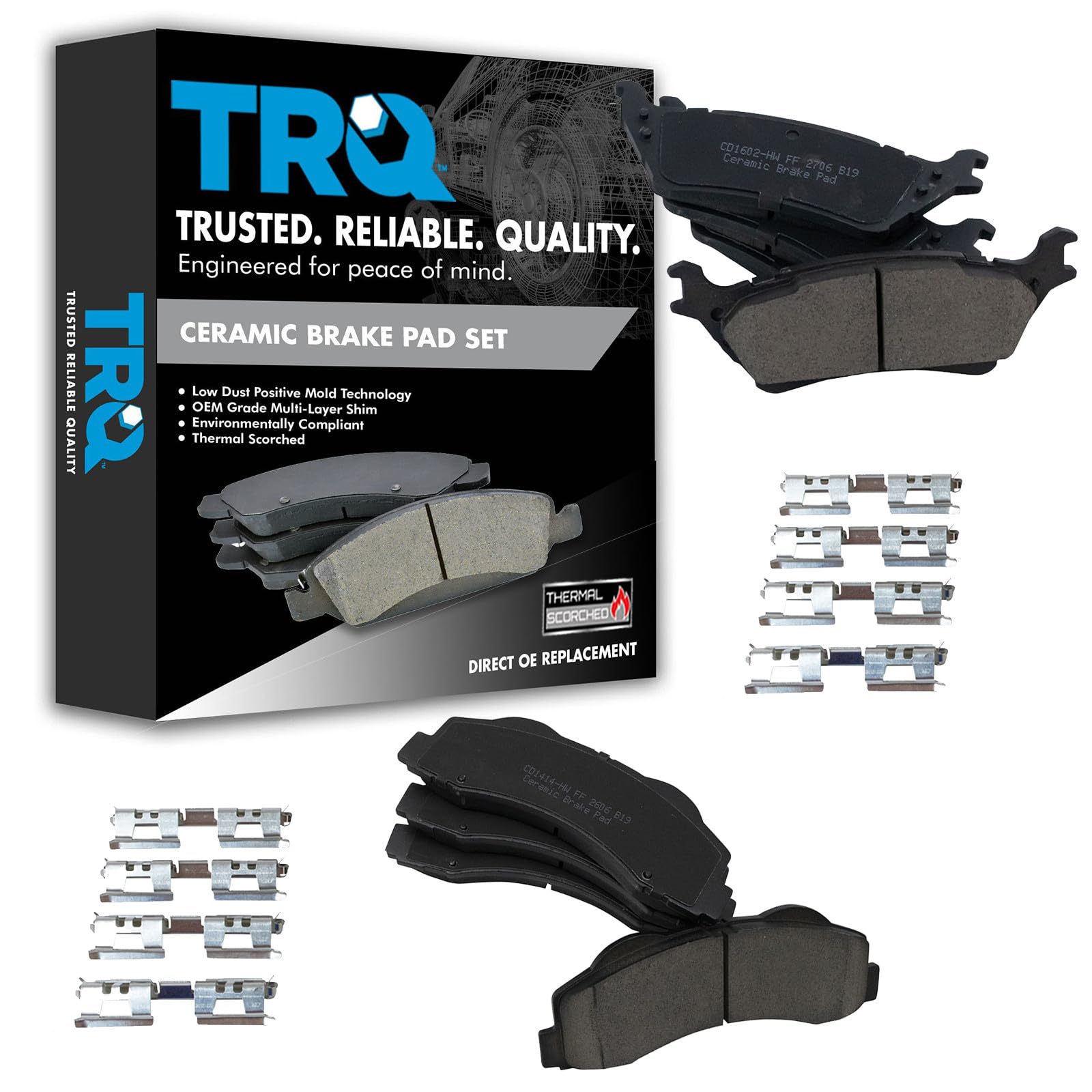
TRQ has built a reputation in the DIY community by pairing direct-fit parts with an extensive library of installation videos, and the BFA13102 kit follows that model. This package includes both front and rear ceramic pad sets, making it a one-box solution for a full brake job on the 2016 F-150. Owners who prefer to do their own work consistently cite the video support as a time-saver, especially for navigating the electric parking brake procedure on later models.
The ceramic compound used in this kit is engineered for OE-equivalent performance with reduced dust output. Multiple verified purchasers on this generation F-150 report that the pads fit precisely to the caliper abutments and that the included clips and shims align without interference. The pre-bedded surface treatment helps shorten the break-in period, so stopping performance firms up quickly after installation.
A small number of owner notes mention that the hardware clips feel slightly thinner than the factory pieces, though no functional issues have been widely reported. The two-year warranty offers solid coverage for a complete set at this tier. For buyers who want a single order that covers all four wheels and comes backed by detailed installation resources, the TRQ BFA13102 delivers a cohesive package.
What works
- Complete front and rear set simplifies ordering and installation
- DIY video library helps first-time installers avoid common mistakes
- Pre-bedded surface reduces break-in time
What doesn’t
- Hardware clips feel less robust than OE pieces
- Premium price point for a full set may exceed single-axle budgets
4. R1 Concepts Front Ceramic Brake Pads

R1 Concepts has carved out a position in the value segment by focusing on consistent ceramic quality at a competitive price point. The front pad set for the 2016 F-150 uses a rubberized shim backing and a chamfered, slotted friction face to control noise and promote even wear. Owner feedback across multiple Ford truck platforms indicates that these pads deliver stopping power that matches the factory feel, with a noticeable reduction in brake dust accumulation on the front wheels.
Fitment data shows compatibility with both two-wheel-drive and four-wheel-drive variants of the 2016 F-150, including models with electric parking brakes. The pads are manufactured to OEM specifications, and several long-term users report that pad life exceeds 40,000 miles under mixed driving conditions. The one-year manufacturer warranty provides basic coverage for material defects.
Some owners note that the initial pedal feel is slightly firmer than the soft compound found in premium-tier pads, though this does not affect stopping distance. A few reports mention that the hardware clips are not included, so buyers reusing old clips should inspect them for wear. For budget-conscious owners who want a reliable ceramic upgrade without the premium markup, the R1 Concepts front set offers solid everyday performance.
What works
- Noticeably lower dust output compared to semi-metallic pads
- Chamfered and slotted face reduces noise during normal braking
- Consistent owner reports of long pad life in mixed use
What doesn’t
- Hardware clips not included — existing clips must be reused or replaced
- Firmer pedal feel than some drivers prefer
5. SIPAUTEC Front and Rear Ceramic Brake Pad Set
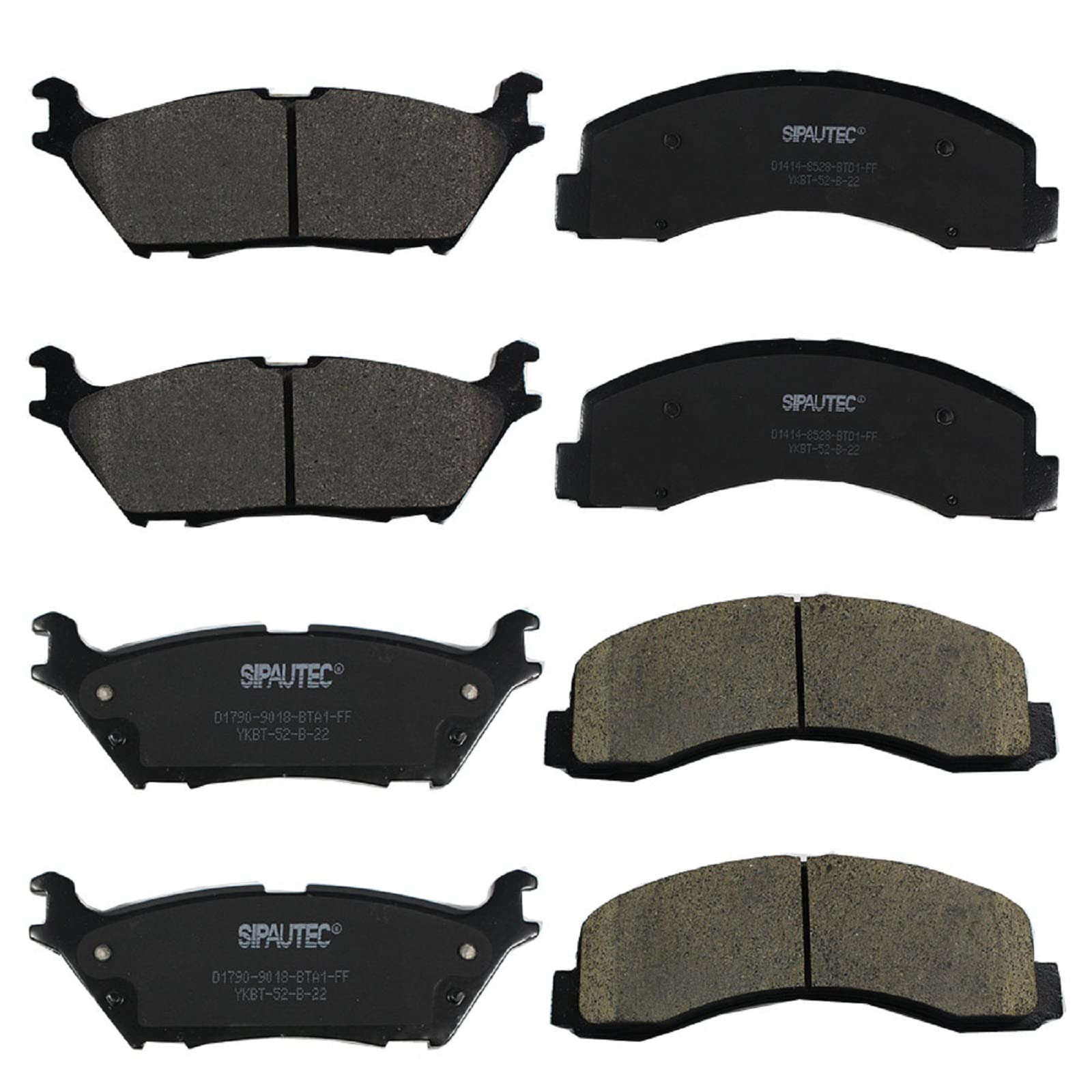
SIPAUTEC enters the F-150 market with an all-in-one eight-pad kit that covers both front and rear axles, specifically engineered for trucks equipped with electric parking brakes. The ceramic formulation is chamfered and slotted to match OE noise-reduction designs, and the set includes brake lubricant for sliding contact points. Owner reports on the 2016 F-150 confirm that the pads fit correctly and that the compound requires minimal break-in before delivering consistent stopping feel.
The kit is certified to multiple industry standards including ISO/TS 16949 and SAE J2784, which indicates a manufacturing process aligned with quality management protocols. Buyers who have installed these pads on daily-driven F-150s report quiet operation and reduced dust on both front and rear wheels after several thousand miles. The inclusion of pads for all four corners in one shipment saves time and shipping costs compared to buying separate front and rear sets.
A handful of owner notes mention that the kit does not include new hardware clips or abutment brackets, so original clips should be inspected and replaced if worn. The ceramic compound is formulated for everyday driving rather than extreme towing, so heavy-duty users may want to consider a more aggressive pad. For a straightforward all-wheel replacement on a commuter or light-duty truck, the SIPAUTEC set delivers strong value.
What works
- Complete eight-pad set covers all four wheels in one order
- Multiple industry certifications indicate quality manufacturing
- Chamfered and slotted face design reduces brake noise
What doesn’t
- No hardware clips included — original clips must be reused
- Compound is best suited for daily driving, not heavy towing
6. Bosch BC1602 QuietCast Premium Ceramic Rear Brake Pads

Bosch’s QuietCast line benefits from decades of OE supply experience, and the BC1602 rear set demonstrates why the brand is a trusted name in braking. The pads feature Bosch’s Molded Shim Technology, where the rubber layer is bonded directly to the steel backing plate rather than simply attached. This construction method reduces the chance of shim separation over time and provides consistent noise dampening throughout the pad’s life.
Owner feedback from 2016 F-150 owners highlights a near-total elimination of the squeal that often plagues semi-metallic pads. Multiple verified buyers who switched from metallic compounds report that the ceramic formulation produces virtually no dust on the rear wheels after weeks of driving. The powder-coated backing plate resists corrosion in salt-belt climates, and the included synthetic lubricant helps ensure smooth caliper slide pin operation.
A few owners note that the included hardware clips are slightly smaller than the factory clips on certain trim levels, though most report that the original clips can be reused without issue. The pads are positioned as a rear-only solution, so front pads must be purchased separately. For F-150 owners targeting a quiet, low-maintenance rear brake setup with proven OE engineering DNA, the BC1602 QuietCast pads deliver exactly what the name promises.
What works
- Molded Shim Technology prevents shim delamination and noise
- Extremely low dust output keeps rear wheels clean
- Powder-coated backing plate resists rust and corrosion
What doesn’t
- Hardware clips may be undersized for some trim levels
- Rear-only set requires separate front pad purchase
7. Detroit Axle Rear Ceramic Brake Pads for Ford F-150
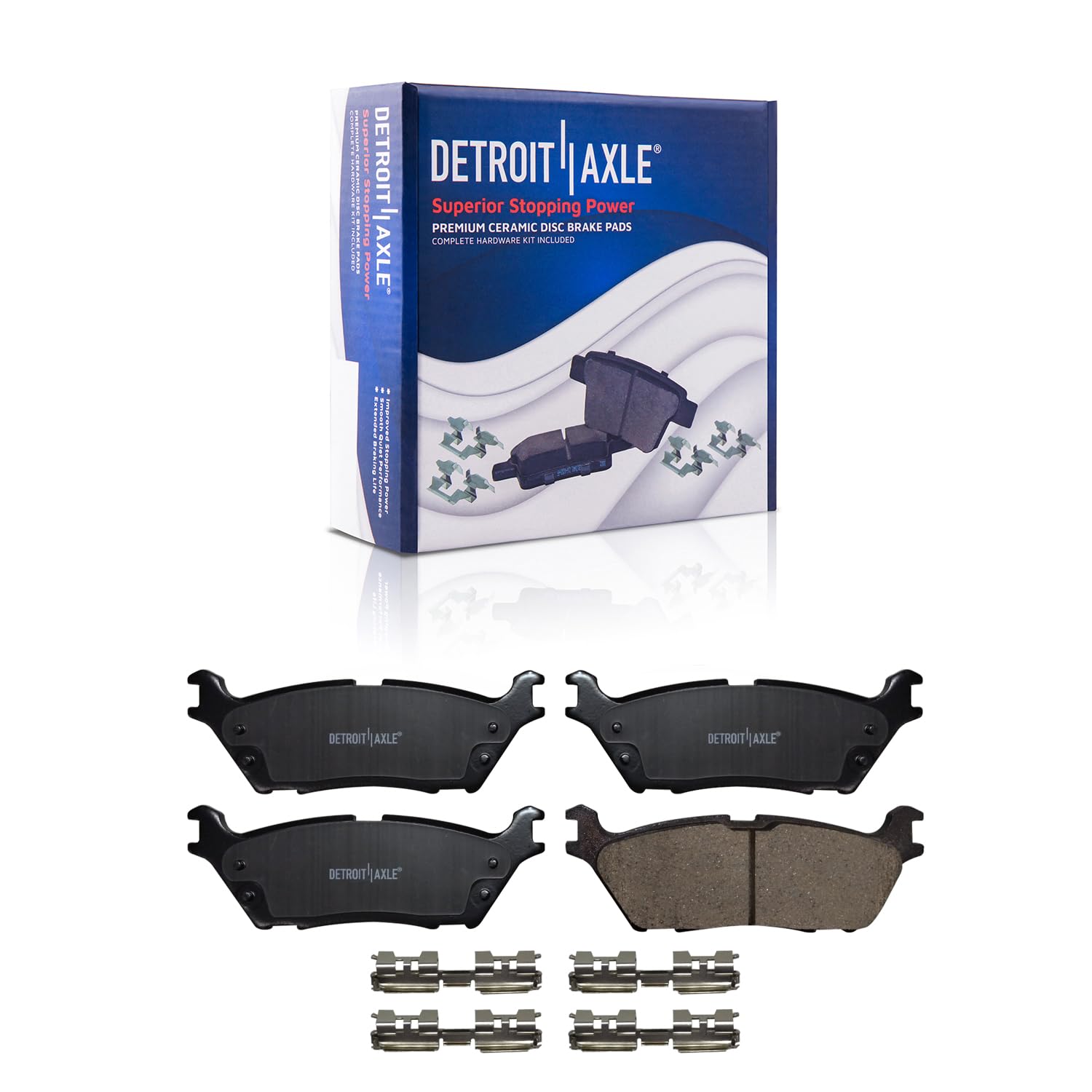
Detroit Axle has become a frequent choice for budget-minded truck owners who want ceramic performance without the premium price. This rear pad kit includes the pads themselves plus new hardware clips, which eliminates the need to reuse aged factory clips that may have lost their tension. Owner reports on the 2016 F-150 indicate that the pads fit the rear calipers correctly and that the included hardware aligns properly with the abutment brackets.
The ceramic compound is formulated as a low-dust alternative to metallic pads, and multiple buyers confirm that wheel cleanliness improves noticeably after the swap. The pads undergo impact, wear, and fatigue testing during manufacturing, and the brand has built a following among F-Series owners who appreciate consistent quality at a competitive price point. Several verified purchasers describe Detroit Axle as their go-to brand for brake components on multiple vehicles.
Some owners note that the initial bite feels slightly softer than OE pads during the first few hundred miles of break-in, which is typical for entry-level ceramic formulations. A few reports mention that the box packaging is sturdy enough to double as a container for old parts — a small but appreciated detail. For rear brake replacements on a budget where reliable stopping performance is the primary goal, the Detroit Axle kit offers a practical solution.
What works
- New hardware clips included for a complete rear installation
- Low-dust ceramic formulation keeps wheels cleaner
- Sturdy packaging doubles as storage for old parts
What doesn’t
- Softer initial bite during break-in period
- Rear-only set requires separate front pad purchase
Hardware & Specs Guide
Friction Material — Ceramic vs. Semi-Metallic
Ceramic pads use dense ceramic fibers and copper or carbon fillers bonded under high heat. They operate quietly, produce minimal dark dust, and transfer less heat to the caliper and fluid, which reduces brake fade in stop-and-go traffic. Semi-metallic pads rely on steel wool, iron powder, and graphite binders for aggressive bite and high heat tolerance, but they generate more noise and abrasive dust that can etch wheel clear coats. For the 2016 F-150, ceramic pads are the recommended choice for daily and light-towing use, while semi-metallic pads suit owners who regularly haul maximum loads or drive in mountainous terrain where sustained high temperatures are the norm.
Shims, Chamfers, and Noise Control
The interface between the pad backing plate and the caliper piston is where most brake noise originates. Multilayer rubber core shims absorb high-frequency vibration before it transfers to the caliper, while chamfered pad edges and center slots help break up resonance patterns during engagement. Pads that include pre-attached shims with a bonded rubber layer generally outperform add-on shim sheets in long-term noise suppression. Slot patterns also aid in gas and debris evacuation, keeping the friction surface clean for consistent bite. These design features are critical for owners who prioritize a quiet cabin over ultimate stopping force.
FAQ
Do I need to replace the rotors when installing new brake pads on a 2016 F-150?
What does bedding-in brake pads mean and why is it important?
Can I mix ceramic front pads with semi-metallic rear pads on the same truck?
How often should brake pads be replaced on a 2016 Ford F-150?
Final Thoughts: The Verdict
For most buyers, the 2016 ford f-150 brake pads winner is the PowerStop Z36-1602 because it combines fade-resistant carbon-fiber ceramic technology with a complete hardware kit, making it a direct upgrade for owners who tow or haul regularly. If you want quiet daily driving with OE heritage, grab the Bosch BC1602 QuietCast rear set. And for a complete front-and-rear replacement in one box, nothing beats the TRQ BFA13102.

Certification: BSc in Mechanical Engineering
Education: Mechanical engineer
Lives In: 539 W Commerce St, Dallas, TX 75208, USA
Md Amir is an auto mechanic student and writer with over half a decade of experience in the automotive field. He has worked with top automotive brands such as Lexus, Quantum, and also owns two automotive blogs autocarneed.com and taxiwiz.com.